

Economic abuse, a pervasive and often life-threatening form of control, impacts a significant number of women across the UK.
Startling figures from the charity Surviving Economic Abuse (SEA) reveal that one in six women have endured economic abuse at the hands of a current or former partner, with the behaviour present in a staggering 95 per cent of all domestic abuse cases.
This insidious tactic extends far beyond mere financial control. Sara D’Arcy, head of external affairs at SEA, clarifies: “Economic abuse is when a partner or ex-partner controls your money, but also your economic resources, so that can be your housing, whether you can access transport, a mobile phone, all the way down to basic essentials like food and clothing.”
Such actions are now recognised and criminalised under the coercive controlling behaviour offence, allowing for prosecution.
Abusers deploy these methods relentlessly, aiming to create profound instability.
“Abusers are using this tactic every day of the year,” D’Arcy states, explaining its core purpose: “It is all about taking control and creating financial instability that eventually makes you feel trapped and like you can’t take steps to leave.”
The exploitation often intensifies during specific periods, with D’Arcy noting “definite tactics deployed at certain times of the year,” including the May half-term and summer holidays.
She highlights how “abusers use child maintenance to control and cause harm at particular times of year, because they know it is going to have an emotional and financial impact.”
This manipulation can deny survivors and their children simple pleasures, meaning “the survivor can’t take the kids to the seaside for half-term, or they’re not going to be able to afford to buy a birthday cake.”

Get a free fractional share worth up to £100.
Capital at risk.
Terms and conditions apply.
ADVERTISEMENT
Get a free fractional share worth up to £100.
Capital at risk.
Terms and conditions apply.
ADVERTISEMENT
The cost of living crisis is used as another “excuse” for abusers “to control their partner and how they spend money or access resources”. Women’s Aid found 75% of survivors living with an abuser said it had prevented them from leaving or made it harder to do so.
Meanwhile, one in eight women with a joint mortgage is experiencing joint mortgage economic abuse.
“This can include the abuser refusing to pay their agreed share of the mortgage, refusing to consent to a better interest rate, and also preventing them from accessing mortgage support,” says D’Arcy.
“With interest rates now rising again, we’re expecting to see survivors struggle even more with meeting their joint mortgage costs, which is why we want the government to deliver a change in the law to help survivors separate a joint mortgage from an abuser.”
Long-term impact
Economic abuse is incredibly insidious. “Economic abuse makes it harder for survivors to flee to safety because they might have lost their home, be destitute, not be able to afford new locks, or a train to safety or a new roof over their head, and that creates a really unsafe situation.
“We also know that financial loss causes the perpetrator to escalate other forms of violence.”

It often doesn’t end if a survivor has left either, “because unlike other forms of domestic abuse, it doesn’t necessitate being physically close to someone.”
Signs to spot Economic abuse
We asked D’Arcy to outline some of the key red flags of economic abuse to watch out for.
In your own relationship
“Especially at the start of a relationship, abusers will use emotional abuse and manipulation to start to take control. e.g. ‘I’ll take care of all the bills and look after the joint accounts, you don’t have to worry about money’.”
“An abuser might try to force the survivor to take out a loan or say things like, ‘If you really loved me, you’d lend me this money’.”
“[They] may discourage you from going for a promotion because they want you to spend time with them.”
“It could be saying, ‘I don’t like it when you wear that type of clothing, you should wear this type of clothing instead’.”
“They may refuse to contribute to shared household bills.”
“It’s about exploiting your economic resources too, so you’re having to buy new things because they’re smashing your phone all the time, for instance.”
“You notice changes to your behaviour. You’re scared to say no to your partner, you can’t have open conversations about money, you start to feel anxious about doing things you normally would have done, and find yourself being isolated.”
“Later down the line, you may realise you don’t have access to the bank account your wages are paid into. Bills are turning up at the door, and while you thought your partner was taking care of it all, you’re suddenly in lots of debt.”
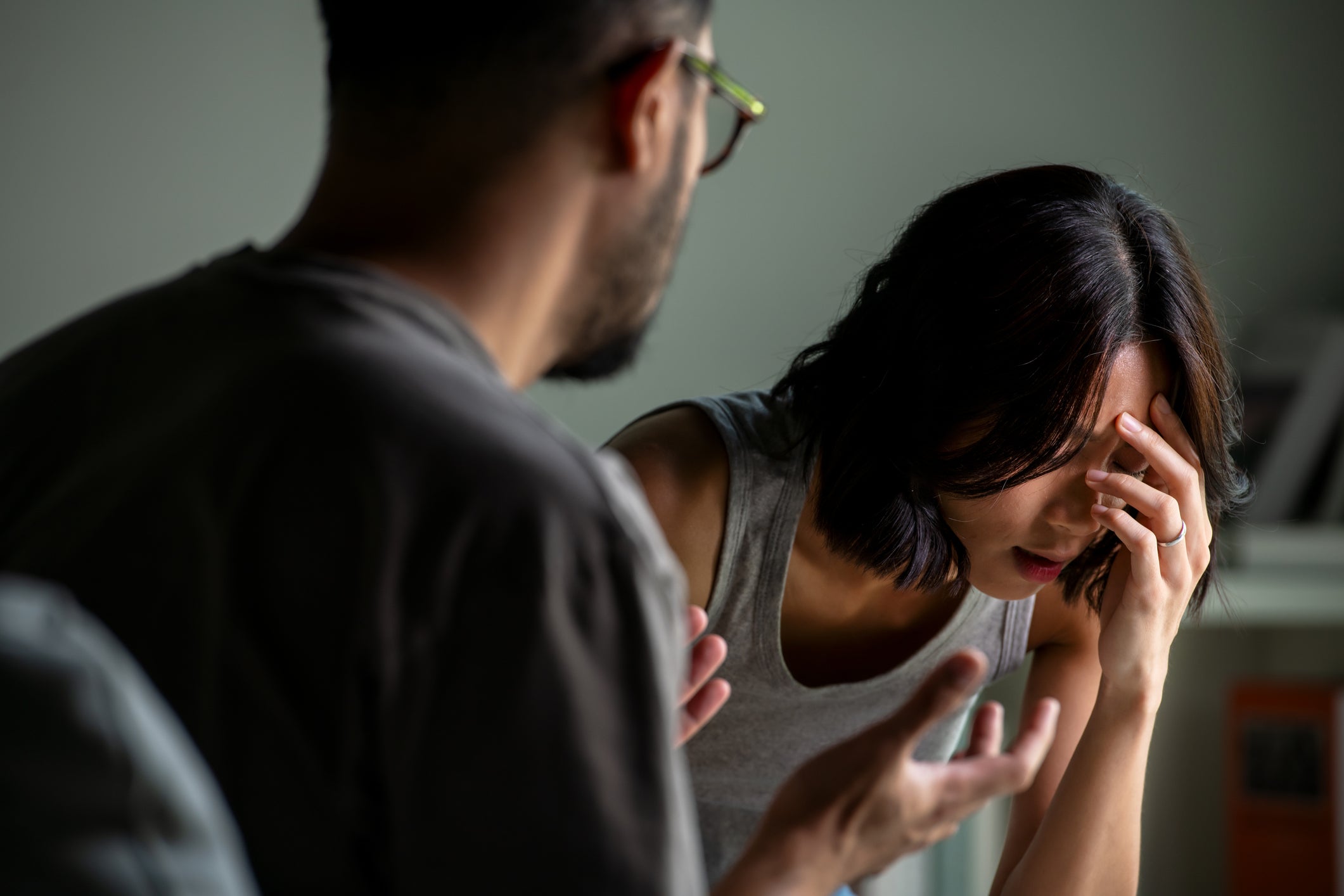
Signs in a loved one’s relationship
“The survivor might not be saying, ‘I’m a victim of domestic abuse’. It’s often subtle signs, like changes in their behaviour.”
“They might be not taking part in regular things, like going out for lunch with you.”
“They might be more worried about money and really keeping tabs on what they’re spending, or saying, ‘My partner doesn’t want me to spend money on that, so I can’t do that’.”
“You might notice them not taking care of themselves, for example, if they’re worried about getting their nails done if they’d done that previously.”
“Look out for loved ones becoming isolated.”
Seeking help
Worried about a loved one? “it’s really important to not judge. Express concern, ask them open questions and allow them to share what they feel comfortable with,” advises D”Arcy. “Let them know you are there whatever it is they’re going through, they’re not alone, and really be there to support them when they’re ready to reach out for help.
“It’s about creating space and for them to take action in their own time,” she continues. “They’ll be thinking, ‘What is safe for me right now?’ and be having to manage their safety.”
For anyone concerned about their own situation, “if you’re in immediate danger, always call 999,” says D’Arcy.
“If you are looking to flee an abusive partner, and you need some help creating a safety plan, the first port of call is the National Domestic Abuse helpline (0808 2000 247), a freephone 24/7 helpline run by Refuge.”
Check out survivingeconomicabuse.org for further advice. SEA also works alongside debt advice charity, Money Advice Plus who “provide support around rebuilding your financial independence and getting specialist help if you’ve been coerced into debt by your abuser”.
There’s also lots of ways banks can help. “TSB offers a flee fund of up to £500 to new and existing customers taking steps to flee,” says D’Arcy.
