

Summer’s nearly here, and many people are thinking about holidays – and whether they can afford them.
And while the cost of the trip forms the bulk of any holiday financial outlay, there’s plenty more to factor in, ranging from new clothes and spending money, to other ‘essentials’.
But are they truly essential, and do you really need to spend a fortune before you go away, never mind while you’re there?
“The excitement, time pressure, and fear of forgetting essentials can lead to last-minute purchases that quickly spiral and eat into your budget before you’ve even taken off,” warns Alicia Hempstead, editorial content manager and personal finance and insurance expert at MoneySuperMarket.
“With advertising everywhere, the temptation to panic buy and refresh your wardrobe before a holiday, for example, can feel overwhelming and hard to resist. But the good news is that building small, consistent habits can help you stay in control of your finances, without taking the fun out of your holiday”
And Vix Leyton, a consumer finance expert at the finance app thinkmoney, adds: “The families who save the most are almost always the ones who treat the logistics as part of the planning rather than an afterthought, or risk eclipsing any early savings they made in the booking process with late-stage bolt-ons.”
Here are the expert tips on how to avoid last-minute holiday spending traps…
1. You don’t need holiday versions of what you already own
Retailers are extremely good at selling the idea that you need an entirely new version of yourself for a week abroad, Leyton points out. “A holiday wardrobe, a holiday skincare routine – holiday versions of things you already own at home,” she says.
Get a free fractional share worth up to £100.
Capital at risk.
Terms and conditions apply.
ADVERTISEMENT

Get a free fractional share worth up to £100.
Capital at risk.
Terms and conditions apply.
ADVERTISEMENT
“The reality for most people is that a proper look through what you already have, done a couple of weeks before travelling, rather than the night before, will reveal you own the vast majority of what you need – the gaps are usually far smaller than the panic suggests.”
2. Follow the 24-hour rule
Wait 24 hours before buying something you fancy for your holiday, advises Hempstead, who explains that the delay isn’t to stop you from spending altogether, but to help interrupt impulse buying.
“That pause creates space to think more clearly about whether you can afford it and genuinely need it, rather than reacting in the moment to a decision that could put pressure on your finances,” she says.
She points out that waiting for longer periods before buying higher-value items can also be an effective way to curb impulse buying – for example, introducing a 48-hour waiting period for anything over £100 to encourage more mindful spending.
“Higher-value purchases often come with higher emotional triggers, such as fear of missing out or pressure to buy before it sells out,” she says. “Waiting longer gives that initial impulse time to fade, allowing space for the logical part of the brain to override high‑emotion reactions.
“If you still want the item after 48 hours and you’ve thought it through financially, that’s often when the decision becomes more considered.”
3. Consider second-hand savings
If you do genuinely need things for a trip, Leyton says it’s worth exhausting every option before buying anything new.
“Holiday-specific purchases are consistently among the most resold items online, for the simple reason that people buy them for one trip and never use them again,” she says.
“Almost-new suitcases, sandals, beach bags and children’s travel gear turn up constantly on platforms like Vinted at a fraction of retail price.”
The same applies to camping and festival equipment, she says, pointing out that Freecycle and local community groups regularly have tents, cool boxes and camping stoves being given away or sold cheaply by people clearing out after a single use.
4. Use the stranger test
The stranger test is simply imagining a stranger holding the item you’re tempted by in one hand and the cash equivalent in the other, explains Hempstead.
“It can be a useful way to see the decision more objectively and decide whether the purchase is really worth it,” she says.
“For example, if it’s a £100 pair of trainers or £100 cash, which one would you choose? Research suggests most people would opt for the money.”
5. Do some savvy swapping
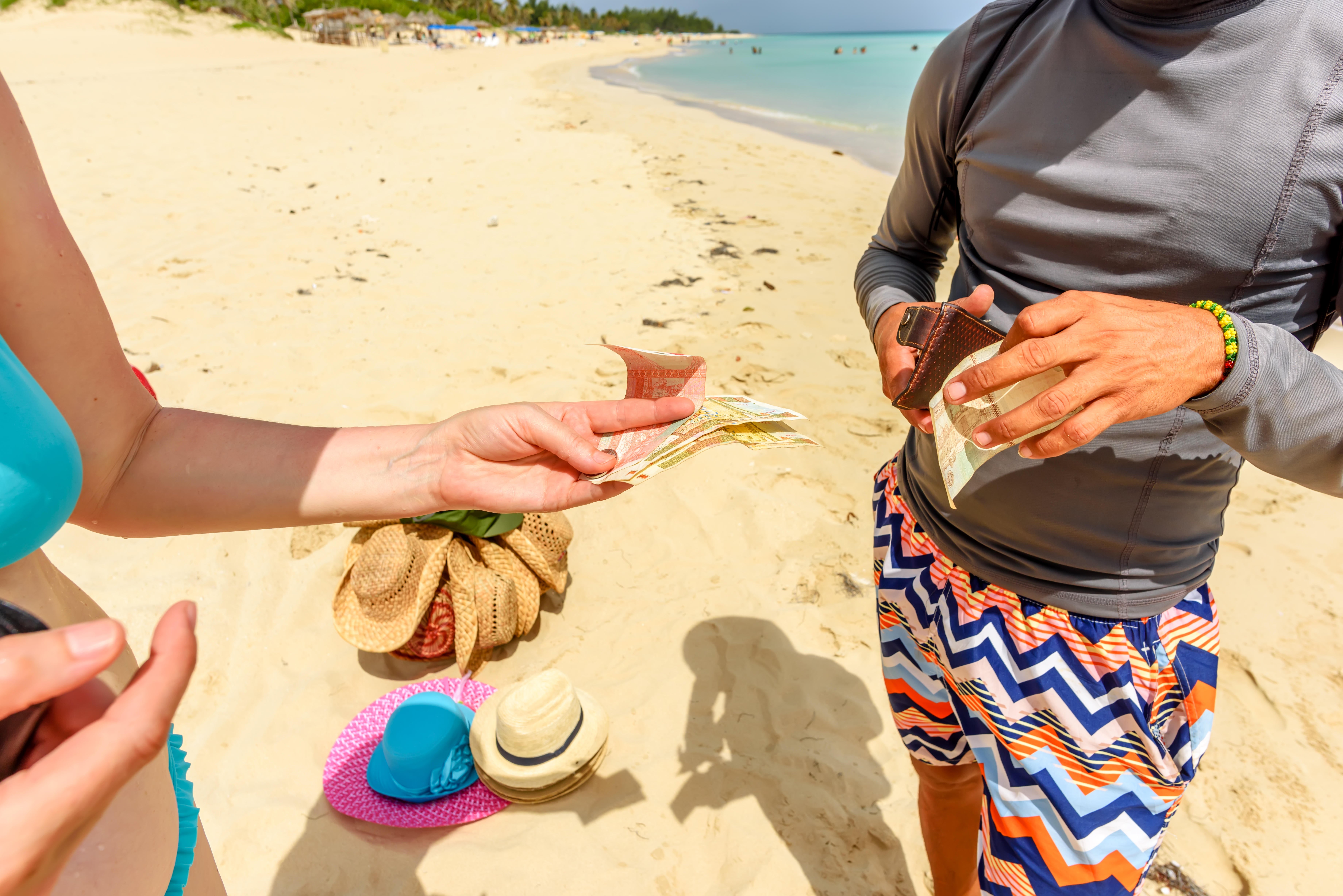
Friends and relatives may well be trying to save money too, so Leyton suggests having a conversation with them, and particularly with any who’ve just come back from holiday themselves, to see if you can borrow some of their holiday stuff.
“Lilos, beach towels, cool boxes, portable speakers – these are exactly the kind of purchases that sit in a cupboard for 50 weeks of the year and are perfectly well-suited to being a shared resource,” she says.
“An informal swap shop among friends before anyone spends a penny means the cost of a summer spreads much further than it otherwise would.”
6. Be mindful about how you pay
Before you travel, it’s worth working out how you’ll pay for things abroad, because the default assumptions can be surprisingly costly, warns Leyton.
“A lot of people are still using their regular debit card without realising it could be adding a foreign transaction fee, typically around 2.75%, to every purchase,” she says. “Plenty of bank accounts and dedicated travel cards now offer completely fee-free overseas spending, and checking whether yours is one of them before you fly costs nothing.”
In addition, if a card machine abroad gives you the option to pay in pounds rather than the local currency, Leyton stresses it’s always best to choose the local currency, explaining: “Choosing pounds feels like the safer choice because you can immediately see what you’re spending, but what it actually means is that the retailer, not your bank, is controlling the exchange rate, and that rate is almost always worse.
“It’s a small habit that costs nothing to adopt and saves something every time.”
7. Make it more difficult to spend
You can force yourself into putting more thought into your pre-holiday shopping by giving yourself spending obstacles to overcome, thus making impulsive purchases less easy, says Hempstead.
“You can do this by not saving your card details onto shopping sites – meaning every time you buy something you’ll have to put in all your information again,” she suggests. “And consider using a physical card and pin rather than a digital wallet that needs just a tap of your phone to make a payment.
“These small challenges that add ‘friction’ to your purchase make you slow down and give you the chance to decide whether it’s really worth it.”
8. Use cash
Alternatively, simply set yourself a budget on your pre-holiday spending, and strictly use cash for all of it.
Hempstead points out: “Withdrawing a set amount of cash – particularly for high‑impulse categories like clothes – can make spending feel more tangible and help you stay within your budget.”
