

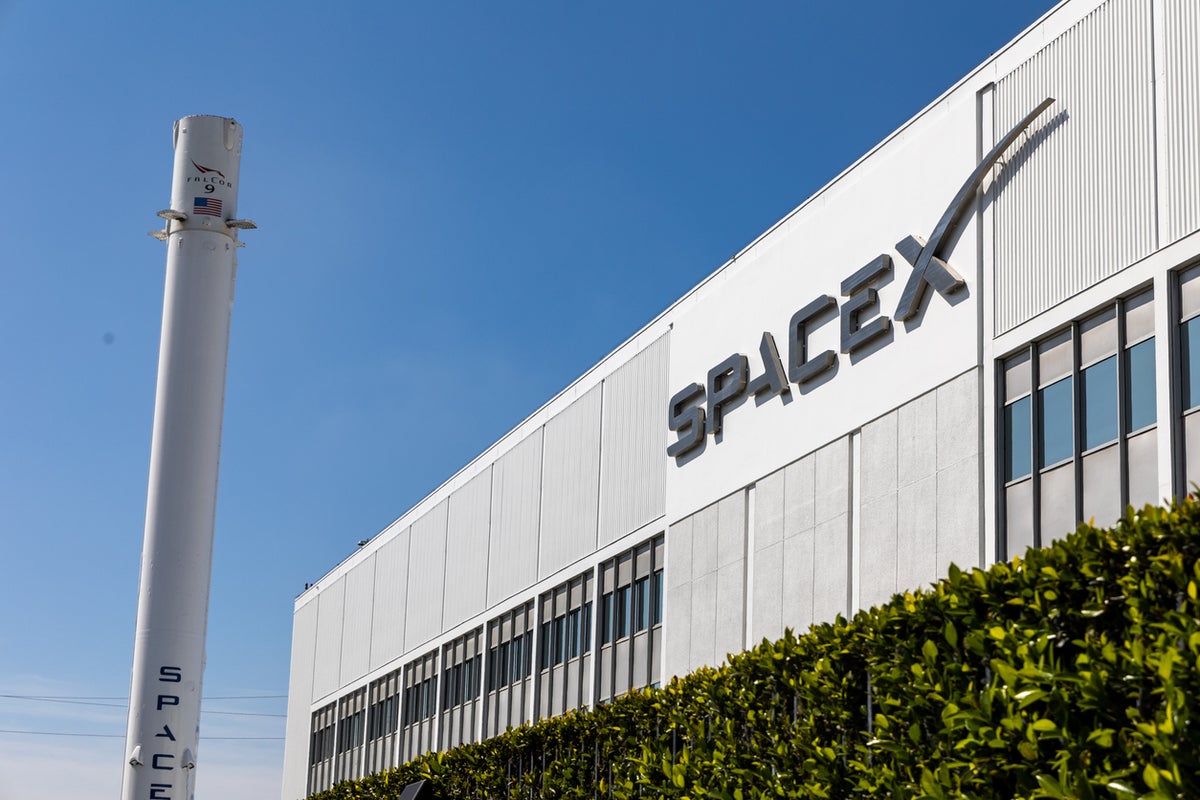

SpaceX’s $1.8 trillion (£1.34 trillion) initial public offering (IPO) is set to take place on 12 June, and represents the first opportunity for retail investors to directly own a piece of the rocket maker via publicly listed shares.
The Elon Musk-led company is at the cutting edge of rocket tech and the burgeoning wider space industry, as well as recently becoming one of the leading artificial intelligence firms via a merger with xAI.
It is also an internet service provider with a difference: the world leader in satellite-based internet through its Starlink network.
The IPO is one of the biggest business and investment stories of the year and is already capturing attention and headlines – hype is likely to be at fever pitch by the time it goes public.
But is it a good investment and how do you own shares in SpaceX?
How does SpaceX make money?
Starlink is bringing in the majority of SpaceX revenue at the moment. While less eye-catching than rocket launches and AI model development, the internet service in the sky is a solid and consistent money spinner.
Of course, the rocket launch service is the real core of the business and how the Starlink satellites got up to space in the first place.
The company is very early in its journey here but does already have contracts with the US government and NASA. In future, the company aims to be charging businesses very large fees for transporting equipment and, eventually, people into space.
Having recently merged with Musk’s AI business xAI, the company also has big plans to scale up revenues from AI-based services in a similar way to the likes of OpenAI and Anthropic.
Should I invest in the SpaceX IPO?

Get a free fractional share worth up to £100.
Capital at risk.
Terms and conditions apply.
ADVERTISEMENT
Get a free fractional share worth up to £100.
Capital at risk.
Terms and conditions apply.
ADVERTISEMENT
The fundamental question all investors face with any IPO – or any other stock purchase – is whether they believe the share price will rise following the event, or fall.
If it is the latter, then waiting a while and snapping up shares on the open market for less is obviously the better thing to do if you want to invest.
The answer lies in the valuation of the IPO relative to its near-term prospects. SpaceX is expected to realise a valuation of between $1.5-1.8tn. That will put it straight onto the market as one of the most valuable companies in the world.
Whether the money it can make in the short or even medium term can justify a valuation like this is a question even the top experts in the world struggle to answer with complete certainty.
While it is clear that SpaceX is right on the cutting edge of two of the most promising areas of technology that exist, space rockets and now AI, the path to making enough money from them to justify a valuation near $1.8tn is uncertain.
Provided the company realises even some of its ambitions though, it will be making many billions of dollars in revenues over the coming decades.
An alternative to directly buying company shares is to invest in a fund or trust which invests in SpaceX along with others. This can give you some exposure while lowering overall risk on the fortunes of a single firm.
Risk factors and selling SpaceX
Another factor in its favour is not all investors are willing or able to take part in an IPO for various reasons and will need to buy on the market after the float, which could push the price higher.
Some may also be unable to buy as much as they want in the IPO due to allocation limits, and have to buy more shares later.
One big risk factor is that investors who already hold stakes in SpaceX, through private market deals, will see the IPO as a good time to cash in on investments they may already have held for years.
If there are more of these than there are new buyers, the price will fall.
Also offering reason for caution is what is called execution risk. While SpaceX has very grand plans, a major failure such as a rocket disaster or a big regulatory clampdown on AI companies are examples of what could go wrong. In such scenarios, investors could see their shares slide sharply.
.jpeg)
Wider market conditions should also play a role in your thinking. At the moment, we are in a strong bull market for stocks, with the major indices at or near record highs.
This positive sentiment, particularly around AI and technology generally, can be helpful for the price of shares post-IPO, but it offers no guarantees. Sentiment in markets can quickly change, and some experts believe the stock market is due for a fall.
How to invest in the SpaceX IPO
In order to invest in an IPO as a retail investor you need to have an account with a major investment platform.
Each provider will have slightly varying procedures, but essentially there will be a section of the website with details on upcoming IPOs, which should guide you through the requirements for receiving an allocation of the freshly minted shares.
Not all IPOs will be accessible on UK platforms, particularly if they are not British companies.
Investing directly in the SpaceX IPO itself is not yet confirmed for UK platforms although some may reveal details in the coming weeks.
If your platform does not offer direct IPO access you can still invest in SpaceX on the day of the IPO though by buying shares in the usual way as soon as they hit the market.
Remember, buying shares in a stocks and shares ISA means any future gains are tax-free.
IPO winners and duds
Entering any IPO carries risk as well as the possibility of reward. There are high profile success stories from the IPO market – and notorious flops that have left investors down on their money.
ARM Holdings, the computer chip designer, is a well-known IPO winner. It priced its IPO at $51 per share in September 2023 and they immediately leapt to $63 per share on the opening day. In less than a year it reached over $180, and as of May 2026 the shares are at over $330.
Cloud services company CoreWeave is another tech firm that saw its shares perform very well after an IPO. Having priced at $40 in March 2025, the shares rose rapidly to reach $180 by that June.
There are plenty of cautionary tales though. Electric vehicle maker Rivian Automotive got off to a fast start, with its share rising on the first day from the IPO price of $78 per share to over $100. That success was extremely short lived as the company ran into production troubles. The shares slumped to less than the IPO price within three months and have not recovered.
Deliveroo was another high-profile IPO dud. Shares in the takeaway delivery app slid 30 per cent from the 390p price on the very first day of trading in March 2021, due to the valuation being overblown.
When investing, your capital is at risk and you may get back less than invested. Past performance doesn’t guarantee future results.