



New research suggests that doing 90 minutes to two hours of weight training per week can slash the risk of an early death.
The new study, published in the British Journal of Sports Medicine, involved 147,374 people who were asked every two years for a 30-year follow up period about how much time they spent doing aerobic exercise and strength training.
Researchers found that the people who undertook resistance training regularly and kept it up for the long term lowered the chance of early death from any cause by 13% – and by 19% when it came to conditions such as heart disease and stroke.
In addition, the findings also showed that those who lifted weights or used things like resistance bands or bodyweight exercises had a 27% lower risk of dying from neurological disease.
Although many people are aware of the benefits of strength training, it can be hard to figure out how to get started.
We spoke to Samuel Quinn, personal training lead at Nuffield Health, who highlighted how accessible and beneficial strength training can be for older adults with the right plan and support, and shared the following advice about how to get started…
Start with a movement screen
“The best practice is to have a functional movement screen,” recommends Quinn.
A movement screen involves a range of exercises that is usually undertaken by fitness professionals to evaluate someone’s movement patterns, he explains.
“It helps us assess how clients move through different fundamental movement patterns of the body, such as squatting movement, hinging movement and single leg movement,” says Quinn. “We can also use this to check someone’s overhead mobility and core stability.
“With this information, we can get a baseline level of your fitness and movement ability.”
Follow a bespoke training program
“There are so many different variables which come into play, so I would recommend following a program which is bespoke and suited to your specific anatomy, goals and ability,” advises Quinn.
“You need a program that you’re going to be able to be consistent with and be able to manipulate and adapt in order to avoid injury.”
Keep it simple
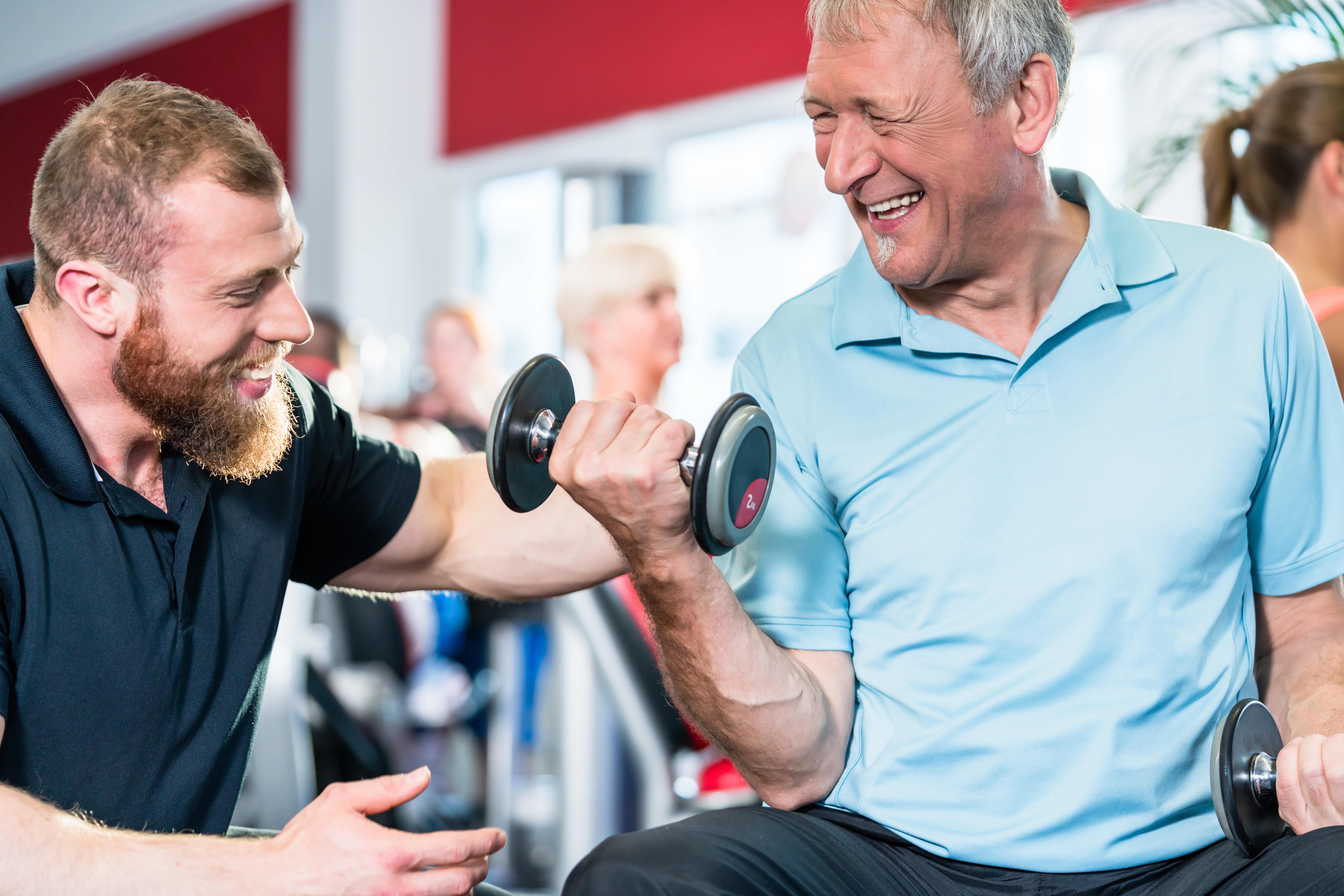
Simple exercises are often the most effective.
“It needs to be simple and involve basic movement patterns, rather than being a very elaborate program that takes a long time,” says Quinn. “It should be relatively straightforward to follow so that you are able to execute it well and therefore yield the results that you desire from it.”
Start with a lighter load
“Lots of people go too heavy too soon, and subsequently injure themselves or get really sore for a few days after,” says Quinn. “The weight doesn’t need to be as heavy as you can possible lift, as you can still get benefits with a slightly lighter load.
“Start by selecting a lower weight and make sure that you are able to comfortably control the repetitions so you get the benefit from the exercise, then progress cautiously with heavier loads overtime.”
Check your form
“With a lot of my clients, I often show and explain to them the exercises, and then send them off with videos which they can go back to when they are training on their own,” says Quinn.
“There’s lots of videos out there which show and explain different types of exercises and explain what they are going to be doing and what the correct form and technique is.”
Aim for a couple of sessions a week
“You don’t have to be doing five hours a week of strength training. Even a couple of sessions a week can yield very good benefits if you’re looking at improving stability, overall physical strength, general fitness and quality of life,” says Quinn.
“It’s about making sure that you’re selecting the right exercises, which are appropriate for your baseline fitness, health and wellbeing, and being able to consistently do that a couple of times a week.
“Even with two relatively short sessions a week, you can really improve your physical strength and quality of life, and help prevent issues which you are more susceptible to as you age, such as osteoporosis and risk of falls.”
Prioritise recovery, protein and hydration

Quinn recommends having a holistic approach to training and advises beginners to think about what they do outside of training sessions.
“In order for you to get the benefits out of your workouts, you need to be able to recover from your workout with adequate sleep and rest,” says Quinn.
“You also need to make sure that you’re eating appropriately, consuming enough protein and are sufficiently hydrated. I would aim for between 1.1-2 grams of protein per kilogram of body weight per day, and around 2.5 litres of water per day.”