



Americans do want the Iran war to end — especially those hardest hit by gas prices — and many see hope for lower prices now.
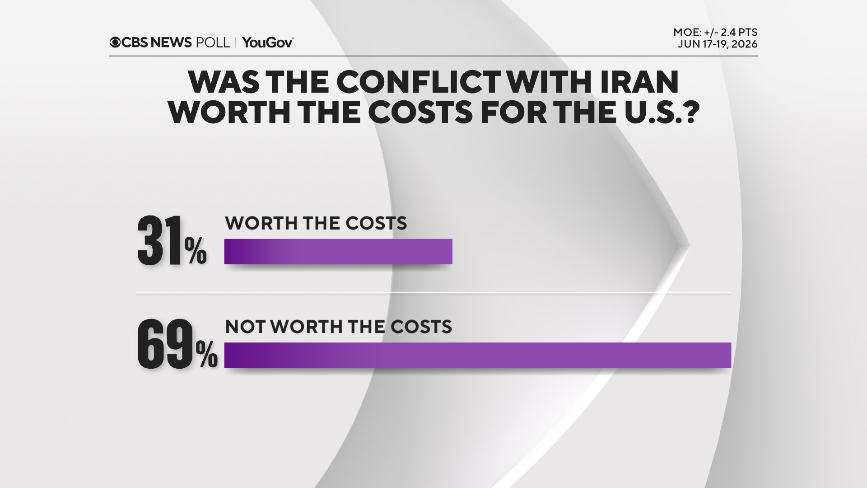
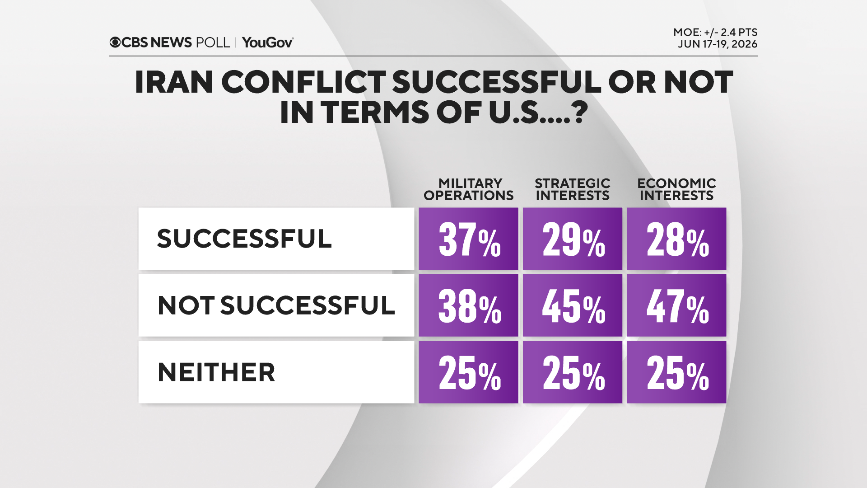
But an ending now also comes with views that the U.S. effort did not succeed in its strategic or economic interests and has not been worth the costs.
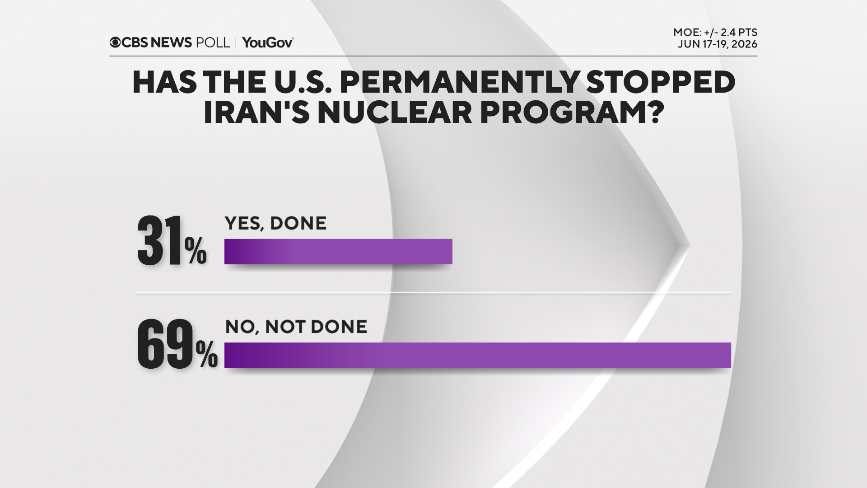
Specifically, most Americans suspect Iran’s nuclear program has not been permanently stopped, and that Iran will not stop threatening its neighbors.
Plenty in the president’s Republican rank-and-file are unconvinced, too.
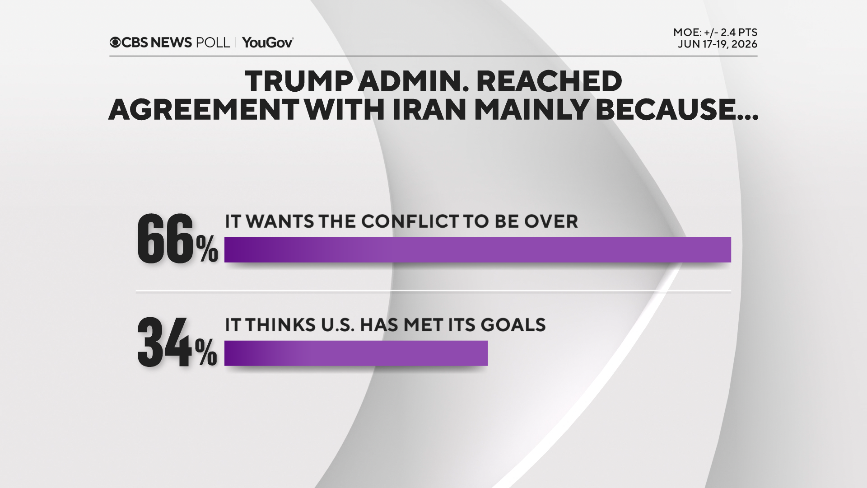
Nor is the public persuaded that the Trump administration feels goals were met, either; rather, that the administration is mainly looking to end the war.
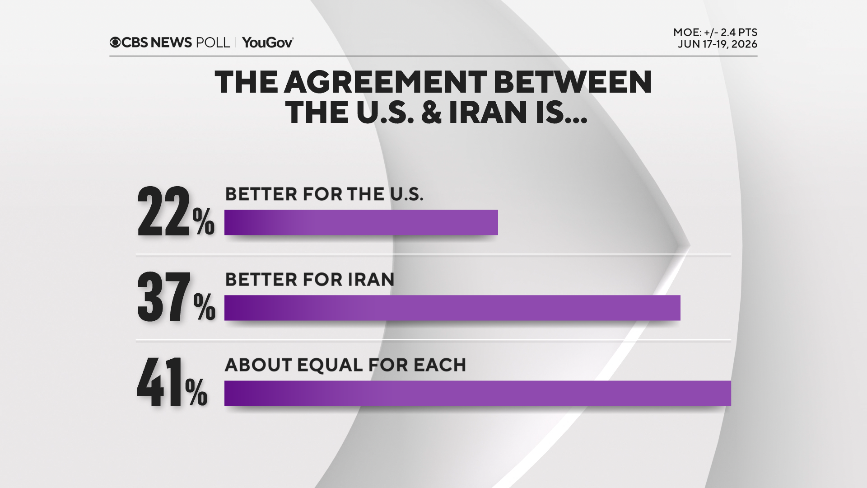
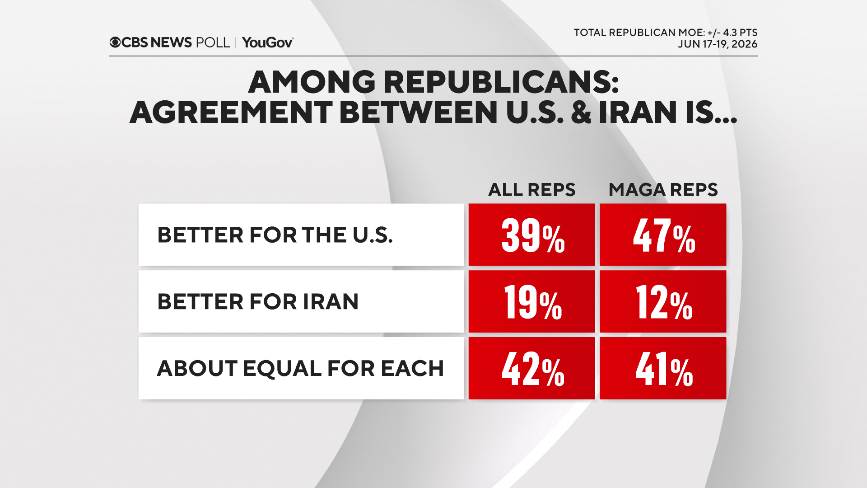
And so, relatively few Americans think the U.S. is getting the better of the new agreement.
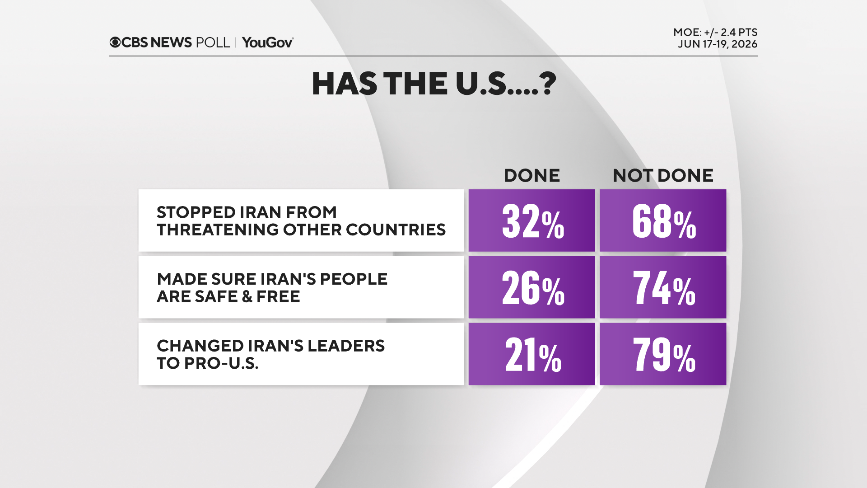
Further, few feel the U.S. has made Iran’s people safe and free or changed Iran’s leadership to one that is pro-U.S. (Those are items that over the course of the war, many Americans said should be U.S. aims.)
Assessing the situation in Iran
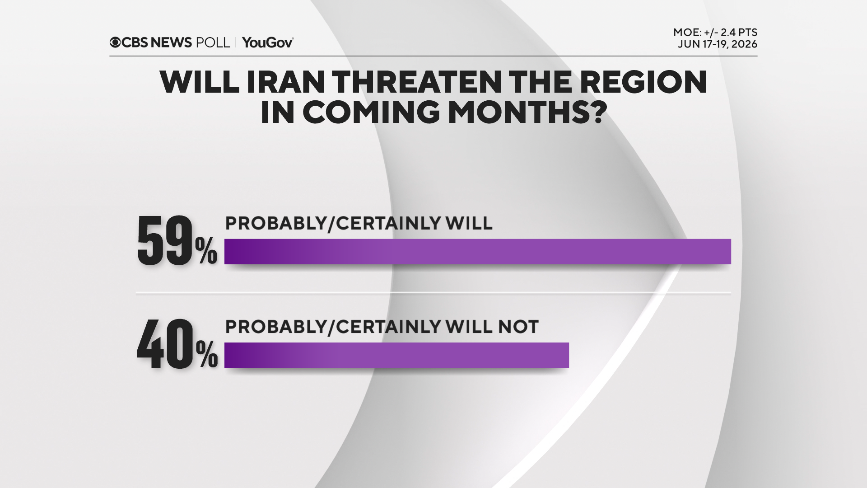
A majority believe Iran will still threaten its neighbors in the region.
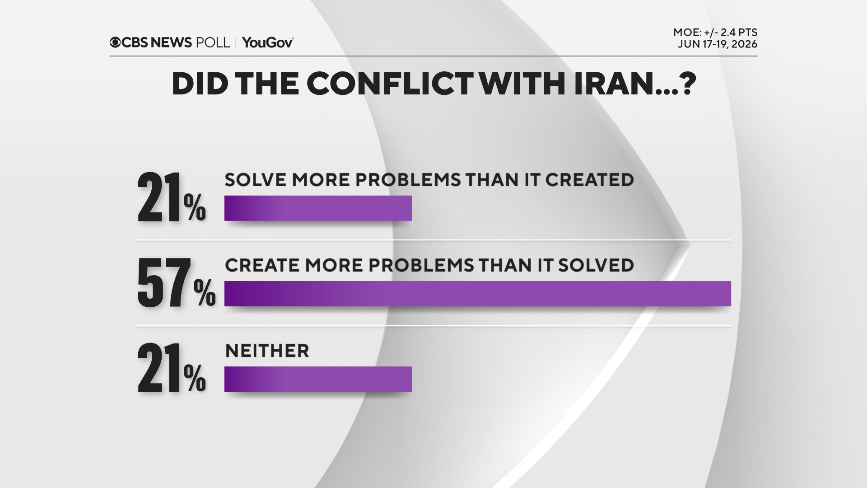
… and that the conflict hasn’t been worth the costs…
And on balance, relatively few see success in advancing U.S. economic or strategic interests.
Splits within the president’s GOP base?
There are some divisions inside the president’s party about the approach from here.
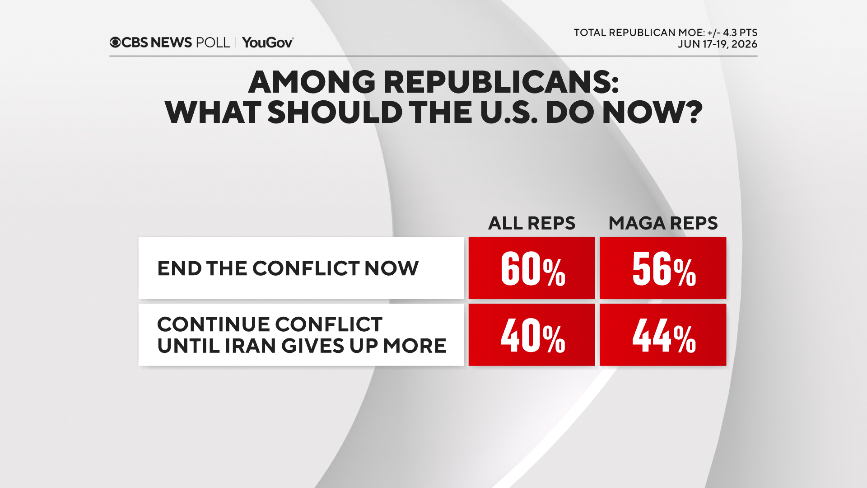
A sizable four in 10 Republicans say the conflict should continue until Iran gives up more: that subgroup also overwhelmingly thinks it’s not acceptable to leave the current regime in power in Iran.
Behind these sentiments, Republicans are split in assessing whether the U.S. has permanently stopped Iran’s nuclear program or stopped Iran from threatening the region, and split over whether the agreement constitutes an even draw or the U.S. got the better of it.
Timing of the agreement
Most Americans feel the administration did not fully anticipate the reaction in the world’s economy.
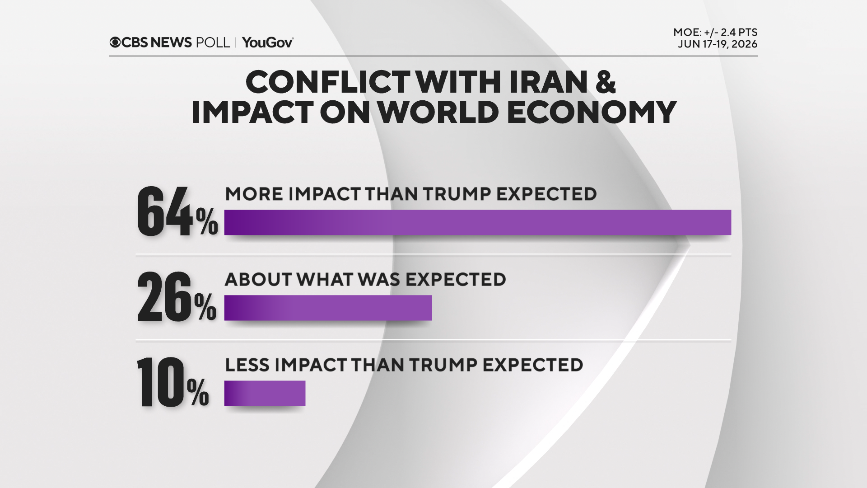
That speaks to public perceptions of the administration’s rationale on the timing of it all: The public is not convinced the administration thinks the U.S. met its goals, but rather that it is simply prioritizing ending the conflict now.
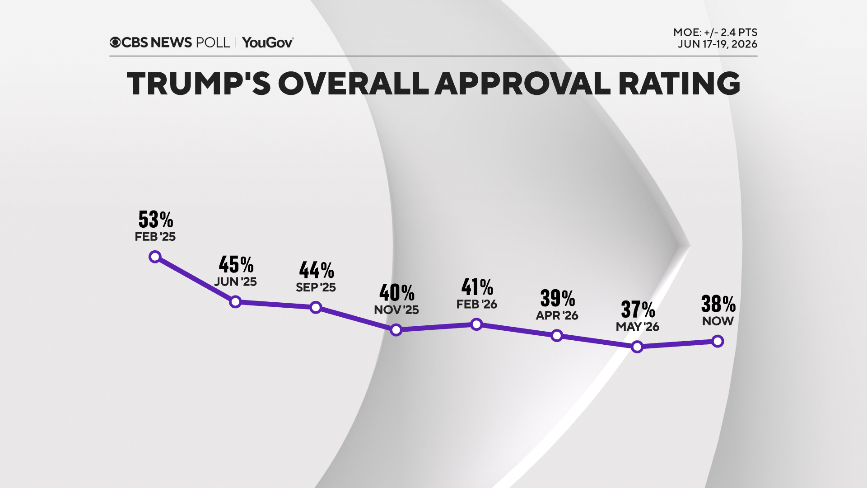
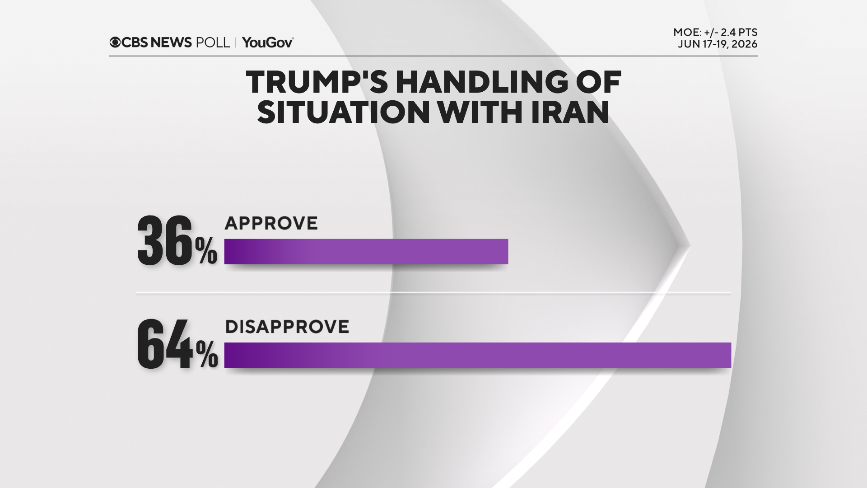
But the prospect of lower gas prices appears to have helped at least stabilize the president’s overall approval ratings and his handling of the Iran situation specifically.
As gas prices rose in recent months, the president’s approval rating had ticked lower. Ending the conflict finds a slight one-point rise back up, though not to its pre-war levels, helped primarily by improvements from non-college Whites, and particularly those among them who think gas prices will go down. This has been a group that is inclined to support the president, but has often noted in polling that financially, price hikes have hit them hard.
The more people say gas prices have been difficult, the more likely they are to say end the war now.
What’s next?
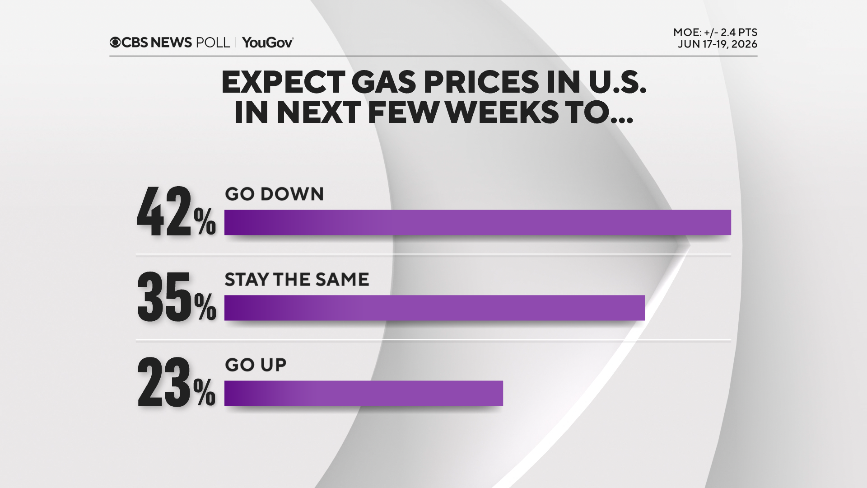
Desires for the war to end have partially to do with gas prices, which more people now expect to go down, rather than continue to rise.
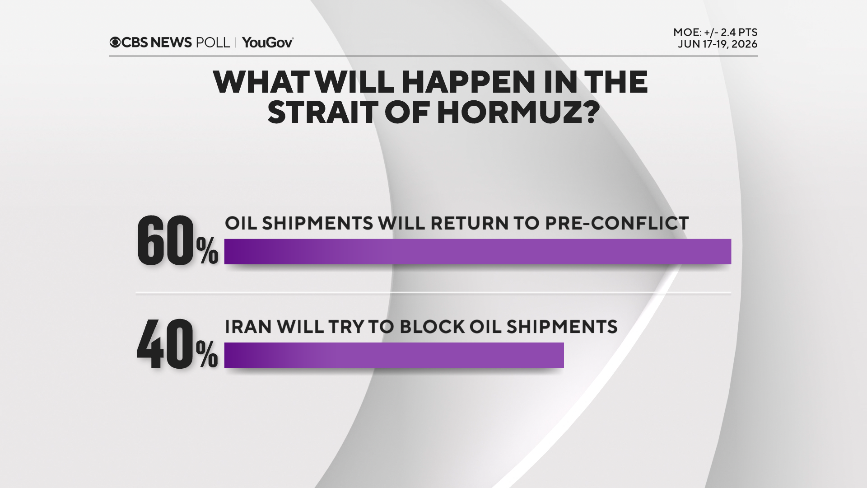
(Plenty of Americans think that could change just the same, with a sizable 40% feeling Iran will continue to threaten and block the Strait of Hormuz.)
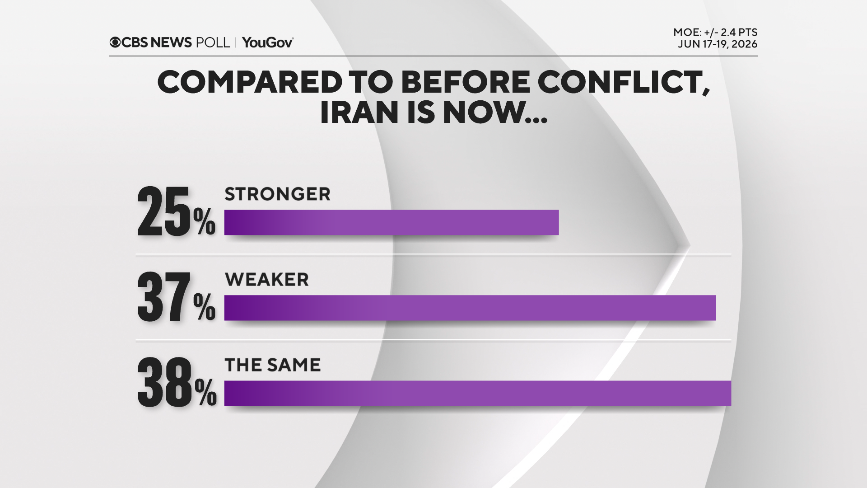
This comes amid a collective uncertainty about Iran’s standing, more generally. Just over a third of the country think Iran is weaker overall now, and just as many think it is the same as it was before the conflict.
Importantly, for all the consternation around gas prices, they aren’t the only thing Americans are concerned about. Iran’s nuclear program is just as important to them.
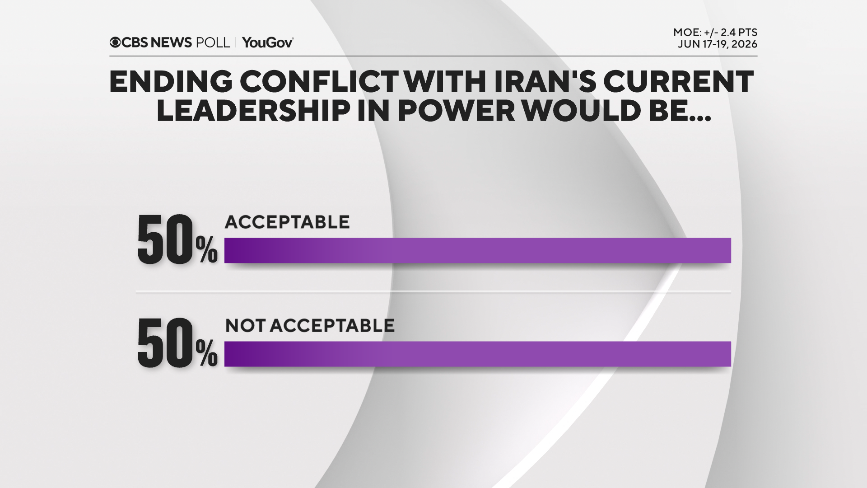
That, in turn, is connected to what Americans perceive as a lack of change in Iran’s leadership. Half say it’s not acceptable to end the war with the current leaders in place. This group is relatively more likely to think Iran will threaten its neighbors.
And on net, given the uncertainty and perceptions of unmet goals, people tend to think the conflict created more problems than it solved.
This CBS News/YouGov survey was conducted with a nationally representative sample of 2,519 U.S. adults interviewed between June 17-19, 2026. The sample was weighted to be representative of adults nationwide according to gender, age, race, and education, based on the U.S. Census American Community Survey and Current Population Survey, as well as 2024 presidential vote. The margin of error is ±2.4 points.