

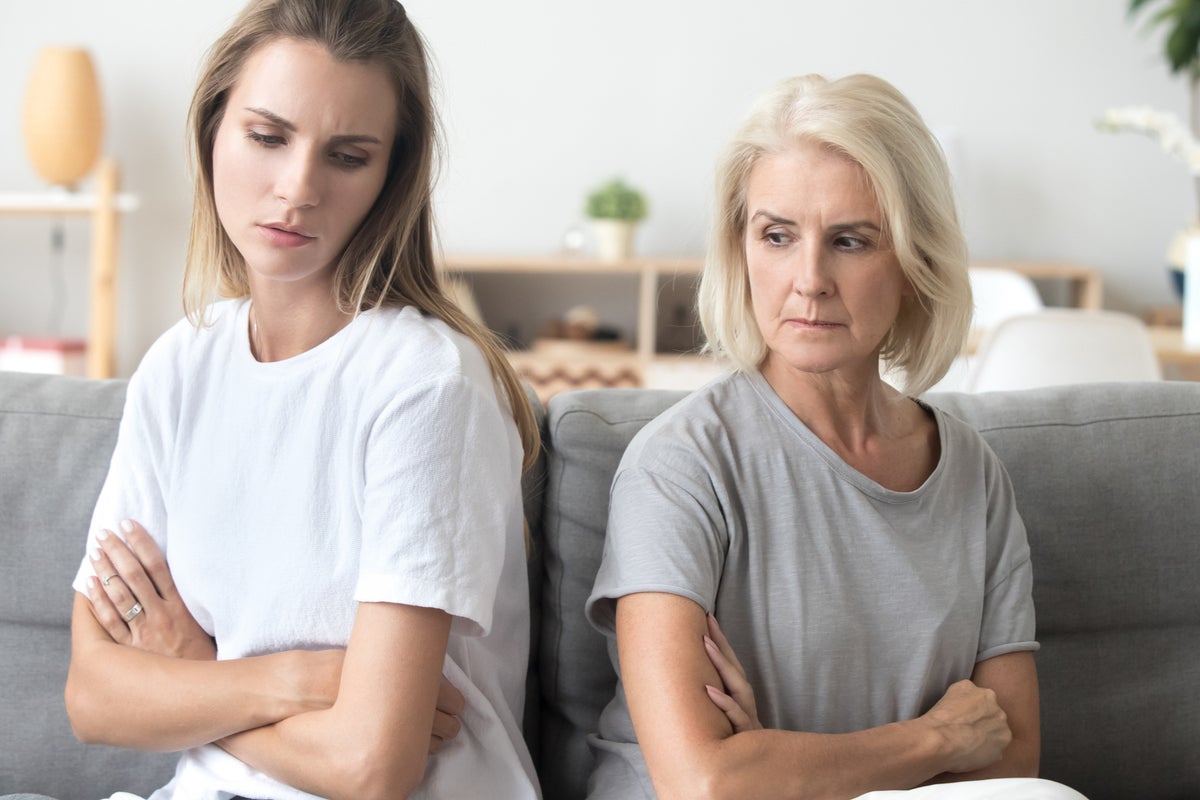

It used to be the case that Brexit – and we’ve just passed the 10th anniversary of the biggest disaster in modern politics – caused the “big divide”.
Families were riven; Christmas dinner politics became teary, awful affairs. For those of us who staunchly voted Remain, seeing our loved ones fooled by the likes of Nigel Farage and Boris Johnson (especially after, predictably, their promises turned out to be nothing but a load of hot air) was a deeply bitter pill to swallow. But now there’s a new pill (or jab) to contend with: the stigma of weight-loss drugs. And just like Brexit, it’s tearing people apart.
I’ve seen friendships fracture over contrasting opinions on Ozempic and Mounjaro; have heard the muttered comments every time someone looks like they’ve lost weight – and more often than not, it’s a woman (current estimates put around 2 million people in the UK on weight-loss drugs, with nearly 80 per cent of them women). It comes with extra heartache because, as women, we so often feel we can’t do anything right: we’re either “too thin” or “not thin enough”. If we aren’t skinny, we’re “lazy”, but if we become skinny any way other than sweating on a treadmill, we’re “lazy” too.
Europe: The Way Back
We’re campaigning to rebuild Britain’s future in Europe
The bear pit of critiquing women’s bodies is nothing new – it can be blatant or it can sting from the sidelines. Many of us spend lifetimes being told we’re “curvy” or that we’re “looking well”… One friend’s mum used to tell her she looked “healthy” (and she knew exactly what that meant). When I was pregnant, I lost count of the number of people who told me I “must” be having a girl because “you’ve put weight on all over. With boys, you just stick out in front.” My heart breaks when I hear women talking about how they “can’t” have cake or chocolate in their sixties and seventies because they’re “on a diet”.
This week, I’ve been reading Roxane Gay’s memoir Hunger: A Memoir of (My) Body – and telling everyone I can to read it. Hunger is the story of Gay’s relationship with her body, which she’s been building into a “fortress” since her early teens. She says: “Writing this book is a confession. These are the ugliest, weakest, barest parts of me. This is my truth. This is a memoir of (my) body because, more often than not, stories of bodies like mine are ignored or dismissed or derided. People see bodies like mine and make assumptions. They think they know the why of my body. They do not.”
Sign up for Victoria Richards’ free Independent Women newsletter here
I also read this powerful piece by Sally Boyd, 51, who says: “Mounjaro has transformed my life. It’s as simple as that. My health has improved, my fitness is the best it’s ever been, and I’ve got more energy than I’ve had in years. But while taking a GLP-1 has brought so many positives, I didn’t expect my 30-year battle with weight to be replaced by a new struggle: the secrecy and shame surrounding these drugs.”
Finally, I spoke to Yimei Qin, a traditional Chinese medicine practitioner, who had an interesting perspective on GLP-1s. “I’ve learned to be curious about the question behind the symptom,” she told me. “And when it comes to appetite dysregulation, the question I find myself returning to is not simply, ‘how do we reduce appetite?’ but, ‘why has the body’s ability to regulate itself been disrupted in the first place?’ Appetite is not viewed as an enemy to be silenced. It is a signal. The more useful question is: what is the body trying to communicate?”
What I think we should all be communicating is support. Women have so many enemies – some men, certain sections of the media, politicians policing our bodies, wide swathes of the beauty industry, the manosphere. The least we could do for each other is hold space – and make sure it’s one we can all fit in.
Get the Independent Women newsletter
To receive the Independent Women newsletter, simply enter your email address in the box at the top of this page.
You can also head to our newsletter preference centre to sign up for the email. Once there, all you need to do is press the ‘+’ button and enter your email address to sign up.
You can also write to me at [email protected] – or to my alter-ego, Dear Vix, at [email protected].
Independent Women: Sign up to Victoria Richards’ weekly newsletter (The Independent)