

Want to bookmark your favourite articles and stories to read or reference later? Start your Independent Membership today.
Already a member?
Log in
Borrowers in the United States faced another major setback this week as long-term home loan rates climbed past 7% for the first time since January 2025, marking the fifth consecutive week of increasing borrowing costs for prospective buyers.
Data released Thursday by mortgage buyer Freddie Mac shows the average rate on a 30-year fixed-rate home loan rose to 7.03 percent, up from 6.95 percent last week. At this time last year, the average rate stood at 6.30 percent.
The current average represents the highest benchmark recorded since Jan. 16, 2025, when it reached 7.04 percent.
“Beyond the immediate financial constraints, the 7% threshold is a foreboding psychological barrier,” said Lisa Sturtevant, chief economist at Bright MLS.
“Crossing this mark could create a chilling effect on the market” that would lead to a considerable slowing of home sales transactions this fall.
Higher borrowing costs can add hundreds of dollars to monthly mortgage payments, severely limiting consumer purchasing power and prompting many prospective home buyers to put their plans on hold.
In late February, the average 30-year mortgage rate dropped briefly to 5.98 percent, reaching its lowest point since late 2022.
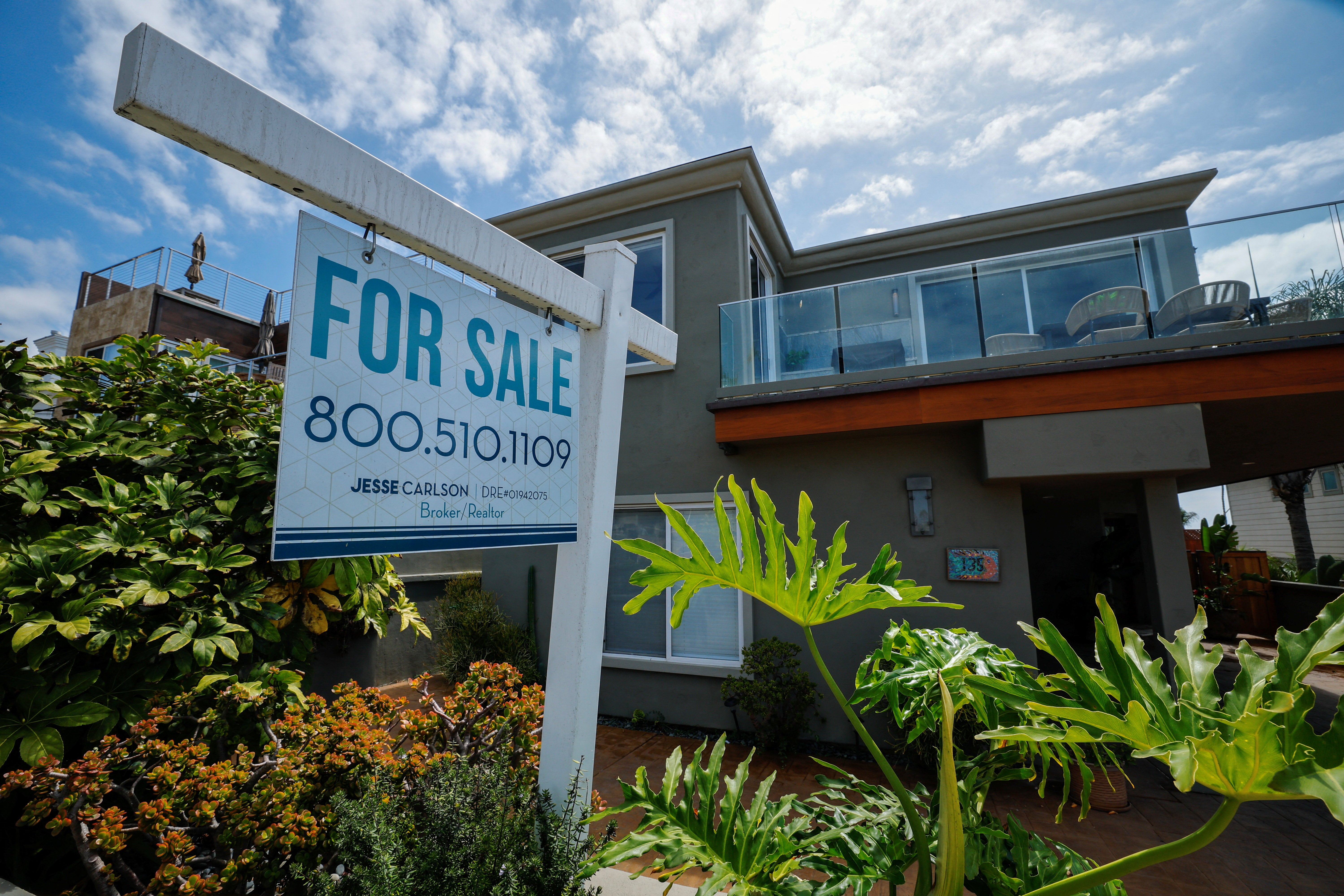
The subsequent increase of roughly 1 percentage point translates into an estimated $276 in additional monthly interest expenses for a homebuyer taking out a $400,000 loan at today’s average rate.

Get a free fractional share worth up to £100.
Capital at risk.
Terms and conditions apply.
ADVERTISEMENT
Get a free fractional share worth up to £100.
Capital at risk.
Terms and conditions apply.
ADVERTISEMENT
Depending on a borrower’s credit, income, and overall financial situation, individual applicants may qualify for interest rates that fall above or below the national average.
The broader housing market has remained bogged down this year largely due to elevated mortgage costs, which have risen continuously since the U.S. and Israel launched attacks against Iran in late February.
Mortgage rates are influenced by broader economic factors, including inflation trends, Federal Reserve decisions, and sentiment among bond market investors. Lenders typically base home loan pricing on the trajectory of the 10-year Treasury yield.
Escalating oil prices and heightened inflation expectations have propelled the 10-year Treasury yield from 3.97 percent in late February, prior to the outbreak of the war, up to 5.17 percent during midday bond trading Thursday. That surge pushes the yield back near levels last recorded in 2007.
Analyzing the latest surge in 10-year Treasury yields, Anthony Smith, senior economist at Realtor.com, noted that “upward mortgage rate pressure seems likely to linger.”
The Federal Reserve’s decision last week to raise its main interest rate for the first time in three years as part of an effort to contain inflation could also keep pressure on home loans upward.
While the central bank does not directly establish mortgage rates, its interest rate policy is followed closely by bond market traders and directly impacts 10-year Treasury yields.
Fed officials have also signaled that an additional interest rate increase remains possible later this year.
According to market data from the CME Group, Wall Street traders currently see roughly a 50 percent chance that the central bank could enact two additional rate hikes before the end of the year.
