

Want to bookmark your favourite articles and stories to read or reference later? Start your Independent Membership today.
Already a member?
Log in
There were three of us in this marriage, so it was a bit crowded.”
These infamous words from Princess Diana during her explosive 1995 interview with Martin Bashir may have referred to the future queen, Camilla Parker Bowles – but in the year 2026, for many couples, they’d just as likely apply to ChatGPT.
AI, increasingly, is becoming the unseen third wheel in relationships up and down the country. Research commissioned by Mental Health UK revealed that more than one in three people are using AI chatbots as de facto therapists; recent analysis from researchers at the University of Oxford’s Oxford Internet Institute found that 38 per cent of regular large language model (LLM) users said they trusted ChatGPT, Claude, Gemini and the like for advice on personal relationships.
All of this has given rise to the term “dry chatting”: the practice of using an AI chatbot to have a “dry run” at a potentially sensitive or contentious conversation with someone in your life before engaging in the real deal.
People are “absolutely” using AI more when navigating interpersonal issues, according to Elinor Harvey, psychotherapist and clinical director at the Relationship Therapy Practice. “Certainly in the last six months, I’ve seen an exponential increase – most of my clients will refer to AI at some point,” she says. “Sometimes in a good way; sometimes less… healthily, shall we say.”
On the face of it, using an external tool to cast an “objective” eye over relational difficulties might feel like it makes sense. It could be especially comforting when seeking reassurance after an altercation with a romantic partner.

And there are, indeed, “healthy” ways of using AI, advises Harvey. A co-parent, for instance, who wants to check the tone of a message isn’t too aggressive while discussing childcare arrangements; a person who’s spiralling about their divorce at 2am and just needs a space to vent their emotions or garner advice on self-regulation tools.
While she therefore doesn’t think AI is all bad, “it can be problematic.” The fact that a chatbot isn’t human lends it an air of being an omniscient, neutral third party; the reality is very different.
In fact, there are various ways in which using AI as a substitute relationship counsellor or friend has the potential to harm, rather than help, your relationship.
“An AI-generated answer can feel unusually authoritative and authentic,” warns Steven Buchwald, MD of Manhattan Mental Health Counseling. “ChatGPT can build and present a polished, convincing answer in very little time, and that can make its output feel rational. However, it doesn’t hold information on the history of the relationship, the participants’ individual pasts or both sides of the story. Ultimately, it’s responding to a prompt, not assessing the couple.”
A verdict that’s delivered by AI may provide a burst of vindication while moving the couple further away from repair
Steven Buchwald, MD of Manhattan Mental Health Counseling
He highlights the signs that an AI chatbot has become the invisible third-party in a relationship – and one that has the capacity to destroy it. One particularly toxic trait is asking AI to adjudicate and decide who’s “right” in an argument. Setting up prompts or questions like “Who is unreasonable”, “Are they gaslighting me”, or “Who is the problem” turns an interaction into a courtroom in which the LLM plays the unearned role of judge and jury.
“It’s a common misconception that arguments are solved by declaring a winner,” says Buchwald. “No matter what the argument is built upon, it’s vital that a couple understands what each person experienced and their interpretation of events. A verdict that’s delivered by AI may provide a burst of vindication while moving the couple further away from repair.”
If you must use AI, instead of bluntly asking “Who’s right?” in the vain hope that AI will agree with you, use questions that inspire reflection, such as, “What might I be missing?”, “Give me three ways this scenario could be interpreted” and “How can I communicate my feelings without assigning a motive?”, he counsels.
Furthermore, quoting an AI chatbot to your partner mid-disagreement is also a surefire way to alienate them and cause tension. “A lot of people will refer back to a conversation and say, ‘Well, I ran this through Claude,’ or ‘I asked ChatGPT and they said that actually you’re the problem’ – using it as ‘evidence’ to validate their perspective,” says Harvey. It can triangulate the relationship, she warns, creating a dynamic in which it becomes one person and AI versus their partner, instead of both partners versus the problem.
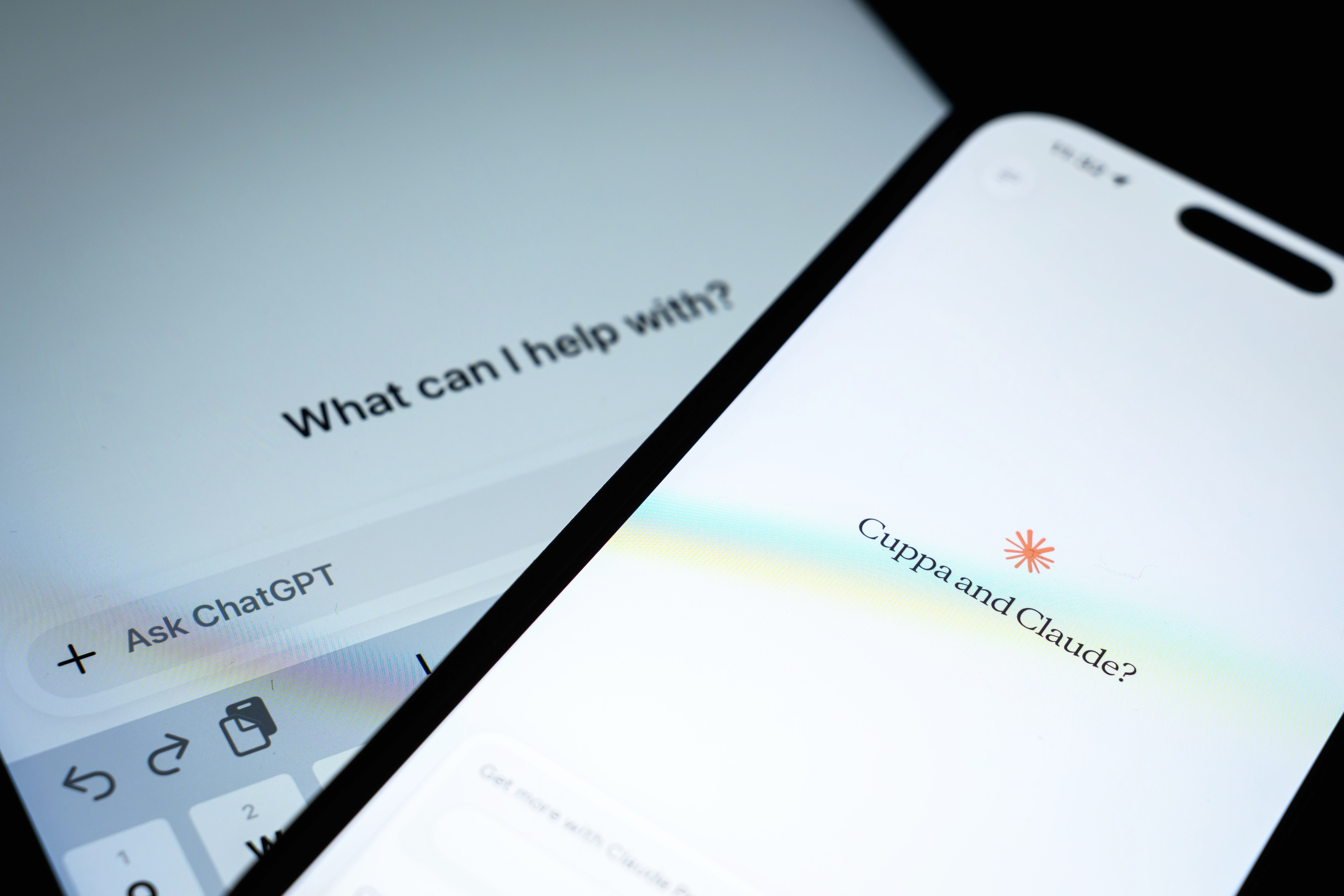
“You’ve suddenly got this two against one-type model that can leave the person who’s been ambushed feeling very defensive,” Harvey says. “It’s so detrimental to good communication when that happens.”
Part of the issue is the well-known propensity of LLMs to agree with the user, far more than another human being would. This problem is commonly known as sycophancy, and it affects every AI chatbot model to a greater or lesser extent.
One paper published by Stanford scientists in March found that the 11 leading large language models they tested were nearly 50 per cent more sycophantic in their responses to interpersonal dilemmas than humans were. Researchers concluded that these flattering, people-pleasing traits posed a real risk to users.
“If AI is designed to tell users what they want to hear instead of challenging their perspectives, then are such systems likely to motivate people to accept responsibility for their own contribution to conflicts and repair relationships?” said researchers.
Then there’s the extreme breach of trust that can come when someone uploads private messages into an LLM. This might happen early on, in the dating stage of a relationship – when people are increasingly asking AI to “break down” DMs into statistics, determining who’s more into whom based on the number of times someone has initiated conversation, double-messaged or asked questions. Equally, a person can use AI to “analyse” an exchange: “What did they mean by this?”; “Do you think I’m being unreasonable?”.
You’ve suddenly got this two against one type model that can leave the person who’s been ambushed feeling very defensive
Elinor Harvey, psychotherapist
AI might not be a human being, but just as screenshotting intimate messages and sending them to friends without the sender’s knowledge or consent crosses a boundary, so does this, argues Buchwald.
“In my opinion, this is one of the fastest ways to break down a relationship, as not only does it break trust, but it leads a person to interpret and convey opinions that they do not believe themselves,” he says. “AI neglects to consider context and only interprets the words you give it. It seldom acknowledges humour, or the pressure a person was under at that moment in time.”
But even if you’re not weaponising an LLM to get the “upper hand” within your relationship, it can still cause a more subtle but insidious seam of damage. Quite simply, if you’re in bed talking to Claude about your problems, it means you’re not talking to the human being lying beside you.
“There’s already a divide,” points out Harvey. “Ultimately, someone having a discussion they could be having with their partner is causing distance.”
You know what they say: two’s company. When it comes to AI and relationships, three’s very much a crowd.

