
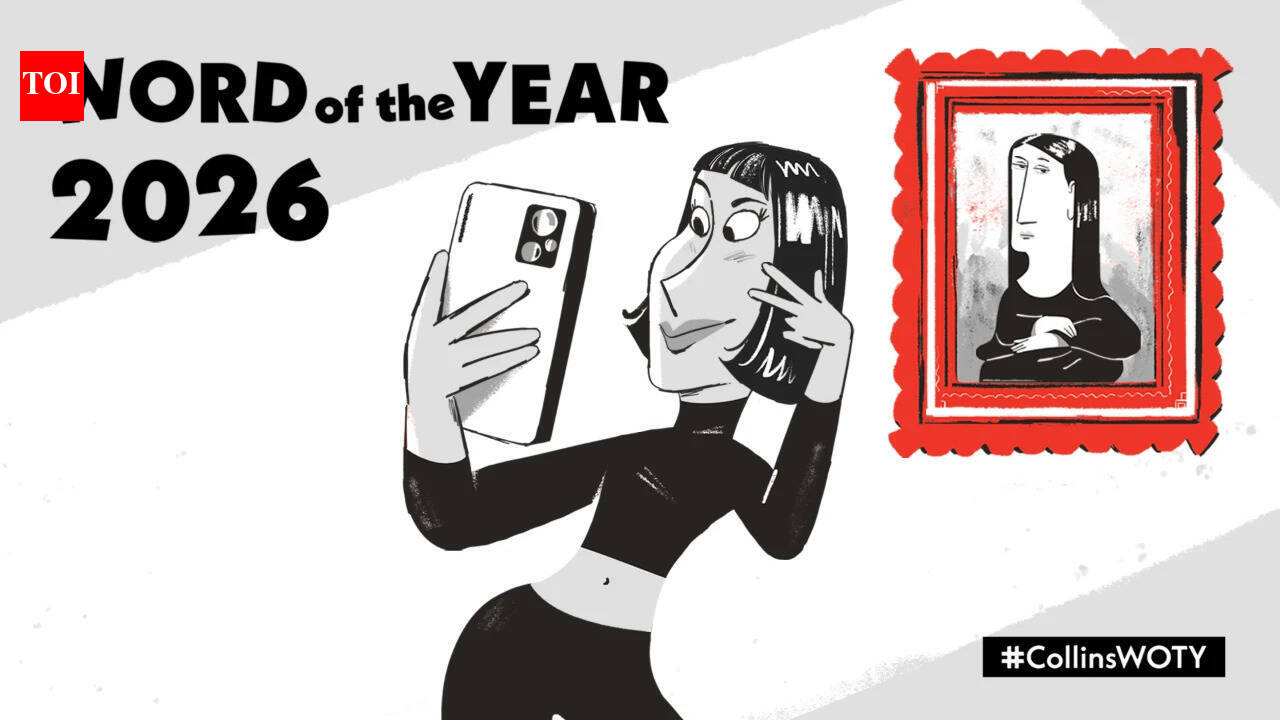
Mogging, meaning to outshine or outperform someone or something, has officially been named the Word of the Year 2026 by Collins Dictionary.It is a fast-growing slang term popularised by Generation Z and Generation Alpha, used both online and in real life. ‘Mogging’ mogged other words with a 210% increase in its usage in 2026. Collins says it has entered mainstream language, with younger generations using it in a playful and ironic way when someone is upstaged.
Meaning and Origin of ‘mogging’
Mogging actually comes from bodybuilding culture, and is believed to be derived from AMOG (Alpha Male of the Group). It first appeared around 2016 as a noun, referring to the most physically dominant man in a gym, before spreading through other online communities. 10 years later, the acronym has been shortened to ‘mog’, which is now used as a verb. Another alternative is ‘out-mog’.In misogynistic online forums and the manosphere in the 2010s, to “mog” came to mean to outdo someone in terms of sexual desirability. It was often used to compare men on the basis of physical appearance, height and perceived attractiveness. The term is still prominently used in internet manospheres, although now it is more mainstream.Even now, as the term has begun to be used much more widely, and in a tongue-in-cheek way, it is still typically associated with looks. But increasingly, mogging can mean besting others at basically anything. For example, gold medal Olympic figure skater Alysa Liu said in an interview last year that her main competition strategy was “to mog”. It can now be used for anything that outdoes something else.
How does Collins decide the Word of the Year?
Collins, one of the UK’s major dictionary publishers, draws from a range of sources, including social media, to reflect how the English language is evolving each year.Its Word of the Year for 2025 was ‘vibe coding’, the art of making an app or website by describing what you want to an artificial intelligence (AI) tool, rather than writing the programming code manually.Collins lexicographers monitor a 27-billion-word database that draws on a range of sources. Not only do the experts track how frequently a word is used, but they also analyse patterns of use, managing director Alex Beecroft said in the release.“The selection of ‘mogging’ as Collins’ Word of the Year shows how each generation leaves its mark on language,” Beecroft said.“It’s a great example of how Gen Z and Gen Alpha have adopted a word and turned it into humorous slang, making the language their own and ‘mogging’ the rest of us.”
Other contenders
Mogging out-mogged other popular terms this year: those connected with the employment crisis, UK politics, AI doom and climate change. Five other words on the list show just how varied the year’s conversations have been.One such contender was ‘ghost job’, something frustrated jobseekers will be all too familiar with. It is when an employer posts a position with no intention of appointing someone. Companies may keep listings up to collect CVs for future vacancies or create the impression that they are expanding. Others fail to take down an advert after a role has been filled. A UK study cited by Collins found that around a third of advertised roles were ghost jobs.Another, ‘hydration break’, was made famous by this year’s FIFA Men’s World Cup. It refers to a short pause in a sporting contest that allows players to drink fluids. At the 2026 tournament, co-hosted by the United States, Mexico and Canada, three-minute breaks were introduced in every match, regardless of the weather, with play stopping around the 22-minute mark of each half.Then there is ‘P(doom)’, the estimation of the probability of artificial intelligence causing a collapse of civilisation. The ‘P’ stands for probability, while ‘doom’ refers to an existential catastrophe caused by AI. Used in AI safety conversations, the figure is usually a percentage, reflecting how likely an individual believes such an outcome to be. It is a personal estimate, not a scientific measurement.‘Manchesterism’, especially rising in popularity in the UK, is the term used for the political approach associated with Prime Minister Andy Burnham, the former Mayor of Greater Manchester. It centres on devolving power to the regions and combining economic growth with social progress. The term dates back to the 19th century, but Burnham revived it in a newspaper article in January 2026. After replacing Keir Starmer as prime minister in July, his approach has attracted wider attention.In a year dominated by climate impact and devastating forest fires all across, ‘firewave’ also made it to the list. Firewave refers to wildfires fuelled by hot, dry conditions linked to climate change have inspired the word ‘firewave’. Coined by researchers at Imperial College London in 2025, it refers to multiple wildfires breaking out over a short period of time, often in towns and cities, after long stretches of hot, dry weather. The term was used in a 2025 study of the urban wildfires that swept through London during the summer of 2022. It draws attention to the risk of fires in urban areas during extreme heat.Together, the words on the list capture a year in which competition, climate concerns and technology have found their way into everyday conversations.

