

The Justice Department on Thursday filed a renewed push to have a federal judge dismiss Trump ally Steve Bannon’s conviction for criminal contempt over his defiance of a subpoena from the House Select Committee that investigated the Jan. 6, 2021, attack on the U.S. Capitol.
Bannon was convicted in 2022 on two counts of contempt of Congress for defying a subpoena from the congressional committee that investigated the Jan. 6, 2021 attack on the Capitol. He served four months in prison in 2024.
In August, the Trump-appointed federal judge who presided over Bannon’s case, Carl Nichols, rejected the DOJ’s motion to dismiss the conviction after determining prosecutors didn’t provide sufficient justification for the move.
In their filing Thursday, the DOJ explained its argument was rooted “in an exercise of its prosecutorial discretion” and that the administration “does not believe that it is appropriate to pursue contempt of Congress charges against a former advisor to the President who did not comply with a subpoena investigating the events of January 6, 2021, based on an asserted belief that he was protected by executive privilege.”
“That is especially so because the United States harbors significant doubts about the fairness of Defendant’s trial and whether D.C. Circuit precedent improperly foreclosed Defendant from raising a defense that he did not “willfully” violate [the contempt of Congress statute] in light of his belief that compliance with the subpoena was unnecessary due to executive privilege,” the filing said. “In these circumstances, the United States no longer wishes to pursue this prosecution.”
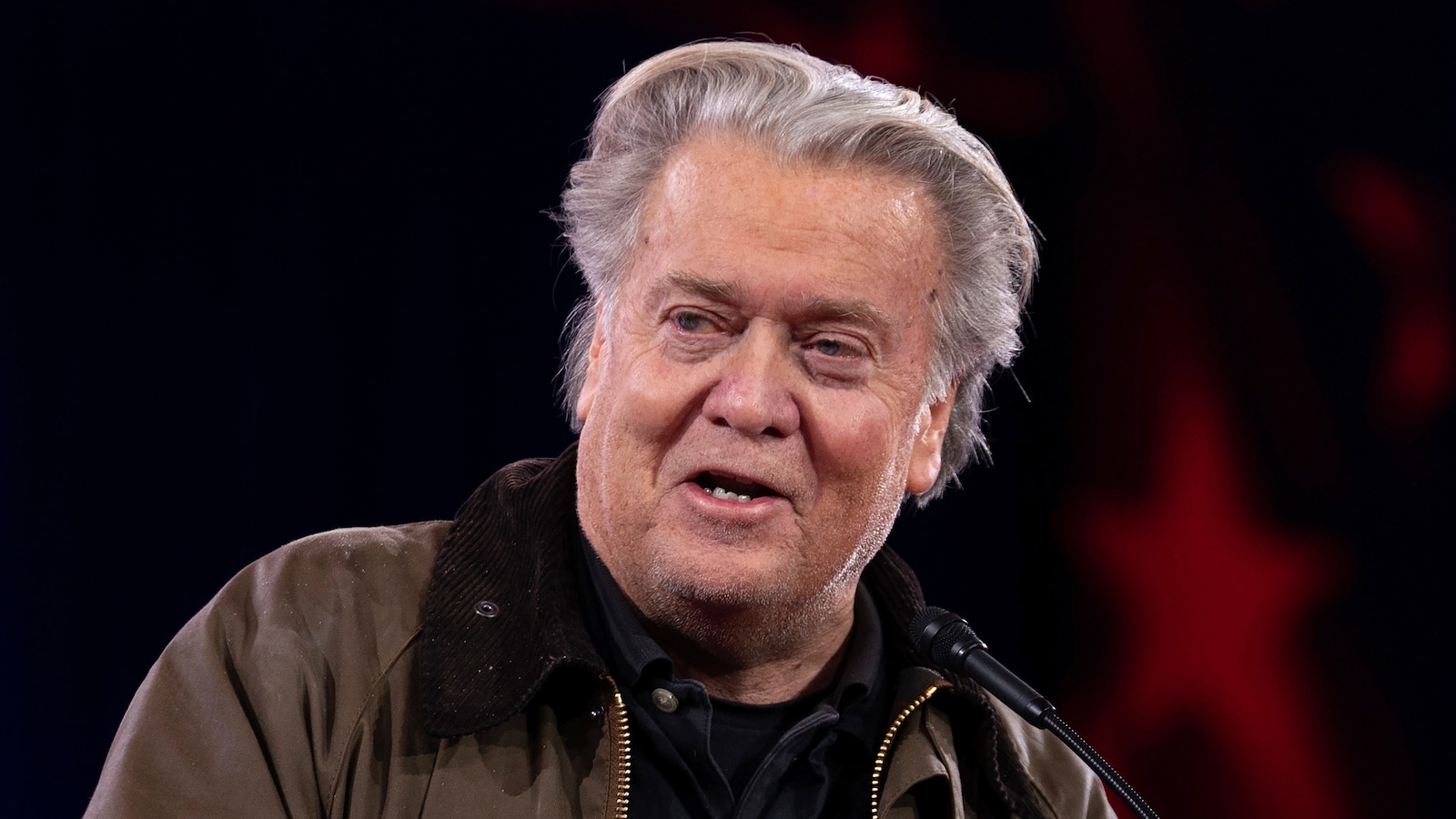
Steve Bannon speaks at the Conservative Political Action Conference, Feb. 20, 2025, in Oxon Hill, Md.
Jose Luis Magana/AP
The filing further points to President Trump’s “grave concerns” about the Biden administration’s prosecutions that stemmed from the Jan. 6 assault on the Capitol and Trump’s sweeping commutations for nearly all of the pro-Trump rioters charged in connection with the attack.
“In light of those actions by the Chief Executive, the Department has determined that it is inconsistent with this Administration’s enforcement priorities to seek affirmance of a criminal conviction of a former advisor to President Trump who did not comply with a subpoena related to January 6 based on an asserted belief that executive privilege applied,” the DOJ said.

