BEIJING — Did the foreign ministers of China and Japan talk at last week’s ASEAN regional meeting, or didn’t they?
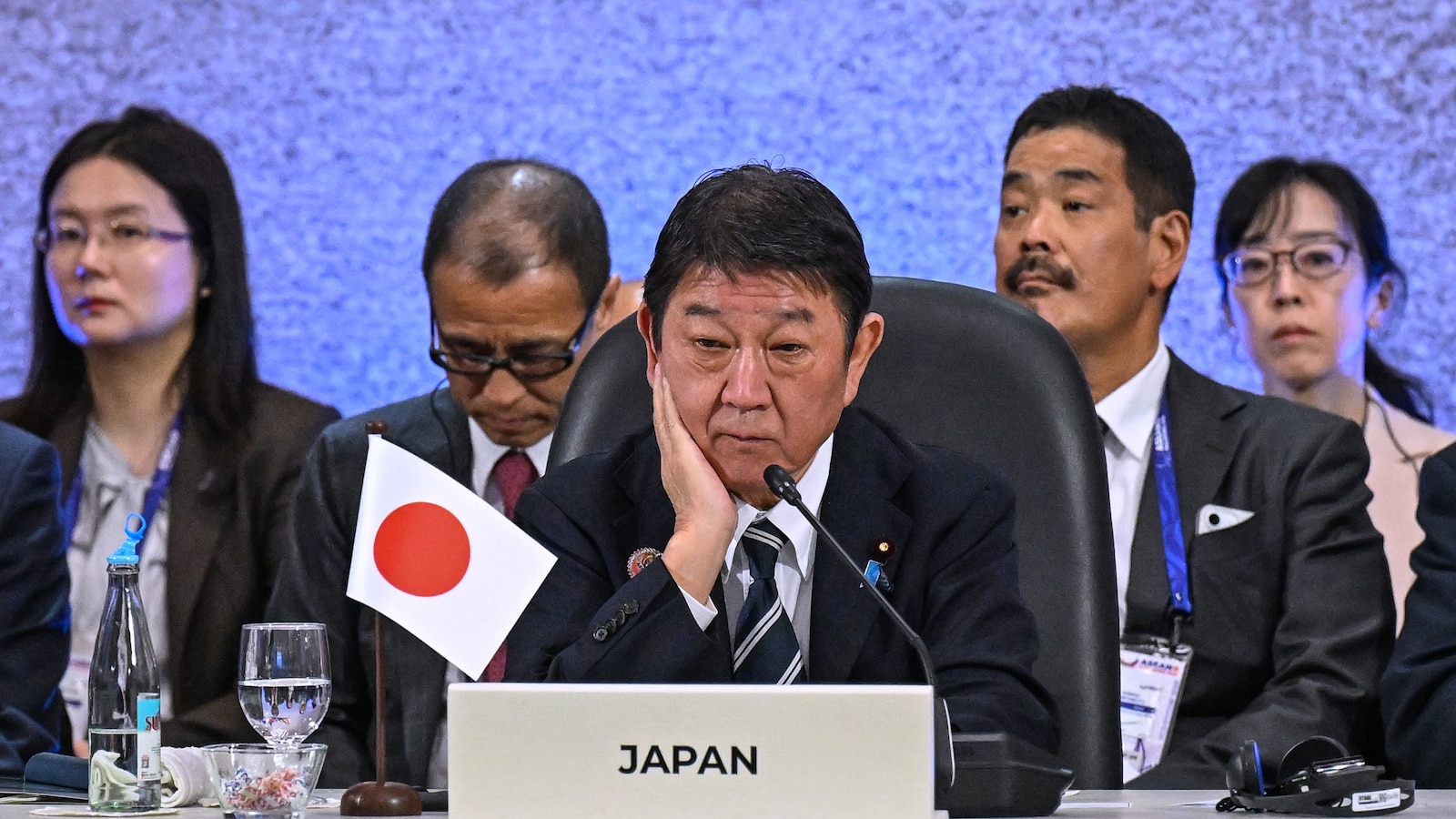
Japan’s Toshimitsu Motegi told reporters last week that he had briefly discussed bilateral relations with Chinese counterpart Wang Yi when they ran into each other during the meeting in the Philippines.
But on Monday, a Chinese Foreign Ministry spokesperson contradicted that.
“Let me make it clear once again that during his visit to Manila, Foreign Minister Wang Yi did not have a meeting with the Japanese side on his schedule, nor did any brief exchanges take place on the site,” Lin Jian said when asked at the daily briefing.
The differing accounts reflect the positions of the governments over a sharp deterioration in their ties since November, when a comment about Taiwan by Japan’s Prime Minister Sanae Takaichi angered China.
Japan is looking for opportunities to rebuild relations, but China has given its neighbor the cold shoulder.
The tensions have spilled over into the economy — including a decrease in Chinese tourists visiting Japan — and heightened unease in both countries about the expansion of each other’s militaries.
“As we have repeatedly noted, Japan is open to dialogue at all levels, and that I believe it is extremely important that we continue our dialogue as both Japan and China hold a major responsibility for regional peace,” Motegi said last week.
Although Motegi said he and Wang discussed ties, Japanese media reported that the exchange was mostly greetings and pleasantries.
Takaichi told a news conference on Monday that the two sides are holding dialogue at various levels including Motegi’s exchange with Wang.
Shortly after becoming prime minister, she was asked in parliament in November if a Chinese blockade of Taiwan or other military action would be a scenario in which Japan could get involved under a policy known as collective self-defense.
The policy allows Japan’s military to help an ally — most likely the United States — if certain conditions such as ensuring Japan’s survival are met.
Takaichi responded that the Taiwan example could meet the criteria: “If it involves the use of warships and military actions, it could by all means become a survival-threatening situation,” she said.
The remark crossed what China considers a red line in its relations with other countries. In its push to gain control of Taiwan, the government opposes any words or actions — including U.S. arms sales to Taiwan — that encourage what it labels Taiwan independence forces. Taiwan is a self-governing island, but China claims it as its territory.
Takaichi has refused to retract her answer but later told the same parliamentary committee that she would avoid talking about specific self-defense scenarios in the future.
___
Associated Press writer Mari Yamaguchi in Tokyo contributed to this report.
As the plane climbs above the clouds, you rest your head against the window, watch tiny buildings disappear below, and maybe even take a photo of the sunset. But if you look closely, you’ll notice something unusual. Near the bottom of the window is a tiny round hole.
It’s so small that most people never notice it. Those who do often assume it’s a manufacturing defect or a scratch. In reality, that little hole is one of the smartest safety features built into an aircraft.
It has been there all along, quietly doing a job that every passenger depends on.
Amid the brief pause in the war between the U.S. and Iran, Iranian Foreign Ministry spokesperson Esmaeil Baghaei told journalists at his weekly press conference on Monday that Iran has “no negotiations with America.”
“The negotiations that we have, and which may genuinely be subject to different interpretations, are the negotiations we have with Oman. They are focused on creating the necessary arrangements regarding the Strait of Hormuz,” Baghaei added.
Baghaei also said that Tehran “will not allow the U.S. to determine the time of war and peace, and we will defend ourselves for as long as necessary,” according to a readout published by the semi-official Tasnim News Agency.
Meghan Markle shared photos of her children, Princess Lilibet and Prince Archie, frolicking around the late Princess Diana’s childhood home and experts are calling Markle’s move “tasteless.”
This week, Markle crafted an Instagram post from the family’s recent U.K. visit. She captioned her post, “Summer Holiday,” and one of the images shows Prince Harry with his kids walking on a grassy path with hedges and large trees. The photo is believed to be taken at Althorp, the Spencer family’s ancestral estate.
In the photo, Archie and Harry are carrying bouquets, which seemingly suggest that they visited Diana’s burial site, which is on an island in the middle of her family’s estate.
A royal expert says Prince William is likely “livid” that Meghan Markle shared photos from Princess Diana’s ancestral estate.(Getty Images)
Hilary Fordwich, British royals expert, told Fox News Digital that Prince Harry’s oldest brother, Prince William, is likely “livid” by Markle’s photos.
“Not only is Prince William likely to be livid regarding such commercialization of Althorp in such a tacky tasteless media post, it’ll fuel his disgust so he shall thwart any major re-entry,” she began. “Likewise, Camilla, courtiers, palace aides, security officials & other institutional gatekeepers who are duty bound to protect the monarchy, will all do their utmost to thwart MM & H’s attempts.”
“Not only is Prince William likely to be livid regarding such commercialization of Althorp in such a tacky tasteless media post, it’ll fuel his disgust so he shall thwart any major re-entry.”
— Hilary Fordwich, British royals expert
Richard Fitzwilliams, royal expert, pointed out that the Spencer’s must have given the Duke and Duchess of Sussex permission to visit Althorp, therefore her post is “permissible.”
“Meghan shared pictures of their children on what is assumed is Althorp, home of the Spencer family. That would have been allowed by the Spencer’s and is therefore permissible,” he told Fox News Digital.
Fitzwilliams continued, “What is important is the silence Harry and Meghan have somehow managed to maintain after seeing King Charles and Queen Camilla in contrast to what has happened previously. It will have been made clear that there would be no future meetings if they had talked to any of the media.”
An aerial view shows the burial site of Diana, Princess of Wales, at the Althorp Estate in Althorp, United Kingdom.(David Goddard/Getty Images)
Helena Chard, British broadcaster and photographer, called Markle’s decision of sharing a private family moment publicly “predictable.”
“As for Meghan posting photos of the children at Diana’s family home. It is a predictable move. It ties them to history without using a title. However it also shows a slight tension, wanting the Royal story when it helps, while keeping distance when it doesn’t,” Chard said.
“The public understands Peace in Private but basically the Crown has to come first,” she concluded.
A photo of Kate Middleton, Prince William, Prince Harry and Meghan Markle.(Chris Jackson/POOL/AFP via Getty Images)
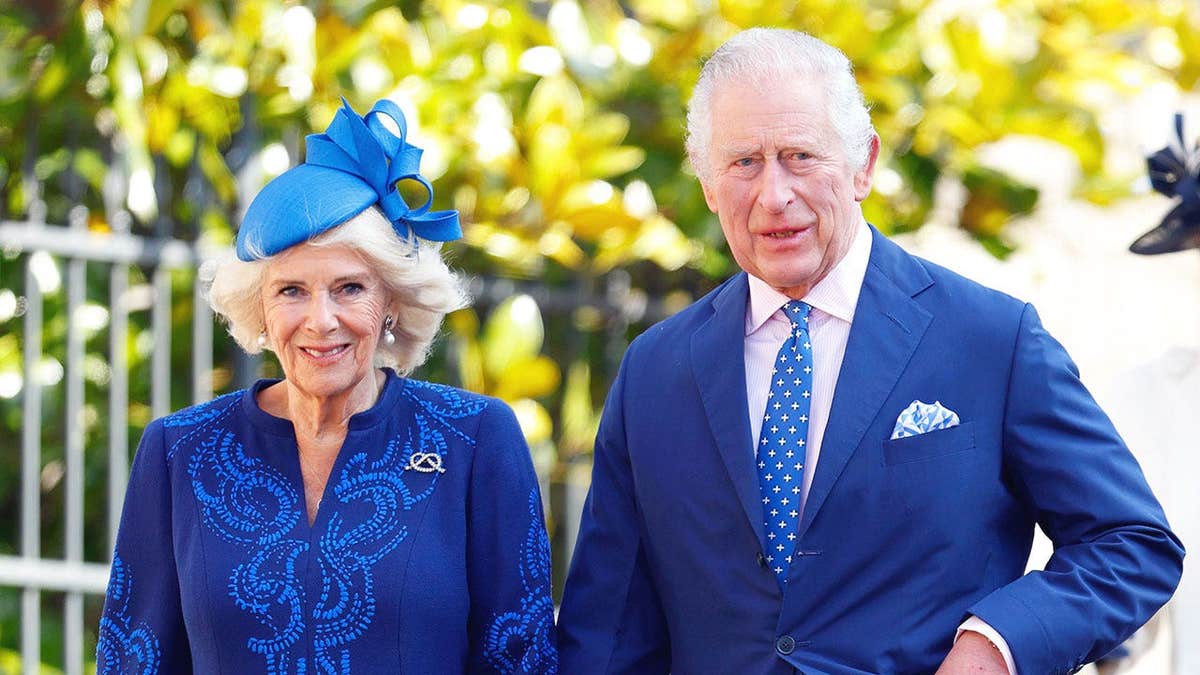
On Harry and Meghan’s recent trip to the U.K., they were reportedly reunited with King Charles and Queen Camilla. Charles had not seen his grandchildren since 2022.
“No doubt KCIII wants his ‘dear boy’ H back within the royal fold with limited family contact & a controlled private reconciliation. But given the stance of Prince William there will not be a return to any significant working-royal role,” Fordwich told Fox News Digital.
Harry, Meghan and their kids reportedly reunited with King Charles and Queen Camilla during their recent U.K. trip.(Max Mumby/Indigo/Getty Images)
“The entire family is most wary of the institutional risk H & MM are likely to cause at any given moment via leaks to the media. MM sharing photos which appear to be taken at Althorp of her children is a ghastly exploitative move & precisely why the couple aren’t trusted,” the royal expert continued.
“She is being predictably provocative & tasteless since Princess Diana’s resting place is purposely at Althorp, a most private family mourning location & deeply symbolic being Princess Diana’s ancestral home.”
Princess Diana died in 1997. She was photographed here in 1983.(Tim Graham Photo Library/Getty Images)
Chard is highly doubtful that Charles’ visit with his estranged son means Harry will be accepted back into the “royal arena.”
“I doubt Charles will just let the Sussexes back into the Royal arena, especially as there has been no genuine contrition. A family reunion is one thing. A return to royal life is another,” she said. “Harry and Meghan would need to take responsibility and offer a proper apology to the King and to the country. Hasn’t happened so far and without it, moving forward is impossible.”
Janelle Ash is an entertainment writer for Fox News Digital covering Hollywood, celebrity culture and breaking entertainment news through exclusive reporting, interviews and in-depth storytelling.
Arsenalhave not opened talks over signing Brazil forward Vinicius Jr, but Real Madrid have set a price of 160m euros (£137m) to sell the 26-year-old this summer. (Sport – in Spanish), external
Arsenal would be willing to offer Vinicius the biggest contract in the club’s history. (Mirror), external
Vinicius’ priority is to sign a new deal at Real Madrid. He has a year left on his contract. (AS – in Spanish), external
Guimaraes has told his representatives he wants his future resolved in the next week, before he reports back for Newcastle‘s pre-season training camp. (TeamTalk), external
Besiktas are waiting for a decision from Egypt forward Mohamed Salah, 34, after submitting their final offer. He is a free agent after leaving Liverpool. (Mail), external
Fulham are the leading option for 18-year-old Argentina midfielder Franco Mastantuono if Real Madrid send him on loan next season. (AS – in Spanish), external
President Donald Trump has paused attacks on Iran for the second night in a row to give diplomacy more time, the US ambassador to the UN said.
Speaking to Fox News on Sunday, ambassador Mike Waltz said the president was “giving talks some space, he’s giving it a little bit of room”.
An Iranian army spokesperson said on Sunday that Tehran had halted “retaliatory” attacks in the region in response. The pause follows nearly two weeks of daily US strikes and tit-for-tat attacks, effectively unravelling the ceasefire struck in June.
Oil prices have dropped sharply in the wake of the pause, opening at $91per barrel on Monday morning after hitting $100 for the first time since May last week.
Asked whether Trump had decided against escalation for now, Waltz told NBC: “I wouldn’t go that far at all. The president is keeping all options on the table.”
Waltz also rejected reports in the New York Times, external that administration officials had warned expanding hostilities could dangerously drain a diminished stockpile of air defence munitions.
“The US military… has everything that it needs to conduct this campaign as effectively as it needs to be,” he said.
As of Sunday evening, Trump had not spoken publicly on the latest developments, but earlier posted computer-generated images on his Truth Social account that depicted US military planes bombing Iranian ships and Kharg island.
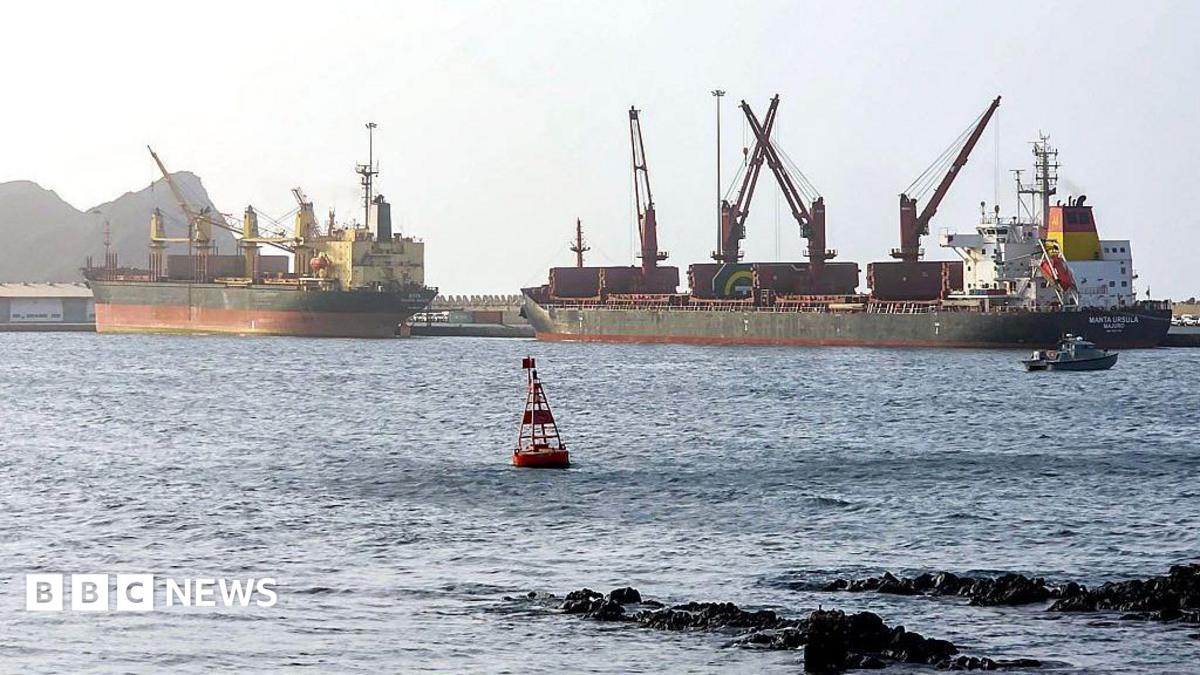
Meanwhile, Iran and Oman held several rounds of technical talks in Tehran on Friday and Saturday to discuss management of the Strait of Hormuz, according to Iranian foreign ministry spokesman Esmail Baghaei.
Disputes over control of the strait reignited US-Iran tensions earlier this month and it remains a major block to permanently ending the war.
Iran and the US signed a memorandum of understanding in June to halt military operations and reopen the strait, as well as to reach an agreement to end the war over the following 60 days.
But after Iranian forces attacked tankers in the Strait of Hormuz on 13 July, the US resumed airstrikes on the country and reinstated its naval blockade on Iranian ports.
Iran retaliated with attacks on US military facilities and bases across the Middle East, killing four American soldiers. The US strikes have since killed dozens of people, according to Iran’s health ministry.
In the UK, new Defence Secretary Wes Streeting said he would meet his US counterpart Pete Hegseth in the coming week to discuss the strait, which is one of the world’s key transport routes for oil, liquid natural gas and other essential commodities.
“When it comes to securing maritime freedom and free commercial shipping in the Strait of Hormuz, that’s where we are absolutely aligned,” Streeting told the BBC.
As the war nears its fifth month, it remains largely unpopular in the US, with a new poll from CBS/YouGov suggesting 57% of Americans are frustrated about the conflict and only 19% optimistic.
Thousands of people have been killed across the Middle East since the US-Israeli war with Iran began in February, official figures show, with the vast majority coming from Iran and Lebanon.
President Trump is set to meet Israeli Prime Minister Benjamin Netanyahu in the White House on Tuesday.
The summer is usually a time when cost-of-living pressures are less intense, with energy demand low and the shock of April’s bill increases becoming part of the normal expenses.
At the same time, concerns remain around the disruption caused by the US-Iran war, which has severely impacted the global oil trade. This has brought knock-on effects to the price of essentials such as energy and fuel, with collapsed peace talks between the nations prompting fear of greater pressures to come.
Inflation fell to 2.6 per cent in the year to June, defying expectations of an uptick. Easing prices for products like motor fuel, chocolate and beef contributed to the dip, although experts still predict prices will begin to rise again.
A record 7.4 million households are now unable to afford at least one essential item, recent research by the Joseph Rowntree Foundation found, up from 7.1 million a year ago.
The state pension rose by 4.8 per cent in April in line with annual earnings growth (PA)
Against this difficult economic backdrop, households should claim all the support they are entitled to. There are now around 24 million people in the country claiming some combination of Department for Work and Pensions (DWP) administered benefits, which include those drawing a state pension, representing around one in three people.
Yet research by Policy in Practice shows that £24bn worth of benefits goes unclaimed every year – you can use its helpful calculator to work out what you might be entitled to.
Are you struggling with the DWP or the cost of living? Share your story: [email protected]
Here is an overview of the financial support available to households this August and key dates for benefit and state pension recipients to look out for:
Get a free fractional share worth up to £100. Capital at risk.
Benefit payment dates in August – with bank holiday changes
Benefit payments will go out as usual for the most part in August, but there are bank holiday dates to be aware of depending on where you live. These include:
Universal credit
State pension
Pension credit
Child benefit
Disability living allowance (DLA)
Personal independence payment (PIP)
Attendance allowance
Carer’s allowance
England, Wales and Northern Ireland have the Summer Bank Holiday on Monday 31 August. Scotland has this holiday earlier, on Monday 3. Payment dates which fall on bank holidays are usually made on the previous working day.
The DWP has now completed its migration of all ‘legacy benefits’ to universal credit, it confirmed to The Independent in July, with just a few claimants remaining on the old system in exceptional circumstances.
Are you having issues with universal credit, PIP, or any other benefit? Get in touch via email: [email protected]
Pension payment dates in August
The basic state pension is paid straight into bank accounts, similar to how benefits are paid. It is usually paid every four weeks, with the exact day you receive it corresponding to the last two digits of your national insurance (NI) number.
Here’s when you should be paid based on those numbers:
00 to 19: Monday
20 to 39: Tuesday
40 to 59: Wednesday
60 to 79: Thursday
80 to 99: Friday
When will benefit rates go up?
In April 2026, all universal credit claimants received an above-inflation income boost of around 6.2 per cent to the standard allowance. For a single person over 25, this is a £6 per week increase, rising from £92 to £98.
For couples with one or both partners over 25, it was an increase of £9 per week, rising from £145 to £154.
Most other benefits were uprated by September’s inflation rate alone, increasing by 3.8 per cent. This included PIP, DLA, attendance allowance, carer’s allowance, ESA and more.
However, at the same time, the weekly payment rate for the health-related element of universal credit for new claimants was cut from £105 to £50. The rate for existing claimants will also be frozen until 2029.
This is a reduction of more than £200 a month, cutting the additional rate by around half.
The state pension rose by 4.8 per cent from April in line with annual earnings growth. This will bring the weekly amount to £241.05.
Other help available
For families: Great British Summer Savings
In May, chancellor Rachel Reeves announced a package of measures to alleviate financial pressures for families over the summer holidays.
The key measure is a temporary VAT cut on family activities lasting from 25 June, when schools break in Scotland, until 1 September, when they return in England, Wales and Northern Ireland.
This reduces the rate from 20 per cent to five per cent, with businesses expected to pass on the savings to families in reduced prices.
It applies to cinemas and theatres, attractions like amusement parks and zoos, and meals in restaurants. In all cases, the VAT cut is only applied to products available for families or children.
More help for parents
Parents with school aged children who receive benefits-related free school meals can access the government-funded Holiday Activities and Food (HAF) programme over the six-week break.
Running nationwide across all local councils in England – with similar schemes operating in Scotland, Wales, and Northern Ireland – it provides children who receive benefits-related free school meals with free holiday club places and a healthy hot meal.
Funding and eligibility criteria varies depending on location, so parents should check with their local authority’s website for more information.
And when the kids go back to school, it is well worth parents checking if their local council offers a school uniform grant to help with this extra cost.
Crisis and Resilience Fund
From April, councils have been able to administer Labour’s new ‘Crisis and Resilience Fund’, designed to support low-income households at times when affording the essentials becomes a struggle.
It will replace both the household support fund and discretionary housing payments.
Crisis payment
The first part of the new scheme is a ‘crisis payment’ to support low-income households that have experienced a financial shock, or are at risk of entering crisis.
As with the household support fund, councils will continue to have discretion over the exact eligibility criteria. However, the government’s guidance says it should not be limited just to those in receipt of benefits.
The DWP has asked that councils take a ‘cash-first’ approach to the crisis payment, meaning cash payments should be awarded unless there is a fair reason not to do so.
In March, it confirmed it was giving local authorities more funding through to support those affected by rising heating oil prices.
Housing payment
A new ‘housing payment’ has also been introduced across the UK, aimed at providing financial support towards housing costs for those in need.
This will usually be related to rent, such as needing rent in advance, a rental deposit, or a shortfall. It could also cover a lump sum associated with housing, like the cost of moving.
Unlike the crisis payment, the housing payment will be restricted to those in receipt of certain benefits. These are either housing benefit or universal credit with the housing element for rental costs. However, DWP says those who do not qualify but are still in need could be considered for a crisis payment instead.
Budgeting advance loans
The government offers a “budgeting advance loan” for people on universal credit who face an emergency lack of money. The loan has a maximum repayment period of two years.
These loans are interest-free and are automatically deducted from universal credit payments. You can borrow an ‘advance’ of up to:
£348 if you’re single
£464 if you’re part of a couple
£812 if you or your partner claims child benefit
Following Labour’s 2024 Budget, a new cap was introduced on the amount the DWP can deduct from benefit payments to repay loans and debts, including budgeting advance loans.
Beginning in April 2025, deductions from universal credit have been capped at 15 per cent of the standard allowance, down from 25 per cent.
Charitable grants
If you are struggling financially, you may be eligible for certain charitable grants. There is a wide range of grants available depending on your circumstances.
However, these grants will typically require you to meet specific criteria and will only be able to offer limited funds.
Charitable grants are available for people who are disabled or ill, carers, bereaved, unemployed, students, and for many other reasons. The charity Turn2us has an online tool to search for grants which may be available to some.
Some energy suppliers offer assistance to those who aren’t able to afford their bills, including Octopus and British Gas (PA)
Energy provider help
A number of energy suppliers offer help for those struggling with their energy bills. These include British Gas, Scottish Power, EDF, E.ON, OVO and Octopus. It is worth contacting your energy provider to find out if you are eligible.
For those struggling with household costs, social tariffs are available for both broadband and water bills. This will mean a reduced rate for certain eligible households.
For water, every company operating in the UK has a social tariff by law. However, the amount on offer can vary between regions and, because water providers can’t be chosen like energy providers, the support has been criticised as a “postcode lottery”.
For instance, some offer as much as 90 per cent off bills, while others cap support at a 20 per cent reduction.
To find out what support your water company offers, it is worth checking on its website or contacting the helpline. In all cases, households will need to be deemed to be on a low income and/or in receipt of certain benefits.
Similarly, many broadband providers offer social tariffs to those on certain benefits like universal credit or pension credit.
Council tax reduction
If you meet certain criteria or are on certain benefits, you may be able to apply for a discount on your council tax of up to 100 per cent (this is sometimes called council tax support).
Your local council may still be able to offer you a discretionary reduction if you can demonstrate you are facing severe hardship and can’t afford to pay your council tax.
To apply for a council tax reduction, contact your local council via the government’s website.
Up to 30 hours of free childcare
From 1 September 2025, all working parents in the UK became entitled to 30 hours of free childcare for children up to the age of four. This concluded a gradual set of expansions that began in April 2024.
Parents must apply online and reconfirm their eligibility every three months, in time for each school term. Working parents can also apply for tax-free childcare, giving back 20p for every 80p you put towards childcare, up to a maximum of £500 a year.
The next deadline is 31 August.
Energy price cap: Is it going up?
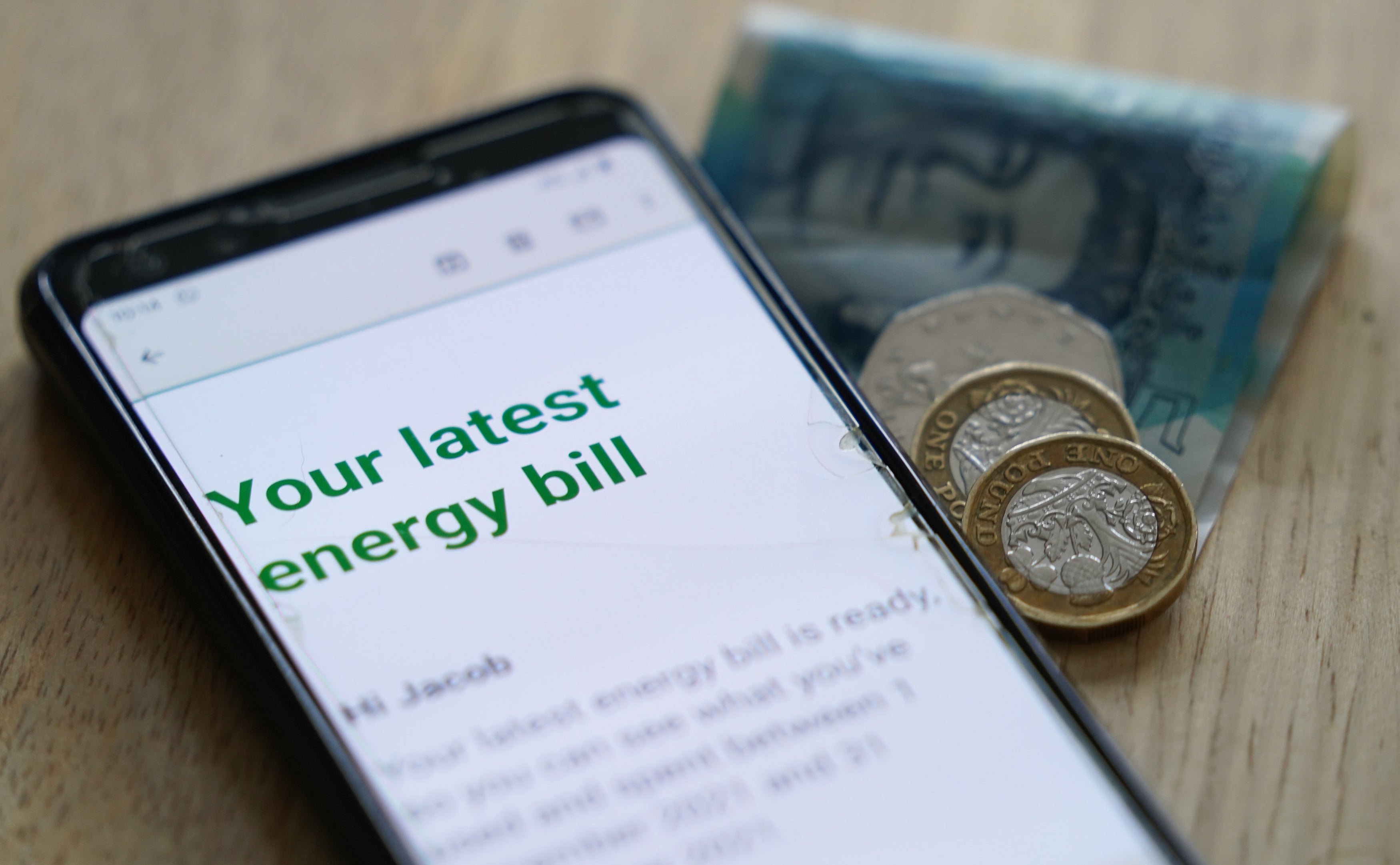
Ofgem’s energy price cap increased by £221 a year to £1,862 from July. The 13 per cent increase marks the highest level in over two years, triggered by spiking oil prices caused by the US-Iran war.
The energy price cap is the maximum amount suppliers can charge you for each unit of energy if you’re on a standard variable tariff. That includes most households. It is expressed as an annual bill for an average home.
Many experts, including Ofgem itself, recommend households consider a fixed tariff energy deal if possible. However, the US-Iran has seen fewer of these on the market than in previous months.
Ofgem is expected to announce the next price cap cap, covering October to December, on 26 August 2026.
Will there be another cost of living payment in 2026?
The DWP has not announced any continuation of the cost of living payment scheme that ran between 2022 and 2024. The final payment should have been made to eligible households between 6 February and 22 February 2024.
Mental health support
In the UK and Ireland, Samaritans can be contacted 24 hours a day, 365 days a year. You can call them for free on 116 123 or visit samaritans.org.
Mind runs a support line on 0300 102 1234 which provides a safe and confidential place to talk about how you’re feeling. There is also an information line on 0300 123 3393 for nearby support, and a welfare benefits line on 0300 222 5782 to support the mental health of those navigating the benefits system
Disability charity Scope has a forum where people can have supportive chats with others going through the same experiences
The NHS offers an online mental health triage service
The urge to watch and appreciate the world around her – and avians flitting in and out of it – has been ingrained in her since childhood, when she was given her grandfather’s binoculars after he died.
Armed with this and a field guide in her home of San Francisco, she set about identifying birds from an early age.
But in recent years, her birding toolbelt has expanded to include something far more modern – an app.
“I had friends who probably wouldn’t describe themselves as birders, but more just curious about nature and the world around them, recommend it to me,” Megan said.
She is one of many millions of people who have downloaded Merlin Bird ID, which claims to be able to identify almost any bird by its look, song or call.
“I think that it’s been a really great tool that I’ve integrated into my birding routine,” she said.
And whether down to heatwaves sending more people outdoors, or younger people delving into birding, these apps are booming in popularity.
Chief among them is Merlin Bird ID, which was developed by Cornell University’s Lab of Ornithology.
It has been downloaded 12 million times in 2026 alone, according to director Jessie Barry – who says it has had 42 million downloads overall.
She says the app has come a long way since it first launched in the US in 2014, with machine learning systems which could identify 285 common bird species from photos.
A real feather in its cap at the time, but a decade or so on, and it can now identify 11,000 species of birds – around as many as exist in the world.
Barry put the development down to AI, as well as “an amazing community of global bird watchers who are able to submit their recordings” – meaning more data to train the tech.
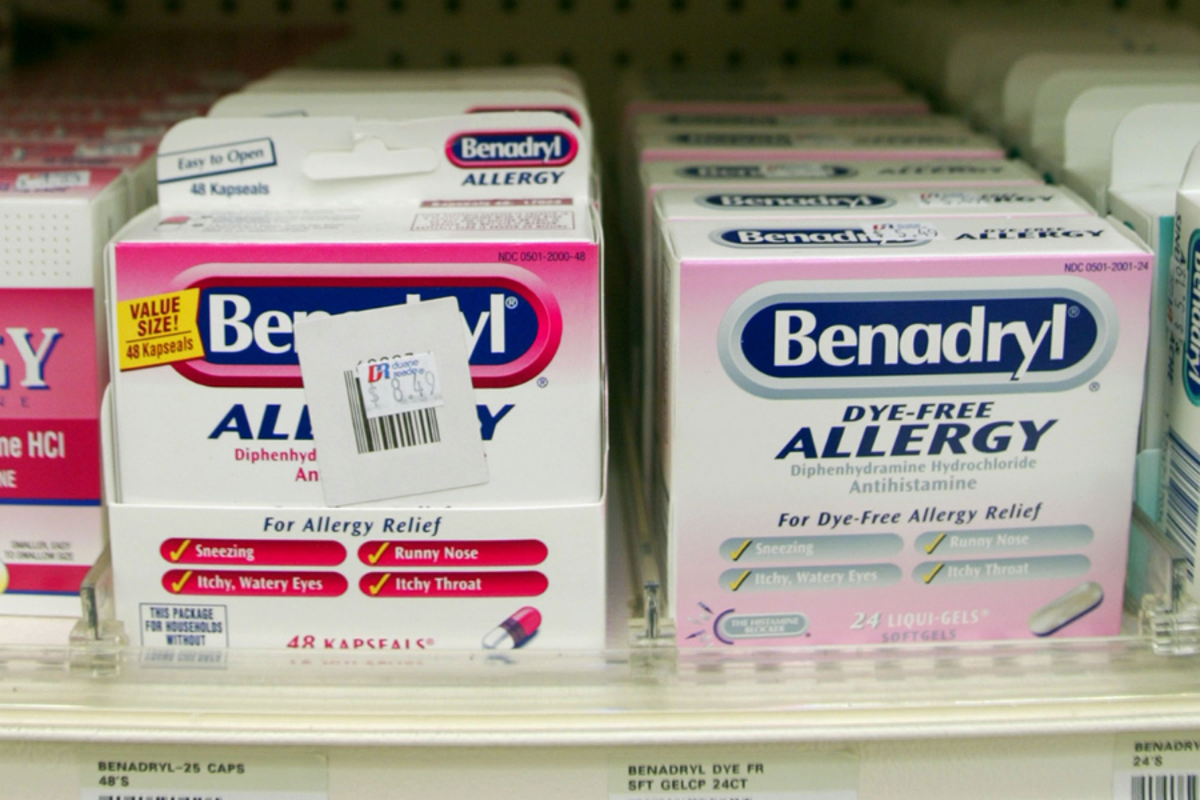
In May and June 2026, four American teens died participating in the “Benadryl Challenge.” This trend encourages adolescents and young adults to consume excessive amounts of diphenhydramine – the active ingredient in Benadryl – to induce hallucinations.
One study has estimated that this challenge may have been responsible for as many as 131 deaths in the U.S. between 2020 and 2024.
As with all online trends, the Benadryl Challenge is not limited by geographical borders. Though it originated in the U.S., public health officials in Canada have been warning parents and clinicians about the same trend since it began.
I research the powerful effects of social media on health behaviors such as substance use, sexual health and nutrition. The speed at which online trends like the Benadryl Challenge spread presents a new challenge for public health.
The science behind diphenhydramine overdose
Diphenhydramine is marketed under various brand names and is available over the counter as a treatment for allergies in numerous countries. The drug works by blocking a neurotransmitter called acetylcholine, which can help calm the body’s response to allergens.
This trend encourages adolescents and young adults to consume excessive amounts of diphenhydramine to induce hallucinations (Getty Images)
Although therapeutic doses are generally safe, taking too much can result in severe anticholinergic toxicity. Symptoms of this condition include delirium, seizures, an abnormal heart rhythm, hyperthermia, coma and death.
Many young people may underestimate the drug’s potential risks because it’s inexpensive and available at nearly any pharmacy or retail store. Plus, teens are highly susceptible to peer pressure and fear of missing out, so they may not appropriately weigh the risks with social media users and influencers encouraging experimentation with this drug.
‘Over-the-counter’ doesn’t mean ‘safe’
The Benadryl Challenge highlights a broader public health challenge: the perception that medications available without a prescription are harmless. Even adults tend to consider diphenhydramine to be a “safe” household medicine.
But poison control centers and emergency departments have been responding to an increasing number of reports about intentional misuse of this and other over-the-counter medications among young people since 2020, with social media contributing to the rapid spread of dangerous behaviors.
In response, public health agencies have increasingly recognized that preventing medication-related harms requires both educating consumers and engaging with the digital environments where risky behaviors emerge.
In 2020, when videos of this trend first emerged on TikTok, the U.S. Food and Drug Administration issued a warning about the Benadryl Challenge, emphasizing the risks of high-dose diphenhydramine use among adolescents. The agency urged parents, caregivers and healthcare professionals to discuss medication safety with young people.
The FDA also contacted TikTok and encouraged the platform to remove videos promoting the challenge and to remain vigilant against similar content.
More broadly, governments have begun holding social media companies accountable for failing to protect children from harmful online content. For example, the European Union’s Digital Services Act and the United Kingdom’s Online Safety Act establish regulatory frameworks for penalizing platforms that fail to address risks to minors.
Global response to the Benadryl Challenge
Still, responses to the Benadryl Challenge outside the U.S. have largely consisted of public awareness efforts rather than formal regulatory action specifically targeting this trend.
The name “Benadryl” can also create confusion internationally. In the U.S., Benadryl allergy products contain diphenhydramine, the medication involved in the challenge. But products sold under the same brand name abroad contain different active ingredients.
In Canada, public health messaging has focused on raising awareness among adolescents and their caregivers after 2026 reports that the challenge resurfaced among youth. In May, a First Nation community in Ontario issued an alert warning families about the dangers of intentionally consuming high doses of diphenhydramine, following reports of youth participation in the trend.
Preventing the next viral health threat
The evolving response to the Benadryl Challenge aligns with the World Health Organization’s call for proactive public health communication. Rather than responding to harmful online trends after they’ve gone viral, public health efforts are increasingly focused on early education, timely risk communication and rapid dissemination of accurate information.
Andrew Yockey is an Assistant Professor of Health and Kinesiology at the University of Illinois Urbana-Champaign.
This article was first published by The Conversation and is republished under a Creative Commons licence. Read the original article.
This includes improving medication safety education, strengthening digital health literacy and helping young people critically evaluate health-related content they encounter online. School-based medication safety programs, such as Generation Rx, may help reduce susceptibility to future medication-related social media challenges.
Caregivers, schools, healthcare providers, poison control centers, public health agencies and technology companies all have a role in identifying emerging risks and communicating accurate information quickly.
Helping young people recognize dangerous online content and understand the consequences of participating in these trends may be one of the most practical ways to reduce harm before the next viral challenge emerges.
A new survey has revealed that a significant majority of British adults – nearly two-thirds (65 per cent) – dedicate a substantial portion of their week to financial anxieties.
On average, individuals grappling with money worries spend approximately 22 hours each week contemplating concerns such as covering household bills, monitoring bank balances, and questioning the long-term sustainability of their funds.
This extensive financial preoccupation is most pronounced in the North East of England, where those affected spend an average of 26.6 hours weekly consumed by such thoughts.
Residents in the North West follow closely at 24.6 hours, alongside the South West at 24.0 hours. Conversely, Scots appear to be the least burdened by these concerns, reporting an average of 17.3 hours spent worrying.
The findings emerge from research commissioned by the thinkmoney app.
People living in the north east of England spend the most time worrying about their finances (PA)
People in households earning less than £15,000 spend around 13 hours more a week worrying about money than those earning more than £100,000, according to the research carried out among more than 2,000 people across the UK in June.
People in households earning less than £15,000 who worry about money spend an average of 29.2 hours a week with finances weighing on their minds, while those in households earning more than £100,000 average 16.2 hours.
More than three in 10 (31 per cent) people said they had cut back on food, heating or other essentials because of money worries.
More than a quarter (28 per cent) said they had checked their bank balance multiple times in a single day looking for reassurance.
Get a free fractional share worth up to £100. Capital at risk.
By contrast, 17 per cent had avoided checking their balance because they were worried to look at it, while 13 per cent had avoided opening bills, letters, emails or banking apps.
The research also found that the impact of financial concerns goes beyond bank balances.
Three in 10 (30 per cent) people said worrying about money had stopped them making plans for the future during the past year.
More than a quarter (28 per cent) said it had affected their confidence around everyday spending, and the same proportion (28 per cent) said it had stopped them feeling in control of their lives.
More than one in four (26 per cent) said money worries had made it harder to relax during their free time.
More than a fifth (21 per cent) said money worries had stopped them seeing friends or family as often as they would like and 17 per cent said financial concerns had prevented them being fully present with friends or family.
Vix Leyton, a consumer expert at thinkmoney, said: “We often measure money problems in pounds and pence, but this research suggests the real cost is something much more valuable – our time and attention.
Experts say people should not underestimate the emotional impact of spending time and attention on worrying about money (Getty/iStock)
“Twenty-two hours isn’t just a statistic; it’s the parent mentally adding up the supermarket shop before they’ve reached the checkout and not enjoying their toddler singing in the trolley.
“It’s someone checking their banking app for the fourth time that day even though they know nothing has changed, trying to enjoy dinner with your friends while part of your brain is still working out whether the bill will knock you off course.
“When you look at the wider findings, you can see how that pressure spills into the rest of people’s lives.
“It stops people making plans, affects confidence, changes how people spend their free time and, for some, even changes how they interact with the people closest to them.
“What really struck me was that people respond to uncertainty in completely different ways.
“Some check their balance over and over again looking for reassurance, and others avoid opening their banking app because they’re frightened of what they’ll find.
“On the surface those behaviours couldn’t look more different, but they’re often driven by exactly the same feeling – not quite knowing where you stand.”
People who are concerned about balancing their budget may find it useful to use online budgeting tools, such as on the Government-backed MoneyHelper website.
Opening bills and going through statements can help people understand their financial position and avoid the risk of missed payments. There may also be some forgotten subscriptions in bank statements that people can cancel to help improve their financial position.
Those who are struggling to pay back debts may also want to consider speaking to their lender to find out what options may be available.
Charities such as StepChange, Citizens Advice and Christians Against Poverty may also be able to provide support.
Here are the average numbers of hours that people said they spend worrying about money in a typical week, among those who worry about money, according to thinkmoney:












.jpeg)