

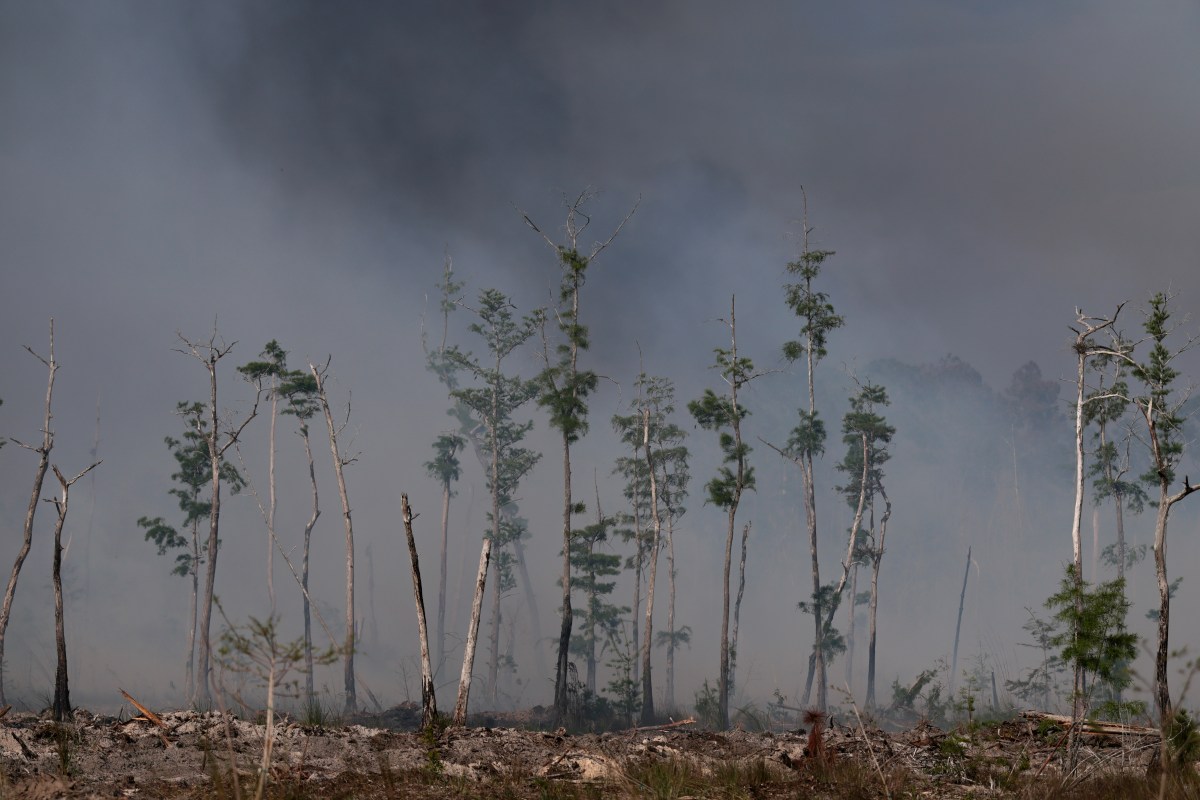

Florida remains on high alert for fast‑moving wildfires as red flag warnings blanket much of the state, with officials warning that dry fuels, gusty winds and critically low humidity are creating dangerous fire conditions.
Fire danger has surged amid a prolonged statewide drought, with 113 wildfires burning across Florida on Tuesday alone, according to the Florida Forest Service. The current blazes have consumed nearly 13,000 acres of land. In addition to the flames already raging, National Weather Service (NWS) meteorologists and Forest Service authorities warn that even small sparks could quickly turn into large, difficult‑to‑contain fires.
NWS offices in Tampa Bay, Jacksonville, Miami and Melbourne have all issued red flag warnings on Tuesday, citing gusty winds and low relative humidities. The warnings extend through the evening across much of the Florida Peninsula, including west‑central, southwest, northeast and interior east‑central Florida.
“Any fire that develops will catch and spread quickly,” the NWS warned in multiple fire weather statements, urging residents to avoid outdoor burning and remain alert as fire behavior could become erratic.
A wildfire map maintained by the Florida Forest Service shows fires scattered across nearly every region of the state, underscoring the scope of the threat. Meteorologists described fire risk levels as “critical” in parts of west‑central Florida, as persistent drought conditions continue to stress vegetation and dry out soils.
“Drought conditions, low humidity, and winds have led @NWS to issue Red Flag Warnings for most inland regions in northeast, central & southwest Florida,” the Florida Forest Service posted on X on Tuesday. “Officials do not recommend any outdoor burning. 38 Florida counties have current burn bans.”
The heightened fire danger comes after evacuations earlier this week linked to wildfires in north Florida, including in Alachua County, where a local emergency declaration was issued as crews battled flames near residential areas. Officials have not ruled out additional evacuations if conditions worsen statewide.
On Tuesday, Alachua County officials warned that the wildfires were producing smoke that would continue to impact nearby communities. In some cases, people were told to stay indoors or even leave the area if they had health conditions that made them susceptible to the effects of breathing in smoke.
“Smoke from ongoing wildfires may continue to affect surrounding communities and counties, with impacts already seen as far as Levy and Marion counties. Additional fires could worsen conditions,” the post on X said.
Forecasters say Florida’s fire threat is being compounded by the lack of meaningful rainfall over recent weeks. Much of the state remains in moderate to extreme drought, limiting moisture recovery even during overnight hours and allowing fuels to remain highly combustible throughout the day.
Emergency managers are urging residents to report any signs of smoke immediately, secure trailers and chains that could spark along roadways, and follow local burn restrictions as fire crews remain stretched across the state.
Lake Okeechobee Docks Shut Down as Drought Deepens
The impact of Florida’s drought is also being felt beyond wildfire zones, with navigation docks on Lake Okeechobee temporarily closing due to falling water levels, according to the South Florida Water Management District.
Officials announced that the north shore locks on Lake Okeechobee would close as water levels drop, making navigation unsafe for boats. The closures highlight the broad reach of the drought, which has strained water systems, harmed ecosystems and increased wildfire vulnerability across much of Florida.
Lake Okeechobee, a critical hub for flood control, water supply and navigation, typically sees seasonal fluctuations, but water managers say current levels reflect ongoing rainfall deficits and continued dry weather across the region.
Meteorologists warn that without sustained rainfall, fire danger is likely to persist in the days ahead. While isolated showers are possible later in the week, officials say it may take weeks of consistent rain to meaningfully reduce fire risk and improve soil moisture statewide.
Until then, Floridians are being urged to remain vigilant, as conditions remain primed for rapid-spreading wildfires, a threat officials say could escalate rapidly amid the current drought‑driven landscape.