

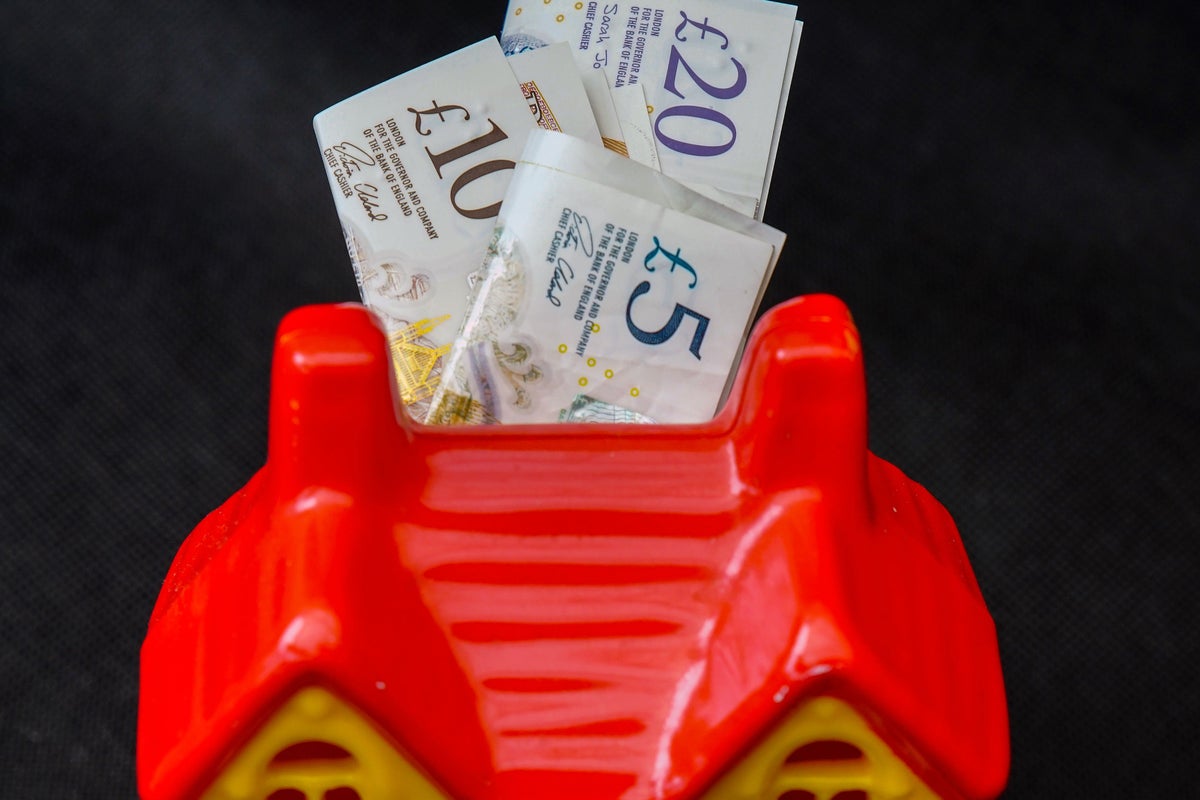
Annual house price growth in the UK halved in April compared with the previous month, as rising living costs continue to foster caution among households.
According to Halifax, the average UK house price saw a 0.1 per cent month-on-month decline in April, following a 0.5 per cent fall in March. This brought the average property value down to £299,313. The annual growth rate for a typical home plummeted to just 0.4 per cent in April, a significant drop from 0.8 per cent recorded in March.
This weakening in price growth could present a glimmer of opportunity for prospective first-time buyers, with Halifax noting that average prices for those stepping onto the property ladder are currently at their lowest levels seen this year.
Amanda Bryden, head of mortgages, Halifax, said: “After a strong start to the year, recent global developments have added a greater degree of uncertainty to the outlook.
“In particular, higher energy prices have fed into inflation expectations, prompting markets to reassess the path for interest rates – a shift that has already pushed up borrowing costs for many buyers.
“This understandably leads to more caution among some households, with the cost of living once again front of mind and extra thought being given to planned property moves.
“Even so, the housing market continues to display the resilience that has been its hallmark in recent years.
“While activity is likely to cool in the near term, the underlying picture remains one of relative stability, supported by wage growth that continues to outpace house price inflation.
Get a free fractional share worth up to £100.
Capital at risk.
Terms and conditions apply.
ADVERTISEMENT

Get a free fractional share worth up to £100.
Capital at risk.
Terms and conditions apply.
ADVERTISEMENT
“Another important factor is that the majority of existing homeowners are on fixed-rate mortgages, meaning they are largely insulated from short-term changes in interest rates.
“A slower pace of house price growth may be disappointing news for existing homeowners.
“However, for those looking to step onto the property ladder, stable prices are helpful, even if higher mortgage rates mean affordability remains stretched.
“The average price paid by first-time buyers has fallen slightly to £238,908, its lowest level so far this year.”
Looking across the UK, Halifax said Northern Ireland leads annual house price growth, with average prices by 7.6% over the past year.
Scotland also recorded strong growth, with a 4.0% annual increase.
House prices in Wales have continued to slow, with annual growth of 0.7% recorded.
In England, stronger price growth remains concentrated in northern regions, the report said.
The North East saw prices rise by 4.5% over the year while the North West recorded annual house price growth of 3.4%.
Sarah Coles, head of personal finance at AJ Bell, said: “If you’re considering pausing a purchase in the hope that prices keep dropping, it’s worth bearing in mind that future movements in the market are never guaranteed.
“While prices have fallen this month, the Bank of England figures show mortgage approvals for purchases rose in February and March, so we could still see this feed through into an uptick in buyers and rising prices again.”
Karen Noye, a mortgage expert at wealth manager Quilter, said: “For buyers and those approaching remortgage, the message is not to try to call the bottom of the market.
“The more practical point is that mortgage pricing could move quickly in either direction, so borrowers should review options early and be ready to act if lenders reprice.”
Mark Harris, chief executive of mortgage broker SPF Private Clients, said: “First-time buyers will be encouraged as house prices remain steady rather than soar.”
Here are average house prices and the annual change, according to Halifax:
East Midlands, £246,997, 0.6%
Eastern England, £333,457, minus 0.7%
London, £536,051, minus 1.4%
North East, £183,445, 4.5%
North West, £248,945, 3.4%
Northern Ireland, £224,851, 7.6%
Scotland, £222,448, 4.0%
South East, £383,044, minus 2.0%
South West, £300,758, minus 1.1%
Wales, £230,952, 0.7%
West Midlands, £265,713, 2.0%
Yorkshire and the Humber, £216,915, 1.0%
Nathan Emerson, chief executive officer of property professionals’ body Propertymark, said: “The rate of inflation remains a key concern for many people, especially as there is widespread speculation that the Bank of England may potentially need to implement measured base rate increases over the coming months to best regulate potential future financial instability.
“There will likely be a sense of anxiety across the summer months, especially for those with tracker mortgage products, and with mortgage deals that are due to expire.
“It will be important for people to investigate what new mortgage products might be available to them and to make plans to help navigate around any increased expenditures.”

