

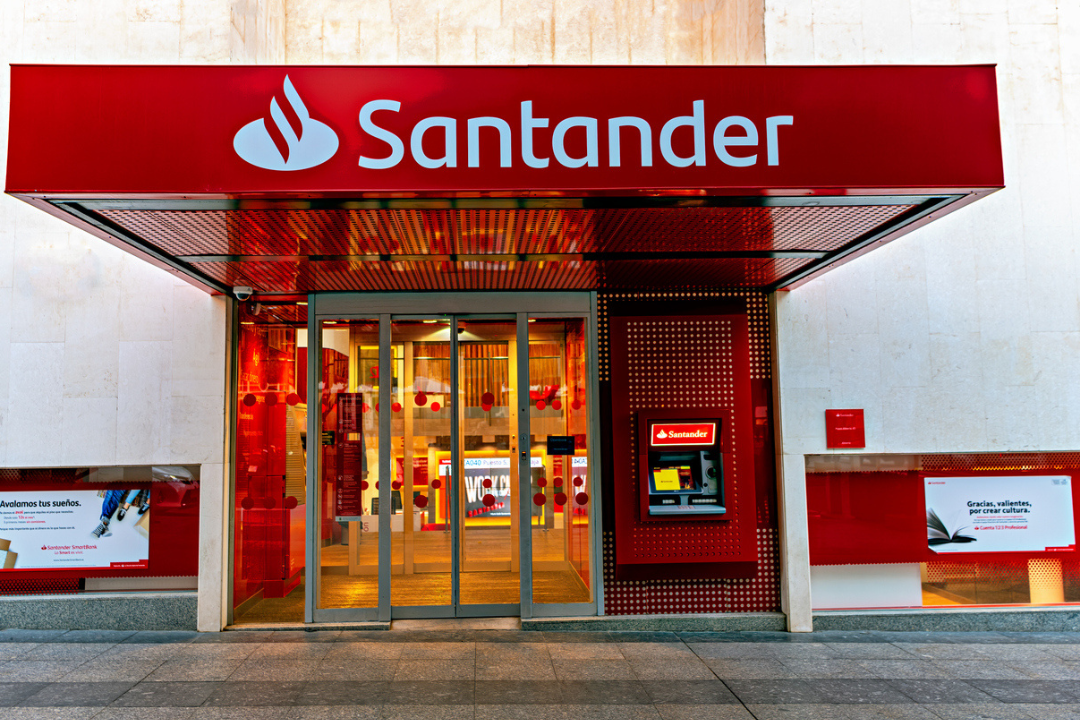
Santander will cut the rates across its higher loan to value (LTV) mortgages by up to 0.3 per cent from Thursday, making it the first major lender to reduce rates since the start of the Iran war.
The bank has announced a raft of rate reductions, which include up to 0.28 per cent being cut from two-year fixed deals at 85-95 per cent LTV. It brings the lowest rate on a two-year deal down to 4.9 per cent.
While the first lender to move in a downward direction since the start of March, this particular is still narrowly beaten by Lloyds, which offers a two-year fix with an LTV of 85 per cent for 4.89 per cent for first-time buyers. For movers, Nationwide currently offers the lowest rate at 4.88 per cent for a two-year fix.
Santander has also made changes to its tracker mortgages, making a cut of 0.3 per cent to its 90 per cent two-year tracker rate for first-time buyers. A smaller reduction of 0.25 per cent is being made to its 60 to 95 per cent two-year tracker rates for movers.
TSB is set to follow Santander’s lead by cutting selected two-year house purchase rates by up to 0.45 per cent.
While headline rates aren’t a perfect indicator of the full cost of a mortgage, brokers are suggesting that this is a positive sign.
Nicholas Mendes, mortgage broker at John Charcol, said: “After what has been a very turbulent few weeks, this is probably the first point where the market feels a little more settled.
“It gives lenders a chance to make pricing moves without the same immediate fear that sudden market swings will knock funding costs or service levels back off course.”
However, while this is good news, it’s not a “full market turn”, says Mr Mendes. “The important caveat is that this is still selective, not broad-based. Santander’s changes are more focused on purchase and selected product transfer business, rather than a blanket reduction across the board.”
Get a free fractional share worth up to £100.
Capital at risk.
Terms and conditions apply.
ADVERTISEMENT

Get a free fractional share worth up to £100.
Capital at risk.
Terms and conditions apply.
ADVERTISEMENT
Mortgage rates recently soared above the 5 per cent mark after the war in Iran sent oil prices shooting past $100 (£74) a barrel.
The high cost of oil is likely to have an impact on UK inflation, which the Bank of England may try to curb by increasing interest rates. Swap rates, which are used to price fixed-rate mortgages, therefore soared, leading major banks to raise their interest rates on mortgage deals.
This latest cut from Santander is good news for buyers, says Hina Bhudia, partner at Knight Frank Finance. “This marks the first meaningful relief for borrowers since the conflict in the Middle East began and should signal the start of a broader market repricing lower. Swap rates have eased following the initial ceasefire announcement and are now out of sync with fixed-rate mortgages, giving lenders scope to reduce pricing.
“Larger lenders such as Santander typically set the tone, with others likely to follow.”
But it’s still unclear when sub-4 per cent mortgages will re-emerge, with Ms Bhudia noting matters could still change quickly in the opposite direction.
“Beyond the very short term, there remains significant uncertainty over the trajectory of mortgage rates, given the ongoing volatility in the Middle East. In this context, borrowers should consider acting on current reductions by locking in a deal, with the option to renegotiate if borrowing costs fall further,” she said.
When investing, your capital is at risk and you may get back less than invested. Past performance doesn’t guarantee future results.
