

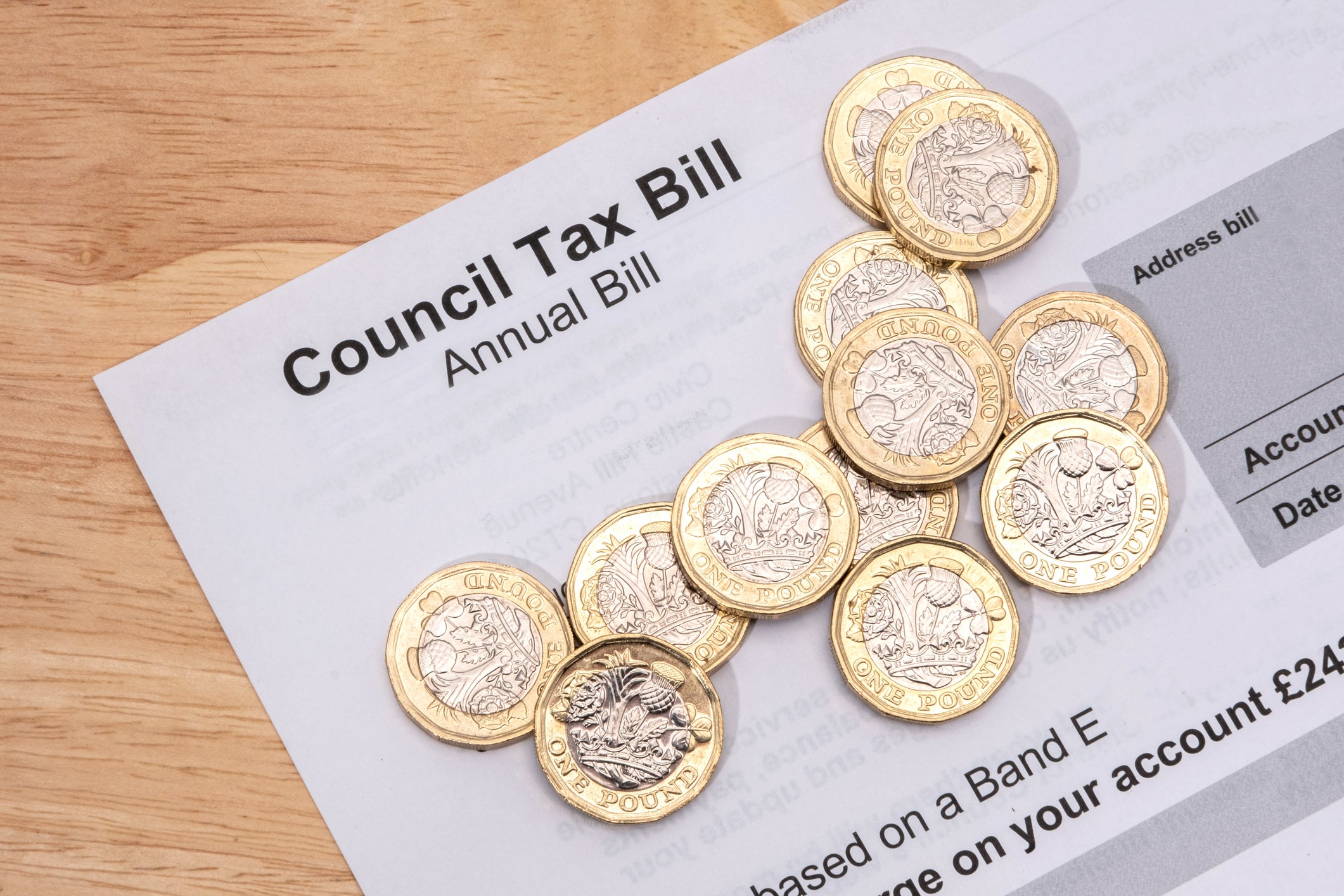
Council tax bills have begun arriving on the doorsteps of households in England, hitting homeowners with an average rise of 4.9 per cent.
This means that the average council tax for a property in band D in England has increased by £111 to £2,392 per year.
Some local authorities such as Shropshire and North Somerset have even hiked rates by more at 8.6 per cent and nine per cent respectively as town halls aim to keep public services afloat. There were hopes that council tax would be reformed in the chancellor’s 2025 Autumn Budget but no changes materialised.
There are steps you can take though, to make sure your property is in the right band and that you are not overpaying.
This will be particularly important in the next year or so as homes worth £2m and above are set to be charged high value council tax – or a mansion tax – from April 2028.
Here is how you can make sure your council tax bill is correct.
The neighbour check
Council tax bands in England were set by the Valuation Office Agency based on property values from 1 April 1991 so there is a chance that errors were made.
You can check your own and your neighbours’ council tax band on the Gov.uk website to see if similar properties are on the same rating.
Rohit Parma-Mistry, founder of consultancy Pattrn Data, said: “Check whether the band looks obviously out of line with comparable properties nearby, especially homes of a similar size, type, and age. If your property appears to be an outlier, that is usually the signal to dig deeper rather than just assuming the bill must be right.”
You can launch a challenge to your council tax band online to the Valuation Office Agency (VOA).

Get a free fractional share worth up to £100.
Capital at risk.
Terms and conditions apply.
ADVERTISEMENT
Get a free fractional share worth up to £100.
Capital at risk.
Terms and conditions apply.
ADVERTISEMENT
It takes a bit of research though as you will need to provide addresses of five similar properties in a lower tax band to yours. You will also need to provide house price evidence to demonstrate what your property was worth between April 1989 and March 1993 in England, and April 2001 and March 2005 in Wales.
You can use sources such as the Land Registry but will still need to pay the council tax during the appeal.
If you are successful, you will get a council tax reduction.
Beware an uplift
However, this process works both ways – so be careful, as the VOA could find that you and your neighbours should actually be paying more.
If so, that could make you quite unpopular on the street.
Samuel Mather-Holgate, managing director at Mather and Murray Financial, said: “Look at what your neighbours are paying, and calculate what your house would have been worth when the taxes were set up.
“If you’ve got a case, proceed. But if you’re on the cusp or in a higher band by your calculations be cautious.
“You don’t want the local council to notch your bill up a level, and this really does happen.”
Are you due a council tax discount?
Even if you are in the correct council tax band, there may be cases where you are due a discount.
An adult living on their own can get a 25 per cent council tax discount. This also applies if certain exempt people are living with you such as under-18s or a university student.
A student house is exempt from council tax as long as everyone living in the property is a full time at university or college. To qualify, the residents must be registered on a course for at least one year and be studying for at least 21 hours a week.
Older people may also get a council tax discount if they are claiming the guarantee element of Pension Credit – but only if you don’t live with someone who is eligible for council tax.
There are also council tax exemptions for empty homes such as if it is being renovated and can’t be lived in.
Additionally, you may be able to get a 12 month exemption on an empty property if you are selling it on behalf of an owner who has died. The council won’t send a tax bill until probate is granted and if it is being marketed for sale or rent.
In some cases, your property could be moved into a lower tax band to reflect your circumstances. This includes a disabled band reduction scheme if you live in a larger property than you would need if you or another occupant were not disabled.
Your council may not automatically know about your living situation so you will have to contact them directly to get any discounts or exemptions.
When investing, your capital is at risk and you may get back less than invested. Past performance doesn’t guarantee future results.
