

In his second term in office, President Trump has initiated a D.C. makeover, attempting to leave his mark on the capital and prompting multiple legal battles.
Mr. Trump, a former real estate developer, has overseen the demolition of the East Wing of the White House to make way for a massive ballroom, tried to change the name of the John F. Kennedy Center for the Performing Arts and completed a resurfacing project at the Lincoln Memorial Reflecting Pool that quickly faced setbacks.
Here’s a look at where five of Mr. Trump’s projects stand and how much they cost.
Lincoln Memorial Reflecting Pool
The Trump administration announced plans to resurface the Lincoln Memorial Reflecting Pool in April and paint it “American flag blue” at the president’s request. The last time the reflecting pool underwent a significant renovation was from 2010 to 2012 during the Obama administration. At the time, the government tapped $34 million from the American Recovery and Reinvestment Act to cover the cost of the project.
Kevin Dietsch / Getty Images
The cost: Mr. Trump estimated it would take a week and cost roughly $1.5 million. Atlantic Industrial Coatings, the Virginia-based company hired for the project, completed the restoration in early June for $14.7 million, according to records, more than nine times Mr. Trump’s original estimate. The administration spent another $1.7 million on a filtration system. Neither contract for the reflecting pool was subject to a competitive bidding process.
Photo by Pete Kiehart/The Washington Post via Getty Images 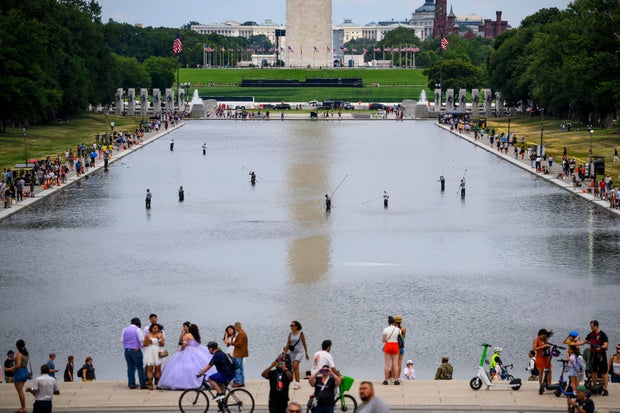
Where it stands now: Images showed the reflecting pool’s water turning green in less than two weeks after Mr. Trump announced that the site had reopened to “rave reviews.”
A spokesman for the Interior Department said supply lines that had been dormant for two months are to blame for the residual algae causing the color change.
Days later, chunks of peeling paint from the blue coating were spotted in the water. Mr. Trump claimed in a Truth Social post, without any evidence, that the Reflecting Pool was vandalized. Five people were arrested for vandalism and five others were served citations, according to the U.S. Park Police.
Ken Cedeno /AFP via Getty Images 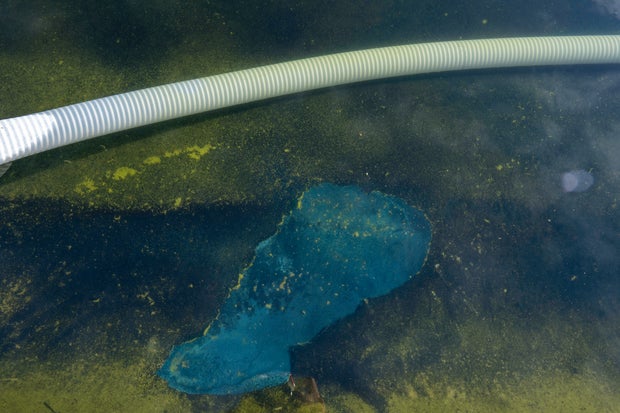
White House ballroom
The Trump administration announced in July 2025 plans to build a 90,000-square-foot ballroom that could seat 1,000 guests. CBS News obtained architectural renderings of the project in September and weeks later, the White House’s East Wing was demolished to start on the ballroom construction. The Trump administration hired Clark Construction as the project’s contractor.
The Trump administration has argued the proposed ballroom would provide safety assurances for large gatherings with the president and other distinguished guests. Administration officials amplified their argument after April’s shooting at the White House Correspondents’ Association dinner and an alleged foiled plot to attack the White House UFC event this month.
Aaron Schwartz / Getty Images 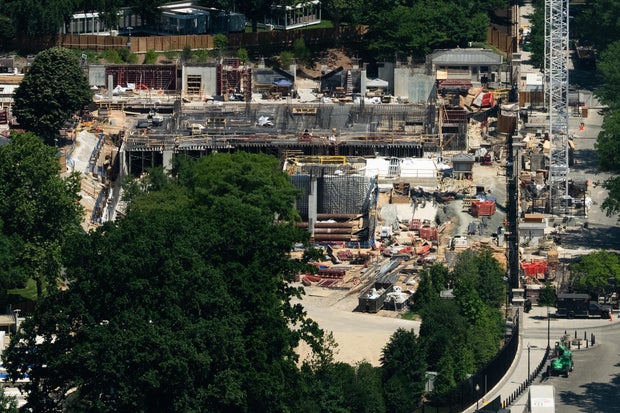
The cost: The project was initially estimated to cost $200 million but has increased significantly less than a year after it was first announced. Mr. Trump has since said construction would cost about $400 million and insisted it would be “taxpayer-free” and funded by him and other donors, including tech giants such as Google, Amazon and Nvidia, defense contractors and other large corporations.
However, a project summary obtained by The Washington Post showed ballroom construction would cost an estimated $600 million, with about half coming from taxpayer-funded departments, including the Secret Service, White House Military Office and the Executive Residence of the White House.
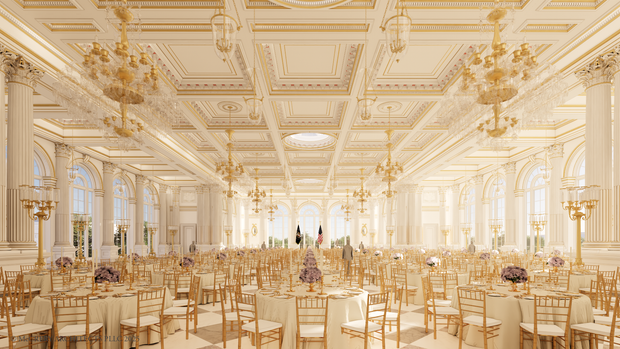
Where it stands now: The project has been embroiled in a legal battle in federal courts. The National Trust for Historic Preservation in the U.S. sued the Trump administration in December for demolishing the East Wing “without any review whatsoever.”
The White House is waiting for an appeals court to decide whether construction can continue after a lower court ruled that Congress must approve the project.
Aaron Schwartz / CNP / Bloomberg via Getty Images / Aaron Schwartz – Pool via CNP 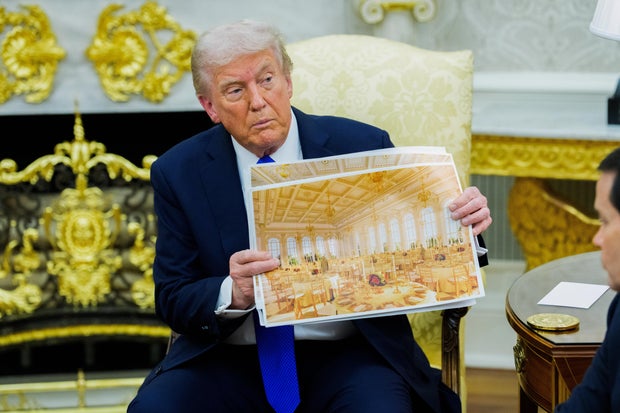
“Arc de Trump”
In October 2025, President Trump told a group of donors for the White House ballroom project that he would also be building a 250–foot triumphal arch that resembles the Arc de Triomphe in Paris. The structure would be built in the middle of Memorial Circle between the entrance of the Arlington National Cemetery and the Lincoln Memorial. Construction could take two to three years, according to documents published on the Federal Register.
When CBS News senior White House correspondent Ed O’Keefe asked President Trump who the arch is for, Mr. Trump simply said: “Me.” The White House added that the arch would commemorate the 250th anniversary of the U.S.
Interior Department to Commission on Fine Arts 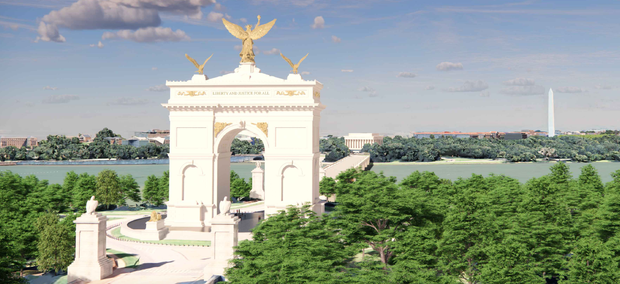
The cost: The White House has not disclosed the total cost for the arch. However, some taxpayer money has already been earmarked for the project. In its spending plan, the National Endowment for the Humanities, an independent government agency, allocated $15 million in taxpayer dollars for the arch.
The actual price tag is likely to be much higher: In November 2025, Axios reported that the arch would cost an estimated $100 million.
“The estimated cost of the Triumphal Arch is still being calculated and will be shared in the near future,” the Department of the Interior said in a statement to CBS News. “We anticipate some combination of public and private funds to be used to pay for the Triumphal Arch.”
Where it stands now: Critics say the arch would dominate the skyline and tower over the 99-foot Lincoln Memorial. A group of veterans and a historian sued the Trump administration to block construction, but a federal court has yet to intervene.
The National Park Service said the project could take almost a year to complete on an accelerated timeline, with two, 10-hour shifts per day, and “several tower cranes, forklifts, skid steers, drill rigs, and concrete pumping systems.”
Andrew Harnik / Getty Images 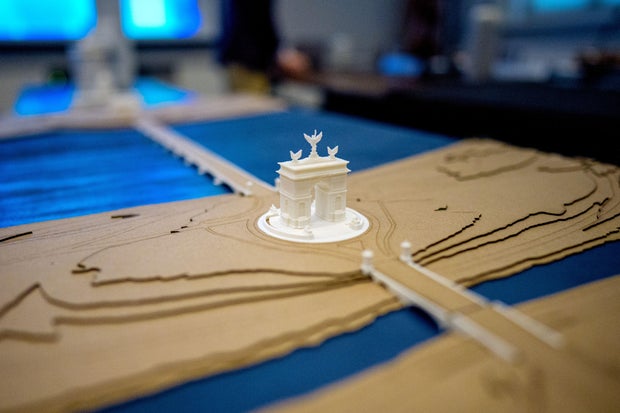
John F. Kennedy Center for the Performing Arts
Mr. Trump has made significant changes at the John F. Kennedy Center for the Performing Arts during his second term. He ousted several board members, installed himself as chairman and proposed an “anti-woke” vision for its future, leading to several artists canceling performances. The board voted in December to change the institution’s name to the Trump-Kennedy Center, and a few months later announced it would close its doors for two years for renovations that were slated to begin this summer.
Anna Moneymaker / Getty Images 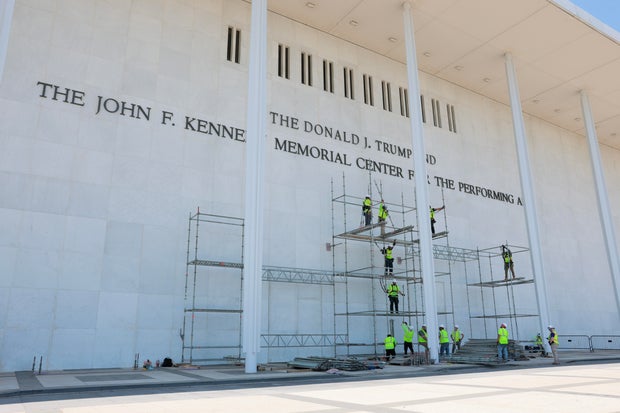
The cost: Last year, Mr. Trump secured $257 million through the One Big Beautiful Bill Act to restore the Kennedy Center. The tax cut and spending law states that funding is available until September 2029 for expenses related to “capital repair, restoration, maintenance backlog and security structures” at the Kennedy Center. Repairs include upgrading theater seats, repairing water damage and drainage issues, replacing soffit panels and addressing structural issues with the center’s parking garage.
“This is a once-in-a-lifetime opportunity for the center,” Matt Floca, executive director and chief operating officer, said in a statement to CBS News. “All of these improvements that we need to make are real, are needed.”
The Kennedy Center did not disclose the total estimated cost for the renovations.
Aaron Schwartz / Bloomberg via Getty Images 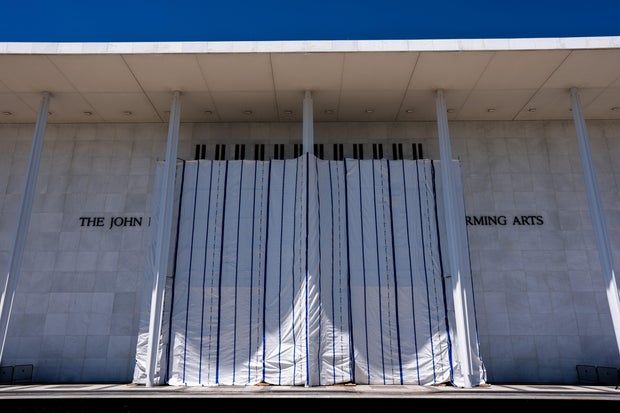
Where it stands now: In May, U.S. District Judge Christopher Cooper ruled in favor of Rep. Joyce Beatty, an Ohio Democrat who serves on the Kennedy Center’s Board of Trustees, after she sued to block the name change and the closure. The judge stopped the plan to temporarily close the center and ruled the board acted unlawfully when it added Mr. Trump’s name to the building.
“The Kennedy Center’s organic statute makes crystal clear that the Center is to be named for President Kennedy, and it cannot bear any other formal name or public memorial based on the Board’s unilateral say-so. Congress gave the Kennedy Center its name, and only Congress can change it,” Cooper wrote in his opinion.
Dozens of people gathered outside the Kennedy Center on June 13 to watch crews scrape the president’s name off the building.
After the judge’s ruling, the center’s board of trustees voted to create a new endowment in Mr. Trump’s name that they said was intended to recognize his “significant contributions and dedication” to the Kennedy Center. A Kennedy Center official said the endowment will raise private funds that will supplement the money secured by Mr. Trump and Congress for renovations.
Lafayette Park
The National Park Service announced that portions of the park would close in January because of “serious concerns about security for construction equipment and prior vandalism associated with public protests in recent years.” In May, Mr. Trump posted on social media that he had contributed funds to build fountains and to rebuild parts of Lafayette Park in front of the White House.
“That’s the entrance to the White House, and it was an embarrassment,” Mr. Trump said.
Kevin Carter / Getty Images 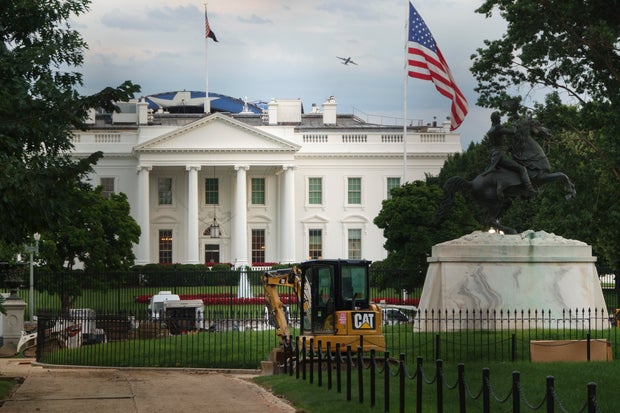
The cost: The New York Times reported in April that the Trump administration initially agreed to pay the government contractor in charge of the ballroom renovation, Clark Construction, $11.9 million to do the job, but later increased the contract to $17.4 million to cover additional costs.
Where it stands now: The project was expected to be completed by May 31, but a spokesperson for the Department of the Interior, which oversees the park, told CBS News that the restoration project is still in progress and that “final figures for the project are unavailable at this time.”
