

Want to bookmark your favourite articles and stories to read or reference later? Start your Independent Membership today.
Already a member?
Log in
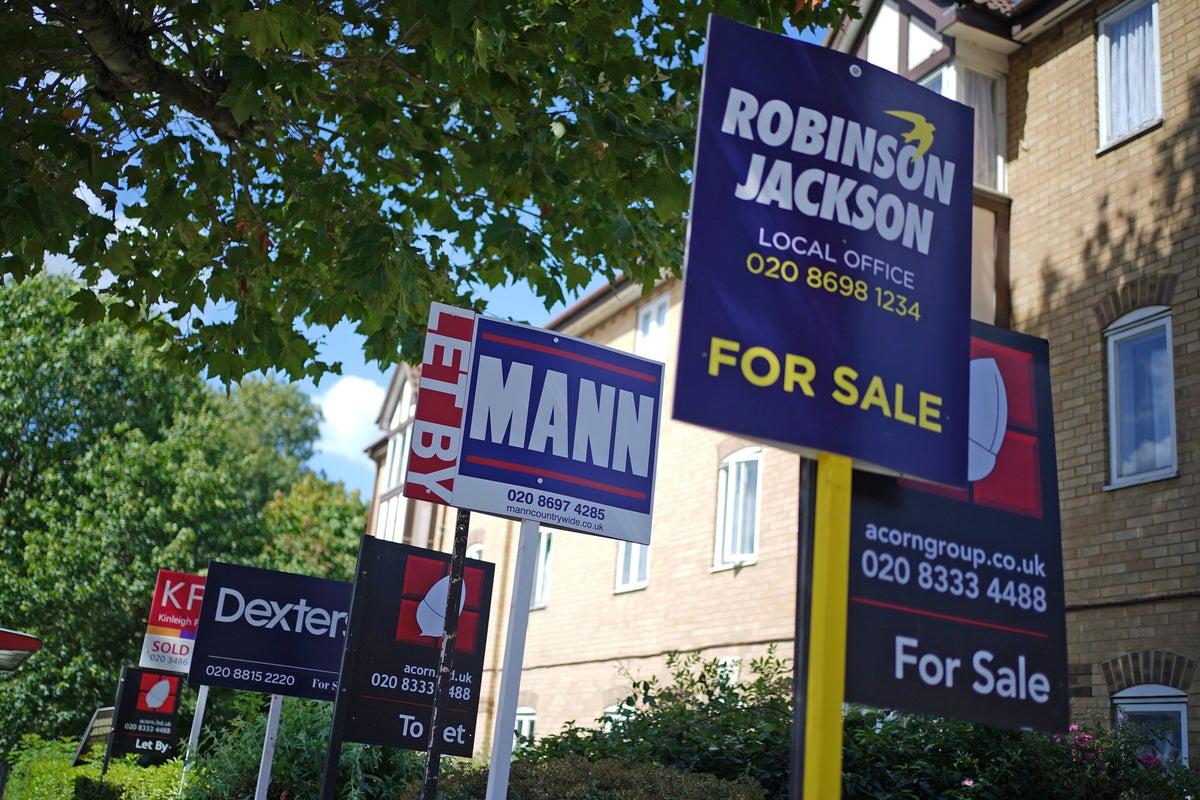
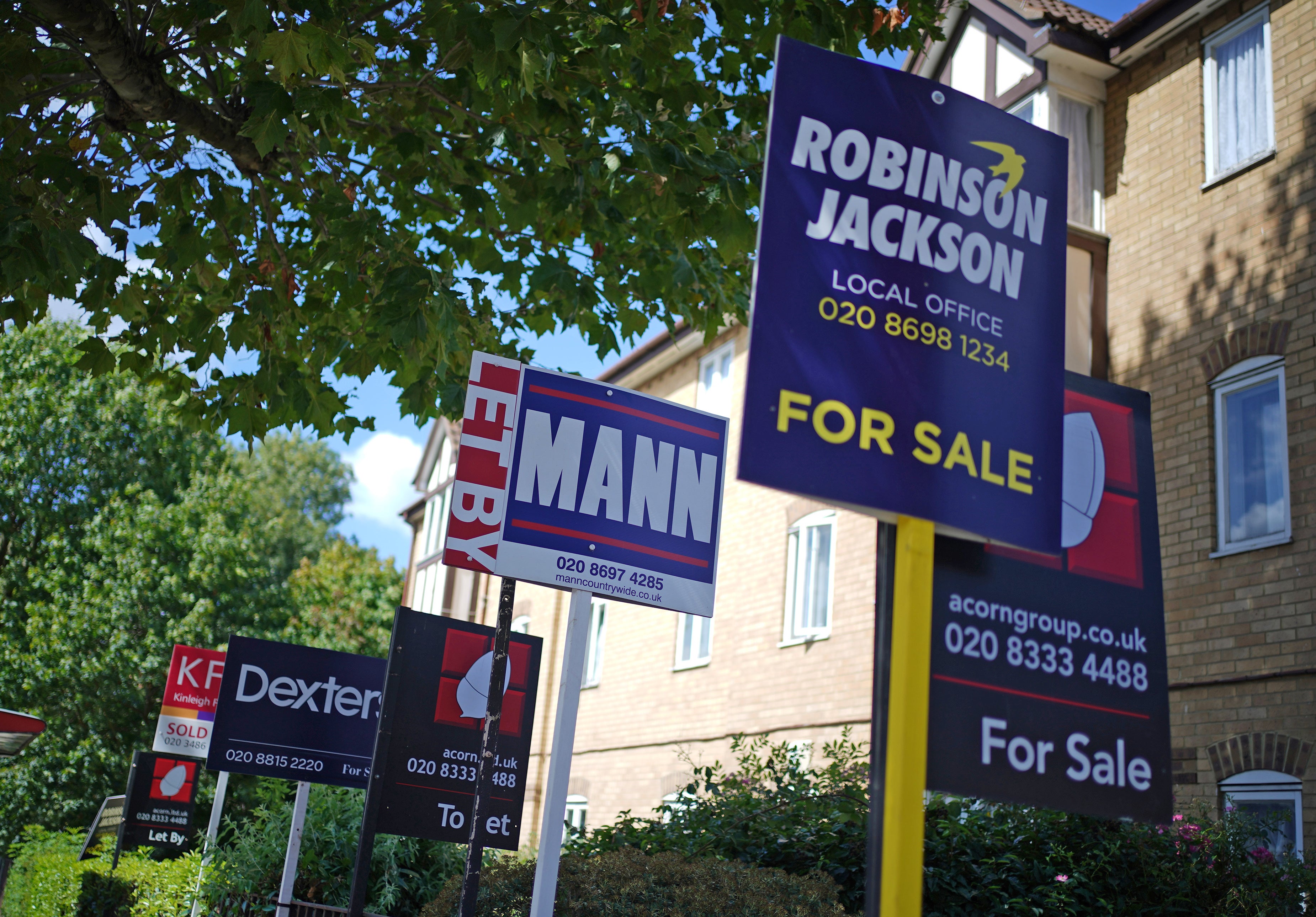
UK house prices recorded their biggest annual fall in three years in October, with the south largely contributing to the overall decline.
Across the whole of the UK, the average property price in October was £296,285, Lloyds said, marking a £1,882 (0.6 per cent) fall compared with September, but meaning a 1.2 per cent fall across the past year for the average property value
The Lloyds house price index showed it was the steepest decrease since October 2023, adding to a difficult property market for sellers.
However, one expert suggested that the affordability gap closing meant it was good news for first-time buyers – while another pointed out that regional differences are making the whole picture worse.
Andrew Asaam , mortgages director at Lloyds, said: “Housing demand is currently being tested by a challenging economic backdrop.
“Renewed inflationary pressures, driven in part by the conflict in the Middle East, are keeping borrowing costs high and adding to the squeeze on household finances, making some buyers understandably more cautious.
“However, it’s important to put October’s fall in context. House prices have changed relatively little over the past couple of years, as the market has gradually adjusted to higher interest rates.
“The recent rise in energy and other household costs has added to the pressure on buyers, so some adjustment in prices is not surprising.
“Looking ahead, conditions are likely to remain subdued in the near term, but we don’t expect this to lead to a sustained period of falling house prices. With wages continuing to rise faster than property prices, the gap between earnings and house prices should gradually narrow, helping affordability to improve over time.”

Invest at least £100 in Stocks or ETFs of your choice. Get fractional shares worth £50!
Terms and conditions apply.
ADVERTISEMENT
Invest at least £100 in Stocks or ETFs of your choice. Get fractional shares worth £50!
Terms and conditions apply.
ADVERTISEMENT
Those wage rises are an important part of the overall economic picture.
Along with enabling people to save more if wages are rising faster than inflation, they are also a key consideration for the Bank of England when determining interest rate changes.
And, when taken in the context of the housing market, it may enable buyers to make their move said Chris Barry, director at Thomas Legal. “A 1.2 per cent annual fall doesn’t sound like much but when considering inflation is rising month-on-month, and wages continue to rise, the affordability gap is being closed,” he said.
“This is good news for those considering their first purchase. Prices now are at a level comparable with 20 years ago when adjusted for inflation, and that is an early Christmas present for registered buyers.”
Not all areas are equal, however.
The Lloyds index data shows London, the east and the south in negative territory for year on year house prices.
Jonathan Hopper, CEO of Garrington Property Finders, said: “Southern England is in sharp correction territory now. Prices there are sliding so far, and so fast, that they’ve dragged the national average into the red too.
“While uncertainty in the run-up to the Budget made October a particularly slow month, the latest Lloyds data can’t be dismissed as a blip. It shows that average prices across the UK have fallen on a quarterly basis for six months in a row, and that the annual pace of decline accelerated by a factor of 12 between September and October.
“Meanwhile buyers’ willingness to move now is being hampered by the sense that if they wait a few months they may be able to buy a better home for less.
“Buyers haven’t disappeared, and those who need to move are still moving. But sentiment is deeply cautious and those that are looking have smaller budgets and non-negotiable limits.
“Sellers who fail to accept this reality risk seeing their homes sit unsold for months. In a buyers’ market like this, they need to think less about what their home might have achieved in a stronger market and more about what a committed buyer can afford and justify paying today.”
On Thursday, the Bank of England base rate increased by 0.25 percentage points to 4%, in the first rise in interest rates in more than three years.
Based on typical outstanding mortgage balances, UK Finance said the increase for homeowners on tracker deals would be £30.72 on average.
Around nine in 10 (87%) outstanding homeowner mortgages are fixed rates.
Some 2.3 million fixed-rate deals are due to expire in 2027, according to the analysis by UK Finance.
Nathan Emerson, chief executive of property professionals’ body Propertymark said: “Renewed inflationary concerns and yesterday’s increase in the base rate will continue to weigh on consumer confidence, particularly as households remain mindful of the cost of living.”
Karen Noye, a mortgage expert at wealth manager Quilter said: “The housing market increasingly feels like it is running up the down escalator.
“Buyers are still moving forward, but every step is becoming harder work.
“That helps explain why activity remains subdued despite a resilient labour market and rising wages.
“Buyers are being asked to make one of the biggest financial decisions of their lives at a time when the outlook for borrowing costs remains uncertain.”
Mark Harris, chief executive of mortgage broker SPF Private Clients, said the base rate rise “may focus the minds of those remortgaging” adding: “Shorter fixed-rate deals and extended mortgage terms may be two ways in which borrowers can manage their monthly payments but seeking advice will be crucial.”
Sarah Coles, head of personal finance at AJ Bell, said: “The market has succumbed to gravity.
“Higher mortgage rates, a glut of homes on the market and a dearth of buyers have taken their toll.”
She added: “Variable rates rose again after yesterday’s Bank of England rate hike, and are vulnerable to more rises as we head into 2027.”
Here are average house prices followed by the annual change, according to Lloyds (regional annual change figures are based on the most recent three months of approved mortgage transaction data):
- East Midlands, £244,426, -0.3%
- Eastern England, £327,241, -2.3%
- London, £524,892, -3.1%
- North East, £184,318, 2.0%
- North West, £249,916, 2.2%
- Northern Ireland, £228,708, 4.4%
- Scotland, £222,667, 2.8%
- South East, £379,258, -2.4%
- South West, £298,057, -2.4%
- Wales, £233,116, 1.6%
- West Midlands, £261,656, 0.3%
- Yorkshire and the Humber, £214,485, -1.0%
Additional reporting by PA

