


The rise of the NSE, meanwhile, mirrors the explosion of retail investing in India, as millions of mom-and-pop investors entered the stock market during the pandemic. Fuelled by cheap mobile data and rising smartphone use, the number of online trading accounts surged from about 30 million to more than 200 million.
Its listing, long delayed by a host of governance issues, signals the “maturing” of India’s market infrastructure and the broad-basing of its investor base, Feroze Azeez, of Anand Rathi Wealth Limited, a wealth management firm, told the BBC.
The exchange is the backbone of India’s $4.85tn stock market, now the world’s fourth largest by market capitalisation. Every trade executed on its platform generates revenue for the NSE, and trading volumes have grown rapidly.
It also earns exceptionally high profits, even though its revenues are directly affected by trading volumes which can swing quite sharply.
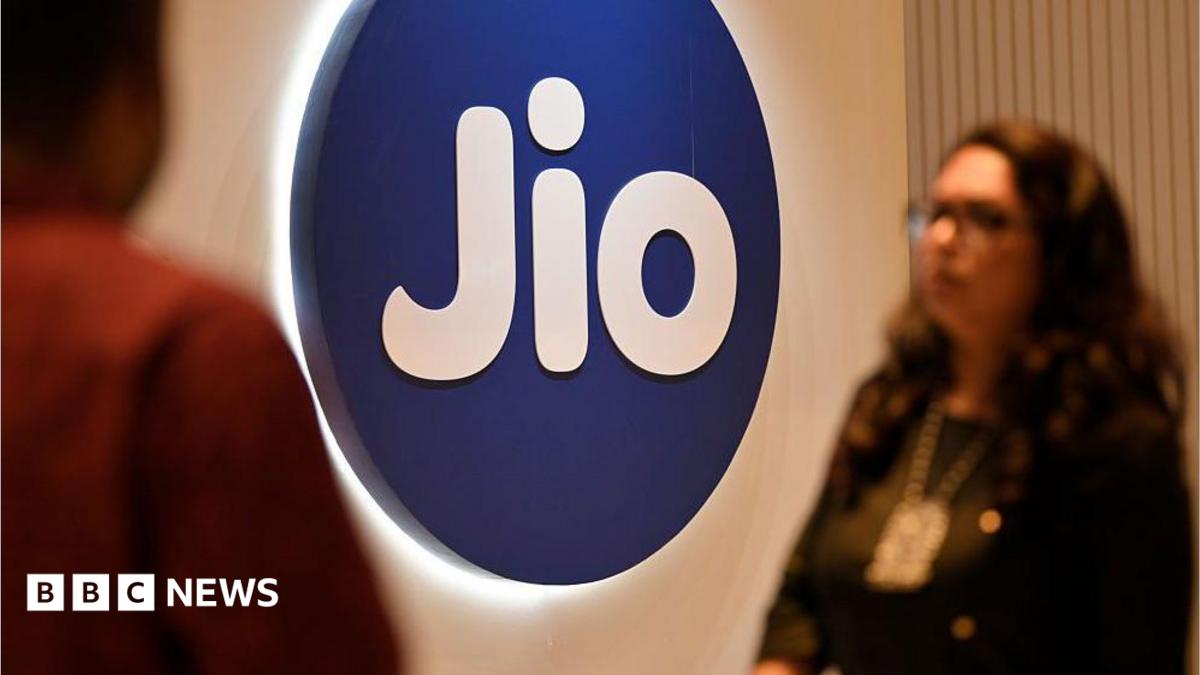
As it readies for a listing, Jio is now positioning itself as more than just a telecom company.
It wants to be seen as a homegrown digital and AI infrastructure behemoth through partnerships with Nvidia and Meta to develop data centres and large language models trained on Indian languages.
It is also moving from a phase of “market share acquisition to monetisation” driven by tariff increases, higher data use, and upgrades to postpaid plans according to Elara Securities – a signal that the country’s consumer market is becoming more sophisticated.
“Together, Jio and NSE represent the twin pillars of India’s new economy,” Azeez said.
Their simultaneous offerings could help draw global capital, as these companies “broaden the investable universe” and provide foreign money with opportunities to invest in sectors that are central to India’s growth story going ahead.