

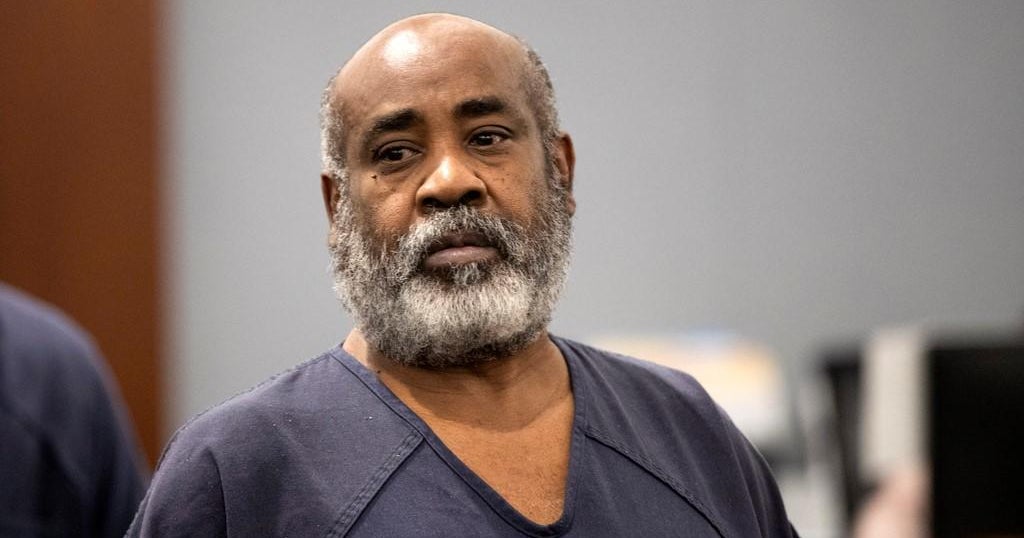
A judge in Las Vegas, Nevada, sentenced Duane “Keffe D” Davis to 40 years to life in prison on Tuesday for the 1996 murder of rapper Tupac Shakur. Judge Carli Kierny said he would receive credit for time already served.
Davis, 63, was convicted in August of murder with a deadly weapon with the intent to promote, further or assist a criminal gang for his role in the killing, although prosecutors said at the time that the state would dismiss the gang-related portion of his charge. He had pleaded not guilty.
At his sentencing hearing, Davis spoke briefly in court, telling the judge that he wanted some of the belongings police took from his house, like his pictures, to be returned to him. He said there was nothing more he wanted to say.
Shakur is widely considered a hip-hop music legend, and his death is among the most notorious celebrity deaths in modern history. He died six days after being shot while stopped at a red light in Las Vegas on Sept. 7, 1996. The mystery of who may have fired the shots persisted for years, until Davis started to speak publicly about his own presence inside the white Cadillac that investigators had known pulled up beside Shakur’s vehicle at that stop light on the night of the shooting.
The prosecution in Davis’ case argued that he had gone “hunting” for Shakur as an act of retaliation against the rapper and Marion “Suge” Knight, the co-founder of his record company, Death Row Records. Referencing what was Davis’ own account for a time, Chief Deputy District Attorney Binu Palal said Davis shot Shakur after he and Knight had beaten up Davis’ nephew.
Palal recognized during Davis’ trial that the defendant had changed his accounts somewhat since he initially began to speak openly about the fatal shooting. But he told the jury that fundamental details of his story remained consistent, including the fact that Davis described himself as being inside a white Cadillac, from which the gunshots that killed Shakur emanated.
But Michael Sanft, an attorney for Davis, argued that no evidence beyond his client’s statements had placed him in Las Vegas on the night that Shakur was shot. Surveillance footage, phone logs or other tangible records weren’t available, he told the jury.
Prosecutors said four men were inside the white Cadillac, and Davis was the only one of them still alive by the time of his 2023 arrest and eventual conviction. Another man, who prosecutors said initially gave the gun that Davis used to shoot Shakur, was also dead.
Davis detailed his involvement in the shooting that led to Shakur’s death and also wounded Knight, who was in the targeted vehicle, too, in his 2019 memoir, “Compton Street Legend.” His attorneys fought to exclude the memoir as evidence in his trial, but the prosecution refused that request.

