

It’s been said that she was uncomfortable in front of a camera, but Marilyn Monroe was one of the most photographed women of the 20th century. And now, in a world where it seems everyone is fighting for attention, her influence and her legacy stand taller than ever.
For the ultimate movie star, it’s no surprise that the Academy Museum of Motion Pictures in Los Angeles is going big with their new exhibition, “Marilyn Monroe: Hollywood Icon,” which opens today.
CBS News
Curator Sofia Serrano and museum director and president Amy Homma put together a collection of all things Marilyn, including some of her more dazzling film costumes.
Asked about the public’s fascination with the sex symbol who died in 1962, Homma said, “The fire has not extinguished. People still want to connect with Marilyn, whether they have seen all of these films, or whether they’re going to be introduced to these titles for the first time through our exhibition. She is everlasting.”
Among the exhibition’s must-haves: Monroe’s pink dress from “Gentlemen Prefer Blondes,” worn during the production number “Diamonds Are a Girl’s Best Friend.”
CBS News/20th Century Fox 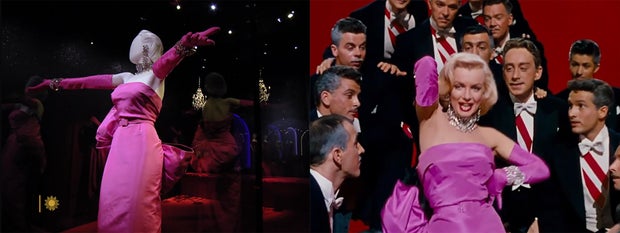
Of course, they tracked it down … and of course there’s a story behind it: The dress is actually a last-minute stand-in. The original design was a lot more revealing. But during production, some nude photos that Monroe had shot years earlier came to light, so to tone down her racy image a bit, the studio head ordered up the more modest pink dress for the song.
The dress, and the film, were hits, but for Monroe it was just another hurdle. “In many ways she represents resilience,” said Serrano. “And that is, I think, something that’s really relatable, and something that a lot of people can draw on for inspiration when they have their own challenges.”
Before she was Marilyn, she was Norma Jeane, a child of divorce who lived in a string of foster homes. In fact, to avoid going to a new foster home, she got married at age 16 to a 21-year-old neighbor, James Dougherty.
Husband number two was better known: baseball legend Joe DiMaggio; and number three was playwright Arthur Miller, who wrote Monroe’s final completed film, “The Misfits,” for her.
Monroe made 29 films, some of them true classics, from “All About Eve” and “The Asphalt Jungle,” to “Bus Stop” and “Some Like It Hot.” But none of it came easy. She had a reputation for being moody and, later in her career, chronically late, often keeping crews and directors waiting for hours.
Serrano said, “It took a lot for her to get ready. Her makeup routine took hours. The costuming often took a lot of work to get it just right. She would spend hours in front of a mirror just rehearsing and prepping before going onto the set. But a lot of people always say, what you did get was 100% worth it.”
She never did win an Oscar, but today her image alone is big business. When Monroe died, she left nearly everything to her acting coach Lee Strasberg, and in 2011, his widow sold most of Monroe’s estate to a company called Authentic Brands Group, who now license her image worldwide on artwork and products, from champagne to fake fingernails.
What’s more, Marilyn Monroe has upwards of 15 million followers on social media, many of them young, says Authentic Brands’ Dana Carpenter. “About 54% of that following is under the age of 34,” she said.
Asked why young people are still interested in Marilyn Monroe, Carpenter replied, “I would like to believe that they really like her self-starter story. I think that really left a mark on a lot of people.”
She was the top female box office draw for much of her career, but while Marilyn Monroe always looked like a million bucks, she didn’t have anywhere near that much.
Scott Fortner, who owns the Marilyn Monroe Collection, has been studying the actress and collecting memorabilia since he was in his early teens. He’s also taken a deep dive into her finances, including her bank records: “I have her full 1962 archive of financial documents,” he said, “and what’s amazing about this documentation is it tells you exactly what Marilyn made and what she spent her money on. It really is a great tool for dispelling a lot of the rumors and stories that are out there about Marilyn.
“One story is that she borrowed $5,000 from Joe DiMaggio to put down on this house in Brentwood. But these statements show that in January, when she put that deposit down, she made over $250,000 in royalties from her films. And there’s no deposit into an account for $5,000. There’s the expense for the deposit, but she didn’t need to borrow money from Joe,” Fortner said. “She bought that house on her own.”
It was a small Spanish-style house in the L.A. suburbs that she called “Cursum Perficio” … Latin for “my journey ends here.” And in the summer of 1962, it was where she gave her final interview, talking with Life magazine about everything from movies to money:
“I would like enough to sustain myself on and those around me who need a little help. But to be a millionaire isn’t any ambition of mine. It’s never one of my American Dreams.”
Allan Grant Photography © 1962 MM LLC; from “Marilyn: The Lost Photographs, The Last Interview” 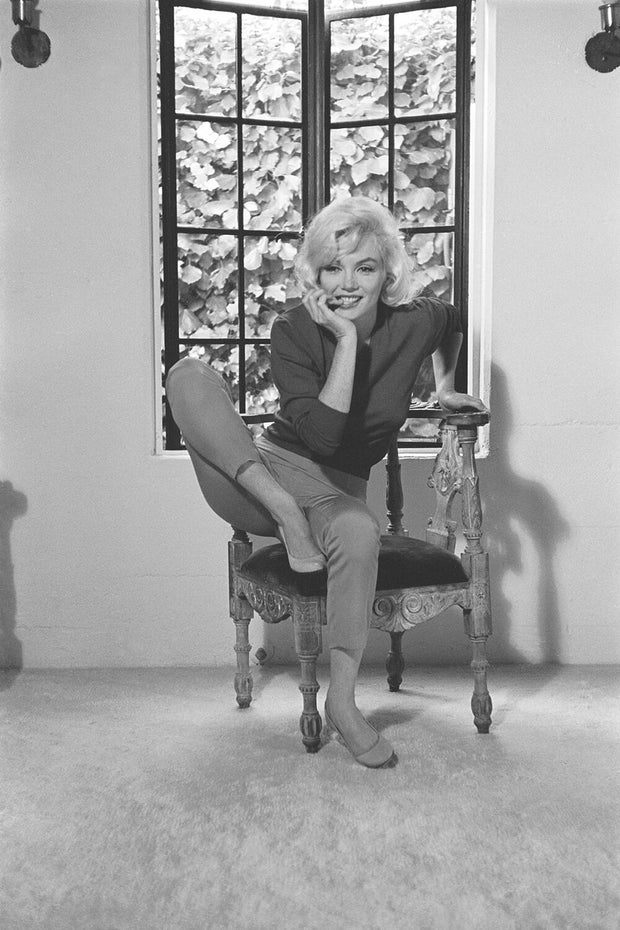
The interview, with Life writer Richard Meryman, and photos, by photographer Allan Grant (many never before seen in public), are in a new book that the publishers consider her official autobiography: “Marilyn: The Lost Photos, The Last Interview.”
That original article was published in Life on August 3, 1962 … and two days later, Monroe was found at her home, dead of an apparent drug overdose.
Weldon Owen 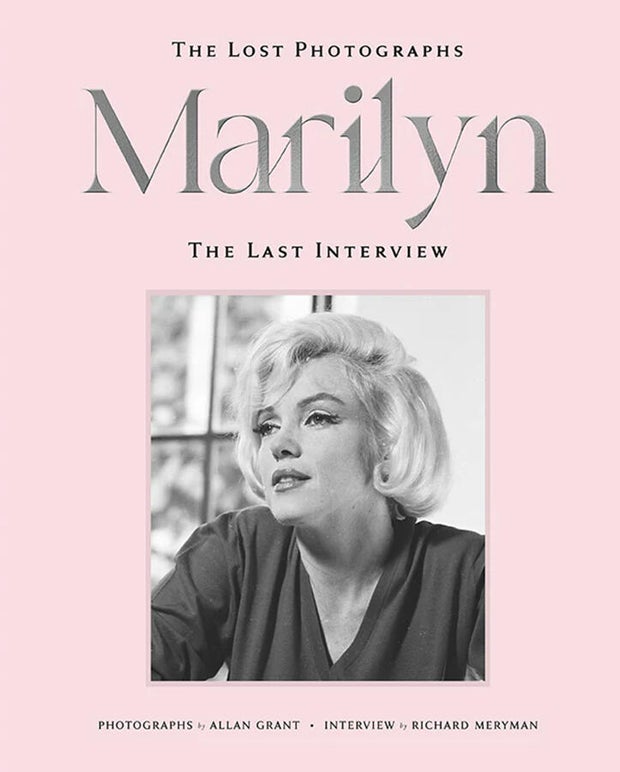
“It’s my opinion that she died by her own hand,” said Fortner. “Whether it was intentional or accidental, that’s the big question. I think the general public is unaware of the fact that she had overdosed in the past; it wasn’t the first time. Arthur Miller talks about two times that he had saved her when she had overdosed, and there were times before that as well.”
Monroe’s death has become part of her mystique, but for millions of fans, it’s not about how she died, but how she lived. And to all of them, she is eternal.
Asked whether he thinks people a hundred years from now will be talking about Marilyn Monroe, Fortner said, “I feel that she’s our modern-day Cleopatra, so I think the answer to that question is probably yes. And I say that because she’s had certain impacts on pop culture that still to this day are existent and ongoing.
“There’s a reason that she’s still as popular and ever-present today, and I think that she always will be,” he said. “What it boils down to is she was troubled, she was challenged. At the same time, she was a genius. Look at what she accomplished. She created this character that the world fell in love with, and still to this day is in love with.”
READ AN EXCERPT: “Marilyn: The Lost Photographs, The Last Interview”
For more info:
Story produced by John D’Amelio. Editor: Steven Tyler.
See also:
