

Want to bookmark your favourite articles and stories to read or reference later? Start your Independent Membership today.
Already a member?
Log in
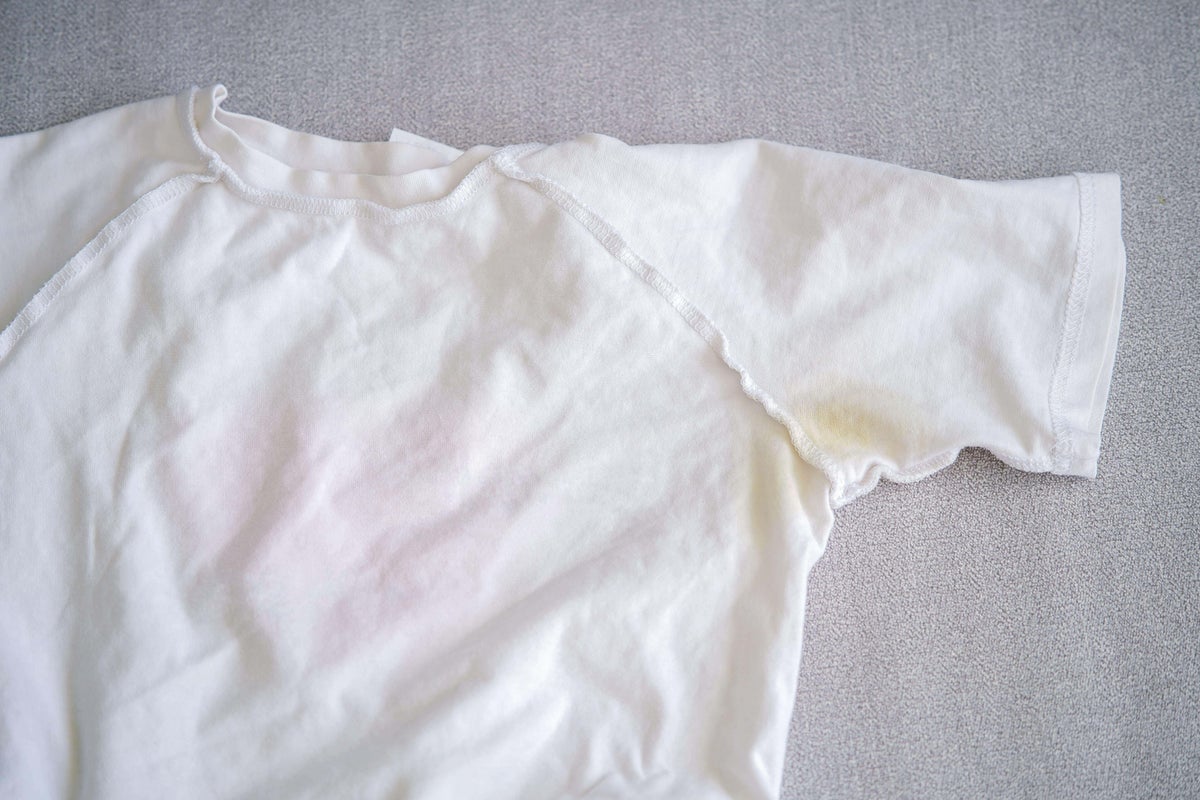
Nothing ruins a favourite white T-shirt quite as quickly as the unsightly yellow marks that slowly build up under the arms.
Contrary to popular belief, they’re not simply “sweat stains”
Sustainable cleaning expert at smol Catherine Green characterises the discolouration as a “tag-team reaction”, noting that sweat itself is generally clear, consisting largely of water and salt.
“The yellowing happens when the proteins, fats, and urea in your sweat mix with the aluminium compounds found in traditional antiperspirants, along with your skin’s natural body oils,” she says.
So, rather than demoting another top to the pyjama drawer, here’s how to effectively remove these stubborn stains.
Treat the stain before it reaches the washing machine
Simply throwing a yellowing T-shirt into your usual wash is not enough to shift stubborn build-up.
“When I’m tackling stains on any item of clothes here is my golden rule,” explains Instagram cleaning sensation Gemma Bray, otherwise known as The Organised Mum, “pre-treat the stain, wash, check that the stain has gone, and only then dry.”
Yellow stains are usually due to a build-up of older sweat and deodorant residue, which require more time, Bray explains.
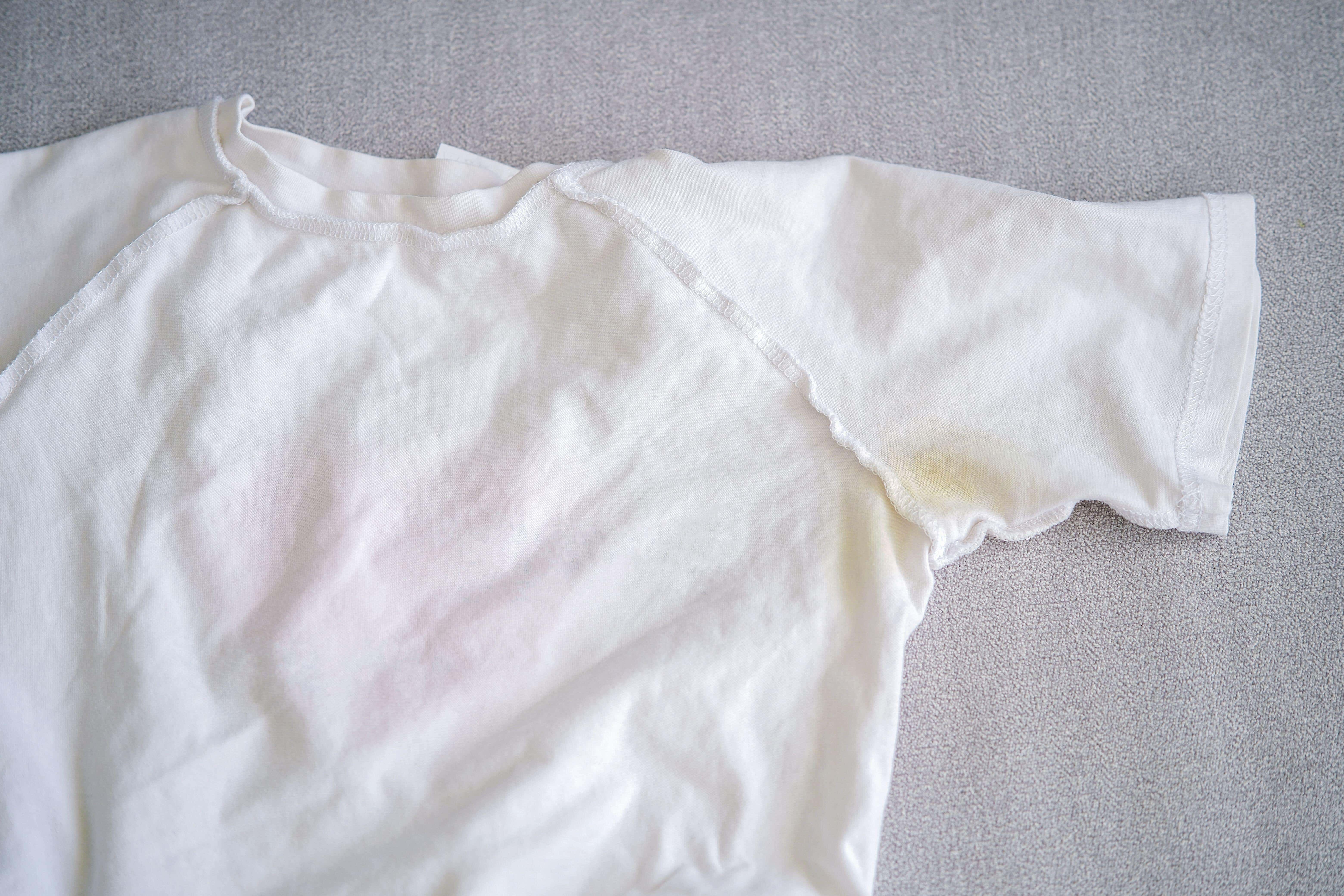
“If I’m washing a T-shirt with older, baked-in stains these will require more patience, not more aggression. If you attack the fabric with harsh chemicals you risk ruining the item of clothing.”
She recommends pre-treating the underarm with an oxygen-based stain remover and allowing it the recommended soaking time before washing according to the garment’s care label.
Raid your kitchen cupboard
If you’re wanting to use fewer chemicals when removing your stains, there are some more natural DIY methods you can try.
Green swears by a paste made from equal parts bicarbonate of soda, hydrogen peroxide and water. She recommends gently working it into the stain with an old, soft toothbrush, leaving it for 15 to 30 minutes – or up to an hour for older stains – before washing.
Bicarbonate of soda can help lift grease and absorb odours, while the acids found in white vinegar can help tackle mineral and antiperspirant build-up, but they shouldn’t be used liberally if the stain is still there after one use.
Dr. Beckmann‘s senior brand manager Chloe Baker says they can be hit and miss.
“White vinegar and bicarbonate of soda can help lighten very light, fresh marks, but they struggle with set-in, built-up stains.
“Lemon juice is the least reliable, and it can leave marks or weaken fibres if left on.”
Don’t assume white clothes need chlorine bleach
It seems logical: white top plus stubborn stain equals bleach. But ordinary household chlorine bleach is not the answer.
“Steer clear of chlorine bleach on yellow underarm stains,” Baker says, as “it can react with the proteins and aluminium residues in the stain and turn it more yellow and it can weaken cotton over time.”

Green agrees, saying chlorine bleach can react with sweat proteins and antiperspirant residues and potentially deepen discolouration while damaging fibres.
“I would never use bog standard bleach on my clothes,” Bray explains. “However I do use a laundry bleach which contains chlorine but is designed for laundry and really does help with white school shirts.”
The safest rule is to follow both the garment care label and the stain-remover’s instructions, rather than assuming a stronger chemical will produce a whiter result.
Resist turning up the temperature
Another tempting response to stubborn stains is to turn the washing machine up as high as possible – but hotter doesn’t mean cleaner.
“Whatever you use, avoid hot water on fresh stains, as it can set the sweat stains in,” warns Baker.
Green recommends washing whites at 30C or lower when using a biological detergent, as the enzymes can help break down sweat and body oils and work best at lower temperatures.
And resist squeezing in that final T-shirt just because there’s technically room.
“Make sure you’re not overloading the machine either to make sure your clothes are being washed properly,” Bray says.
Whatever you do, don’t tumble dry it
This might be the most important step if the first wash hasn’t worked.
Heat can make an existing stain considerably harder to tackle, so don’t put the garment in the tumble dryer – or iron over the affected area – until you’ve checked the yellowing has disappeared.
“Because the residue builds up with every wear and wash, and heat from tumble drying or ironing can set it in, the yellowing tends to appear gradually rather than after a single wear,” explains Baker.
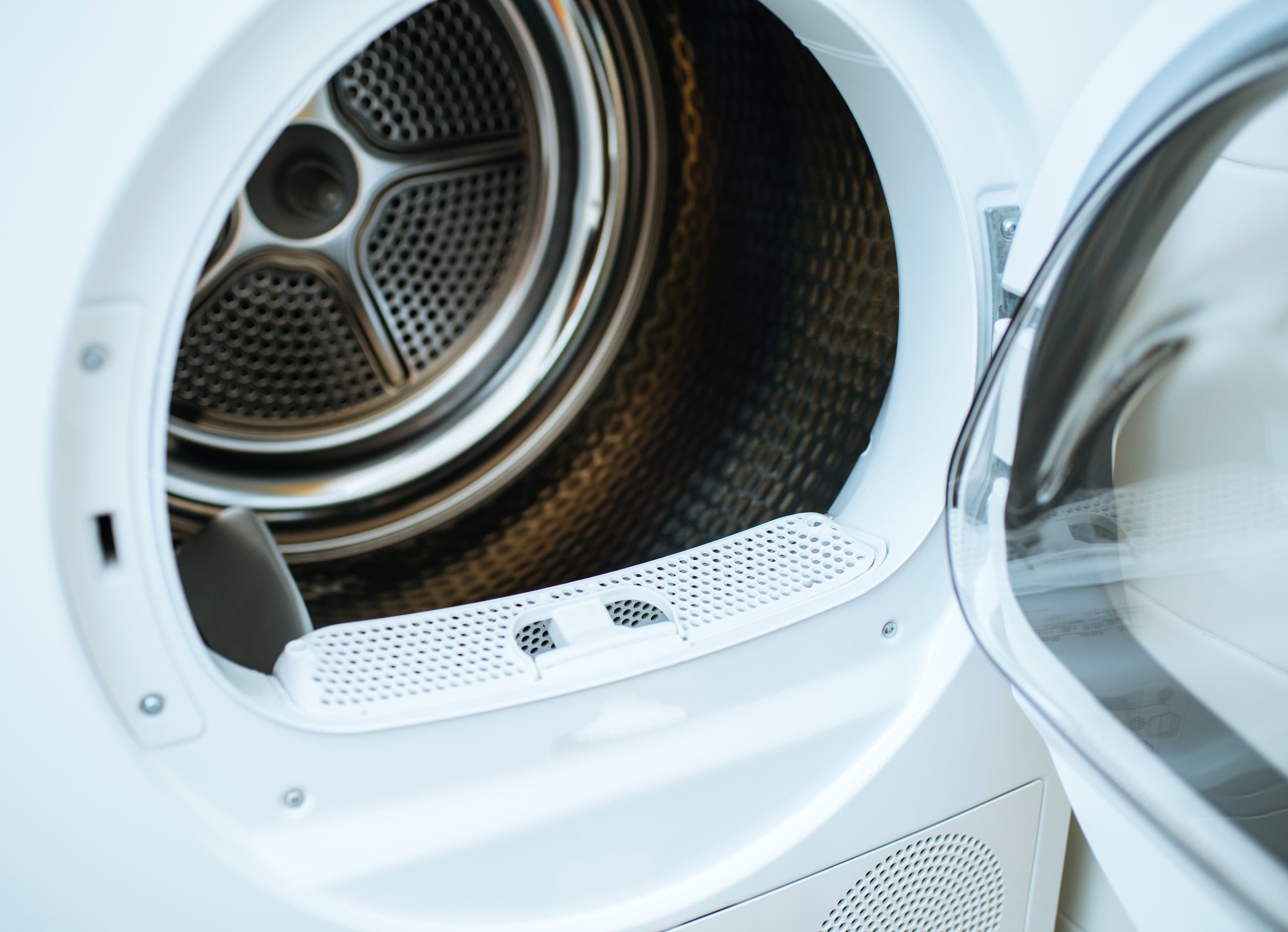
Bray similarly says: “Don’t tumble dry the T-shirt until you’ve checked that the stain has actually gone [otherwise] it will bake the stain into the garment.”
If it’s still visible, repeat the pre-treatment and wash before applying heat.
On a sunny day, however, a washing line could work in your favour.
“Don’t underestimate the power of sunlight for helping whites look brighter and whiter,” says Bray, who suggests turning a T-shirt inside out so the underarm area gets maximum exposure.
How to prevent yellow stains
The best way to deal with yellow underarms is to stop the build-up becoming visible in the first place, and for this, it all starts before you even put your T-shirt on.
“The first step is letting your deodorant fully dry after you’ve applied it before putting your T-shirt on,” says Bray, “also, take care not to use any more than you need.”
Baker similarly recommends allowing antiperspirant to dry completely and using less product. For people who repeatedly struggle with staining, she suggests considering an aluminium-free deodorant, as this removes one component involved in the reaction.
The second step is not letting a worn white T-shirt languish at the bottom of the laundry basket.

“When people talk about keeping their whites white, that means washing them regularly – usually after only one wear,” Bray explains.
“Don’t leave them sitting at the bottom of your washing basket because things like body oils and deodorant can build up on the T-shirt.”
Separating whites, avoiding an overloaded washing machine and using the appropriate amount of detergent can also help prevent residue accumulating.
And if repeated soaking, pre-treating and washing still can’t resurrect an old T-shirt, there is a point at which more cleaning risks doing more harm than good.
“Sometimes you have to recognise when a stain is not going to go. If the stain is set, it might be time to let the T-shirt go,” Bray says.

