


During the past few days, everyone else I know and I have been experiencing an uncomfortable sense of deja vu. The phrase “zoonotic virus” has been cropping up a lot, alongside “human-to-human contact”, “track and trace” and “self-isolation”. The World Health Organisation is releasing regular statements, as are members of the ultimate ‘don’t panic department’ UK Health Security Agency (UKHSA). It feels eerily like 2020.
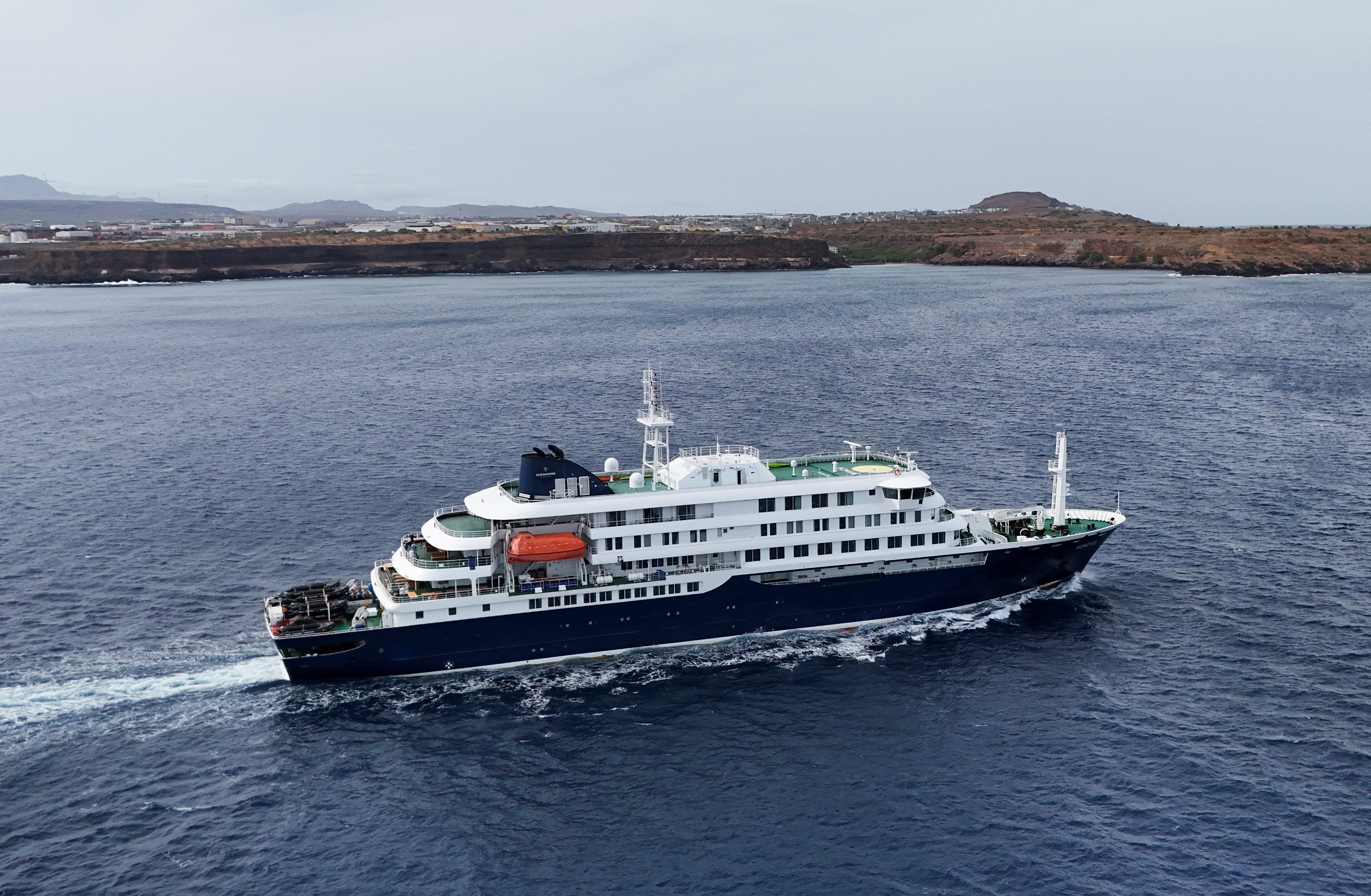
Instead of coronavirus dominating the headlines, this time it is the hantavirus outbreak. The focus is not on ski resorts in Italy, but a Dutch cruise ship, the MV Hondius, where eight cases of this rodent-borne disease have now been linked back to the boat, with five confirmed by laboratory testing. So far, there have been three deaths on board since the Hondius set sail from Argentina at the start of April.
Photographs of healthcare workers wearing hazmat suits and full PPE to evacuate passengers with suspected symptoms, as well as the news that two Brits are self-isolating at home after potential exposure on the ship, are sparking buried memories of the start of the pandemic. So do the endless maps tracking the ship’s movements, and the alarmingly detailed social media threads from armchair epidemiologists. It feels like a matter of time before we see Chris Whitty standing at a podium, presenting statistics-laden slides.
It is no wonder that news of the outbreak has triggered these unwanted recollections and an attendant quiet internal panic. While we may like to think that the coronavirus pandemic is in the rear-view mirror, many of us are still grappling with the aftershock, and any mention of a mysterious zoonotic illness (spread from animals to people) can inevitably dredge up fears of another pandemic-type situation.
It’s as if, since Covid, we’ve all been on a collective red alert for the next big disease. We saw similar fears bubble up earlier this year during the meningitis outbreak in Kent, when pharmacies reported that they were running out of stock for the meningitis vaccine due to high demand.
But before we seriously consider dashing out for multiple rolls of toilet paper, how worried about hantavirus do we actually need to be?
While there are still plenty of questions circulating around the cruise ship outbreak, one thing that health officials have been very clear about is that despite feeling the same, this is a very different situation than the one we saw six years ago with Covid. The risk to the wider public remains very low.
Hantaviruses are a group of viruses carried by rodents such as rats and mice, typically caused by exposure to their faeces or urine. This usually happens when humans inhale particles after trying to get rid of droppings by sweeping them up, and thus causing the particles to become airborne, but the virus can also be spread through rodent bites, or can enter the body through open cuts or the eyes. It’s thought that there are around 150,000 global cases of the disease annually, with more than half of them typically occurring in China.
They can be divided into two categories, each causing a severe illness, although both start with flu-like symptoms such as fever, muscle aches, headaches and dizziness. The type more prevalent in Asia and Europe, sometimes referred to as “Old World” hantaviruses, tends to lead to Haemorrhagic Fever with Renal Syndrome, or HFRS. Symptoms usually crop up one to two weeks after exposure to the infected rodent, and it can result in severe kidney failure, with a mortality rate varying from one per cent to 15 per cent.
The “New World” hantaviruses more common in the Americas, meanwhile, can cause Hantavirus Pulmonary Syndrome, or HPS, and has a longer incubation period, with symptoms appearing between one to eight weeks after contact. HPS can cause fluid to build up in the lungs and chest cavity, prompting serious heart and lung problems.
With this type of hantavirus, the death rate is much higher: HPS can prove fatal in nearly 40 per cent of patients. It’s an illness that made headlines last year, when it emerged that Betsy Arakawa, wife of Hollywood legend Gene Hackman, had died of the disease, days before the actor died of natural causes.
Currently, there are no specific vaccines or treatments for either sort of hantavirus infections; patients with severe cases may need supportive care in hospital, such as respiratory support for HPS or dialysis for HFRS.
Typically, a hantavirus prompts what is known as a dead-end infection: when a human contracts the disease after their contact with infected droppings, they don’t tend to pass it on. There is only one known strain of the virus that can be spread by human to human contact, and that is the Andes strain, most commonly found in Argentina and Chile.
In 1996, an ANDV (the Andes virus) began in the small city of El Bolsón and then expanded to distant cities, such as Bariloche (121 km) and Buenos Aires (1700 km), involving 16 epidemiologically linked cases. This outbreak became a focal point for research because molecular and epidemiological evidence suggested person-to-person transmission (PTP).
A larger PTP transmission outbreak was in the Argentinian village of Epuyen in 2018, when a man contracted the virus through contact with a rodent, then attended a birthday party soon after. A handful of people who sat near him then went on to spread the illness at other crowded events; in total, there were 34 confirmed infections and 11 deaths. In this last outbreak, several individuals were identified as superspreaders, predicting the high transmission potential of this strain. It was eventually curtailed by the implementation of strict quarantine measures.
Patients on the Hondius have tested positive for the Andes strain and there is unconfirmed speculation that the outbreak may be linked to a Dutch couple’s birdwatching expedition near a landfill site in Ushuaia, on the southernmost tip of Argentina, where, it is believed, they encountered a rodent-contaminated environment.
But while the idea of human-to-human transmission might sound alarming, experts are keen to stress that hantavirus is only passed on through close contact. “We’re not talking about casual contact from very far away from one another,” WHO official Dr Maria Van Kerkhove told the BBC this week.
For the broader public, not directly involved in this cruise ship [outbreak], the risk here is really negligible
Professor Robin May
And in an appearance on BBC Radio 4’s Today programme, the UK Health Security Agency (UKHSA)’s chief scientific officer Professor Robin May emphasised that “a quick pass in an airport is not going to put you at risk”.
“For the broader public, not directly involved in this cruise ship [outbreak], the risk here is really negligible,” he said, emphasising that there is “really no cause for concern”.
In fact, scientists seem to agree that hantavirus simply isn’t efficient enough at transferring from person to person – and for that reason, it’s an unlikely candidate for a pandemic. Past cases have not resulted in huge outbreaks – and even on a cruise ship, a uniquely closed off environment where passengers are constantly crossing paths and sharing facilities, the number of travellers impacted so far remains small.
With viruses, there is always the possibility of mutation, but hantavirus would have to change significantly in order to spread more easily between humans, according to Zoe Weiss, director of microbiology at Tufts Medical Centre in Boston.
“[It] would need to make a major evolutionary leap to become a pandemic threat,” she recently told Newsweek, which “would likely require multiple coordinated changes affecting how the virus enters human cells, replicates in human tissue, and evades early immune defences. Hantavirus does not currently spread well enough between people for that to be an easy or plausible evolutionary path”.
So if you are prone to panicking when we hear phrases like “test and trace” and “airborne transmission”, try to keep calm. The experts seem to be of the same mind – that the prospect of us sailing into a Covid 2.0-style situation with hantavirus is very unlikely indeed.

