
Hello. My name’s Helen, and I’m a virgin.
A ChatGPT virgin, I should say. Though, in the midst of our ongoing AI apocalypse, the latter is quite possibly the more shocking admission at this point.
It’s not just Chat. I’ve never fooled around with Claude, Gemini, Llama or any of the other generative AI platforms that have swiftly become all the rage. And when I say virgin, I mean virgin. I’ve not so much as opened one of these tools, let alone asked them anything. I’m not even 100 per cent where they live. Presumably on the internet. Are they in the cloud? Does one download an app?
This ignorance wasn’t intentional – at least, not at first. The whole thing somehow passed me by, just as podcasts did. One day everything was normal, and the next I woke up and looked around to find the world avidly listening to the opinions of Z-list celebrities and asking ChatGPT what to eat for breakfast.
I do use some AI – it’s nigh-on impossible to avoid, given that it’s fast becoming baked into every piece of tech in existence – but my usage is currently limited to Otter, a transcribing tool that I employ for interviews. It’s saved me countless hours by performing a task I previously found unbearably tedious, the perfect use of AI, to my mind.
Otter is pretty accurate but it also hallucinates on a regular basis. Which, in layman’s terms, means it makes stuff up. Or, to put it another way: it lies.
Why, then, would I trust AI, as so many people seem to nowadays, to dish out critical relationship advice, reply to sensitive messages, do most of my job for me and serve as my therapist, travel agent and de facto romantic partner all wrapped into one? Why would I essentially stop using my brain and outsource my thinking to something prone to proudly presenting total nonsense as fact with all the unearned confidence of a 23-year-old life coach?
I’m also deeply conscious of the fact that, in many cases, AI is quite literally doing another human being out of a job. Someone told me recently that I should use it to put together a personal training plan because “it’s really good at that.” No it isn’t!, I wanted to scream directly into their face. What it’s “good” at is scraping the internet, pulling together the hard-won knowledge and advice of skilled professionals, and dishing it out for free – all while ensuring a real-life PT misses out on a paying client and sees their livelihood slowly decimated.
The boss of Standard Chartered, Bill Winters, may have since rowed back on his recent controversial comments following intense backlash, but he was simply voicing plenty of other companies’ stances when he said that AI would be replacing “lower-value human capital” amid thousands of job cuts.
Oh, and don’t even get me started on the energy usage; ChatGPT is said to use 10 times as much energy as a Google search.
Yet I can’t help but worry that my AI obstinacy is going to end up screwing me over. An ever-widening chasm already seems to be opening up between the early adopters and stubbornly analogue luddites. Very few people seem to merely flirt with AI – they’ve either opted out entirely, like me, or they’re a fully paid up member of the Large Language Model squad, extolling its virtues with the kind of zeal usually reserved for cult members talking about their glorious leader.
You would be hard-pressed to find a corporate role where some level of AI fluency won’t soon be expected
Amanda Augustine, Careerminds
According to some estimates, nearly half (46.3 per cent) of the UK population now uses ChatGPT, not to mention Claude or its other rivals. Based on April 2026 figures, UK users generate around 86.7 million prompts per day, roughly 31.7 billion annually.
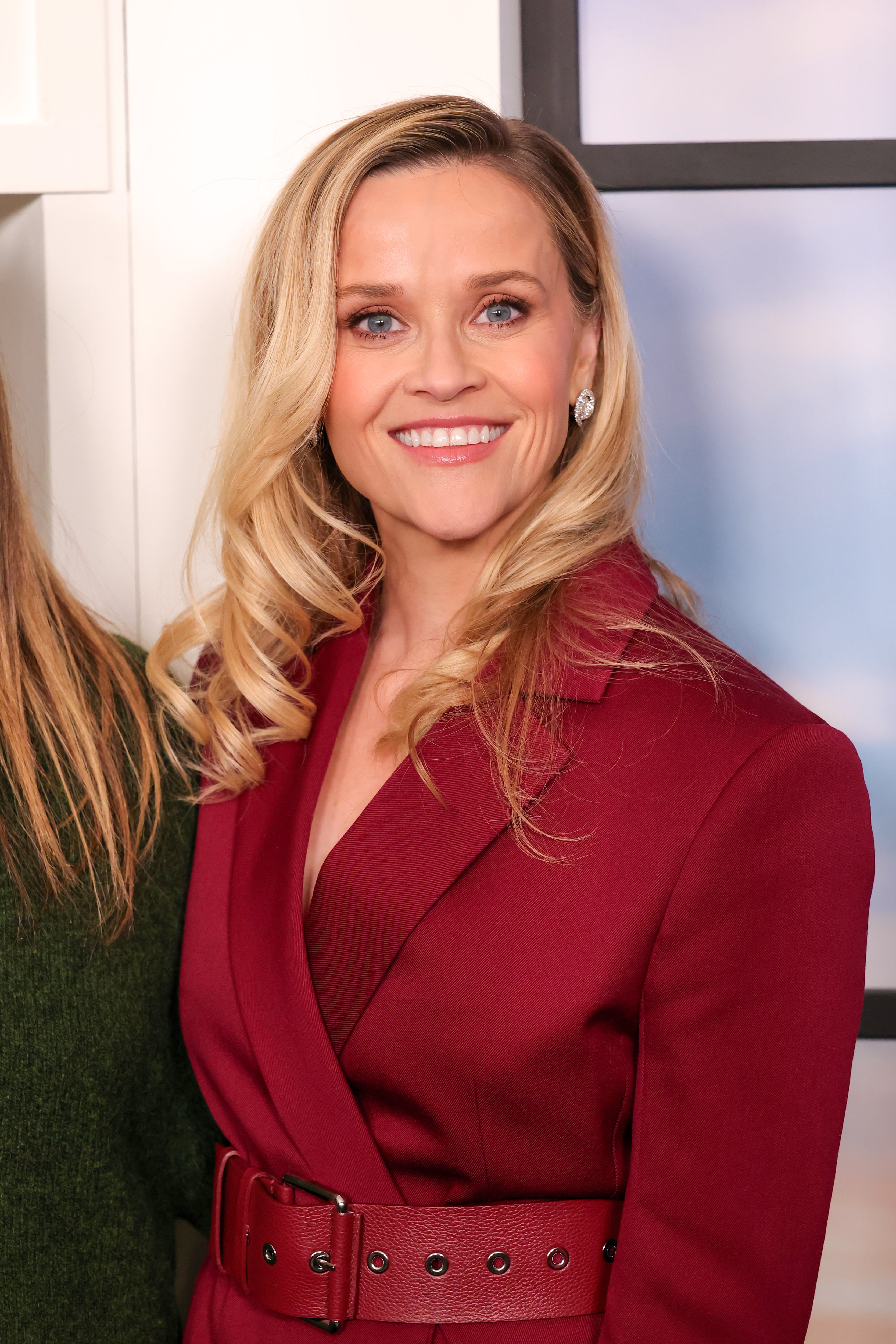
Even famous women, from Reese Witherspoon to Mel Robbins to Sheryl Sandberg, are instructing me to get on the AI train right this second or accept my fate as a has-been, as highlighted in The Cut’s excellent recent piece, “The Girlbossification of AI”.
So am I destined to be left behind in the AI revolution – as hopelessly stranded in the dark ages as an octogenarian who never progressed past a landline and has to rely on their adult children to access online banking? I’ve heard that candidates are increasingly being asked to demonstrate they can use generative AI in job interviews. Principles are all well and good, but they ain’t going to pay the mortgage anytime soon.
“In many organisations, AI is no longer viewed as an emerging trend; it’s becoming part of the day-to-day workflow,” Amanda Augustine, career expert at global workforce solutions provider Careerminds, tells me. “I think you would be hard-pressed to find a corporate role or industry where some level of AI fluency won’t soon be expected.”
When I ask whether my refusal to engage with Chat, Claude and friends might be detrimental, her answer is pretty unequivocal: “If you completely ignore these tools or refuse to explore them, it could potentially hurt future career prospects or progression. As the adage goes, the only constant is change. If you resist embracing these changes in technology, it could hold you back in the workforce.”
While I don’t need to become an AI expert overnight, “employers are increasingly expecting candidates to demonstrate their adaptability and a willingness to learn new technologies. Even a basic understanding of like ChatGPT can help professionals work more efficiently.”
According to legit AI expert Michael Wooldridge, professor of foundational AI at the University of Oxford, AI adoption is adding another dimension to a well-known digital divide. He cites his late parents, who never managed to get on board with computers. “It was something that was alien to them, and towards the end of their life that started to become a real issue,” he says. Services they needed to use were only accessible in electronic format, online or via an app. “There is a certain element of exactly the same phenomenon here that is definitely worrying.”
He is, understandably, somewhat incredulous when I tell him I’ve never once used Chat et al – “you haven’t dabbled at all?” – but it’s not all bad news, apparently.
Human-generated content starts to have significant value in its own right
Michael Wooldridge, University of Oxford
“AI is a lot more accessible to this generation than computers were to my parents 30 years ago,” he explains reassuringly. “It’s actually a very unthreatening thing. You don’t need a PhD in AI to use Chat GPT. You just go to it and have a conversation.” Essentially, the people of previous generations forced to suddenly get to grips with computing technology had a much bigger leap to make than ordinary office workers do today when engaging with AI.
While a two-tier system is emerging, it’s between white-collar and blue-collar workers. “For an awful lot of people, AI is completely irrelevant in their working lives,” says Wooldridge. “If your job is in the physical world – if you are a plumber or an electrician or you work in a care home – then AI is going to be a rather marginal part of it. One of the ironies about the advances that we’ve seen is that skilled manual labour professions are going to be immune from AI for the foreseeable future, whereas white-collar work is a lot more vulnerable.”
On the flip-side of the AI coin, Wooldridge can foresee a new career path that will become the natural successor to today’s online influencer: “People are going to monetise every experience they have by providing the data of that experience to AI – filming their entire lives. Every bit of data that you can scrape from a human being is going to be scraped and fed to AI, and people are going to make financial deals in order to do that.”
This sounds like, quite frankly, hell on Earth. So am I going to be left behind? Not necessarily, there could be unexpected advantages.
“One fascinating dimension is that, even as we have this conversation, AI slop is becoming ever more prevalent,” says Wooldridge. “You wade through ever more of it, and one of the side effects is that human-generated content starts to have significant value in its own right. When I’m reading a piece from a journalist who has some experience of the things that they are talking about, it actually has some value.
“As we look to the future, one of the things we’re likely to see is that we get this high value attached to authentic, genuine human voices, precisely because they are authentic rather than polished and generic.”
This idea that the human touch will command a premium is even more compelling if you believe Wooldridge’s depressing prediction that the current proliferation of AI slop is the merest tip of the iceberg. “We haven’t seen anything compared to what’s coming,” he warns. “It’s going to be mind-boggling.”
There’s one additional potential benefit to keeping myself pure: we’re already seeing the threat of humans voluntarily de-skilling and eroding their own critical thinking faculties by palming everything off on AI rather than figuring things out themselves.
“It’s a real risk,” advises Wooldridge, “we need to stay on top of that, and that’s part of the education that we need around how to relate to these tools and how to use them well.”
At the end of the day, continuing to stick my fingers in my ears and pretend the age of AI isn’t happening might not be my best career move to date. But if it means that I still remember how to write and problem-solve and research and, most crucially of all, think for myself, you know what? I might just hold off popping my cherry a little longer.
