

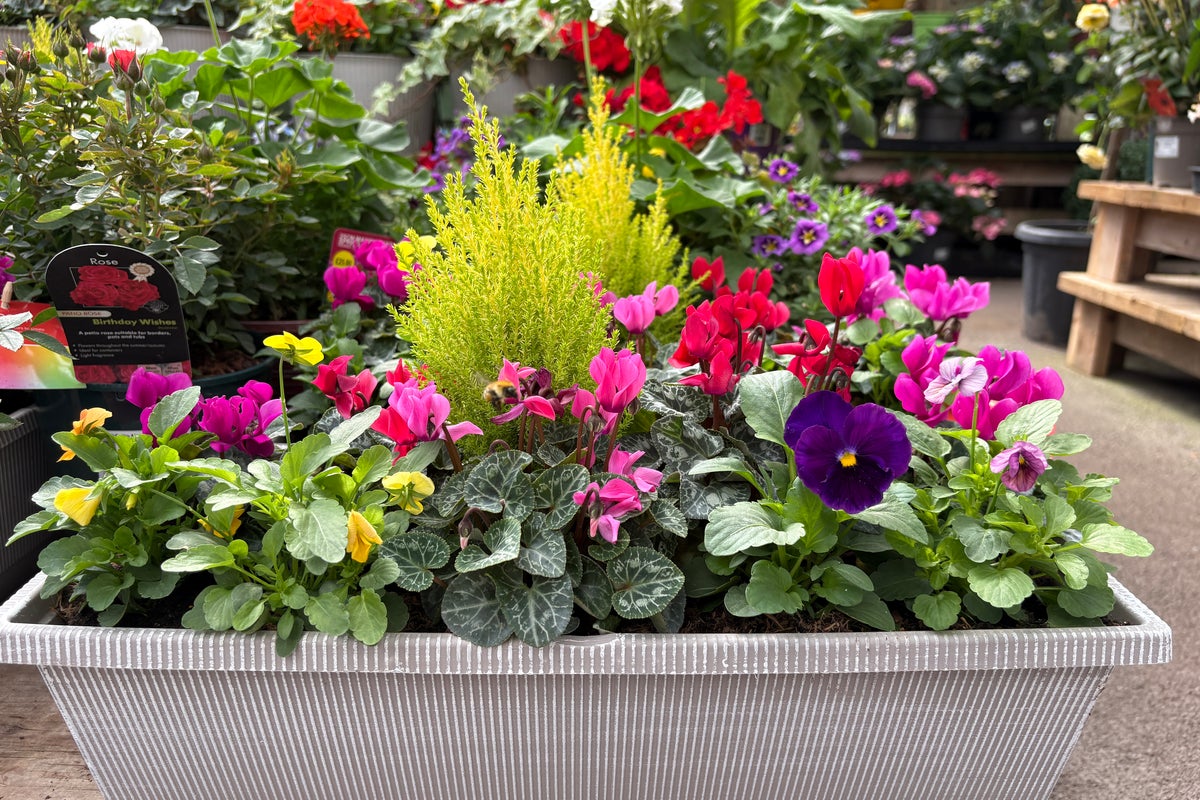
While the current weather may still feel Mediterranean, autumn is almost here, making this an ideal moment to clear out tired summer containers and substitute them with vibrant seasonal plantings.
Stores and garden centres are now filled with later-flowering plant species including cyclamen, skimmias, hebes, violas and pansies, alongside flowering heathers in shades of purple, pink or white, feathery ornamental grasses and lush evergreens.
If the goal is simply to secure immediate displays of colour for the autumn season that will not persist far beyond October, options include large hybrid cyclamen in a wide range of colours or substantial bronze or orange chrysanthemum balls, explains Kate Haines, plant area manager at Squire’s Garden Centres.
“But there are also more mixed herbaceous planters, where people might put in a heuchera and maybe a salvia and some perennial plants like gauras or ornamental grasses, such as pennisetum.
“You need something in the middle to give you a wow factor. The old formula is that you need a thriller, a filler and a spiller – something that’s going to give you a bit of wow in the middle and something like a pennisetum would do that.
“You need things that fill in through the middle, which are not necessarily going to be the stars of the show but are going to give you some bulk, like asters, little chrysanthemums or violas mixed in with some thymes, and then you want something to spill over the sides and soften the edge, such as tumbling violas, which give a bit of swag down the side.”
“I like Cyclamen hederifolium which flower in autumn,” suggests Ashley Edwards, head gardener at Crocus. “I would go for some nice evergreens, so something like a Pittosporum ‘Tom Thumb’, which is small.”
Nepeta will also give you a second flush in autumn if you cut it back in late summer, he adds. Sedums, which are now called hylotelephium, also do well in pots in the autumn.
The perennial Salvia jamensis Magical River Series should flower through to the first frosts, are fully hardy and ideal for growing in pots, while erigeron will also spill over and should flower until the first frosts, says Haines.
“Santolina and ajuga will give you interest through the winter, more through evergreen texture than flower colour,” she adds.
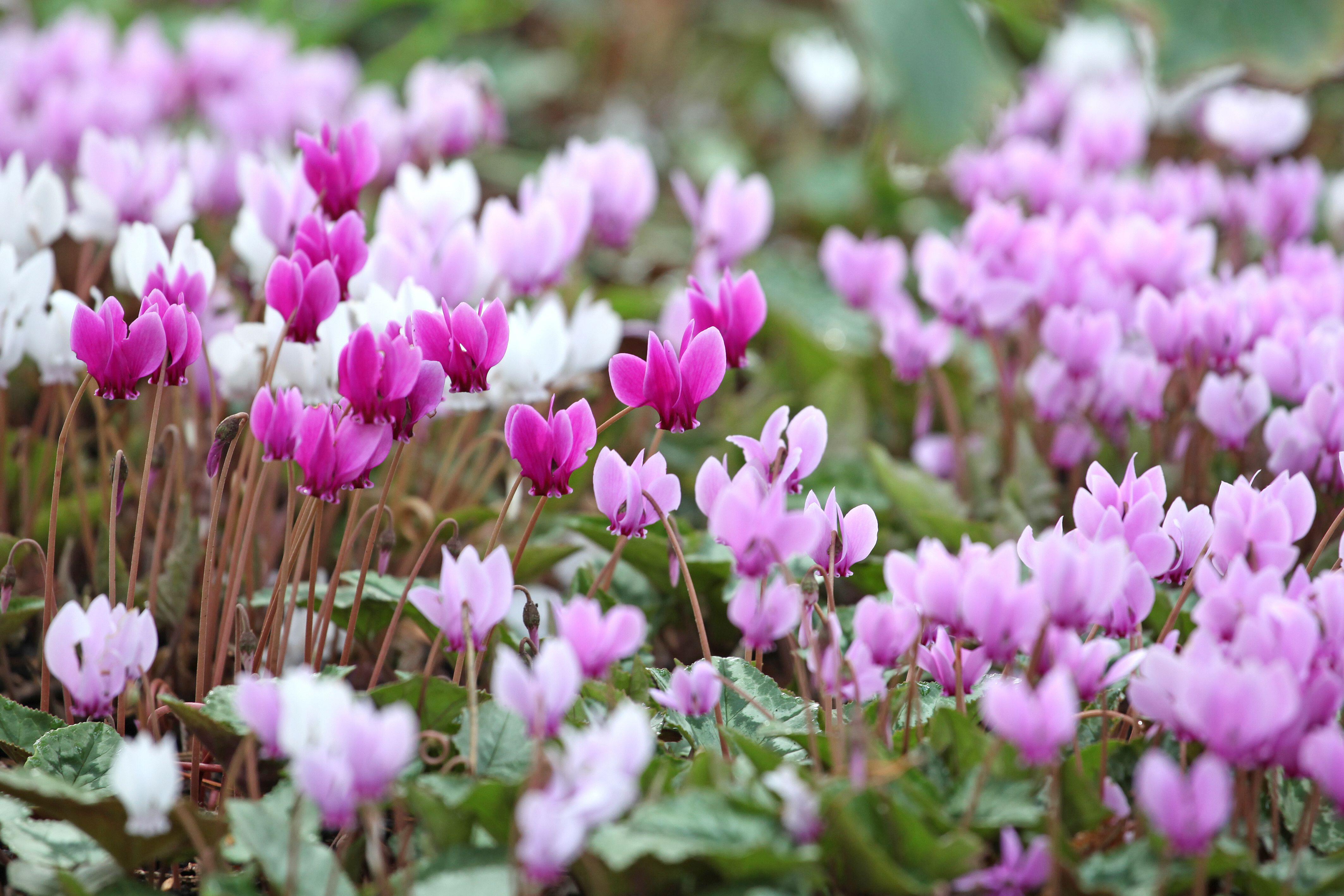
And if you want berries, solanum – a low bushy plant with orange berries – or gaultheria, with red berries, are suitable for pots, along with Skimmia rubella.
Viburnum tinus grows very well in pots and containers, providing glossy evergreen foliage and winter blooms, followed by steely blue berries, from November to April, Edwards suggests.
Remember first, though, that any pot you plant will need well watering for as long as the good weather lasts.
“When it comes to containers you will always be a slave to the watering can. If you don’t do that, your plants will wither and die,” says horticulturist Andrew Londero, also from Squire’s Garden Centres, which is holding an autumn terracotta pot masterclass on September 11.
Follow Londero’s step-by-step guide to creating a beautiful autumn planter.
What you’ll need
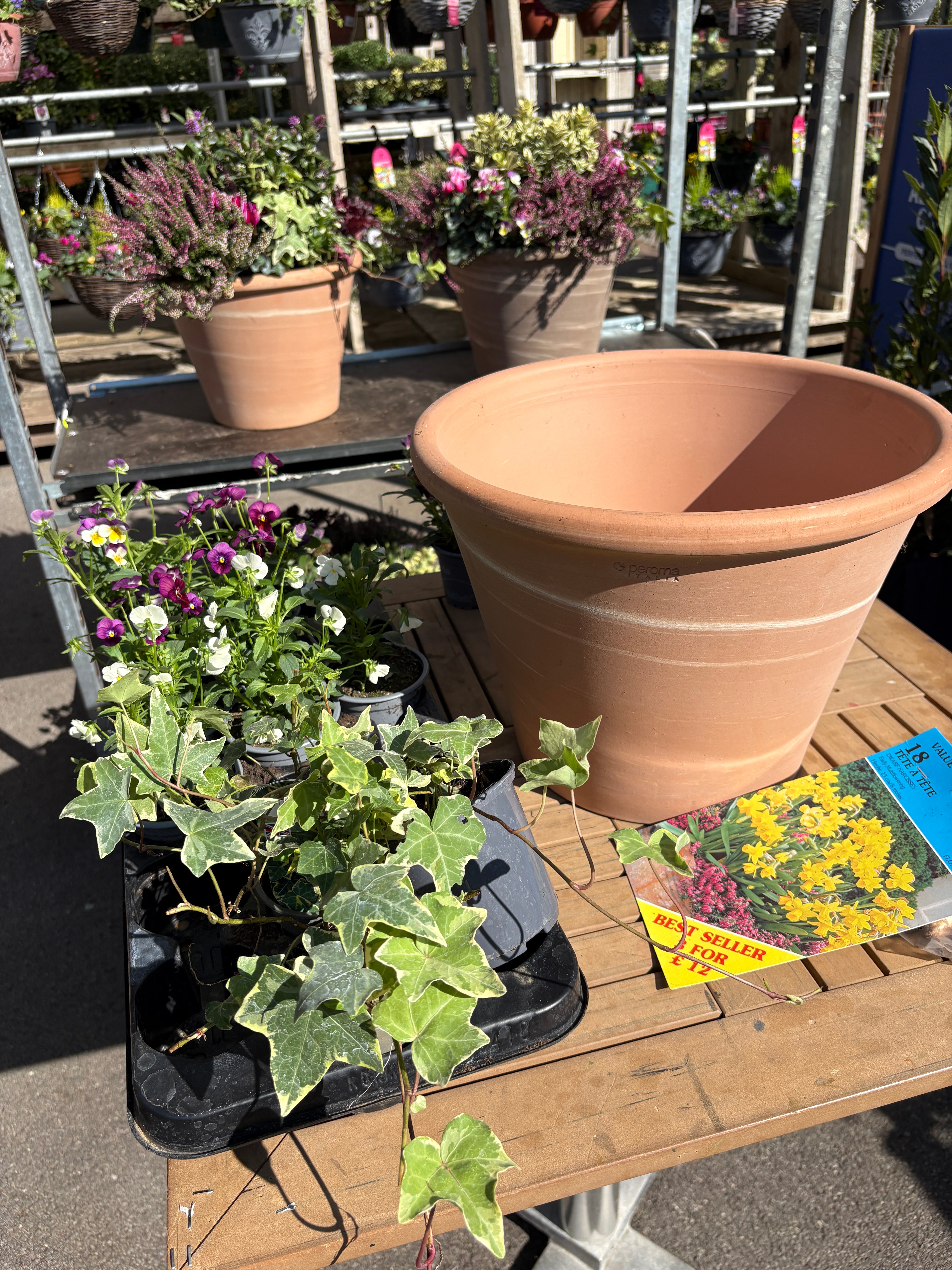
A large planter with a drainage hole in the bottom, multi-purpose compost and a selection of plants which should consist of one bigger, taller statement plant as the centrepiece thriller and a selection of fillers and spillers.
The centrepiece could be anything from a dwarf conifer to a skimmia, a hebe or even an ornamental grass.
Fillers might be winter-flowering heathers, which come in a variety of colours, along with mini cyclamen, or you could even include small ferns.
Spillers such as ornamental thyme, muehlenbeckia or ivy and viola could trail over the side of the pot.
You could also plant a few miniature bulbs such as Narcissus ‘Tête-à-Tête’, or other bulbs, below the main plants, a few centimetres from the side of the pot.
How to start
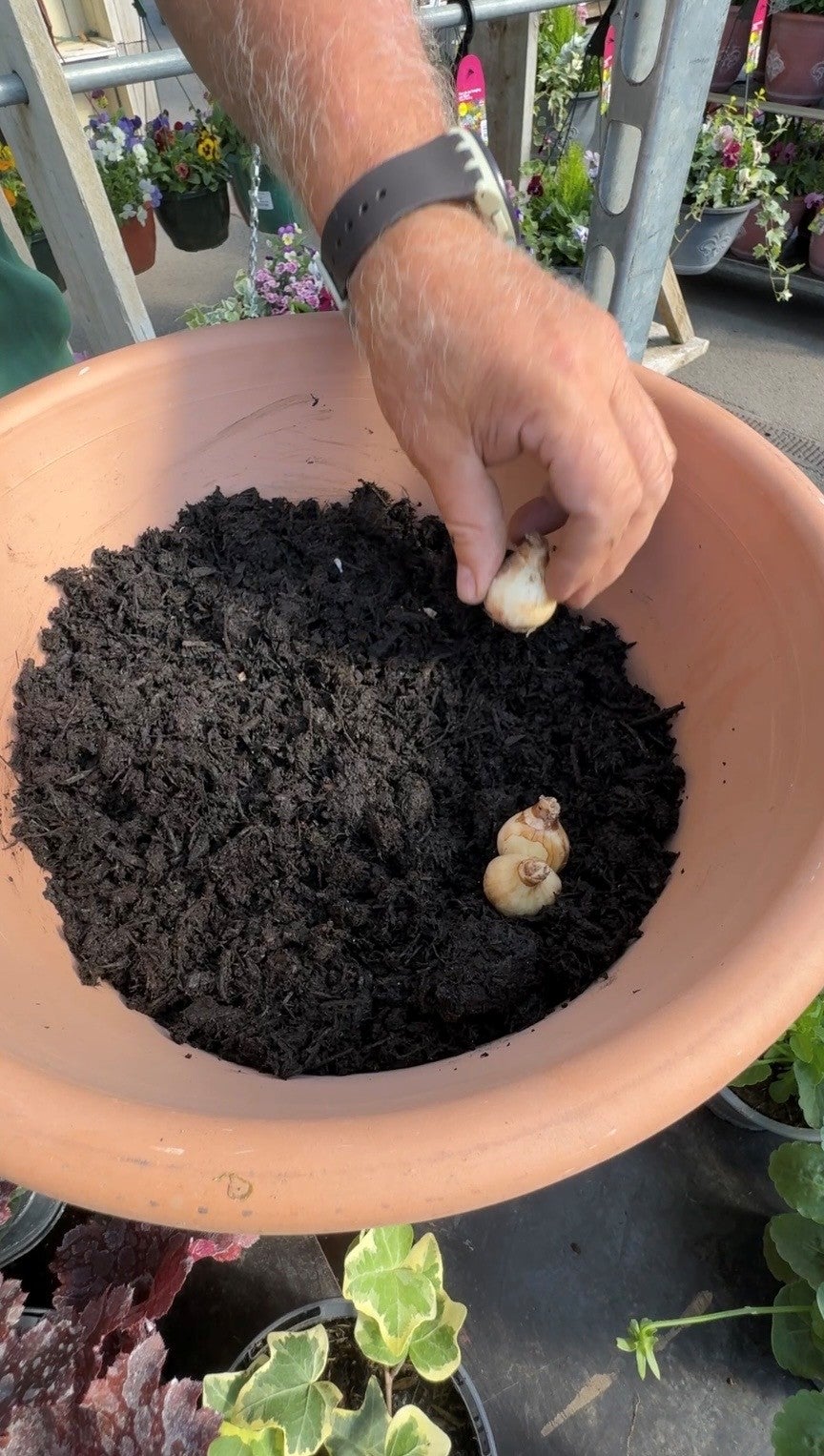
Place some crocks in the bottom of your pot, to allow for drainage.
“As the weather has been so hot, if you are using a terracotta pot it may be worth lining it with your compost bag (or part of it), cutting a circular hole in it so that the bottom of the pot is exposed for drainage,” he suggests.
Then fill two-thirds of the pot with compost before sitting your bulbs on that surface layer. Then add more compost to reach within a couple of inches of the top of the pot.
Choose the plants you want and place them roughly at first, to make sure they have the effect you want. Londero recommends one central plant and then three of each filler placed strategically around it to form a triangle, to give the pot some uniformity.
Give them a good water in their original pots before planting.
Begin planting
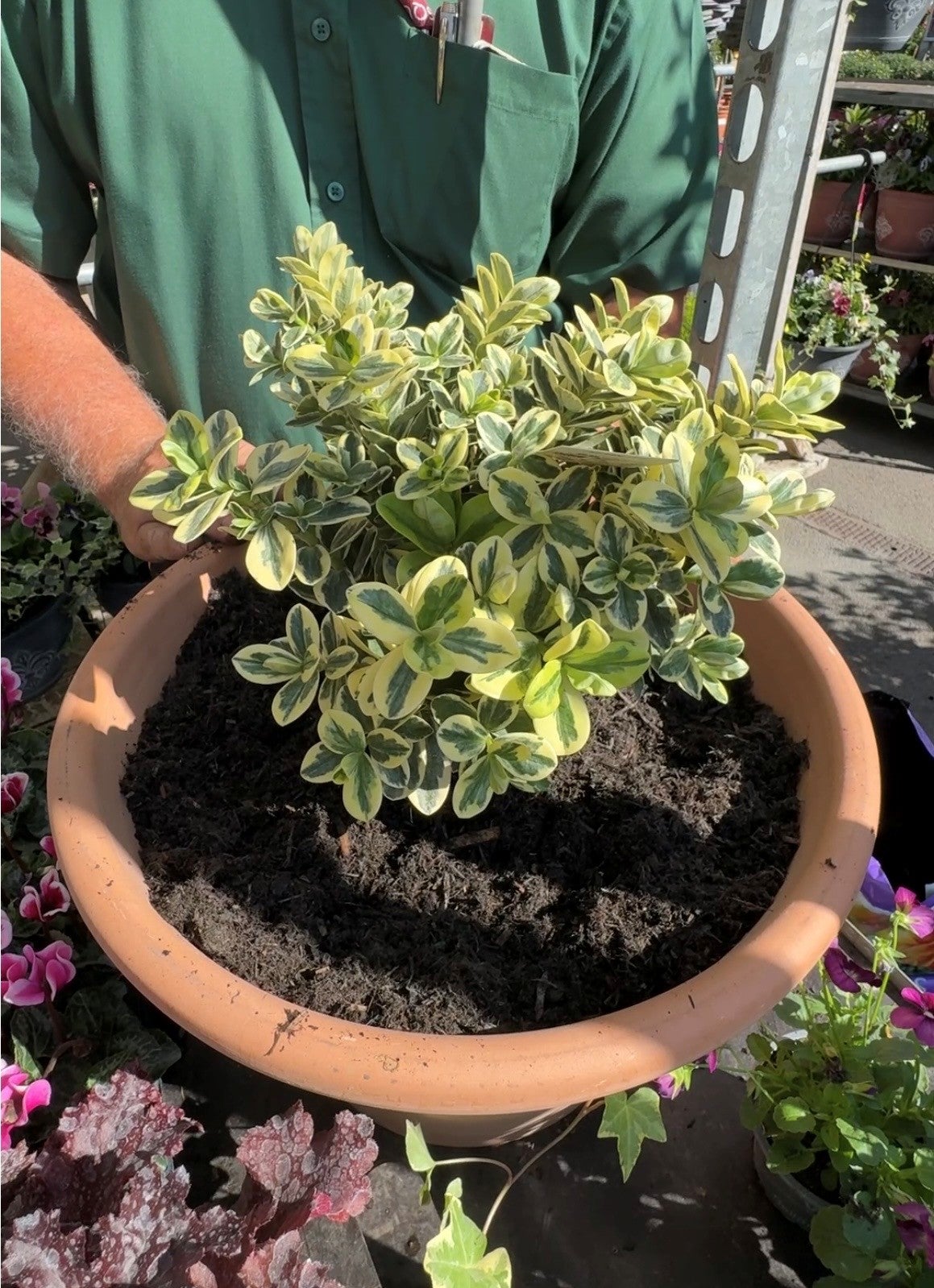
Once you know where you want to put your plants, plant the centrepiece first, taking it out of the plastic pot and teasing out the roots with your thumb and finger to loosen them, which will help them establish when planted. Make a small hole in the compost in the middle to allow the plant to sit it, then infill with compost to secure it.
Place the fillers – one species at a time – at even spaces outside the main plant to form a triangle, then place the other fillers in the spaces left, again in a triangular fashion. Fit in the spillers where space allows. If you are using violas as spillers, plant them at an angle so they will sit over the side of the pot.
Once the planting is complete, fill remaining gaps between the plants with compost, up to the base of the plants.
Aftercare
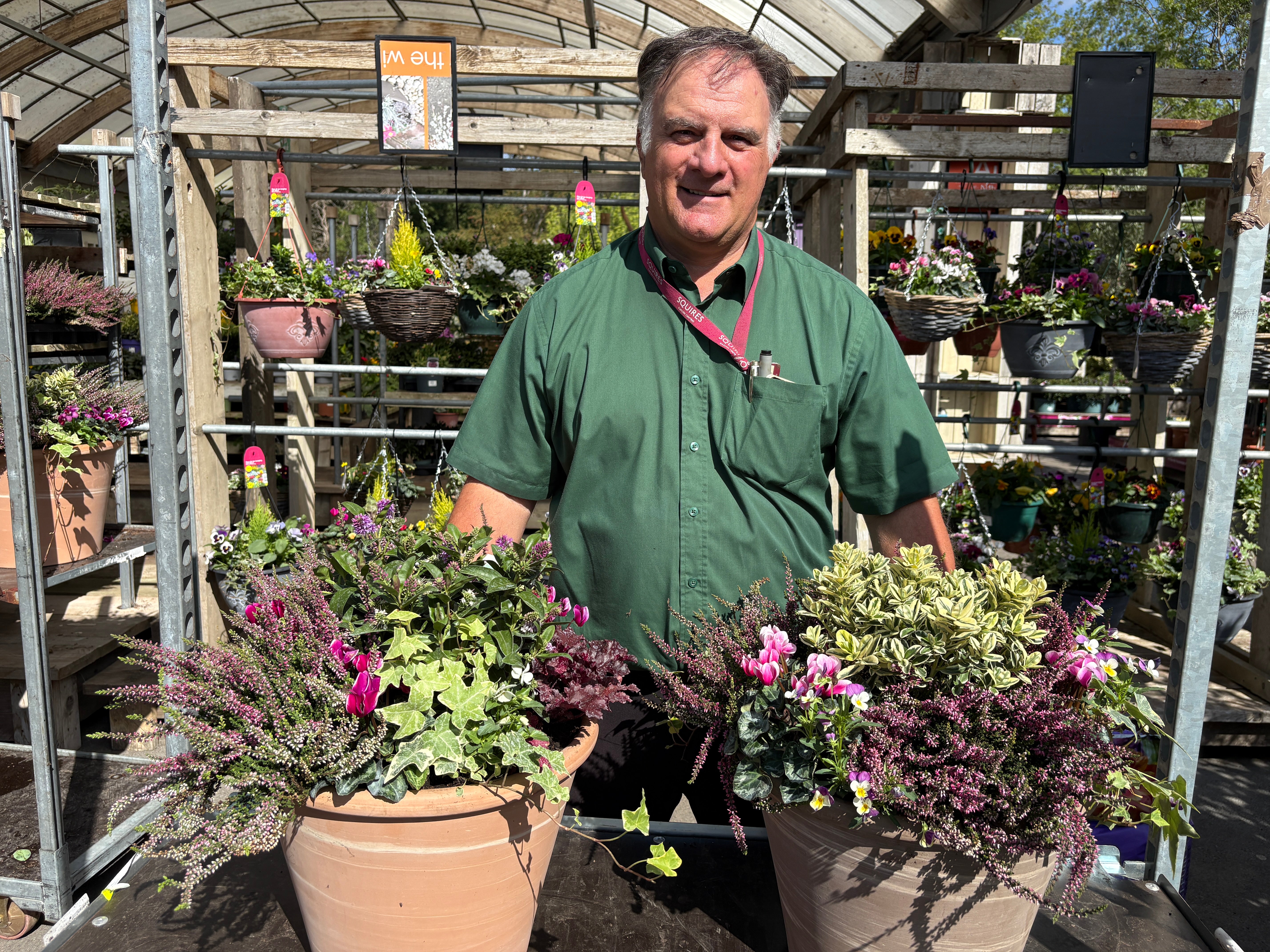
“The fertiliser in the multi-purpose compost should last four to six weeks, after which you can use a general purpose feed,” says Londero.
The plants, which need to be watered regularly, should last through autumn and winter and the hebe and heather should keep going, although you may be wise to freshen the compost in spring.
The heathers should flower until the end of October, after which you could trim them, but don’t cut into old wood or they won’t recover. If you want to refresh the pot, they could be planted in the garden.

