

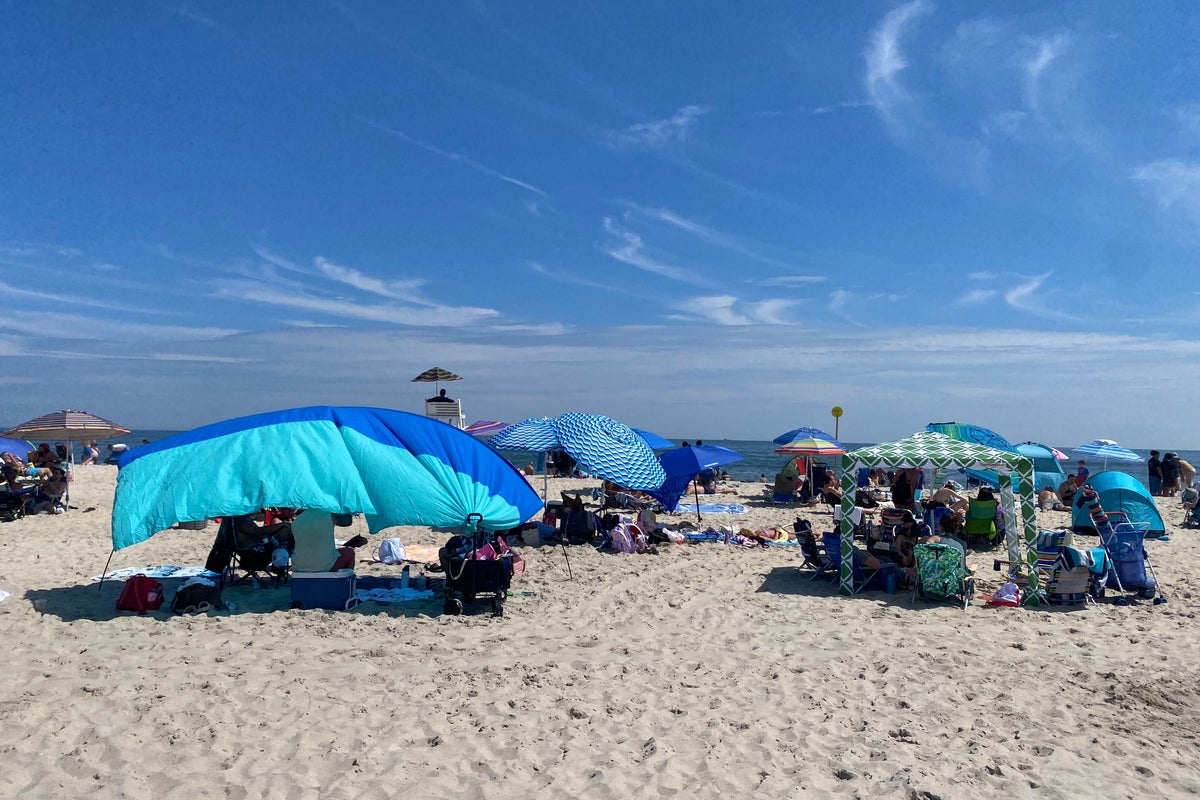
On a trip to New York’s Rockaway Beach last week, with the sun blazing and temperatures soaring past 80F, I expected a tranquil day by the sea. I imagined drifting off to waves breaking on the shore, gulls calling overhead and the faint murmur of ice-cream vendors in the distance.
Instead, I spent the afternoon listening to fabric flapping in the wind.
The source of the racket was a dozen Shibumis, the rectangular shade canopies that have become the beach accessory of the moment. They work like this: a lightweight sheet of polyester is stretched over a curved aluminum frame and held aloft by the wind, providing enough shade for an entire family without the bulk of a traditional umbrella. A whopping 150 square feet of shade to be exact.
While it’s a savvy invention, it is also, in practice, an infuriating and antisocial public nuisance. I can’t stand them. When a Shibumi catches a strong gust, it sounds like someone repeatedly shaking out a giant plastic bag next to your ear. The noise carries surprisingly far, making it difficult to hold a conversation, read a book, or do the very thing many people come to the beach to do — relax.
The second issue is space. The width of the Shibumis means that Shibumists (yes, I’m calling them that now) take up large stretches of sand on crowded beaches and leave little room for others. There’s something territorial about it. Entitled, even. Taking up such a wide stretch of sand feels inconsiderate, especially when beach space is limited in places like New York. I understand the need for maximized shade, especially for families with young children or babies, but the Shibumi is giving people a license to spread out far beyond their needs.
So omnipresent have wide beach canopies become that some U.S. beaches have enforced umbrellas-only ordinances. Officials say the canopies can obstruct lifeguards’ sightlines and make it harder to monitor swimmers and access the shoreline in an emergency. Traditional beach umbrellas are preferred because lifeguards can more easily see around them. As a result, popular destinations like Myrtle Beach, South Carolina; Rehoboth Beach, Delaware; and several Jersey Shore towns, including Long Beach Township, Beach Haven and Manasquan, have prohibited Shibumi-style shades.
Myrtle Beach Mayor Mark Kruea told The Wall Street Journal that the beach was “being consumed by tents and canopies… They blocked access to the beach for some folks, and potentially to emergency responders.”
At a public hearing in April, Nan Trout, a resident of Myrtle Beach, presented the committee with a long list of reasons to keep the ban in place. The WSJ reported that concerns raised included “conflicts over territory, and the possibility that guy lines and anchors will cause many people to trip.” Trout told the paper that she and her neighbors do not “want to see Shibumis on the beach.”
Pushing back, Shibumi co-founder Dane Barnes told The Independent in a statement: “Shibumi Shades are permitted on nearly every beach in the United States, and families are choosing them because they’re easier to use and are a safer alternative to umbrellas and pop-up tents. Many public safety officials have shared that Shibumi Shades make their beaches safer. Families should have the freedom to choose the best technology to protect themselves from the sun. Shibumi is the best, and proven, choice for a beach day.”
Another issue some customers have found is that the Shibumi doesn’t always live up to the hype. On TikTok, there are dozens of “Shibumi fails,” where Jess Glynne’s “Nothing Compares to a Jet2Holiday” viral vacation-gone-wrong anthem plays over videos of the canopies hanging limply in breezeless conditions.
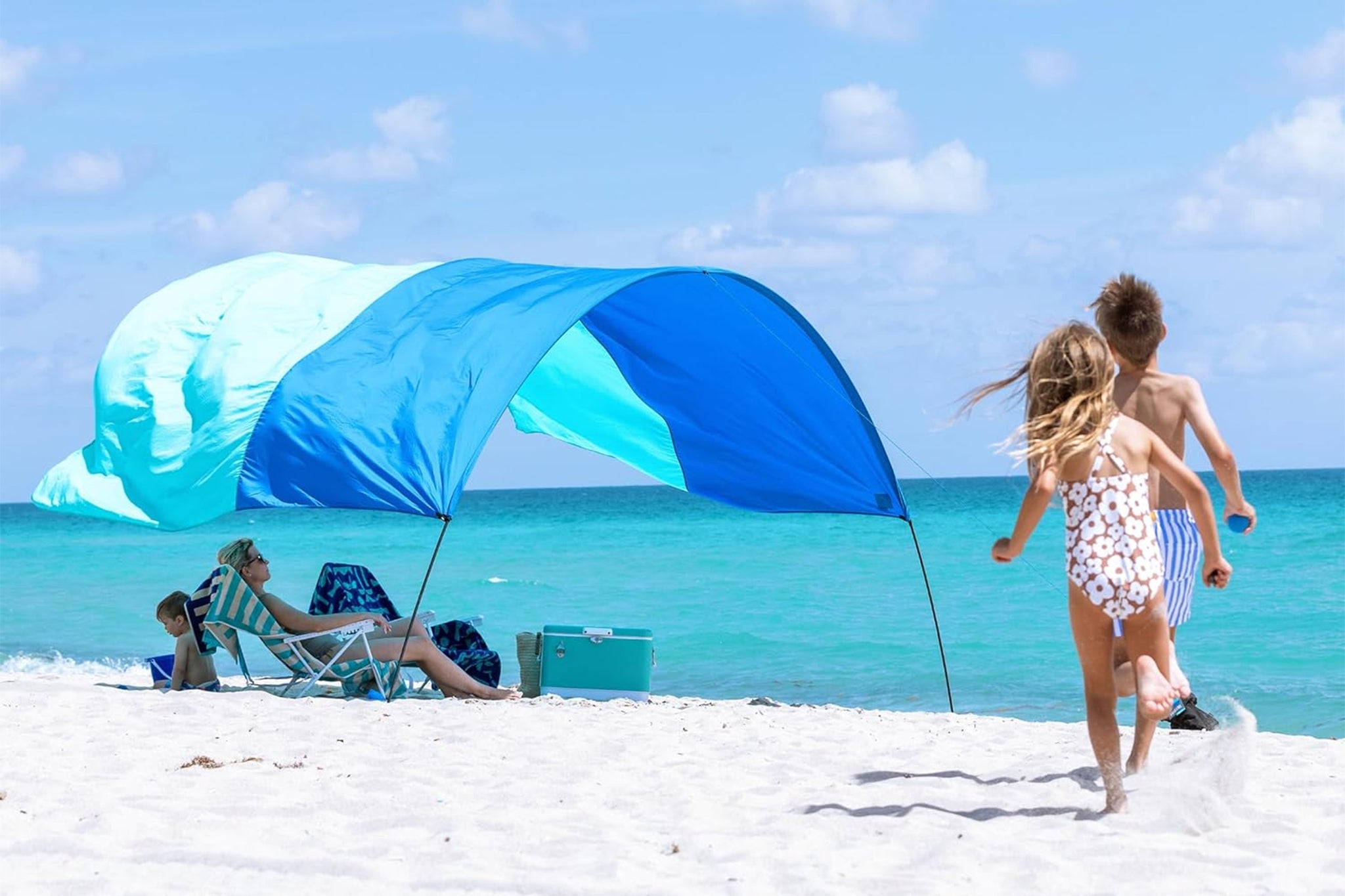
In one video shared on TikTok, a woman is seen sunbathing before her Shibumi, which is struggling to become airborne, collapses on top of her. Others have documented the difficulty of getting the canopy set up in the right direction, facing the sun, to gain enough shade.
The company has attempted to address the concerns: in 2024, they introduced a wind-assist kit — consisting of a pair of cables, clips and sandbags, that can keep the fabric from drooping — as well as a quieter version of their beach shade, known as the Quiet Canopy.
And there’s a steep price for all this wind-powered polyester. Sold in shades of turquoise and blue, the Shibumi — created in 2016 by a trio of recent UNC-Chapel Hill graduates and named after the Japanese term “Endless Perfection” — is priced at $255 and upwards.
There are some notable benefits: the Shibumi is easy to carry, set up and is safer than umbrellas, which can cause injuries if they are sent flying by wind gusts on crowded beaches. Measuring 26 by 5 inches when bundled away, the Shibumi is small enough to carry on vacation. Plus, it can all be set up by just one person in under five minutes, and the company claims it blocks 98 percent of harmful UV rays.
But my beach day spent adjacent to a Shibumi ended up with me trudging off down the sand, clutching my humble beach towel, in search of some peace and quiet. I’m sure the Shibumists meant no harm but the constant flapping and the amount of space they occupied felt oddly intrusive.
At peak beach season, it seems that a few etiquette rules are required. When you plant a massive, roaring sail in the sand, you’re essentially declaring your own comfort more important than those around you.
So this summer, a plea to fellow beachgoers and Shibumists: take up a little less space and show some consideration. We’re at the beach to listen to the surf and unwind, not to hear your oversized polyester sail snapping in the wind.

