


When I was a teenager, I had a conversation with a family friend that has always stayed with me. I was a geeky kid obsessed with etymology. She was a woman in her mid-forties with three daughters. I asked her what their names were, and she told me, very matter-of-factly, that they were Kate, Meg and Jane.
“Do you love the names?” I asked.
“Oh, no,” she said, seemingly surprised by my question. “Not at all. They were the plainest names I could possibly think of. I love the people behind the names, and I wanted to give them the best possible start in life by allowing them to be anything at all.”
I didn’t like this explanation, as someone who loved names and especially weird names. In fact, I was sure I was going to call my children bizarre names when I grew up (and, reader, I did.) My own view — at both 13 and 34 years old — was: I’m going to carry this kid for nine months, with all the nausea and the back pain and the undignified examinations that pregnancy entails, and then I’m going to go through some form of brutal labor, all to call them John or David or Mary at the end? I don’t think so.
There are plenty of completely justified arguments against my view. John might be a common name in the western world, but it might also go down better on a resumé than a Zenobius or an Acorn. Should we care about that? Should we capitulate to it?
I have a friend who named her daughter a very masculine name (think Andrew) in an effort to circumvent sexist discrimination. I have another female friend whose given name is Timothy, and she likes it a lot. My own name — Holly — was one of the most popular names where I grew up in the nineties and noughties, and I hated the fact that I was always “Holly B.” wherever I went; I know another Holly who loved that she had always had fellow Hollys around her, and saw its popularity as a bonus.
Considering that so much, then, is dependent on temperament and personality, how should you go about naming a baby you know nothing about yet?
‘Name this child for you, not for anyone else’
Colleen Slagen is an expert in these matters. A baby name consultant (yes, it’s a real job) and author of Naming Bebe, she receives so many requests for consultations that she has to ration them carefully. Her standard consultations cost $300 and include a curated list of baby names (around 15) and feedback on an existing list, though there’s also a $1,000 deluxe package that involves a Zoom call and support until the baby arrives, as well as an $85 “Name 911” mini package that offers some quick feedback on questions like “Does this first name go with my last name?” and the option for Slagen to poll her 78,700 Instagram followers on your shortlist.
Some people approach the consultation process with anxiety, says Slagen, and often that’s because of how other people might react to their choice of name.
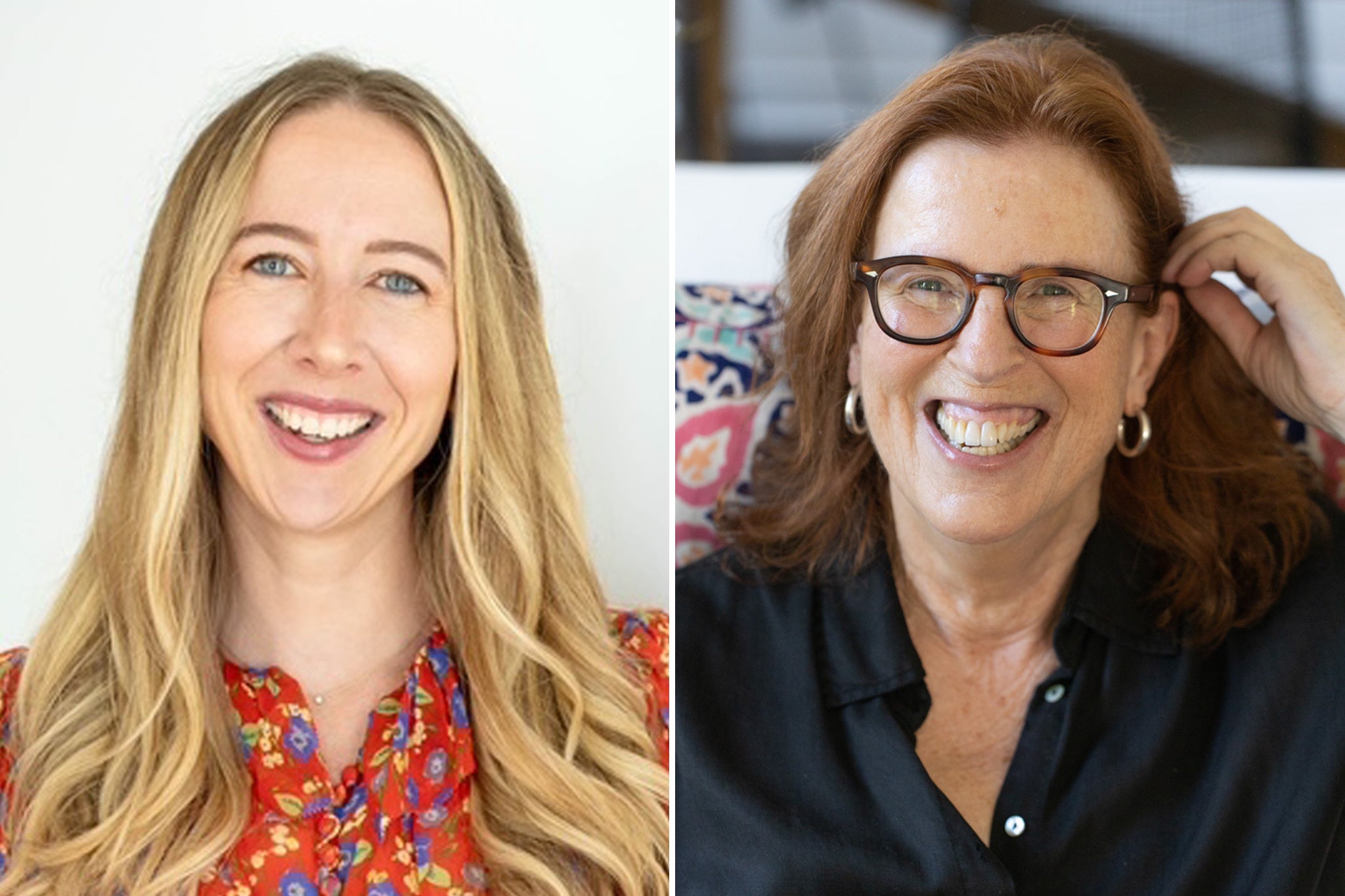
“I’m just thinking about this one girl who was so worried about what her mom thinks, and I’m like: Listen, I get it. I had the same holdups when I was naming kids, and I wish I hadn’t,” she says. “I think it’s hard to step out of the moment, but I try to tell people: Name this child for you, not for anyone else. This is your child to name. They had their chance.”
Surprisingly, a large amount of Slagen’s client base is people who have already named their child and are now experiencing “name regret,” either because of the reactions of the people around them or because they felt railroaded into a name they didn’t actually love.
“I do feel like I’m playing therapist half the time,” Slagen adds. She just worked on a consultation where a couple asked her to think of every possible cruel nickname that other children could come up with for each name on their list “and I was like: I can’t! Kids are creative. I can’t think of everything.”
If you’re concerned about bullying when thinking about naming your kids, she advises that you should “just avoid the low-hanging fruit. Like if you’re really sensitive about your child getting teased, don’t name him Tucker, because there’s a pretty easy rhyme for that one.”
Then there are the people who don’t come to her with anxiety; instead, they come to her with a definite style and roadmap.
“I have some people who just are very blunt and they’re like: ‘Our style of naming is CEO names,’” she says, “or ‘presidential names’. I mean, I’ve had somebody even say before: ‘Our style is country club.’ I think for their son, they were like: ‘We want him to sound like he could be a professional golfer.’ And well, that’s a vibe.”
‘A name through life’
Slagen says that in general, Americans are very attached to the idea of “a name through life” — for instance, Katherine who can be Katie as a child, Kath as an adult, and Katherine in the boardroom.
Australians and Brits tend to be much more casual, much happier to simply go with Katie as the legal name if that’s what they intend to call their daughter day-by-day, and much quicker to embrace nickname-y names like Ozzy and Ziggy. (There are also some interesting anomalies between the English-speaking countries: an American geneticist I recently interviewed for another piece said he was struggling to adjust to having a British PhD student named Poppy — a very normal, popular name among British girls that is almost never used in the U.S., due to its use as a nickname for American grandpas — in his cohort.)
One name that’s trending in the U.S. right now is Goldie — but enough U.S. parents worry that a Goldie wouldn’t be taken seriously as a “30-year-old business owner” that they go with Marigold as the legal name, even if they don’t entirely like it.
Pamela Redmond is the founder of popular naming website and app Nameberry, as well as the author of a number of naming books including the bestselling 90s tome Beyond Jennifer and Jason (later revised and updated in the 2000s to Beyond Jennifer and Jason, Madison and Montana to keep up with moving trends.) Redmond has been in the name consultation business for over 35 years, and she takes etymological analysis seriously. Nameberry includes line graphs for most names that show their popularity over the past few years, taken from Social Security Administration data, so you can check if your supposedly unique choice is actually part of a wider trend — or if the name you think is familiar is actually more out-there than you assumed.
Americans especially like to assert their ethnic or cultural roots through naming, Redmond says, and they particularly like to be able to say that a name they chose for their child is “a family name”. She’s noticed that a lot of the time “it isn’t real, you know — it’s like: ‘Well, that was my great aunt’s middle name,’ which is Anne or Rose or something kind of meaningless. But people are really looking for that meaning and wherever it is, they find it. And also, there’s so many choices. I think it’s a way for people to narrow down.”
It wasn’t always thus. Before the civil rights movement and a naming trend mainly led by African Americans, proudly asserting your background through your naming choices was a lot more uncommon, says Redmond: instead, immigrants tended to change their names when they arrived in the U.S. and to name their children Anglo-style names (a Luigi might become Louis, for instance, who later called his children Elizabeth and Paul, or a Carlos would become Charles.)
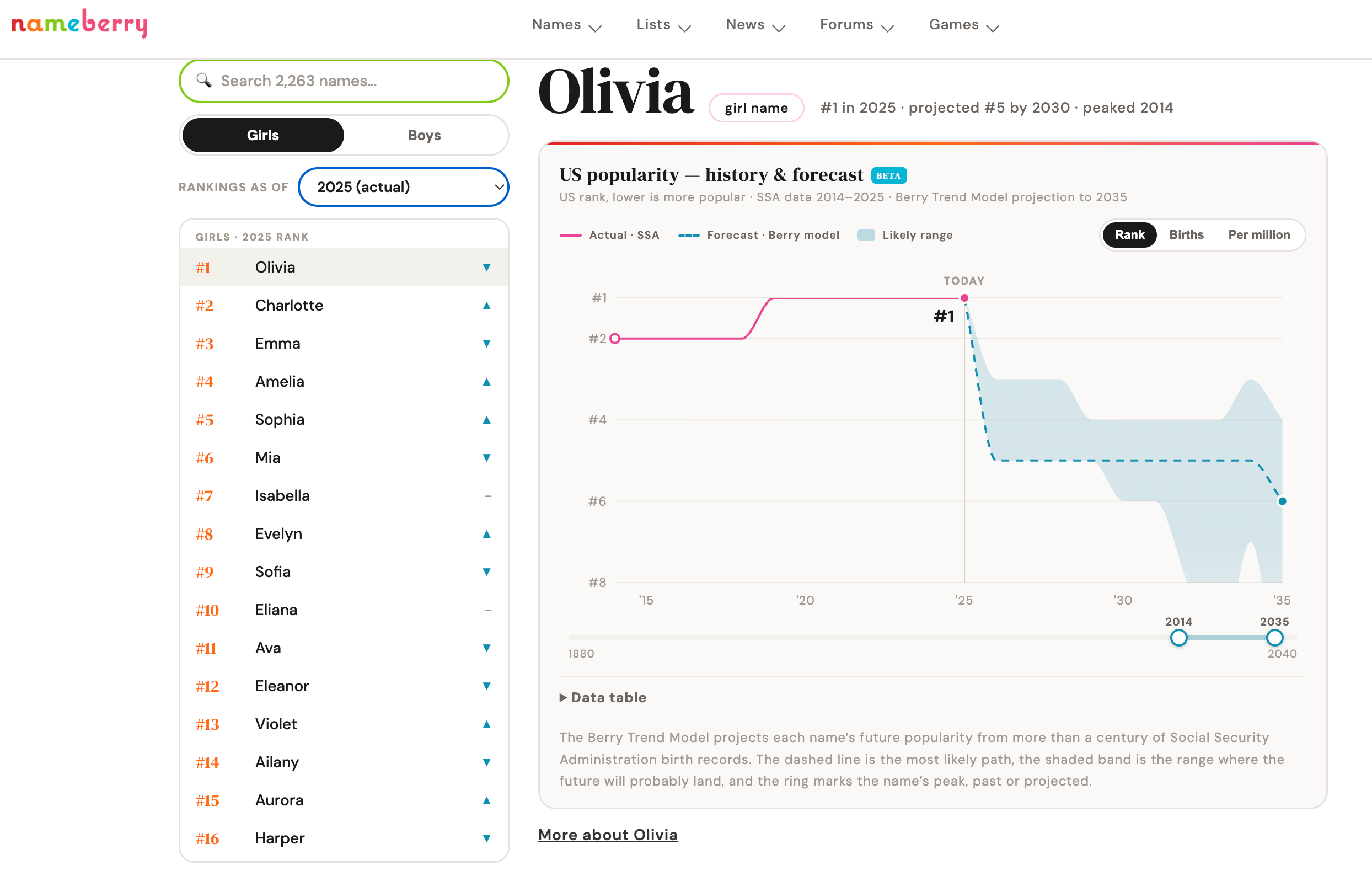
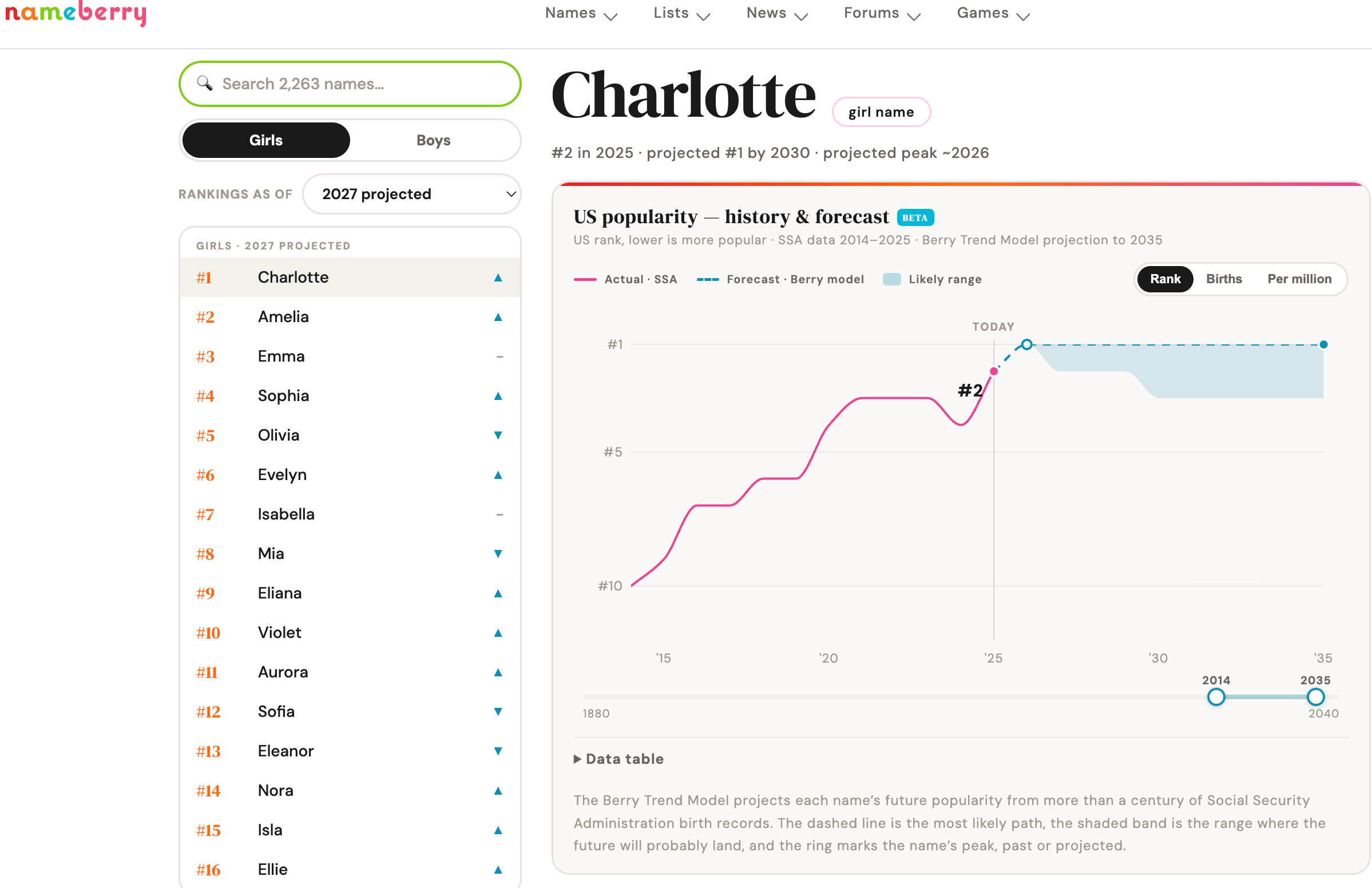
As one example, a lot of Americans with Irish roots chose Riley and Kennedy for their daughters ten years ago. The modern-day equivalents are Sloane and Collins, Redmond says, both of which are currently very trendy among American parents of girls (the class lists at my son’s Brooklyn preschool can attest to this.)
One thing Colleen Slagen gently advises people against is a “timestamped name,” i.e. a name that’s trending so high that it will definitely become associated with that era. Although she says she thinks her own name is “fine,” she doesn’t like that its popularity in the late 80s and early 90s has led to it being thought of as a name for women in their 30s and 40s today. (Redmond doesn’t like her own name at all — throughout her childhood, she says, she was desperate to have a name more “soft and bookish” than Pamela to suit her personality, ideally Susie.)
Slagen had a consultation recently with a couple where she gave this advice about the name Caden: though there’s nothing awful about it objectively, she says, the explosive popularity of Caden alongside Aiden, Jayden, Hayden, Zayden and pretty much every other rhyming variation over the past decade means a Caden will grow up inevitably “timestamped” to the 2010s and 2020s.
Slagen says it’s rare that she really, really dislikes a name brought to her by clients, but if it happens, she simply advises whether it fits with their own aesthetic. She does find herself developing biases against certain names that she hears again and again, however.
“I tell people I am a little biased against Margot now,” she says. “If I could define my clients in one name, it would be Margot. It’s what they all love. They all want to name their baby Margot. And so I’m over it.”
It’s not just in the consultation room that she sees this particular name come up, she adds: “Even this morning, she and her husband met a woman at the bank who introduced them to her new granddaughter, “and I was like: Oh, what’s her name? And she’s like: Margot. I’m like: Oh, I could have guessed that.”
Nevertheless, Slagen adds, she knows she’s in the strange position of overseeing many, many naming choices per week. As far as Margot goes, she says, “if you’re not over it, then it’s a good choice for you because it’s really about how the name feels to you.”
Slagen is a mother-of-three herself (if you’re curious, her kids’ names are Rory, Janie and George — a boy, a girl, and another boy.) If she had to name another girl and boy tomorrow, she tells me, she’d call them Clementine and Winston. Clementine is a name she’s always loved but “I didn’t have the balls to use it when I was first naming,” she laughs. “Maybe I would now.”
In a strange twist of fate, Pamela Redmond also has a child called Rory, although hers is a daughter. She remembers visiting the U.K. with Rory as a child, long before the Gilmore Girls era that made Rory a little more female-adjacent in the public mind, and “people looking at us like I’d named her Thomas.”
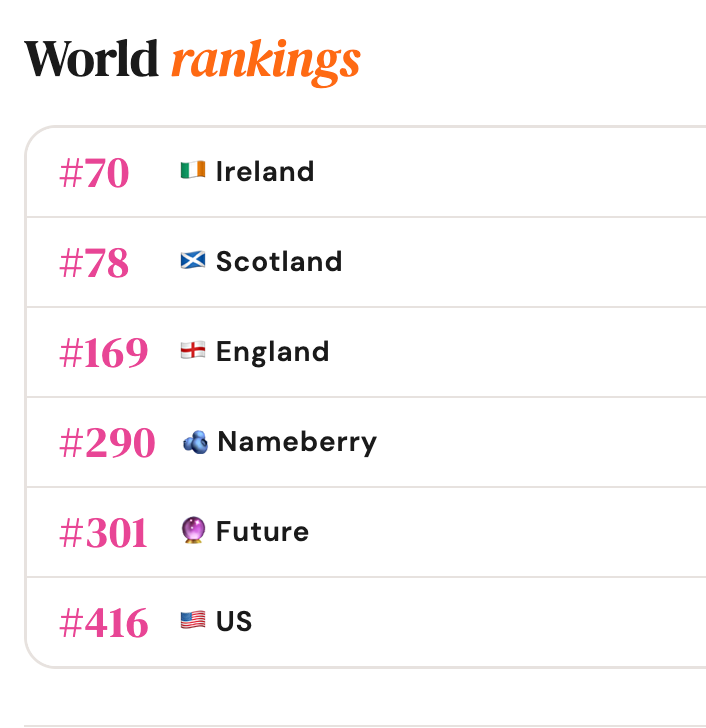
In some ways, it remains that way: according to Nameberry’s own rankings, Rory for a boy currently ranks as the third most popular name in Scotland, and comes in at a still-popular number 17 in England, whereas it’s only the 199th most used name in the U.S. Rory as a girls’ name, however, ranks at number 230 in the U.S. — not far away from where it is as a boys’ name. It doesn’t even rank in the top 500 as a girls’ name for any of the U.K. or in Ireland, despite its Celtic roots being in those islands. So a girl Rory is a huge anomaly in England, whereas it’s practically expected in America.
Red names and blue names
Back in the 80s and 90s, Redmond included a category in her book called “Androgynous, Executive Names” for the many parents who wanted to give their daughters power names with masculine energy. The list included names like “Taylor and Parker, Jordan and Morgan,” she says, most of which have now “sailed away, although some people are still picking them.”
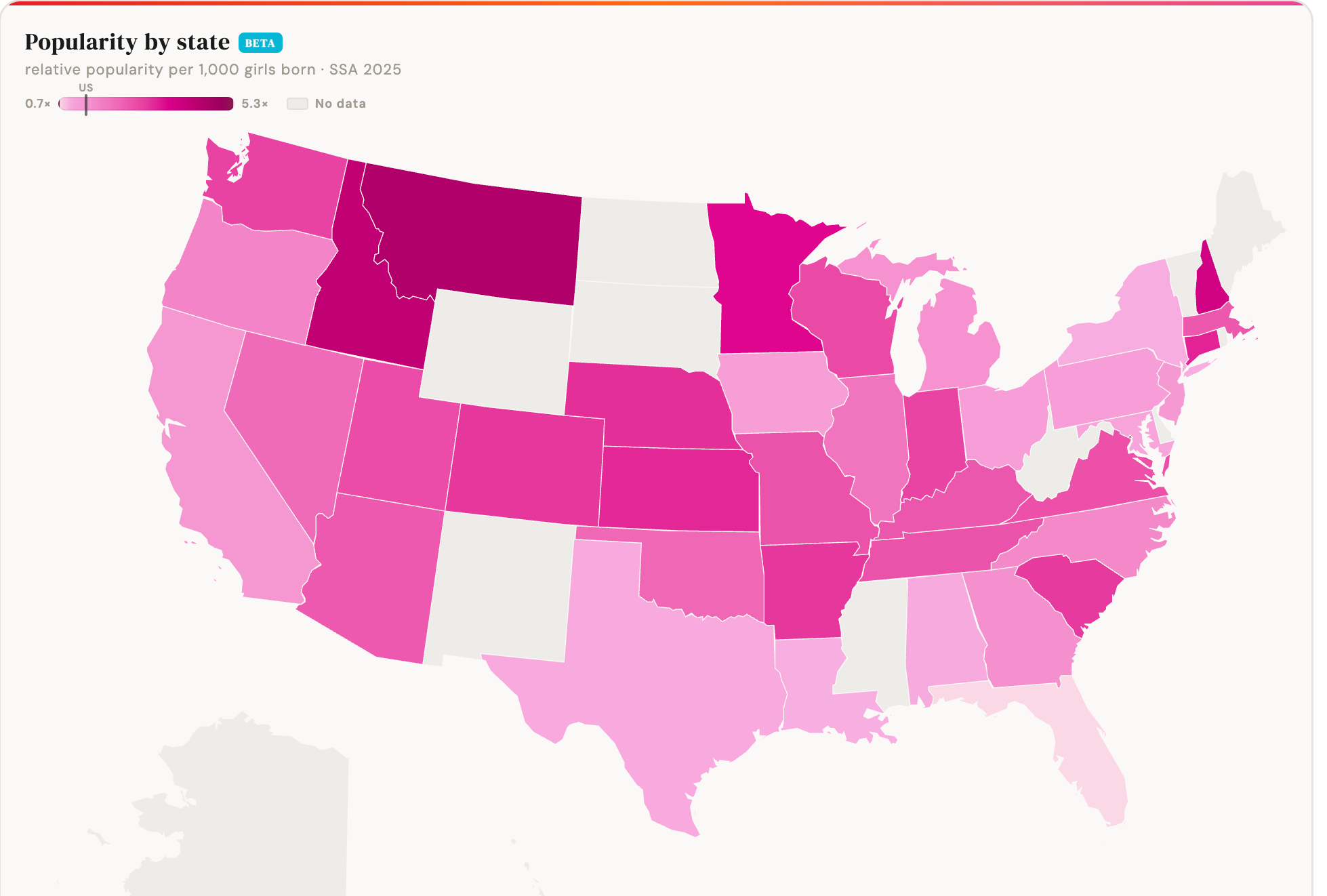
An interesting trend that has emerged over the past 20 years is that red and blue states have diverged in naming styles — and not in the way you might think. Nameberry’s analyses have found that people in red states are more likely to give their daughters and their sons gender-neutral names, as well as less traditional names.
“You know, it’s kind of a libertarian thing,” Redmond says. “You tend to think of [those states] as conservative, but I think that conservative means something new in the age of Trump.” These are states “that are sort of on the frontier… states have always been making it up as they went along. They’re further from society, further from churches, further from family, further from Europe, and so they’re just basically doing what they want,” and they’ve developed their own micro-trends along the way.
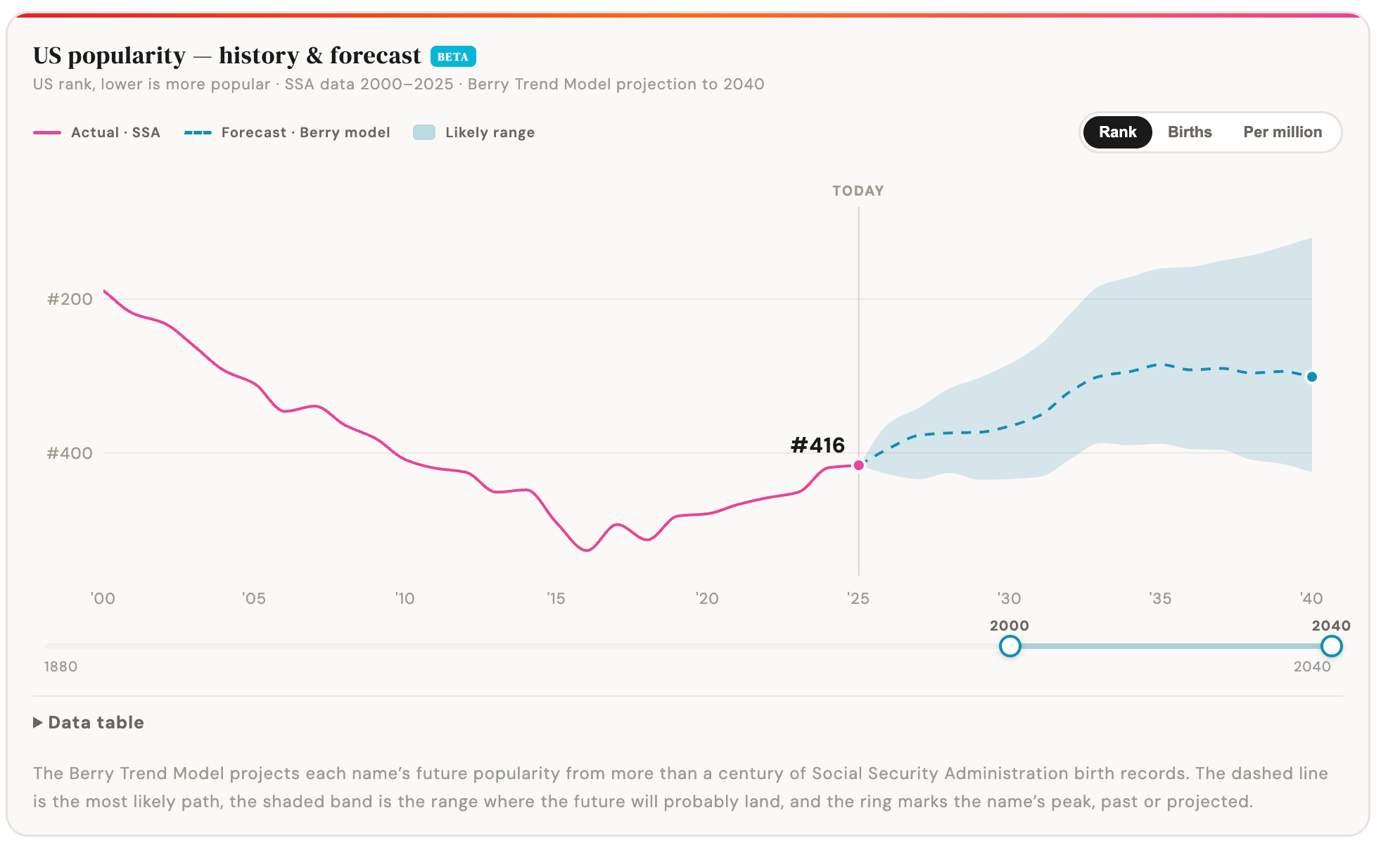
The names we now see dominating in red states are often invented, appropriated or abbreviated — Blakely, Scottlyn, Hattie, Brexlee or Cohen, for instance. Cohen — sometimes spelled Kohen — is a particularly strange case, as it’s been trending in the top ten boys’ names in red states with very low Jewish populations for a while, despite the fact that Cohen is a sacred surname (never a first name) among religious Jews. Redmond interviewed people across the states for this Nameberry analysis and says one parent who had chosen Cohen for their son simply shrugged and said: “Well, I’ve never met a Jew in real life.” They were so removed from the origins of the name that the name seemed simply a new combination of sounds, and so unlikely to rub shoulders with Jewish compatriots that the potential offensiveness meant nothing to them.
“The blue state names tend to be more ethnic, which is not surprising,” Redmond says. Popular choices have Italian, Spanish, Arabic or Hebrew roots, and include more traditional and religious picks like Francesca. Blue state parents are also much more likely to pick very feminine names for girls and very masculine names for boys. The most “evenly divided” name in terms of gender neutrality, Redmond adds, is Charlie: it’s taken off hugely as a girls’ name while retaining its popularity among boys. Charlie is now the most neutral of neutrals.
Choosing your child’s future
But really, when it comes to naming, there’s never full neutrality. Names can signal race, class, religion and gender before we have heard anything else about a person — and those signals have consequences.
For centuries, societies have attached different levels of status and respectability to different kinds of names, from that Anglicization of immigrant names to the pressure on women to take their husbands’ surnames (even in 2020, when I got married, I faced pushback after my husband bucked the trend and took my last name instead of vice versa.)
There is striking evidence of name-related bias in hiring experiments in particular. In one of the best-known studies, economists Marianne Bertrand and Sendhil Mullainathan sent nearly 5,000 otherwise identical fictitious resumés to employers in Boston and Chicago, randomly giving applicants either stereotypically white names such as Emily Walsh and Greg Baker or stereotypically Black names such as Lakisha Washington and Jamal Jones. The “white”-named applicants received about 50 percent more callbacks.
Similar research has found that gender can be inferred from a name and affect how an applicant is perceived, particularly in occupations where one sex is already overrepresented (such as construction or elementary school teaching.) In other words, the name at the top of a resumé can start influencing our judgement before we have even begun to read about the applicant’s experience.
How does one address such discrimination? Some parents believe that it’s by simply calling everybody Emily and Greg (perhaps even going so far as to name their girls Greg, too.) Others believe that if nobody takes a chance on a different name, the discrimination will never end.
What we know for sure: Names that were once thought “too informal” or “unprofessional” — Mollie, for instance, which began as a nickname for Margaret, or Liam, which originated as a shortening of William — are normalized by repeated use. The names we now think of as perfectly conventional were, at some point, someone’s slightly outlandish choice. What feels unusual today may simply be what everyone is calling their child in 20 years’ time. And perhaps that is the paradox of naming: we want to give our children something distinctive, but we also want a name that will not make their lives harder. Every generation has to decide, in effect, where that line falls.
Redmond believes that we are moving towards a world — buoyed by wider knowledge and acceptance of trans people choosing new names that affirm their gender and by traditions like those in China, where a name change sometimes happens if one is experiencing a bout of bad luck — in which people everywhere might start using “time of life” names according to their circumstances. In that kind of a world, she could’ve been Susie as well as Pamela, perhaps with a detour to something else in between.
Indeed, people have had this approach toward their own names for hundreds of years: Redmond didn’t know her own grandmother’s birth name was Bridget until she found her Irish birth certificate after her death. When she read through the papers, she found out that her grandmother, who had always known as Beatrice, had spent her early days as Bridget. When Bridget arrived in the U.S., she changed her name to Bertha because “a Bridget” was a derogatory slang term for a working-class Irish immigrant at the time. After going by Bertha for a couple decades, Germanic names fell out of favor because of the Second World War and she changed her name again, becoming Beatrice for the rest of her life.
It’s completely understandable, says Redmond, to “pick a name that’s more compatible with what’s happening in your life right now.”
Instead of being handed an “absolute, forever, one-name identity that your parents pick… something might change depending on where you live, depending on who you think you are.” Despite whole industries built around expectant parents agonizing over what to call their little Jennifers and Jasons, she adds, “I think that’s the future.”

