
Home Blog Page 141

Would this survival pod make you feel safer?

0
Would this survival pod make you feel safer?


NEWYou can now listen to Fox News articles!

Disaster prep used to mean bottled water, flashlights and maybe a generator in the garage. Now a French startup is taking all of that to the next level. Momentum Technologies recently showed off its LifePods survival capsules. According to the company’s website, the capsules are designed to protect people, families, response teams and critical infrastructure during natural disasters, industrial risks and security threats.

You can see why something like this would get a lot of attention right now. Blackouts seem more common. Floods can move fast. Global instability has many of you wondering how prepared you really are if help cannot get there right away. LifePods takes that fear and turns it into a physical product you can buy, move and place before disaster hits.

Free live CyberGuy class: Sick of Spam? Join us July 22

Join us Wednesday, July 22, at 1 p.m. ET for a free CyberGuy Live class that will help you cut down on robocalls, spam texts, junk email and other unwanted messages. Kurt “CyberGuy” Knutsson will walk you step by step through simple ways to filter spam, clean up your inbox and recognize the messages that could put your personal information at risk. No technical experience is needed. You’ll also receive our spam-stopping checklist, and every registrant will get a link to the class recording afterward.

Reserve your free spot today at CyberGuyLive.com.

17 EMERGENCY ITEMS TO BUY BEFORE YOU ACTUALLY NEED THEM — STARTING AT $6

The LifePods B01 opens from the front, giving one or two occupants a compact shelter built for hostile environments and critical infrastructure sites. (Momentum Technologies)

What are LifePods survival capsules?

LifePods survival capsules are compact shelters built for extreme emergencies. Momentum Technologies says the capsules can provide immediate shelter during tsunamis, flash floods, storm surges, armed attacks, collapses, extreme fires and dangerous environments. That makes them different from the underground bunker you may imagine behind a hidden steel door. These capsules focus on faster deployment and a smaller footprint.

The company currently highlights two main commercial models. The W-01 is a floating capsule for water-related disasters. The B-01 is an armored land capsule for ballistic and industrial protection. Momentum also lists an earthquake-focused Q-01 concept under development.

How the LifePods B01 survival pod works

The LifePods B01 is the tougher-looking model. Momentum built it for hostile environments, critical infrastructure and situations where fast shelter could save lives. The company says the B01 gives occupants protected space against ballistic threats, fragments, armed attacks and degraded environments. It also says people can get inside and lock the system in seconds.

This model seems aimed more at security teams, industrial sites and public safety agencies than a typical backyard buyer. Momentum lists possible uses at military or police checkpoints, energy production stations, telecom hubs, transport terminals and heavy industrial sites.

The B01 lists room for one to two people, high-hardness ballistic steel, positive air filtration options and a total weight of about 4,000 pounds. Momentum says representative test panels obtained VPAM PM7 certification for resistance to 7.62x51mm military ammunition, a roughly .30-caliber rifle round. SR7 civil validation remains in progress.

How the LifePods W01 flood survival pod works

The LifePods W01 is the model that may feel more relatable if you live near water. Momentum describes it as a floating capsule for extreme weather when evacuation can no longer happen safely.

The company says the W-01 responds to risks from tsunamis, hurricanes, floods, marine submersion and dike or dam failures. It is designed to float, resist impact and keep occupants protected until rescue teams arrive. Momentum says the W-01 is designed to safely accommodate four adults. Young children may also ride with accompanying adults using additional restraint systems, similar to those used in commercial aviation.

The capsule also includes exterior grab bars. That could help survivors already in the water hold onto the outside while waiting for rescue. Every W-01 is also equipped with a geolocation and emergency distress transmission system. The goal is simple: help emergency services find the capsule faster.

The W-01 is currently completing its engineering development phase. Momentum says its structural behavior has been modeled with advanced naval engineering simulation software by Inha Works Ltd., also known as IWL, a Yamaha Motor Group company. That modeling allowed the company to evaluate structural resistance, buoyancy and stability before physical testing.

Physical validation is expected to begin during the second half of 2026. Momentum says the testing will move through initial flotation and stability tests, real-world sea trials and final certification testing in a specialized laboratory that can reproduce extreme disaster conditions such as wave impacts.

LifePods Q01 could bring protection to earthquake zones

Momentum also lists an earthquake-focused Q-01 “Quake” concept under development. That matters because earthquakes create a different kind of danger than floods or armed attacks. You may have only seconds to react, and falling debris can turn an ordinary room into a life-threatening space fast. The company says the Q-01 is being designed to provide structural protection during earthquakes. It is intended for apartments and buildings located in seismic areas.

For now, the Q-01 should be treated as a future concept rather than a product you can price out or buy today. Still, it shows where Momentum wants to take LifePods next. The company seems to be building a family of survival capsules for different disasters instead of relying on one pod to handle every threat.

15 SECURITY ESSENTIALS TO KEEP YOUR VALUABLES SAFE FOR SUMMER TRAVEL
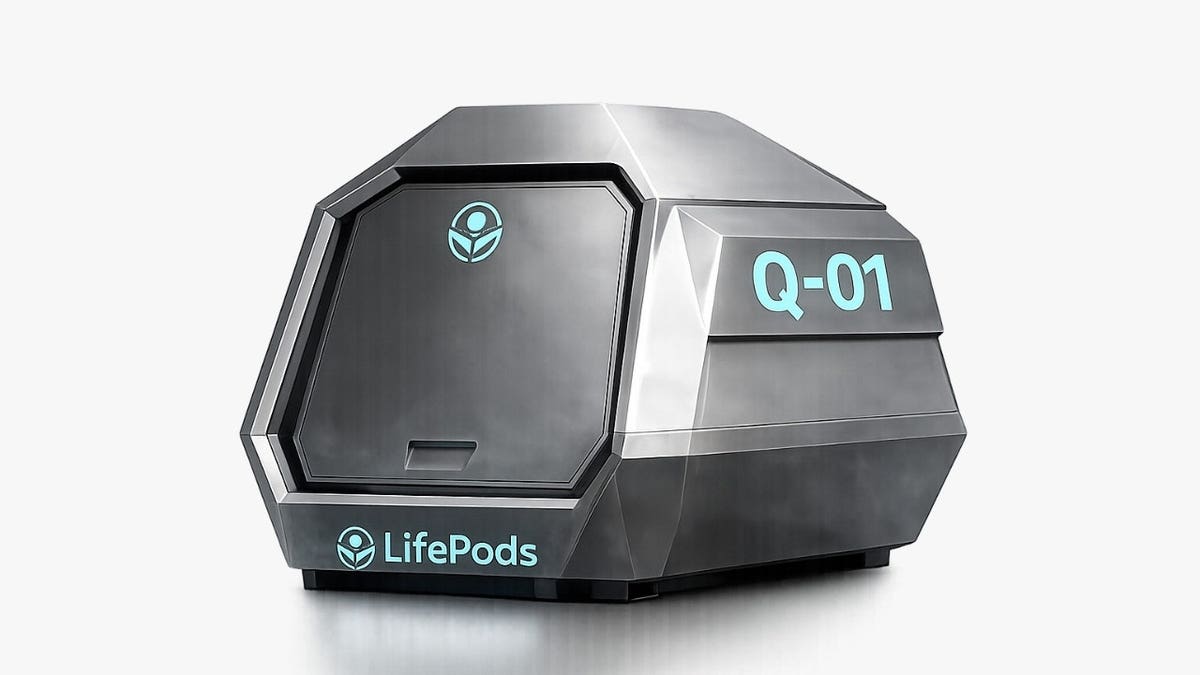
A LifePod capsule

The Q01 concept shows Momentum’s plan to expand LifePods into earthquake-focused protection beyond its land and flood survival pods. (Momentum Technologies)

Can you buy a LifePods survival pod in the U.S.?

Yes, according to Momentum. The company tells CyberGuy that U.S. customers can contact LifePods through its official website to discuss projects and place pre-orders. The first production units are expected to be available from Barcelona, Spain, in October 2026. That timing depends on the successful completion of the ongoing certification program.

For U.S. customers, deliveries are expected to begin around November 2026, depending on the final destination and shipping arrangements. The company says international shipments are planned from the Port of Barcelona. Momentum also says LifePods is represented by a U.S.-based commercial partner in San Diego, California, who can help customers through the purchasing process.

At first, the company expects demand to come mainly from government agencies, civil protection organizations, industrial operators and critical infrastructure owners. However, private customers can also reserve production capacity as the product becomes commercially available.

How much does a LifePods survival pod cost?

Momentum now lists European retail prices before VAT at 25,000 euros for the B-01 and 31,000 euros for the W-01. In U.S. dollars, that comes out to roughly $27,000 for the B-01 and about $33,500 for the W-01, depending on exchange rates. Those prices cover the capsule before shipping and other costs.

You should also expect international shipping, customs clearance, import duties, local taxes, final inland transportation and installation to add to the total. Momentum says it is finalizing its U.S. logistics strategy and expects to provide more accurate landed-cost estimates in the coming weeks. The company also says it plans to establish U.S. inventory in 2027 to reduce delivery times and improve customer support across North America. The company is also looking for strategic distribution partners across the United States to support local sales, logistics and after-sales service.

Why LifePods survival pod testing matters

The big question is proof. Trade show attention can make a product look ready for the real world. Survival gear has to do much more than look impressive under bright lights.

For the B-01, the representative armor panels have already demonstrated compliance with VPAM PM7 ballistic requirements. The remaining work focuses on validating the complete B-01 as an integrated product before it receives final VPAM SR7 certification. That distinction is important. A strong armor panel is one thing. A finished capsule with doors, ventilation, structural joints and other weak points has to prove it can hold up as a complete system.

For the W-01, Momentum says the certification program will include flotation performance, structural integrity, stability, impact resistance, self-righting capability and additional safety evaluations designed for survival equipment used during extreme natural disasters. That is the right place to focus. Flood survival depends on chaotic conditions, including debris, moving water, wave impact, panic and rescue timing.

A row of survival pods

Momentum’s LifePods lineup includes different capsule designs for emergencies ranging from floods to attacks and infrastructure failures. (Momentum Technologies)

Why LifePods says it is building survival pods now

Momentum says LifePods grew out of a simple observation after the devastating tsunamis of 2004 and 2011. The company says those disasters showed how few last-resort survival options exist once evacuation can no longer happen. The company also says LifePods are meant to complement prevention and evacuation, not replace them. Its goal is to offer a final layer of protection when every other option has failed.

That could mean armed attacks. It could mean tornadoes, hurricanes, tsunamis or catastrophic flooding. In each case, Momentum says the goal is to provide a protected space that can increase the chances of survival until emergency services arrive. The company says it sees resilient personal protection systems becoming a more important part of emergency preparedness as climate-related disasters grow more frequent and geopolitical risks continue to evolve.

Future LifePods could target fires and extreme heat

Momentum’s plans go beyond the B-01, W-01 and Q-01. The company says it is also studying a FireRescue version derived from the B-01. This version would be engineered to protect occupants against intense heat and smoke during fires.

Momentum says this version would be intended mainly for emergency responders and professional users. The goal would be to provide a protected refuge while waiting for evacuation or rescue. Looking further ahead, Momentum says it is working on future autonomous LifePods that could actively regulate interior temperature. That could help occupants remain protected for longer periods under extreme environmental conditions. Ultimately, the company says its ambition is to build a complete family of survival solutions for major natural, technological and security threats.

What this means for you

LifePods taps into a feeling many of you already have. You may not want a bunker. You may not have space for one. But you probably do want a better answer for the moment when help takes too long to arrive. For now, most of you should focus on realistic emergency prep. Know your flood risk. Keep water, food and backup power available. If severe weather is a concern where you live, our storm survival essentials guide at cyberguy.com breaks down gear that can help you stay powered, connected and informed during outages.

Your phone matters too. Set up emergency contacts, Medical ID or emergency information before something goes wrong. You can also review our guide on getting your phone ready for an emergency so you know what your iPhone or Android can do when cell service fails. If you live somewhere remote or spend time outdoors, a separate satellite SOS device may also be worth considering. We have a guide to satellite communicators and emergency SOS tools at cyberguy.com that explains how they can help when your phone loses signal.

Still, LifePods shows where disaster prep may be heading. Preparedness is moving beyond small gear into bigger engineered survival systems. That could help critical sites, emergency teams and families in high-risk areas. At the same time, big claims deserve careful questions. Before anyone spends tens of thousands of dollars on a survival capsule, they should look for completed certifications, independent tests and clear installation requirements.

Kurt’s key takeaways

LifePods is one of those ideas that grabs your attention because it sounds extreme at first, then starts to make sense the longer you think about it. Floods, fires, attacks and infrastructure failures can leave families and workers with very few options. I like the focus on fast shelter when evacuation becomes impossible. I also like that Momentum is thinking through different threats instead of trying to make one capsule solve every disaster. Still, I would be cautious. A survival capsule has to work when everything around it goes wrong. The latest testing update makes this feel more real than a trade show concept, but final certification will decide how strong the case really is. For now, LifePods feels like a serious emergency-tech idea with real potential, a high price tag and a lot riding on the next round of testing.

Would a survival capsule make you feel safer, or does this feel like disaster prep going too far? Let us know by writing to us at CyberGuy.com.

CLICK HERE TO DOWNLOAD THE FOX NEWS APP

Sign up for my FREE CyberGuy Report

  • Get my best tech tips, urgent security alerts and exclusive deals delivered straight to your inbox.
  • For simple, real-world ways to spot scams early and stay protected, visit CyberGuy.com – trusted by millions who watch CyberGuy on TV daily.
  • Plus, you’ll get instant access to my Ultimate Scam Survival Guide free when you join.

Copyright 2026 CyberGuy.com. All rights reserved.



Source link

Chinese firm seeks compensation over British Steel nationalisation

0
Chinese firm seeks compensation over British Steel nationalisation


The former owner of British Steel has said it will pursue the British government for compensation after the loss-making firm was nationalised.

The UK took control of the Scunthorpe steelworks a year ago after China’s Jingye Group said it planned to close the site because it was not financially viable, and fully nationalised the plant on Thursday.

In a statement on Sunday, Jingye said it will seek “full compensation through legal means to the very end” over the UK’s move.

A government spokesperson said draft compensation regulations due to be released in the autumn will set out a compensation process through which an independent assessor “would determine what, if any, is payable”.

Jingye bought the Lincolnshire steel plant in 2020, but in March last year the firm launched a consultation on its closure saying the plant was losing £700,000 a day.

The government took control of British Steel operations in April 2025, but until this week it remained under Jingye’s ownership which limited the government’s ability to shape the firm’s future.

On Thursday the UK government said it was taking the firm into public hands in order to safeguard a “vital national capability”, giving the government the power to decide the plant’s future.

The decision to nationalise British Steel has threatened to strain the relationship between London and Beijing just as Andy Burnham prepares to enter Downing Street as prime minister on Monday.


Source link

UFC: Du Plessis makes winning return with dominant decision over Usman

0
UFC: Du Plessis makes winning return with dominant decision over Usman


South African fighter held the middleweight belt ⁠from January 2024 until mid-August 2025, when he lost to Chimaev.

Dricus Du Plessis ‌leaned on his South African roots in his first fight in nearly a year ⁠to secure ⁠a unanimous decision victory over Nigeria’s Kamaru Usman in the middleweight main event of UFC Fight Night on Saturday in Oklahoma City.

The judges ⁠scored the bout 50-45, 49-46, 49-46 in favour of Du Plessis (24-3 MMA), who won his first nine UFC bouts and held the middleweight belt ⁠from January 2024 until mid-August 2025.

Recommended Stories

list of 4 itemsend of list

Du Plessis hadn’t fought since that win streak was snapped by Khamzat Chimaev, who remains champion.

“I had to get up,” the 32-year-old said. “There’s so many South African kids that look ‌up to me.

“It’s bigger than me, I can’t go lie down.”

Dricus Du Plessis, right, fights Kamaru Usman during UFC Fight Night at Paycom Center [Alonzo Adams/Imagn Images via Reuters]

In a fight fought upright with no successful takedowns or submission attempts, Du Plessis didn’t appear rusty whatsoever, finishing with a convincing 139-99 edge in total strikes and landed 136 significant strikes to Usman’s 92.

Usman (21-5) was the UFC welterweight champion for nearly three years from March 2019 to November 2021. ⁠However, the Nigerian, 39, has lost four of ⁠his last five fights, and couldn’t add a second straight win with his first fight in 13 months this weekend.

In the middleweight co-main event, England’s Christian Leroy Duncan (15-2) defeated Jared Cannonier (18-10 MMA) ⁠via unanimous decision. The scorecards read 30-27, 30-27, and 29-28 for Duncan.


Source link

Want to Bet on My Wedding?

0
Want to Bet on My Wedding?


As prediction markets and prop betting gain popularity, more couples are integrating them into their celebrations.


Source link

A Modest Proposal for the Strait Dispute: A Shared Pact Among Gulf States

0
A Modest Proposal for the Strait Dispute: A Shared Pact Among Gulf States


If the United States’ war with Iran evolved out of longstanding tensions over its nuclear program, the focus has shifted sharply to Iranian control over the Strait of Hormuz. The result is a chokehold on one-fifth of the world’s oil supply and an acrimonious dispute that has returned the two sides to open conflict.

Despite frequent assurances from President Trump that Iran has no navy and that the strait is open for passage, shipping traffic has plummeted amid renewed Iranian strikes on commercial ships. Diplomacy has essentially halted, and over the weekend, U.S. and Iranian forces continued to trade attacks in the region. Military experts assess that trying to open such a narrow, vulnerable passageway with force in the middle of a war would be a deadly, Sisyphean task.

Casting about for answers, one analytical group has floated a possible compromise model for the Persian Gulf. It’s based on a somewhat obscure, now-defunct treaty that once governed the collective production of coal and steel in Europe after World War II.

The group’s proposal, outlined in a report published this month, goes like this: The countries surrounding the Gulf would treat it as a shared territory — a regional commons of sorts — and charge a nominal fee only to oil tankers for the water’s maintenance. That could fall within international law, satisfy Tehran’s demand for enhanced control and give all eight states bordering the Gulf a stake in maintaining peace, the group said.

“If we can’t imagine a world where these countries are administering a nominal fee to do some maritime safety and environmental work, then that is sort of a bellwether of whether there’s going to be some pathway to a more durable regional peace,” said Esfandyar Batmanghelidj, the founder and chief executive of the Bourse & Bazaar Foundation, a London-based think tank focused on development and diplomacy in the Middle East and the broader region.

“Until we get this more basic kind of cooperation right, we’re not going to be able to move forward on the bigger things,” he added in a phone interview.

The main idea behind the proposal is that the Gulf situation is analogous to Europe at the end of World War II. Amid the struggle to recover from two bloody, devastating conflicts, Robert Schuman, France’s foreign minister, rejected trying to isolate Germany the way it was after World War I.

Instead, France and Germany worked together to produce coal and steel, two key components for armaments, under an agreement known as the European Coal and Steel Community. That rendered war between the two historical rivals “not merely unthinkable, but materially impossible,” Mr. Schuman said in a declaration in 1950.

France and Germany were joined by Italy, Belgium, Luxembourg and the Netherlands, a coalition that ultimately led to the European Union.

Achieving such a union in the Gulf would mean overcoming multiple obstacles, not least the diverging political agendas and historical rivalries. Still, the current alternative, trying to pry open the strait using military force, would be daunting.

The Pentagon has planned for decades for how to reopen the Strait of Hormuz in the event of a conflict, said Mara Karlin, a professor of national security issues at Johns Hopkins University who directed strategic military planning under the Biden administration as an assistant secretary of defense.

Mine sweeping is incredibly slow, strenuous work, and the few U.S. Navy ships designed to do it would be exposed, she said, so an armistice was always assumed as a precondition.

“Reopening has almost wholly focused on a permissive environment because it’s just seen as too difficult to try to reopen and go through this painstaking process of clearing mines when one attack restarts the whole mission,” she said. Planting just one new mine, or even threatening to plant one, can deter shipping.

Another method would be for the United States or some form of international coalition to provide escorts. This process was used by the U.S. Navy to protect Kuwaiti-flagged oil tankers under attack from Iran toward the end of the Iran-Iraq war in the 1980s. That set off frequent skirmishes with Iranian forces, and one warship that struck a mine nearly sank.

The years since have seen the development of much more nimble threats from Iran that include drones and missiles fired from mobile launchers or the fast attack boats employed by the Islamic Revolutionary Guards Corps, sometimes called its “mosquito fleet.”

“Maybe we can neutralize their capacity to interdict shipping, but all it takes is one mosquito boat, a couple of mines or a few drones to get through, and you’ve effectively blocked trade again,” said Ryan Crocker, a former U.S. ambassador to various countries in the region, including Iraq and Kuwait.

Neutralizing Iranian attacks would require extensive ground forces to control the long Iranian coastline, which would greatly ratchet up the risk of American casualties. “I think the calculation has been to date that we can reopen the strait, but not on a timeline or at a cost that was considered acceptable,” said Suzanne Maloney, vice president and director of foreign policy at the Brookings Institution.

Iran has insisted that Article 5 of the Memorandum of Understanding that the United States and Iran signed on June 17 gave Tehran full authority over restoring normal shipping. It has accused the United States of trying to undermine its negotiating leverage by opening an alternative shipping channel that skirts the coastline of Oman on the western side of the Strait of Hormuz.

In their report, Mr. Batmanghelidj and his colleague Mehran Haghirian at the Bourse & Bazaar Foundation point out that sprawling Gulf ports like Jebel Ali in Dubai already charge service fees to ships that use their facilities, so it would not be a major leap to grant similar authority instead to a supranational body that divided the proceeds.

The most logical step, the authors said, would be to apply such fees on the largest oil tankers that transit the Gulf annually, including 600 massive supertankers that make multiple trips. The yearly value of oil shipments is around $600 billion, according to the International Energy Agency. The carriers would barely notice a small surcharge, and the tankers pose the biggest risk for environmental damage, the report said.

Six Arab Gulf states — Saudi Arabia, Qatar, the United Arab Emirates, Kuwait, Bahrain and Oman, all U.S. allies — already belong to an organization called the Gulf Cooperation Council. Although generally effective when hammering out collective guidelines on mundane matters like industrialization, the organization is notoriously fractious when it comes to joint political action.

Adding Iran and Iraq to that mix could make the council even more volatile, a concern raised by some European officials, Mr. Batmanghelidj said. They view the Middle East as permanently riven by conflict, but France and Germany had the same reputation after World War II, he noted.

The major question is whether the United States and Iran would buy in.

The official Islamic Republic News Agency published a lengthy essay on July 10 expressing interest in a collective settlement, and it also reprinted the Bourse & Bazaar proposal.

“The Strait of Hormuz is not merely a passageway for the transfer of goods and energy, but rather an opportunity for regional cooperation,” the essay on IRNA said. “If managed properly, its economic and financial benefits can be shared more fairly among the countries of the region.”

Iranian national security “depends on preserving the ‘Iranian arrangements’ governing the Strait of Hormuz,” Gen. Mohammad Bagher Ghalibaf, the speaker of Iran’s Parliament and its chief negotiator, said in a statement on Wednesday. At the same time, “we must also use the tools of diplomacy and negotiations to achieve and realize our national interests,” he said.

How Mr. Trump might respond to such a proposal is anybody’s guess. Top U.S. officials, including Secretary of State Marco Rubio, have insisted that Hormuz return to the state of unfettered international navigation that was in place before the war.

That seemed to be Mr. Trump’s position. Then he suggested charging a 20 percent fee on all cargo in exchange for the U.S. Navy’s protecting the strait, before dropping the proposal after 24 hours.

So one main hurdle now, analysts said, is the lack of well-defined American policy goals. “I think the biggest negative now is uncertainty where the U.S. stands,” said Mr. Crocker, the former ambassador. “The Gulf states definitely need that kind of long-term U.S. assurance before they’re prepared to take any steps unilaterally or collectively.”

Shirin Hakim contributed reporting.


Source link

Mel C ‘marries model boyfriend’ – but one Spice Girl misses intimate ceremony

0
Mel C ‘marries model boyfriend’ – but one Spice Girl misses intimate ceremony


Four years ago, Mel C was feeling like she “never wanted to meet anyone ever again” after splitting from her ex – but she has now reportedly married her model boyfriend, who spiced up her life after they met on a dating app.

On Saturday (18 July), Melanie Chisholm, known by her Spice Girls moniker Sporty Spice, is believed to have walked down the aisle with Chris Dingwall at The Country House in Castle Carrock, Cumbria.

Chisholm’s former Spice Girls bandmates Emma Bunton, Melanie “Mel B” Brown and Geri Halliwell-Horner were spotted arriving at the location on Saturday afternoon.

Mel C met new love on dating app Raya (Getty Images)

Despite being invited, Victoria Beckham was unable to attend due to being in the US with her husband David for the World Cup, where they watched England finish third after beating France 6-4. However, according to MailOnline, Beckham designed Chisholm’s dress as a gift.

“Victoria would have loved to have been there if she could,” a source told the outlet, adding: “It was her great pleasure to make the dress for Mel.” The Independent has contacted Chisholm and Beckham for comment.

Chisholm, 52, shunned a large ceremony in favour of an understated wedding – and opted for the Georgian building, which is co-owned by her close friend, the West End star Ben Forster. Chisholm met Forster when they starred together in Jesus Christ Superstar in 2013.

Guests have described the ceremony as “perfect”, noting that the singer’s 17-year-old daughter Scarlett, whom she shares with property developer Thomas Starr, was her bridesmaid.

“Mel swore she would never get married, so having a big do wasn’t really for her,” a source told the outlet. “It is the perfect venue for them, totally out of the way but in the most beautiful place.”

The singer met Australian model Dingwall in 2023 on Raya, an exclusive dating app commonly used by celebrities.

Mel C with new husband, Chris Dingwall
Mel C with new husband, Chris Dingwall (Getty Images)

In November 2025, she revealed on Laura Byrne’s Life Uncut podcast that her friends convinced her to download it on a night out after splitting from an ex, thought to be producer Joe Marshall.

She soon matched with Dingwall, who was living in Australia at the time, and the pair met when Chisholm travelled overseas for a tour.

The singer was previously in a relationship with Starr from 2002 to 2012.

Chisholm was writing her latest album, Sweat, when she met and “fell in love” with Dingwall, and she told The Telegraph in May: “I ended up having this wonderful arc of emotions throughout the album – of heartbreak and then that excitement of a new relationship.”

She described her new husband as “very laidback” and “loads of fun”, revealing that they work out together.

“We have very similar personalities and lifestyles,” she added.


Source link

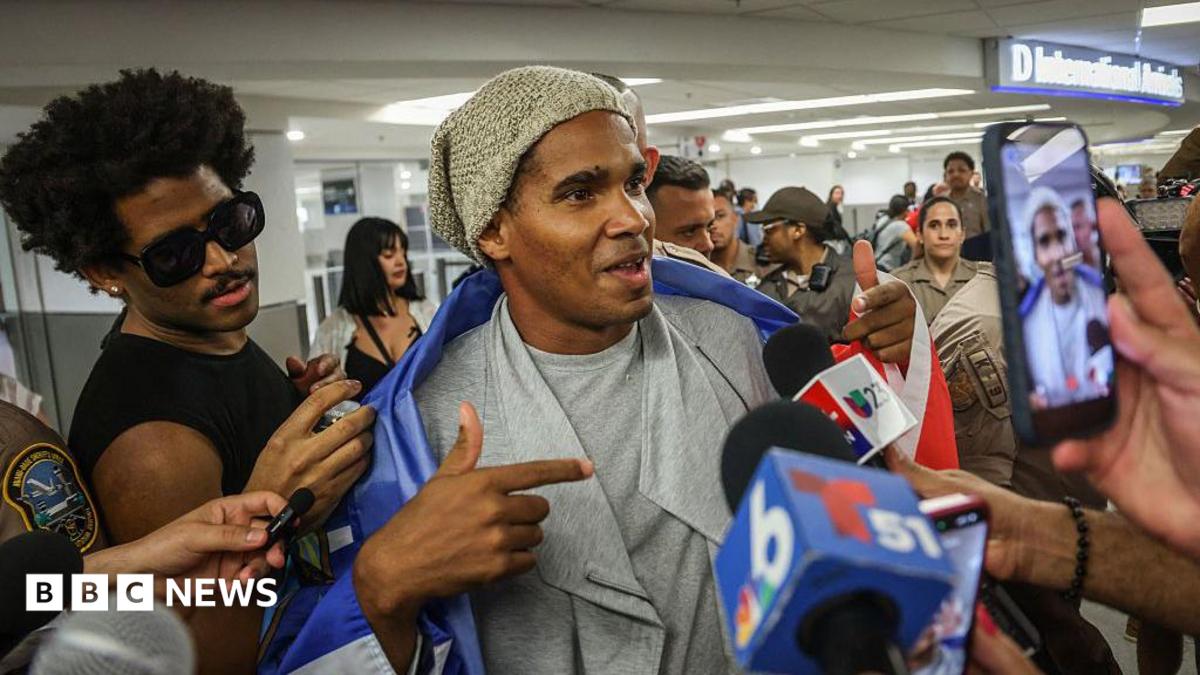
Cuban dissident Luis Manuel Otero Alcántara goes into exile in US

0
Cuban dissident Luis Manuel Otero Alcántara goes into exile in US


US Secretary of State Marco Rubio said the Cuban government’s “brutal crackdown against its own people five years ago is yet another reminder of the unique misery and evil that is innate to the communist system”.

“Otero Alcántara’s only ‘crime’ was refusing to stay silent and using his art to demand the basic freedoms everyday Cubans have been denied for almost seven decades,” he said in a statement.

The cases of Otero Alcántara and ​fellow SIM member Maykel Castillo, known as “Osorbo”, who is serving an eight-year prison sentence, have been a recurring source of diplomatic tension between Washington and Havana.

That tension has swelled in recent months, with the Trump administration hitting Cuba with an oil blockade, sanctions and openly threatening military intervention.

Last week the BBC’s US news partner CBS reported that the Pentagon was looking at military options in Cuba, although it quoted officials as saying the briefings did not mean any decision to carry out an operation had been made.

The US oil blockade has exacerbated an ongoing fuel crisis, with Cubans facing extended blackouts and food shortages in recent months.

The US also announced in May an unprecedented murder indictment against former Cuban leader Raúl Castro, over the 1996 downing of two planes, an incident that killed four people. Russia and China condemned the move.

Tourism has taken a major hit amid the US sanctions, with fewer than 360,000 people visiting the island in the first five months of 2026, a decrease of nearly 60% compared to the same period last year, according to Onei.

Washington warned in May that a peaceful agreement with the Caribbean nation was unlikely.


Source link

Should you apologise to your child after shouting? Psychology has a clear answer

0
Should you apologise to your child after shouting? Psychology has a clear answer


Every parent loses their temper sometimes. Sleepless nights, work stress, endless to-do lists and the daily challenges of raising children can push even the calmest adult to react in ways they later regret. A raised voice, a harsh word or a moment of frustration is part of being human. But what happens next may matter far more than the shouting itself. According to psychologists, apologising to your child after losing your temper is not a sign of weak parenting. In fact, research suggests it can strengthen trust, improve emotional security and teach children one of life’s most valuable lessons: everyone makes mistakes, and healthy relationships are repaired through accountability. Here’s what experts say.

Children learn more from what you do than what you say

Parents are a child’s first role models. Children constantly observe how adults handle anger, conflict and mistakes. When a parent apologises sincerely after shouting, they demonstrate that taking responsibility is normal and that hurting someone, even unintentionally, deserves acknowledgment.

3 Jul 2026 | 12:38

How do you teach children about money and financial responsibility?

2

According to the American Psychological Association (APA), children develop social and emotional skills by observing and imitating the behaviour of trusted adults. If they regularly witness respectful conflict resolution, they are more likely to use those same strategies in their own relationships.

An apology helps repair emotional safety

Shouting can leave children feeling frightened, confused or ashamed, especially younger children who may not fully understand why their parent became angry. A sincere apology helps restore the emotional connection that may have been disrupted during the conflict. Developmental psychologist Dr. Becky Kennedy, author of Good Inside, often describes repair as one of the most important parts of parenting. According to her, conflict is inevitable in every family, but what builds secure relationships is the willingness to reconnect afterward. Children do not need perfect parents. They need caregivers who repair moments of disconnection.

It teaches accountability without blame

Many parents worry that apologising will undermine their authority. Psychologists say the opposite is usually true. A thoughtful apology communicates that while parents remain responsible for setting boundaries, they are also responsible for their own behaviour. This helps children understand an important distinction: discipline is acceptable, but losing control is not. For example, saying, “I shouldn’t have shouted. I was frustrated, but that wasn’t the right way to speak to you,” acknowledges the behaviour without abandoning the original lesson or household rule. Children learn that authority and accountability can exist together.

Secure relationships are built through repair

3

Research on attachment theory has consistently shown that healthy parent-child relationships are not defined by perfection. Instead, they are characterised by repeated experiences of safety, responsiveness and emotional repair. According to Harvard University’s Center on the Developing Child, supportive, responsive relationships help children build resilience and manage stress more effectively throughout life. Moments of conflict become less damaging when they are followed by warmth, understanding and reconnection.

An apology teaches emotional intelligence

When parents name their own emotions, children gradually learn to recognise theirs. Instead of pretending nothing happened, an apology might sound like: “I was feeling overwhelmed and I shouted. That wasn’t okay. I’m sorry.” This simple conversation helps children understand that emotions themselves are not wrong. What matters is how we respond to them. Researchers have found that children who grow up in emotionally responsive environments are more likely to develop empathy, self-regulation and healthier interpersonal relationships.John Gottman’s work on emotion coaching also highlights that parents who acknowledge emotions while setting limits help children develop stronger emotional regulation over time.

What makes an apology meaningful?

Not every apology has the same impact. Psychologists say an effective apology usually includes three elements. Acknowledge what happened without making excuses. Take responsibility for your behaviour. Explain how you will try to handle the situation differently next time. Equally important is listening if your child wants to express how they felt. Feeling heard reinforces trust and helps children understand that their emotions matter too.

Apologising does not mean abandoning boundaries

4

One common misconception is that saying sorry means letting children avoid consequences. Experts emphasise that these are two separate issues. A parent can apologise for shouting while still addressing the behaviour that prompted the conflict. For example, if a child broke an important household rule, the consequence may still be appropriate. The apology is about the parent’s reaction, not the child’s responsibility. This distinction teaches children that everyone is accountable for their own actions, regardless of age.

Progress matters more than perfection

No parent stays calm all the time. The goal is not to eliminate conflict but to navigate it in healthier ways. Psychologists consistently emphasise that children benefit most from relationships where mistakes are acknowledged, emotions are discussed openly and trust is rebuilt after difficult moments.In the end, apologising after shouting is about more than saying two simple words. It tells a child that respect flows both ways, that love is not withdrawn during conflict and that even adults continue learning. Those lessons often stay with children far longer than the argument that made the apology necessary.


Source link

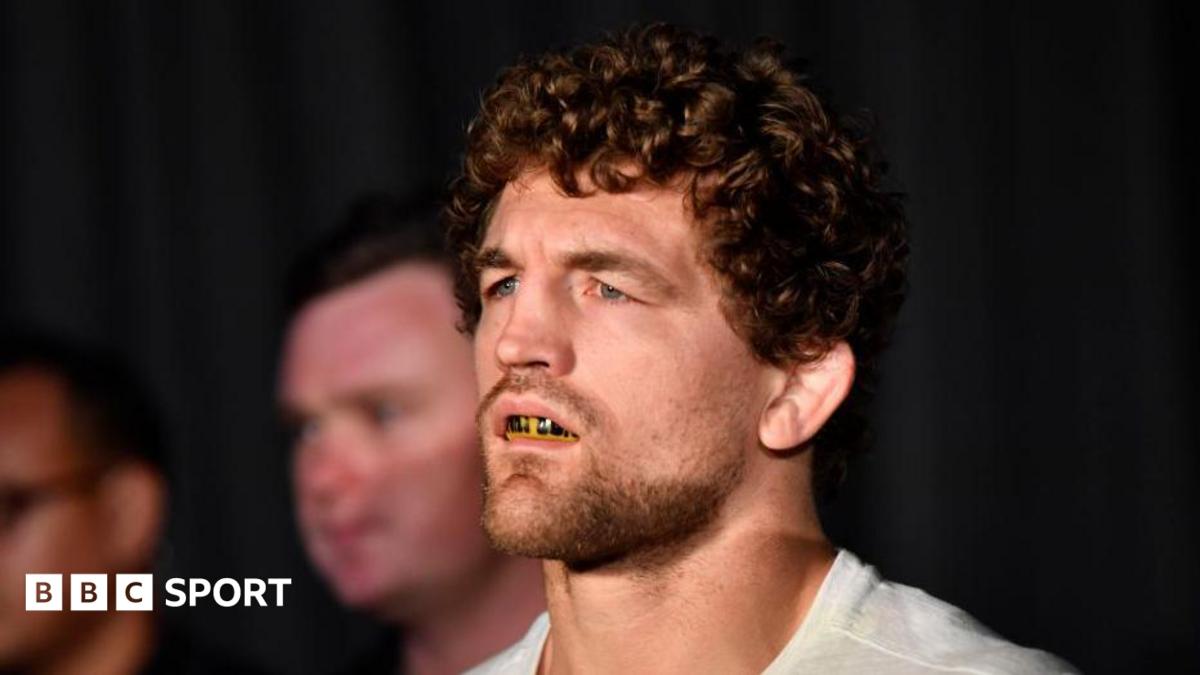
Former UFC fighter Ben Askren loses in wrestling return before confirming retirement

0
Former UFC fighter Ben Askren loses in wrestling return before confirming retirement


An emotional Ben Askren ended his competitive career with a points loss in a wrestling match with another former UFC fighter Belal Muhammad.

Askren came out of retirement for one last bout on Saturday, a year after he almost died from pneumonia.

The fight was organised by Real American Freestyle (RAF) and took place on Askren’s 42nd birthday in his home town of Milwaukee, Wisconsin.

He needed a double lung transplant after falling ill last year, when Askren said he “died four times” and was in a coma for 37 days.

He lost nearly a third of his bodyweight and weighed 63kg.

His recovery was such that he felt able to commit to one last fight, although he said it would be a one-off.

And Askren, who had three UFC fights in 2019, stayed true to his word after losing 6-3 to Muhammad.

Askren produced a mainly defensive performance and clearly faded during the third and final period.

“My legs gave out, they wouldn’t carry me any longer,” he said. “For sure it’s my last time on the mat. I couldn’t find a better place to do this.

“I worked hard over the last year. It was tough. There were times I couldn’t feed myself, I couldn’t stand up or go to the bathroom.

“Every day I woke up and thanked God for the chance to do it just one more time. I promised I’m going to make the most of this day. I’m going to treat people well, work my ass off and try to make a difference in the world.”

Muhammad beat British fighter Leon Edwards to win the UFC welterweight title in 2024 and had the last of his 22 UFC fights in June.

The 38-year-old added: “He [Askren] came back from death, this guy’s a legend.

“He’s changing lives. I know, he changed my life. I’m at home ready to quit. I’m tired, I’m sore, all my losses, but I look at Ben still fighting every single day.

“It shows you man, life is precious. Go after it bro.”


Source link

How to watch Argentina vs Spain: Live stream the 2026 FIFA World Cup final match

0
How to watch Argentina vs Spain: Live stream the 2026 FIFA World Cup final match


NEWYou can now listen to Fox News articles!

And just like that, it all comes down to Spain and Argentina.

The two soccer powerhouses will look to etch their names in the history books and become World Cup champions when they play at 3 p.m. ET on Sunday at MetLife Stadium. The game will be broadcast on FOX.

For Argentina, they have the opportunity to become the first back-to-back World Cup winner since Brazil did it in 1958 and 1962, and just the third country to win back-to-back titles overall. Italy first won consecutive World Cups in 1934 and 1938.

WATCH ARGENTINA VS SPAIN LIVE

(Left) Argentina’s Lionel Messi (10) reacts during the World Cup semifinal soccer match between England and Argentina in Atlanta, Georgia, on July 15, 2026. (Right) Spain’s Lamine Yamal (19) reacts during warm-up ahead of the World Cup Round of 16 soccer match between Portugal and Spain in Arlington, Texas, near Dallas, on July 6, 2026. (Stephanie Scarbrough/AP Photo; Tony Gutierrez/AP Photo)

However, for a long time in Argentina’s semifinal matchup against England, it did not look like they were going to have a chance to make history. The Three Lions held Argentina off the scoresheet for 85 minutes, but Lionel Messi sparked another electrifying come-from-behind win.

Anthony Gordon got the scoring started when he buried a cross from Morgan Rogers to put England on the board first in the 55th minute with an acrobatic finish. Harry Kane sparked the counter with a long pass that left the Argentina defense flummoxed for the first time all game.

However, that would end up being the lone true scoring opportunity of the game for the Three Lions. After England got on the board, Argentina’s pressure was relentless, but England was able to stave off the Argentine attack for about 30 minutes.

WATCH THE WORLD CUP FINAL ON FOX ONE

Argentina

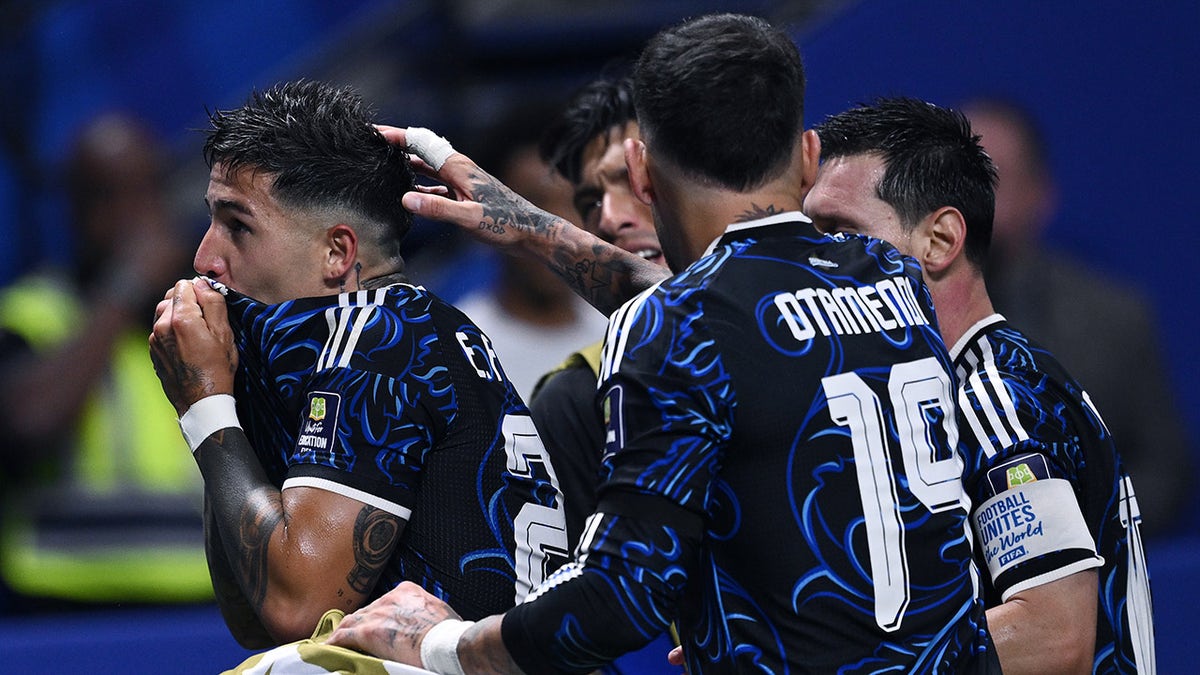
Enzo Fernandez of Argentina celebrates his goal during the FIFA World Cup 2026 Semi Final match between England and Argentina at Atlanta Stadium on July 15, 2026 in Atlanta, Georgia. (Image Photo Agency/Getty Images)

They finally broke through when Messi set up Enzo Fernandez just outside of the penalty box, and the 25-year-old hooked a shot around England goalkeeper Jordan Pickford into the back of the net to knot it at 1-1.

Lautaro Martinez then played the hero as he came off the bench and into Argentine soccer lore by scoring the winning goal in stoppage. In the 92nd minute, Messi recorded his second assist after he gathered a loose ball and played a beautiful pass into the penalty area, where Martinez was waiting unmarked. Martinez headed the ball past Pickford to send the Argentine fans into a frenzy as they completed the comeback.

It was not the first remarkable comeback of Argentina’s run to the title game. In the Round of 16, they scored three goals in 13 minutes to erase a 2-0 second-half deficit against Egypt to keep their World Cup hopes alive .

How to watch France vs Spain: Live stream the 2026 FIFA World Cup Semifinals

For Spain, their run have not been quite as dramatic, but it still has been remarkably dominant.

FOX ONE’S NEW WORLD CUP VIEWING EXPERIENCE

Mikel Oyarzabal celebrates after scoring on a penalty kick in Arlington, Texas.

Mikel Oyarzabal of Spain celebrates after converting a penalty to score his team’s first goal during the FIFA World Cup 2026 semifinal match between France and Spain at Dallas Stadium in Arlington, Texas. (Lars Baron/Getty Images)

They have shut out their opponents in six of their seven matches, and has allowed just one goal all tournament. Belgium was the lone country to break through against Spain , but the Spaniards beat Belgium 2-1 in the quarterfinals.

Against France in the semifinal, Spain capitalized on an early mistake and never looked back.

Veteran French defender Lucas Digne misread the ball and challenged a ball on a cross, but kicked Lamine Yamal instead, committing a foul and giving Spain a penalty kick in the 22nd minute.

Mikel Oyarzabal stepped up for Spain and buried the penalty kick, giving the Spaniards a lead they wouldn’t relinquish.

Pedro Porro doubled the lead for Spain in the 58th minute, when he broke through the French defense and found the back of net after beating France goalkeeper Mike Maignan on a crisp pass from Dani Olmo.

The French desperately tried to get back into the game, but the Spanish defense was too sound for them to break through , and held on for the win.

CLICK HERE TO DOWNLOAD THE FOX NEWS APP

Pedro Porro celebrates after scoring for Spain on the field.

Pedro Porro of Spain celebrates after scoring his team’s second goal during the FIFA World Cup 2026 semifinal match between France and Spain at Dallas Stadium in Arlington, Texas, on July 14, 2026. (David Ramos/Getty Images)

When: Sunday, July 19, 2026

Where: New York/New Jersey Stadium , East Rutherford, New Jersey

TV: FOX

Stream: Watch on FOX One and FOX Sports

Follow Fox News Digital’s sports coverage on X, and subscribe to the Fox News Sports Huddle newsletter.


Source link