
Emma joins Nuala McGovern to discuss her book Start With Yourself: A New Vision for Work and Life.
Source link
Why women should speak openly about money

7.3 earthquake hits Mexico-Guatemala border with no immediate damage reported

TAPACHULA, México — A strong earthquake struck the southern Mexican Pacific coast on Friday, right on the border with Guatemala, and was felt from Mexico City to El Salvador. Authorities have not immediately reported any severe damage or casualties in any country.
The U.S. Geological Survey (USGS) reported that the earthquake had a magnitude of 7.3 with the epicenter 48 kilometers (30 miles) southwest of Aquiles Serdan, near the coast of Chiapas and at a depth of 15 kilometers (9 miles). It was preceded by a smaller quake with an epicenter a bit farther out in the ocean.
There were at least five aftershocks between magnitude 5.1 and 6, according to USGS.
In Tapachula, the main city on Mexico’s southern border, the tremor began mildly but gradually intensified.
“We were upstairs on the second floor when it started shaking; we thought it would pass, but then it got stronger, so we all went downstairs and evacuated in an orderly manner to the front courtyard,” Alejandra Mendoza, an administrative employee at a public hospital in the city, explained to The Associated Press.
In Guatemala City, the earthquake frightened residents because of how long it lasted. Many people poured into the streets in the middle of rush hour as the workday was beginning and several buildings were evacuated.
Guatemala’s National Coordinator for Disaster Reduction (CONRED) reported no immediate damage. Social media users posted videos of some landslides, especially on roads heading west.
The Ministry of Education suspended in-person classes in the departments of San Marcos, Quetzaltenango, Suchitepéquez and Retalhuleu, near the quake’s epicenter.
In the Mexican capital, where buildings in certain areas creaked and shook, the earthquake alert did not sound because, the government said, “the energy radiated by the earthquake during the first few seconds did not exceed the activation thresholds.”
Mexican President Claudia Sheinbaum said that preliminary reports showed no damage. The navy recommended staying away from beaches for six hours because of tsunami risk.
The Meteorological Service of Chiapas alerted that there could be tsunami waves up to 1 meter (3.3 feet) off the coast of Mexico and Guatemala.
In the town of Suchiate, located along the river that separates Mexico from Guatemala, coastal areas are being monitored for tsunami risk, according to Mayor Elmer Vázquez Gallardo.
The region is prone to earthquakes, many that can be deadly. Earlier this year, a strong earthquake rattled southern and central Mexico, killing two. Hundreds in Mexico City were killed in a 7.1 magnitude earthquake in 2017.
___
Sonia Pérez D. contributed from Guatemala City. María Verza contributed from Mexico City.
Far above the Earth, NASA’s Apollo lunar lander put astronauts on the moon
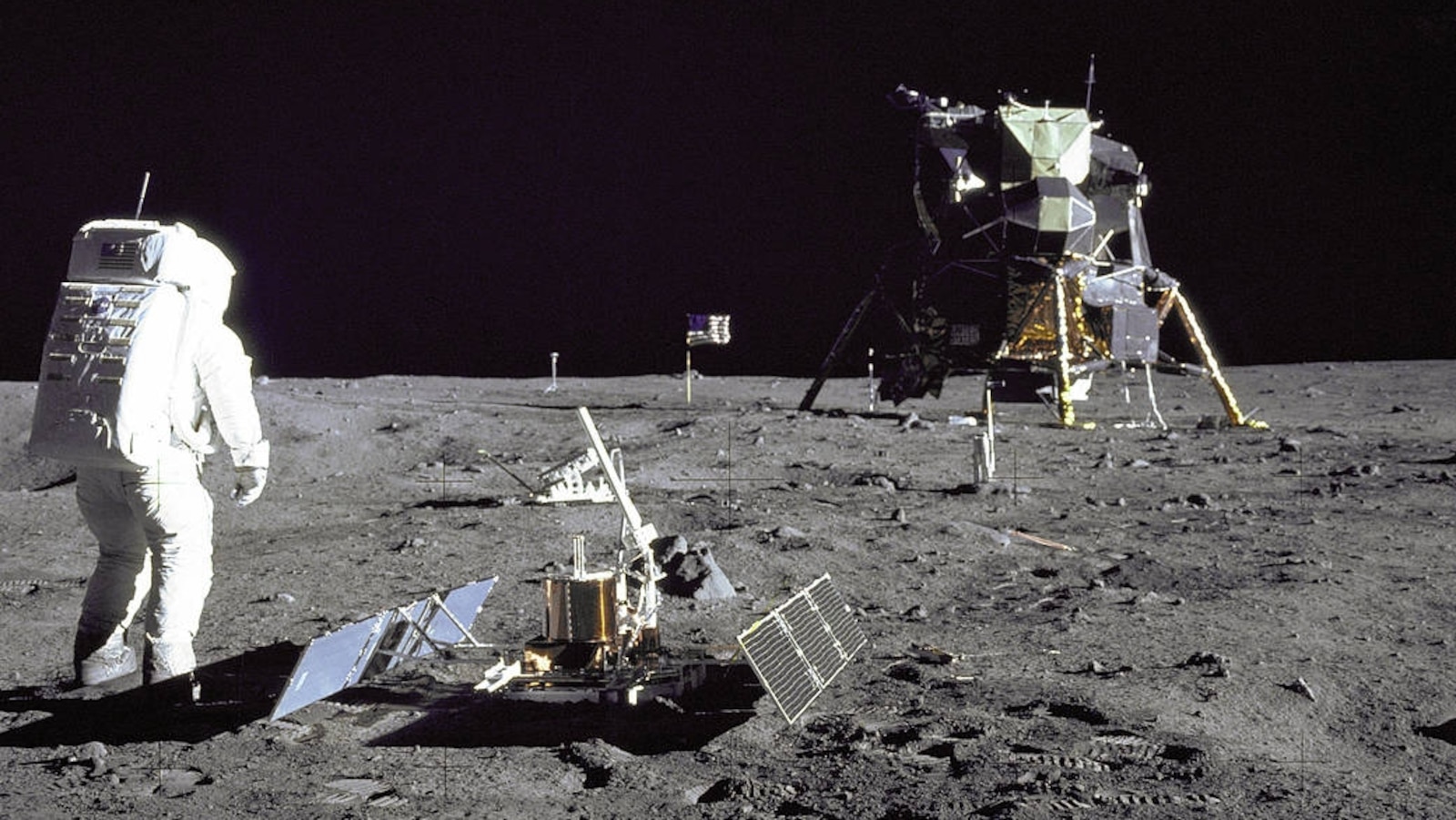
CAPE CANAVERAL, Fla. — America’s most daring, extraordinary feat — landing astronauts on the moon — remains the pinnacle of achievement by anyone anywhere. Ever.
And the lunar lander — a groundbreaking piece of America — is up there still, far away.
NASA put 12 men on the lunar surface more than half a century ago, beginning with Apollo 11’s Neil Armstrong and Buzz Aldrin. The two became the first humans to explore another world when their lander, bearing the patriotic name Eagle, settled onto the Sea of Tranquility on July 20, 1969. “The Eagle has landed,” Armstrong radioed as a spellbound Earth erupted in cheers and tears.
Just 6½ hours later came the most momentous and memorable line of all. Armstrong descended the ladder and stepped onto the gray, gritty dust: “That’s one small step for man, one giant leap for mankind.”
At 23 feet (7 meters), the Apollo lunar module stood a little taller than a giraffe and looked just as ungainly. It had two sections: a lower descent stage with four legs and an upper stage that housed the crew. The descent stage got the moonwalkers to the lunar surface and remained behind as the men blasted back into lunar orbit.
All six descent stages will be there for perpetuity, clumped around the equator on the moon’s near side.
NASA’s Lunar Reconnaissance Orbiter and other countries’ satellites around the moon have photographed them. Resembling whitish splotches from orbit, the descent stages pinpoint the touchdown sites not only of Eagle but Intrepid, Antares, Falcon, Orion and Challenger. Its moon landing nixed, Apollo 13’s lunar module Aquarius was turned into a lifeboat that got its crew of three safely home. The ascent stages are scattered all over the moon — smashed to bits, no longer needed once the moonwalkers were back inside the command module. Some speculate, however, that Apollo 11’s ascent stage might still be orbiting.
For NASA’s new Artemis program, private businesses are handling lunar lander details and operations. Elon Musk’s SpaceX and Jeff Bezos’ Blue Origin are scrambling to get their landers ready for a docking test in low-Earth orbit with a NASA crew capsule next year. If Artemis III’s docking rehearsal goes well, NASA could launch its first moon landing with astronauts since Apollo as early as 2028. SpaceX’s Starship is so tall that moonwalkers will need a 10-floor elevator to descend to the lunar surface. The Apollo astronauts used a nine-rung ladder.
On that long-ago day, President Richard Nixon said in a phone call to Armstrong and Aldrin as the pair stood alongside the U.S. flag they had just planted 240,000 miles (385,000 kilometers) from home. Said Nixon: “For one priceless moment in the whole history of man, all the people on this Earth are truly one.”
___
Part of a recurring series, “American Objects,” marking the 250th anniversary of the United States. For more American objects, click here. For more stories on the anniversary, click here. The Associated Press Health and Science Department receives support from the Howard Hughes Medical Institute’s Department of Science Education and the Robert Wood Johnson Foundation. The AP is solely responsible for all content.
Father warns of ‘brain-eating amoeba’ after son’s death

Cases caused by the amoeba, Naegleria fowleri, have numbered in the hundreds since 1960 – but it can quickly prove fatal if not diagnosed correctly.
Source link
Wildfire smoke is invading more than 20 states — doctors reveal who should worry most
NEWYou can now listen to Fox News articles!
Canadian wildfire smoke is drifting across parts of the U.S., prompting doctors to warn that even healthy people may face risks from prolonged exposure to polluted air.
More than 180 wildfires are burning in Ontario alone, while nearly 850 are active across Canada, sending smoke into the Midwest and Northeast, according to NASA.
More than 20 states have been affected, prompting widespread air quality alerts from the Upper Midwest to the East Coast.
DOCTORS WARN YOUR ‘STOMACH BUG’ MAY ACTUALLY BE A PARASITE THAT’S HARDER TO DETECT
The greatest concern comes from fine particulate matter (PM2.5), which is about 30 times smaller than the width of a human hair. According to the U.S. Environmental Protection Agency (EPA), these microscopic particles can penetrate deep into the lungs and even enter the bloodstream.
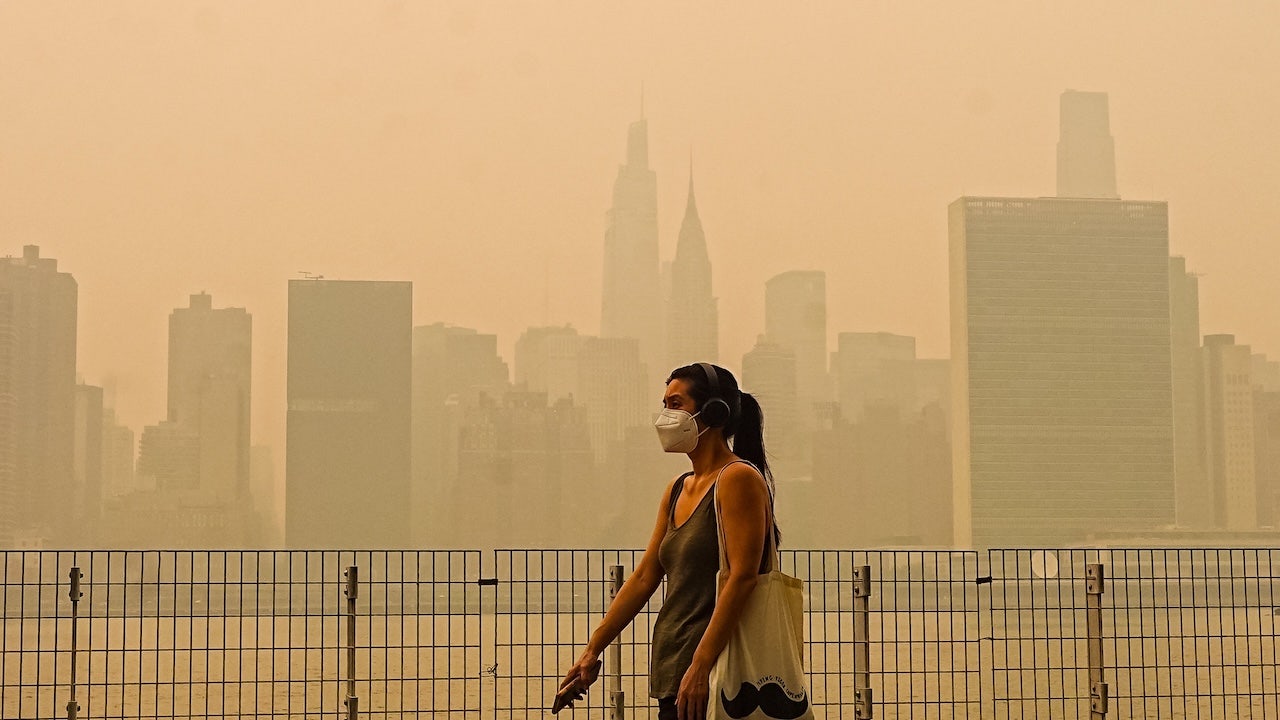
Smoke from massive wildfires in Canada engulfed the New York City skyline, reducing visibility and casting an orange haze on July 16. (Getty Images)
“The main concern is fine particle pollution, known as PM2.5,” Dr. Fernando Safdie, director of endoluminal and airway surgery and a lung cancer specialist in Miami Beach, Florida, told Fox News Digital. “These particles are small enough to get deep into the lungs, and the smallest can pass into the bloodstream.”
“Smoke also carries irritant gases,” he added. “That combination is what triggers symptoms.”
IS LETTUCE STILL SAFE TO EAT AMID TACO BELL ILLNESS PROBE? DOCTORS ANSWER
The EPA considers an Air Quality Index (AQI) above 100 unhealthy for sensitive groups, while levels above 150 are unhealthy for everyone.
Smoke-related health risks
The most common effect of wildfire smoke is irritation to the respiratory system.
“Most people notice burning or watery eyes, scratchy throat, runny nose or coughing,” said Safdie.
“It can progress to chest tightness, shortness of breath, wheezing, headaches, fatigue and a faster heartbeat.”
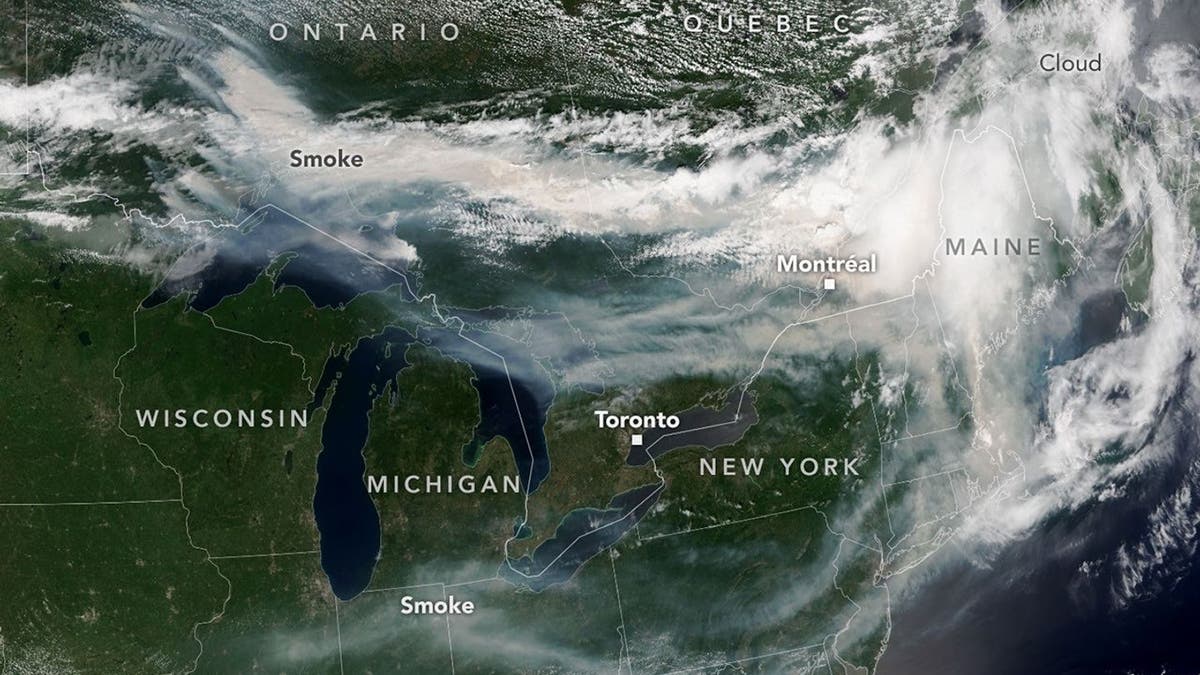
Smoke from wildfires pours eastward over Canada and the U.S. in an image captured on the afternoon of July 14, 2026, by the VIIRS (Visible Infrared Imaging Radiometer Suite) on the NOAA-21 satellite. (NASA Earth Observatory/Lauren Dauphin)
For anyone with asthma, COPD or chronic bronchitis, smoke can set off a flare or make existing symptoms noticeably worse, the doctor cautioned.
Wildfire smoke can also strain the cardiovascular system, according to the American Heart Association. It has been linked to increased emergency room visits for ischemic heart disease, irregular heart rhythm, heart failure, pulmonary embolism and stroke.
THINK YOUR CORTISOL IS TOO HIGH? EXPERT REVEALS THE TRUTH BEHIND VIRAL WELLNESS CRAZE
Short-term exposure to wildfire-related fine particulate matter can also worsen heart failure and contribute to premature death, the EPA notes.
Studies have linked long-term exposure to an increased risk of premature death, chronic heart and lung disease, lung cancer, cognitive decline and dementia, as well as pregnancy complications such as preterm birth and low birth weight, according to the EPA and recent research.
Who is most at risk?
Children are at the highest risk because their lungs are still developing and they breathe more air for their body size, according to Safdie.
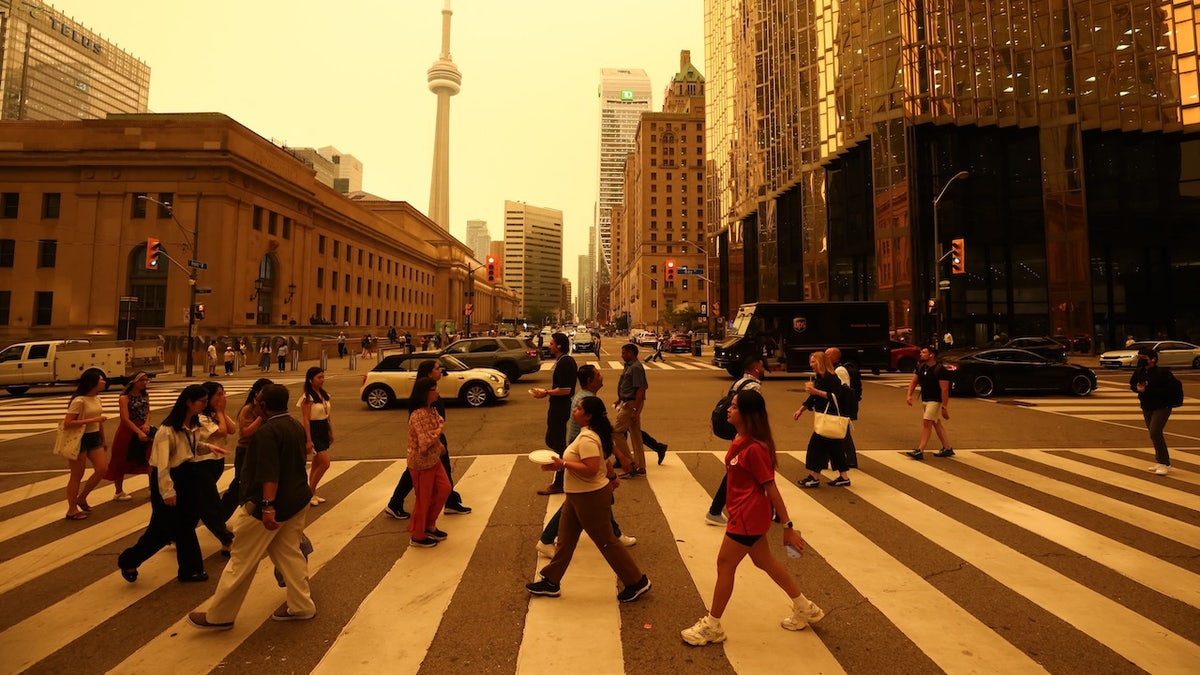
People walk in downtown Toronto, as smoke from forest fires in Northern Ontario causes poor air quality over the city on July 15. (Getty Images)
Older adults, pregnant women, and and anyone with a heart or lung condition, such as asthma, COPD or heart disease, are also especially vulnerable. Other high-risk groups include those with compromised immune systems and chronic kidney failure, the doctor said.
“Outdoor workers are exposed simply because of where they spend the day,” Safdie added.
Protecting against smoke dangers
The doctor emphasized that outdoor air quality dangers may not always be visible.
“When you don’t see the fires, you could still be exposed to the smoke and breathing that highly polluted air,” he told Fox News Digital.
TEST YOURSELF WITH OUR LATEST LIFESTYLE QUIZ
The CDC and EPA shared the following protective measures to prevent smoke-related health risks.
Monitor air quality. Check air quality at AirNow.gov before spending time outdoors. Sensitive groups should limit outdoor activity when AQI exceeds 100, and everyone should reduce exposure at levels of 150 and higher.
“Don’t tough it out if breathing is genuinely hard.”
Stay indoors when smoke levels are high. Keep windows and doors closed. If using air conditioning or central HVAC, set the system to recirculate to reduce the amount of smoky outdoor air entering the home.
Clean indoor air. Run a portable air purifier with a HEPA filter or use a highest-efficiency filter. Experts also recommend avoiding activities that worsen indoor air pollution, such as burning candles, smoking, frying food or vacuuming while smoke levels remain elevated.
CLICK HERE TO SIGN UP FOR OUR HEALTH NEWSLETTER
Wear an N95 respirator if necessary. If you must spend time outside when smoke levels are high, a well-fitting N95 respirator can filter out most harmful fine particles.
Reduce strenuous outdoor activity. Heavy exercise causes people to breathe faster and deeper, increasing the amount of fine particulate matter that reaches the lungs. Consider moving workouts indoors until air quality improves, experts advise.
When to seek help
“Don’t tough it out if breathing is genuinely hard,” Safdie advised. “Get medical care if you have shortness of breath that doesn’t ease with rest, a cough that won’t settle, wheezing, chest tightness, dizziness or heart palpitations.”
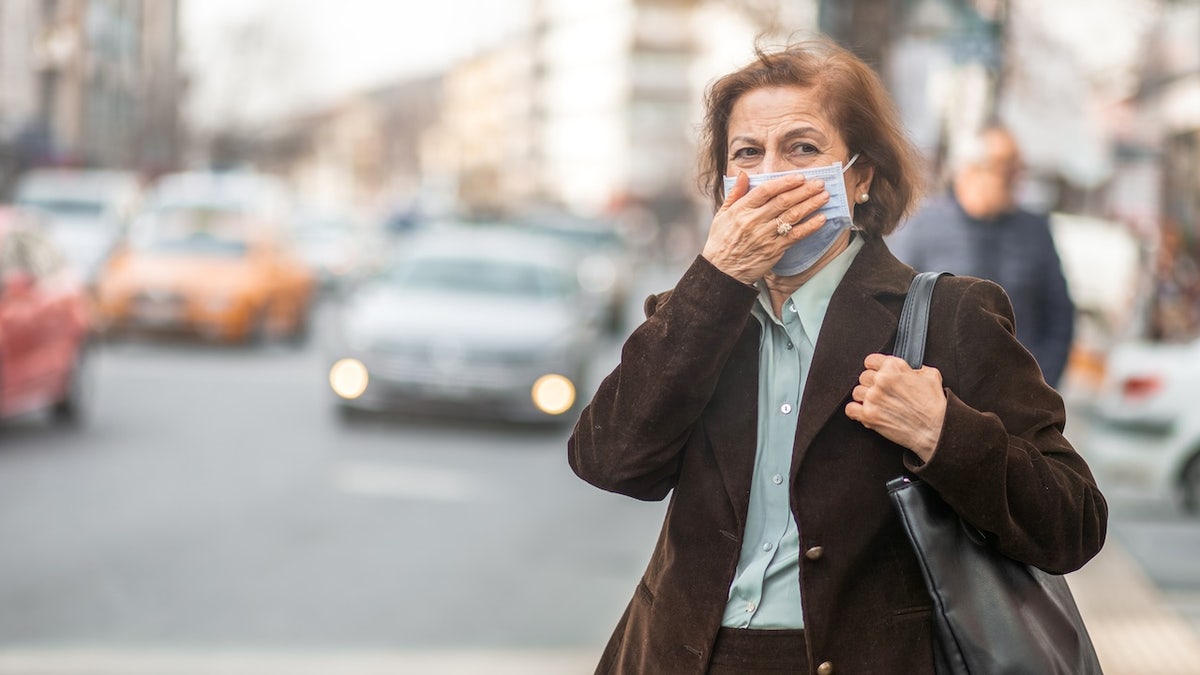
The most common effect of wildfire smoke is irritation to the respiratory system. (iStock)
Those who have asthma or COPD should follow their doctor-provided action plan.
“Don’t wait if your rescue inhaler isn’t doing the job,” Safdie said. “Call 911 for severe difficulty breathing, chest pain or confusion. When in doubt, get checked.”
CLICK HERE FOR MORE HEALTH STORIES
Although short-term exposure is unlikely to cause long-term damage, “very intense” exposure can generate chronic issues, he said.
CLICK HERE TO DOWNLOAD THE FOX NEWS APP
“For example, firefighters who are in the eye of the problem should definitely be very well-protected with the appropriate equipment, because the concentration of the smoke and the PM25 particles will be extremely high and could cause chronic problems,” Safdie said.
“But for the general population, it is unlikely that they will have such an exposure. I think that it would be more of an acute problem.”
This famous European destination now requires advance booking and entry fees for its most popular beaches

A visit to one of Europe’s most picturesque beach destinations now requires more planning than ever before. According to a Fox News report, several of the most popular beaches on Sardinia, the Italian island in the Mediterranean, have introduced advance reservation systems, daily visitor limits and entry fees to combat overtourism and protect their fragile coastal environment. The new rules mean that visitors may need to secure bookings weeks in advance before heading to some of Europe’s most sought-after beaches.
Why Sardinia is limiting beach access

Rena Bianca beach, Sardinia (Image Credit: Canva)
Sardinia, the second-largest island in the Mediterranean, is renowned for its crystal-clear waters, white sandy beaches and dramatic coastline. The island attracts large numbers of travellers, especially during the summer months, placing increasing pressure on its natural landscapes.In recent years, local authorities have become increasingly concerned about overtourism’s effects. Large crowds, damage to coastal vegetation, erosion of sand dunes and increasing pressure on local ecosystems have led to policies that limit the number of daily visitors to certain beaches.The new system is part of a broader effort to preserve Sardinia’s natural beauty for future generations. Similar conservation measures have been introduced in several tourist destinations around the world where rising visitor numbers have threatened sensitive ecosystems.
Which beaches have the new rules
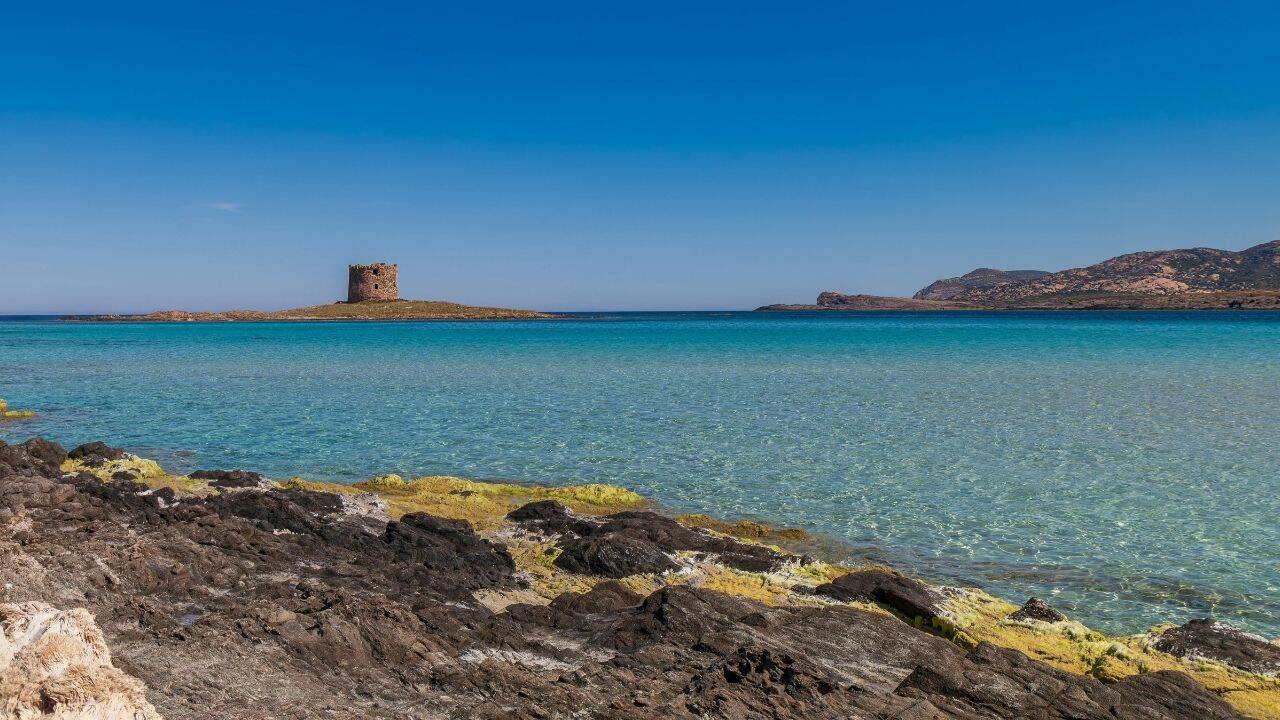
Scenic View of La Pelosa Beach Tower in Sardinia (Image Credit: Canva)
Among the beaches with the strictest regulations is La Pelosa Beach, one of Sardinia’s best-known coastal attractions. Famous for its shallow turquoise waters and soft white sand, the beach now allows only 1,500 visitors per day. Anyone wishing to visit must reserve a spot online in advance, pay a small entrance fee and present a booking confirmation or QR code before entering.Another iconic destination is Cala Goloritzé, a protected beach celebrated for its striking limestone cliffs and pristine waters. Visitor numbers here are even more tightly controlled, with only 250 people permitted each day during the tourist season. Advance reservations are mandatory, and visitors are also required to pay an entry fee.These restrictions are no longer limited to just one or two locations. According to Heart of Sardinia, a booking platform managing reservations for several of the island’s beaches, around 16 beaches and coves across Sardinia have introduced reservation systems, visitor caps or similar access controls to better manage tourism.The reservation requirements mean that travellers hoping to visit these beaches during the busy summer months may need to secure their bookings several weeks before their trip, as available slots can fill up quickly.
What travellers should know before planning a visit

Rena Bianca beach, Sardinia (Image Credit: Canva)
For travellers, the new rules mean that spontaneous beach visits may no longer be possible at some of Sardinia’s most popular locations. Travellers are advised to check the reservation requirements for their chosen beach before finalising their itinerary and complete any necessary bookings in advance.In addition to making reservations, visitors should be prepared to pay the required entrance fees and carry proof of their booking when arriving at the beach. Visitors without a valid reservation may be denied entry, even if they have travelled a considerable distance.While the additional planning may seem inconvenient, the measures reflect a growing global effort to balance tourism with environmental conservation. As destinations around the world grapple with overtourism, Sardinia’s approach highlights how popular attractions are increasingly adopting visitor limits to protect fragile natural landscapes.For travellers, the message is clear: if Sardinia’s stunning beaches are on your travel wish list, planning ahead is now just as important as packing your beach essentials.
China’s Moonshot AI claims Kimi K3 can rival OpenAI and Anthropic

Chinese AI start-up Moonshot has unveiled a massive new artificial intelligence model it says can rival top American firms.
The company launched Kimi K3, containing 2.8 trillion parameters, which serves as a measure of an AI’s scale and processing power.
Kimi K3’s full capabilities – coding, knowledge work, and reasoning – will be known when it is released as an open-source model on 27 July.
The sudden breakthrough suggests that China’s tech prowess is rapidly narrowing the capabilities gap, upending long-held assumptions in the West that Chinese developers trail their American peers.
Its arrival later this month will make it the world’s first open-source model in the three-trillion-parameter class that can be freely downloaded, run and customised by outside developers.
The release comes at a highly sensitive moment for the global technology sector, just weeks after the US government abruptly forced American developer Anthropic to temporarily withdraw its flagship Fable and Mythos models due to severe cybersecurity concerns.
While Washington has since lifted those restrictions, the initial move highlights how the US government now views advanced AI software as critical national infrastructure, labelling frontier models as vital national security assets subject to strict export controls.
However, the rapid arrival of Kimi K3 suggests Chinese firms are successfully bypassing these regulatory barriers and advancing independently despite US restrictions on hardware sales.
Heavily backed by domestic tech giants Alibaba and Tencent, Moonshot has quickly risen to the forefront of China’s generative AI ecosystem.
In a statement the company said that K3 stands as Moonshot AI’s “most capable flagship model to date”.
Unlike closed, proprietary American systems from OpenAI or Anthropic, Kimi K3’s open nature allows global users to modify the system for advanced reasoning and complex software development.
Moonshot AI noted that the system is uniquely built to operate with “minimal human supervision” to sustain tasks such as engineering and coding.
Third-party evaluations from Artificial Analysis and Arena.ai show the model performing on a par with leading models in the US, such as OpenAI’s GPT and Anthropic’s Claude.
In these independent benchmarks, external, Kimi K3 ranked first in web interface engineering, outperforming Anthropic’s Fable system, external in blind human-preference tests.
While the system’s massive size means running it locally requires significant computing equipment, making it open-source could heavily disrupt Silicon Valley’s commercial models.
The announcement had an immediate impact on shares in Moonshot’s domestic competitors Zhipu and MiniMax, which tumbled sharply in Hong Kong by about 27% and 16% respectively.
Brewdog founder James Watt faces data complaints over efforts to buy back firm
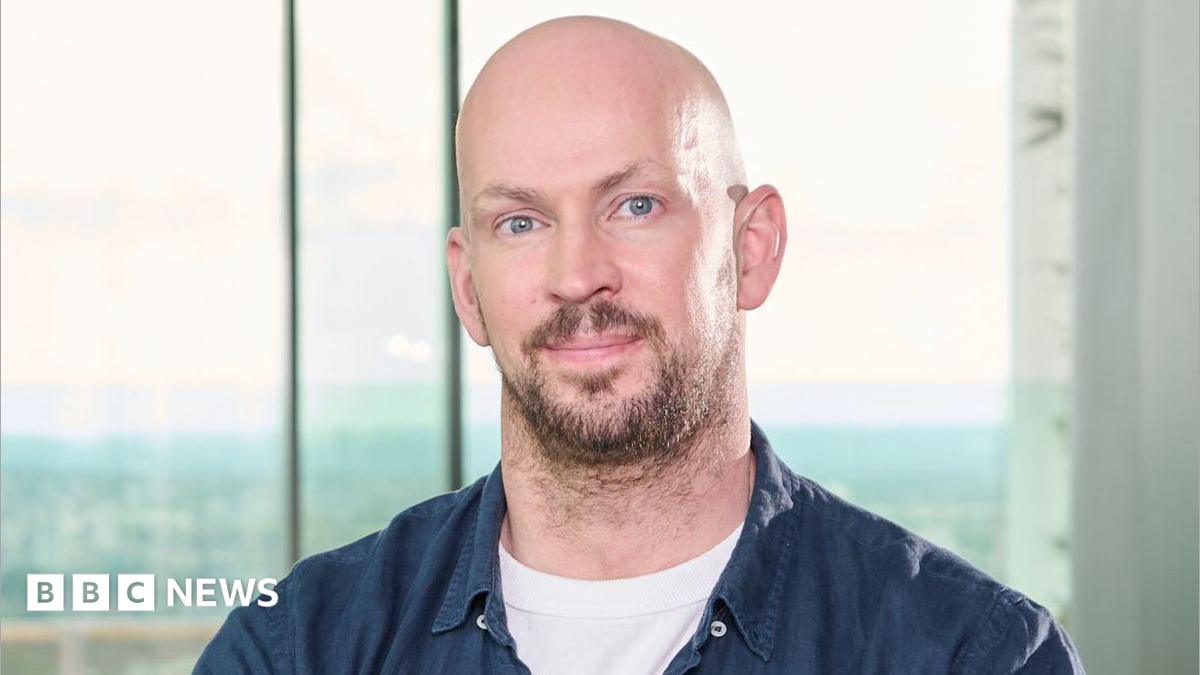
Earlier this week, bosses at Tilray stressed that the brand was not for sale and planned to reject Watt’s takeover efforts.
A spokesman added: “Tilray Brands did not acquire Equity for Punk shareholder data as part of its acquisition of the BrewDog brand and assets; that records system remains under the control of BrewDog plc (in administration).
“Tilray acquired only a customer CRM database comprising individuals who explicitly opted in to BrewDog communications.
“For the avoidance of doubt, Tilray Brands (trading as BrewDog) and its current management team have no involvement in, affiliation with, or responsibility for James Watt’s business activities, including Second Best.”
The spokesman added that Tilray Brands did not “authorise, facilitate, or participate in the communications reportedly sent to former Equity for Punks investors and did not authorise the use of any acquired data for such purposes”.
“We take data privacy with the utmost seriousness and can categorically confirm that no data held by Tilray Brands has been shared with external entities or former directors,” he said.
MLS team apologizes after JJ Watt called them out for snubbing his soccer star wife

Major League Soccer’s Real Salt Lake has apologized to soccer star Kealia Watt for referring to her only as JJ Watt’s wife in a social media post.
On Wednesday, the team shared a picture of the two sports stars with their three-year-old son, writing on X: “Welcome @JJWatt and fam.”
Former NFL defensive JJ responded to the post with a list of his wife’s sporting accolades, including four Utah state championships, as well as earning Gatorade Player of the Year twice and National Player of the Year.
“The woman in the photo grew up literally down the road, won 4 Utah state championships (1 in this exact stadium), Gatorade Player of the Year twice, National Player of the Year, scored the fastest first goal in USWNT history…” JJ wrote in response. “Could probably be worth a mention, but idk [I don’t know].”
Real Salt Lake shared an apology Thursday, writing: “We made an honest mistake yesterday and we are sincerely sorry for that. When we welcomed the Watt family to America First Field, we should have recognized Kealia Watt for exactly who she is.”

The team then shared a summary of Kealia’s sporting legacy.
“Kealia is a Utah native and one of the most decorated players to ever come out of this state. Kealia won four state championships with her club and four more in high school, and was a two-time Utah Gatorade Athlete of the Year. She was a U.S. youth national teamer at 13. At the U-20 level, she scored the game-winning goal in the World Cup final,” the post continued.
“She started four years at North Carolina, won a national title with the Tar Heels, then went No. 2 overall in the NWSL draft to the Houston Dash, and was the franchise’s first-ever college pick. She then became their captain with 114 appearances and 28 goals. Kealia finished her career with the Chicago Stars (then known as the Red Stars) and is now a soccer analyst for Amazon Prime Video.”
“@KealiaOhai, @JJWatt — we are deeply sorry. Thank you for all you do for the sport.”
Kealia, 34, is a former member of the U.S. Women’s National Team who played in the National Women’s Soccer League. She now co-hosts the podcast Style of Play with former soccer star Julie Ertz.
JJ, 37, an NFL game analyst for CBS Sports, stepped away from professional football after the 2022 season, finishing a 12-year career with the Arizona Cardinals.
In 2023, the couple purchased a stake in the English soccer club Burnley F.C., which played in the Premier League last season.
New bank scam laws could stop suspicious payments

NEWYou can now listen to Fox News articles!
Your phone rings, and the caller says your bank account is under attack. To protect your savings, you must move the money right now. The caller sounds calm. The instructions feel official. However, the “safe account” belongs to a scammer. That pressure can turn years of savings into an irreversible transfer. Georgia now gives some banks and credit unions another chance to interrupt the payment before the money leaves.
House Bill 945 took effect July 1, 2026. The law lets financial institutions pause certain transactions when they reasonably suspect financial exploitation. It protects adults age 65 or older. It also covers adults with qualifying physical or mental incapacities, Alzheimer’s disease or dementia. The idea sounds simple. Yet the details matter because your bank’s power may depend on your state, your account and the institution’s own policy.
YOUR FAMILY COULD BE ONE PHONE CALL FROM A BANK SCAM
Free live CyberGuy class: Sick of Spam? Join us July 22.
Join us Wednesday, July 22, at 1 PM ET for a free CyberGuy Live class that will help you cut down on robocalls, spam texts, junk email and other unwanted messages. Kurt “CyberGuy” Knutsson will walk you step by step through simple ways to filter spam, clean up your inbox and recognize the messages that could put your personal information at risk. No technical experience is needed. You’ll also receive our spam-stopping checklist, and every registrant will get a link to the class recording afterward.
Reserve your free spot today at CyberGuyLive.com.
Georgia’s new bank scam law lets financial institutions pause certain suspicious transactions involving older or vulnerable adults. (Getty)
Georgia’s new bank scam law can pause a suspicious payment
Under Georgia’s law, a financial institution may place a hold on a transaction linked to suspected exploitation. The law can cover an eligible adult’s account or an account where that adult is a beneficiary. It can also reach an account belonging to someone suspected of carrying out the exploitation. That last provision gives the law extra reach. In practice, it could help when suspicious money arrives in another customer’s account. The institution may have room to stop the payment from moving farther when the facts support concern.
However, the law gives banks discretion. It says a financial institution may place the hold, but it does not require one. Therefore, a worried teller or fraud analyst still has to notice the warning signs and act. The law also focuses on the suspicious transaction. It does not automatically shut down every payment or withdrawal connected to the account.
A possible 30-day delay comes with limits
A Georgia hold initially expires after 15 business days. The bank may add up to 15 more business days if its review still supports the exploitation concern. A court may shorten or extend that period. The bank must notify authorized account parties and any trusted contact within three business days. It can skip someone it reasonably suspects of taking part in the exploitation. The institution must also begin reviewing the facts behind its decision.
Before using this power, the institution must train the employees involved. It also needs written procedures for reviewing suspected exploitation. The law gives institutions liability protection when they act in good faith and use reasonable care.
A trusted contact can help without controlling your money
Georgia’s law also allows an eligible adult to name a trusted contact for an account. That person could be a relative, friend or another adult the account owner trusts. The bank may contact that person when it suspects exploitation. It may also ask for help confirming contact information, health status or the identity of someone holding power of attorney. In some cases, the institution may share only that it suspects exploitation.
A trusted contact does not automatically gain access to your balance. The role also does not grant authority to move your money or make decisions for you. Federal regulators describe the contact as a backup person whom the institution can alert when something looks wrong.
Which states let banks pause suspected scam payments?
Georgia is part of a much larger shift. As of today, at least 33 states have enacted laws that let banks, credit unions or other covered financial institutions delay certain transactions when they suspect financial exploitation.
The FTC’s most recent nationwide chart identified 24 states with these laws.
However, the agency warned that its chart was only a snapshot and advised readers to check current state statutes.
However, the agency warned that its chart was only a snapshot and advised readers to check current state statutes. Since that report, nine additional states have enacted protections.
These 33 states have enacted transaction-hold protections
The states are:
- Alabama, Arkansas, Colorado, Connecticut, Delaware, Florida, Georgia and Idaho
- Kentucky, Louisiana, Maine, Maryland, Michigan, Minnesota, Mississippi and Montana
- Nebraska, Nevada, New Hampshire, North Carolina, North Dakota, Oklahoma, Oregon and Rhode Island
- South Carolina, South Dakota, Tennessee, Texas, Utah, Vermont, Virginia, Washington and Wyoming
The laws do not give every bank the same power. Some let an institution pause a payment on its own. Others require a report to law enforcement or adult protective services. The protected age can also vary, while several states include younger adults with qualifying disabilities. Hold periods differ even more. A delay may last only a few business days in one state. Elsewhere, an investigation or court order can keep the payment on hold much longer.
HOW FLORIDA RETIREE LOST $200K IN FAKE PAYPAL REFUND SCAM
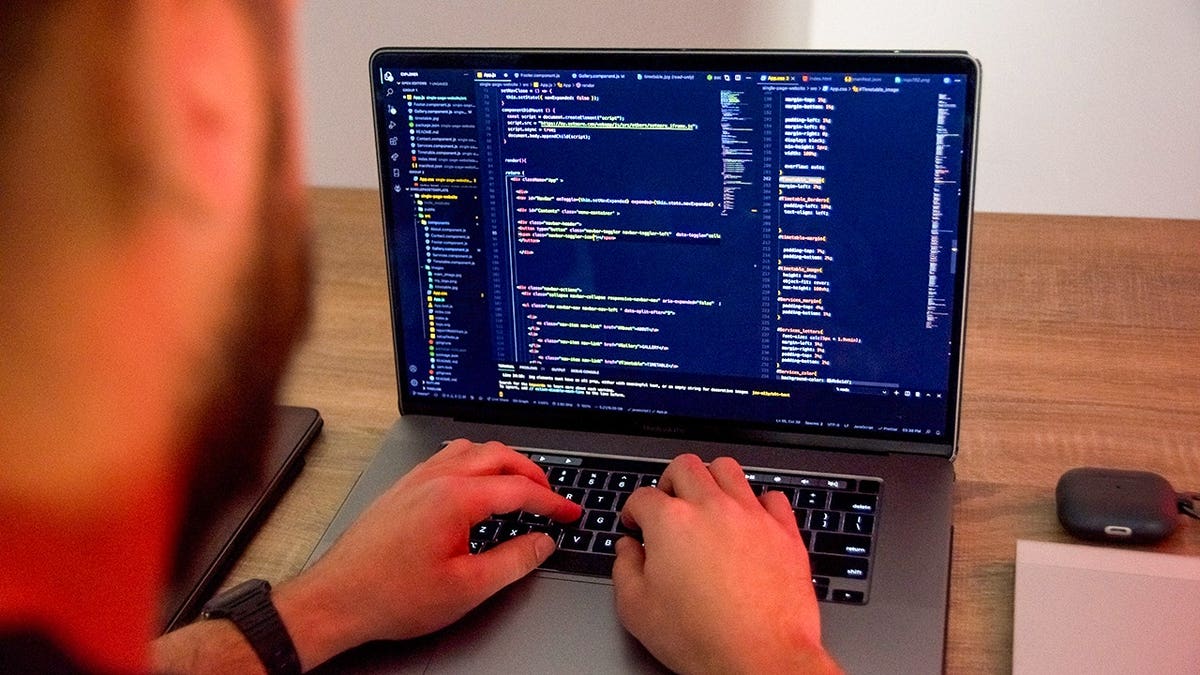
Scammers often pressure victims to move money quickly, while transaction-hold laws aim to create time for review. (Photo by Nikolas Kokovlis/NurPhoto via Getty Images)
Nine states have joined the list since the FTC’s last review
Here is what the newer state laws do.
Colorado
Colorado’s HB 26-1110 created the Adults’ Security and Safeguards from Exploitation in Transactions Act, known as the ASSET Act. It lets a bank or credit union delay a disbursement when it reasonably believes a vulnerable adult faces financial exploitation. The institution must notify law enforcement or adult protective services. A decision generally must be made within 90 days. That period can reach 180 days when an agency investigation remains underway. The law takes effect August 12, 2026.
Georgia
Georgia’s HB 945 lets a financial institution place a hold on a suspicious transaction involving an eligible adult. The law also reaches accounts where the adult is a beneficiary. In some cases, it can cover an account belonging to the suspected perpetrator. The initial hold lasts up to 15 business days. A bank may extend it for another 15 business days when its review continues to support the concern. The law also includes trusted contacts, employee training and written notice requirements.
Idaho
Idaho enacted HB 182, known as the Report and Hold law, in 2025. It covers a broad range of financial businesses, including banks, credit unions, lenders, money transmitters and investment firms. Covered professionals may temporarily pause suspicious transactions and report suspected exploitation. The law also gives them liability protection when they act in good faith.
Maine
Maine’s 2025 law covers adults age 65 or older and people protected by the state’s Adult Protective Services Act. A bank or credit union may delay a disbursement when it reasonably believes the payment could result in exploitation. The institution must notify the Maine attorney general within two business days. The hold generally ends within 15 business days unless a court extends it. Customers may also be able to designate a trusted contact.
Maryland
Maryland’s Vulnerable Adult Banking Protection Act covers residents age 65 or older and vulnerable adults who cannot provide for their daily needs. A financial institution may delay or deny a suspicious disbursement. An initial delay can last 15 business days. The institution or an investigating agency can extend it for up to 25 business days from the original request date. The law takes effect October 1, 2026.
North Carolina
North Carolina’s SB 595 gives financial institutions broad authority to delay or refuse transactions involving suspected exploitation of older or disabled adults. The law covers withdrawals, transfers and some requested account changes. An initial delay can last up to 30 business days. The institution may extend it for another 30 business days if it continues to believe exploitation is occurring. Banks may also alert a trusted contact.
Oklahoma
Oklahoma’s SB 2067 requires financial institution employees to report suspicious activity internally and notify an appropriate agency. Banks and credit unions may place a temporary hold on a reported account. They can also contact someone previously designated by the account holder. The law takes effect November 1, 2026.
South Dakota
South Dakota’s HB 1238 lets a financial institution delay or refuse certain transactions when it reasonably believes exploitation may have occurred or is being attempted. The law protects senior and vulnerable adults. It also covers a consenting adult who asks the institution to take protective action.
Vermont
Vermont’s Act 106 lets covered financial institutions delay a transaction when they reasonably believe a customer faces financial exploitation. The initial delay can last 15 business days. The institution may add another 15 days when it believes the exploitation may continue. Vermont approved the law on May 20, 2026.
Why bank scam protections vary by state
The federal Senior Safe Act encourages financial professionals to report suspected exploitation. It also offers liability protection to covered institutions and trained employees who make qualifying reports. However, the law does not create one nationwide transaction-hold rule for checking and savings accounts. Investment accounts follow a different framework. FINRA Rule 2165 lets a brokerage firm temporarily hold certain disbursements or securities transactions when it reasonably believes an eligible adult faces financial exploitation.
The rule generally covers adults age 65 or older along with some younger adults who have qualifying impairments. As a result, a brokerage firm may have national regulatory authority to pause a suspicious request. A bank handling your checking account may depend more heavily on the law in your state.
A state law still cannot guarantee your payment will stop
Most state laws give a bank permission to act rather than requiring it to block every suspicious payment. The institution still needs to recognize the warning signs and have enough information to reasonably suspect exploitation. Your protection may depend on your age, the account involved and where you live. Your bank’s internal policies and employee training also play a role. Even in a state with a transaction-hold law, a payment may go through before anyone realizes a scam is underway.
Scammers know speed works in their favor
CyberGuy has reported on grandparent scams that use urgent calls, stolen details and AI-cloned voices. We have also covered crypto kiosk scams where frightened victims followed a caller’s instructions while the money moved beyond easy recovery. Georgia also used HB 945 to add safeguards for virtual currency kiosks, another payment method scammers use to move money quickly.
In both cases, the scammer wants to keep you isolated. They may warn you not to call your family or bank. They might claim that an employee is part of the investigation. A transaction hold attacks that pressure tactic. It adds time, which gives someone a chance to ask a basic question: Does this story make sense? Of course, no law will catch every scam. A payment can move through a different state, another financial service or a crypto wallet. Also, a bank may miss the warning signs or choose not to place a hold.
THE GIFT THAT PROTECTS YOUR DAD FROM SCAMMERS

House Bill 945 took effect July 1, 2026, giving Georgia banks more authority to delay payments tied to suspected exploitation. (Kurt “CyberGuy” Knutsson)
Do these bank scam transaction hold laws work?
An ABA Foundation survey commissioned from 158 banks offers an early view. Half of the responding banks in states with hold laws said they had used the authority to delay, refuse or hold transactions. Nearly 90% of respondents in states without such laws supported adopting them. The survey reflects the banking industry’s experience rather than a nationwide independent study. Even so, it shows that banks see value in having time to investigate.
That time can also create a difficult balance. Banks need enough authority to stop a devastating payment. Yet they must avoid blocking legitimate transactions based on age alone. Georgia tries to address that concern with a reasonable-cause standard. It also requires notice, employee training and an internal review. Whether the law succeeds will depend on how institutions use those tools.
How to protect your money from bank scams
You should not assume your bank can reverse a scam payment. You also cannot count on it pausing every suspicious transaction. The safest approach is to put protections in place before an urgent call, text or email catches you off guard.
1) Ask your bank about trusted contacts and transaction holds
Call your bank’s fraud department and ask whether you can add a trusted contact to your account. Then ask what the bank does when an employee suspects financial exploitation. You should also find out whether your state allows the bank to delay a suspicious transaction. The answer may differ between your checking account and your brokerage account.
2) Turn on instant alerts for account activity
Enable notifications for withdrawals, transfers and card purchases. Choose the lowest available dollar threshold so you hear about unusual activity quickly. Also review your bank’s daily transfer and wire limits. Lower limits can make it harder for a scammer to move a large amount of money in one transaction.
3) Make sure your trusted contact understands the role
Choose someone who will answer quickly and question an unusual request. Make sure that person knows your bank may call if something appears wrong. A trusted contact does not automatically gain access to your money. The role gives your bank another way to reach someone you trust during a possible emergency.
4) Create a family code word for emergencies
Choose a private word or phrase that family members can use to verify a real emergency. If someone calls claiming a loved one needs money, ask for the code word. Then hang up and contact your relative through a phone number you already have. Never call a number provided by the person demanding payment.
5) Never transfer money to a so-called safe account
A bank, government agency or law enforcement officer will not tell you to protect your savings by transferring them to another account. Scammers often use the phrase “safe account” to make a fraudulent transfer sound official. Do not send money through a wire transfer, cryptocurrency kiosk or payment app while someone is pressuring you to act immediately. End the conversation and call your bank using the number on the back of your card or its official website.
6) Use strong security software on your devices
Strong antivirus software can help detect malicious links, fake websites and downloads that scammers use to steal financial information. Keep the software updated on your phone and computer. Security software cannot stop every phone scam. However, it can block some of the digital tools criminals use before they reach your bank account. Get my picks for the best 2026 antivirus protection winners for your Windows, Mac, Android and iOS devices at CyberGuy.com.
7) Reduce the personal information scammers can use
Scammers may pull your age, relatives’ names, phone number and address from data broker and people-search websites. They can use those details to make a fake emergency sound convincing. A data removal service can help reduce how much personal information appears on these sites. It cannot remove every record from the internet, but it can make it harder for criminals to build a detailed profile around you or your family. Check out my top picks for data removal services and get a free scan to find out if your personal information is already out on the web by visiting CyberGuy.com.
8) Act quickly if money starts moving
Call your bank’s fraud department as soon as you suspect a scam. Ask the institution to stop, recall or flag the transaction. Change your online banking password from a trusted device and review recent account activity. If you shared login details, ask the bank whether it should lock online access or issue new account numbers. Next, report the incident to local law enforcement and the appropriate fraud agency. For suspected elder financial abuse, you can also contact Adult Protective Services in your state.
Kurt’s key takeaways
Georgia’s new law gives financial institutions explicit authority to pause certain transactions when they suspect financial exploitation. However, the hold remains optional, and the protection applies only in qualifying situations. The issue reaches far beyond Georgia. At least 33 states have enacted some form of transaction-hold authority for banks or credit unions, although several newer laws have later effective dates. The protections still vary, so your state and financial institution can shape what happens during the most urgent minutes of a scam. Add a trusted contact where available. Talk with your family about how to verify an emergency and learn how your bank handles suspicious payments. A five-minute conversation today could create the pause that saves someone’s life savings later.
Should a bank have the power to delay your payment when it believes a scammer is directing you, even if you insist the transfer is legitimate? Let us know by writing to us at CyberGuy.com.
CLICK HERE TO DOWNLOAD THE FOX NEWS APP
Sign up for my FREE CyberGuy Report
- Get my best tech tips, urgent security alerts and exclusive deals delivered straight to your inbox.
- For simple, real-world ways to spot scams early and stay protected, visit CyberGuy.com – trusted by millions who watch CyberGuy on TV daily.
- Plus, you’ll get instant access to my Ultimate Scam Survival Guide free when you join.
Copyright 2026 CyberGuy.com. All rights reserved.