The so-called “great wealth transfer” — the passing of assets from the baby boomer generation to their heirs — will mostly benefit younger Americans who are already affluent, according to a July report from Visa Business and Economic Insights.
And while the wealth transfer will be significant, the value of assets that are passed down could be much smaller than some previous estimates pegging it as high as $124 trillion, according to the report.
“When people throw around $100 trillion, they don’t think about all the deductions that have to come from it,” Visa chief economist Wayne Best told CBS News. “You have to subtract liabilities, and boomers actually have a lot of mortgage debt.”
Here’s how much actual wealth Visa’s economists expect boomers to transfer to their children and grandchildren.
The size of the average inheritance
Baby boomers are sitting on $93 trillion in assets, a sum that will shrink to $36 trillion in inheritable assets after subtracting liabilities, retirement spending, charitable giving and taxes.
The report also expressly excluded the wealth of the top 1% of U.S. households, or those worth at least $13 million, because their spending patterns are not reflective of the population at large.
That means that on average, inheriting households will receive $515,000.
Of the $36 trillion that will be transferred, only $8 trillion will be spent, according to the Visa report. That’s because most recipients are already wealthy and are expected to save or invest the remainder of what they receive from their families.
The anticipated $8 trillion boost to consumer spending will lift average annual consumer spending growth about 0.1 percentage points, to 2.1% per year, over the next 20 years, Visa estimates.
Transportation and travel sectors stand to benefit
Already affluent recipients of boomer wealth are expected to spend their inheritances on making home improvements and traveling, providing a boon to businesses in those sectors.
“A wealthy person who receives an inheritance from a wealthy parent probably already has a home, but might use the money to improve that home,” Best said.
Other kinds of businesses, including airlines, cruise lines and some retail categories, are also poised to benefit from the wealth transfer, according to Best. Spending on automobiles and associated expenses like insurance, maintenance, repairs and gasoline is also expected to rise.
From warming winter teas to zesty stir-fries, ginger (Zingiber officinale) has long been a kitchen staple. But beyond its culinary charm, this spicy root has a rich history in traditional medicine – and modern science is catching up.
Studies now show that ginger may offer a wide range of health benefits, from easing nausea and relieving colds to reducing inflammation and supporting heart health.
Here’s what you need to know:
1. Nausea relief
Multiple clinical trials have shown consistent evidence that ginger can reduce nausea and vomiting, particularly when compared to a placebo. The NHS even recommends ginger-containing foods or teas for easing nausea.
Ginger seems especially effective for nausea during pregnancy. In small doses, it’s considered a safe and effective option for people who don’t respond well to standard anti-nausea treatments.
Ginger seems especially effective for nausea during pregnancy (Getty/iStock)
There’s also promising evidence that ginger can help with chemotherapy-induced nausea, though results are mixed when it comes to motion sickness and post-surgery nausea.
Researchers believe ginger’s anti-nausea effects may work by blocking serotonin receptors and acting on both the gut and brain. It may also help by reducing gas and bloating in the digestive tract.
2. Anti-inflammatory benefits
Ginger is rich in bioactive compounds, such as gingerol and shogaol, which have strong antioxidant and anti-inflammatory properties.
Recent research suggests ginger supplements may help regulate inflammation, especially in autoimmune conditions. One study found that ginger reduced the activity of neutrophils — white blood cells that often become overactive in diseases like lupus, rheumatoid arthritis and antiphospholipid syndrome.
Neutrophils produce extracellular traps (NETs), which are web-like structures used to trap and kill pathogens. But when NETs form excessively, they can fuel autoimmune diseases. In the study, taking ginger daily for one week significantly reduced NET formation.
Dipa Kamdar is a Senior Lecturer in Pharmacy Practice at Kingston University.
While this study used ginger supplements, it’s unclear whether fresh ginger or tea has the same effect. Still, the findings suggest ginger may be a helpful, natural option for people with certain autoimmune conditions – though more research is needed.
Ginger also has antimicrobial properties, meaning it can help combat bacteria, viruses and other harmful microbes. Combined with its anti-inflammatory effects, this makes ginger a popular remedy for easing cold and flu symptoms like sore throats.
3. Pain management
When it comes to pain, the research on ginger is encouraging – though not conclusive. Some studies show that ginger extract can reduce knee pain and stiffness in people with osteoarthritis, especially during the early stages of treatment. However, results vary, and not everyone experiences the same level of relief.
For muscle pain, one study found that taking two grams of ginger daily for 11 days reduced soreness after exercise.
Ginger may also ease menstrual pain. In fact, some studies suggest its effectiveness rivals that of non-steroidal anti-inflammatory drugs like ibuprofen.
Researchers believe ginger works by activating pathways in the nervous system that dampen pain signals. It may also inhibit inflammatory chemicals like prostaglandins and leukotrienes.
4. Heart health and diabetes support
High blood pressure, high blood sugar and elevated “bad” cholesterol (low-density lipoprotein or LDL cholesterol) are all risk factors for heart disease. Ginger may help with all three.
A 2022 review of 26 clinical trials found that ginger supplementation can significantly improve cholesterol levels — lowering triglycerides, total cholesterol and LDL cholesterol, while raising HDL (“good”) cholesterol. It may also lower blood pressure.
A 2022 review of 26 clinical trials found that ginger supplementation can significantly improve cholesterol levels (Alamy/PA)
For people with type 2 diabetes, ginger could offer additional benefits. A review of ten studies found that taking one to three grams of ginger daily for four to 12 weeks helped improve both cholesterol levels and blood sugar control.
These benefits appear to come from multiple mechanisms, including improved insulin sensitivity, enhanced glucose uptake in cells, and reduced oxidative stress. Ginger’s anti-inflammatory actions may also contribute to its heart-protective effects.
Some early research suggests that ginger may also offer benefits for sexual health, though evidence in humans is still limited. Animal studies have found that ginger can boost testosterone levels, improve blood flow, and enhance sexual behaviour. In traditional medicine systems, it has long been used as an aphrodisiac. While there’s not yet strong clinical evidence to confirm a direct impact on libido, ginger’s anti-inflammatory, circulatory and hormonal effects could play a supportive role, particularly for people managing conditions like diabetes or oxidative stress.
5. Brain health and cancer research
Emerging evidence suggests ginger may also offer neuroprotective and anti-cancer benefits. Lab-based studies show that ginger compounds can help protect brain cells from oxidative damage – a key factor in neurodegenerative diseases like Alzheimer’s.
Other in-vitro research has found that ginger can slow the growth of some cancer cells. However, these findings are still in early stages and more research is needed to confirm their relevance in humans.
Ginger is generally safe when consumed in food or tea. But like any supplement, it should be used in moderation.
Doses above four grams a day may cause side effects such as heartburn, bloating, diarrhoea or mouth irritation. These are usually mild and temporary.
Certain groups should use caution with high doses. Ginger may increase bleeding risk in people on blood thinners (like warfarin, aspirin or clopidogrel), and it can enhance the effects of diabetes or blood pressure medications, potentially leading to low blood sugar or blood pressure. Pregnant women should also consult a doctor before using high doses.
So ginger isn’t just a fragrant kitchen spice – it’s a natural remedy with growing scientific support. For most people, enjoying ginger in food or tea is a safe and effective way to tap into its therapeutic potential. If you’re considering taking supplements, it’s always best to speak with your doctor or pharmacist first, especially if you’re managing a medical condition or taking medication.
Social media often turns everyday experiences into larger conversations, and this time, the spotlight is on life inside Indian offices. A post by an NRI about adjusting to work culture after returning to India has caught the attention of professionals across the internet. Instead of talking about salaries or job titles, the discussion revolves around everyday office experiences that many people say are surprisingly familiar.The post has triggered hundreds of reactions, with several users saying they have faced similar situations at work. Others shared their own experiences of returning to India after working overseas, adding to the growing discussion in the comments section.
What the NRI said about working in India
The viral post was shared by Instagram user Nupur Dave, who listed what she described as the “top problems you’re going to face as an NRI in Indian work culture.”According to her, one common challenge is meetings getting cancelled or postponed at the last moment, especially for people who are not in decision-making positions. Sharing her own experience, she wrote, “Yesterday, three of my four partnership calls got rescheduled a few minutes before.”She also advised professionals to “be ready to wait,” saying that meetings often start late because earlier discussions continue longer than expected. In her view, waiting for several minutes, or sometimes even an hour, can become a regular part of the workday.
Her views on office dynamics
Dave also shared her observations about workplace behaviour. She claimed that “sucking up is normal here,” saying some leaders prefer hiring people they personally like or employees who tend to agree with them.At the same time, she clarified that she was not defending the practice. According to her, organizations already deal with enough challenges, and some managers may simply find it easier to work with agreeable teams. She wrote, “I’m not defending it. It’s just one possible reason.”
Comments on time, note-taking, and feedback
Another point she raised was the pace of work. Describing her experience, she wrote, “Time moves differently in India. The sense of urgency is spread over time, which means people culturally have time for a one hour lunch, a 5 pm chai break, and work spilling over to the next day. Like it or not, it’s chill, but will you like it? I’m not sure.”She also claimed that note-taking is often overlooked, adding that designers sometimes make changes without documenting them.According to Dave, constructive feedback is also not always received positively, with people sometimes becoming defensive instead of accepting it.She ended her post by inviting people to “set up a meeting with me for more clarity.”
Internet users say they have seen the same things
The post received several comments from users who felt her observations reflected their own experiences.One user wrote, “I feel working hours in India aren’t clearly defined. We work day and night, and sometimes there’s no separation between personal time and work. I’ve seen many of my friends go through this.”Another commented, “Accurate! I worked abroad for 12 years and have been in India for the last 5.5 years. The challenges you’ve outlined are on point.”A third person shared, “I tried to set up a manufacturing unit in India. Between bureaucracy, chai paani money, a lack of value for time, and many other issues, I moved my setup to Thailand. It was the best decision. By the way, I’m a fourth generation NRI who loves India for its culture, food, and vibes. I hope things become faster.”Another user added, “What I’ve observed is that people are only concerned about their own time. They don’t value other people’s time. If they need something, they’ll schedule a meeting at odd hours without thinking twice about whether you’re busy or already have other plans.”Disclaimer: This article is based on a post shared on Instagram and reflects the opinions and experiences expressed by the user. The Times of India has not independently verified the claims or observations made in the post. Individual experiences may vary. Thumb image: Instagram
Umm al-Khair, occupied West Bank – The Palestinian villagers of Masafer Yatta, a collection of hamlets in the southern West Bank, feel Israel’s military and settlers closing in on them on a daily basis.
In one of those villages, Umm al-Khair, the presence of a newly established illegal settlement outpost nearby is the latest evidence that they are being replaced in their own land.
Recommended Stories
list of 3 itemsend of list
Salem and Ikhlas al-Hathaleen live with their eight children in a modest home covered with sheet metal. The land around their home had been somewhere the family could use for agriculture and grazing. But the illegal outpost, an extension of the nearby settlement of Carmel established last September, was set up on that land, roughly 20 metres (66 feet) away from their house.
Ikhlas explains that her old morning routine used to involve taking the family’s sheep out of their enclosure, providing them with food and water, milking them, and allowing them to graze.
The tasks were simple – but that is no longer the case.
Now, thanks to the new Israeli outpost, reaching the enclosure – which lies just behind the house – has become difficult, and at times, impossible.
According to Ikhlas, the family was initially prevented for four consecutive days from reaching the livestock enclosure and then was only allowed to access it once, while accompanied by Israeli soldiers, in order to provide food and water for the animals. They were then prevented from accessing the enclosure for two days. This pattern of occasional visits interspersed with days of not being allowed to access the animals has continued, and Ikhlas says they have only been able to check on the animals three times in July.
“I look every morning to see whether the sheep are still alive,” Ikhlas says. “I only wish I could reach them and take care of them like I used to.”
Struggle for a bathroom
It is not just sheep enclosure that is a struggle to get to for the al-Hathaleen family.
Even the family’s bathroom, which is a freestanding structure a few metres away from their home, has become difficult to reach.
Ikhlas explains that settlers in early July placed obstacles near the bathroom, including barbed wire and children’s playground equipment, all in an effort to make access harder, particularly for children and the elderly.
She adds that the situation has become more complicated since the Israeli army declared the area around the bathroom a closed military zone. As a result, the family – including the children, the youngest of whom is a year old – have been forced to use a neighbour’s toilet, despite the risks involved in reaching it.
The route requires crossing a road used by settler vehicles, Ikhlas says, adding that her five-year-old daughter Swar was injured after being hit on the road last August.
For Ikhlas, it is not just an issue of reaching a toilet or the family’s livestock, but about a family’s ability to live with dignity and have a normal life inside their own home.
“We will not leave our land,” she says. “Even if we have to live in a tent or under a tree, we will stay here.”
Settlers have attempted to block access to the al-Hathaleen’s outdoor bathroom [Mosab Shawer/Al Jazeera]
Growing settlements
Umm al-Khair has faced an increasing tide of settler attacks since October 2023, when Israel’s genocidal war on Gaza began, as well as a simultaneous escalation in Israeli attacks in the occupied West Bank.
Jewish settlers, seeking to capture more land from Palestinians in the West Bank, have become a particular menace, with little pushback from the Israeli state – and often encouragement, particularly in light of the presence of far-right settler leaders, such as Itamar Ben-Gvir and Bezalel Smotrich, in the highest ranks of government.
Settlements continue to expand rapidly across the occupied West Bank and occupied East Jerusalem, making any hope for a Palestinian state on these lands increasingly remote.
An Israeli court issued an order last October that the new illegal outpost next to Umm al-Khair be evacuated, but after the Israeli army did nothing to implement the order, it was cancelled.
The local Palestinians have little ability to push back against the Israeli settlers – if they do, they are at risk of being attacked more forcefully by the settlers, who have weapons, or arrested by soldiers.
Khalil al-Hathaleen, the head of Umm al-Khair’s village council, says that settlement expansion in the area has accelerated in recent years, including the establishment of the new illegal outpost, as well as the opening of roads for settlers, and expanding the areas under the control of existing settlements – all of which rely on expropriating Palestinian land.
The extension of the illegal Israeli settlement of Carmel lies right next to Umm al-Khair [Mosab Shawer/Al Jazeera]
Khalil explains that as a result, the number of livestock owned by Umm al-Khair’s residents has dropped from 3,000 to about 700, as a result of the difficult conditions facing herders and the growing challenges in accessing grazing areas.
He adds that more than 1,000 olive trees have been cut in the area, 50,000 square metres (538,000sq feet) of agricultural land taken over, and demolition orders issued against 14 homes and structures.
“For the people of Umm al-Khair, losing access to their land does not only mean losing property,” Khalil says. “It means losing an entire way of life that has existed for generations.”
Hisham al-Sharbati, a researcher at the Jerusalem Legal Aid and Human Rights Center, says the organisation has been monitoring the situation in Umm al-Khair for years, and that challenges facing residents have intensified alongside settlement expansion in the area.
“The humanitarian impact is visible in every detail of daily life – from difficulties accessing sources of income to restrictions affecting homes and basic facilities,” he says, adding that the actions of Israel and its settlers directly contravene international law.
Ahmed al-Hathaleen tracks the impact of the illegal settlement on Umm al-Khair [Mosab Shawer/Al Jazeera]
Children in fear
Ahmed al-Hathaleen, another resident of Umm al-Khair, works to track Israeli abuses in the village.
“I have a special folder on my phone called ‘Umm al-Khair File’,” he says, adding that it contains about 1,500 video clips and 1,200 photographs that he has collected since April 2025.
“Photography and video have become a way to tell our story and show people what is happening here,” he says.
Ahmed, who is 31 years old, says that it is the children – and he has three of them – who are most affected by the situation, with some experiencing nightmares as a result of the surrounding environment.
Sahm Khalil al-Hathaleen is one of those children. He says children in the community have lost much of their normal childhood, especially their right to education and safe spaces to play.
The Palestinian children in Umm al-Khair say they’re fearful of the Israeli settlers [Mosab Shawer/Al Jazeera]
The 12-year-old boy says that he just wants to go to school and play without fear, but that is impossible in the current situation they face.
“The children here just want to live like other children,” he says.
Sahm sees some of those other children living normal lives – the children from the nearby Israeli settlements. While they play, he describes being woken up in the middle of the night scared whenever he hears a sound outside.
“Fear,” Sahm says, “has become part of our daily lives.”
Microplastics are a big environmental issue. They’ve been found in oceans, drinking water, seafood, the air we breathe, and increasingly throughout the human body, from the placenta to the brain.
A new study by researchers in Italy, published in the European Heart Journal, adds another organ to that growing list: the heart’s own blood supply. But while the discovery of microplastics in coronary blood is concerning, the most intriguing finding may not be the plastics themselves. It is how they may be getting there.
Microplastics are a big environmental issue (Getty Images/iStockphoto)
Researchers found that people who smoke were six times more likely to have detectable micro- and nanoplastics in the blood supplying their hearts than non-smokers. Even more notable, every smoker who was also exposed to higher levels of air pollution had plastics detected in their blood, compared with just 12.5% of people who neither smoked nor experienced high pollution exposure. That is a remarkable difference, even in a small population.
Rather than simply confirming another harmful consequence of smoking, these findings raise an intriguing possibility: cigarettes may also act as an efficient delivery system for microscopic plastic particles. For decades we’ve understood why smoking damages the heart and blood vessels. Tobacco smoke contains thousands of chemicals that trigger inflammation, damage blood vessels, promote clotting and accelerate the build-up of fat inside arteries.
The new research suggests another mechanism could be operating alongside these well-established risks. Cigarette smoke contains enormous quantities of fine particles that penetrate deep into the lungs. The researchers propose that inhaled micro- and nanoplastics may hitch a ride with these particles, crossing the delicate air sacs of the lung, called alveoli, and entering the bloodstream far more readily than previously thought. Air pollution may facilitate a similar process.
This doesn’t necessarily mean the detected particles originated from the cigarette itself, although most cigarette filters are made from the plastic cellulose acetate and may contribute. Rather, smokers inhale air that already contains microscopic plastic particles from synthetic clothing fibres, tyre wear, degraded packaging and countless other environmental sources. Smoking may simply make it easier for these particles to cross from the lungs into the circulation.
The researchers studied 61 patients undergoing a heart test called coronary angiography. They compared three groups: people who had experienced a heart attack, patients with stable coronary artery disease and people with normal coronary arteries.
Micro- and nanoplastics were detected in 84% of patients who had suffered a heart attack compared with 40% of those with chronic coronary disease and 32% of those with normal coronary arteries. Heart attack patients also carried a greater variety of plastic polymers, with polyethylene, commonly used in packaging, being the most frequently detected.
Importantly, the researchers also observed higher levels of inflammatory markers in patients with detectable plastics. Since inflammation plays a central role in destabilising fatty blockages in the heart and triggering heart attacks, this biological link deserves further investigation.
Why this isn’t proof yet
This study, however, does not prove that microplastics cause heart attacks. The study was based on a small number of participants and was observational. That means researchers identified associations but cannot determine whether one factor caused another.
People who smoke often experience greater exposure to environmental pollution and may differ in many other lifestyle factors that influence cardiovascular risk. Patients treated for acute heart attacks receive intravenous fluids and medical devices that themselves may introduce tiny plastic particles into blood samples.
That caution matters. Microplastics have become a topic that attracts considerable public attention, and it is tempting to assume every new discovery represents proof of harm. Science rarely works that way. Instead, each study contributes another piece to a much larger puzzle.
Whether or not microplastics ultimately prove to play a direct role in heart disease, this study reinforces a broader message that has become increasingly difficult to ignore. Our heart health is shaped not only by our genes and personal lifestyle choices but also by the environments we live in.
Air pollution is already recognised as a major contributor to cardiovascular disease worldwide. Smoking remains one of the largest preventable causes of premature death. If both exposures also increase the movement of environmental plastics into the bloodstream, they may represent overlapping rather than separate risks.
This idea fits with a growing understanding of the exposome; the sum of environmental exposures we accumulate throughout life. Rather than considering tobacco smoke, air pollution and plastic pollution independently, researchers are beginning to examine how these exposures interact.
David C. Gaze is a senior Lecturer in Chemical Pathology, University of Westminster. This article was first published by The Conversation and is republished under a Creative Commons licence. Read the original article.
The findings should not distract from the established reasons to stop smoking. Cigarette smoking already dramatically increases the risk of heart attack, stroke, cancer and chronic lung disease.
But if future research confirms that smoking also acts as a gateway through which microscopic plastics enter the bloodstream, it would add yet another mechanism by which tobacco harms health.
The statistic likely to resonate most with readers is also the simplest: in this study, every participant who both smoked and had high air pollution exposure had detectable plastics in their blood, compared with only one in eight people exposed to neither.
This small study doesn’t prove plastics caused heart disease, but it does remind us that smoking is more than a source of toxic chemicals. It may also be helping transport another modern pollutant to places in the body we never expected to find it.
Vicious Vicki is once again crossing the Jersey state line in hopes of getting back into the Awesome Championship Wrestling (ACW) Women’s Championship picture on Saturday.
She will be one of 10 women participating in a battle royal to determine who is the No. 1 contender for the title held by Steph De Lander. Vicki was able to get one up on De Lander at Reckoning when she pinned her to win a tag team match. But at Indypendence Day at the MJN Center in Poughkeepsie, New York, the stakes a just a little bit bigger.
Vicious Vicki in the ring for Awesome Championship Wrestling.(Smoothlenz Photography)
Vicki told Fox News Digital in a recent interview she’s done being looked over and stepped on by her opponents.
“Look, I’ve been a part of ACW since its inception. I have been the, yes, self-proclaimed ‘Queen of ACW,’ but at the same time, I have been stepped on, walked all over, just overlooked, overshadowed, and I just feel I have 10 other women who have no business being in that ring,” she said. “And I feel like I’m just going to throw them all over and prove yet again why I should be the ACW women’s champion.
“Now, I know I have to get the contendership to do that, but there have been multiple times and multiple occasions where I should have been in the title picture or had the title. So, Saturday is going to be a proving ground yet again at why I’m the best in ACW.”
Vicious Vicki stands on the outside of a ring in Awesome Championship Wrestling.(Smoothlenz Photography)
Vicki, a New Jersey native, is passionate about the sport and her craft.
She said she fell in love with pro wrestling watching WWE Hall of Famer Lita and The Hardy Boyz in action during the Attitude Era. Since then, all she could think about was achieving her dream of becoming a pro wrestler.
“I have been a fan for pretty much my entire life. Four years old, I was watching the Attitude Era and just watching these larger-than-life characters and really just fell in love with it,” she said. “I always wanted to be like Lita. That was like the initial thing. I wanted to be just like Lita growing up and the Hardy Boyz and what have you. And yeah, it was just one of those things where I loved it and I was an athlete growing up and all I talked about was wrestling.
“All I thought about was wrestling. ‘How am I going to make this a real career?’ Then, I went through some stuff growing up, but it finally happened. In 2018, I finally took the leap and I knew that if I didn’t do it or if I didn’t try that, I would regret it forever. It was like one of those things where I was like, if I don’t live this dream out, I will regret it for the rest of my life.”
It was the pageantry of the sport mixed with its athleticism that drew her in.
“I think for me, it was just this perfect blend of acting and athleticism and the outfits and I just think it was just so mesmerizing as a kid,” she said. “Then as I got older and started having new interests like being an athlete and doing musical theater and stuff like that, I feel like it was just literally a perfect blend of everything I loved. So, it was like this just like I said larger-than-life, amazing show that I felt like I have to be a part of this. But again, it’s deeper than that.
“Us die hard wrestling fans, it’s just the stories and being connected to these people and wanting to be like these people and, believing that, hey, I can do this, too. I think for me growing up, it was a matter of like seeing someone like Lita like jumping on the scene and this beautiful girl and doing all these crazy things, it just kind of made me believe in myself that I could do it, too.”
Vicious Vicki and Lady Frost win a tag team match in Awesome Championship Wrestling.(Smoothlenz Photography)
On Saturday, she said fans who come out to ACW Indypendence Day will be treated to a one-of-a-kind experience that no other independent promotion has to offer.
“ACW is one of the hottest things going right now,” she told Fox News Digital. “It is literally one of the biggest independent companies right now. There’s everything. First of all, it’s in a historic building. So that’s No. 1 right there. The talent on the card is bar none the best in the world. I think what Vik (Dalishus) and Hale (Collins) are doing and whatnot, it’s really special. It’s been thriving.
“I think people have a ball. Every single time that I go to a show and whether I’m doing meet and greets or if it’s before the show, after the show, everybody’s just so happy to be there. They are so excited for the show. It’s very family friendly. And it’s for the smart marks, too. It’s just a really great company and I don’t know one person who has had a bad time at ACW.”
Ryan Gaydos is a senior editor for Fox News Digital.
Brenda Fricker, the Irish actor who won an Academy Award for 1989’s “My Left Foot,” played the Pigeon Lady in “Home Alone 2” and appeared in “A Time to Kill” and “So I Married an Axe Murderer,” has died, her agent confirmed to CBS News on Friday. She was 81.
Fricker died Thursday night in Dublin after “a period of ill health,” her agent, Phil Belfield, said in a statement to CBS News.
“We will never see her like again and the world is lesser for the lack of her,” Belfield said. “I was honoured to know, love and work with her and she will always have a place in my heart and in the heart of so many film and TV fans the world over.”
Born in Dublin, Fricker performed onstage in London and was part of the original cast of what’s become known as the longest-running primetime medical drama in the world, the BBC’s “Casualty,” when it debuted in 1986.
Fricker won the Oscar for best supporting actress for her performance in 1989’s “My Left Foot,” about the Irish writer Christy Brown, who was born with cerebral palsy and only had control over his left foot. Fricker played Brown’s mother opposite Daniel Day-Lewis, who won the Academy Award for best actor for his portrayal of Brown.
Brenda Fricker attends a screening of “Cloudburst” at the Savoy on Feb. 16, 2012, in Dublin, Ireland.
Phillip Massey/WireImage
Fricker’s victory in Hollywood marked the first time an Irish woman won an Oscar.
In reaction to her death, Ireland’s deputy prime minister, Simon Harris, hailed Fricker’s contributions to the country.
“She truly was among the greatest exports this country has ever produced and an ambassador for Irish talent on the world stage,” he said. “Quite simply, we will never see the like of her ever again.”
Parents rarely keep track of everything they do for their children. For many, making sacrifices simply becomes part of everyday life. Years later, when children find a way to express that gratitude, those moments often strike an emotional chord with people far beyond the family. That is exactly what happened in a recent Instagram video that has touched thousands online. A daughter’s thoughtful birthday surprise for her father has left viewers emotional, with many calling it a beautiful way of giving back.
Birthday celebration takes an unexpected turn
The video, shared on Instagram by user Nandini, begins with the daughter joining the celebration through a video call. Her father steps outside with his wife and son, unaware of what is waiting for him.Outside, he notices a large object covered with a red cloth. As party poppers go off, he pulls away the cover and discovers a brand new bike. The surprise leaves him emotional. He hugs his son, who helped organize the gift, before making a video call to thank his daughter. Struggling to hold back tears, he expresses how much the gesture means to him.
Daughter explains why she planned the surprise
Along with the video, Nandini shared a heartfelt note dedicated to her father and reflected on everything he has done for the family over the years.She wrote:“Fifty years of the man who gave me everything. This is why I work so hard every single day. Dad, you’ve spent your entire life putting our family before yourself. You gave me a beautiful life, shaped me into the person I am today, believed in me when I doubted myself, and taught me that hard work and kindness will always take you further than anything else. You never asked for much. Today, I finally got to give a little something back.”She also thanked her family members for helping make the surprise possible and added:“Happy 50th birthday, Daddy. It will never compare to everything you’ve done for me, but I hope it reminds you how deeply you are loved and appreciated. Bitts, @rahull.01, none of this would have been possible without you. And Mummy, @kavithakaveri, thank you for keeping this surprise a secret and helping make today so special. This isn’t just a birthday gift. It’s a small thank you for a lifetime of love, sacrifices, and believing in me. I love you more than words can ever express. Happy 50th, Daddy.”
Internet reacts
The heartwarming clip drew warm responses from social media users, many of whom said they hoped to do something similar for their own parents one day.One user wrote, “Manifesting so hard to have at least one day like this in my life.”Another commented, “So sweet. Really happy for you!”A third wrote, “The tears that rolled down his eyes said everything. He accepted the gift from his heart. I absolutely loved it. Belated birthday wishes to the hero. Please convey them. Stay blessed always. Love from Kolkata.”Another user said, “Nothing else you need, Akka! You won it.”Others also shared heartfelt reactions, writing, “His emotions said everything. Stay blessed.” “Tears in my eyes too,” and “May Allah bless everyone with this kind of success. Stay blessed always.”Disclaimer: This article is based on a video and caption shared on Instagram by the user. The Times of India has not independently verified the authenticity of the video, the claims made in the post, or the circumstances surrounding the incident. Thumb image: Instagram
The governing body of football in Europe, Uefa, said it was investigating the role of both clubs during the events at the stadium.
It said charges against CSKA Sofia include damage to the stadium, throwing objects, racist and/or discriminatory behaviour, crowd disturbances and violating decent behaviour.
Charges against Derry City include effective invasion of the field of play, throwing objects, crowd disturbances and insufficient protection of the playing area against intruders.
In a statement, Derry City Football Club said it “unequivocally condemns the violence witnessed at tonight’s match”.
“The club is working closely with UEFA, the PSNI, CSKA Sofia and our security partners to establish the full facts surrounding the incidents,” it added.
A spokesperson for CSKA Sofia said the club plans to present Uefa with information relating to “the organisation – or lack thereof – concerning security, the conditions, and the overall staging of the football match in Derry by the host club and the Northern Irish authorities”.
The club added they condemn “all acts of aggression, inappropriate behaviour, and hooliganism”.
The BBC has asked Derry City FC and the PSNI for further comment.
A confidential report prepared for Iran’s presidency is raising a consequential question for Washington and its allies: Do extraordinary levels of public anger and support for systemic change justify reassessing whether the Islamic Republic may be more vulnerable to regime change than previously believed?
The classified document, titled “What Iran Wants,” reportedly found that only 9% of respondents supported maintaining the status quo, with 53% calling for fundamental or structural reforms and more than 19% favoring changing the political system outright.
Taken together, nearly three-quarters of those surveyed reportedly supported either deep structural reform or replacement of the existing system — findings that could strengthen arguments that Iran’s political crisis has moved beyond dissatisfaction with individual leaders or policies.
Protesters march in downtown Tehran, Iran, Monday, Dec. 29, 2025.(Fars News Agency via AP)
IranWire reported on July 13 that it had obtained the document, which was compiled by Ali Rabiei, President Masoud Pezeshkian’s social adviser and a former government spokesman. It was based on polling conducted by the Ara Opinion Research Center in May 2026 and circulated among institutions within Iran’s governing structure in June, according to the outlet.
Miad Maleki, a senior fellow at the Foundation for Defense of Democracies, told Fox News Digital that the report should prompt a fresh assessment of the potential for political upheaval inside Iran.
“If anything, this research understates the depth of Iranians’ rage,” Maleki said. “And that is what makes it remarkable: even a survey prepared for the regime’s own president, by its own pollsters, records anger levels above 63%, well beyond the highest rate Gallup has ever recorded anywhere in the world, alongside 81% struggling to put food on the table and a majority expressing hopelessness.”
Maleki cautioned that polling conducted under an authoritarian government cannot be treated as precise because respondents may fear the consequences of expressing opposition.
“In a police state where expressing the wrong opinion can cost you your job, your freedom, or your life, respondents self-censor, which means these findings are best read as a floor, not a ceiling,” he said.
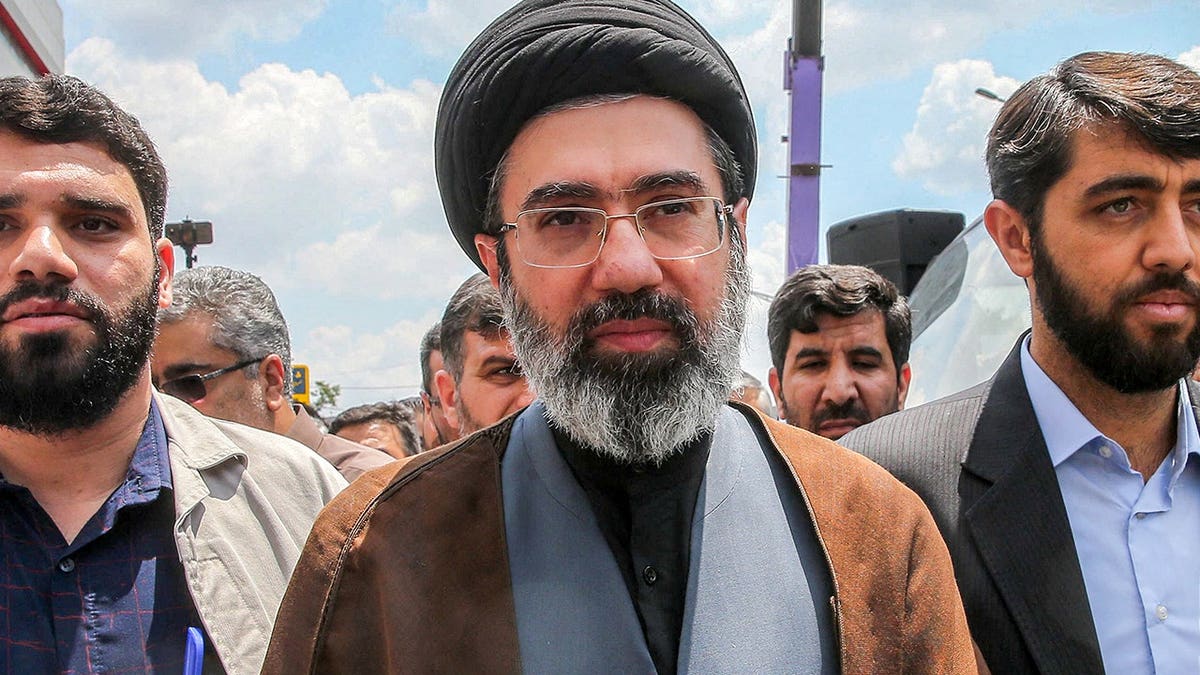
In this picture obtained from Iran’s ISNA news agency, Mojtaba Khamenei (C), son of Iran’s supreme leader Ayatollah Ali Khamenei, walks along a street in Tehran on May 31, 2019.(Hamid FOROUTAN / ISNA / AFP via Getty Images)
The complete survey methodology was not included in the material obtained by IranWire. The report reportedly did not disclose how respondents were selected, who was questioned or whether the sample reflected Iran’s geographic and demographic makeup.
Its findings therefore cannot be independently verified or treated as definitive measurements of Iranian opinion. The report also cannot establish that dissatisfaction will translate into an organized movement capable of removing the government.
Still, its findings portray multiple pressures converging at once.
Approximately 64% of respondents reported persistent anger, up roughly 12% points from a previous government survey conducted in December 2025. Half reported hopelessness, approximately 48% reported sadness or depression and about 45% reported persistent fear or anxiety, according to IranWire.
Economic distress also appears central to the public anger.
More than 81% experienced severe or partial difficulty obtaining enough food, while 75% struggled to cover medical costs, IranWire reported. Fifty-four percent said their income did not cover current household expenses, and only 8% reported earning enough to save.
Respondents blamed domestic governance more frequently than international pressure. 46.9% cited government inefficiency as the cause of Iran’s economic problems, 26.3% blamed corruption and 20.7% cited foreign sanctions.
Thousands gathered at Revolution Square in Tehran on May 30, 2026, to protest attacks by the US and Israel on Iran, carrying Iranian flags and posters of the late Supreme Leader Ali Khamenei.(Fatemeh Bahrami/Anadolu)
That finding could be especially significant to the regime-change debate because it suggests many Iranians do not primarily blame outside powers for their deteriorating living conditions.
The document also points to a crisis of institutional confidence. Roughly 60% reportedly distrusted major government institutions, while 61.2% negatively assessed officials’ ability to solve Iran’s problems. Distrust of the government, parliament, judiciary and state television remained above 50%, IranWire reported.
The report’s recommendations, however, reportedly centered on managing dissatisfaction rather than addressing demands for systemic change.
Rabiei urged state institutions to better explain the impact of sanctions, moderate the rhetoric used by officials and religious platforms, present a more inclusive image through state television and avoid policies that place the government in direct confrontation with society.
Cars burn in a street during a protest over the collapse of the currency’s value in Tehran, Iran, Jan. 8, 2026.(Stringer/WANA (West Asia News Agency) via REUTERS)
IranWire’s follow-up analysis argued that the recommendations treated Iran’s crisis primarily as a communications and public-perception problem. The report offered few concrete proposals involving institutional accountability, political liberalization or fundamental economic reform, according to the outlet.
Maleki said the findings were consistent with the expanding scale of unrest, citing demonstrations that spread from more than 80 cities in 2017 to more than 200 cities across all 31 provinces this year, alongside what he described as a quadrupling of strikes.
“Iranians have moved from being skeptical of what another revolution might bring to concluding there is no alternative to one, because reform has proven impossible,” Maleki said.
Yet the report does not resolve one of the largest obstacles to regime change: The Islamic Republic has spent decades building institutions designed to monitor, deter and violently suppress organized opposition.
“This regime was born of revolution, by revolutionaries,” Maleki said. “Preventing and crushing the next one is the one thing they genuinely know how to do.”
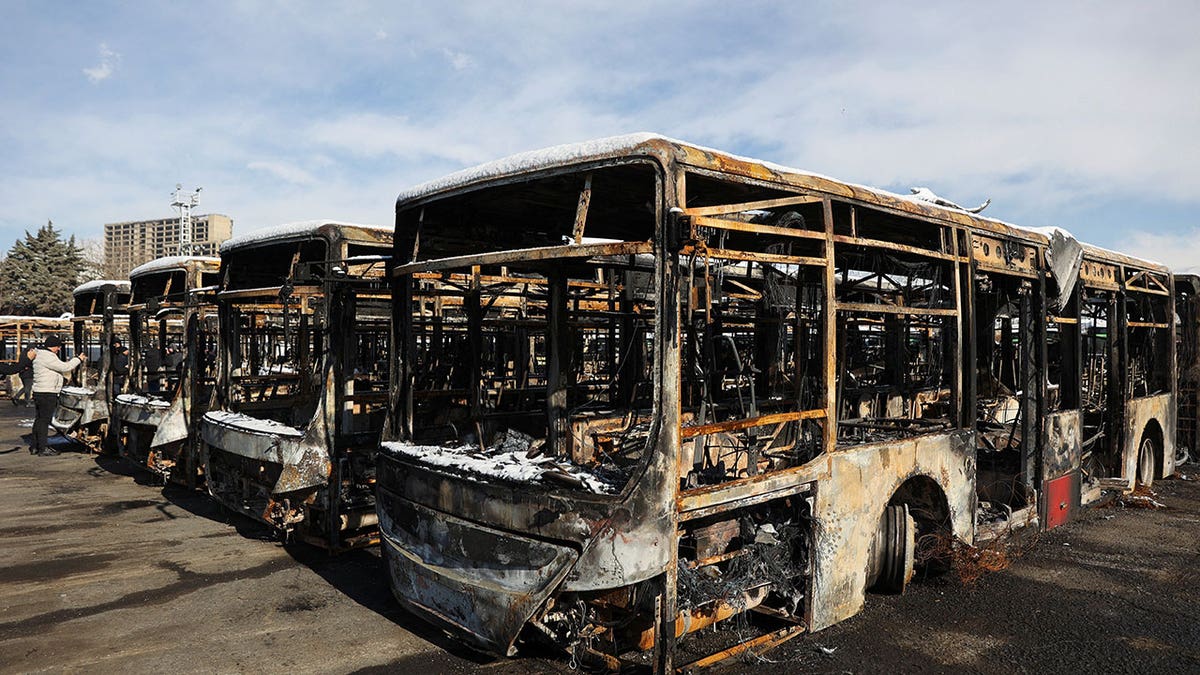
Buses that were burned during Iran’s protests, in Tehran, Iran, Jan. 21, 2026.(Majid Asgaripour/WANA (West Asia News Agency) via Reuters)
He nevertheless argued that further unrest was inevitable.
“So the discontent will translate into renewed protest,” Maleki said. “The question is not if, but when, and whether anyone is prepared to stand with the Iranian people when it does.”
Efrat (Effie) Lachter is an investigative journalist, filmmaker and war correspondent. She has directed and produced over 200 documentary segments across more than 40 countries. Recipient of the 2022 Peres Center for Peace Award, Lachter is also a 2023-24 Knight-Wallace Journalism Fellow at the University of Michigan. She holds a bachelor’s degree in communication and a master’s degree in political science.