
Home Blog Page 211

Trump to address defense technology gathering as the Iran war has reduced US weapon stocks

0
Trump to address defense technology gathering as the Iran war has reduced US weapon stocks


WASHINGTON — President Donald Trump is headlining a defense summit at the U.S. Army War College on Wednesday, planning to tout major investments in battlefield technology at a time when the war in Iran has reduced the U.S. supply of Tomahawk cruise missiles and Patriot and THAAD interceptors.

The gathering in Carlisle, Pennsylvania, is organized by Republican Sen. David McCormick. It has also featured Defense Secretary Pete Hegseth; Gen. Dan Caine, chairman of the Joint Chiefs of Staff; Army Secretary Dan Driscoll; CIA Director John Ratcliffe; and Mike Waltz, U.S. ambassador to the United Nations.

Trump has been a frequent visitor to the critical swing state of Pennsylvania, including last month, when he went to a Mack Trucks facility in Macungie, outside Allentown — hoping to boost Republican Rep. Ryan Mackenzie’s reelection chances.

Trump carried Pennsylvania in 2016 and 2024, and McCormick is not up for reelection this cycle, but Republicans are increasingly concerned about the war and persistently high cost of living as well as the president’s low approval ratings as they look to maintain control of Congress during November’s midterm elections.

The White House said the summit is bringing together key leaders in defense and some of the largest global investors to spotlight the importance of national security and identify investment opportunities.

Summit attendees include JPMorgan’s Jamie Dimon, Blackstone President Jon Gray, Lockheed Martin CEO Jim Taiclet, General Dynamics CEO Phebe Novakovic, Boeing CEO Kelly Ortberg, SpaceX director Antonio Gracias, and Shyam Sankar, chief technology officer of analytics and artificial intelligence firm Palantir, McCormick’s office said.

Trump spoke at a similar gathering organized by McCormick last year in Pittsburgh that sought to make the city a hot spot for advancement in energy technology and robotics. Then, the senator announced $90 billion in pledged investments in those sectors across Pennsylvania.

This year’s summit began on Tuesday. Before Trump’s arrival, multi-analytics threat detection leader ZeroEyes, which is based in Conshohocken, outside Philadelphia, announced a planned $10 million investment in artificial intelligence and machine learning research and development.

Pittsburgh-based Gecko Robotics also says it plans to open a new 10,000-square-foot (930-square-meter) manufacturing facility designed to boost integration of robotics into defense manufacturing processes and better expand the nation’s defense industrial base.

An analysis released in May found that U.S. military contractors will need at least three years to replenish stockpiles of Tomahawks — used to strike targets deep inside enemy territory — as well as Patriots and THAAD interceptors, which defend against incoming missiles and drones.

Stocks have dwindled as the U.S. has repeatedly fired strikes on Iran, adding to concerns that American forces would have limited firepower in any potential future conflict with China.

China has a stated goal of ensuring its military is capable of taking Taiwan by force if necessary by 2027, which experts see as more aspirational than a hard deadline. But Chinese President Xi Jinping warned during Trump’s recent visit to Beijing that if Washington mishandles its relations with the self-governing island, the U.S. and China could end up clashing or even find themselves in open conflict.

Trump also recently pledged to give Ukraine a license to produce Patriot air-defense systems which could be a major development in its war with Russia — though turning the idea into real weapons is also likely to take years.

Trump has sought to correct the shortfall by seeking a historic $1.5 trillion defense budget proposal for 2027. But a package authorizing such spending levels is stalled in Congress, and, even if it eventually moves forward, loads of additional time will still be required to expand production capabilities to accommodate such weapons systems.

Jake Loosararian, co-founder and CEO of Gecko Robotics, said U.S. defense companies have “got to supercharge supply chains” to reduce how long it takes for new technology to be ready for widespread production.

“President Trump uniquely understands the importance of pragmatic impact today,” Loosararian said. “He also understands big, beautiful things for tomorrow.”



Source link

Thames Water returns to profit after raising bills

0
Thames Water returns to profit after raising bills


Thames Water has returned to a full-year profit after hiking its customers bills by 40% last year.

The UK’s largest water company reported post-tax income of £113m for the 12 months to the end of March, swinging from a £1.51bn post-tax loss the previous year.

However, the firm’s net debt also swelled to £18.5bn from £16.8bn as it said it “continued to fund the business through… debt and internally generated cash flows”.

Chief executive Chris Weston said: “The progress we have made in turning the company around has meant we are now performing better.”

The publication of Thames Water’s results comes after the government rejected a proposed rescue deal for the business in June.

Under the terms of the deal, Thames’ lenders wanted leniency from future pollution fines in return for writing off £9.4bn of its debt pile and investing new money.

Thames Water said on Wednesday pollution incidents had fallen by 18%. It hit just over half of its performance targets.

The firm said it was below target when it came to customer complaints, which jumped by 77% in a year, with bill complaints making up over three quarters of the total.

The results also reveal how money from its customer bills is not enough to fund the massive upgrades needed to improve its aging and historically underinvested infrastructure, which means it needs to borrow more money.

It added that it has enough debt funding to keep the business going “through to Q4 2026”.

Weston told investors on a call on Wednesday its investors “want to see what the new Burnham government thinks before providing more funding”.

Labour MP Andy Burnham is expected to become Prime Minister on Monday. He has previously called for Thames Water to be nationalised.

Additional reporting by Simon Jack


Source link

How the failed 2016 coup reshaped Turkiye’s civil-military relations

0
How the failed 2016 coup reshaped Turkiye’s civil-military relations


Istanbul, Turkiye – At around 19:30 GMT on July 15, 2016, a faction of the Turkish military launched a coordinated attempt to overthrow President Recep Tayyip Erdogan’s democratically elected government.

But within hours, the attempted takeover involving tanks and fighter jets had been quashed. Thousands of people poured onto the streets of major cities, joining loyalist members of the army and the police, and much of the chain of command, in defeating the putschists.

The failed coup attempt 10 years ago was not only the bloodiest in Turkiye’s modern history – some 250 were killed and more than 2,200 wounded – but also a watershed moment that fundamentally changed relations between civil and military authorities in the country.

“The failure of July 15 had three pillars,” said retired Colonel Unal Atabay.

“The resistance of the people, the officers, noncommissioned officers and soldiers inside the Turkish Armed Forces who resisted the coup, and the institutional reflex of the armed forces themselves.”

People demonstrate outside Ataturk international airport on July 16, 2016 [Huseyin Aldemir/Reuters]

Military intervention cast a long shadow over Turkish politics for decades.

The armed forces overthrew governments in 1960 and 1980; intervened through a memorandum in 1971; and forced another elected government from office in what became known as the “post-modern coup” of 1997.

Although civilian rule returned after each intervention, the military remained one of Turkiye’s most influential institutions, seeing itself as the guardian of the republic’s founding principles.

Yet that was not how the republic’s founders had envisioned civil-military relations. Mustafa Kemal Ataturk and Ismet Inonu, both commanders during the War of Independence of the early 1920s, entered politics only after leaving military service.

“If the military had remained involved in politics, it would most likely have been exploited by various groups in the uncertain and weak conditions of those early years of the republic. They made the most accurate diagnosis and said that the military should stay out of politics.

Political scientist Ali Carkoglu said separation between military command and civilian politics was regarded as one of the republic’s founding principles, calling it “the most accurate diagnosis”.

Over time, however, the armed forces increasingly came to see themselves as guardians of the state, repeatedly invoking that role to justify intervention in politics.

But 10 years since the latest attempt, few experts believe Turkiye faces another conventional coup.

“You never say never,” said Howard Eissenstat, a Turkiye specialist at St Lawrence University in New York. “But to bet on a military coup in Turkiye is to lose money.”

Turkish President Tayyip Erdogan addresses during an attempted coup in Istanbul, Turkey
Turkish President Recep Tayyip Erdogan speaks to reporters on July 16, 2016 [Huseyin Aldemir/Reuters]

While the military’s political role appears to have receded, the broader consequences of the post-coup transformation remain the subject of debate.

Reducing the military’s influence over politics had already become a central objective of the governing Justice and Development Party, or AK Party, after it came to power in 2002.

Following years of tension with the military establishment, the government steadily expanded civilian oversight – and the failed coup accelerated that process dramatically.

Ankara accused the network of United States-based Muslim scholar Fethullah Gulen, designated by the Turkish government as the Fethullah Terrorist Organisation (FETO), of orchestrating the coup attempt. Tens of thousands of soldiers, judges, police officers, teachers and civil servants were dismissed or arrested. Military academies were replaced by the National Defence University, command structures were overhauled, and civilian oversight of the armed forces expanded.

Atabay said these changes have fundamentally reshaped the relationship between the military, the state and society.

He added the military has strengthened its internal oversight after the coup to prevent another organised infiltration, noting that both the armed forces and wider society are now more alert to attempts to penetrate state institutions.

“External centres of power may always make such attempts,” he said. “The important thing is to detect them early, expose them and build a system that prevents them from infiltrating the state.”

People react near a military vehicle during an attempted coup in Ankara, Turkey, July 16, 2016
People take to the streets of Ankara to resist the coup attempt on July 16, 2016 [Tumay Berkin/Reuters]

For Carkoglu, however, the military cannot be examined in isolation from the broader health of Turkiye’s democratic institutions.

He said bringing the armed forces firmly under civilian authority was essential. But civilian supremacy alone, he argued, does not necessarily amount to democratic consolidation.

“It is certainly a success that civilian authority has established greater control over the military,” he said. “But if that comes at the expense of democracy, then it is, at the very least, an unfortunate outcome for Turkish politics.”

Carkoglu noted that institutions derive legitimacy not simply from who controls them, but from whether citizens trust them.

“The healthy development of trust in institutions requires competitive politics and the possibility of free expression,” he said. “Otherwise, institutions themselves begin to lose credibility.”

That debate has become increasingly prominent in recent years.

The arrests of several opposition mayors – including Istanbul mayor and presidential candidate for the main opposition Republican People’s Party (CHP) Ekrem Imamoglu, together with investigations into other opposition politicians, have fuelled criticism from political parties and rights groups, who argue judicial processes are increasingly being used against rivals.

The government rejects those accusations, saying the investigations are conducted independently and are based solely on evidence of criminal wrongdoing.

The debate has unfolded during a period of remarkable political continuity. Since coming to power in 2002, the AK Party has won every parliamentary election, most recently in 2023, when the governing People’s Alliance retained its parliamentary majority.

Rights groups, meanwhile, focus on a different legacy of the coup.

Human Rights Watch says emergency powers introduced after the 2016 coup attempt gradually evolved into broader restrictions on civil liberties. It argues the crackdown extended well beyond those responsible for the attempted overthrow, leaving many dismissed public employees unable to rebuild their professional lives even after acquittal.

The government says the measures were necessary to dismantle clandestine networks inside the state and prevent Turkiye from facing a similar threat again.

Ten years on, that effort continues. On Monday, two days before the anniversary, Turkish authorities launched coordinated operations across all 81 provinces targeting nearly 1,000 suspects over alleged links to FETO.

For the government, it was another reminder that the events of July 2016 remain an active national security issue rather than a closed chapter in the country’s history.


Source link

26 Meta employees sue, alleging AI-driven layoff picks hit workers on medical and parental leave

0
26 Meta employees sue, alleging AI-driven layoff picks hit workers on medical and parental leave


A group of 26 Meta employees has sued the company, claiming it used artificial intelligence systems to select people for layoffs, disproportionately targeting those on medical, parental or family leave.

They are among the 8,000 employees, or about 10% of its workforce, Meta said it would lay off in May. The lawsuit filed late Monday in federal court in Oakland, California, claims the company used internal AI systems, keystroke and activity-monitoring data, AI token-usage dashboards and algorithmically assisted performance rankings, among other methods, to determine who would be laid off.

Many of these scores and ratings “by design, cannot be accumulated by an employee who is on protected medical or family leave, or whose output is reduced by a disability,” the lawsuit says. Meta, according to the lawsuit, did not account for protected leave when taking employees’ scores into account and “did not pause the system for the individualized, leave- and accommodation-neutral review that the law requires.”

As a result, people on protected medical or family leave were disproportionately selected for layoffs, the lawsuit says. Each of the 26 anonymous employees in the lawsuit took protected leave and requested or received a reasonable accommodation for disability. Though they have been notified of their layoffs, all 26 remain employed by Meta, with separations set to begin July 22.

Many of the employees in the lawsuit took pregnancy or parental leave, during which time they wouldn’t have worked and thus had their measured output reduced. Others took medical leave — one disclosed a “serious health condition and disability” that was approved by Meta’s own provider. But according to the lawsuit, he was “discouraged and deterred from taking that leave by a manager” who warned that doing so would result in his selection for the anticipated layoffs. Meta offered no accommodation for his disability, the lawsuit says.

Meta said in a statement that the claims “lack merit and are not based on facts. Workforce management and organizational decisions were and are made by people, not AI.”

About half the plaintiffs had taken leave for caregiving or pregnancy-related reasons. Eight are women who had taken maternity or pregnancy-related leave, four are men who had taken parental leave and one is a woman who had taken leave to care for a family member and later bereavement leave.

The lawsuit says the layoffs violated several state and federal laws, including the Family and Medical Leave Act, the Americans with Disabilities Act, the Pregnancy Discrimination Act and the Pregnant Workers Fairness Act.

The complaint also references “disparate impact liability,” a longstanding civil rights concept that President Donald Trump’s administration moved to abandon. Disparate impact, codified in Title VII of the 1964 Civil Rights Act, holds that facially neutral policies or practices can be discriminatory if they disproportionately burden a protected class of workers and aren’t necessary for the job.

The Trump administration has ordered federal agencies to deprioritize disparate impact liability enforcement, arguing that its use undermines “meritocracy” and encourages the assumption that any racial or gender imbalance in a workforce is the result of discrimination. The order has led the Equal Employment Opportunity Commission to drop discrimination cases on behalf of some workers.

However, the lawsuit against Meta underscores that companies remain vulnerable to disparate impact litigation in the age of AI despite the Trump administration’s efforts to stamp out its enforcement. Workers are still free to pursue such lawsuits on their own if the EEOC rejects their complaints, and several state laws specifically prohibit disparate impact discrimination.

In the case against Meta, lawyers for the plaintiffs argued that the company’s “algorithmically assisted selection process, by systematically recording such absences as reduced performance, falls more heavily on women than on men.” That’s because women disproportionately take pregnancy and caregiving leave, according to the lawyers. The lawsuit cites Title VII’s prohibition on employment practices that have a disparate impact, as well as a landmark 1971 Supreme Court ruling that recognized the doctrine.

The plaintiffs’ lawyers said in a statement that the lawsuit asks for one thing — preserving the status quo to keep the workers employed pending arbitration. That’s because “once these separations are final, the harms are irreversible: employer-subsidized health coverage lost during pregnancy, postpartum recovery, and active medical treatment; time-bound leave rights extinguished; unvested equity forfeited; and immigration consequences triggered.”

The Associated Press’ women in the workforce coverage receives financial support from Pivotal Ventures. AP is solely responsible for all content. Find AP’s standards for working with philanthropies, a list of supporters and funded coverage areas at AP.org.


Source link

US-Russian crew arrives at the International Space Station for 8-month mission

0
US-Russian crew arrives at the International Space Station for 8-month mission


MOSCOW — A U.S.-Russian space crew arrived Tuesday at the International Space Station after launching from the Russia-leased Baikonur cosmodrome in Kazakhstan.

NASA astronaut Anil Menon and Russian crewmates Pyotr Dubrov and Anna Kikina lifted off as scheduled at 7:47 p.m. (10:47 a.m. EDT, 1447 GMT) aboard the Roscosmos Soyuz MS-29 for an eight-month stint on the orbiting outpost. Their spacecraft docked smoothly at the station in automatic mode about three hours after the launch.

NASA Administrator Jared Isaacman attended the launch, the first visit to Baikonur by a NASA chief in eight years that highlighted the ongoing cooperation in orbit between Moscow and Washington, despite tensions over Russia’s military action in Ukraine.

Before the launch, Isaacman met with the head of Russia’s state corporation Roscosmos, Dmitry Bakanov. Speaking during Monday’s meeting with the crew, Isaacman thanked Roscosmos for its efforts to prepare for the mission, saying that “the integrated work performed over the past several months reflects the professionalism and dedication of everyone involved.”

Isaacman also had a meeting with Russia’s Deputy Prime Minister Denis Manturov. Manturov’s office said they discussed prospective cooperation on the International Space Station and other projects.

The mission is Menon’s first space flight and the second for Dubrov and Kikina.

The trio will join NASA astronauts Jessica Meir, Jack Hathaway and Chris Williams, European Space Agency astronaut Sophie Adenot and Roscosmos cosmonauts Sergei Kud-Sverchkov, Sergei Mikaev and Andrei Fedyaev.

Once bitter rivals in the space race during the Cold War, Russia and the U.S. cooperate on the space station and other projects. That relationship was marred by tensions after Moscow sent troops into Ukraine in 2022, but Washington and Moscow have continued to work together, with U.S. and Russian crews flying to the orbiting outpost on each country’s spacecraft.

Plans for broader cooperation, including possible Russian involvement in NASA’s Artemis program of lunar research, have fallen apart. As Russia has become increasingly reliant on China for its energy exports and imports of key technology amid Western sanctions, Roscosmos has started cooperation with China on its prospective lunar mission.


Source link

World Cup 2026: What happened to David Batty?

0
World Cup 2026: What happened to David Batty?


It is a question that has been repeatedly asked.

Not least at the various reunions to mark Leeds‘ title triumph in 1992 or Blackburn Rovers’ Premier League win three years later.

Batty was involved in both of those landmark achievements, but ex-Blackburn midfielder Mark Atkins has not caught up with him since their playing days.

“We have tried to get him to the dos we have had, but nobody can get hold of him,” he said.

“He’s not that type of person. Even if he was living five miles away, he wouldn’t turn up because he’s a very personal guy, really.”

Aside from a rare trip to Elland Road to lay a wreath on the pitch in memory of his close friend Gary Speed, following his tragic death in 2011, Batty has tended to keep out of the public eye.

Viduka, who quietly opened a cafe in Croatia after hanging up his boots, can relate.

“In this day and age, everyone shows off everything they do in every moment, like what they had for breakfast,” he said. “Who cares?

“If anyone was not going to be like that, it was Batts.”

Rather than entertaining corporate guests, representing footballers or working in the media, Batty always planned to dedicate his time solely to his family in Yorkshire after retiring.

It has only added to the cult surrounding a player who former Leeds team-mate Eirik Bakke called one of his “heroes”.

“If someone tackled you, Batts was always there to stand up for you,” he said. “You don’t find those types of players a lot. You could always rely on him.”

Batty was more than a mere enforcer, however.

As well as standing his ground, and aggressively winning the ball back, the England international rarely gave away possession.

Those qualities quickly struck ex-Leeds midfielder John Sheridan, who was Batty’s “mentor” in his early days at the club.

“You would think butter wouldn’t melt in his mouth when you looked at him then,” he said.

“But he was tough as nails. He made the game look very simple by doing the simple things easily.”


Source link

Newlywed bride who was airlifted from Japan on honeymoon breaks silence

0
Newlywed bride who was airlifted from Japan on honeymoon breaks silence


The bride who went into a coma during her honeymoon in Japan has spoken out for the first time since she was airlifted back to the U.S. in a terrifying medical emergency.

Sarah Danh, 27, was hospitalized April 9 on the second day of her trip to Japan with her new husband, 28-year-old Luke Gradl, after she suffered acute liver failure and fell into a coma, according to a previous GoFundMe for the newlyweds.

She was kept in critical care for two weeks overseas before she took an emergency medical evacuation flight back to her home state of Texas, where she and Gradl landed 20 hours later on April 21, as first reported by People.

Danh, who was still in a coma when she arrived back to the U.S., was diagnosed with “severe bilateral brain damage,” according to People, and doctors warned her family that she might never wake up again.

However, she began to breathe on her own days later and was taken off life support. She was transferred to a Houston hospital in May, where she began physical and cognitive therapy.

Sarah Danh was in a coma from April 9 to April 29 (Khang Le/Facebook)

In her first post on Instagram since a video of her wedding shared in March, Danh broke her silence with an emotional Instagram post July 9, according to People. Her account has since been made private.

“First things first… I’m alive,” Danh, a San Antonio nurse, wrote in a message alongside pictures and videos from the hospital.

“It feels bittersweet to finally be sitting here, able to tell this story myself,” she said. Danh went on to thank her doctors, her family and those who donated to her GoFundMe, which surpassed $187,000 before it was deactivated.

She explained in the post that she had felt sick in the days before her flight to Japan, but that she had been “convinced it was Covid.” She went to the local emergency room, but Danh said no blood work was done and nothing had seemed out of the ordinary. She said the doctor told her to “get some rest, stay hydrated, rotate Tylenol and Ibuprofen for your fever… and have fun in Japan.”

Danh said she does not remember anything from the trip to Tokyo.

“I have absolutely no memory of any of it,” Danh wrote. “Apparently I was already so weak from throwing up the whole flight that I could barely walk and could barely get through customs. Supposedly I decided to stay in and rest, convinced I’d wake up the next morning feeling better and finally be able to enjoy our honeymoon.”

She continued: “SIKE. That night everything changed. I became combative, lethargic, started speaking complete nonsense, and, according to everyone around me, turned yellow like a minion. An ambulance took me to St. Luke’s Hospital, where I was diagnosed with acute liver failure, hepatic encephalopathy, and critically elevated ammonia levels.”

Doctors told Gradl and Danh’s mother, who traveled to Japan after her daughter was hospitalized, that they could not perform liver transplants on non-citizens, which meant that she needed to become stable “enough to survive the flight” back to Texas to have the surgery.

Once she was back in America, Danh said doctors began to focus on her brain injury that was caused by her liver damage, which led a neurologist to tell her family that, if she survived, she “would never be the same” and “would likely never walk or talk again and would require lifelong care.”

Then, as Danh wrote, “something incredible happened.”

“My liver slowly began healing itself,” she wrote. “The swelling in my brain started going down.”

She woke up April 29, writing, “It honestly feels like I came back from the dead.”

“Recovery didn’t end there – not even close,” she said. “I’m still recovering every single day. I now have more specialists than I can count and continue with neuro rehabilitation.”

Danh said that the cause of her sudden and extreme health decline is still a mystery.

“This experience changed me,” she wrote. “It taught me how unbelievably fragile life is. It taught me that tomorrow is never promised. It taught me to love louder, forgive quicker, and appreciate the ordinary moments we so often take for granted. And most importantly… it taught me that miracles do happen.”


Source link

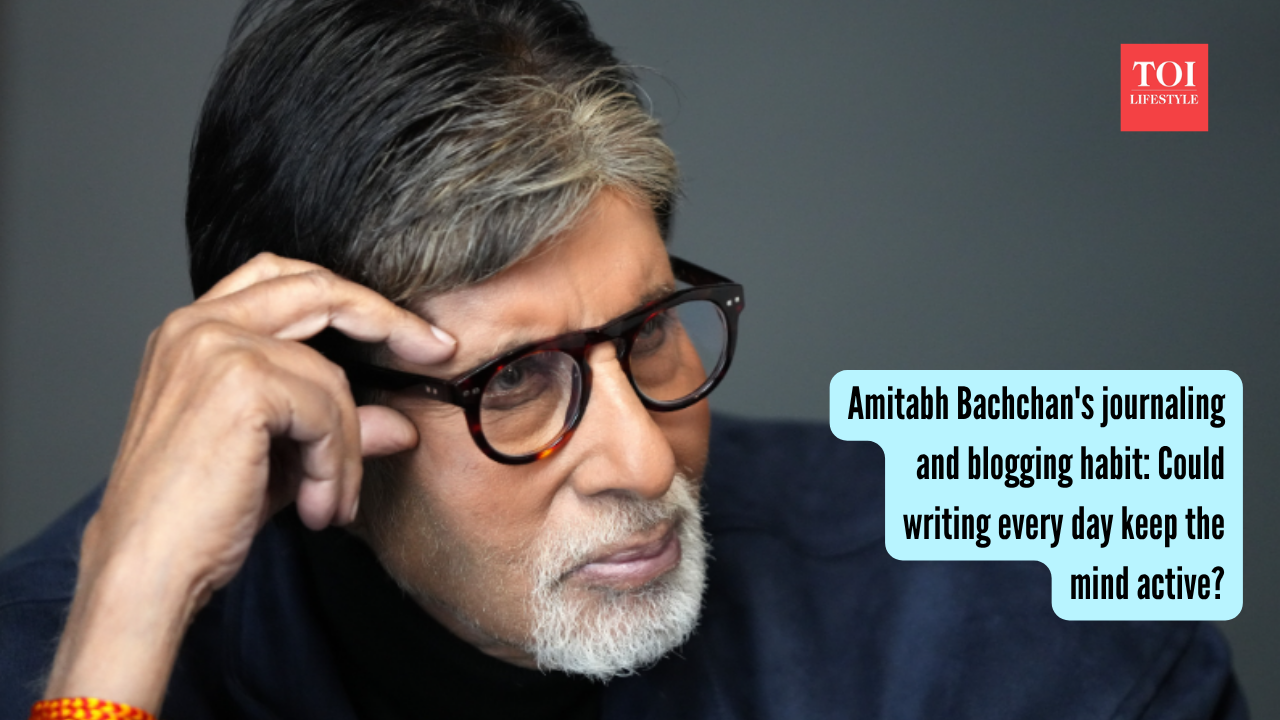
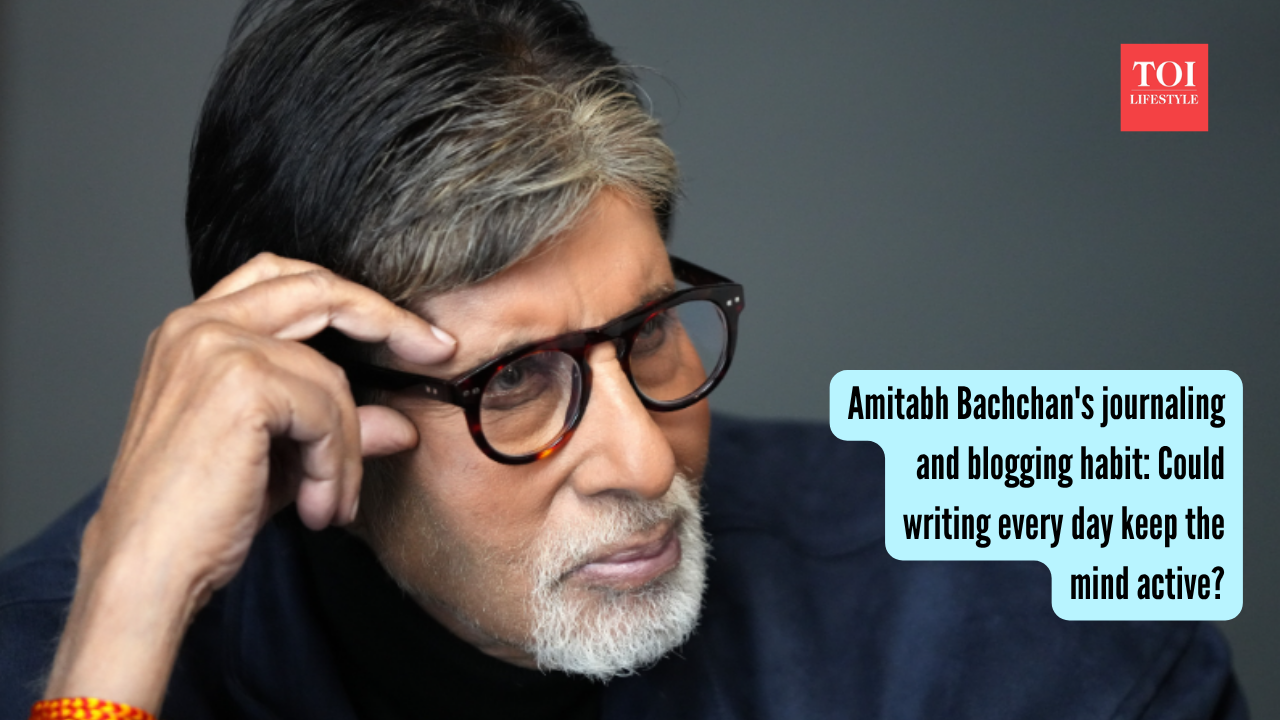
Amitabh Bachchan’s journaling and blogging habit: Could writing every day keep the mind active?

0
Amitabh Bachchan’s journaling and blogging habit: Could writing every day keep the mind active?


Amitabh Bachchan’s consistent daily blogging habit, started in 2008, offers significant cognitive benefits. This unbroken routine provides structure for the ageing brain, which is valuable as work routines loosen. Writing about emotions helps lessen their internal impact by calming the brain’s stress response. Keeping the brain curious and active through daily writing maintains mental agility over time. Public writing, like Bachchan’s blog, also fosters social engagement and reduces cognitive decline.

At 83, Amitabh Bachchan is still awake past midnight, not for a film shoot, but for football. As the FIFA World Cup 2026 entered its final week, BigB recently took to his personal blog to admit that the tournament’s late-night match schedule had thrown his routine into disarray: “the timelines and the idea of time has gone awry.. the reason of course, is the WC 2026”, he wrote.With odd viewing hours making the days feel harder, even as the matches brought cheer, remorse, and frustration over unfair decisions, he described the heightened emotions amid the ongoing tournament.Just days earlier, when the tournament paused for a three-day break before the semi-finals, he had written simply that he needed a “respite” too.Apart from following the FIFA World Cup 2026, what makes his habit of blogging interesting isn’t just when he talks about games alone, but the consistency with which he has been following it.Bachchan launched his blog on April 17, 2008, and has probably been updating it every single day since, without missing an entry.That kind of unbroken daily writing habit, sustained for nearly two decades, is commendable and brings us to what journaling does for an ageing, active mind.So, here are 5 ways in which writing every day, whether through journaling or blogging, impacts wellbeing:

Amitabh Bachchan's journaling and blogging habit Could writing every day keep the mind active

Photo: Tumblr/ SRBachchan

Shehanshah’s daily habit that has outlasted trends

Bachchan’s blog began in 2008 and has been updated daily ever since, and is based upon everything across his day from film shoots and family moments to sport and current affairs.Most habits fade within months, but his has run for over 17 years. And he doesn’t necessarily write blogs every time, some of the most popular and interesting ones are just punchy oneliners.Psychologists who study journaling often point to this kind of unbroken repetition, not any single entry, as the real source of benefit. A daily habit builds a structure the mind can lean on, especially valuable once formal work routines loosen with age.

A routine the brain can depend on

Research from the Rush Memory and Aging Project found that older adults who engaged in cognitively stimulating activities, including reading and writing, showed a notably slower rate of cognitive decline over time, even after accounting for other health factors. A fixed daily writing habit gives the ageing brain something to keep exercising.

Talking about emotions to lessen their impact internally

A landmark UCLA study using brain scans found that putting feelings into words reduces activity in the amygdala, the brain’s alarm centre, while increasing activity in the prefrontal cortex, which handles regulation and control. Researchers call this “affect labelling.” Writing down a frustrating or overwhelming moment, even briefly, appears to genuinely calm the brain’s stress response rather than just distracting from it temporarily.

Keeping the brain curious and active

James Pennebaker’s expressive writing research, beginning with his 1986 study with Sandra Beall, found that writing about personal experiences and emotions was linked to impactful improvements in physical health and fewer doctor visits over time.

Satisfaction comes with keeping a gratitude journal

Another study by Robert Emmons and Michael McCullough found that participants who kept a gratitude journal reported greater life satisfaction, more optimism, and fewer physical complaints than those who journaled about hassles or neutral events.

Writing as a bridge to others

A 12-year Rush University study found that older adults who were more socially engaged showed 70% less cognitive decline compared to those who were least socially active, even after adjusting for other health and lifestyle factors. Public writing, like a shared blog that engages in replies and conversation, extends journaling’s private benefits into this kind of ongoing social engagement.


Source link

Oil is up after Iran attacks – so why hasn’t the stock market cratered this time?

0
Oil is up after Iran attacks – so why hasn’t the stock market cratered this time?


A reopening of hostilities in the Middle East has seen the Strait of Hormuz shuttered once more, with the US and Iran exchanging missile strikes to leave hopes of an extended ceasefire in tatters.

One immediate knock-on effect has been a rise in the price of oil, with Brent Crude rising to $87.20 by noon on Tuesday, a one-month high, though still materially lower than the $110-120 range seen regularly through March and April in the first months of the war.

But stock markets have not, yet at least, reacted in a similarly strong way, with some investors pondering whether this will be a classic Donald Trump bait-and-switch scenario, where the US president has repeatedly said one thing and then done another in the days afterwards.

“Markets have been relatively slow to react to the renewed fighting between the US and Iran, with oil prices edging up but still way below those April highs,” says AJ Bell head of financial analysis Danni Hewson.

“So far investors have been anticipating that the current escalation is just a Trump tactic and that a deal will be done to end the conflict way ahead of the potentially painful mid-term elections in the US.”

The FTSE 100 is down only 0.2 per cent on Tuesday and down 1.8 per cent across the past week, but remains at a notably higher level than March and April. The US’ S&P 500 is flat across the past week and up almost 8 per cent compared to mid-April, while the tech-focused Nasdaq index is projected to rise more than half a percent when markets open on Tuesday afternoon.

Repeat performance?

Fatigue of having to constantly monitor global events may be taking its toll on some investors, who have had to endure political instability in different parts of the world – including the UK – tariffs and wars over the past year or so alone.

Constantly reacting to those events by changing investment positions can have a negative impact on returns in some cases, leading to a “wait and see” approach being taken.

(Getty)
Trading 212 logo

Get a free fractional share worth up to £100.
Capital at risk.

Terms and conditions apply.

Go to website

ADVERTISEMENT

Trading 212 logo

Get a free fractional share worth up to £100.
Capital at risk.

Terms and conditions apply.

Go to website

ADVERTISEMENT

AJ Bell’s head of markets Dan Coatsworth pointed out the markets will adjust if fighting in the Middle East continues, while domestically in the UK it’s a focus on the energy giants which stops the big dips seen elsewhere.

“Investors feel like they’ve hit rewind on a movie they didn’t enjoy first time round. The ability to get shipping through the Strait of Hormuz is once again compromised thanks to the renewed tensions between Tehran and Washington,” he said.

“For now, investors seem to be retaining a measure of calm and hoping a path towards a resolution in the Middle East can still be found. The longer the current situation persists though, the more likely market sentiment takes a more serious hit.

“The UK market fared better than most other parts of Europe thanks to its heavy exposure to the energy sector through BP and Shell.

“Stocks with exposure to the travel sector along with retailers and housebuilders were among those to take a step back as investors weighed up the implications of potentially higher inflation and interest rates.”

Wider influences

There are also other external influences pushing stock markets in different directions at the same time, beyond the Middle East conflict.

Expectations of interest rate changes can affect individual stocks, with the US inflation report this week a likely indicator of movement there.

The Kospi is down more than 10% in a week, but rose overnight
The Kospi is down more than 10% in a week, but rose overnight (AP)

Sector-specific sentiment, such as investors feeling chip manufacturers are perhaps due a change in valuations, can also weigh on prices – and some of Asia’s more volatile markets are also whipsawing back and forth.

“Interestingly, the (Korean) Kospi and the (Japanese) Nikkei both posted gains overnight, and [chipmaker] SK Hynix stabilised and rose by 3 per cent, after suffering its steepest ever sell off on Monday,” said Kathleen Brooks, research director at XTB.

“This is bolstering the chip trade across the Atlantic, and Nasdaq futures are pointing to a higher open later today. This suggests that the Nasdaq could break its short-term negative correlation with the oil price, and rise alongside energy prices if this continues.”

In short, there are regularly multiple factors at play across broader stock markets which can all send prices in different directions regardless of the headline news.

But, should matters escalate once more in the Middle East, bigger fears of inflation gains, higher energy costs worldwide and the threat of trade being disrupted will likely see stock markets head southward once more – though how much and for how long, is anybody’s guess.


Source link

American League stars outshine National League in 96th MLB All-Star game

0
American League stars outshine National League in 96th MLB All-Star game


NEWYou can now listen to Fox News articles!

The 2026 MLB All-Star Game arrived in Philadelphia with the feel of a 250th birthday bash for the United States, complete with plenty of red, white and blue and a roster full of stars who had earned their stripes.

But Citizens Bank Park, long known as a hitter-friendly backdrop, produced fewer fireworks than expected as the American League shut out the National League 4-0 in the 96th Midsummer Classic.

CLICK HERE FOR MORE SPORTS COVERAGE ON FOXNEWS.COM

A general view of Citizens Bank Park during the 96th MLB All-Star Game presented by Mastercard on, July 14, 2026, in Philadelphia, Pennsylvania. (Rob Tringali/MLB Photos via Getty Images)

Toronto Blue Jays pitcher Dylan Cease struck out the side in the first inning, setting the tone for a dominant AL pitching performance as 10 relievers helped finish a three-hitter in Tuesday night’s shutout of the NL.

New York Yankees outfielder Cody Bellinger hit a two-run single and Ben Rice followed with an RBI single in the first against Cristopher Sánchez of the host Philadelphia Phillies.

Chicago White Sox infielder Miguel Vargas added an eighth-inning home run off the Los Angeles Dodgers’ Justin Wrobleski, who was pitching on his 26th birthday, for the game’s only extra-base hit. The AL won for the 18th time in 23 games and holds a 49-45-2 advantage overall.

Singles by Juan Soto in the fourth, Pete Crow-Armstrong in the eighth and Otto Lopez in the ninth were the only hits by the NL, which failed to advance a runner past first.

Pitchers combined for 27 strikeouts, 15 by AL hurlers.

MLB ALL-STAR GAME SCARE AS RAYS SLUGGER JUNIOR CAMINERO EXITS AFTER TAKING 98 MPH FASTBALL TO HAND

Yandy Diaz loses control of the bat during the MLB All-Star Game

Tampa Bay Rays’ Yandy Diaz loses control of the bat in the fifth inning during the MLB All-Star Game between the American League and National League on July 14, 2026, in Philadelphia, Pennsylvania. (Matt Rourke/AP)

Phillies slugger Kyle Schwarber, last year’s hero in the first-ever swing-off tiebreaker, led off for the NL. Schwarber replaced designated hitter Shohei Ohtani, who skipped the showcase to undergo a knee procedure ahead of the season’s second half.

Kyle Schwarber at home plate during the MLB All-Star game

Philadelphia Phillies designated hitter Kyle Schwarber bats during the third inning of the 2026 MLB All-Star Game at Citizens Bank Park in Philadelphia, Pennsylvania, on July 14, 2026. (Al Bello/Getty Images)

Detroit Tigers outfielder Riley Greene and two New York Yankees, first baseman Ben Rice and Bellinger, gained American League starting spots because of injuries.

Tampa Bay Rays’ Junior Caminero was hit on the outside of his left hand by a 97.6 mph sinker from St. Louis Cardinals closer Riley O’Brien in the third inning and immediately left the game. The 23-year-old, fourth in the major leagues with 28 home runs, stayed down for a few moments before he popped up and ran straight into the clubhouse. X-rays were negative.

CLICK HERE TO DOWNLOAD THE FOX NEWS APP

Players across the majors will have the day off Wednesday before the Phillies host the New York Mets on Thursday. Action across the rest of the league resumes Friday.

The Associated Press contributed to this report.

Follow Fox News Digital’s sports  coverage on X, and subscribe to the Fox News Sports  Huddle newsletter.


Source link