
Alan Ritchson talks about starring in “Motor City,” which has nearly no dialogue, how his process was different and why he thinks it will resonate with audiences.
Source link
Alan Ritchson gives inside look at the film
World Cup 2026: Why do Argentina sing about the England and the Falklands?
The Falkland Islands, an archipelago in the South Atlantic Ocean, has been a British Overseas Territory since 1833.
The group of islands is situated 300 miles off the east coast of Argentina, which believes it should have sovereignty.
This came to a head in 1982 when Argentina invaded the Falkland Islands, but lost the war that resulted.
The Falklands War lasted 74 days, and claimed the lives of 907 people: 649 Argentine military personnel, 255 from Britain and three Falkland Islanders.
Remembering the soldiers lost in that defeat 44 years ago, and with the islands still being under British control, is important to Argentines – and enshrined in several other songs.
Before a friendly against Zambia at La Bombonera stadium in Buenos Aires in March, veterans from the Falklands War joined the players on the pitch to sing the national anthem.
One song in particular is regularly sung at football matches – and even rock concerts – in which Argentines bounce up and down, chanting: “And now you see, and now you see, whoever doesn’t jump is English!”
There will be increased security measures in place because of the historical tensions.
“It’s part of the Argentine culture,” Argentine journalist Nicolas Rotnitzsky told BBC Sport.
“It’s like ‘we are not them – we are us’. So we have to jump to prove that we are not one of them.”
Rotnitzsky says that, alongside Brazil, England are considered Argentina’s greatest football rivals.
“It’s not about hate, not at all,” Rotnitzsky said.
“It’s important, getting our identity around what happened with the Malvinas. It’s about who we are.”
Argentina midfielder Rodrigo de Paul said the chants are “very much about our heroes” and not about politics.
“We have to understand that this is a football match and that the Malvinas issue needs to be discussed elsewhere,” De Paul said.
England goalkeeper Jordan Pickford said it’s “just a game of football” and predicted “football will do its talking”.
Argentina’s April 2 War Veterans Federation has insisted the game is “not an armed rematch nor historical compensation”.
But it is an inevitable clash between politics and sport.
Argentina’s foreign minister, Pablo Quirno, said this week that the population of the Falklands Islands was “artificially implanted by the occupying power”.
The UK government hit back, insisting Falkland Islanders are “British with a right to determine their own future”.
Even Fifa cannot ignore the politics.
Premier League referee Anthony Taylor was a contender to officiate the 2022 World Cup final but was ruled out when Argentina reached it.
How to keep your children and pets safe in a heatwave – everything you need to know
Britain continues to swelter amid a record-breaking summer, with the third heatwave of the year in full swing.
The UK Health Security Agency (UKHSA) has issued a number of yellow heat health alerts across England, which remain in place until Friday 17 July at 9pm.
It comes as the Met Office has confirmed that the UK has had as many 30C days in 2026 as in the historic year of 1976.
Britain has already endured 24 days this year where temperatures have exceeded 30C, a figure accumulated across May, June and July.
The Met Office predicts the current heatwave will persist across much of the UK this week, with Wednesday anticipated to be the hottest day, potentially reaching 33C in parts of southern-central England.
However, an ease is expected by the second half of the week, with peak temperatures forecast to dip into the mid to high-20s by Saturday.
How can I get to sleep in hot weather?
Getting to sleep during a heatwave can seem like an impossible task, particularly when you don’t have access to air conditioning – but there are steps you can take to get a good night’s sleep.
Julie Gooderick, an “extreme environments” expert at the University of Brighton, says it is key to set your environment before sleeping.
The ideal room temperature for sleeping is around 18-21C, she says, and to avoid your bedroom becoming too hot she advises using fans, opening windows at night, and keeping curtains closed during the day.
She also advises using a thin sheet instead of your regular duvet, avoiding napping during the day, and cooling your body down as much as possible – this can be done using cooling pads, a cold shower, or even putting your pyjamas in the freezer a few hours before bedtime.
How can I avoid heatstroke?
Extreme hot weather poses the risk of conditions such as heatstroke and heat exhaustion, which can sometimes be fatal. Each year, the UK Health Security Agency (UKHSA) sees excess deaths during periods of extreme hot weather.
Make sure you are drinking plenty of fluids and try to avoid the sun (and physical exertion outdoors) between 11am and 3pm, when the sun is strongest.
The UKHSA advises people to walk in the shade, apply sunscreen regularly, and wear a wide-brimmed hat in the heat, and to make sure fridges and freezers are working properly.
How can I help someone experiencing heat exhaustion?
Some people are more vulnerable than others in the heat, particularly those who are aged 75 or older, people with serious health conditions, and those who are unable to keep themselves cool.
Ensure you check in on those who live alone, and be aware of the symptoms of heat exhaustion – these can include dizziness and confusion, a headache and a high temperature.
If you notice someone is experiencing the symptoms of heat exhaustion, they need to be cooled down – make sure they are drinking enough water, lie them down and move them to a cold place if possible.
How can I keep my baby cool in hot weather?
It is essential to avoid babies becoming dehydrated and overexposed to sunlight – regularly apply sunscreen with a protection factor (SPF) of at least 30, and keep their faces cool with a wide-brimmed sun hat.
Babies less than six months old should be kept out of direct sunlight, the NHS says, and older babies should also be kept out of the sun as much as possible.
Sleep consultant and CEO of Just Chill Mama, Rosey Davidson, advises putting bottles of frozen water in front of a fan to achieve “a mini air con solution” to help babies sleep when it is hot outside.
“You can also hang a wet towel over a chair – pre-freezing this in your freezer helps – the evaporating water cools the air,” she adds. “If it is very hot in your baby’s room they can just sleep in a vest or nappy.”
Save the Children has previously published a list of tips to keep children safe and entertained on hot days:
Staying in the house with the curtains drawn and the fans on is a great way to ward off the heat, but being stuck at home all day could make children become anxious or restless.
Save the Children recommends finding ways to have fun and encourage play indoors, such as dressing up, making dens in the living room or painting and drawing.
Playing in a paddling pool is also a good way to keep children cool in the garden, but the charity suggests ensuring the pool is kept under the shade when the weather is hot.
In order to ward off any stress your child may be feeling from the hot weather, Save the Children also urges parents and caregivers to keep calm and answer kids’ questions openly and honestly.
One way to maintain a sense of order and structure is to stick to regular bath and sleep times for your child.

Keeping cool on the move
It is paramount that children are never left unsupervised in parked cars.
Even in a less threatening climate, vehicles can rapidly heat up to dangerous temperatures, and leaving your child inside puts them at risk of severe heat-related illness or death, even if the windows are cracked open, the charity warns.
Another vital tip is to ensure you choose your child’s clothing appropriately. Lightweight, light-coloured, and breathable fabrics such as cotton are your best options.
It is also vital to ensure your child is covered top-to-toe in broad-spectrum sunscreen with protection from both UVA and UVB sun rays. This will ensure your child from both the heat and potential sun-related skin damage.
Hats and umbrellas can also be used to limit exposure to harmful rays.
Also make sure to tune in to local news and weather channels for health, safety and weather-related updates, including heat warnings, watches and advisories before setting off.
Drink lots of fluids and get lots of rest
Regardless of your activity level, whether that be a water fight in the garden or a puzzle in the living room, remember to drink plenty of liquids. Fluids should be drunk before, during and after being exposed to extreme heat.
Save the Children also recommends checking your baby’s nappy for concentrated or dark in colour urine, which can indicate dehydration.
Hot meals are also best avoided when the temperatures are especially high.
Strenuous activities should be reduced, eliminated or rescheduled to the coolest time of the day.
Pay special attention to the needs of babies
Save the Children suggests giving your baby a cool bath before bedtime, keep nightwear to a minimum and if your baby kicks and pushes off covers during the night consider putting them in just a nappy with a single well-secured sheet, that will not work loose, cover their face or get entangled during the night.
Your baby will sleep most comfortably at room temperature between 16C and 20C, a nursery thermometer will help you monitor the temperature of the baby’s room.

How can I keep my pets safe in the heat?
Not just babies struggle with the heat – pets are also at risk in extreme temperatures.
The Department for Environment, Food and Rural Affairs (Defra) advises dog owners to walk their pets in the morning or evening when it is cooler, and to ensure they have enough shade and water.
You can also keep them cool with pet-friendly frozen treats, and pet-safe sun cream is also available.
Never leave pets alone in parked cars, and make sure you are aware of the key signs of heatstroke – symptoms in dogs and cats can include panting, diarrhoea and restlessness.
Should I exercise in a heatwave?
Avoid extreme physical activity during the hottest parts of the day, but there are ways to exercise safely during the heatwave.
Try to do so during the cooler hours – in the early morning or evening – and ensure you take enough water.
Going for a swim can be a good way to cool down, but make sure to do so in safe, lifeguarded sites.
“People will want to cool down but don’t dive into open water as it’s colder than it looks,” the London Fire Brigade warns. “There is the risk of cold water shock, which can cause your body to go into shock no matter how fit you are.”
Experimental Alzheimer’s drug shows some promise as researchers hunt new approaches
WASHINGTON — An experimental drug might help slow early Alzheimer’s disease in a markedly different way than today’s treatments — by lowering levels of a brain protein called tau, researchers reported Tuesday.
Tau is one part of a toxic duo fueling Alzheimer’s but prior attempts to develop drugs that can target the protein have failed. Two Alzheimer’s drugs, lecanemab and donanemab, try to clear buildup of the better-known amyloid protein and can modestly slow cognitive decline.
The new findings suggest Biogen’s diranersen did more than lower tau levels. The study of about 400 people found signs that it also slowed cognitive decline, in one small subset enough to be comparable to amyloid therapy, according to results presented at the Alzheimer’s Association International Conference in London. Biogen is planning a larger study to try to prove the drug’s benefit.
“This is really quite promising if it were to hold up” in that next-step testing, said Jessica Langbaum of the Banner Alzheimer’s Institute in Phoenix, who wasn’t involved with Biogen’s study.
“This is early days,” cautioned Dr. Reisa Sperling of Mass General Brigham, who also wasn’t involved in the study. But “I think it will reinvigorate interest and investment in lots of tau mechanisms, and the field needs that.”
It’s one of multiple novel attempts to fight the mind-destroying disease, including a possible tau vaccine, an experimental heart drug that might do double-duty for some people at high risk of Alzheimer’s, and ways to help medicines more easily get across the so-called blood-brain barrier.
It’s not clear exactly what causes Alzheimer’s, which affects more than 7 million Americans and tens of millions worldwide. That sticky amyloid protein starts building up to form plaques in the brain about two decades before symptoms appear. But amyloid alone isn’t enough to cause Alzheimer’s. Many scientists believe that amyloid buildup eventually triggers an abnormal form of tau to form tangles in neurons, setting off symptoms.
Diranersen is what’s called an antisense oligonucleotide that doesn’t attack tau buildup but instead instructs a tau-producing gene to produce less.
“If you lower tau production, you are lowering the amount of the abnormal tau that needs to be cleared by the microglia, by the clearance mechanism in the brain. And so you are enabling the normal clearance mechanism to have more capacity to clear the tau,” said Dr. Cath Mummery of University College London, who led the new study.
Today’s anti-amyloid drugs are given through the bloodstream via infusions or injections. Diranersen is injected into the fluid surrounding the spinal cord, a straighter path to the brain.
Biogen’s study included people with mild cognitive impairment or mild Alzheimer’s, randomly assigning them to different doses of diranersen or a placebo. Back in May, Biogen and partner Ionis Pharmaceuticals announced that the lowest dose — given every six months — had the strongest effect. That was a counterintuitive surprise and meant the study didn’t meet its planned goal of showing that higher doses brought greater benefits.
Still, scientists had been anxiously awaiting details about how much that twice-a-year spinal shot really helped. Five of six different brain tests showed diranersen recipients’ memory and other cognitive abilities still worsened but more slowly than those given dummy shots, Mummery said. In one test of the lowest dose, that translated to a 26% reduction in cognitive decline — “approximately the same” change seen in earlier tests of amyloid drugs, she said.
Side effects included injection site pain and a temporary state of confusion that could appear a few days after the shot and last about a week, she said. But there were no signs of brain inflammation, which can affect recipients of anti-amyloid drugs.
The University of California, San Francisco, last week opened a first-of-its-kind study known as the Alzheimer’s Tau Platform. Funded by the National Institutes of Health, it will test a variety of experimental anti-tau therapies against and in combination with today’s amyloid treatments. First up is a vaccine called AADvac1 designed to train the immune system to recognize and fight a specific worrisome portion of the tau protein, said UCSF’s Dr. Adam Boxer.
The “platform” approach will expand to locations around the country, allow addition of other tau drugs to test and include people with Alzheimer’s-related protein buildup who aren’t yet showing symptoms, he said.
Researchers told the Alzheimer’s meeting that an experimental cholesterol-lowering drug called obicetrapib might do more than help heart health. They’re exploring if it also might lower buildup of Alzheimer’s-related proteins in people who carry a genetic risk for the disease.
Why? That gene, called APOE4, also affects how the body processes cholesterol. Obicetrapib maker NewAmsterdam Pharma plans to begin a study soon to test if the drug’s cholesterol effects also can mitigate the Alzheimer’s risk in people carrying one or two copies of that gene.
Companies also are trying to get Alzheimer’s drugs into the brain faster and at higher volumes, by penetrating the protective lining meant to protect the brain from harm. Denali Therapeutics’ CEO Ryan Watts describes it as “hitching a ride” with iron that naturally gets into the brain. His company is pursuing drugs that target tau and amyloid using that “transport vehicle” technology.
___
The Associated Press Health and Science Department receives support from the Howard Hughes Medical Institute’s Department of Science Education and the Robert Wood Johnson Foundation. The AP is solely responsible for all content.
‘Piracy’: Will Trump’s 20 percent Hormuz toll find takers?
Amid renewed escalation between the United States and Iran, President Donald Trump says the US will restart its naval blockade of Iran and “become the guardian” of the Strait of Hormuz.
Trump added that the US will charge a 20 percent toll on ships transiting through the strait.
Here is a closer look at what Trump said and what this could mean for ships passing through the Strait of Hormuz.
What did Trump say?
Trump revealed his plans for the Strait of Hormuz in an interview with Fox News and in a post on his Truth Social platform on Monday.
“We are reinstating the THE IRANIAN BLOCKADE, so named because it is only stopping Iran’s ships or customers from entering or leaving,” Trump posted.
The US Navy-led Joint Maritime Information Center subsequently added that the blockade would begin at 20:00 GMT on Tuesday.
“The U.S.A. will be, from this point forward, known as ‘THE GUARDIAN OF THE HORMUZ STRAIT’,” Trump added, “but as such, and as a matter of FAIRNESS, will be reimbursed, at the rate of 20% on all cargo shipped, for any and all costs necessary to do the job of providing safety and security to this very volatile section of the World.”
“The process and formation will begin immediately,” he said.
But Andreas Krieg, a senior lecturer at the School of Security Studies at King’s College London, told Al Jazeera that Trump’s latest comment “looks much more like an improvised political remark than a developed policy”.
“It reflects President Trump’s instinct to demonstrate that he still has leverage and options, even as Washington’s room for manoeuvre has narrowed considerably,” Krieg said. “The problem is that the proposal misunderstands what the dispute over the Strait of Hormuz has become. This is no longer primarily about generating revenue. It is about authority, prestige and who sets the rules of the Gulf’s most important waterway.”
Could Trump’s proposal work?
Krieg said, in practice, he does not see the US-administered 20 percent toll working.
He explained that Washington “has no legal mechanism to impose charges on international shipping through the strait, nor does it physically control the waterway”.
“More importantly, introducing an American toll would inadvertently validate Iran’s own argument that passage through Hormuz is something that can legitimately be monetised. Washington has spent weeks insisting that freedom of navigation is a principle under international law,” Krieg said.
“If it suddenly starts talking about charging for access itself, it weakens its own legal and political position while strengthening Tehran’s narrative that control over Hormuz comes with the right to levy fees.”
What would this mean for ships trying to travel through the strait?
Krieg explained that commercial shipping companies will comply with whoever can actually affect their ability to sail safely.
“They are not choosing between an American toll and an Iranian demand on commercial grounds. They are making risk calculations based on insurance, security and operational continuity,” he explained.
He added: “If Iran continues to exercise coercive control over the strait, shipping companies will adapt to that reality regardless of what Washington announces from the White House.”
Before the war, most commercial traffic in the Strait of Hormuz followed established shipping lanes that run roughly through the middle of the strait.
Now, the vessels face a stark choice: If they move near the Omani side of the strait, they risk getting attacked by Iran, and if they sail closer to Iranian waters in coordination with Iran, they risk being accused of violating Trump’s blockade and could face US attacks.
Krieg said Trump’s proposal would create greater uncertainty for vessels traversing through the Strait of Hormuz.
“Shipping companies already face conflicting guidance from insurers, naval authorities and regional governments,” he said. “Adding a politically driven American toll proposal without any internationally recognised enforcement mechanism would create another layer of legal and commercial ambiguity. Markets dislike uncertainty far more than they dislike predictable costs.”
What does international law say about tolls in waterways?
Arsenio Dominguez, the secretary-general of the United Nations shipping agency, the International Maritime Organization (IMO), told Al Jazeera in April that the introduction of tolls in waterways goes against international law.
“Countries do not have the right to introduce tolls or payments or charges on these straits,” Dominguez said.
“Any introduction of tolls is something that is against international law,” he said.
In a statement on Monday, the IMO said it opposed any imposition of fees to sail through the strait.
“We have always been consistent on our stance on fees. IMO stands firmly against charging fees for passage through straits used for international navigation,” the agency said.
“There is no legal basis through which to introduce mandatory tolls simply to transit through a strait.”
In June, Trump’s secretary of state and national security adviser, Marco Rubio, had rejected the notion of any country charging tolls to pass through international waterways.
“No country is allowed to charge tolls or fees on an international waterway. That’s existing international law,” Rubio said, at the time responding to the possibility of Iran levying fees for passage.
On Monday, Brazilian President Luiz Inacio Lula da Silva described Trump’s plan as “piracy”.
“President Trump tweeted that he will unblock the Strait of Hormuz,” Lula said at an event in Sao Paulo. “But for every ship, the oil owner must pay him 20 per cent. This used to be considered piracy.”
What is the backdrop?
Trump’s renewed blockade comes after a week of renewed hostilities between the US and Iran that has eroded peace negotiations.
The US launched attacks on Iran last week, accusing it of going against the terms they had agreed to pertaining to the Strait of Hormuz during their negotiations. Iran’s Islamic Revolutionary Guard Corps (IRGC) has since launched multiple waves of retaliatory attacks on US military assets in Gulf countries and Jordan.
Krieg said the deeper problem is strategic.
“Every time Washington publicly improvises new ideas without first building an international consensus, it reinforces the perception in Tehran that the United States is searching for leverage because it has run out of military options.
“That encourages the IRGC to hold its position rather than compromise. Ironically, proposals like this make it harder, not easier, to persuade Iran to step back from its increasingly assertive posture in the strait.”
Oil is up after Iran attacks – so why hasn’t the stock market cratered this time?
A reopening of hostilities in the Middle East has seen the Strait of Hormuz shuttered once more, with the US and Iran exchanging missile strikes to leave hopes of an extended ceasefire in tatters.
One immediate knock-on effect has been a rise in the price of oil, with Brent Crude rising to $87.20 by noon on Tuesday, a one-month high, though still materially lower than the $110-120 range seen regularly through March and April in the first months of the war.
But stock markets have not, yet at least, reacted in a similarly strong way, with some investors pondering whether this will be a classic Donald Trump bait-and-switch scenario, where the US president has repeatedly said one thing and then done another in the days afterwards.
“Markets have been relatively slow to react to the renewed fighting between the US and Iran, with oil prices edging up but still way below those April highs,” says AJ Bell head of financial analysis Danni Hewson.
“So far investors have been anticipating that the current escalation is just a Trump tactic and that a deal will be done to end the conflict way ahead of the potentially painful mid-term elections in the US.”
The FTSE 100 is down only 0.2 per cent on Tuesday and down 1.8 per cent across the past week, but remains at a notably higher level than March and April. The US’ S&P 500 is flat across the past week and up almost 8 per cent compared to mid-April, while the tech-focused Nasdaq index is projected to rise more than half a percent when markets open on Tuesday afternoon.
Repeat performance?
Fatigue of having to constantly monitor global events may be taking its toll on some investors, who have had to endure political instability in different parts of the world – including the UK – tariffs and wars over the past year or so alone.
Constantly reacting to those events by changing investment positions can have a negative impact on returns in some cases, leading to a “wait and see” approach being taken.

Get a free fractional share worth up to £100.
Capital at risk.
Terms and conditions apply.
ADVERTISEMENT
Get a free fractional share worth up to £100.
Capital at risk.
Terms and conditions apply.
ADVERTISEMENT
AJ Bell’s head of markets Dan Coatsworth pointed out the markets will adjust if fighting in the Middle East continues, while domestically in the UK it’s a focus on the energy giants which stops the big dips seen elsewhere.
“Investors feel like they’ve hit rewind on a movie they didn’t enjoy first time round. The ability to get shipping through the Strait of Hormuz is once again compromised thanks to the renewed tensions between Tehran and Washington,” he said.
“For now, investors seem to be retaining a measure of calm and hoping a path towards a resolution in the Middle East can still be found. The longer the current situation persists though, the more likely market sentiment takes a more serious hit.
“The UK market fared better than most other parts of Europe thanks to its heavy exposure to the energy sector through BP and Shell.
“Stocks with exposure to the travel sector along with retailers and housebuilders were among those to take a step back as investors weighed up the implications of potentially higher inflation and interest rates.”
Wider influences
There are also other external influences pushing stock markets in different directions at the same time, beyond the Middle East conflict.
Expectations of interest rate changes can affect individual stocks, with the US inflation report this week a likely indicator of movement there.

Sector-specific sentiment, such as investors feeling chip manufacturers are perhaps due a change in valuations, can also weigh on prices – and some of Asia’s more volatile markets are also whipsawing back and forth.
“Interestingly, the (Korean) Kospi and the (Japanese) Nikkei both posted gains overnight, and [chipmaker] SK Hynix stabilised and rose by 3 per cent, after suffering its steepest ever sell off on Monday,” said Kathleen Brooks, research director at XTB.
“This is bolstering the chip trade across the Atlantic, and Nasdaq futures are pointing to a higher open later today. This suggests that the Nasdaq could break its short-term negative correlation with the oil price, and rise alongside energy prices if this continues.”
In short, there are regularly multiple factors at play across broader stock markets which can all send prices in different directions regardless of the headline news.
But, should matters escalate once more in the Middle East, bigger fears of inflation gains, higher energy costs worldwide and the threat of trade being disrupted will likely see stock markets head southward once more – though how much and for how long, is anybody’s guess.
What in the World – How a $2m treatment cured my sickle cell disease – BBC Sounds
Available for over a year
Sickle cell is a genetic blood condition that can cause severe pain, extreme tiredness and serious health complications. It mainly affects people of African and Caribbean heritage, and for many, it’s something they’ve had to live with their whole lives.
But that could be changing.
We meet Daniel Cressy, a young man from Louisiana whose dream is to become a pilot. After years of living with sickle cell, he received a ground-breaking treatment that has effectively cured him. He shares what life was like before and what it’s like now to be sickle cell free.
We’ll also hear from Dr Steven Okoli, who breaks down how these new treatments work and what needs to happen to make them available to more people across the world. Could we be entering a future where sickle cell is no longer a lifelong condition?
Email: [email protected]
WhatsApp: +44 330 12 33 22 6
Presenter: Emma-Louise Amanshia
Producers: William Lee Adams and Stefania Okereke
Video Producer: Baldeep Chahal
Editor: Verity Wilde
10 literary baby names inspired by Shakespeare’s timeless plays
Shakespeare’s characters have inspired readers for more than 400 years, and many of their names remain just as meaningful today. Whether you’re drawn to the romance of Juliet, the wisdom of Portia or the courage of Sebastian, these literary names blend history, elegance and enduring appeal. Choosing one of them gives your child not just a beautiful name, but also a connection to some of the greatest stories ever written.
(All Image Credits: Canva)
Inside Israel’s mission to train civilians to stop the next Oct 7-like terror attack
Israeli civilians train for next terror attack
Watch Israeli civilian defenders rehearse responding to a simulated terrorist infiltration designed to prepare border communities for another Oct. 7-style terrorist attack. (Video: Amelie Botbol for Fox News Digital.)
NEWYou can now listen to Fox News articles!
ISRAEL-GAZA BORDER: “Fire, fire, fire!” shouts a member of Kibbutz Bror Hayil’s local security squad, pointing his weapon at a fellow participant acting as a terrorist. The kibbutz is located adjacent to the Gaza border, from where thousands of Hamas-led Palestinians invaded Israel and massacred some 1,200 people on Oct. 7, 2023.
The exercise, attended by Fox News Digital, was the eighth training session conducted by Magen48 in partnership with the Israel Defense Forces — a full-scale drill involving the local civilian defense squad designed to prepare southern Israeli communities for scenarios similar to Oct. 7.
One of the scenarios simulated terrorists infiltrating the kibbutz kindergarten. With IDF forces en route, the civil defense squad had to respond while accounting for the presence of children, limited visibility and the need to neutralize the attackers while ensuring a safe evacuation. During the exercise, a simulated grenade detonated, injuring one member of the civil defense squad in the leg, while the others succeeded in neutralizing the terrorists.
A member of Kibbutz Bror Hayil’s civil defense squad runs to respond to the simulated terror infiltration in Kibbutz Bror Hayil, July 8, 2026. (Amelie Botbol for Fox News Digital)
In earlier sessions, participants learned to operate weapons from behind cover while sitting, lying down, standing and moving. They are also trained to work in pairs and larger groups while developing communication skills. The exercises grew increasingly complex, with teams conducting drills inside buildings and responding to continuous emergency alerts.
Because the exercise took place inside a civilian community, no live ammunition was used. All weapons and equipment were secured to prevent accidental discharge. Residents were notified in advance of the drill.
Among the 47 participants were IDF soldiers and medical personnel from the Gaza Division’s Northern Brigade.
Magen48 instructor T., who could not reveal his full name for security reasons, said the Bror Hayil program initially presented significant challenges.
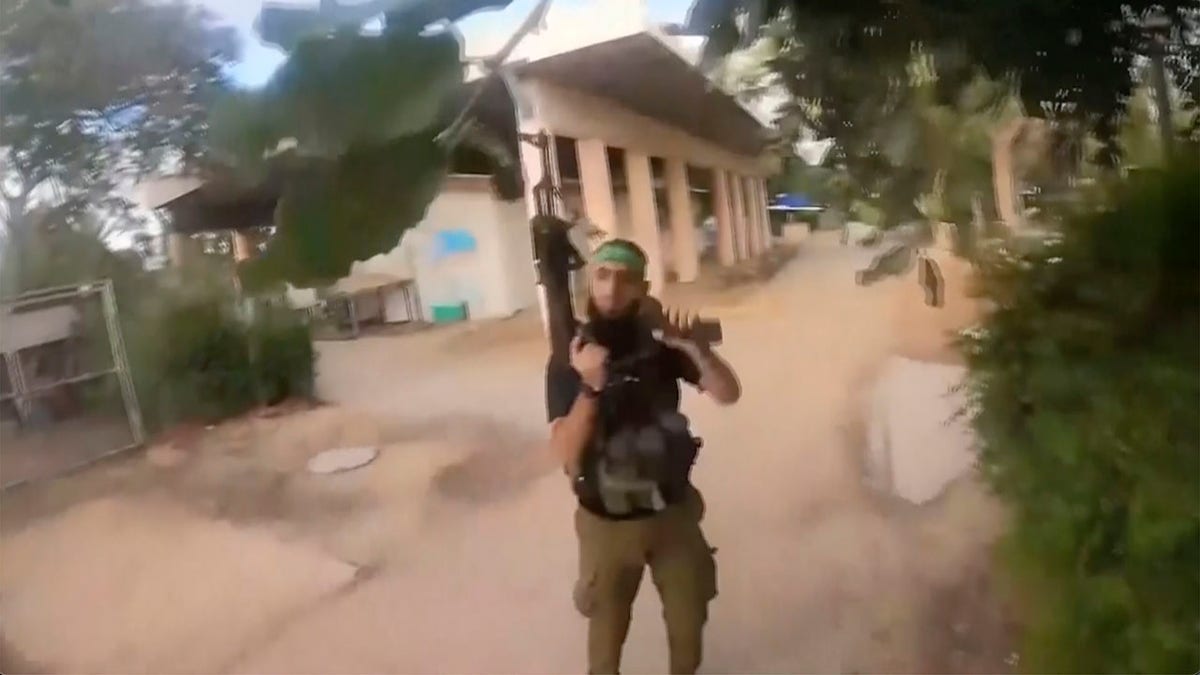
This image made from undated bodycam video footage taken by a downed Hamas terrorist and released by the Israel Defense Forces, shows a Hamas terrorist walking around a residential neighborhood at an undisclosed location in southern Israel. (Israel Defense Forces via AP)
“The civil defense squad was made up of soldiers who had served in special forces alongside others who had never held combat roles in the military. Some were issued weapons they had never used during their service. Training begins with weapons familiarization, covering the basics of firearm operation and how to manipulate the weapon’s safety mechanisms,” he said.
One lesson drawn from Oct. 7 was that many members of civilian security squads responded alone. “Whoever ran alone was not able to fend off terrorists,” T. said, explaining that the training emphasizes locating another squad member before engaging whenever possible.
“The idea behind this project is to establish a unified operational language, so that if an incident occurs, nearby communities can join the response and coordinate effectively,” he said.
ISRAEL FORTIFIES BORDER WITH JORDAN AS IRAN SEEKS NEW TERROR PATH
“The idea is that they are able to manage the event until forces arrive, then hand over control in an orderly manner while continuing to work together. They know the kibbutz, they work well as teams and they have undergone high-quality training that sharpened their skills.”
Magen48, established in July 2024 and named for the 48 first responders killed on Oct. 7, has trained 1,500 civilians to respond to life-threatening emergencies, equipping them with the knowledge, skills and resources to contend with scenarios such as terrorist attacks, medical emergencies and fires.
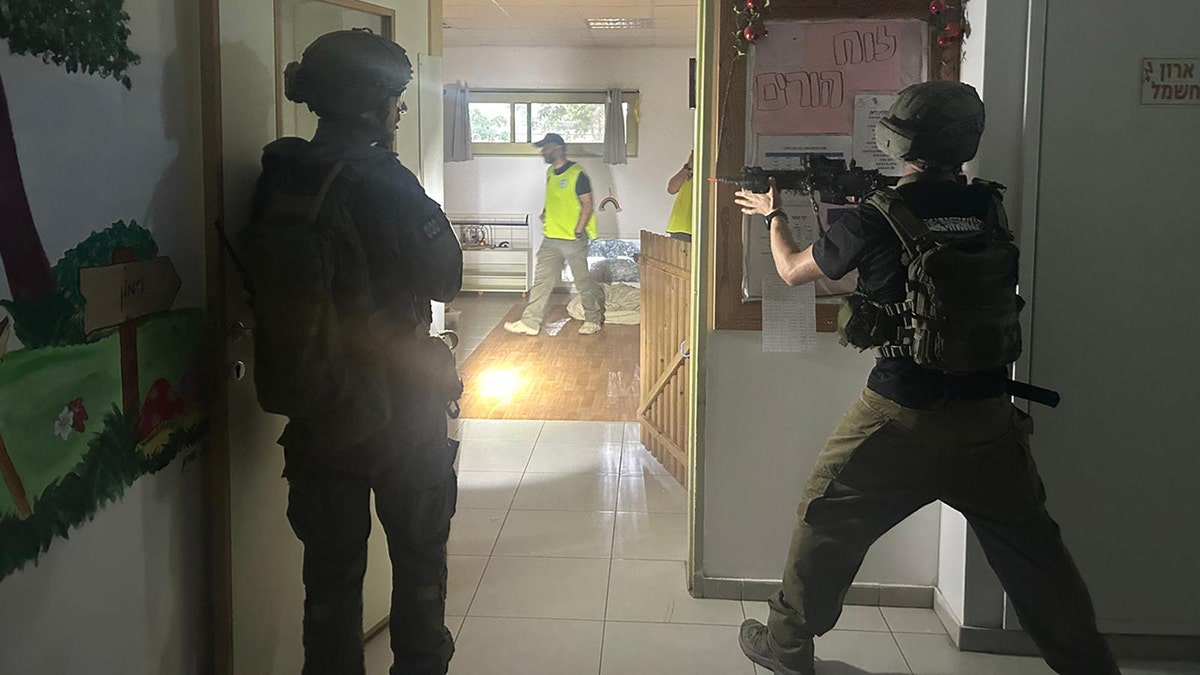
Participants to Magen48’s drill in Kibbutz Bror Hayil respond to a simulated terrorist infiltration inside the kibbutz’s kindergarten, July 8, 2026. (Amelie Botbol for Fox News Digital)
Counterterrorism expert Ehud Dribben, who has 30 years of experience in the field, co-founded the organization with Ari Briggs and Mike Aron. As the three began planning to create a training facility, the IDF approached them to develop a program providing each of the 67 Gaza Envelope communities with 12 full training days annually. To date, Magen48 has conducted more than 550 training sessions.
The training exercise began with the community command center issuing an alert about eight terrorists infiltrating the kibbutz, prompting members of the civil defense squad to mobilize to their assigned defensive positions.
Briggs and Dribben designed the exercise around five key locations where the defense squad would ultimately need to concentrate its forces. Response times are measured, and every step — from alerting residents to engaging the terrorists and evacuating casualties — is closely monitored.
“The reports that emerged after Oct. 7 showed that civilian first responders were incredibly brave. They were prepared to do anything to protect their families, friends and communities, but they were not trained adequately and lacked the equipment they needed,” Briggs said.
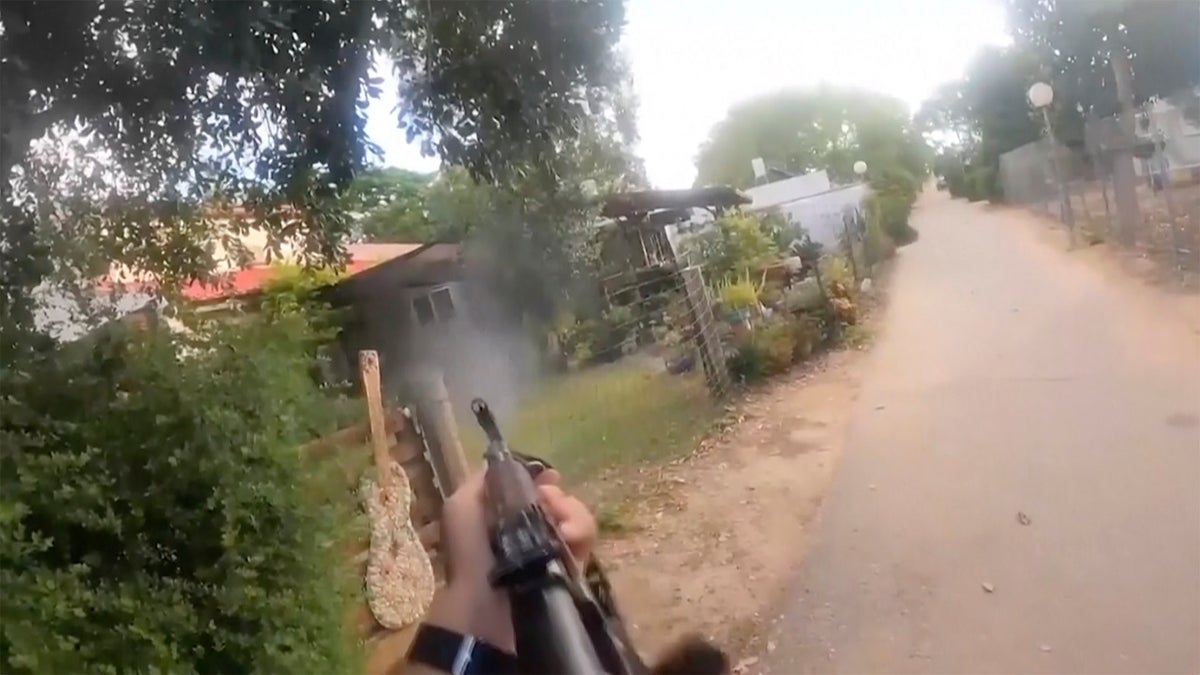
Hamas terrorists killed civilians, including women, children and the elderly, when they attacked Israel on Oct. 7, 2023. (Israel Defense Forces via AP)
“Strong, well-trained civilian response teams don’t just improve security — they help bring communities back together, strengthen resilience and ensure these towns grow and have an amazing future,” he added.
Retired British Col. Richard Kemp, who observed the training exercises, said the primary objective is to prevent another Oct. 7.
“I was in the British army for 30 years, so I understand the importance of defense and security for a country like Israel,” he told Fox News Digital. “If you know that your enemy has a capability of any sort to endanger you, you have to be ready to deal with that capability through the kind of work that Magen48 is doing.”
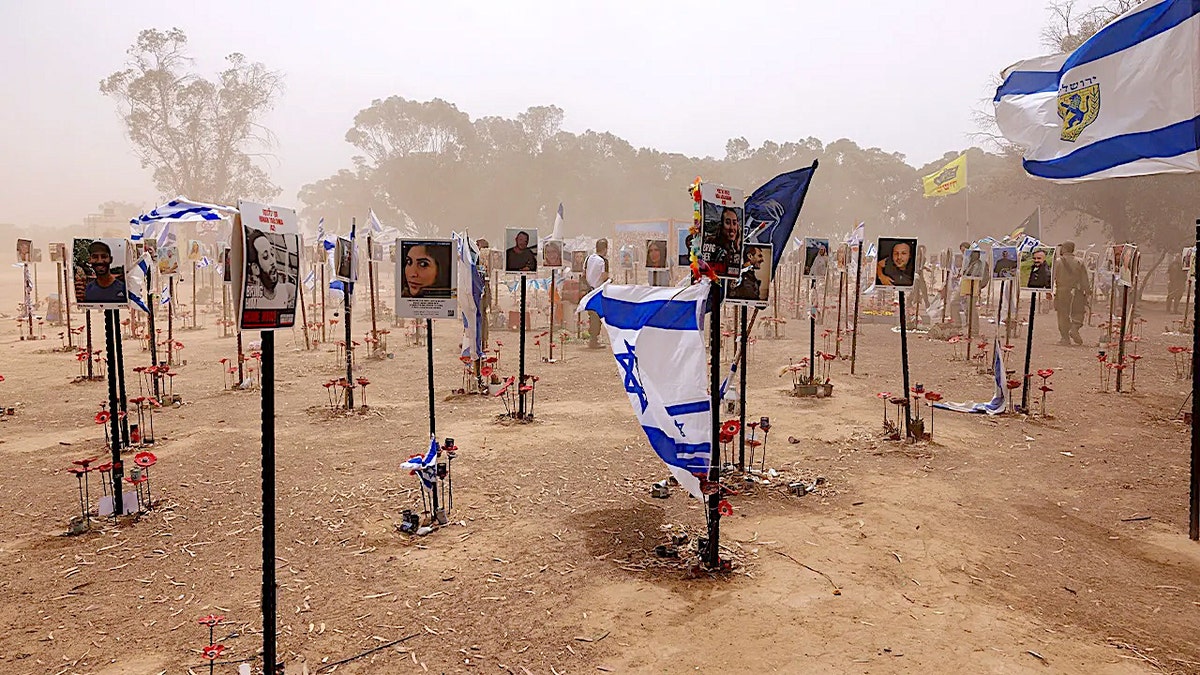
Memorials at the site of the Oct. 7 Hamas terror attack on the Supernova music festival near Kibbutz Re’im, Israel, on May 27, 2024. (Kobi Wolf/Bloomberg via Getty Images )
CLICK HERE TO DOWNLOAD THE FOX NEWS APP
Kemp called the drill one of the most complex exercises he had witnessed.
“It’s really important that these drills take place to give the local community confidence that its security is a top priority and that forces are doing everything they can to prepare for another terrorist attack like the one we saw on Oct. 7,” he said.
Covid inquiry PPE report – a look at the key findings
The scramble to buy PPE during the pandemic saw the UK waste almost £10 billion of taxpayers’ money, the inquiry says, with tens of millions of pounds more spent on other equipment that simply could not be used.
The chair Baroness Heather Hallett criticised the “vast” waste in pandemic procurement, amounting to two-thirds of the £14.9bn total the UK and devolved governments spent on PPE.
Although it was better to have purchased too much PPE in a pandemic than too little, it would “clearly have been better if supply had been calibrated more closely with demand”, the report concluded.
“Better planning would have resulted in fairer, faster and less costly procurement decisions.”
“Had ministers and officials been better equipped with appropriate plans, information and systems, procurement decisions would have been easier, fairer and far less costly – and equipment would have reached those who needed it faster,” Hallett added.