Home Blog Page 219

Video Boat rescue plays out as reporter records story

0
Video Boat rescue plays out as reporter records story


The rescue played out in a river in Idaho just as a local reporter was recording a news story only feet away.


Source link

What is sleep debt? An expert explains what happens when you don’t get enough rest

0
What is sleep debt? An expert explains what happens when you don’t get enough rest


Maybe you’re a new parent or someone who lies awake at night. If so, you may have started to worry you’re not getting enough sleep.

Sleep wearables don’t help. They can show your “sleep debt”, a running total of how far you’ve fallen behind.

But the word “debt” assumes your sleep works like a bank account. It assumes lost hours stack up, carry over, and you must eventually repay them in full.

But sleep doesn’t really work this way. And chasing “enough sleep” may not be helping.

What is a sleep debt?

Two systems control your sleep. One is your body clock, which helps keep wakefulness and sleep aligned with the day and night. The other is the one that matters here: sleep pressure.

Sleep pressure builds the longer you stay awake and eases while you sleep. At its highest, it’s hard to resist. Someone pulling an all-nighter might find themselves nodding off unintentionally.

This biological process is what “sleep debt” is trying to describe. If you sleep less than your body needs, pressure for sleep builds. Given the opportunity to recover after lost sleep, you sleep longer. In this broad sense, the debt metaphor works.

Sleep pressure builds the longer you stay awake and eases while you sleep (Getty/iStock)

But this metaphor has some assumptions that don’t fit with our biology.

If you have a financial debt, the maths is exact: you owe a precise sum, which stays there until you pay it down. Sleep pressure does none of those things. Our sleep systems are more dynamic and adaptable.

What happens next?

To study the effects of short sleep, researchers bring volunteers into a lab and restrict how much they can sleep, such as four or six hours a night, sometimes for a week or two. Watching what happens under these conditions tells us how our body handles the shortfall.

The first thing it does is reorganise. When sleep is cut short, the body protects its deepest sleep (the stage that does most of the restorative work) and sacrifices lighter sleep.

People also fall asleep faster and spend less time awake in bed. In other words, given less time, the body spends that time more carefully and efficiently.

When people are freed from sleep restriction conditions, we watch what the body does to recover. “Recovery sleep” is characterised by a few nights of longer, deeper sleep. After this point, the debt appears to be cleared. But you do not sleep “back” the same number of hours you lost.

People fall asleep faster and spend less time awake in bed
People fall asleep faster and spend less time awake in bed (Getty/iStock)

What this means in everyday life is that after a run of short nights, you tend to sleep a little longer and deeper for a night or two, then your sleep settles back to its usual length.

What about the sluggishness that follows after a few nights of short sleep?

These same sleep experiments also measure sleep-sensitive outcomes such as cognitive performance.

These outcomes follow their own recovery timelines and often take a little longer to return to baseline. You may have had all the recovery sleep you are going to get, but you still need a few more nights of normal sleep before your cognitive performance catches up.

Could knowing my sleep debt make things worse?

Receiving feedback about the previous night’s sleep seems to affect your mood, energy levels and alertness the next day.

One study showed that giving participants negative feedback about their sleep – for example “your sleep quality was poor” – made them feel more tired and negative the next day.

You have insomnia if you regularly:

  • find it hard to go to sleep
  • wake up several times during the night
  • lie awake at night
  • wake up early and cannot go back to sleep
  • still feel tired after waking up
  • find it hard to nap during the day even though you’re tired
  • feel tired and irritable during the day
  • find it difficult to concentrate during the day because you’re tired

Another small experiment showed that people’s cognitive performance was influenced by how long participants believed they had slept.

No study has directly examined what happens if we tell people how much sleep debt they have. But, based on what we know, it is possible that knowing it can make you more worried about your sleep, and have worse sleep as a result.

False precision and moving targets

There is a deeper problem with the whole idea of calculating a sleep debt.

To calculate a debt, you need to know exactly what you owe in the first place, that is, a precise idea of how much your body needs. Trackers try their best to model how much sleep you need, but it is a slippery number.

Amelia Scott is an Honorary Affiliate and Clinical Psychologist at the Woolcock Institute of Medical Research, and a Macquarie University Research Fellow.

This article is republished from The Conversation under a Creative Commons licence. Read the original article.

How much sleep someone needs varies widely from person to person. Some healthy adults feel fine on around six hours, others need closer to nine.

How much sleep you need is not fixed. You need more sleep when unwell or start training hard at the gym. Sleep shifts with the seasons, with people generally sleeping more in winter.

Sleep trackers also estimate how much sleep you had overnight. They are increasingly accurate, but this is still an estimate, not the truth. So, trackers measure one guess (how much we slept) against another (how much we need).

The bottom line

Sleep debt is a handy metaphor to help us understand sleep regulation. Sleep pressure builds the longer you’re awake, and a short night can leave you needing a longer one to follow.

However, the way our bodies manage short sleep is not an ever-accumulating tally you must repay in full. To calculate a debt, you’d also need to be certain how much you need and how much you have, which are both hard to know.

The good news is that we are built to withstand and recover from the times life gets in the way of a good night’s sleep. There’s no need to carry a ledger or chase a sleep debt to zero.


Source link

Woman’s Hour – ADHD and hormones, When co-habiting couples separate, God of War – BBC Sounds

0
Woman’s Hour – ADHD and hormones, When co-habiting couples separate, God of War – BBC Sounds


Available for over a year

What impact do hormones have on women with ADHD? A first of its kind study by King’s College and Queen Mary University in London is putting the link to the test, by asking 50 women who have ADHD and are taking medication for it to track their menstrual cycle. They will log the impact it has on their ADHD symptoms, and daily life more broadly. Report academic Dr Jessica Agnew-Blais and Laura Mears-Reynolds from the charity ADHDAF+ join presenter Nuala McGovern to discuss.

We hear about the current government consultation aiming to give added financial security to more than 3.5 million unmarried couples when they separate. It’s hoped the overdue reforms will help protect women and better meet the needs of modern relationships. Nuala discusses this with Mandip Ghai, a lawyer from the legal charity Rights of Women, who have campaigned for new laws, and Jenny Allen who is feeling the long-term impact of her separation on her finances now she is semi-retired.

Video game God of War will have a female protagonist for the first time in the form of Laufey, both a powerful woman and a mother. Nuala is joined by player and journalist Vicky Jessop and The Guardian’s games editor Keza Macdonald to discuss the significance and online backlash.

Presented by: Nuala McGovern
Produced by: Sarah Jane Griffiths

Programme Website


Source link

Mother tells Lampard Inquiry: ‘Don’t let blood be on your hands’

0
Mother tells Lampard Inquiry: ‘Don’t let blood be on your hands’


The mother of a 16-year-old girl who died at an Essex mental health unit has made a direct appeal to the chair of a public inquiry, saying: “Don’t let the blood be on your hands – you can change things.”

Victoria Sebastian was giving evidence to the Lampard Inquiry in London, which is examining the deaths of more than 2,000 people under the care of Essex mental health services between 2000 and 2023.

Her daughter, Elise Sebastian, who was autistic, was found unresponsive in her room at the St Aubyn Centre in Colchester in April 2021.

During an emotional four-hour testimony, Victoria told the hearing on Monday: “They let my daughter die. My daughter meant nothing [to them]. Absolutely nothing.”

She said she believed Baroness Lampard had the power to ensure the inquiry recommendations would lead to meaningful change.

Baroness Lampard promised that bereaved families would be at the heart of the inquiry because she wanted to identify systemic failures which the country could learn from.

Essex Partnership University NHS Foundation Trust (EPUT), which runs mental health services in Essex, said it was sorry Elise “did not receive the care she deserved”.

  • If you are affected by this story, there are dedicated organisations that offer support and advice 24/7 on the BBC Action Line


Source link

How many people have died in the heatwaves in England and Wales?

0
How many people have died in the heatwaves in England and Wales?


Experts suggest more than 2,700 people may have died from heat-related causes during the heatwaves.


Source link

Mom shares the toys her toddler never gets bored of: Parents, take notes as they also support healthy development

0
Mom shares the toys her toddler never gets bored of: Parents, take notes as they also support healthy development


Image credits: Instagram/@sukhleenarora

A parent deals with a constant battle of choosing toys for their toddlers. It is so because toddlers lose interest real quick. Nowadays, phones have added more to the problem. Within minutes children head straight back to their parents asking for phones.Certainly, handing a phone to children keeps them engaged for hours. However, it isn’t the correct way to promote development. But then again, finding toys that genuinely hold a young child’s attention isn’t easy.

6 Jul 2026 | 14:01

What factors did you consider, or would consider, before choosing the right school for your child?

Parenting influencer Sukhleen Aarora was going through the same struggle. But now she has found the right toys for her kids that keeps them busy. According to her, these are the toys her children keep returning to voluntarily because they are fun, challenging and open-ended rather than flashy or overstimulating.Here’s a look at the toys she recommends and why they can support a child’s healthy development along with keeping them engaged.

Hanging bat ball

One of the mom’s top recommendations is the hanging bat ball, a simple toy that keeps children moving without needing much space.The toy consists of a lightweight ball which is attached to a string or cord and hung from the doorway or ceiling. With the plastic bat, the child hits the ball. The ball swings back after every hit, and keeps children chasing the ball.One of the relieving parts for parents is that this toy doesn’t require an adult to be engaged with the toddler. Simple supervision is enough.Beyond keeping children entertained, the hanging bat ball also supports several developmental skills. It helps improve hand-eye coordination, timing, balance, reaction speed, and focus.

Magnet tiles

Canva image

Canva image

This toy is a long term investment for toddler and preschoolers as it evolves as their creativity grows.Magnetic tiles are colourful plastic shapes with magnets sealed inside their edges. Children simply bring two tiles close together, and the magnets snap them into place. As a toddler, a child might stack these tiles like a flat surface and as they grow older, they may even build houses and castles with it.Beyond fun, magnetic tiles can help strengthen a child’s problem-solving, spatial awareness, hand-eye coordination, and fine motor skills.

Mini sports champ

This is perfect for the toddlers with endless energy! A mini basketball and soccer combo can turn that excitement into healthy, skill-building play.The set typically includes a toddler-sized basketball hoop, a small soccer goal, and lightweight balls that are easy for young children to hold, throw, kick and catch.Balance, coordination, hand-eye and foot-eye coordination- this simple toy set can support several aspects of early development.

Story box

A story box is a screen-free audio player filled with nursery rhymes, bedtime stories, mythological tales and educational content. A story box is a child-friendly audio device that plays preloaded content with the press of a button. The mom says she has two versions- a millennial one and one with Gen-Z inspired content.Unlike watching cartoons, listening to stories encourages children to imagine the characters, settings and events in their own minds. This active form of listening helps develop language skills, vocabulary, memory, listening comprehension and attention span.

The dancing mat

The mom says it’s “the best game we’ve ever had.” A dancing mat is an interactive floor mat with coloured spots or pressure-sensitive buttons that light up or play music. As the game begins, children are prompted to step, jump or hop onto the correct spot based on the lights, sounds or voice instructions.This toy can help improve gross motor skills, balance, coordination, body awareness and reaction time in toddlers.

Canva image

Canva image

There are also some other toys the parenting influencer swears by. These include- An activity walker, a whiteboard, a musical white noise machine, and a classic block set.No single toy can keep every toddler engaged, and what works for one child may not work for another. However, one thing stands out from this mom’s recommendations- they are all open-ended toys that encourage children to move, imagine, build, create or listen, rather than simply watch.


Source link

World Cup: The origin story of France star Michael Olise

0
World Cup: The origin story of France star Michael Olise


The origin story of France star Michael Olise begins much closer to home than you might think.


Source link

MAJORITY LEADER THUNE: Lindsey Graham was the GOP’s glue, binding us together with courage and grace

0
MAJORITY LEADER THUNE: Lindsey Graham was the GOP’s glue, binding us together with courage and grace


NEWYou can now listen to Fox News articles!

In the tragic and sudden loss of Sen. Lindsey Graham, America has lost one of its greatest patriots. I have lost a dear friend. And the Republican Party has lost a champion.

Much will rightfully be written about Lindsey’s strong advocacy on behalf of the United States and freedom-loving people around the world. There was no bigger believer in America’s role in the world. In uniform and in Congress, Lindsey dedicated his life to the mission that America was a singular force for good.

I was blessed to travel with Lindsey on several occasions, and while there was always a lot made of his support for American hard power, he also was a big believer in the use of soft power — America’s economic, diplomatic, and political solutions to the world’s problems.

LINDSEY GRAHAM, SOUTH CAROLINA SENATOR WHO ROSE FROM SMALL-TOWN ROOTS TO GOP POWER BROKER, DIES AT 71

Lindsey was a statesman, and he will be mourned the world over. I expect that nearly every living American president has taken advice from Lindsey Graham, whether they care to admit it or not. Heads of state came to respect his opinion and seek his counsel because of his undeniable influence on American foreign policy.

But the most profound sting of this great loss will be felt here at home and within the Republican Party. Lindsey was our glue. He spoke fluently to every corner of our big-tent party, and to those of us who had the privilege of serving with him, we were blessed to call him a friend first and a colleague second. Even in the most stressful situations, Lindsey was adept at bringing out a laugh and putting a smile on your face.

‘THE HALLS OF THE SENATE ALREADY FEEL EMPTY’: TEARFUL THUNE HONORS LINDSEY GRAHAM AS SISTER TAKES HIS SEAT

If you were putting together a dinner of colleagues, Lindsey was the first person you called. He was always entertaining and never pretentious. To me, he was a loyal friend, a trusted adviser and someone who always called them as he saw them.

He was as transparent as they come — he never minced words or pulled punches. When he was against you, he let you know. When he was on your side, he was your greatest ally. And if his convictions demanded that he stand on an island, he did that too. What you saw was what you got. He was respected for it.

TRUMP PRAISES LINDSEY GRAHAM AS SENATOR WHOSE KAVANAUGH FIGHT CHANGED SUPREME COURT HISTORY

And when Lindsey set his sights on a goal, watch out — because nothing was going to stand in his way. His relentless work ethic paved the way for generations of conservative policy victories.

One doesn’t need to look far to see Lindsey’s remarkable contributions to our party and his outsized role in passing the Republican agenda

In this Congress alone, he and his team at the Budget Committee shepherded three budget resolutions and two reconciliation bills through laborious, all-night vote-a-rama sessions. No Senate has ever held more vote-a-ramas in modern history, and that wouldn’t have been possible without Lindsey’s persistence and determination. He and his team led our conference through incredibly high-stakes, fraught negotiations and floor processes. And because of that, generations of Americans will have greater national, economic and financial security.

CLICK HERE FOR MORE FOX NEWS OPINION

But this was the leadership that we knew to expect from Lindsey Graham. As a former chairman of the Judiciary Committee, Lindsey was passionate about the rule of law and an independent judiciary. His influence on the judicial system will undeniably last for generations. After all, virtually every judicial nominee for the last 20 years has had to withstand his questioning and work to earn his support.

Sen. Lindsey Graham, R-S.C., is pictured in Kyiv on July 10, one day before his death on July 11, in Washington, D.C. (Valentyn Ogirenko/Reuters)

CLICK HERE TO DOWNLOAD THE FOX NEWS APP

I am grateful for all the ways Lindsey gave to America and Americans. His mark on history and his impact on the conservative movement will be well documented, but I will be equally, if not more, grateful for the mark he left on my life. Thank you, Lindsey, for being a true and loyal friend, and thank you for always making me laugh.

Rest in peace, my friend.

CLICK HERE TO READ MORE FROM SENATE MAJORITY LEADER JOHN THUNE


Source link

Notable figures who died from the same heart condition linked to Lindsey Graham’s death

0
Notable figures who died from the same heart condition linked to Lindsey Graham’s death


NEWYou can now listen to Fox News articles!

Sen. Lindsey Graham’s sudden death has thrown new attention on a rare but often deadly cardiovascular emergency known as aortic dissection.

The cause of death was identified as an aortic dissection due to arteriosclerotic cardiovascular disease, according to a statement released by Graham’s office on Sunday, citing preliminary findings from the District of Columbia’s Office of the Chief Medical Examiner.

“It occurs when the layers of the aorta (the body’s largest artery) come apart and the inner one tears,” Fox News senior medical analyst Dr. Marc Siegel, who did not treat Graham, told Fox News Digital.

HEART CONDITION TIED TO LINDSEY GRAHAM’S DEATH CAN STRIKE WITHOUT WARNING — WHAT TO KNOW

“It can come on in minutes or days and may be hard to recognize,” added the doctor, noting that while dissections can evolve over time, symptoms often appear suddenly.

Graham, 71, is not the only notable figure to have died from an aortic dissection

Sen. Lindsey Graham’s cause of death was ruled an aortic dissection due to arteriosclerotic cardiovascular disease, according to a statement released by Graham’s office on Sunday. (AP Photo/Susan Walsh)

Below are three other celebrities and public officials whose deaths were linked to the same life-threatening condition.

1. John Ritter

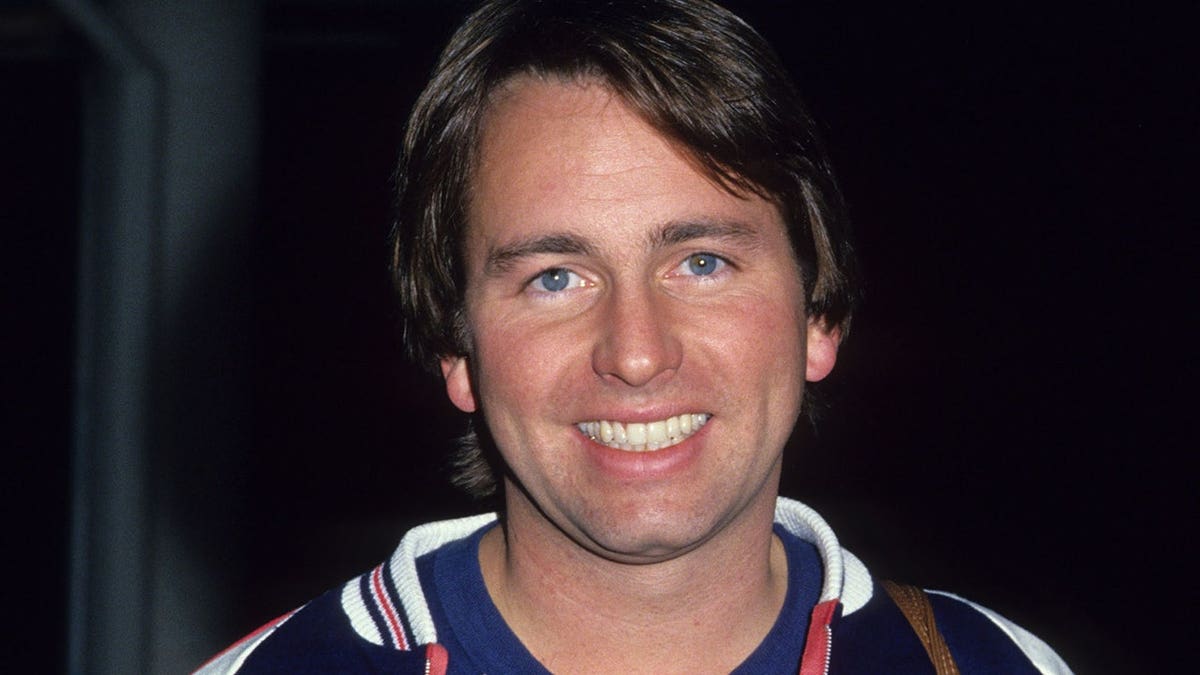
Actor John Ritter, best known for his role in the hit sitcom “Three’s Company,” died from an aortic dissection on Sept. 11, 2003.

The John Ritter Foundation for Aortic Health (JRF) said the actor was taken to the hospital after experiencing symptoms later identified as a type A aortic dissection. The nonprofit, founded in his honor to fund research and raise awareness for the condition, later said Graham’s death brought “needed attention” to the condition.

John Ritter stands at CBS TV City in Los Angeles.

John Ritter is seen at CBS TV City on Jan. 5, 1978, in Los Angeles, California. (Tom Wargacki/WireImage)

Type A dissections involve the ascending (upper) aorta near the heart, which typically require emergency surgery.

At the time of his death, Ritter was filming the sitcom “8 Simple Rules… for Dating My Teenage Daughter,” co-starring Kaley Cuoco.

MEDICAL EXAMINER RELEASES PRELIMINARY FINDINGS IN LINDSEY GRAHAM’S DEATH AS DEATH CERTIFICATE REMAINS PENDING

The actor was initially treated for a presumed heart attack, but passed away that night as his condition worsened.

In a press release, the JRF extended its condolences to Graham’s family.

“Deaths due to aortic dissections are preventable if individuals at risk are identified and properly treated.”

“These deaths underscore that aortic dissections are not a rare cause of death,” Meredith Ford O’Neal, CEO of the foundation, shared with Fox News Digital. “Deaths due to aortic dissections are preventable if individuals at risk are identified and properly treated.”

“We hope this moment encourages people to learn the warning signs of aortic dissection, which includes an increased risk for family members of individuals who have had an aortic dissection.”

2. Rep. Doug LaMalfa

Rep. Doug LaMalfa, R-Calif., died on Jan. 6, 2026, at age 65 from complications of an aortic dissection, according to the Butte County Sheriff’s Office. Cardiomegaly (an enlarged heart) was listed as another significant condition, and his death was ruled natural.

Doug LaMalfa

Rep. Doug LaMalfa, R-Calif., died on Jan. 6, 2026, at age 65 from complications of an aortic dissection. (Tom Williams/CQ-Roll Call, Inc via Getty Images)

LaMalfa, who represented California’s 1st Congressional District, was taken into emergency surgery but passed away during the procedure, according to a statement from the Butte County Sheriff’s Office.

A month later, the Butte County Sheriff’s Office confirmed to People that his cause of death was complications of an aortic dissection. Cardiomegaly, or an enlarged heart, was also listed as a significant condition.

3. Alan Thicke

“Growing Pains” actor Alan Thicke died from an aortic dissection on Dec. 13, 2016, at the age of 69.

Thicke reportedly experienced chest pain while playing hockey with his son and was taken to the hospital.

Allen Thicke stands at a bowling event in Hollywood, California.

“Growing Pains” actor Alan Thicke died from an aortic dissection on Dec. 13, 2016, at the age of 69. (Brian To/FilmMagic)

The Los Angeles County coroner later determined that Thicke died from a ruptured aorta caused by a type A aortic dissection, according to ABC News.

Raising awareness

In a 2016 HCA Healthcare article, Nashville-based heart surgeon Dr. Grayson Wheatley reflected on Thicke’s “unfortunate” case.

YOUR RESTING HEART RATE COULD REVEAL MORE ABOUT YOUR HEALTH THAN YOU THINK, DOCTORS SAY

“I am sharing with you my expert thoughts based on limited information about Mr. Thicke’s case, but in light of an extensive career of treating hundreds of patients with aortic dissections, I can connect the dots in Mr. Thicke’s case from patterns that have emerged from treating similar patients with aortic dissections,” he said.

Alan Thicke stands with Robin Thicke backstage.

Alan Thicke, pictured with son Robin Thicke in 2013, reportedly experienced chest pain while playing hockey with his son and was taken to the hospital before his death. (Francis Specker/CBS via Getty Images)

Chest pain is often the first sign of a sudden tear or rip in the aorta, which can develop “within a few heartbeats,” according to Wheatley.

“The pain associated with an aortic dissection is extreme,” he said. “My patients describe it as so intense and sudden that it drops them to their knees. They literally fall to the ground and feel an intense tearing or ripping in their mid-upper back and/or chest.”

CLICK HERE FOR MORE HEALTH STORIES

Once the dissection occurs, it becomes a “race against time” as the condition worsens, the doctor said.

Dr. Neel Mansukhani, a vascular surgeon at Northwestern Medicine in Chicago, explained why this condition can become life-threatening so quickly.

TEST YOURSELF WITH OUR LATEST LIFESTYLE QUIZ

“The aorta is the main blood vessel that comes off of the heart, and it runs like a pipe through your body,” he told Fox News Digital. “Smaller blood vessels branch off to go to all your internal organs, arms, legs and brain.”

“The aorta itself has three layers,” the surgeon went on. “A tear in the lining of the aorta causes those layers to separate. It’s similar to paint peeling off a wall. And that brings a lot of consequences depending on where the tear is.”

Aortic dissection

“The aorta is the main blood vessel that comes off of the heart, and it runs like a pipe through your body,” a doctor told Fox News Digital. “Smaller blood vessels branch off to go to all your internal organs, arms, legs and brain.” (iStock)

An enlarged aorta or damage to the vessel wall from cardiovascular disease can increase the likelihood of an aortic dissection, although age and high blood pressure remain the leading risk factors, Mansukhani said.

CLICK HERE TO SIGN UP FOR OUR HEALTH NEWSLETTER

“As we get older, blood vessels can weaken, and over time the constant pressure of blood flow can make the wall of the aorta more vulnerable to a dissection,” he said. 

Graham, Ritter, Thicke split - aortic dissection deaths

In addition to Graham (left), actors John Ritter and Alan Thicke both died after experiencing an aortic dissection. (Getty Images)

Type A dissections are “immediately life-threatening,” as they are “right by the heart,” according to the doctor.

CLICK HERE TO DOWNLOAD THE FOX NEWS APP

“It’s an emergency that usually needs surgery within 24 hours if a patient can tolerate that,” he said. “A type B dissection is located further down from the heart. It can also be life-threatening, but does not usually need immediate surgery.”

Although an aortic dissection often strikes without warning, maintaining cardiovascular health and monitoring conditions such as high blood pressure can help lower the risk, Mansukhani advised.


Source link

Facing funding losses, states call out big businesses with employees on Medicaid

0
Facing funding losses, states call out big businesses with employees on Medicaid


As the Trump administration’s January deadline looms for states to enforce a new Medicaid work requirement, some state lawmakers are turning the tables by pushing to publicly name the largest companies that have employees enrolled in the government program covering low-income and disabled people.

California lawmakers seek to revive an expired law that would require the state to identify companies that employ 100 or more people and have employees enrolled in Medi-Cal, the state’s Medicaid program. Nevada has had a similar law in place since 2017, though a proposal for one in Oregon stalled when its legislative session ended in March.

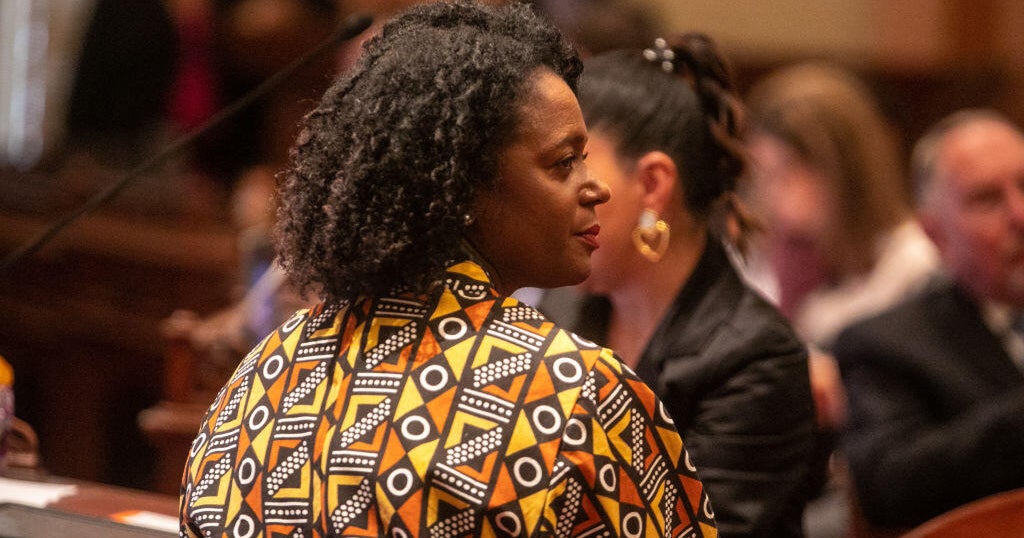
The California bill author, Democratic state Sen. Lola Smallwood-Cuevas, said she is deeply troubled by what is going to happen when work requirements kick in. According to the state, nearly 5 million out of more than 14 million residents on Medi-Cal will be subject to the requirement.

“We think this is a bill that’s about fairness,” Smallwood-Cuevas said. “It’s a basic principle that taxpayers deserve transparency about which large employers are shifting their healthcare costs onto the public.”

California state Sen. Lola Smallwood-Cuevas wants the state to identify companies that employ 100 or more people and have employees enrolled in Medi-Cal.

Jason Armond / Los Angeles Times via Getty Images


Large employers that regularly top Nevada’s list, such as Walmart and Amazon, have said that the state included part-time and seasonal workers in their counts and that their full-time hourly employees make too much to qualify for Medicaid.

Walmart spokesperson Katrina Proffitt said that the company offers affordable medical coverage to most employees, including eligible part-time workers, and that most of its plans include no-cost virtual care options.

“Healthcare affordability and access to quality care remain real barriers for many Americans, and Walmart continues to be committed to being part of the solution,” Proffitt said.

The push to name and shame companies reflects dueling narratives about the biggest abusers of the joint state-federal Medicaid program, which reached nearly $932 billion in government spending in 2024. The Trump administration, led by Centers for Medicare & Medicaid Services Administrator Mehmet Oz, has called out blue states for not doing enough to fight insurer fraud and abuse. State Democratic leaders, meanwhile, are pushing back by calling attention to big employers that don’t offer affordable health benefits, which leaves taxpayers subsidizing healthcare costs for the low-wage workforce.

Some states have considered financial penalties. Democratic New Jersey Gov. Mikie Sherrill signed a bill in June to fine businesses that have at least 50 Medicaid-enrolled employees. Companies with 50 to 249 workers on Medicaid will pay $325 a year per person, and those with at least 500 will pay $725. 

Bills that would have penalized companies with workers enrolled in Medicaid failed in Washington state and Colorado this year.

In Sacramento, California, Democrats want to figure out a way to make large businesses pay for their employees’ health coverage. State lawmakers struck a deal with Democratic Gov. Gavin Newsom, who is contemplating a presidential bid as he wraps up his final year in the governor’s office, to explore tax options. Any tax hike would be up to the new governor.

States face losing billions of dollars under HR 1, the GOP tax-and-spending law known as the One Big Beautiful Bill Act, notably through a provision that requires nondisabled Medicaid enrollees ages 19 to 64 in most states to prove they are working, volunteering, or going to school at least 80 hours a month to keep their coverage.

Yet federal work requirements are projected to increase the number of uninsured people nationwide by more than 5 million by 2034, according to the Congressional Budget Office. Nebraska and Montana have begun enforcing the rule.

One health policy researcher said employer Medicaid reports highlight the lack of affordable healthcare options available to low-wage workers. More than half of adults enrolled in Medicaid who don’t have dependent children already meet the 80-hour-a-month requirement or face challenges that would likely qualify them for an exemption, according to KFF.

“There’s a whole set of people who are working — they may not satisfy the work requirement provisions, they may not get the exemption that they’re qualified for, and they don’t have access to that employer-sponsored insurance either,” said Edwin Park, a research professor at the Center for Children and Families at Georgetown University.

Employers push back

While employer lists haven’t succeeded in bringing down Medicaid costs, supporters say measuring the burden can be the first step and help lawmakers make the case for further action.

In Nevada, Amazon has employed more Medicaid enrollees than any other company since 2020, according to the state’s report published in January. For state fiscal year 2025, Walmart, the Clark County School District, the state government, and Tesla rounded out the top five.

Employers have argued that the reports are misleading because they have included part-time and seasonal employees. The state’s latest report includes only full-time employees, plus those who could not be confirmed as either full- or part-time employees.

That came to 4,914 Amazon employees and 3,503 Walmart workers in Nevada on Medicaid in 2025.

There are no penalties for companies on the list.

Amazon said it pays its workers more than double the $7.25-an-hour federal minimum wage and noted that Medicaid eligibility is based on household income and size rather than an individual’s wage. That means two employees who earn the same pay may have different eligibility depending on whether they have children or live with parents.

“Pointing fingers at Amazon over Medicaid is a red herring,” said spokesperson Alisa Carroll. “What really needs to happen is a significant and large increase in the federal minimum wage — that would be a big boost for American families.”

Nevada Medicaid spent nearly $950 million on healthcare for more than 133,000 full-time employees and more than 140,000 of their dependents. While the total amount spent dipped in fiscal year 2025, the average cost per member per year increased by nearly 17%.

Yvanna Cancela, a former Nevada lawmaker who sponsored the legislation on Medicaid work reports, said the annual reports force an important conversation “about whether or not this is the kind of economy we want and whether or not it is right or just that people who work full-time don’t make enough to have health insurance.”

A fraying safety net

Health researchers say that uninsured people delay or skip using healthcare and that their children may end up losing coverage, too.

One analysis found that more than 2 million fewer children were enrolled in Medicaid and the Children’s Health Insurance Program this April than in January 2025. California is among the states with the steepest enrollment losses among children.

The loss in healthcare coverage among residents will be compounded by the loss of public food assistance benefits, Smallwood-Cuevas said. Her bill is pending in the legislature.

She compared Medi-Cal to a trampoline that has become a “very tattered kind of fishnet” overwhelmed by people falling into it. President Trump’s spending-and-tax law pulls and rips at the safety net, she said.

When people lose food assistance and health benefits, they must choose between paying for medicine and paying for rent, Smallwood-Cuevas said.

“We’re going to see more people in their cars, more people on the street, and a lot more people in the emergency room,” she said. “That is dangerous for all of California.”

KFF Health News is a national newsroom that produces in-depth journalism about health issues and is one of the core operating programs at KFF — the independent source for health policy research, polling, and journalism.


Source link