
Home Blog Page 689

A tool to help keep dementia in check

0
A tool to help keep dementia in check


If you worry about your risk of dementia, Lauren Sprague knows your fear. Her father had a stroke when she was in high school. What followed was a long, slow descent into memory loss and dementia. He died at just 63.

“So, since I was 16 years old, pretty much every day of my life I worry, ‘Is today the day that the same thing could happen to me that happened to my dad?'” Sprague said. “It’s an incredible fear to walk around with.

“Every day of my children’s lives up until now, I’ve worried that that could be me,” she said.

Then she went to see Dr. Jonathan Rosand, who told us, “Time and again I would get the question, ‘Doctor, what can I do to take good care of my brain so that I don’t end up like my mother, my brother, my father?'”

Rosand is a neurologist at Massachusetts General Hospital in Boston. He explained to Sprague it was possible to cut the risk of dementia by making changes to daily habits, from choices about what you eat, to the amount of physical activity you get every day. “It turns out that these modifiable risk factors probably account for at least 40% of all dementia cases,” Rostand said.

A committee of experts from around the globe has concluded that about 40 to 45% of dementia cases could be prevented or delayed by addressing 14 modifiable risk factors:

  • Physical inactivity
  • Smoking
  • Excessive alcohol consumption
  • Air pollution
  • Traumatic brain injury
  • Hearing loss
  • Untreated vision loss
  • High blood pressure
  • Diabetes
  • Obesity
  • Low education attainment
  • Social isolation
  • High cholesterol
  • Depression 

Rostand said that it’s a very common conception that if dementia or Alzheimer’s is in one’s family, that they are doomed. “But the truth is there’s so much we can do,” he said.

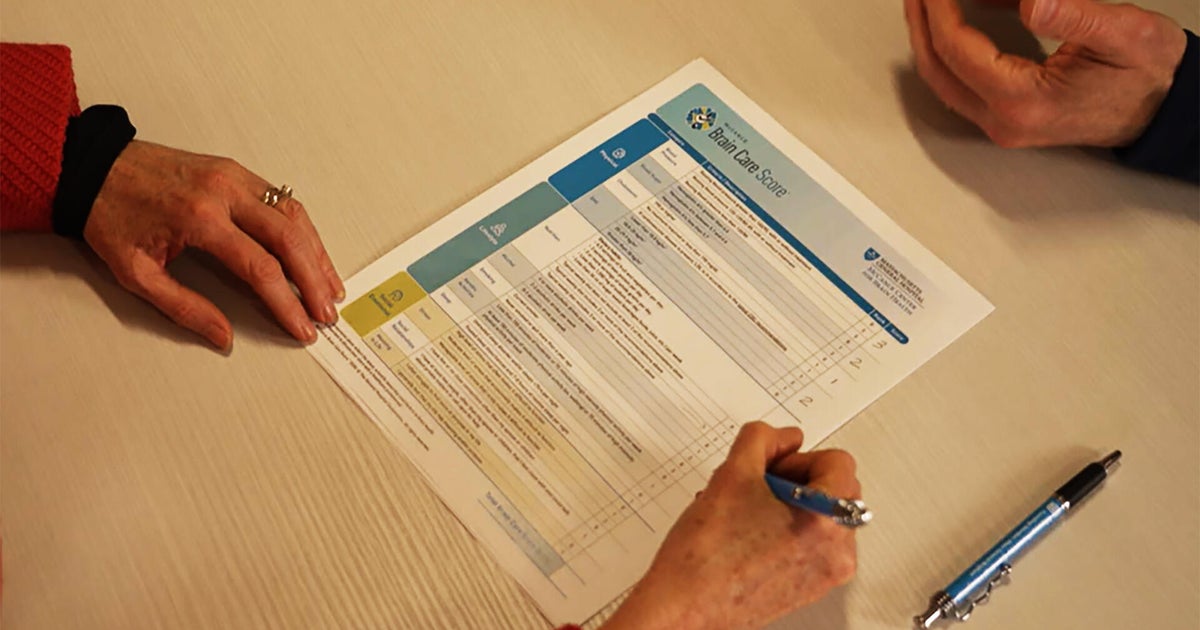
The idea that exercise and diet are important is not new, of course. But what is new is a tool from Rosand and his team to help you understand exactly how much and what kind of lifestyle changes are beneficial. It starts with a simple questionnaire free to everyone online, called the Brain Care Score.

“The Brain Care Score is a tool for any of us to use in our daily lives that lists out the modifiable risk factors for dementia, stroke and depression,” Rostand said.

The Brain Care Score allows you to identify traits and lifestyle habits that can impact your brain health. 

Global Brain Coalition


The healthier your habits, the higher your score. And to improve your score, you pick which habits you want to focus on changing. Rostand said, “It’s a guide to where you can go next. And in our work with patients, it really does give a choice, and a sense of freedom.”

A groundbreaking study from June 2025 found that a five-point higher Brain Care Score is associated with a 43% lower risk of developing heart disease, and a 31% lower incidence of most common cancers (including lung, colorectal, and breast cancer).

It’s evidence that what’s good for the brain is good for the rest of the body, too.

So, where to start? For Lauren Sprague and her husband, Scott, change started in the kitchen. They doubled down on greens and cut out highly-processed foods. (This added one point to her score.) They spend more time outdoors, which helps with fitness and stress relief. (That can add 2 more points.) She also takes time to sing and create, adding meaning, more stress relief, and purpose (while adding 2 more points).

Sprague said, “The Brain Care Score really gave me the prescription that I needed. And the wonderful thing about it is, it is a recommendation, but there is nuance, and it can be customized, which is wonderful.”

And Rosand is hoping this is one prescription that we all can share. He said, “The key message we want to convey with the Brain Care Score is, it is you. It is each of our viewers. It is everyone who wants to take a step forward. It’s up to you and you’re in control.”

     
For more info:

     
Story produced by Amol Mhatre. Editor: Emanuele Secci. 



Source link

Ralph Waldo Emerson: Success quote of the day by Ralph Waldo Emerson: “Success is to know even one life has…” – The Times of India

0
Ralph Waldo Emerson: Success quote of the day by Ralph Waldo Emerson: “Success is to know even one life has…” – The Times of India


“What is success?To laugh often and much; to win the respect of intelligent people and the affection of children; to earn the appreciation of honest critics and endure the betrayal of false friends; to appreciate the beauty; to find the best in others; to leave the world a bit better, whether by a healthy child, a garden patch, or a redeemed social condition; to know even one life has breathed easier because you have lived. This is to have succeeded!”Ralph Waldo EmersonIn a world buzzing with rankings, salaries, followers, and achievements, Emerson’s words feel like profound wisdom. His definition of success isn’t about having big job titles, or winning trophies, or about how many people know your name. Instead, it’s rooted in kindness and the impact you leave on others.This quote makes us pause and think what true success really means. Emerson says that success is not about the heights you have reached, but the gentleness with which you have made a difference in other peoples’ lives.

Why Emerson’s view of success feels so true

Most of us have grown up with a narrow idea of success, like: earn more money, have bigger houses, faster cars, higher status. But the older we get, the more we realise that these things, while nice, don’t guarantee true happiness or meaning. We’ve watched “successful” people feel lonely, admired people feel empty, and busy people feel lost.Emerson’s reflection reminds us that success is actually a collection of small, everyday choices like:– Laughing with someone who needed a smile– Respecting someone who felt overlooked– Standing by someone who was betrayed– Believing in the goodness of others, even when it’s hardHis words invite us to see success not as a finish line, but as a series of little but powerful moments where you’ve made someone’s life a little easier, lighter, or safer. You don’t have to change the world. You just need to soften someone’s journey, even for a moment.

What does “One life has breathed easier because you have lived” mean?

The line “to know even one life has breathed easier because you have lived” is emotionally powerful because it’s realistic and deeply reassuring. You don’t have to be a hero, a billionaire, or a famous leader to have “succeeded.” You only need to have been there for someone in a way that made their load feel lighter.Maybe that someone is:– A friend who stayed on the phone with you through a breakdown– A parent who stayed up to comfort you as a child– A teacher who told you, “I believe in you”– A partner who listens without judgment when you feel brokenThese are the quiet, little successes that go unnoticed by social media but deeply shape a life. When you say, “I’m successful because one life has breathed easier because of me,” you’re not boasting about yourself; you’re acknowledging your impact through kindness.

How to live this kind of success every day

Here’s how you can live Emerson’s words in practical, gentle ways:– Be the kind of person people feel safe around. Offer your presence, not just your advice.– Practice small acts of care. A check‑in text, a coffee refill, a “How are you really?” can make someone feel seen.– Look for the best in people. When others fall short, try to see the struggle behind the behaviour.– Endure the hard stuff with grace. Not everyone will stay loyal, but your kindness shouldn’t shrink because of it.Emerson doesn’t dismiss ambition or hard work; he just reminds us that the true measure of a life isn’t in what you achieved, but in how you showed up for others. When you know that even one person can breathe easier because you exist—if only for a day, a moment, a conversation—then you’ve already met Emerson’s quiet, beautiful definition of success.


Source link

A tool to help keep dementia in check

0
A tool to help keep dementia in check


Many people fear that a family history of dementia dooms them to inevitably suffer the condition themselves. But a new tool, the Brain Care Score, shows how lifestyle changes can be beneficial, cutting the risk of dementia. National Public Radio correspondent Allison Aubrey talks with neurologist Dr. Jonathan Rosand about how making changes to your daily habits might just be the prescription needed.


Source link

Horsepower: How horses are therapeutic

0
Horsepower: How horses are therapeutic


Horses can form powerful bonds with people owing to their ability to sense and feel human emotions. Endeavor Therapeutic Horsemanship, in Bedford Corners, N.Y., has programs that help people with disabilities, veterans with PTSD, and the incarcerated through interactions with their horses. “60 Minutes” correspondent Lesley Stahl reports.


Source link

Overtourism: Too much of a good thing?

0
Overtourism: Too much of a good thing?


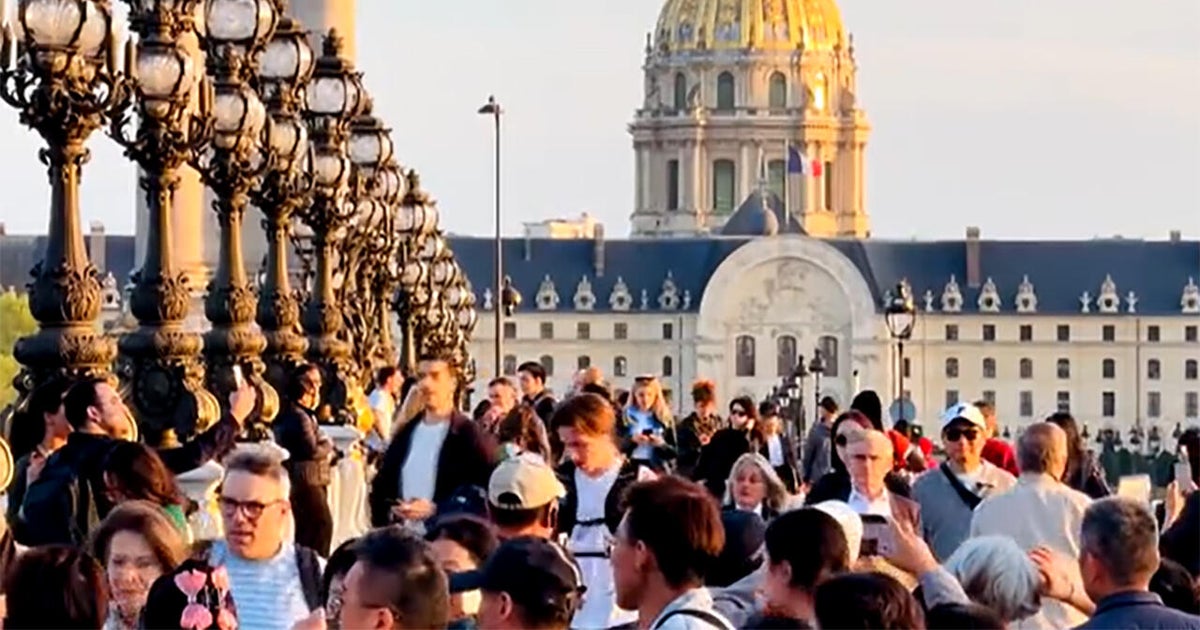
We are bombarded, lured, or both, as hotels, airlines, social media influencers, cruise companies, and our own friends curate, post and tempt us to travel. What’s often cropped out are the crowds and long lines – the frustrations that can come with vacationing today, or living in a vacation destination.

“Where we see neighborhoods starting to serve tourists more than residents, that’s where we start to see problems,” said Paris-based writer Paige McClanahan. “And that’s where we start to see pushbacks, like we’ve seen some anti-tourism protests in places like Barcelona.”

McClanahan, who has covered travel and tourism for decades, says tourism is a huge economic force. “Globally, tourism is 10% of the global economy,” she said. “It’s about one in 10 jobs around the world.”

Correspondent Seth Doane with journalist Paige McClanahan outside the Louvre Museum in Paris. 

CBS News


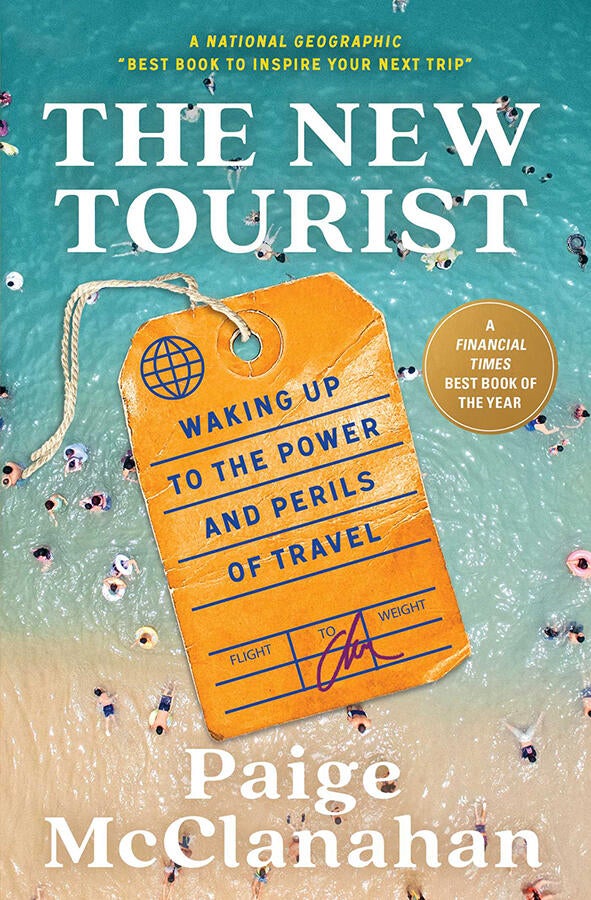
In her book, “The New Tourist,” McClanahan traces how guidebooks, low-cost airlines, and now social media are fueling a surge in travel. In 1950, there were 25 million tourist arrivals around the world. Today there’s more than 1.5 billion.

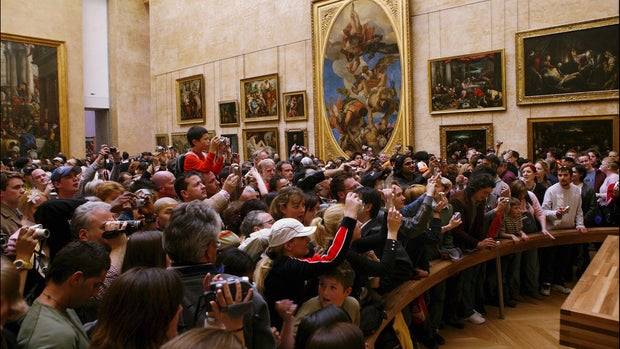
One place on many tourists’ checklists: The Louvre in Paris. It’s the world’s most-visited museum. “It’s obviously an iconic spot,” McClanahan said. “It’s also a spot that really epitomizes some of the pressures that we’ve been talking about.”

In June 2025, Louvre employees went on strike because of its inability to cope with the crowds.

“It feels like tourism is having a coming-of-age moment, where destinations are really waking up to the fact that tourism is something that needs regulation, it needs taxes, it needs urban planning laws, it needs physical infrastructure,” said McClanahan. “At the same time, tourists, we travelers, are also waking up to the impact of our presence in places.”

Mona Lisa relocated in the Louvre's Salle des Etats in Paris, France on April 06th, 2005.

Visitors angle for a view of the Mona Lisa at the Louvre in Paris, April 6, 2005.

Raphael GAILLARDE/Gamma-Rapho via Getty Images


So, has social media been good or bad for travel? “Yes!” McClanahan replied. “Yes to both.”

Consider this: A canyon in Iceland had to be closed after a Justin Bieber music video attracted too many tourists. A farmer in Italy’s Dolomites protested crowds by installing a turnstile to charge to get to Instagrammable spots.

Then, there’s this fragile city…

A flood of tourists in Venice

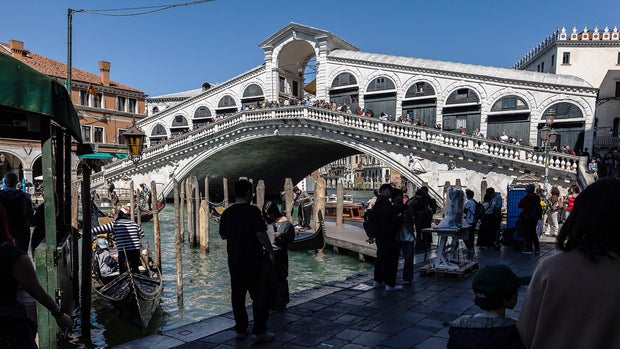
Each year around 30 million visitors come to Venice – that’s about 600 times the local population. In 2024 the city implemented a fee for daytrippers of 5 to 10 Euros at peak times – one way to combat the crush of tourists.

Italy Daily Life 2026

Tourists crowd onto the Ponte di Rialto bridge in Venice, April 3, 2026. The Italian city, a UNESCO World Heritage treasure, draws tens of millions of visitors.  

Emanuele Cremaschi / Getty Images


Venice has also tried banning massive cruise ships – but tourists still come.  Portofino, on Italy’s other coast, added new rules to manage the behavior of those already there.

Police commander Chiarello Giuseppina got new duties this past summer when Portofino banned drinking alcohol or sitting on the ground in main streets and squares. Also off-limits in peak times: being barefoot or shirtless. There’s an up to 500 Euro fine.

Does she ever hear complaints from visitors? “No, we have no complaints,” Giuseppina said. “In general, people understand. We explain that we are, yes, on the sea, but we are in a very famous center, and it’s correct to respect and enjoy the town.”

Across Europe, countries are trying to regulate tourism. Spain started removing tens of thousands of illegal Airbnbs, and introduced taxes which decrease over time to encourage longer stays.

Asked what tourist destinations and cities should do, McClanahan said, “It’s not the sexiest topic really, but one really interesting tool is a tourism tax, and we’re seeing that in Amsterdam. They’ve upped the tourist tax to 12.5%, which is currently the highest in Europe.”

Amsterdam: Venice of the North

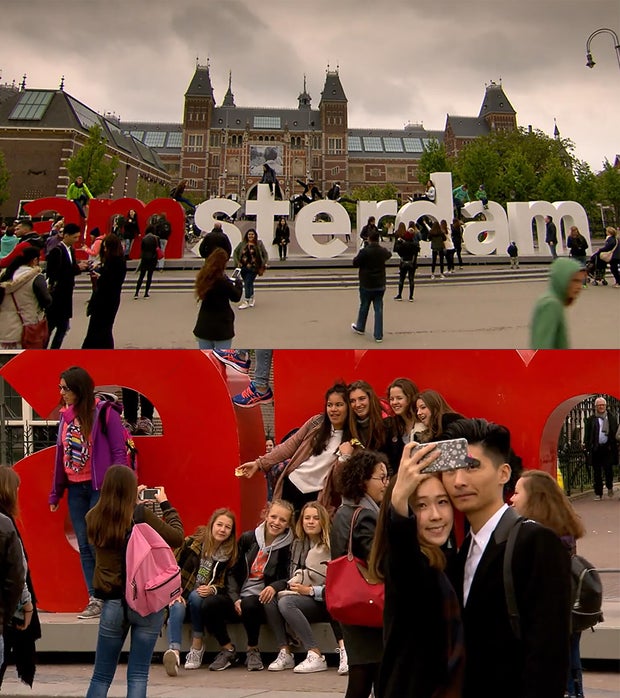
Amsterdam is known for its canals, and more and more its crowds. Home to fewer than one million residents, it saw a record 23 million tourists in 2024. “At a certain point, residents started to raise their voices,” said Anouschka Trauschke, who used to manage what she calls a “typical” tour company. But she says she had an inner conflict: “You feel like an ambassador of the city. But on the other side, you were feeling that you were part of a problem.”

amsterdam-tourists.jpg

Amsterdam registered a record 23 million tourists in 2024. 

CBS News


Trauschke organizes community sessions to brainstorm solutions to overtourism, and started Tours That Matter, which tailors visits, often touring less-trafficked spots, like taking the ferry to North Amsterdam, where a former shipyard is on one of her tours.

But is it just a drop in the bucket, considering the more than 20 million tourists that come to the city? “That’s what you would think,” she said, “but with Tours That Matter, we’ve been very much part of a pioneer movement. And then we still have this large, large tourism that is just asking for transition.”

Edwin Scholvinck is pushing for that transition. For 33 years he’s lived in the city’s world-famous red-light district, known for its windows and sex workers. But he says his friends won’t come visit anymore. Why? “Because there are too many tourists,” he said.

Lately, he has been able to find a little more peace at home. Guided tours are no longer allowed in the often-noisy neighborhood, and bars must close earlier. He’s also joined a community campaign called We Live Here. “The idea is to show the visitors to this area that there’s not only party, but there’s also a residential area,” he said.

We Live Here is one of several different efforts underway. Economist Jasper van Dijk says, “I think those efforts are great. It’s great, but it’s not enough.”

Van Dijk is part of a group trying to sue the city of Amsterdam for not adhering to an agreed-upon cap of 20 million tourists. “The city definitely took measures,” he said, “and I think we’re also one of the front-runners in Europe. But we’re saying it’s quite a little too late. We can do way more.” He thinks even higher tourist taxes would cut down on the numbers.

the-new-tourist-cover-scribner-900.jpg

Scribner


“Sunday Morning” had plenty of questions for the City of Amsterdam, but could not get anyone to talk with us. The Mayor, the Deputy Mayor involved in tourism, even the marketing agency working with the city each declined our request to be interviewed.

The irony is that ten years ago, the city had so much success with its marketing campaign, I amsterdam, that it later launched another campaign encouraging rowdy visitors to stay away. Paige McClanahan said, “In too many cases you have to get to sort of a breaking point before the city wakes up and realizes they need to invest like this.”

She says solutions need to be catered to each community, but some of the responsibility lies on those of us travelling. “Whether tourism is going to be more of a force for good in the world or more of a destructive force, a challenging force, is really up to us to decide,” McClanahan said. “If we all come together and treat tourism with the respect and the scrutiny and the responsibility that it deserves, then we can use our power to turn tourism into a constructive force for humanity.”

READ AN EXCERPT: “The New Tourist” by Paige McClanahan

      
For more info:

     
Story produced by Jon Carras and Sabina Castelfranco. Editor: Jason Schmidt. 


See also:


Source link

Overtourism: Too much of a good thing?

0
Overtourism: Too much of a good thing?


Tourism represents 10% of the global economy. But many travel destinations (and the people who live there) are reeling from increasing numbers of tourists, spurred in large part by social media. Correspondent Seth Doane travels to Amsterdam, Paris, Venice and Portofino to look at the impacts that tourism is having on cities, resorts and natural attractions, and why some people are resisting visitors – or redefining tourism – in some of the world’s most popular and fragile destinations.


Source link

Longevity experts reveal ‘flicker method’ that could help you feel years younger

0
Longevity experts reveal ‘flicker method’ that could help you feel years younger


NEWYou can now listen to Fox News articles!

The idea that aging is a steady, predictable process is being challenged by a new book, which describes a so-called “flicker stage” where some aspects of aging may briefly reverse.

Stuart Kaplan and Marcus Riley, authors of the book “Your Aging Advantage,” say aging may be more fluid than chronological age alone would suggest. They call this phenomenon the “flicker stage,” just one of seven stages of aging.

The “flicker stage” suggests functional age isn’t fixed, with people shifting between levels of youth and vitality based on lifestyle and mindset, the authors state.

FAITH DRIVES MAN TO HELP ANOTHER THROUGH MENTAL HEALTH CRISIS IN DRAMATIC LIFE-OR-DEATH SCENE

Periods of feeling significantly younger, followed by times of feeling one’s age, may reflect what the authors describe as the “flicker stage.”

Riley said healthier aging involves “flickering back” to a younger state, noting that while stress or setbacks can make people feel older, those shifts aren’t permanent.

The secret to aging healthier is learning how to “flicker back” to a younger state when life pushes you forward, the authors said. (Milan Markovic/iStock)

“Through positive interventions, we have the ability to flicker back to the stage of age we want to be in … these setbacks or unforeseen circumstances might propel us to a different stage of aging, but we have this ability to flip it back through positive intervention.”

“Aging or growing older is [not] a problem to fix… it’s an opportunity to be seized.”

Riley said this requires identifying personal “flicker triggers” — physical, psychological, social or environmental shifts that help reset one’s pace, such as exercise or renewed social connection.

AGING ‘HOTSPOT’ FOUND IN BRAIN, RESEARCHERS SAY: ‘MAJOR CHANGES’

Most people already live with a “feels-like” age that doesn’t match their chronological age, said Kaplan, comparing it to a weather report.

“In the summertime, the weatherperson might say it’s 85 degrees outside, but with the humidity, it feels like 95… The feels-like age is the lived age, as compared to the chronological age or the age on your birth certificate.”

A group of elderly friends sitting in a circle playing guitars and singing at home

The authors suggest that engaging in your community is one way to activate the flicker stage. (iStock)

Focusing on the “lived age” may allow people to intentionally shift into a younger stage, according to the authors.

Instead of “aging in place,” which focuses on where one lives, they suggest focusing on “aging on pace.”

PSYCHIATRIST REVEALS HOW SIMPLE MINDSET SHIFTS CAN SIGNIFICANTLY REDUCE CHRONIC PAIN

“It’s more about what’s important to us on a personal level… do we want to stay in employment and work for as long as we can? Do we want to be shifting gears… and pursuing other interests and pastimes that are important to us?” Riley asked.

Kaplan said the common focus on age 65 as a point of decline reflects a socially imposed retirement benchmark, not a biological marker.

CLICK HERE TO SIGN UP FOR OUR HEALTH NEWSLETTER

“It comes from the Social Security Act that was created in 1935 in the United States. And here we are 90 years later, and we’re still thinking that 65 is an important age…. We didn’t use the word retirement back then. I mean, have you ever seen a farmer back in the 1800s… that says, ‘Oh, we’re going to retire because Grandpa is now going to be 62 or 65 years old?'”

Older couple healthy and riding bikes

The flicker effect works best when you stop viewing aging as a “downhill” perspective, the experts said. (iStock)

The flicker effect works best when you stop viewing aging as a “downhill” perspective, Riley and Kaplan said.

TEST YOURSELF WITH OUR LATEST LIFESTYLE QUIZ

Even after a health setback shifts someone into a later stage, maintaining a positive and active approach may help move them back toward an earlier stage of aging, according to the authors.

CLICK HERE TO DOWNLOAD THE FOX NEWS APP

Ultimately, the goal is to stop seeing the passage of time as a problem to be solved, Riley said.

CLICK HERE FOR MORE HEALTH STORIES

“Aging or growing older is [not] a problem to fix.… We want the mindset [that] it’s an opportunity to be seized.”


Source link

Nine of the most scandalous Met Gala looks from years past

0
Nine of the most scandalous Met Gala looks from years past


The Met Gala, the world’s most famous fashion fundraiser, returns on 4 May with the theme ‘Fashion as Art’.

The event was first held in 1948 and over the decades, has evolved from a society dinner into a global cultural phenomenon, where fashion pushes boundaries to their absolute limit.

While many attendees strive for elegance or homage, some looks inevitably go further, sparking outrage, debate, and even global controversy.

From political slogans to boundary-pushing silhouettes, we delve into nine of the most scandalous Met Gala looks in history.

1. Princess Diana, 1996

Diana Princess of Wales (left) arrives at the 1996 Met Gala with her friend Liz Tilberis (AFP/Getty)

When Princess Diana attended the Met Gala in 1996, it was widely interpreted as a declaration of independence following her split from Prince Charles.

The newly divorced princess wore a navy silk slip dress by John Galliano for Dior, stepping firmly outside of the confines of royal dress codes.

The lingerie-inspired silhouette – reportedly altered to be more revealing – was paired with her iconic sapphire and pearl choker, the same one she paired with her infamous 1994 ‘revenge dress’.

At the time, Diana’s understated sensuality shocked traditionalists, but in retrospect, it marked a turning point in how she used fashion to shape her own narrative.

2. Rihanna, 2015

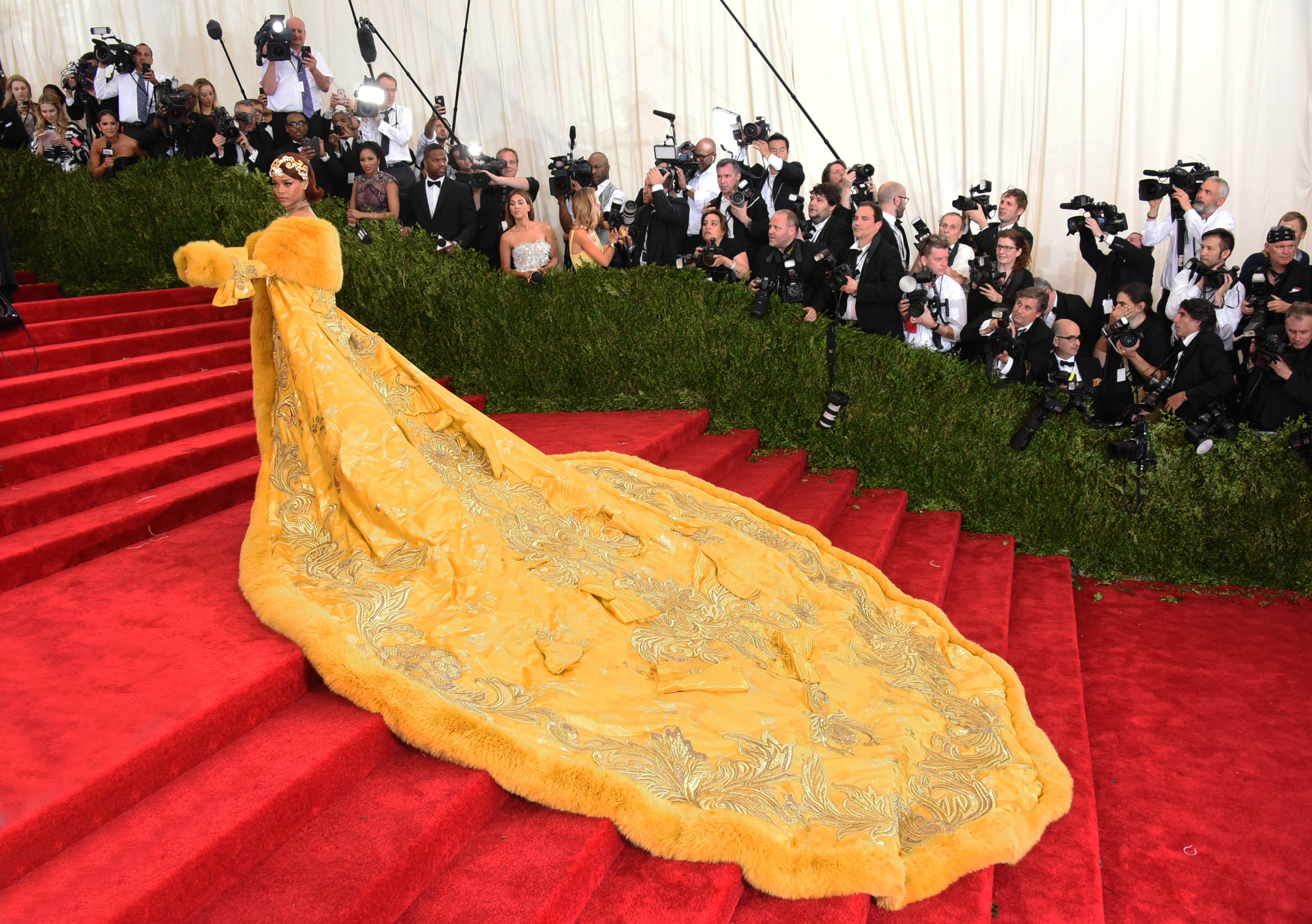
Rhianna arriving at the Met Gala in 2015 (Alamy/PA)

Rihanna has become one of the Met Gala’s most iconic celebrities, but her 2015 appearance remains one of the most talked-about.

Wearing an imperial yellow couture gown by Chinese designer Guo Pei, the singer honoured the “China: Through the Looking Glass” theme with a sweeping, fur-trimmed train that required several assistants.

While fashion insiders praised the hand-embroidered craftsmanship which took over two years – the internet had other ideas, quickly turning the look into viral memes likening it to an omelette or pizza.

The backlash highlighted the tension between high fashion and mass perception, ultimately reinforcing Rihanna’s ability to command both.

3. Rihanna, 2018

Wintourpremium
Wintourpremium

Returning for the “Heavenly Bodies: Fashion and the Catholic Imagination” exhibition three years later, Rihanna embraced the theme very on the nose.

Her Maison Margiela look, designed by John Galliano, featured a jewel-encrusted mini dress, matching coat and a papal mitre.

The ensemble was widely praised for its commitment to the brief, but it also drew criticism from some who viewed the religious references as inappropriate and by even some, as blasphemous.

4. Katy Perry, 2019

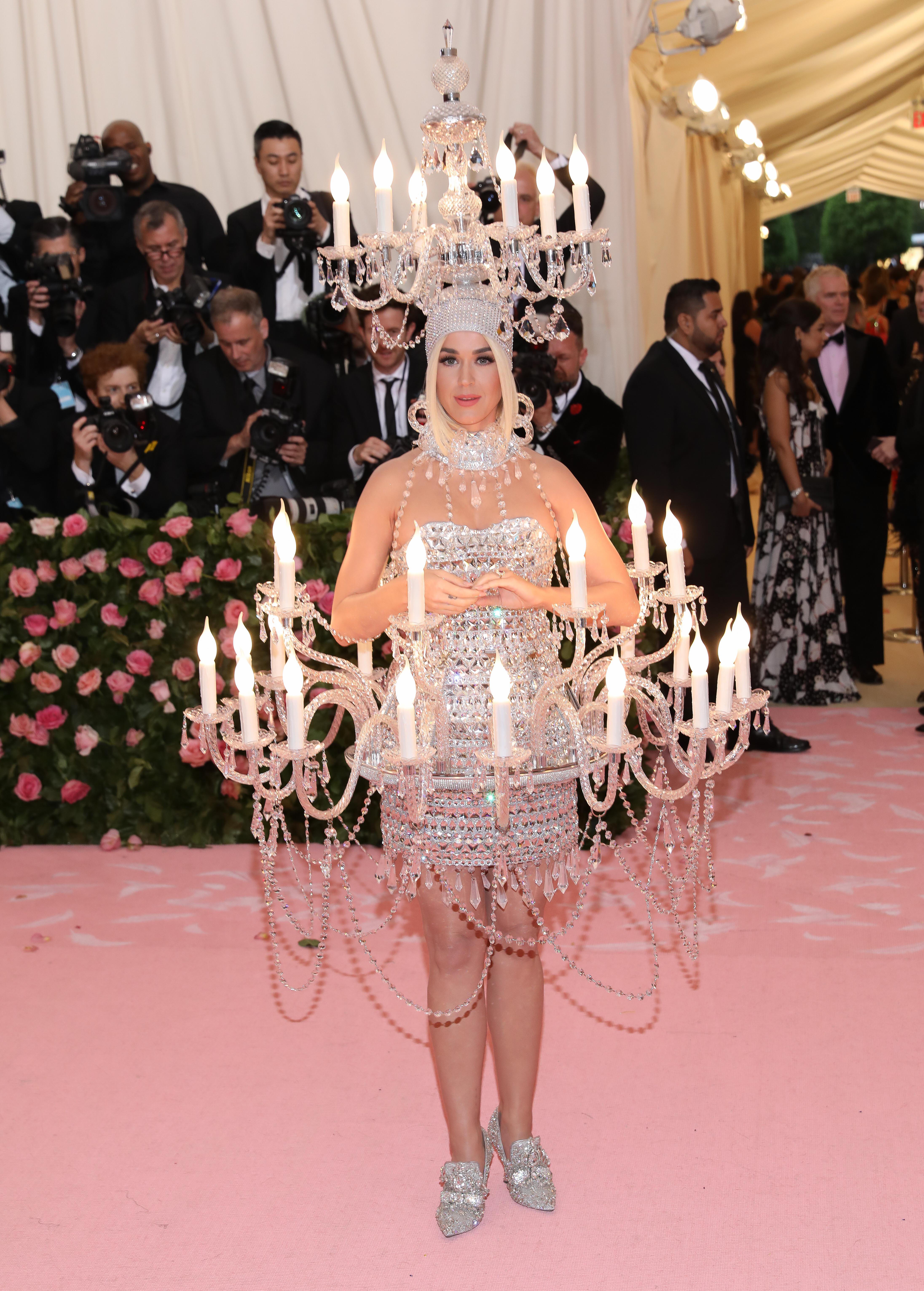
Katy Perry on the 2019 Met Gala carpet (Alamy/PA)

For the 2019 “Camp: Notes on Fashion” theme, singer Katy Perry leaned fully into theatrical excess. Designed by Moschino’s Jeremy Scott, her chandelier dress featured working lights and required careful navigation of the carpet.

Later, she swapped the elaborate look for a cheeseburger costume at the after-party – an outfit that divided opinion between those who embraced the humour and those who felt it veered into gimmick.

5. Jared Leto, 2019

Jared Leto on the 2019 Met Gala carpet (Alamy/PA)

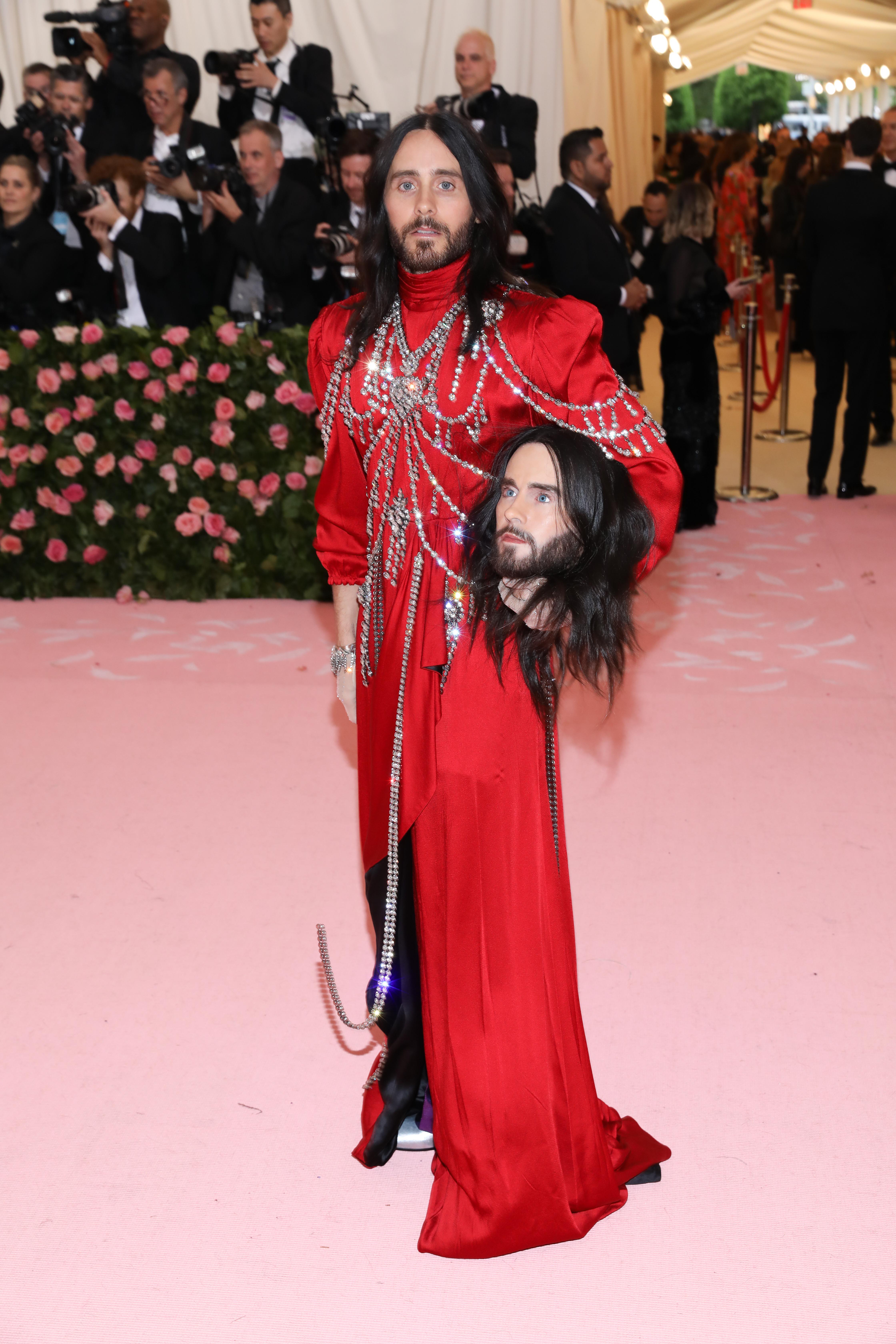
That same year, Jared Leto arrived in a red Gucci ensemble designed by Alessandro Michele – complete with a lifelike replica of his own head.

The accessory quickly became one of the night’s most surreal talking points, with guests reportedly posing with it throughout the evening. While undeniably absurd, it also raised questions about the boundaries of fashion versus performance art.

6. Cardi B, 2019

Wintourpremium
Wintourpremium

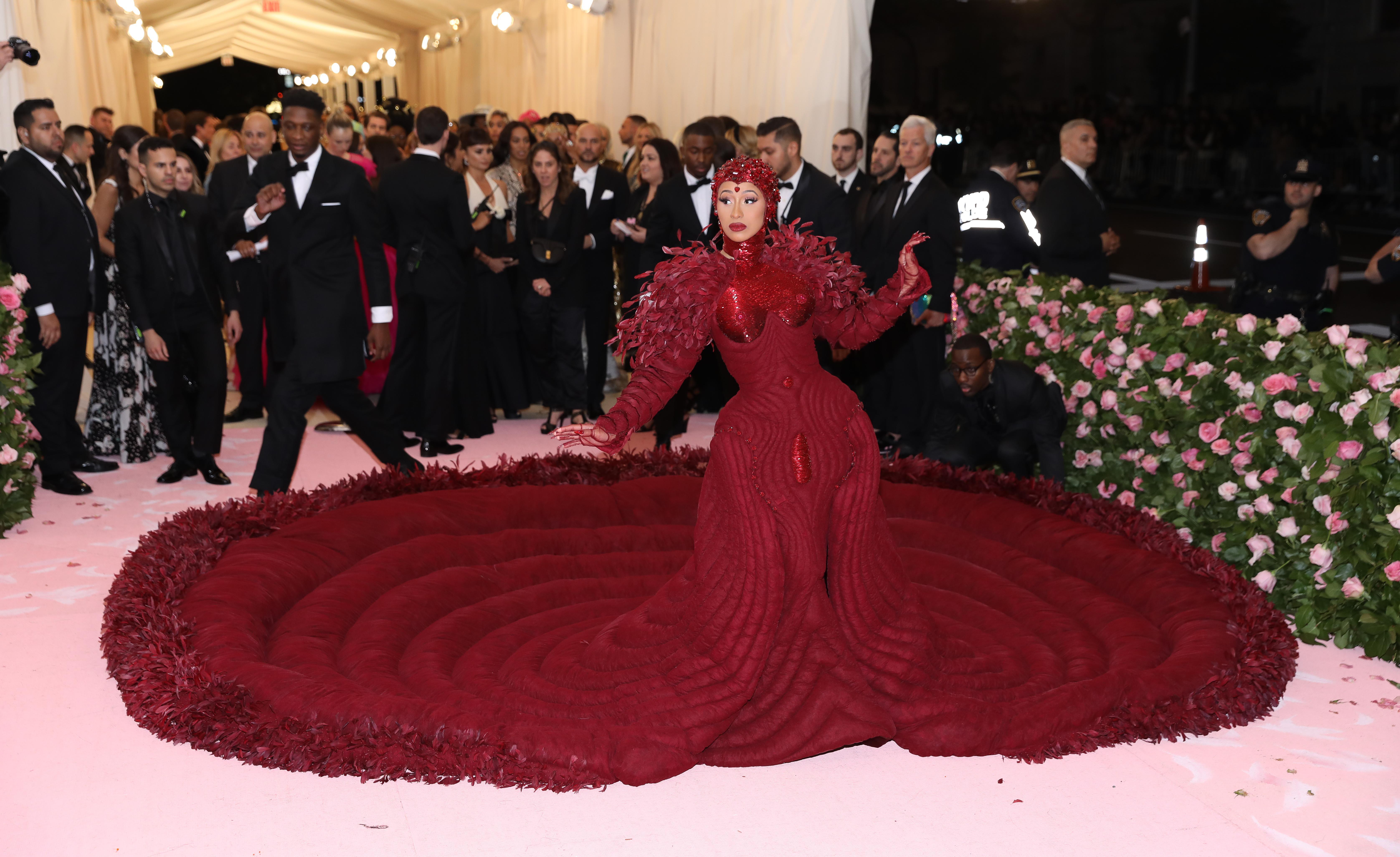
Cardi B made a dramatic entrance in a custom Thom Browne gown that epitomised excess for the 2019 Met Gala themed “Camp: Notes on Fashion”.

The deep red dress featured a quilted bodice complete with 44 carats of rubies and an enormous circular train extending several metres, reportedly requiring multiple attendants to manage.

While widely admired for the sheer scale of the look, the gown sparked debate about practicality and perception of excess for ostentation’s sake, even by Met Gala standards.

7. Kim Kardashian, 2021

Kim Kardashian in Balenciaga on the Met Gala carpet (Alamy/PA)

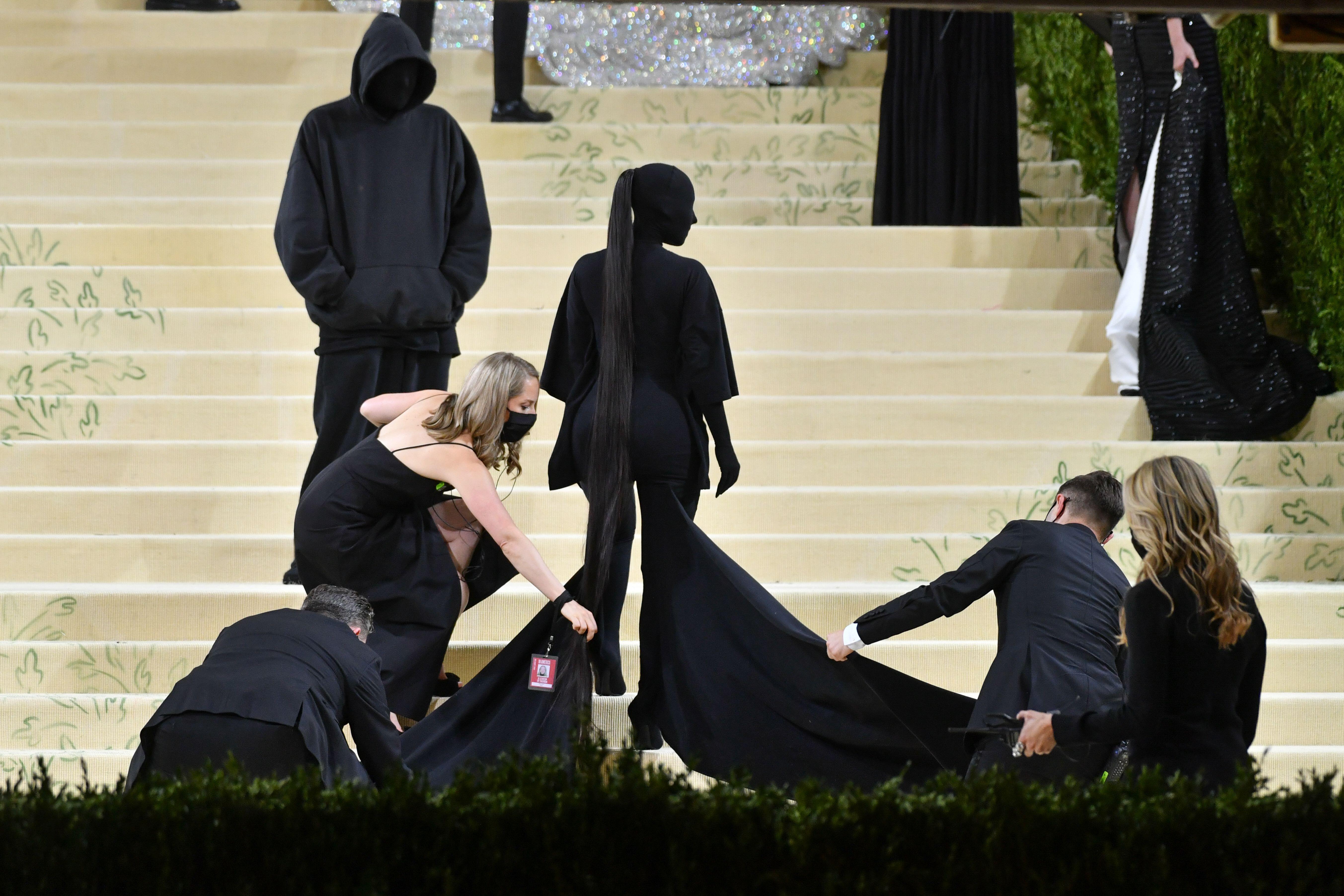
In 2021, Kim Kardashian made headlines by covering her entire body – including her face – in a black Balenciaga ensemble designed by label’s creative director Demna.

The look, reportedly influenced by her then-husband Kanye West, was intended to shift focus from the wearer to the silhouette.

Critics, however, questioned whether removing identity altogether undermined the purpose of celebrity fashion. The polarising response ensured its place in Met Gala history.

8. Alexandria Ocasio-Cortez, 2021

Alexandria Ocasio-Cortez’s “Tax the Rich” dress (Alamy/PA)

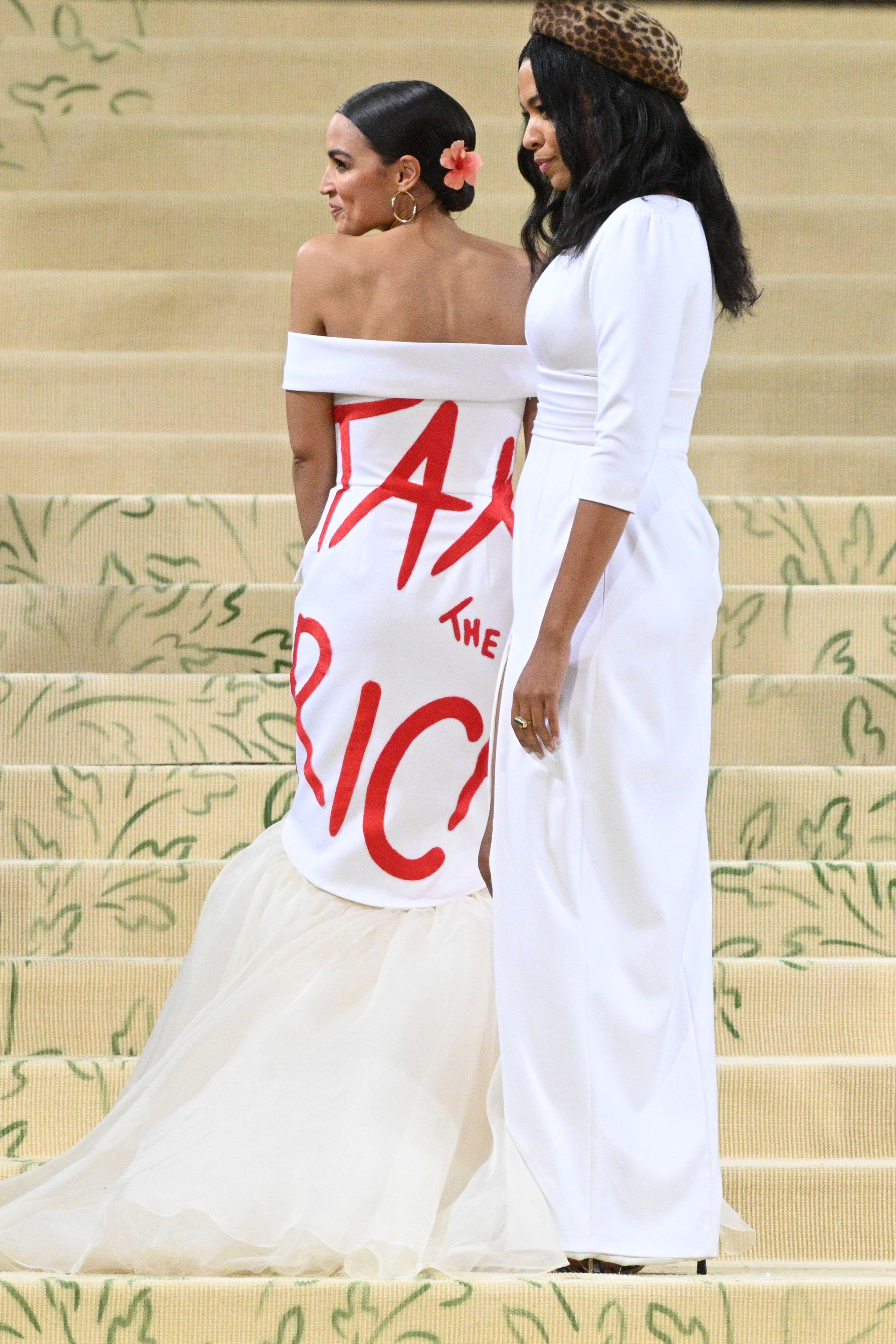
U.S politician and activist Alexandria Ocasio-Cortez, also known as ‘AOC’, made one of the evening’s most overtly political statements in a white gown by Aurora James, emblazoned with the words “Tax the Rich” in red lettering.

Supporters praised the boldness of bringing a progressive message into an elite setting, while critics accused her of hypocrisy for attending the event at all. The look demonstrated the Met Gala’s growing role as a platform not just for fashion, but for ideology.

9. Kim Kardashian, 2022

Kim Kardashian wearing Marilyn Monroe’s original 1962 “Happy Birthday” dress (Alamy/PA)

While you may have thought Rihanna to be the only celebrity to make the list twice, publicity guru Kim Kardashian sparked debate for the second time when she wore Marilyn Monroe’s original 1962 “Happy Birthday Mr President” dress to the 2022 Met Gala – an instant headline-making choice that drew backlash from conservation experts and historians, some of whom claimed the garment was damaged after being worn.

Though intended as a tribute to the late Marilyn Monroe, critics argued that such a fragile and culturally significant piece should never have left archival preservation.

While reports of damage remain contested, the moment reignited an ongoing debate around fashion history, conservation and the cost of publicity.


Source link

I make the Met Gala red carpet — here’s what no one sees on fashion’s biggest night

0
I make the Met Gala red carpet — here’s what no one sees on fashion’s biggest night


In March, the Metropolitan Museum of Art received a special delivery: 57 rolls of pristine white carpet, each stretching nearly 100 feet long. Stored securely until around 3 a.m. on the first Monday in May, the precious fabric will be unfurled down the museum’s iconic Fifth Avenue steps and meticulously hand-painted by a team of artists, transforming it into the stage for hundreds of VIPs who will strut, sashay, and smize their way into the Met Gala later that evening.

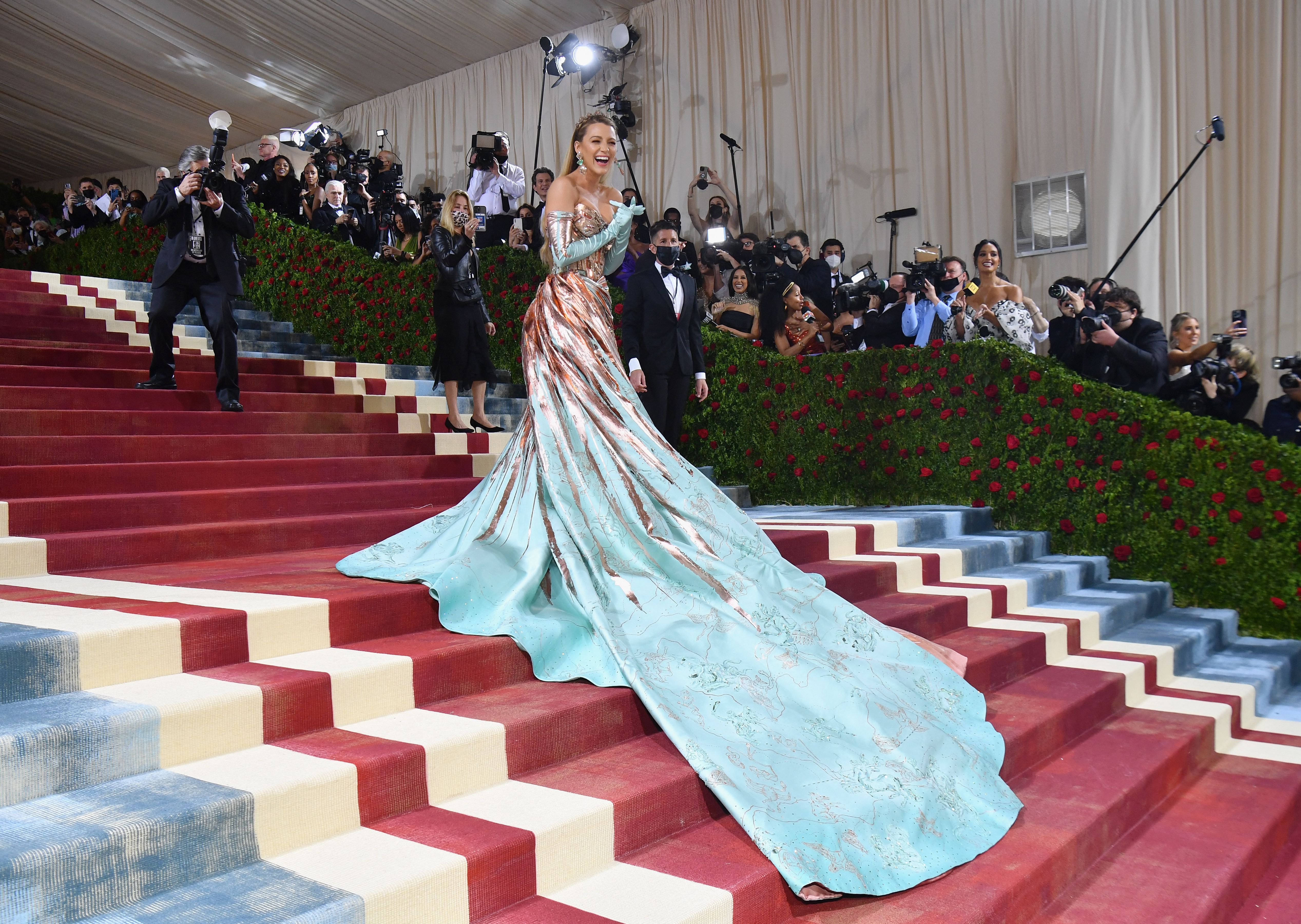
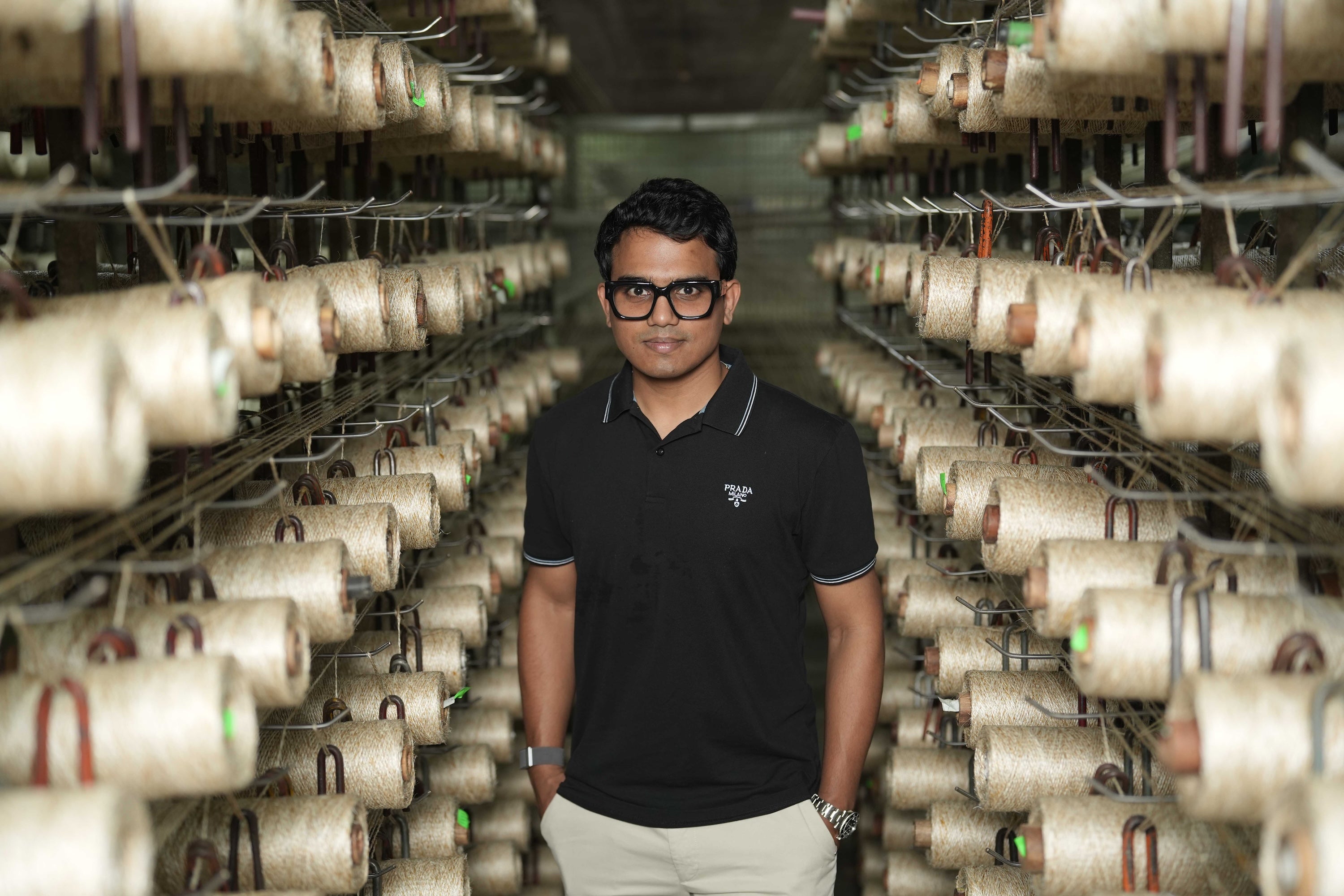
The man behind those 73,625 square feet of magic carpet is 35-year-old Sivan Santhosh, co-owner of Neytt by Extraweave, based in Kerala, India. He started the company with his wife, Nimisha Srinivas, in 2021 continuing a family legacy of carpet weaving that stretches back more than a century. Neytt has manufactured the Met Gala’s red carpet for the 2022, 2023 and 2025 ceremonies — as well as this year’s event, taking place Monday.

Santhosh’s carpets have seen it all: Kim Kardashian in Marilyn Monroe’s iconic “Mr President” gown; Doja Cat in cosplay as Karl Lagerfeld’s cat, Choupette; and two Rihanna pregnancy bump reveals. It’s the stage for some of fashion’s most talked-about moments.

Only after months of creating the first carpet was it revealed to Santhosh and Srinivas that the NDA-shrouded event they had been working on was none other than the Met Gala.

“We started with the initial prototyping and development, but we didn’t know who the client was,” he told The Independent. “Only once the samples were approved, we were told who it was for, and we were ecstatic. But because we’re from a small town, nobody knew what the scale of the Met Gala was but only after it came out in the press, did people know that this was something very big.”

By order of the Met: Neytt founders Sivan Santhosh (left) and Nimisha Srinivas are the masterminds behind the Met Gala red carpet that rolls down the museum’s iconic Fifth Avenue steps (Neytt)
Blake Lively walks the red carpet at the 2022 Met Gala — the first year the carpet was manufactured by Santhosh’s company, Neytt by Extraweave
Blake Lively walks the red carpet at the 2022 Met Gala — the first year the carpet was manufactured by Santhosh’s company, Neytt by Extraweave (AFP via Getty Images)

Santhosh and his team quickly learned how high the stakes were. The Met’s brief called for a “blank canvas” for artists to paint on but with a crucial caveat: the carpet’s construction and texture had to withstand the weight — and spectacle — of the decadent, eccentric looks set to parade across it. In other words, it had to be celebrity-proof.

“We make the weave tighter so that celebrities in stilettos don’t trip and fall down, and that their garments don’t get caught,” Santhosh explains. “Even a tiny blemish could be visible on a carpet like this, so we make sure everything is perfect.” Neytt went through multiple rounds of prototyping and a few rejections from the Met’s design team to get it right.

This event, after all, is a military-style operation. The process of laying down and decorating the carpet is so secretive that even Santhosh and his team aren’t involved.

“They have their own dedicated team in New York,” he says of the rolling out of the carpet. “No phones are allowed in the vicinity – it’s very, very private.”

Still, that doesn’t mean that Santhosh relaxes once the carpet is handed over. “We’re on our toes all the time,” he says. “And we always wait till the event is actually over to get the final feedback, so there’s always some kind of pressure.”

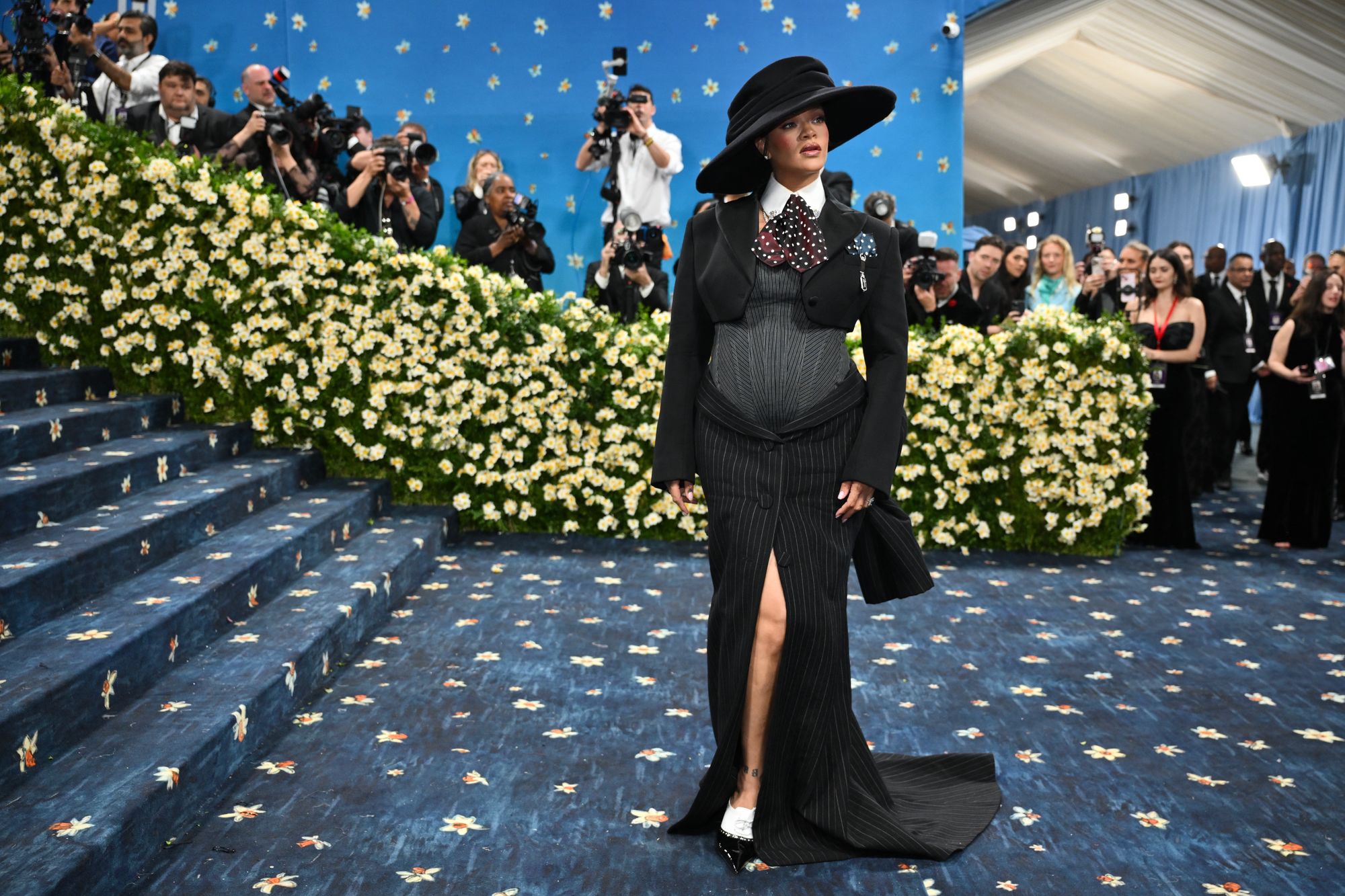
Rihanna on the Met Gala carpet in 2025. The midnight blue background and yellow daffodils were hand-painted on the 2025 Met Gala red carpet after it was constructed over 90 days in India
Rihanna on the Met Gala carpet in 2025. The midnight blue background and yellow daffodils were hand-painted on the 2025 Met Gala red carpet after it was constructed over 90 days in India (AFP via Getty Images)

The Met Gala didn’t always have a red carpet — in fact, it’s only a relatively recent addition to the event. When the Met Gala began in 1948 as a high-society New York fundraiser, “doing the carpet” simply meant laying rubber treads over the museum’s concrete steps to keep unsteady VIPs from slipping after a few martinis.

When Vogue’s Anna Wintour took over as the gala’s chair in 1995, guests were still arriving on the same concrete steps; their delicate stilettos, silk dresses and long gowns snagging on the granite. In the mid-2000s, red runners were first laid along each step, before eventually expanding into a full carpet in the years that followed.

As the event has grown more extravagant, so too has the carpet. In 2016, celebrities walked along a cream rug with red and pink color-blocking as part of the “Manus x Machina” theme. In 2019, a Barbie pink rug was rolled out for that year’s event “Camp: Notes on Fashion.” Until 2022, the carpets were produced by a New Jersey firm before Neytt took over the contract in a move toward a more sustainable manufacturing process.

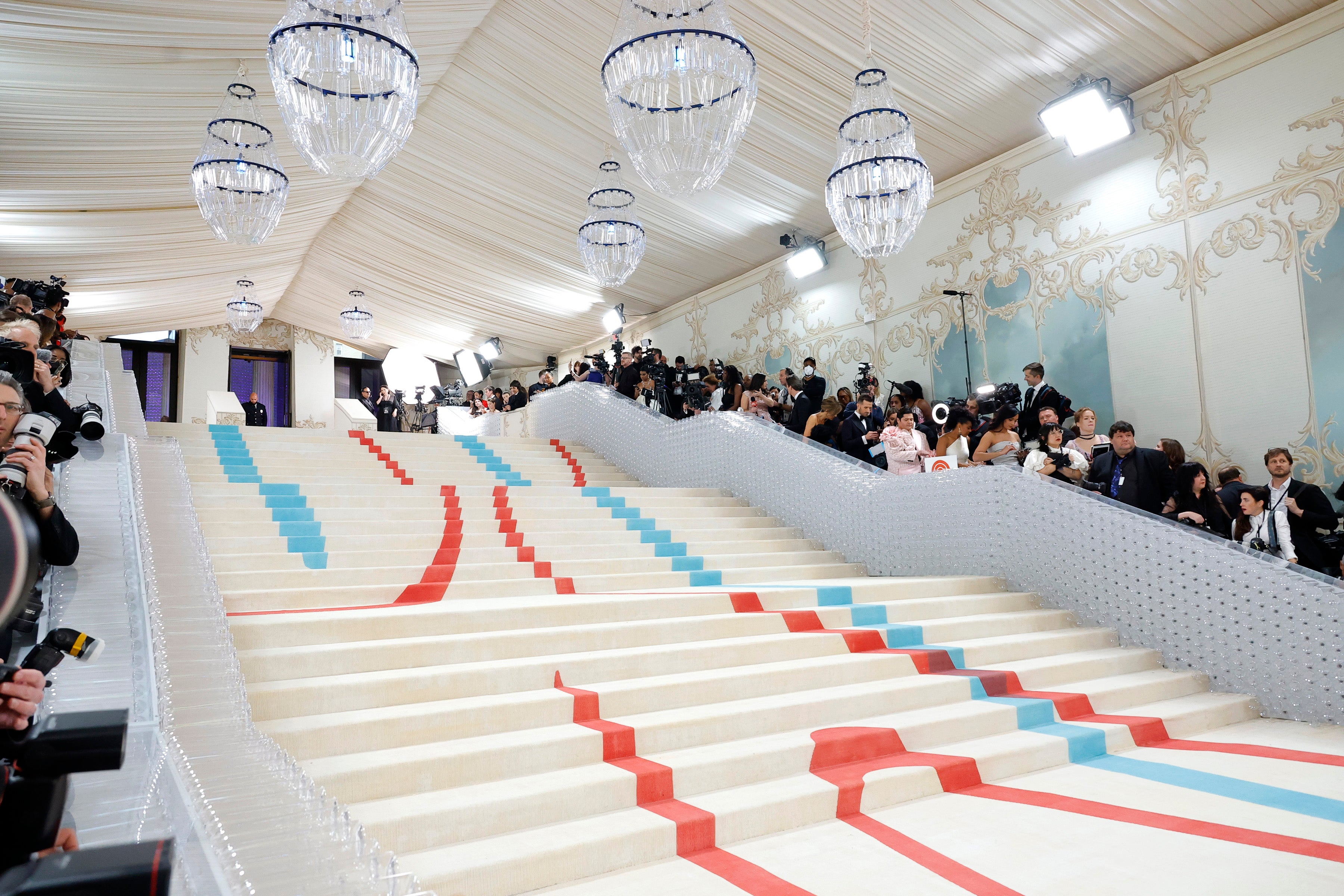
Neytt’s Met Gala red carpet for 2023’s theme, ‘Karl Lagerfeld: A Line of Beauty’
Neytt’s Met Gala red carpet for 2023’s theme, ‘Karl Lagerfeld: A Line of Beauty’ (Getty Images)
Based in Kerala, Santhosh said his commission for the Met Gala was ‘a proud moment for the company, also for India’
Based in Kerala, Santhosh said his commission for the Met Gala was ‘a proud moment for the company, also for India’ (Neytt)

The role has been an honor for Santhosh and his family in Cherthala, Kerala, following in the footsteps of his grandfather, who founded a carpet business in 1917.

“When we got the job, it was a proud moment for the company, also for India, that we are from a smaller town and doing something of this scale,” he says. “Lots of entrepreneurs have reached out to us, and we’re happy that we can give people confidence and inspire people to dream bigger.”

Santhosh’s favorite carpet was last year’s midnight blue design dotted with white-and-yellow daffodils for the theme “Superfine: Tailoring Black Style,” which encouraged guests to explore Black dandyism style and identity.

“It was really nice to see people dress up and show their roots,” he says. “It was a very happy moment for us.”

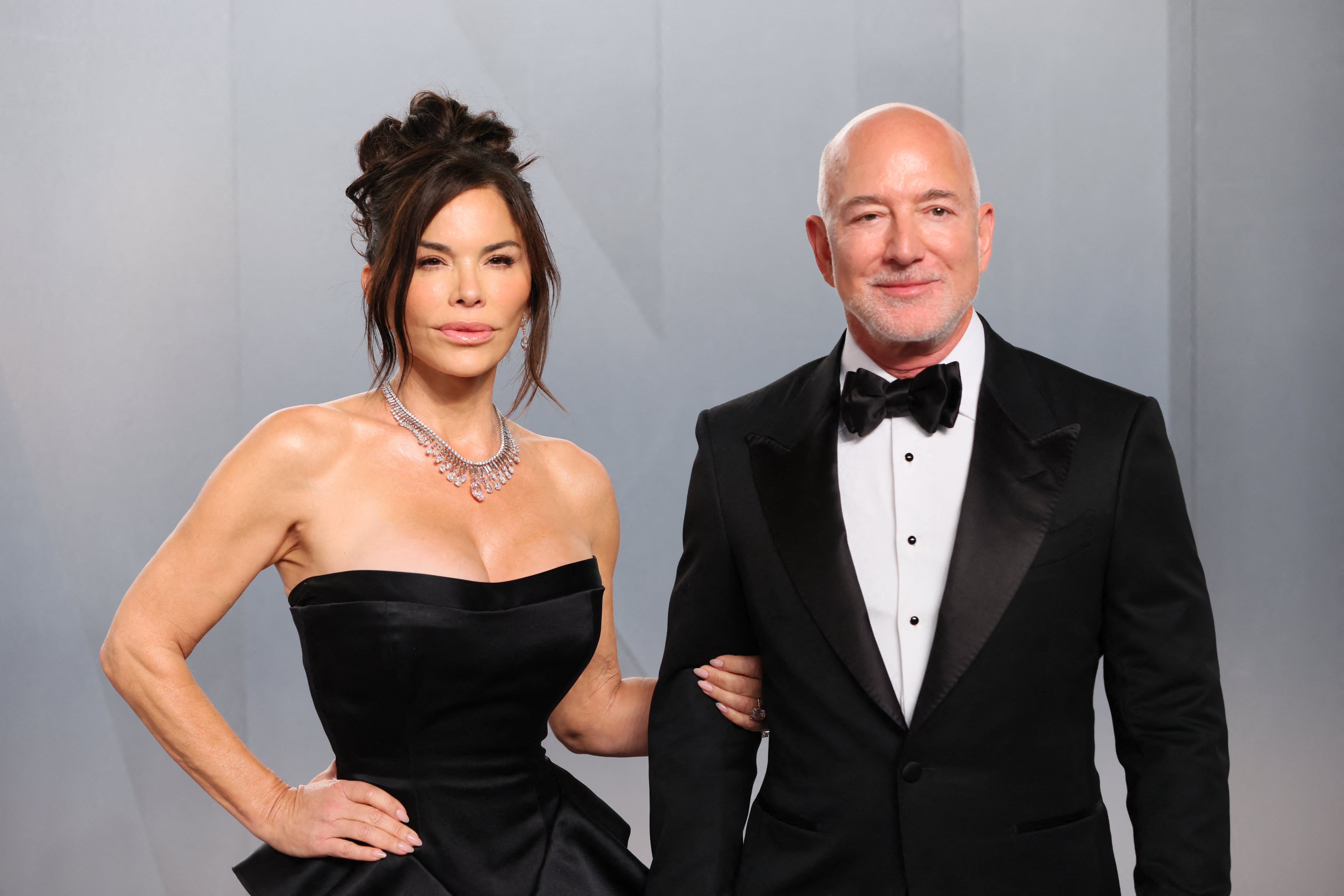
Monday night’s event looks set to be star-studded despite some controversy. In attendance will be Beyoncé (who hasn’t been to the Met Gala in a decade), Nicole Kidman and Venus Williams, acting as honorary hosts alongside Wintour. Amazon founder Jeff Bezos and his wife, Lauren Sánchez Bezos, are the main financial donors for the accompanying Met exhibition and the party itself (a choice that has been the subject of recent boycotts).

Billionaire couple Jeff Bezos and Lauren Sánchez Bezos are not just attending this year’s Met Gala — they are playing a central financial and organizational role, serving as serving as lead sponsors and honorary co-chairs
Billionaire couple Jeff Bezos and Lauren Sánchez Bezos are not just attending this year’s Met Gala — they are playing a central financial and organizational role, serving as serving as lead sponsors and honorary co-chairs (AFP/Getty)

The dress code, “Fashion is Art,” is inspired by the Costume Institute’s spring show, “Costume Art,” which is said to encourage guests to think about how they can use their bodies as a blank canvas (think sculptural suits, archival designs and probably a lot of naked dresses).

While Santhosh won’t be there on the night, I wonder if he has had direct communication with the bobbed, sunglasses-clad lady behind it all. Has Wintour sent him a direct congratulations on the carpet in previous years?

“No, not yet… hopefully soon,” he says excitedly. “Hopefully, we’ll also get invited to the Met Gala at one point in time.”


Source link

In five charts: How UAE’s exit could affect Opec’s influence over the oil price

0
In five charts: How UAE’s exit could affect Opec’s influence over the oil price


The BBC takes a look in charts at what the UAE’s departure could mean for the oil cartel and more widely.


Source link