Gay’s two centuries this year, the first of which came on the season’s opening day, follow four in Division One in Durham’s relegation season last year.
One of those in 2025 came against champions Nottinghamshire and another against Surrey, who finished second.
“Is he good enough? Quite possibly,” said BBC Newcastle commentator Martin Emmerson, who has watched Gay throughout his Durham career.
“Consistency is key, though. While he scored nearly 1,000 runs in Division One last season, there were also five ducks early in the year.”
Gay will have three more Championship matches to further press his case before England’s hierarchy convenes to pick their squad for the first Test of the summer against New Zealand on 4 June.
For the last two of those matches, against Worcestershire and the return at Kent, he will have Stokes in the dressing room, assuming the all-rounder’s recovery from cheek surgery continues as planned.
There are also two four-day Lions fixtures against South Africa A scheduled for late May, with England’s players coming together for a camp in the week in between.
Selections there may reveal plenty.
The first Lions match may be when England get their wish in seeing 22-year-old left-hander James Rew face the new ball.
He is another of the outstanding candidates despite his 379 runs at an average of 75.80 coming in Somerset’s middle order. It is not inconceivable Rew, Gay and McKinney all line up against the Proteas second string.
Over the weekend Haseeb Hameed and Dom Sibley, two openers from England’s past eyeing a recall, also made centuries which muddied the selection waters further.
It does not help that the position of England’s national selector remains vacant – that recruitment process has reached its second stage – but finding context in early-season county batting performance remains difficult, given the lack of similarity between it and the pace and bounce found at Test level.
That is only multiplied when runs flow as they did across this weekend, when all four Division One matches ended in high-scoring draws.
For all of the talk of adapting, England remain keen on batters able to put the best bowlers under pressure and who can deliver on the biggest stage.
What will catch their eye more? Sibley’s 101 from 283 balls in Surrey’s stalemate against Essex or Gay, who thwarted James Anderson and the highly-rated seamer Mitch Stanley to drag Durham from staring at a heavy defeat to victory?
Conversely, Gay’s runs have come in the second division and Lancashire’s attack was tired after four games in four weeks, and Bailey ended the match bowling loopy spin after Lancashire’s request for an injury substitute was rejected.
Context is hard to find but Gay could have done little more.
Commuting in the Philippines has become extremely chaotic. “When you get on the train, you have to protect yourself so that you don’t get squeezed.” “We call it a sardine situation. It’s becoming unimaginable.” The war in Iran has created a global energy crisis, more than doubling the price at the pump in the Philippines. This has forced people to ditch their cars for public transportation, like trains and popular vehicles called jeepneys, that could typically hold about 20 people. Many are trying to figure out how to navigate massive crowds during rush hour, while saving money. “Excuse me.” These commuters filmed and posted on social media about their new challenging journeys. “I stopped driving. I take the public transportation as a commute.” Stella Kim works for a multinational company in Manila as a project coordinator. Her drive to work was typically about an hour and a half. But then gas prices started to climb. “It just wasn’t worth it. It’s very expensive.” So Kim now hails a motorcycle, and takes a train and jeepney during her commute. “I used to ride jeepney maybe like once a month, but now it’s like the cheapest option.” Kim said this new commute cost half the price of driving, but it adds an hour and a half to her trip. “When I arrived home, it was 9:30 p.m., so I just go home and the days end.” The crush of new passengers is making travel harder for commuters like Stephen Emperado. “So lines are much longer, waiting times are less predictable, and you’re competing for space.” He already had a complicated commute to his college in Manila. “First, I will ride jeepney to go to MRT train station, and I will transfer to another train.” Emperado said the large crowds at rush hour have become stressful. “It really takes a toll physically, and of course, mentally.” He said his commute used to be the only free time he had to read and study. “All I can do in commuting is just bring my book and I can’t even open it.” Because of the crush of bodies in the summer heat, he also packs an extra shirt. So Emperado has found ways to avoid rush hour. “I sometimes stay at my friend’s condo near school or go home late, around 9 to 10 p.m. since I really want to avoid the people.” Kim started looking for condos closer to her office so she can have her life back. “If I’m living near this city, then I get to do other things. I’d be closer to my coworkers. We can hang out more often.” Both Kim and Emperado are eager for things to get back to normal. “I just wish this energy, fuel crisis would settle down.” “Filipinos are very resilient people. Despite the fuel crisis, we are really trying our best.”
The Home Office is challenging top judges who ruled that the proscription of the group as a terrorist organisation was unlawful.
Published On 28 Apr 202628 Apr 2026
London, United Kingdom – The United Kingdom is set to appeal the High Court’s landmark ruling that the government’s ban on Palestine Action was illegal.
The two-day hearing, which begins on Tuesday at the Court of Appeal in London, comes after top judges described the proscription of the direct-action group as a terrorist organisation as “disproportionate” in February.
Recommended Stories
list of 4 itemsend of list
This week’s case marks the latest development in the legal battle between the state and the activist network whose stated mission is to target companies associated with the Israeli military.
Since the UK banned Palestine Action last summer, thousands of Britons have participated in a coordinated campaign of civil disobedience, with more than 2,700 people arrested under terror laws for holding up signs reading, “I oppose genocide. I support Palestine Action.”
Although the government’s case suffered a blow at the High Court, the proscription remained in place amid the appeals process – and it is still illegal to show support for the group.
The fate of those arrested remains uncertain.
London’s Metropolitan Police announced that it was unlikely to arrest supporters in the aftermath of the High Court ruling, but reversed that policy weeks later.
Earlier this month, more than 200 protesters were arrested in central London and last week, celebrities and scholars, including the novelist Sally Rooney, climate activist Greta Thunberg and Israeli historian Ilan Pappe, signed a letter in which they declared support for Palestine Action – a move that also risks arrests.
“We oppose genocide, we support Palestine Action,” the letter read.
Palestine Action was founded in 2020 by Huda Ammori, a Briton of Palestinian and Iraqi descent and former Extinction Rebellion activist Richard Barnard.
Several remand prisoners – including those who engaged in a lengthy hunger strike demanding an end to the Palestine Action ban – and activists on bail have alleged that their human rights have been violated because of their alleged association with the group, a claim denied by the Ministry of Justice.
Rights groups condemned the UK’s ban on the group as an unprecedented overreach and urged the government not to appeal.
In its annual report, Amnesty International said the UK “continued to use counterterror laws to restrict peaceful protests against the genocide in Gaza and ban the organisation Palestine Action [as] arms exports to Israel continued.”
Proscribing the group put it on par with armed groups such as ISIL and al-Qaeda.
Last month, Human Rights Watch wrote, “When the state blurs the line between activism and terrorism, it is not defending security, it is undermining freedom.”
It is unclear when the Court of Appeal might hand down its judgment.
At the time of publishing, Home Secretary Shabana Mahmood, who is leading the case against Palestine Action, had not responded to Al Jazeera’s request for comment.
While many people recognise the common digestive issues linked to coeliac disease, fewer are aware of the more subtle symptoms that can easily go unnoticed.
In the lead-up to Coeliac Awareness Month in May, we spoke with Alice Andrews, health policy lead at Coeliac UK, who helped clear up some common misconceptions about the condition and outlined six often-overlooked signs that may be worth discussing with your doctor.
What is coeliac disease?
“Coeliac disease is a serious autoimmune condition which is caused by a reaction in the immune system in response to gluten,” explains Andrews. “So, when people with coeliac disease eat gluten, it damages the lining of the small intestine where food and nutrients are absorbed. This means when this damage is happening, the body can’t properly absorb nutrients from food.”
She emphasises that it’s not an allergy or an intolerance to gluten, which is a common misunderstanding.
“Many people say ‘a bread crumb won’t hurt’, but we know that very small amounts of gluten can be damaging,” says Andrews.
How common is it?
“One in 100 people in the UK have coeliac disease,” says Andrews.
However, only 36% are diagnosed which leaves 500,000 people suffering with unexplained symptoms, according to Coeliac UK.
What are the risk factors?
“If a first-degree family member (parent, sibling, child) has coeliac disease, the chances of having the condition increases to one in 10,” says Andrews. “Therefore, if a close family member is diagnosed with coeliac disease, the recommendation is that the rest of family test for coeliac disease too.
“In addition, if you have another autoimmune disease, such as autoimmune thyroid disease, then you have a higher risk of having coeliac disease compared to the general population.”
What are some symptoms to look out for?
“The symptoms are always persistent, reoccurring or unexplained,” says the health policy lead. “The common symptoms that most people know about is the gut symptoms, such as severe or regular diarrhoea, constipation, unexplained vomiting or nausea and recurrent stomach pain and bloating.
“However, coeliac disease is a multi-system disorder and there are a few symptoms that most people are not as aware of.”
Here are six more subtle signs of coeliac disease to have on your radar…
1. Mouth ulcers
“Persistent mouth ulcers are a symptom of coeliac disease that most people aren’t aware of,” says Andrews.
2. Sudden or unexpected weight loss
“Sudden or unexpected weight loss is another symptom that some people might not know about,” says the health policy lead.
3. Ongoing tiredness
“Tiredness is also a symptom that often gets missed,” says Andrews.
Fatigue can be be a sign of iron deficiency anaemia, or vitamin B12 or folate deficiency anaemia, according to the NHS website.
4. Vitamin deficiencies
Malabsorption (where your body does not fully absorb nutrients) can lead to a deficiency of vitamins and minerals, according the NHS website.
“People with coeliac disease are often iron deficient or vitamin B12 deficient,” says Andrews.
5. Numbness and tingling in the hands and feet
“One of the neurological symptoms that people with coeliac disease sometimes experience is peripheral neuropathy, which is a numbness and tingling in your hands and feet,” says Andrews.
6. Issues with coordination and balance.
“Another neurological sign that many people don’t know about is ataxia, which causes issues with coordination.” says Andrews.
When should you raise these symptoms with a doctor?
“As soon as your symptoms become severe, reoccurring or persistent, you should go and see your GP,” recommends the health policy lead. “At Coeliac UK we have a Is it coeliac disease? symptom checker, where anyone can go online, fill in a little short questionnaire and the results will recommend whether it’s a good idea to go and see your GP about your symptoms or not.”
How is it diagnosed?
“The first step is going to the GP and getting a blood test, and then once that blood test comes back, if it’s positive, or if the GP still suspects something, you’ll be referred to a specialist in secondary care, which is often a gastroenterologist,” says Andrews.
“Then they will do further investigations and confirm the diagnosis. This could be through an endoscopy and a biopsy, or it could just be done on your blood tests alone.”
How is it treated or managed?
“Coeliac disease is a lifelong condition, and the only treatment is a gluten-free diet,” says Andrews.
The health policy lead highlights that a gluten-free diet is not a lifestyle choice or a ‘fad’ for people with coeliac disease.
“They need to follow a strict gluten-free diet so their body and gut can heal and absorb nutrients again,” says Andrews. “Therefore, getting support from a specialist dietitian is very important, and there’s also a lot of support and tips on Coeliac UK’s website about this.”
What might happen if coeliac disease remains undiagnosed?
“If coeliac disease remains untreated, it can lead to complications such as osteoporosis and you can also develop anaemia from not having enough nutrients,” says Andrews.
“In very rare cases, people can develop a type of cancer called small bowel lymphoma.”
This Coeliac Awareness Month, Coeliac UK is urging people not to ignore persistent symptom. To check your risk of developing coeliac disease visit isitcoeliacdisease.org.uk
When children spend long stretches with fast-moving, highly stimulating content, the brain can get used to constant novelty. Over time, that can make slower, everyday tasks feel harder to tolerate. The evidence here is still evolving, but the pattern is worrying enough to deserve attention. Research has increasingly pointed to a pattern: certain kinds of screen use, especially when it replaces real-world interaction or involves overstimulating content, are linked with poorer psychosocial outcomes in children. What matters is not just how long a child spends on a device, but what they are watching, how they are using it and whether it is cutting into sleep, play or connection.
Sleep loss makes this even worse. Children who do not sleep well are more likely to struggle with focus, frustration and self-control the next day. That is why screen time, especially before bed, can become a double-edged problem: it does not just take time away from sleep, it can also leave children more scattered, reactive and hard to settle. The Pickard trial and broader sleep research both point to this connection between evening screen habits and daytime functioning.
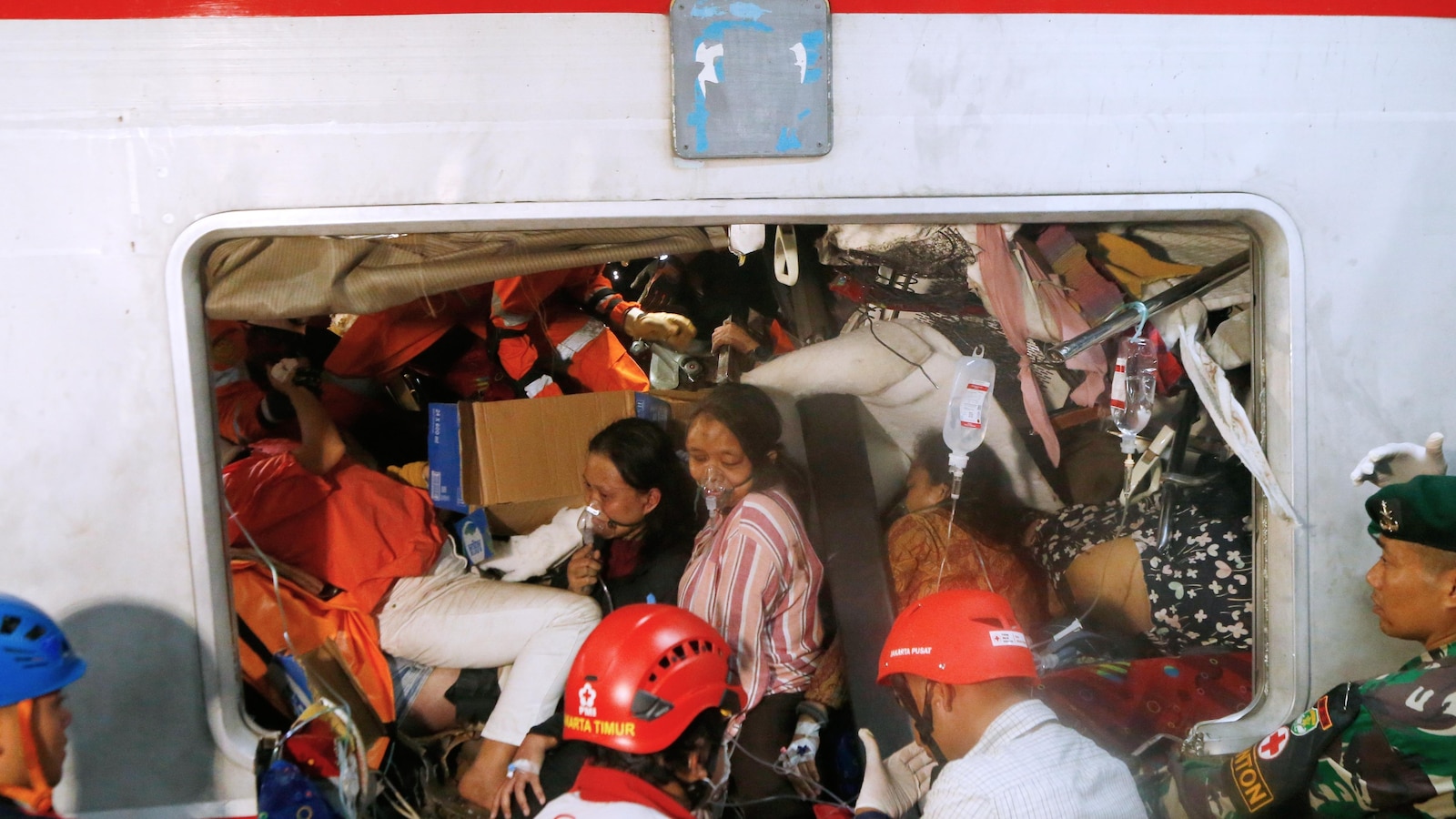
BEKASI, Indonesia — Rescuers finished removing victims from a damaged commuter train car Tuesday, confirming the crash outside Indonesia’s capital killed 14 people.
The crash occurred Monday when a long-distance train crashed into the rear car of the stopped commuter train at Bekasi Timur Station outside Jakarta. The car was one designated for women only, a common accommodation to stop harassment.
A total of 84 injured people were taken to hospitals for treatment, said Bobby Rasyidin, CEO of state-owned railway company PT Kereta Api Indonesia. The bodies of the dead were taken to a hospital for further identification.
Rescue teams completed the evacuation of all victims from inside the wreckage about midmorning. “There are no further casualties,” said Mohammad Syafii, the head of the National Search and Rescue Agency.
All 240 passengers on the Argo Bromo Anggrek long-distance train were safe, officials said.
Police were investigating the cause of the accident, Jakarta Police Chief Asep Edi Suheri told reporters at the scene.
Rasyidin said another commuter train struck a stalled taxi on a crossing near the station and a rail system disruption was suspected.
“As for the chronology of events, we are leaving it to the National Transportation Safety Committee to investigate the cause of tonight’s train accident in greater detail,” Rasyidin said.
Accidents are common on Indonesia’s aging railroad network. In January 2024, two trains collided in West Java province, killing at least four people.
___
Associated Press writer Niniek Karmini in Jakarta, Indonesia, contributed to this report.
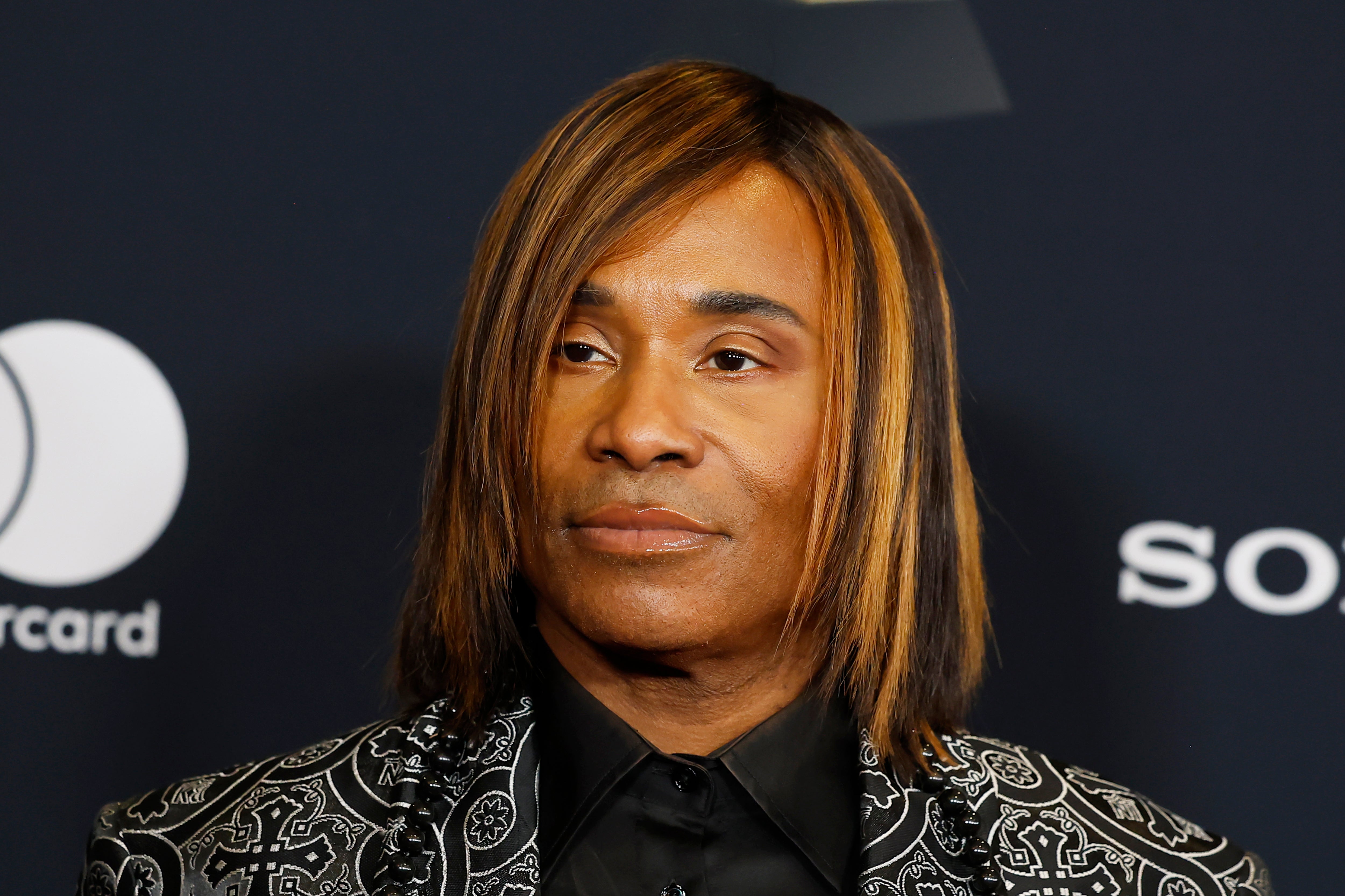
The 56-year-old Pose actor made his debut at the star-studded VIP event in a bejewelled gold ensemble for that year’s theme, “Camp: Notes on Fashion,” making his entrance sprawled across a plinth carried by six shirtless men.
In a new interview with SiriusXM’s Beverly Smith, Porter was asked if he would attend this year’s event on May 4, to which he responded: “No, I’m not going. I have not been invited… I haven’t been invited back since 2019.”
Porter said he doesn’t go “where I’m not welcome” and spoke about how he felt being omitted from last year’s event, which celebrated Black dandyism through the theme, “Superfine: Tailoring Black Style.”
“I’m just going to throw that out there,” he said. “I’m good. It’s all good. But the reality is when people ask me, you need to know I was not invited and I’m good, and I don’t go to places where I’m not welcome.”
Billy Porter’s entrance to the 2019 Met Gala went down in fashion history (Getty Images)
Actor hasn’t been invited back to the Met Gala after he made his debut for the ‘Camp: Notes on Fashion’ theme (Getty Images for The Met Museum/)
The Tony-winning actor said he’s made peace with the situation since he “doesn’t require validation from the outside.”
He added: “So I’m going to sit and live in that because it helps keep me sane, too.”
Celebrities are invited to the Met Gala primarily through the approval of Vogue’s global editorial director and chair of the benefit, Anna Wintour, who has control of the guest list and waitlist.
The Independent has contacted the Met and Wintour for comment.
Invitations are often based on cultural relevance, and some celebrities are invited as guests of a fashion brand that has paid thousands of dollars for a table at the benefit.
Porter’s 2019 Met Gala look paid homage to the Egyptian art on display at The Metropolitan Museum of Art and also referenced an outfit worn by Diana Ross during a montage in the 1975 film Mahogany. The actor wore a gold headdress, bedazzled leotard and a pair of sweeping golden wings.
Porter said he ‘doesn’t require validation from the outside’ (Getty Images for The Recording A)
The dress code for the 4 May event is “Fashion is Art,” which celebrates the Costume Institute’s “Costume Art” exhibit, which explores the “centrality of the dressed body.” Guests are encouraged to think about how they can use their bodies as a blank canvas.
This year’s honorary hosts are Beyoncé, Nicole Kidman and Venus Williams, while members of the Gala Host Committee — co-chaired by Anthony Vaccarello and Zoë Kravitz — include singer Sabrina Carpenter, musician Doja Cat, ballerina Misty Copeland, Girls creator Lena Dunham, singer Sam Smith and One Battle After Another actor Teyana Taylor, among others.
Jeff Bezos and his wife, Lauren Sánchez Bezos, are lead sponsors for the event. The role gives the couple influence over everything from invites to the overall presentation of the event.
Their involvement has led to a boycott campaign from the political activist group Everyone Hates Elon, which has distributed flyers across New York City that read “Boycott the Bezos Met Gala” in the lead-up to the event.
A general view of play between the Cleveland Guardians and Los Angeles Angels in the eighth inning at Angel Stadium of Anaheim on May 26, 2024.(Ronald Martinez/Getty Images)
The Los Angeles Angelshave seemingly traded the rally monkey in for alley rats. Now, there is a new problem crawling into Anaheim: a rodent infestation at Angel Stadium.
Health inspection reports that surfaced this week showed Section 432 at Angel Stadium was hit with a shutdown, and inspectors found the concession stands were not exactly running a tight ship.
Turns out some uninvited, four-legged guests were making themselves at home. For once, the stench at the Big A is not just coming from the bullpen.
Orange County Public Health Services did not find just one mouse sniffing around for scraps. Inspectors flagged rodent droppings in five different spots around the concession area, which is still more coverage than the Angels’ lineup usually provides.
A general view of Angel Stadium’s exterior is seen before a game between the Texas Rangers and the Los Angeles Angels of Anaheim in Anaheim, Calif., on April 6, 2008.(Los Angeles Angels of Anaheim/MLB/Getty Images)
The exclusive report shared by the California Post also noted a ceiling hole larger than a quarter inch, which basically gave the critters a free pass to move between the rafters and the food stations like they had season tickets.
On record, the concession stand was shut down on April 22, which was a homestand against Toronto, ending in a 7-3 win over the Blue Jays.
While the Angels keep struggling to shut down opposing hitters, the health department had no trouble shutting down part of the stadium.
Until Artie Moreno fixes the holes in the ceiling and the holes in the lineup, the only thing consistently lit in Anaheim might be a Closed for Infestation sign.
A general view of the exterior of Angel Stadium is seen prior to a game between the Texas Rangers and the Los Angeles Angels of Anaheim on April 6, 2008 in Anaheim, California.((Photo by Los Angeles Angels of Anaheim/MLB via Getty Images))