
Home Blog Page 715

I’m a pharmacologist. Here’s the truth about tea tree oil and fertility

0
I’m a pharmacologist. Here’s the truth about tea tree oil and fertility


The heady scent of tea tree is one of the iconic smells of the Australian bush. And the essential oils derived from tea trees have been used as medicines, first by Indigenous people, then by colonists.

Today, many of us have a bottle of tea tree oil at home, or use shampoo or creams containing it. Tea tree oil is also a major export earner for Australia.

Now, media reports suggest the European Union (EU) is concerned that tea tree oil may affect people’s fertility and may ban imports.

Let’s see whether we really need to worry about any impact of tea tree oil on our reproductive system.

The many uses of tea tree oil

Leaves of Melaleuca alternifolia trees and other species of Melaleuca produce an essential oil that’s used medicinally and in a variety of toiletries and cosmetics. This oil is a complex mixture of nearly 100 aromatic compounds.

Tea tree oil has been used as an antiseptic since it became commercially available in the 1930s. It has antibacterial, antifungal, anti-parasite and antioxidant properties.

Tea tree oil has been used as an antiseptic since it became commercially available in the 1930s (Getty)

Laboratory experiments suggest it may also help reduce inflammation and enhance healing.

It’s used to treat acne, seborrhoeic dermatitis, and as a mouthwash to treat gingivitis (gum disease). However, the clinical evidence for these uses is not strong.

Tea tree oil is also used in cosmetics and toiletries, such as shower gel and face wash, in various concentrations.

Is tea tree oil safe?

The most common adverse effects of tea tree oil are when it’s used on the skin. In some people, the skin can become sensitive and allergic contact dermatitis can develop. This is particularly when used neat (using the pure oil) rather than after using cosmetics and toiletries, which contain lower concentrations.

Acute toxicity, when there are rapid side-effects coming on within minutes, to tea tree oil via skin application is rare.

Drinking tea tree oil, even diluted or in small concentrations, is not recommended as this can be deadly. There have been reports of cases of depression of the central nervous system (where brain activity slows down) and possible injury to the lungs.

How about the reproductive system?

The EU has been concerned about the potential impact of tea tree oil on the reproductive system for several years.

In November 2023, the European Chemicals Agency’s Committee for Risk Assessment proposed that tea tree oil be classified as a presumed human reproductive toxicant, under category IB.

This classification would mean a ban on tea tree oil in pesticides, and cosmetics and toiletries used in the EU.

The decision rested on the results of reproductive toxicity experiments. This involved administering tea tree oil to rats orally at various concentrations for ten days, before mating. Female rats also received tea tree oil while pregnant and up to the weaning of the offspring.

About the author

Ian Musgrave is a Senior Lecturer in Pharmacology at Adelaide University.

This article is republished from The Conversation under a Creative Commons licence. Read the original article.

In the females, measures of fertility, including the number of embryos implanted and mean litter size, were no different to those that had not been given tea tree oil.

At the highest doses, the sperm counts of male rats were lower. But this wasn’t the case for rats given tea tree at 25 milligrams of tea tree oil per kilogram of body-weight per day. That’s around 0.028 millilitres of tea tree oil per kilogram a day.

This doesn’t sound much, but for a 60kg human, that would be equivalent to drinking about one-and-a-half millilitres of pure tea tree oil a day. Nobody is going to be drinking that amount day in, day out. Virtually every application says not to ingest any tea tree oil because of its known human oral toxicity.

This is the level that has no effect on reproduction. The level for reproductive toxicity is twice that.

In cosmetics and toiletries, no-one would be exposed to that much tea tree oil. Less than 4% of tea tree oil components are absorbed via the skin. So even if you did smear that much tea tree oil on yourself, the concentration your body would be exposed to is less than a tenth of the amount that has no effect.

Rats also metabolise tea tree oil components differently to humans. They produce a toxic byproduct that affects sperm. By comparison, humans only produce trace levels of this byproduct.

So what happened recently?

In November 2025, another European committee, the Scientific Committee on Consumer Safety gave its update.

It considered the issues of dose and metabolism outlined above. It also considered human pharmacovigilance data (where therapies are monitored over time to track any potential safety issues). The pharmacovigilance data showed no sign of reproductive toxicity associated with human use of existing products.

It considered tea tree oil’s use in cosmetics and toiletries to be safe up to the maximum concentration of:

  • 2.0% in shampoo
  • 1.0% in shower gel
  • 1.0% in face wash
  • 0.1% in face cream.

The United Kingdom has also weighed in. In August 2025, the Health and Safety Executive didn’t classify tea tree oil as a reproductive toxicant.

What this means for the EU’s classification of tea tree oil in the future is unclear. Shifting it to another category – toxicity category 2, a suspected human reproductive toxicant – would be an option.

In a nutshell

Europe’s initial evaluation of tea tree oil as a presumed human reproductive toxicant in 2023 understandably sounds alarming. But the 2025 update has toned down warnings.

The subsequent re-evaluation of evidence – of tea tree oil’s concentrations and applications, species-specific toxicity, and real-world data tracking safety in humans – means we can be much more confident of its safety.

Tea tree oil, when used as directed, is much safer than the headlines suggest.



Source link

7 phrases parents should never say to their eldest child | – The Times of India

0
7 phrases parents should never say to their eldest child | – The Times of India


“My eldest one is the most responsible one…” we’ve often seen parents praising their first born for just being the eldest. Many such children grow up like a role model to their younger siblings. That said, sometimes parents expect a little too much from the eldest one. While this sounds flattering to the younger ones, does the eldest feel the same way?What sounds like an empowering statement to parents can sometimes place an invisible emotional burden on the eldest child. Subtle words and everyday phrases that parents say without the intention to harm can leave a deeper impact.

7 phrases parents should never say to their eldest child

The first-borns may be the eldest among their siblings, but at the end of the day, they are also a child; A child who’s also experiencing everything for the first time. Here are 7 things parents should avoid saying to their eldest child, and what they should say to convey their message.

“You’re older, you should know better.”

This is a line heard in countless homes. While parents never use this with a purpose of harm, to the child this sounds more like a criticism.If the eldest one makes a mistake, offer your support instead of judgement.

“Your brother is younger, let him have it.”

Repeated use of such sentences can leave the child feeling that his needs are neglected. These words can make the child develop a sense of resentment over time, and even lead to them suppressing their feelings.

“You’re supposed to be the responsible one.”

While it sounds like praise, it can box the child into a role where they feel they must always be perfect, dependable, and composed.Parents should appreciate their eldest child’ actions without turning it into an identity they must live up to.

“Set an example for you little sister.”

These words can build a leadership burden for the child. The child will constantly feel like they should be the role model for their younger siblings, which eventually can make them feel like they’re being constantly watched and evaluated.

“You’re not a little kid anymore.”

When a new baby is welcomed into the family, many parents unintentionally make the eldest sibling feel like they have “grown overnight.” But the presence of a baby doesn’t instantly make someone a grown-up. Phrases like: “You’re not a kid anymore” can make the child feel like their childhood is over.

“You’re older, you should help more.”

Encouraging responsibility is important but tying it to their age can make a child feel that their value lies in how much they contribute. Over time, a child can start to feel they are appreciated only when they are useful or helpful. Parents should frame help as a shared value rather than an obligation.

“Stop acting like you’re the little one.”

Parents should understand that vulnerability isn’t something to be ashamed of. This phrase can feel dismissive and shaming, especially when the child is simply expressing emotions like frustration, jealousy, or a need for attention. Over time, the child may start suppressing their feelings to avoid being judged, which can affect their emotional confidence and communication.


Source link

Prediction markets in hot seat over rogue bettors and insider trading

0
Prediction markets in hot seat over rogue bettors and insider trading


A soldier betting on an operation to oust Venezuela’s leader. Politicians gambling on their own elections. Massive bets on the president announcing a ceasefire with Iran right before he actually did.

Are prediction markets safe places for news junkies to bet on events – or dens of insider trading?

A lot is at stake as states vow to heavily regulate or even ban what they view as illegal gambling operations. Even the Trump family could be impacted as it lays plans to open its own prediction market.

Just how fair prediction markets are now depends partly on the trading venue. They all have different internal policies and different rules, though recent headlines suggest they’re all going through adolescent growing pains – and the adults are worried.

Part of the problem is no one on the outside can tell who exactly is placing the winning bets, fueling suspicion some participants are trading on non-public information and triggering demands for Washington to crack down.

“There has been very much a laissez-faire” attitude toward the industry, said Richard Warr, professor of finance at NC State University. “Regulation always takes time to catch up.”

The two dominant players in the industry approach the business differently.

Polymarket operates primarily outside the U.S. and gives the impression of being a no-holds-barred wild child. It was even banned for a time from operating in the U.S. after the Biden administration ruled it wasn’t complying with regulations.

Polymarket uses cryptocurrencies to settle bets, enabling customers to use pseudonyms and remain anonymous. Critics say that encourages people with inside information to take a chance, though experts note that Polymarket should know who such people are from when the accounts and payments were verified.

Kalshi has been a U.S.-regulated exchange since 2020. By contrast, it requires its customers to show ID and so knows all their names on the back end, though it is shields their identities from other bettors on its site. And since it operates onshore, it also has to follow U.S. “Know Your Customer” rules to make sure money launderers and other assorted crooks are not using its market for criminal activities.

In the competition for customers, Kalshi is seeking to portray itself as the responsible, clean actor.

“Not all prediction markets are the same,” said Kalshi spokesperson Elisabeth Diana as calls grew for a crackdown earlier this month following the ceasefire bets. She added, “We support Congress and regulators taking action to police insider trading.”

The latest news of alleged insider trading came this past week after the arrest of an army special operations soldier accused of using inside information to bet in Polymarket before the capture of former Venezuelan leader Nicolas Maduro.

Polymarket emphasized that it had alerted federal authorities that something was awry with the soldier’s account, though it’s not clear whether customers view this as evidence the company is a good policeman or just overwhelmed by too many bad actors. “We flagged this, referred it, and cooperated throughout the process,” Polymarket CEO Shayne Coplan posted on X. “This happens constantly behind the scenes, despite what many are led to believe.”

Kalshi took a different take and seized upon the news to say the same soldier – Gannon Ken Van Dyke, who had netted $400,000 on his trades – had tried to make a Maduro bet earlier on Kalshi but didn’t pass muster and was turned down.

“Unlike competitors whose trading activity is mostly offshore and unregulated, we ban and police insider trading and don’t allow war markets,” a Kalshi spokesperson told the AP.

Earlier this year, Israeli authorities arrested two soldiers for allegedly trading on secret information on its country’s operations against Iran last year, among other things.

On Wednesday, Kalshi announced that three politicians running for federal office had gambled on their own elections. The candidates, one running for the Senate in Virginia and two congressional hopefuls from Texas and Minnesota, were fined and banned from Kalshi for five years.

The industry is scrambling to clean things up

Last month, Kalshi said it would ban political candidates from trading on their own campaigns, and it would preemptively block anyone involved in college or professional sports from trading contracts related to the sports they play or are employed by.

Polymarket also recently rewrote its rules to say clearly that users can’t trade on contracts where they might possess confidential information or could influence the outcome of an event.

The federal government maintains that oversight belongs to one of its agencies, the Commodity Futures Trading Commission, and prediction markets aren’t under the purview of state gambling laws. After all, it argues, the CFTC already oversees financial derivatives sold by banks to companies as a hedge against risks, and these prediction market bets are similar.

Some states fervently dismiss that argument.

“Gambling by another name is still gambling,” said New York state attorney general Letitia James after suing two new players – Coinbase and Gemini – for allegedly operating illegal gambling businesses. “It is not exempt from regulation.”

In big states like California and Texas, where bettors are using the markets to get around sports betting bans, the pushback to the CFTC’s support for prediction markets has been especially fierce. “I don’t remember the CFTC having authority over the ‘derivative market’ of LeBron James rebounds,” Republican Gov. Spencer Cox of Utah wrote in response to a social media post from CFTC chairman Michael Selig in February. Cox vowed to use “every resource” to block the market from his state.

Congress is vowing a crackdown, too.

Members on both sides of the aisle are pushing for more oversight of bets on war, assassinations, terrorist attacks and a person’s death. Federal law already gives the CFTC the authority to bar some of these so-called event contracts, but some lawmakers are seeking an outright ban. “There is no justification for gambling on lives,” said Democratic Sen. Adam Schiff last month, noting that bets on war could also tip off U.S. enemies and therefore are national security risks.

Mr. Trump’s family stands to profit if the industry grows — yet another conflict in a presidency rife with them.

His oldest son, Donald Trump Jr., has a stake in Polymarket through a venture capital fund in which he’s a partner. He’s also an adviser to both Polymarket and Kalshi. And the Trump business that runs the social media platform Truth Social has plans to build its own prediction market, called Truth Predict.

As for the president himself, its not clear if he’s going push for more regulation, though he has turned somewhat critical.

“I was never much in favor, and I don’t like it conceptually, but it is what it is,” he said Thursday, referring to the online bests. “Now, I think that I’m not happy with any of that stuff.”


Source link

Elon Musk and OpenAI CEO Sam Altman head to court in high-stakes showdown over AI

0
Elon Musk and OpenAI CEO Sam Altman head to court in high-stakes showdown over AI


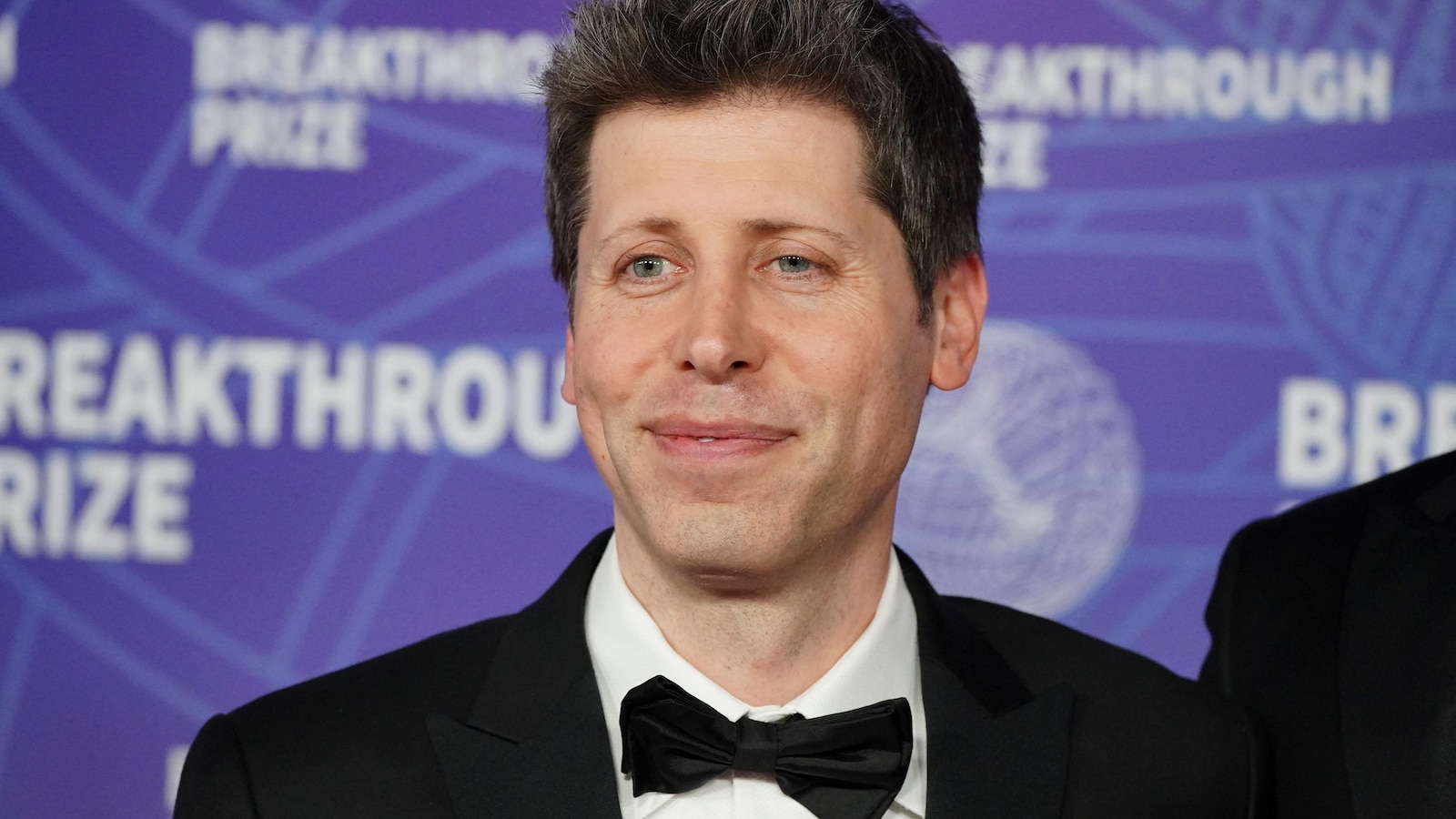
OAKLAND, Calif. — Technology tycoons Elon Musk and Sam Altman are poised to face off in a high-stakes trial revolving around the alleged betrayal, deceit and unbridled ambition that blurred the bickering billionaires’ once-shared vision for the development of artificial intelligence.

The trial, which is scheduled to begin Monday with jury selection, centers on the 2015 birth of ChatGPT maker OpenAI as a nonprofit startup primarily funded by Musk before evolving into a capitalistic venture now valued at $852 billion.

The trial’s outcome could sway the balance of power in AI — breakthrough technology that is increasingly being feared as a potential job killer and an existential threat to humanity’s survival.

Those perceived risks are among the reasons that Musk, the world’s richest person, cites for filing an August 2024 lawsuit that will now be decided by a jury and U.S. District Judge Yvonne Gonzalez Rogers in Oakland, California.

The civil lawsuit accuses Altman, OpenAI’s CEO, and his top lieutenant, Greg Brockman, of double-crossing Musk by straying from the San Francisco company’s founding mission to be an altruistic steward of a revolutionary technology. The lawsuit alleges they shifted into a moneymaking mode behind his back.

OpenAI has brushed off Musk’s allegations as an unfounded case of sour grapes that’s aimed at undercutting its rapid growth and bolstering Musk’s own xAI, which he launched in 2023 as a competitor.

Musk, who invested about $38 million in OpenAI from December 2015 through May 2017, initially was seeking more than $100 billion in damages.

But any damages now are likely to be much smaller after a series of pre-trial rulings that went against Musk. Musk has since abandoned a bid for damages for himself and instead is seeking an unspecified amount of money to be paid to fund the altruistic efforts of OpenAI’s charitable arm. The money would be paid primarily by OpenAI’s for-profit operations, and Microsoft, which became the company’s biggest investor after Musk cut off his funding.

Musk’s lawsuit also seeks Altman’s ouster from OpenAI’s board. Musk’s decision to stop funding the company contributed to a bitter falling out between the former allies. Musk says he was responding to deceptive conduct that OpenAI’s board picked up on when it fired Altman as CEO in 2023 before he got his job back days later.

But the trial also carries risks for Musk, who last month was held liable by another jury for defrauding investors during his $44 billion takeover of Twitter in 2022. Any damaging details about Musk and his business tactics could be particularly hurtful now because his rocket ship maker, SpaceX, plans to go public this summer in an initial public offering that could make him the world’s first trillionaire.

However it turns out, the trial is expected to provide riveting theater, with contrasting testimony from two of technology’s most influential and polarizing figures in the 54-year-old Musk and the 41-year-old Altman.

“Part of this is about whether a jury believes the people who will testify and whether they are credible,” Gonzalez Rogers said during a court hearing earlier this year while explaining why she believe the case merited a trial. The judge will make the final decision on the case, with the jury serving in an advisory role.

Musk, whose estimated fortune stands at about $780 billion, has long been hailed as a visionary for his roles creating digital payment pioneer PayPal, electric automaker Tesla and rocket ship maker SpaceX. But he has also provoked backlashes with his social media commentary, unfulfilled promises about Tesla’s self-driving technology and his cost-cutting role last year in President Donald Trump’s administration.

Some of Musk’s erratic behavior has been tied to allegations of taking hallucinogenic drugs, but Gonzalez Rogers ruled that he can’t be asked during the trial about his suspected use of ketamine. But the judge is allowing Musk to be questioned about his attendance at the 2017 Burning Man festival in Nevada, a free-wheeling celebration known for widespread drug use. The judge is also allowing Musk to be questioned about his relationship with former OpenAI board member Shivon Zilis, the mother of several of his children.

Altman, currently sitting on a roughly $3 billion fortune, didn’t emerge in the public consciousness until the late 2022 release of ChatGPT. The tech boom triggered by that conversational chatbot has led some to liken Altman to a 21st-century version of the nuclear bomb inventor, J. Robert Oppenheimer.

Although Altman was initially hailed as trailblazer he is now facing blowback amid worries about AI’s potential dangers. Earlier this month, the New Yorker magazine published a profile that painted him as an unscrupulous executive. Days later, a 20-year-old man worried about AI’s effect on humanity was arrested on attempted murder charges after throwing a Molotov cocktail at Altman’s San Francisco home.

The dueling testimonies of Altman and Musk are expected to open a window into some of the thinking that helped trigger the AI race, as well as the unraveling of their friendship. The kinship was forged in 2015 when they agreed to build AI in a more responsible and safer way than the profit-driven companies controlled by Google co-founders Larry Page and Sergey Brin and Facebook founder Mark Zuckerberg, according to evidence submitted ahead of the trial.

Details of the bitter break between the two men were captured in a February 2023 email exchange that surfaced as part of the evidence leading up to the trial.

After letting Musk know “you’re my hero,” Altman tells him: “I am tremendously thankful for everything you’ve done to help —I don’t think OpenAI would have happened without you — and it really (expletive) hurts when you publicly attack OpenAI.”

Musk’s response: “I hear you and it is certainly not my intention to be hurtful, for which I apologize, but the fate of civilization is at stake.”


Source link

UK healthy life expectancy falls by two years in past decade

0
UK healthy life expectancy falls by two years in past decade


The global comparison, based on World Health Organization data, compared the UK to other nations in western Europe, the Nordics, North America and Oceania. It is now ranked 20th out of 21 with only the US seeing its population live for fewer years in good health.


Source link

Iran war: What’s happening on day 59 amid diplomatic push to end conflict?

0
Iran war: What’s happening on day 59 amid diplomatic push to end conflict?


Iran discusses diplomatic solutions with regional partners as Trump says Iran could telephone if it wants to talk.

Iran has stepped up diplomatic efforts to end the war with the United States, with Foreign Minister Abbas Araghchi shuttling between Pakistan and Oman on Sunday before flying to Russia on Monday.

US President Donald Trump said on Sunday Iran could telephone if it wanted to negotiate an end to the two-month US-Israel war on Iran after scrapping a visit ⁠⁠to Islamabad by his representatives Steve Witkoff and Jared Kushner.

Recommended Stories

list of 3 itemsend of list

The two main sticking points are the issues of Iran’s nuclear programme and access to the crucial Strait of Hormuz, which remains under de facto Iranian blockade.

Meanwhile, Israeli forces have escalated attacks against Lebanon, killing at least 14 people on Sunday despite a US-brokered ceasefire.

Here is what we know on day 59 of the conflict:

War diplomacy

  • Iranian Foreign Minister Araghchi arrived in Saint Petersburg early on Monday and is expected to meet Russian President Vladimir Putin, according to Russian and Iranian state media.
  • Discussions on ⁠⁠bilateral ties ⁠⁠and regional issues, including the US-Israel war on Iran, will be held, Araghchi said.
  • According to Araghchi, Iran and ⁠⁠Oman, as coastal states of the Strait of Hormuz, had agreed to ‌‌continue expert-level consultations to ensure safe transit and protect ‌‌shared ‌‌interests in the waterway.
  • Araghchi said his talks in the Pakistani capital were “very productive” and included a review of “the specific conditions under which negotiations between Iran and the US could continue”.
  • Al Jazeera’s Osama Bin Javaid, reporting from Islamabad, said according to one diplomatic source, recent events have “served as a catalyst”, reinforcing the view that “there needs to be a permanent end to hostilities”.
  • “We are being told here in Islamabad that we are inching towards a framework of sorts, which will provide a background to which all of these sides can come to an agreement – and not just the Iranians and the Americans, but essentially the Gulf countries as well,” he reported.
  • Mikhail Ulyanov, Russia’s envoy to international organisations in Vienna, said the US must abandon “blackmailing” and “ultimatums” in its negotiating position if talks with Iran are to move forward.

In Iran

  • Iran’s Islamic Revolutionary Guard Corps (IRGC) said it had no intention of unblocking the Strait of Hormuz.
  • “Controlling the Strait of Hormuz and maintaining the shadow of its deterrent effects over America and the White House’s supporters in the region is the definitive strategy of Islamic Iran,” the IRGC said on its official Telegram channel.

In US

  • Trump said a shooting at a Washington media dinner on Saturday would not divert him from the war on Iran. “It’s not going to deter me from winning the war in Iran. I don’t know if that had anything to do with it, I really don’t think so, based on what we know,” Trump told reporters at the White House after the incident.
  • The US president reiterated that Iran cannot have nuclear weapons, while saying he was open to talks with Tehran.

In Lebanon

  • The Ministry of Public Health said Israeli strikes on southern Lebanon on Sunday killed 14 people, including two women and two children, and wounded 37.
  • State media outlet National News Agency reported that Israeli forces raided the entrance to Kafra in southern Lebanon at dawn on Monday and cut off the road leading to the town.
  • Hezbollah rejected Israeli Prime Minister Benjamin Netanyahu’s accusation that it was jeopardising a ceasefire, saying in a statement that its attacks on Israeli targets in southern Lebanon and northern Israel were “a legitimate response to the enemy’s persistent violations of the ceasefire since the first day of the announcement of the temporary truce”.


Source link

Football quiz: Name every FA Cup finalist since 2010

0
Football quiz: Name every FA Cup finalist since 2010


From the underdogs to the serial winners, can you name every FA Cup finalist since 2010?


Source link

Anta: The Chinese sports brand taking on Nike and Adidas

0
Anta: The Chinese sports brand taking on Nike and Adidas


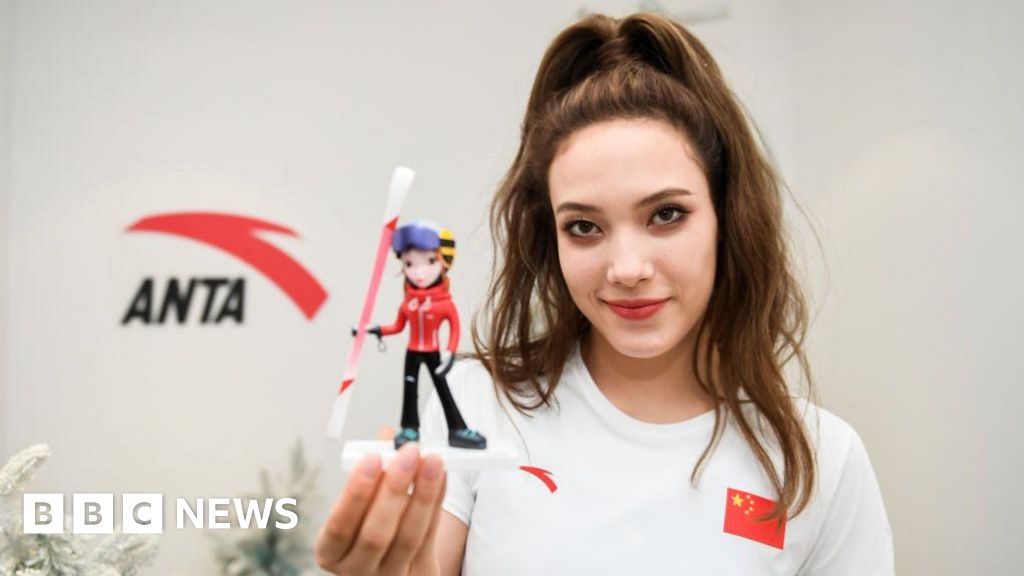
Now one of the biggest sportswear firms, Anta’s rise follows a playbook adopted by many Chinese giants.


Source link

How to create a cottage garden in a small space

0
How to create a cottage garden in a small space


The vision of a cottage garden may be one of a countryside scene in a rural retreat like the Cotswolds, with clouds of peonies, roses, lupins, delphiniums and all other manner of classic blooms wafting in the summer sun.

“When we think of cottage gardens we do often think of small spaces which are quite heavily planted but with a loose hand,” says writer and gardener Joff Elphick, whose new book, A Year In A Cottage Garden, co-written by Sue O’Neil, documents just that.

“From the point of design we almost let the plants get on with it themselves, so things like self-seeders are encouraged and we like to think that where they seed, the spot they’ve chosen to come up, is the place that’s probably best for them.”

So, what do you expect from a cottage garden in a small space?

“We don’t necessarily expect a lawn but we expect almost a tapestry of plants and maybe a light hand from a design point of view. I like to think it’s grown over the years on its own.

People are attracted to that tapestry of plants and the idea that in some ways the garden is fairly low maintenance. We let the plants get on with it – that’s the attraction.”

You don’t need an old property

“With the use of pots and the right plants, you can do it. When you live in urban houses or apartments you are wanting to bring a little bit of the countryside in.”

Keep landscaping simple, he suggests, with maybe a gravel path that isn’t overly engineered. And if you have a boundary, wire it up for climbers, or if you have a border you might add a natural wigwam out of hazel sticks or other twiggy stems.

Check your soil

See if your soil is claggy or dry and light, and dig in some organic matter to enrich it, he advises. Leaf mould also is a great additive and plants are more likely to thrive in a balanced soil.

Leave colours loose

“I like to go for mixes where you haven’t got a beautiful blended colour scheme but you’ve just an absolute mix so it doesn’t look like the designer has been at it.”

Support plants early

Plan ahead and get stakes in early, as if the plants have any height it’s important to stop them flopping and smothering other nearby plants.

He suggests a variety of cottage garden plants suitable for small spaces.

Annuals

“They can play a big part because they self-seed around, things like Papaver somniferum, the opium poppy. It’s quite tall but doesn’t take up much ground space and self-seeds, and once the flowers – which come in ranges of pinks and purples – are over, they have wonderful seedheads on top of them.

“The smaller poppies, such as Papaver rhoeas ‘Mother Of Pearl’ and ‘Amazing Grey’, are only about 18in tall, self-seed and come in a wonderful range of colours.

“Nasturtiums are also great for a cottage garden, French marigolds, primulas and petunias are all good, and forget-me-nots are a lovely choice because once you’ve got them you’ll tend to have them forever.

Honesty is also wonderful, I wouldn’t do without foxgloves and Cosmos bipinnatus is one that we all like to grow.

“If you want to keep the size down you can also go for the Cosmos sonata series.”

Perennials

Choose varieties carefully for a small space, he advises.

“The Hidcote variety of lavender is not too big and fairly well-behaved, and if you’re looking at (wild) geraniums I wouldn’t go for the classic ‘Rozanne’ because it gets big. I’d go for the lower-growing types like the macrorrhizum varieties, which have lovely scented stems and leaves.”

The other plant that has really caught on in the last couple of years is the Erigeron karvinskianus (Mexican fleabane).

“They have really dainty flowers which flower on and on. They are such good performers,” he enthuses. “If you find by late summer that they are a bit straggly you can cut them back by half and they will come back again.”

Be careful which catmint (nepeta) you choose for a small space, he continues.

“They can get huge if you go for the ‘Six Hills Giant’ and don’t be fooled by ‘Walker’s Low’ which gives you the impression it’s going to be small but it’s not. But there are things like ‘Little Trudy’ which is more compact.”

Elphick also wouldn’t be without Alchemilla mollis (lady’s mantle) in a smaller cottage garden, he says.

“Again it’s perennial and can be cut right back to the ground if it starts looking tatty.”

Include flowering shrubs

Heavily scented candidates include Philadelphus (mock orange). “There’s a small one called ‘Manteau d’Hermine’ which grows to about a metre with double white flowers.”

For those who want to grow something tight against a wall, Cotoneaster horizontalis is brilliant, he says. “It has very unnoticeable tiny white flowers in the spring, and then you have berries as well and they make a very good habitat for birds and insects.”

Feature classic favourites

“I’m always a bit careful about recommending delphiniums as I know many gardeners find that they are eaten by the slugs, but if you can overcome that issue, they are great performers.”

Roses are also classic cottage garden favourites. “There’s a rose called ‘Phyllis Bide’, which is not too big and you can train it against a wall. I’m about to try another called ‘Blush Noisette’, which has a pale pink flower and is remarkably trouble-free in terms of disease.

“One climber which is stunning is the Clematis ‘Princess Diana’ which has these tulip-shaped dark pink flowers and it doesn’t get too big.”

Other classics include the orange-peel clematis (C. tangutica), which can get big but if you manage it well it can fit into a lot of places, he says.

“You can cut it to the ground any point in winter to sprig and it will come back like a perennial.”

A Year In A Cottage Garden by Joff Elphick and Sue O’Neill is published by Genus, priced £19.50. Available now


Source link

“I think my mom doesn’t love me”: What this 4-year-old reveals will break you | – The Times of India

0
“I think my mom doesn’t love me”: What this 4-year-old reveals will break you | – The Times of India


There are moments online that stop people cold, not because they are dramatic, but because they are painfully plain. A small child says something so unguarded, so quietly devastating, that it lands like a weight in the chest. In this case, a 4-year-old boy, asked who he likes to play with most, answers in a sad, worn-out tone: “I don’t know, I’m always bored, no one plays with me.”This clip, it’s important to note, comes from a Korean reality show where licensed therapists are present. Parents’ behaviours are explored openly, the emotional impact on the child is addressed, and relationship repair tools and guidance are offered. The moment is not framed for judgment, but as part of a larger process of awareness, accountability, and healing. It is the kind of sentence adults often dismiss too quickly. Children are “just being children,” we tell ourselves. They will forget, we say. But children do not only remember words. They remember tone. They remember distance. They remember whether a room felt warm or cold when they entered it. And above all, they remember whether someone seemed to make space for them. Scroll down to read more…

A child’s sadness is never random

What makes this clip so heartbreaking is not simply that the boy sounds lonely. It is how clearly he already understands the emotional atmosphere around him. When asked about his father, he says he is scary when angry. When asked what he wants from him, he says he wants him to reply nicely. When asked about his mother, he says, almost like a conclusion he has already reached, “I don’t think she loves me.” That line is the one that splits the heart open. A 4-year-old should not have to translate affection, safety or care into guesswork. He should not have to study moods like weather. He should not have to wonder whether love disappears when adults are stressed, irritated or busy. Yet that is exactly what many children do. They build theories out of silence. They make emotional maps from the smallest signs. They learn, very early, to read the room and then read themselves through it. And when a child says, “She doesn’t listen,” it is not only a complaint. It is a tiny record of emotional isolation.

What children absorb before they can explain

Children are astonishingly alert to emotional cues. They may not have adult vocabulary, but they are constantly collecting information: the speed of a voice, the face that hardens, the hug that never comes, the words that are brushed aside. Over time, these moments become beliefs.I am a burden.I am too much.I am not worth calming down for.If I speak, nobody hears me.Those beliefs can begin with one household and echo for years. That is why the boy’s tears matter so much. He is not performing emotion. He is showing it. He pauses, asks for a minute, and then says he hopes his mother plays with him too. That one sentence carries so much longing in it. Not a demand. Not rebellion. Just the simplest wish in the world: to be included.

Parenting is not only provision

Many parents are not cruel. Many are overwhelmed, tired, stretched thin, and carrying wounds of their own. That matters. It does not excuse harm, but it explains how easily emotional neglect can happen without anybody naming it as such. A parent can feed a child, dress a child, school a child, and still miss the quiet emotional hunger growing underneath.Children do not require adults to be perfect. What they truly need is the ability to mend and repair relationships. They need grown-ups who can show tenderness after having lost their temper, who can reconnect after pulling away, and who can be attuned to the subtle shifts in a child’s expression, especially when their small face falls into silence. Often, the most significant harm does not stem from a single moment of anger, but rather from the lack of subsequent reconnection and reassurance. This is precisely what gives tone its incredible impact. A sharp, harsh response can resonate in a child’s mind long after the conversation has ended, while a warm and loving reply can save a child from drawing erroneous conclusions about themselves.

Why this scene stays with people

This clip moves people because it strips away the comfortable illusion that childhood pain always looks loud. Sometimes it looks like a bored little boy sitting alone, trying to explain that nobody plays with him. Sometimes it looks like a child who has already decided love is uncertain. Sometimes it sounds like a four-word sentence that an adult will never forget.“I think my mom doesn’t love me.”No child should have to say that out loud. And maybe that is why the moment travels so far online. It does not simply break our hearts. It reminds us of a duty. To listen sooner. To soften faster. To stop treating a child’s feelings as inconvenient noise. Because to a small child, a parent’s tone can become a lifelong soundtrack. And the smallest acts of attention can become the first proof that they are deeply, unquestionably loved.


Source link