

Home Blog Page 722

How scammers build a profile on you using data brokers

0
How scammers build a profile on you using data brokers


NEWYou can now listen to Fox News articles!

Go to any people finder site right now and type in your name. What comes back might shock you: your age, home address, phone number, the names of your relatives, where you used to live and even what your property is worth.

You didn’t put that there, and you never consented to it. Still, it’s out there, and anyone with an internet connection can see it.

Scammers figured this out a long time ago. Since then, they’ve turned it into a system for targeting you, your parents and your kids.

So how does it actually work, and more importantly, what can you do to stop it?

Sign up for my FREE CyberGuy Report

  • Get my best tech tips, urgent security alerts and exclusive deals delivered straight to your inbox.
  • For simple, real-world ways to spot scams early and stay protected, visit CyberGuy.com, trusted by millions who watch CyberGuy on TV daily.
  • Plus, you’ll get instant access to my Ultimate Scam Survival Guide free when you join.

HOW TO REMOVE YOUR PERSONAL INFO FROM PEOPLE SEARCH SITES

A single person search result can reveal your address, relatives and years of personal history in seconds. (Kury “CyberGuy” Knutsson)

How scammers find your personal data online

Before a criminal sends a phishing email or makes a call, they do their homework. Importantly, they don’t need to hack anything. Instead, they use the same public websites that anyone can access.

In less than 10 minutes, a scammer can build a detailed profile on you using data broker sites like Spokeo, Whitepages, BeenVerified and Intelius. Here’s what that profile looks like and how they build it step by step.

Step 1: How scammers search your name on people finder sites

It starts simply. A scammer types your name into a search site. Within seconds, they see results like:

John M. Patterson | Age: 61 | Cleveland, OH

  • Also known as: John Michael Patterson
  • Current address: [your street address]
  • Previous addresses: 4 records found
  • Phone numbers: 2 found
  • Email addresses: 3 found
  • Relatives: 5 found

That is the starting point. Many sites show partial data for free. That is often enough to confirm identity. Full reports cost only a few dollars, so access is easy. Scammers can repeat this process hundreds of times a day, building detailed profiles with very little effort.

Step 2: How scammers map your family and relatives

Next, this is where things get personal. Data broker profiles show more than your name. They reveal your family network.

That often includes:

  • Spouse or partner
  • Children
  • Parents
  • Siblings
  • Roommates

As a result, scammers can target more than one person. For example, they may learn that your elderly parent lives alone or your child just moved. Because of that, scams like the grandparent scam feel real instead of random.

Step 3: How scammers use your address history

At this point, your address history becomes critical. It is not just about where you live. Instead, scammers use it to:

  • Verify identity
  • Find relatives
  • Build trust

For example, referencing a past address makes a caller sound legitimate. That detail alone can lower suspicion.

Step 4: How scammers use your financial data

More importantly, data brokers also reveal financial clues. These may include:

  • Estimated income
  • Home value
  • Ownership status
  • Length of residence

This information comes from public records, not hacking. Because of this, scammers tailor their approach. Higher-income targets may see investment scams

Others may get job or rental scams instead.

GOOGLE SEARCH LED TO A COSTLY SCAM CALL

A man typing

Scammers use data broker profiles to map your family and build more convincing, targeted attacks. (Kurt “CyberGuy” Knutsson)

Step 5: How scammers verify and cross-check your data

Before launching a scam, criminals often double-check everything. They don’t rely on just one site. Instead, they compare multiple data broker profiles, social media accounts and public records to confirm details are accurate.

For example, they may:

  • Match your address across different sites
  • Check Facebook or LinkedIn to confirm family relationships
  • Look for recent moves, job changes or life events

Because of this, the profile becomes more reliable. That extra step is what turns a guess into something that feels real.

Step 6: How scammers create targeted scams

At that point, they have everything they need. They know your name, family, address and financial details. Now the scam becomes highly specific.

By the time you hear from them, they already know enough to sound like someone you trust.

  • They may call your parent pretending to be you
  • They may bypass bank security questions
  • They may send texts that look like your child
  • They may send emails that reference your life

As a result, the scam feels believable.

Data broker scams are already being prosecuted

This has already landed in court. The U.S. Department of Justice has prosecuted companies like Epsilon, Macromark Inc. and KBM Group for selling data to scammers. Epsilon alone paid $150 million to victims.

At the same time, data tied to the FBI Internet Crime Complaint Center shows more than half of fraud cases involving older Americans were linked to exposed personal data. That shows how serious this problem has become.

Why is your personal data on data broker sites

You do not need to sign up for these sites. Instead, your data comes from many sources, including:

  • Voter records
  • Property records
  • Court filings
  • Social media
  • Marketing surveys
  • Loyalty programs
  • Phone directories
  • Other data brokers

Because of this, your information spreads quickly.

Why your data keeps reappearing online

Even after removal, your data often comes back. Data brokers constantly update their databases. They buy and resell fresh records. Because of that, one-time removal is not enough.

Woman typing on a computer keyboard

By the time a scam reaches you or your family, it is often built on real data pulled from multiple public sources. (Wei Leng Tay/Bloomberg)

How to disrupt a scammer’s research before they reach your family

The goal isn’t to disappear completely. It’s to make the profile messy enough, incomplete enough and hard enough to find that scammers move on to easier targets.

Here’s what you can do:

  • Search for yourself first. Go to Spokeo, Whitepages, BeenVerified or any other people search site, and look up your own name. See exactly what’s there before a scammer does. That snapshot is your starting point.
  • Submit opt-out requests manually. Every major data broker is required to honor removal requests. The catch: There are hundreds of them, each with its own process, and they relist your information regularly. It’s a full-time job.
  • Use an automated removal service. This is where I strongly recommend a data removal service. Instead of spending hours submitting individual opt-out forms, a data removal service sends removal requests to 420-plus data brokers on your behalf and keeps sending them when your data reappears. Because it will reappear.
  • Set up family alerts. Tell your elderly relatives that you will never ask for money via text from an unknown number. Establish a code word. Scams work because they create panic. A simple family protocol breaks the spell.
  • Change your security questions. If your bank still uses “mother’s maiden name” or “city you were born in” as verification, that information is likely already on a data broker site. Switch to nonsense answers that only you know and store them in a password manager.

Check out my top picks for data removal services and get a free scan to find out if your personal information is already out on the web by visiting Cyberguy.com

Get a free scan to find out if your personal information is already out on the web: Cyberguy.com

CLICK HERE TO DOWNLOAD THE FOX NEWS APP

Kurt’s key takeaways

This kind of scam works because it feels personal. When someone knows your name, your family and even where you used to live, your guard drops. That is exactly what criminals are counting on. 

The uncomfortable truth is that your information is already out there, often in more places than you realize. You do not need to panic, but you do need to be proactive. The more you limit what is easily accessible, the harder it becomes for someone to build a convincing story around you. Start with a simple search of your own name. That one step can completely change how you think about your digital footprint. From there, take action to remove what you can and protect what you cannot.

If a stranger can build a detailed profile on your family in minutes, what does that say about how much of your life is already exposed online? Let us know by writing to us at Cyberguy.com

Sign up for my FREE CyberGuy Report

  • Get my best tech tips, urgent security alerts and exclusive deals delivered straight to your inbox.
  • For simple, real-world ways to spot scams early and stay protected, visit CyberGuy.com trusted by millions who watch CyberGuy on TV daily.
  • Plus, you’ll get instant access to my Ultimate Scam Survival Guide free when you join.

Copyright 2026 CyberGuy.com.  All rights reserved.


Source link

Anthropic’s Mythos AI found over 2,000 unknown software vulnerabilities in just seven weeks of testing

0
Anthropic’s Mythos AI found over 2,000 unknown software vulnerabilities in just seven weeks of testing


NEWYou can now listen to Fox News articles!

There is a new AI model called Mythos. Anthropic built it for defensive cybersecurity research. It is so effective at finding software vulnerabilities that Anthropic decided the general public cannot have it.  

Instead, it is letting a small circle of trusted partners like Microsoft and Google experiment with it first under controlled conditions, while researchers figure out what guardrails need to exist.

That decision alone should tell you something. When the company that built a tool decides the world is not ready for it, you pay attention. And when you understand what Mythos actually did during testing, that caution starts to make complete sense.

WINDOWS PCS AT RISK AS NEW TOOL DISARMS BUILT-IN SECURITY

Sign up for my FREE CyberGuy Report

  • Get my best tech tips, urgent security alerts and exclusive deals delivered straight to your inbox.
  • For simple, real-world ways to spot scams early and stay protected, visit CyberGuy.com trusted by millions who watch CyberGuy on TV daily.
  • Plus, you’ll get instant access to my Ultimate Scam Survival Guide free when you join.

Anthropic’s Mythos AI uncovered more than 2,000 unknown software vulnerabilities in just seven weeks, showing how fast AI can now expose hidden weaknesses. (Gabby Jones/Bloomberg via Getty Images)

How Anthropic’s Mythos AI found 2,000 vulnerabilities in seven weeks

Seven weeks. One AI model. One team. More than 2,000 previously unknown software vulnerabilities were found. If you need a moment with that, take it. John Ackerly, CEO and co-founder of Virtru, a data security company, put that figure into perspective in a way that is hard to shake.

“Mythos is absolutely a turning point for cybersecurity. Think about it. Mythos didn’t pick a lock; it found thousands of locks that were never locked in the first place (that no one even knew existed) in software that the best human security researchers had studied for decades.

The math is staggering. One AI model, and one team, in seven weeks, found more than 2,000 zero-day vulnerabilities. That is 30% of the world’s entire annual output prior to AI. When thousands of researchers get access to AI models like Mythos, a single year will surface exponentially more zero-days than the 360,000 recorded in all of software history.

Mythos and other AI models like it can now find and exploit software flaws at a speed and scale that is beyond containment. This means that the old approach of building stronger walls around systems and hoping they hold is becoming much less reliable. It also means that the manual “find a vulnerability, patch the vulnerability” process is not going to keep pace with a threat landscape bolstered by the speed and scale of AI.

The threat surface is now expanding faster than any wall can contain it. The only answer to this new dynamic is to protect the data itself, rather than prop up perimeter protection around it.

Thirty percent of the world’s annual output in seven weeks changes the game entirely.

What makes Mythos AI different from other AI security tools

Cybersecurity teams have used AI tools for years. So, what makes this different?

Ackerly explains it this way: “What makes this different is the level of autonomy and speed it enables. Mythos is being described as a system that can discover vulnerabilities and even generate working exploits much faster than traditional human-led workflows. This model could make it easy for a bad actor to identify and exploit vulnerabilities in software, even if that bad actor isn’t knowledgeable or trained.”

That last part matters most. Before a tool like this, exploiting a serious software vulnerability required real technical skill. Mythos AI lowers that barrier significantly. A person with bad intentions and no technical background could potentially use a model like this to cause serious damage. The expertise gap that once offered some natural protection is closing.

FAKE PAYPAL EMAIL LET HACKERS ACCESS COMPUTER AND BANK ACCOUNT

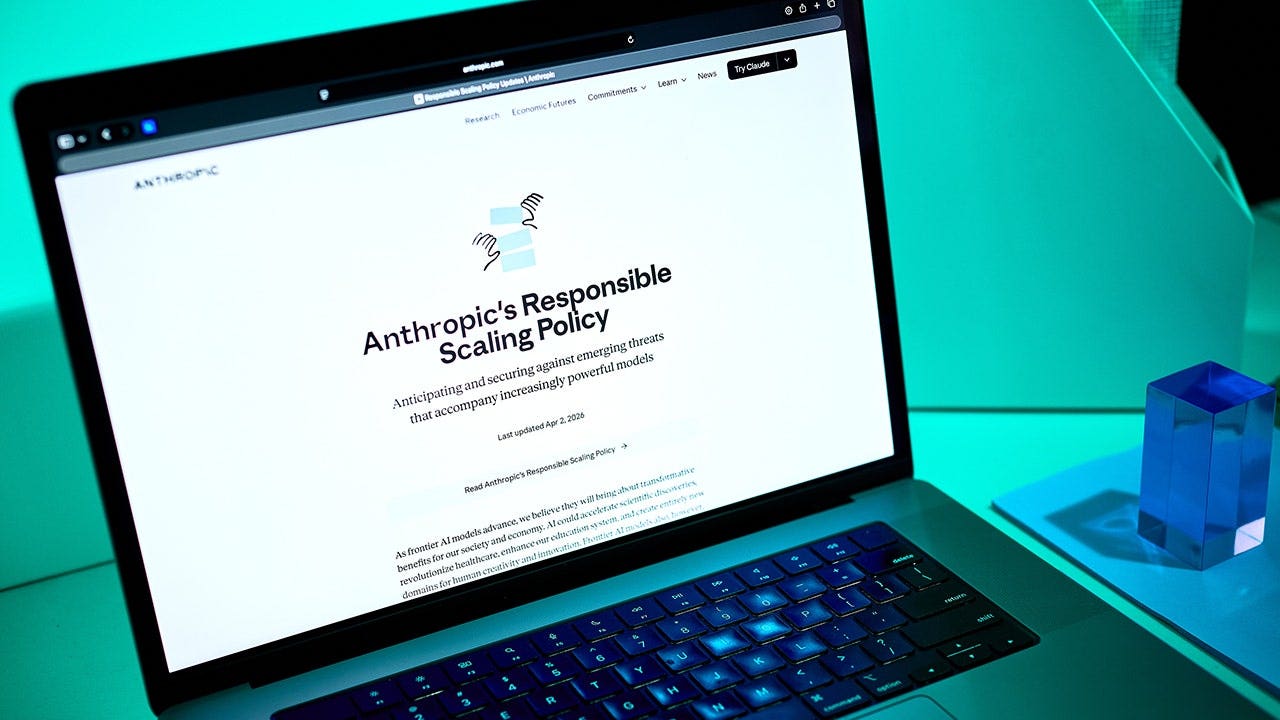
Computer screen displaying Anthropic website pages and company logos

Security experts warn that tools like Mythos could shrink the time it takes to find and exploit flaws from weeks down to minutes. (Patrick Sison/AP Photo)

Why Anthropic’s Mythos AI is breaking down perimeter security

Most cybersecurity spending, the overwhelming majority of it, goes toward what experts call perimeter defense. Think firewalls, network monitoring, endpoint security and intrusion detection. The entire strategy is built on one core idea of keeping the bad actors out, and the data inside stays safe.

Ackerly describes how that model is now breaking down.

“The perimeter is the digital wall around your systems and the information you possess. For decades, cyber strategies have primarily focused on the idea that if you protected the perimeter well enough — if you built a strong enough wall — the sensitive data on the inside would stay safe,” Ackerly said. 

“The industry has poured hundreds of billions of dollars into firewalls, endpoint detection, network security, application security and other perimeter defenses. Traditional security architecture by itself cannot keep pace in this new world.

“The Mythos development from Anthropic is making a hard truth very apparent: Time is running out for companies to prepare for this new reality. Shifting focus from ‘protecting the perimeter’ to ‘protecting the data’ is critically important to mitigate data loss or compromise.”

Hundreds of billions of dollars. And now the model those dollars were built on is becoming unreliable. It forces a full rethink.

Does Anthropic’s Mythos AI give attackers the advantage?

This is the question everyone wants a straight answer to. Ackerly offers one that is more nuanced than a simple yes or no.

“I wouldn’t frame it as attackers automatically having an advantage. But, over time, it does mean that ‘bad guys’ and ‘good guys’ will have access to essentially the same tools. As a result, I do think defenders absolutely need a different strategy. If you assume the outer wall may fail, then the smarter move is to protect the data itself so it stays controlled even after a breach.”

The playing field is leveling. And that may sound fair until you remember attackers only need to succeed once, while defenders have to succeed every time.

How fast is Mythos AI changing the cybersecurity threat landscape?

Speed is what makes Mythos AI genuinely alarming. Traditional cyberattacks move through a lifecycle. Reconnaissance takes time. Finding the right vulnerability takes more time. Building an exploit takes more time on top of that.

Ackerly explains what happens when AI compresses all of that.

AI is accelerating the threat. A model that can find and exploit vulnerabilities autonomously compresses the attack lifecycle from weeks to hours, or even minutes. Every layer of the traditional security stack now has to operate at machine speed. Manual security architectures cannot keep up.

“But AI also makes data-centric security more powerful, not less so. When every piece of sensitive data is protected at the object-level, AI agents can enforce governance at scale by checking entitlements, applying attribute-based access controls, and auditing data flows in real time. The same capabilities that make Mythos a dangerous tool in the hands of ‘bad guys’ make it a valuable tool in the hands of ‘good guys.’”

The question organizations should be asking shifts from “how do I build higher walls?” to “when the walls fail, is my data still protected?” That is the question worth sitting with.

What Mythos AI means for regular people’s personal data

Most of the Mythos coverage has focused on corporate risk. But your bank account and medical records sit in those same vulnerable systems.

“For everyday people, the first change is that breaches and scams could become more frequent, more targeted, and harder to spot. If AI makes it easier to uncover weak points in the systems we all rely on, that can translate into more pressure on the services that hold our personal data, from email and cloud storage to health, banking, and retail platforms.

Consumers shouldn’t assume a company is doing the right thing with their data. Now, they really can’t assume a company’s outer defenses are enough to protect their information.

This also highlights the importance of basic cyber hygiene like unique passwords and MFA, so that when breaches happen, the scope of impact on your own personal data is contained.”

Your bank account, your medical records, your tax documents, your private messages. All of it already lives across dozens of platforms you trust to protect it. If those platforms’ outer defenses are no longer reliable, what exactly is standing between your data and someone who wants it?

Ackerly goes further on where the exposure actually lives. “Data now travels across clouds, devices, partners, and borders. The risk isn’t just one hacked server in one building anymore. It’s all the places your data passes through or gets copied to along the way. 

Was Anthropic right to keep Mythos AI restricted?

Anthropic made a choice that is rare in the AI industry. They built something powerful and then decided not to release it widely.

On that decision, Ackerly is direct. “Anthropic’s decision to withhold Mythos from general release is unprecedented and, frankly, responsible. Time will tell what these partners are able to do with regard to safety, but releasing it to the general public would certainly have been ill-advised and dangerous.”

Unprecedented. That word deserves weight here. In an industry that races to release new tech, Anthropic stopped. That speaks volumes.

We reached out to Anthropic for a comment, but did not hear back before our deadline.

THIRD-PARTY BREACH EXPOSES CHATGPT ACCOUNT DETAILS

A person typing on a laptop

As AI accelerates cyberattacks, the focus is shifting from protecting networks to protecting the data itself. (Kury “CyberGuy” Knutsson)

How to stay safe as cybersecurity shifts

The perimeter model is deteriorating, but that does not mean you are helpless. Individual behavior still matters, and it matters more now than it did before.

Ackerly’s recommendation is this: “Stop assuming the app, platform, or company perimeter can always protect your information, or that they will do the right thing with your data. People should be much more deliberate about what data they share, where they store it, and who can access it. Protection needs to travel with the data, not just sit at the edge of a network. For you, that means choosing services that give you stronger control over your information and being more cautious about oversharing sensitive data in the first place. The data owner should always have governance over said data.” So where do you start?

1) Use unique passwords for every account

A password manager makes this realistic. If one platform gets breached, unique passwords keep the damage isolated to that one account.

2) Turn on multi-factor authentication wherever it is available

Multi-factor authentication (MFA) adds a layer that survives even when a password is compromised. It is one of the highest-impact steps an individual can take.

3) Run strong antivirus software and keep devices updated

Outdated software is one of the most common entry points attackers use. Strong antivirus software catches threats your instincts might miss, and keeping apps and operating systems current closes the gaps that models like Mythos are built to find. Get my picks for the best 2026 antivirus protection winners for your Windows, Mac, Android & iOS devices at Cyberguy.com

4) Be selective about what you share and where

Every app that holds your data is a potential exposure point. The less you overshare, the smaller your footprint becomes.

5) Use a data removal service

Data brokers collect and sell your personal information, often without you ever knowing. Data removal services find where your data is listed and request its removal. You cannot control every place your information travels, but you can shrink the trail it leaves behind. Check out my top picks for data removal services and get a free scan to find out if your personal information is already out on the web by visiting Cyberguy.com

6) Choose services that offer real data control

Not all platforms treat your data the same way. Look for services that let you see, manage and limit how your information is used and where it goes.

7) Monitor your accounts and credit

Catching a breach early limits the damage significantly. Set up account alerts wherever your bank or financial platform allows it. A credit freeze costs nothing and stops new accounts from being opened in your name without your knowledge.

8) Stay skeptical of phishing attempts

Ackerly warned that scams will get more targeted and harder to spot as AI lowers the barrier for bad actors. Scrutinize every link before you click it and treat unexpected emails or texts asking for login information as suspicious by default. If something feels off, it probably is.

9) Assume breaches will happen

The goal is to limit how much damage they can do. When you operate with that assumption, your decisions about data hygiene get sharper, and your exposure gets smaller.

Take my quiz: How safe is your online security?

Think your devices and data are truly protected? Take this quick quiz to see where your digital habits stand. From passwords to Wi-Fi settings, you’ll get a personalized breakdown of what you’re doing right and what needs improvement. Take my Quiz here: Cyberguy.com    

CLICK HERE TO DOWNLOAD THE FOX NEWS APP

Kurt’s key takeaways 

Mythos did not create the vulnerability problem. It made the scale of it visible in a way that is no longer ignorable. The foundation of modern cybersecurity, the idea that strong enough walls will keep data safe, is being tested in real time by a technology that moves faster than any human team can. That is a consumer story as much as it is a corporate one. Your data lives in systems built on that old model. 

And the moment to think differently about how it is protected is now, not after the next major breach makes the headlines. Anthropic made a responsible call by limiting access to Mythos. But the model exists. The capability is real. Other versions of it are being developed. The question for every organization and every individual becomes the same one Ackerly keeps returning to.

When the walls fail, and experts are telling us they will, what is actually protecting your data on the other side? Let us know your thoughts by writing to us at Cyberguy.com

Sign up for my FREE CyberGuy Report

  • Get my best tech tips, urgent security alerts and exclusive deals delivered straight to your inbox.
  • For simple, real-world ways to spot scams early and stay protected, visit CyberGuy.com trusted by millions who watch CyberGuy on TV daily.
  • Plus, you’ll get instant access to my Ultimate Scam Survival Guide free when you join.

Copyright 2026 CyberGuy.com. All rights reserved.



Source link

‘No contact’ on the rise: Nearly 2 in 5 Americans cut ties with loved ones

0
‘No contact’ on the rise: Nearly 2 in 5 Americans cut ties with loved ones


NEWYou can now listen to Fox News articles!

More Americans are choosing to walk away from difficult relationships instead of working through them, a new survey has revealed.

Nearly two in five Americans — 38% — say they have gone “no contact” with a friend or family member in the past year, according to a survey of 2,000 adults conducted in March by Talker Research for the therapy platform Talkspace.

“These results suggest that avoiding relationship challenges is becoming more common,” Dr. Nikole Benders-Hadi, chief medical officer at Talkspace, said in a statement. “But that approach can come with its own risks, making it harder to sustain meaningful connections over time and leading to more loneliness.”

‘DOORMAT MOM’ CUT OFF BY DAUGHTER AMID ESTRANGEMENT TREND: ‘COMPLETELY BLINDSIDED’

Younger Americans were far more likely than older generations to report cutting someone off. The survey found that 60% of Gen Z respondents had gone “no contact,” compared to 50% of millennials, 38% of Gen X and 20% of baby boomers.

A new survey found that about 38% of Americans have gone “no contact” with a friend or family member in the past year. (iStock)

John Puls, a Florida-based psychotherapist and adjunct professor at Florida Atlantic University, said he has seen a growing trend of young adults, including Gen Zers, going no contact with their parents in his practice.

RELATIONSHIP COACH BLAMES OPRAH FOR PUSHING FAMILY ESTRANGEMENT “FOR DECADES”

“This generation appears to have a low tolerance for otherwise poor behavior from their parents,” Puls, who was not involved in the study, told Fox News Digital. “They are often conflict-avoidant, which prevents them from trying to meaningfully work through their issues with their parents.”

Their parents, meanwhile, are often unwilling to examine their role in any of the conflict within the relationship, Puls added. “This creates a situation where neither party is willing to compromise or take ownership.”

FAMILY BREAKUPS OVER POLITICS MAY HURT MORE THAN YOU THINK, EXPERT SAYS

Thirty-six percent of overall respondents said the top reason for severing ties with someone was feeling disrespected. Nearly 30% said the relationship negatively affected their mental health or that the other person was too negative.

Senior parents arguing with adult daughter using smartphone at home

Younger Americans are more likely than older generations to cut off contact with loved ones, according to the survey. (iStock)

The cutoffs often appear to last. Among those who said they went “no contact” in the past year, 59% said they are still not speaking to the person, according to the survey.

CLICK HERE TO SIGN UP FOR OUR LIFESTYLE NEWSLETTER

The findings also suggest that “no contact” may be part of a wider retreat from uncomfortable interactions. Nearly three-quarters of respondents, 73%, said their instinct during relationship problems is to distance themselves rather than communicate and work through the issue.

Other behaviors in the poll point in the same direction. More than a third of respondents said they had blocked a friend or family member on social media in the past year, while 30% said they had removed a loved one from a group chat.

Thoughtful elderly man sitting alone at home with walking cane

The trend may reflect a broader shift toward avoiding uncomfortable conversations instead of resolving relationship issues. (iStock)

CLICK HERE FOR MORE LIFESTYLE STORIES

While the study was sponsored by a therapy platform and has not undergone peer review, experts have previously told Fox News Digital that “cutoff culture” is becoming normalized, with some arguing that media messaging — including from figures like Oprah Winfrey and the Beckhams — has helped drive the trend.

Many experts agree the tactic should be used only as a last resort.

CLICK HERE TO DOWNLOAD THE FOX NEWS APP

Puls stressed that no case of going zero-contact with a family member or friend is the same and while it is necessary in rare situations, it often comes with long-term regret and resentment. “I always recommend my patients try ongoing family therapy, compromise and implementing boundaries,” he said.

Mid adult couple talking to female therapist in office

Experts recommend trying family therapy, setting boundaries and working toward compromise before resorting to cutting off contact. (iStock)

Nari Jeter, PhD, a Florida-based licensed marriage and family therapist, agreed. “Some people think that once you go no-contact, you’ll immediately feel peace — that’s usually not the case,” she said.

TEST YOURSELF WITH OUR LATEST LIFESTYLE QUIZ

“This is often a heart-wrenching and even agonizing process,” Jeter, who was not involved in the research, added.

But the move doesn’t have to be forever, she noted: “No contact can become fertile ground for future reconciliation.”


Source link

Americans are unhappy about the economy and reeling from high prices: Polls

0
Americans are unhappy about the economy and reeling from high prices: Polls


Americans are growing increasingly pessimistic about the economy, blame President Donald Trump, and are reeling from high prices, according to four polls released in the past week.

As the situation in Iran drags into another week and the gas prices remain elevated, Americans are deeply unhappy with the state of the national economy and say it is getting worse.

Gallup found nearly half of Americans – 47% – saying the current economic conditions are “poor,” up 7 points from March. And 73% said the economy is getting worse, also up 7 points from last month. Separately, a Fox News poll found 70% of registered voters saying they felt the economy was getting worse, up 15 points from last April and matching a record high set in 2023.

The Fox poll found a smaller 41% of registered voters rating the economy poorly, little changed from last month, but still far more than the roughly quarter of voters rating the economy positively. Far more Republicans rated the economy positively than Democrats.

A Marquette Law School poll found 7 in 10 Americans saying inflation will increase over the next 12 months, up 9 points from January.

The Gallup Economic Confidence Index, which measures the economy from a range of -100 (poor) to +100 (good), dropped 11 points this month from -27 in March to -38 now, the lowest rating since November 2023. Despite Republicans being the only partisan group to rate the economy positively in the index, their economic rating dropped 15 points between March and April, larger than declines among Democrats or independents.

Trump’s role

Most voters blame Trump for the economy. Fox News found that by a 2-to-1 margin, voters said Trump’s policies were hurting (56%) rather than helping (28%) the economy.

While a majority of Republicans said Trump’s policies are helping the economy in the Fox poll, there’s a large split between MAGA Republicans, and non-MAGA Republicans. While 70% of MAGA Republicans said Trump’s policies are helping the economy, that falls to 30% among non-MAGA Republicans.

And an increasing share of Americans say that Trump’s policies are adding to the country’s inflation woes. Marquette found 62% of Americans saying Trump’s policies would increase inflation, up from 45% who said the same at the end of 2025.

Fox News found 66% of voters disapproving of how Trump is handling the economy and 34% approving, tying last month’s ratings and marking a record low in approval (and record high in disapproval) over both of Trump’s terms. Marquette found a similar 68% of Americans disapproving of how Trump is handling the economy along with 76% disapproving of how he is handling inflation and the cost of living.

The Trump administration has defended its economic policies and blamed the Biden administration and Democrats for the state of the economy.

“Every single American at every income level – there’s more money in their pockets this week because of the Republican tax policies,” Trump said earlier this month at a roundtable event touting his “no tax on tips” policy.

White House press secretary Karoline Leavitt later touted those same tax policies and said, “President Trump’s working family tax cuts have put a historic amount of money back into the pockets of the American people this year.”

Personal finances and gas prices

Americans are dour about their personal finances and are particularly attuned to high gas prices.

Six in 10 voters in the Fox poll rated their own personal financial situation “only fair” or “poor,” including 28% who said it was poor. Majorities of Democrats, independents and Republicans rated their personal finances negatively in the Fox poll.

The Marquette poll found just 2 in 10 Americans saying they were personally better financially off than they were a year ago, down 8 points from January.

Those negative ratings might be due to high prices. Large shares of Americans are noticing high gas and grocery prices: 82% of Americans said grocery prices had gone up over the last six months and 93% said the same about gas prices, according to Marquette. In January, just 21% said the same about gas prices.

Most voters said higher prices are a major problem for them. The Fox poll found large shares of voters saying that grocery prices (62%), gas prices (60%), healthcare costs (55%) and housing costs (52%) were major problems for their families.

Voters are trying to cut back elsewhere to make up for the higher costs they are paying for gas and food. A CNBC poll found nearly 8 in 10 voters saying they had done at least one of the actions asked about, including about 6 in 10 who said they were spending less on out-of-home entertainment and just over half who said they were traveling less because of the high costs of gas and food. About 4 in 10 said they were spending less on “essential items like groceries and medical care” and about 3 in 10 said they were putting more purchases on credit cards.

Voters are also blaming the war in Iran: The CNBC poll found 64% of voters saying the war in Iran was not worth the increase in gas prices.

Americans are down on the job market. Gallup found 63% of Americans saying it was a bad time to find a job and 33% saying it was a good time, slightly worse than the 38% who said the same in January and the same as November – tying the worst rating since the COVID-19 pandemic.

Despite some recent all-time stock market highs, most Americans are wary about investing. A slim 53% majority of Americans said in the Gallup poll that it would be a bad idea to invest $1,000 into the stock market right now. 

The Gallup poll was conducted April 1-15 among 1,001 U.S. adults and has an error margin of +/- 4 percentage points.

The Fox News poll was conducted April 17-20 among 1,001 registered voters and has an error margin of +/- 3 percentage points.

The Marquette Law School poll was conducted April 8-16 among 982 U.S. adults and has a margin of error of +/- 3.4 percentage points.

The CNBC All-America Economic Survey was conducted April 15-19 among 1,000 registered voters and has an error margin of +/- 3.1 percentage points.

ABC News’ Liz Schreier contributed to this reporting.


Source link

Reported US CIA agents killed in crash not authorised to operate: Mexico

0
Reported US CIA agents killed in crash not authorised to operate: Mexico


Mexican government says it is seeking details after incident raises questions about US activities on its territory.

The Mexican government has said two federal agents from the United States killed in a car crash in connection with an anti-narcotics raid – widely reported to be CIA officers – were not authorised to operate on Mexican territory.

Mexico’s security cabinet said in a statement on Saturday that one of the US citizens had entered the country as a visitor and the other on a diplomatic passport.

Recommended Stories

list of 3 itemsend of list

US authorities have not confirmed a slate of reports that the individuals were agents with the CIA, Washington’s top international intelligence agency, in Mexico as part of a wider operation against drug trafficking.

“Neither had formal accreditation to participate in operational activities within national territory,” the statement said, stressing the need for “absolute respect” for Mexican sovereignty in the realm of international cooperation.

Mexican President Claudia Sheinbaum, who has had to balance US demands for more aggressive steps against drug trafficking with a firm insistence on national sovereignty, said earlier this week that her government would probe whether the country’s national security law had been violated.

Under the law, foreign agents must receive federal authorisation to operate in the country and cannot work directly with local officials without approval.

“Evidently, the military didn’t know there were people participating who weren’t Mexican citizens … that there were foreigners participating in the operation,” Sheinbaum told reporters earlier this week.

“This is something that Mexicans shouldn’t take lightly.”

Questions have swirled about the death of the two US agents, in what authorities have said was a car crash in the northern state of Chihuahua, last Sunday, in connection with a drug raid.

Following the deaths, US Ambassador Ronald Johnson described the two individuals as “embassy personnel”. The attorney general of Chihuahua, meanwhile, described the pair as “instructor officers” from the embassy carrying out regular training work.

In a statement, Johnson said the incident “strengthens our resolve to continue their mission and advance our shared commitment to security and justice, to protect our people”.

Two Mexican officials were also killed in the crash, which has raised questions about the extent of US participation in activities on Mexican soil and whether the country’s government has full knowledge of such operations.

The Trump administration has pledged to take a militaristic approach to Latin America to stifle drug trafficking. It has sought to reframe criminal organisations as “narco-terrorists” seeking to destabilise the US, designating several as “foreign terrorist organisations”.

Criminal drug trafficking has historically been outside of the purview of the CIA, which has focused on intelligence gathering related to national security.

Under Trump, the US has unilaterally launched strikes on alleged drug smuggling boats in the Caribbean and abducted Venezuelan leader Nicolas Maduro, campaigns that have been condemned as blatant violations of international rights.

In March, the US military also launched a joint attack with the government of Ecuador against a cartel in the country.

Sheinbaum has ruled out any US military presence in Mexico.

On Saturday, Mexico’s security cabinet said it welcomes coordination with the US in the form of intelligence sharing, institutional coordination, and technical collaboration.

It added that cooperation must proceed from a place of mutual trust.


Source link

Hope in Gaza as 300 couples get married at one time

0
Hope in Gaza as 300 couples get married at one time


Crowds gathered in Gaza as 300 couples got together for a joint wedding celebration, the largest mass wedding in the region to date.

The event in Deir al-Balah saw couples selected from a draw of nearly 2,000 people.

The weddings were funded by the Khalifa bin Zayed Al Nahyan Foundation, as part of the United Arab Emirate’s Operation Gallant Knight 3, which is a humanitarian initiative to provide support to Palestinians in Gaza.

One of the brides, Thekra al-Masri, told the BBC how the celebration was bringing “hope for change” for displaced Gazans.

There has been a ceasefire in Gaza since last October, but it is fragile.

The Gaza war was triggered by the Hamas-led attack on southern Israel on 7 October 2023, when about 1,200 people were killed and 251 others were taken hostage.

Israel responded by launching a military campaign against Hamas in Gaza, during which more than 72,560 people have been killed, according to the territory’s health ministry.

On 23 April, at least eight Palestinians, including three children, were killed in two Israeli strikes in the Gaza Strip, according to medics and first responders.

In a statement, the Israeli military said it had targeted what it called “a terrorist” who had approached troops in the area of the Yellow Line, which marks territory held by Israeli forces, and posed an immediate threat.

A Hamas spokesman condemned what he described as “the horrific massacre” and accused Israel of undermining efforts to implement their ceasefire agreement.


Source link

Women’s Six Nations: Ten-try England cruise to 62-24 victory over Wales

0
Women’s Six Nations: Ten-try England cruise to 62-24 victory over Wales


England: Kildunne; David, Jones (capt), Rowland, Moloney-MacDonald; Aitchison, L Packer; Carson, Cokayne, Bern, Burton, Burns, Kabeya, M Packer, Feaunati.

Replacements: Powell, Clifford, Muir, Lutui, Short, Robinson, Harrison, Breach.

Wales: Powell; Singleton, Keight, De Vera, J Joyce; George, Bevan; Pyrs, Jones, Tuipulotu, Aiono, Crabb, Metcalfe, Lewis (capt), King.

Replacements: Reardon, Davies, Rose, Evans, A Joyce, Lockwood, Bell, Richards.


Source link

Frankie Grande on starring in

0
Frankie Grande on starring in


Frankie Grande sits down with “CBS Saturday Morning” to discuss his starring role in Broadway’s latest hit show “Titaníque,” after originating the part in the show’s Off-Broadway run.


Source link

What is DCD? The underdiagnosed condition as common as ADHD

0
What is DCD? The underdiagnosed condition as common as ADHD


When a child struggles to tie their shoelaces, write legibly or stay upright during PE, it can be dismissed as clumsiness or lack of effort. But for around 5 per cent of UK children, these challenges stem from a neurodevelopmental condition known as developmental coordination disorder (DCD), also known as dyspraxia.

And new findings reveal how deeply it’s impacting their lives – at home, in school and in their future.

Alongside colleagues, we conducted a national survey of more than 240 UK parents. The findings reveal a stark reality for families of children with developmental coordination disorder (DCD).

Despite affecting around 5 per cent of children – making it as common as ADHD – DCD remains underdiagnosed, misunderstood and insufficiently supported. Families reported an average wait of nearly three years for a diagnosis, with almost one in five children showing clear signs of DCD but not yet having begun the diagnostic process.

The diagnosis, when it comes, is often welcomed: 93 per cent of parents say it helped explain their child’s difficulties and offered clarity. But many also expressed frustration that this recognition didn’t change much in practical terms, particularly in schools. One parent summarised the prevailing sentiment: “It is helpful for us at home but not at school.”

Our survey showed that the movement difficulties associated with DCD can ripple through everyday life, mental health and wellbeing.

Families reported an average wait of nearly three years for a diagnosis (Getty/iStock)

Children with DCD face daily physical struggles with eating, dressing, cutting with scissors and handwriting. These aren’t just inconveniences. They translate into fatigue, frustration and often social exclusion. Compared to national averages, children in this survey were less active, with only 36 per cent meeting recommended physical activity levels. Many parents worry that early disengagement from sport is cultivating lifelong habits that will undermine their children’s health.

What is developmental co-ordination disorder (dyspraxia)

NHS

Developmental co-ordination disorder (DCD), also known as dyspraxia, is a condition affecting physical co-ordination. It causes a child to perform less well than expected in daily activities for their age, and appear to move clumsily.

The emotional impact is just as severe. A staggering 90 per cent of parents expressed concern about their child’s mental health. anxiety, low self-esteem and feelings of isolation are common. Children with DCD are significantly more likely than their peers to show signs of emotional and peer-related difficulties.

One parent recalled their child asking, “Why do I even try when I’m never picked?” Others shared heartbreaking worries: a child who felt “he doesn’t belong here” or another who had internalised the idea that they are “stupid” or “terrible”.

DCD is a lifelong condition: it doesn’t go away with age, and there’s currently no “cure.” However, with the right support, many children can develop strategies to manage their difficulties and thrive. Early intervention, tailored therapies, especially occupational therapy and physiotherapy, and appropriate classroom accommodations can make a significant difference to a child’s confidence, independence and quality of life.

Schools are often unprepared

Despite 81 per cent of teachers being aware of a child’s motor difficulties, fewer than 60 per cent had individual learning plans in place. Support was inconsistent: some children benefited from teaching assistants or adaptive tools like laptops, while others found themselves struggling alone. Physical education posed particular challenges, with 43 per cent of parents saying their child wasn’t supported in PE lessons, often facing teachers who didn’t understand DCD at all.

About the authors

Charikleia Sinani is a Senior Lecturer in Physiotherapy, School of Science, Technology and Health at York St John University.

Greg Wood is a Reader in Sensorimotor Control at Manchester Metropolitan University.

Kate Wilmut is a Professor of Psychology, School of Psychology, Social Work and Public Health at Oxford Brookes University.

This article is republished from The Conversation under a Creative Commons license. Read the original article.

The consequences are significant: 80 per cent of parents felt that movement difficulties negatively impacted their child’s education, and the same number feared it would affect their future employment.

Despite 81 per cent of teachers being aware of a child’s motor difficulties, fewer than 60 per cent had individual learning plans in place
Despite 81 per cent of teachers being aware of a child’s motor difficulties, fewer than 60 per cent had individual learning plans in place (PA)

Therapy helps, but is hard to access. Most families had sought therapy, with occupational therapy proving transformative for some. Yet many faced long waits or had to pay out of pocket, with some families spending thousands annually. Even when therapy was available, 78 per cent felt it wasn’t sufficient.

And it’s not just the children who suffer – 68 per cent of parents reported constant emotional concern, and nearly half said the condition restricted their ability to take part in normal family activities.

What needs to change

To improve outcomes for children with DCD, we need urgent, coordinated action across five key areas. Parents and experts involved in the report outlined clear recommendations:

  • Awareness: A nationwide effort is needed to educate the public, schools and healthcare professionals about DCD as a common yet currently poorly understood condition.
  • Diagnosis: GPs and frontline professionals need clear, step-by-step guidance and referral routes to help them identify early motor difficulties and connect families with the right support quickly.
  • Education: All teachers should receive mandatory training in DCD and practical strategies for supporting affected pupils in the classroom.
  • Mental Health: Support systems must recognise the deep connection between movement challenges and emotional wellbeing, ensuring that physical and psychological needs are treated together.
  • Support: Crucially, children shouldn’t have to wait for a formal diagnosis to get support. Early intervention is vital to preventing long-term harm, and must be available as soon as difficulties emerge.

Children with DCD are bright, capable and full of potential. But as one parent warns, “If she can’t write her answers down quickly enough in exams, she won’t be able to show her knowledge.” The cost of neglect is high, not just in lost grades or missed goals, but in the wellbeing of a generation of children struggling in silence.


Source link

Bank robber’s cellphone gave him away; now Supreme Court hears his case

0
Bank robber’s cellphone gave him away; now Supreme Court hears his case


WASHINGTON — Okello Chatrie’s cellphone gave him away.

Chatrie made off with $195,000 from the bank he robbed in suburban Richmond, Virginia, and eluded the police until they turned to a powerful technological tool that erected a virtual fence and allowed them collect the location history of cellphone users near the crime scene.

The geofence warrant police served on Google found that Chatrie’s cellphone was among a handful of devices in the vicinity of the bank around the time it was robbed.

Now the Supreme Court will decide whether geofence warrants violate the Fourth Amendment’s ban on unreasonable searches. It’s the latest high court case that forces the justices to wrestle with how a constitutional provision ratified in 1791 applies to technology the nation’s founders could not have contemplated in their wildest dreams.

Chatrie’s appeal is one of two cases being argued Monday. The other is an effort by Bayer to have the court block thousands of state lawsuits alleging the global agrochemical manufacturer failed to warn people that its popular Roundup weedkiller could cause cancer.

Geofence warrants turn the usual way of pursuing suspects on its head. Typically, police identify a suspect and then obtain a warrant to search a home or a phone.

With geofence warrants, police do not have a suspect, only a location where a crime took place. They work in reverse to identify people who were in the area.

Prosecutors credit the warrants with helping crack cold cases and other crimes where surveillance cameras did not reveal suspects’ faces or license plates.

Civil libertarians say that geofences amount to fishing expeditions that subject many innocent people to searches of private records merely because their cellphones happened to be in the vicinity of a crime. A Supreme Court ruling in favor of the technique could “unleash a much broader wave of similar reverse searches,” law professors who study digital surveillance wrote the court.

Investigators used geofence warrants to identify supporters of President Donald Trump who attacked the Capitol in the riot on Jan. 6, 2021, as well as in the search for the person who planted pipe bombs outside the Democratic and Republican party headquarters the night before.

Police also credit these warrants with helping identify suspects in killings in several states, including California, Georgia and North Carolina.

An academic group that works to bridge gaps between the police and communities wrote that the court should avoid an all-or-nothing approach in Chatrie’s case.

The Trump administration’s position would allow police to use geofence warrants and similar tools “with no judicial supervision or constitutional safeguards,” according to the Policing Project at the New York University School of Law. Chatrie’s lawyers want the court to rule out any use of geofence warrants at all, impeding “legitimate law enforcement activities,” the group wrote.

In Chatrie’s case, the geofence warrant invigorated an investigation that had stalled. After determining that Chatrie was near the Call Federal Credit Union in Midlothian around the time it was robbed in May 2019, police obtained a search warrant for his home. They found nearly $100,000 in cash, including bills wrapped in bands signed by the bank teller.

He pleaded guilty and was sentenced to nearly 12 years in prison. Chatrie’s lawyers argued on appeal that none of the evidence should have been used against him.

They challenged the warrant as a violation of his privacy because it allowed authorities to gather the location history of people near the bank without having any evidence they had anything to do with the robbery. Prosecutors argued that Chatrie had no expectation of privacy because he voluntarily opted into Google’s location history.

A federal judge agreed that the search violated Chatrie’s rights, but allowed the evidence to be used because the officer who applied for the warrant reasonably believed he was acting properly.

The federal appeals court in Richmond upheld the conviction in a fractured ruling. In a separate case, the federal appeals court in New Orleans ruled that geofence warrants “are general warrants categorically prohibited by the Fourth Amendment.”

In the Supreme Court’s last case on digital-age searches, in 2018, the court divided 5-4 in favor of a defendant whose movements were tracked by authorities for nearly four months, without a warrant, through the review of cellphone tower data.

An issue in that case that also appears in Chatrie’s is whether the defendant had an expectation of privacy that would trigger Fourth Amendment protections.

The Supreme Court has previously ruled that information shared with third parties cannot be considered private.

But Chief Justice John Roberts wrote in his majority opinion about the extraordinary computing power of cellphones, describing “seismic shifts in digital technology” and “the exhaustive chronicle of location information casually collected by wireless carriers today.”


Source link