Home Blog Page 730

Q&A: Apollo astronaut Schmitt talks about getting back to the moon and life in the universe

0
Q&A: Apollo astronaut Schmitt talks about getting back to the moon and life in the universe


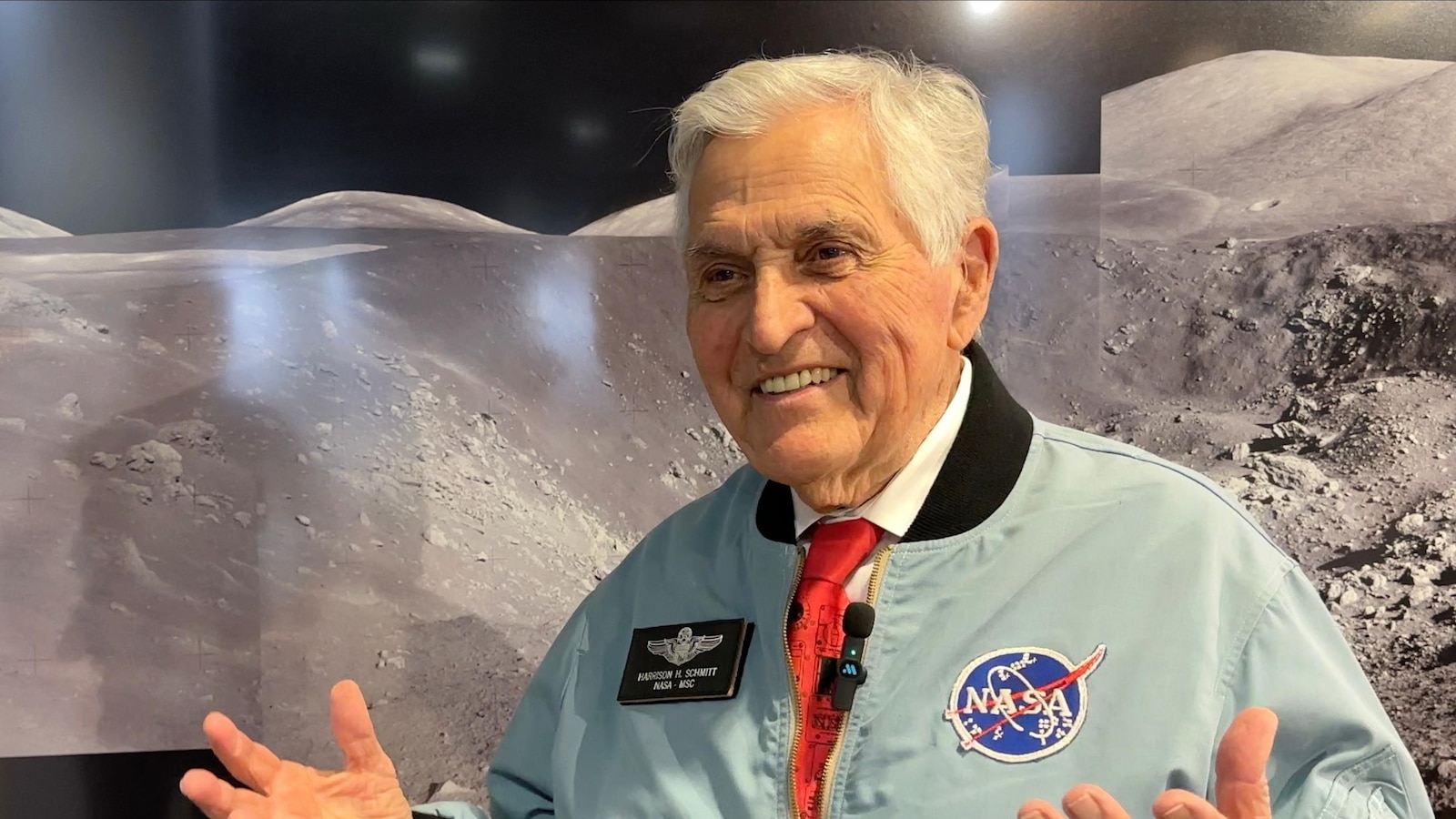
ALBUQUERQUE, N.M. — It was 1972 and Apollo astronauts Harrison “Jack” Schmitt and Eugene Cernan had just stepped onto the moon’s surface to begin collecting rock and soil samples.

The mission would mark the end of an era for the American space program, but Schmitt already was looking to the future. His voice crackling over a high-frequency radio signal that day, he shared his thoughts with Cernan and those listening in at Mission Control.

“Well, I tell you Gene, I think the next generation ought to accept this as a challenge. Let’s see them leave footsteps like these someday,” Schmitt said.

Schmitt, 90, is one of the four Apollo moonwalkers still alive today. A field geologist, he was the first scientist to set foot on the moon and his expertise helped answer questions about the origin of that big rock up there and what it tells us about the solar system.

Schmitt felt the thrill again when the Artemis II crew rocketed into space on a historic lunar flyby. Pure excitement and the potential for so much more. And he’s hopeful as new generations get back to the moon and beyond.

Interviewed by The Associated Press, the former U.S. senator from New Mexico spoke about everything from the importance of having a lunar base to tapping new energy sources and whether we’re alone in the universe. Dark matter and quantum entanglement also were mentioned, with Schmitt saying many discoveries are yet to come.

“You’ve just got to remember,” he said, “what used to be called supernatural probably should be called unknown physics.”

This interview has been edited for brevity.

Well, I think a lunar base makes a lot of sense and it always has for a lot of reasons. One is geopolitical. Probably the most important one is a geopolitical presence in deep space — and in preparation for going on to Mars.

The moon has resources that are going to reduce the cost of actually going to Mars and it gains experience. One of the things people keep forgetting about is you’ve gone through several generations and the new generation has to gain experience — psychologically as well as practically about how you work in deep space. And they’re doing that. That was probably the most important part of Artemis II, is it gave the ground people, Mission Control and others, the experience now to really have the risk as real rather than as part of a simulation.

I had a lot of understanding of what other crews had learned, what had been learned from some of the early sample analyses and so we were trying to put sort of the frosting on the cake of answering questions in a very complex geologic area called Taurus-Littrow.

Taurus-Littrow actually is deeper than the Grand Canyon and so it has a three-dimensional aspect to it that we hadn’t had on other missions. And plus having a field geologist like myself on board meant that we should be more efficient at gathering samples that had a meaningful aspect to our further understanding of the origin of the moon, its relationship to the Earth and, it turns out, also its relationship to the history of the sun.

Well there’s no question that the moon has a history to tell us.

It’s been recording the history of the solar system ever since the solar system formed about 4.5 billion years ago. That is really what the moon gives us — that library of knowledge, of potential knowledge about how the solar system evolved and then what the sun has been doing in that 4.5 billion years.

In the recent work that I’ve been doing in that layer of debris, the regolith, we find that the sun became even more active than it had been about the same time as we had an explosion of life in the oceans on Earth, and so the oceans may have been and almost certainly were warming to that more active sun and life likes warmth. So it multiplied not only in quantity but in diversity. The mammals started to appear soon after that, life started to move up onto the continents that had formed so things were really starting to move about a half-billion years ago.

This is a sample of a basalt lava and we have a lot of basalt lavas here in New Mexico. This is different in that it is rich in titanium, more rich than most terrestrial basalts. And that titanium turns out to be very important in terms of the resources that are available on the moon. It has a property of concentrating some of those resources, particularly hydrogen and helium.

There’s an isotope called helium-3 and that is going to be, I think, ultimately very, very important in the production of energy. It’s going to be extremely useful in quantum computing, in cancer therapy and other things here on Earth. We just don’t have much on Earth, so the moon is going to be a our reservoir, our source of this very important isotope of helium-3.

Helium-3 offers a possibility of having nuclear energy without nuclear waste. We’ve known that for decades, and so the moon now offers that opportunity to begin to substitute a nuclear form of energy that doesn’t produce nuclear waste for what we have today.

There’s no question about it. China is interested in it, we’re interested in it. And that’s probably one of the big technological drivers of this new race to the moon, a new space race, a Cold War that’s on now primarily involving China and I think helium-3 is a big actor in that right now.

First of all, we were in a valley deeper than the Grand Canyon. The mountains on either side were as high as the Grand Canyon from the bottom. Secondly, you’re in one-sixth gravity so that means you can walk much more easily than you could here on Earth. Now we were covered by a pressure suit but still walking around was like being a kid again, just one-sixth of your height and if you fell you didn’t fall very hard and you certainly didn’t cry about it. But the moon is really a very easy place to work so as long as you have the right equipment surrounding you. You have to have that atmosphere of course to breathe.

For me, it was a very comfortable environment to be in and you get a little bit lazy. For example, if you’re taking notes with a pad of paper and a pen or pencil and somebody says would you take the SCS switch to off, well you just let go and it floats there and you go over to the switch and come back and start to dictate those notes again.

You’ve got to be careful though because you’re brain gets lazy. When I got on the carrier after splashdown, I was taking my first drink of water and I just let go of the cup and of course it broke on the floor. Human beings tend to take advantage of their environment very quickly and the brain does get a little bit lazy like that. It took about three days to get comfortable again back here on Earth.

No, I think living on the moon is going to be very good. Now long term civilization on the moon, there’s still some major issues. The radiation issue has to be dealt with and we can. There are ways to do that. Going to Mars is another issue and that’s why you’ll almost certainly need fusion rockets to cut that time frame.

Well there are billions of sunlike stars out there and so you just have to imagine that life may have originated on some other planet, although the conditions for life to originate here on Earth are really unique. Everything sort of fit together and creation for us sort of leads to you thinking of an infinitely intelligent being that made it all happen. But the technical potential statistically is very high that you could have had the similar kind of conditions develop elsewhere in the universe.

Now are they visiting us? My feeling is if they’re really so advanced they could be here, they’d communicate better than they have and so I just don’t know. But it’s plausible. Let’s put it that way. Unlikely maybe, but plausible.

Oh surely. Teresa, my wife, would like very much to go with me — that would be one condition. But I think a trip to Mars is going to be fantastic for those people.

So youth is extremely important and the education of those youth particularly in mathematics is extraordinarily important, and NASA now has a younger agency than they had grown to be during the shuttle era.

Look what has happened since Apollo. The commercial sector has developed new technologies, new ways of doing things and NASA is now trying to integrate those into a new approach to deep space exploration.



Source link

Carrie Ann Inaba shares her struggle to manage hidden, invisible illness: ‘It’s real’

0
Carrie Ann Inaba shares her struggle to manage hidden, invisible illness: ‘It’s real’


NEWYou can now listen to Fox News articles!

Longtime “Dancing with the Stars” judge Carrie Ann Inaba is spreading awareness about a condition she’s been living with for decades.

The dancer and TV personality has recently been transparent about her journey with Sjogren’s disease – an autoimmune condition that can start with seemingly small symptoms but has the potential to become debilitating.

Inaba, 58, was rushed to the hospital last week after her condition triggered a medical emergency mid-flight while traveling to New York City.

‘DWTS’ JUDGE CARRIE ANN INABA RUSHED TO HOSPITAL AFTER MID-FLIGHT MEDICAL EMERGENCY

In an Instagram post featuring a video of Inaba being transported in an ambulance, she described how she “suddenly felt quite ill.”

“And while it seemed like food poisoning, I also suddenly broke out into a cold sweat, got dizzy and my arms went numb,” she wrote.

“Like many people who live with autoimmune disease, I travel with a health tool kit and am prepared for the worst, but this scared me.”

SELENA GOMEZ’S HEALTH BATTLE TAKES PAINFUL TURN AS STAR REVEALS LUPUS COMPLICATION

In an interview with Fox News Digital, Inaba revealed that she’s been silently struggling with the disease for years, since first developing eye problems when she was younger.

“My eyes were really, really dry and I kept having injuries to my corneas,” she said.

After consulting her ophthalmologist, who brushed off her symptoms, Inaba met with a rheumatologist who directed her to a Sjogren’s specialist.

Carrie Ann Inaba has been a “Dancing with the Stars” judge since the ballroom dance competition’s first season in 2005. (Courtesy of Carrie Ann Inaba)

Following extensive bloodwork and a dry-eye test, Inaba was diagnosed with Sjogren’s disease in 2013 – more than 10 years after she first experienced symptoms.

What is Sjogren’s disease?

Sjogren’s is a chronic, systemic autoimmune disease that can affect different parts of the body. If left untreated, the condition can worsen over time, in some cases causing damage to the lungs, kidneys and other organs, according to medical experts.

An estimated four million people in the U.S. are living with Sjogren’s, 90% of whom are women.

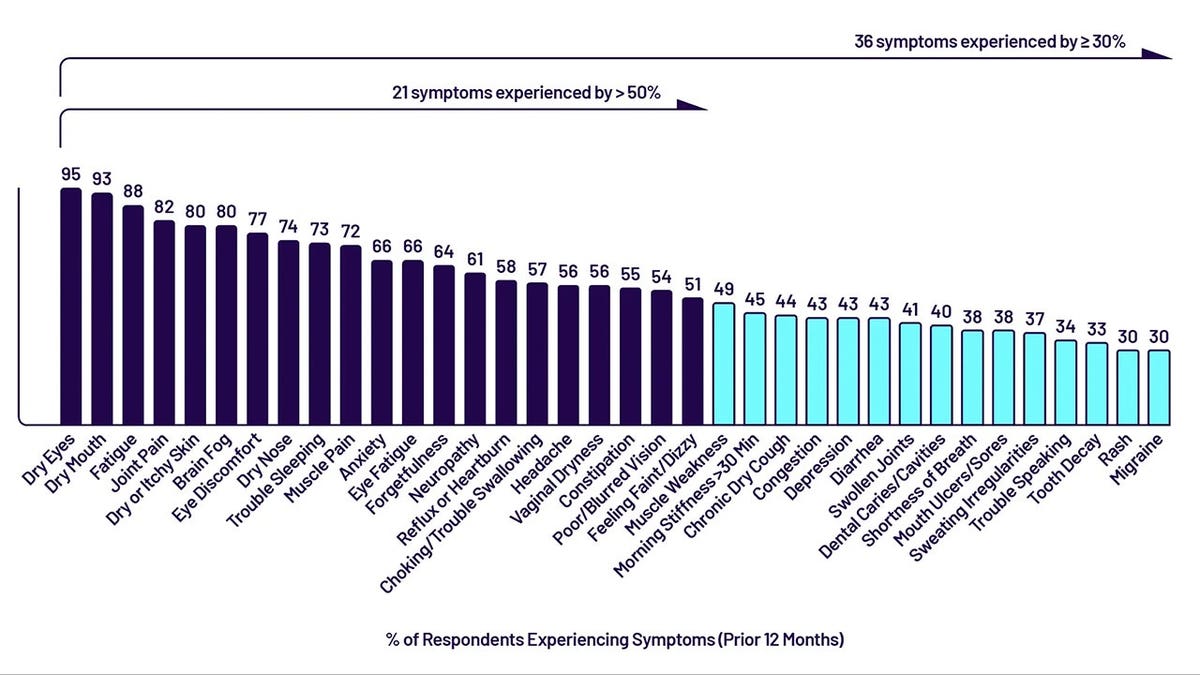
In a survey of more than 3,500 adults living with the disease, 48 different symptoms were reported over the course of a year, per data from Sjout for Sjogren’s.

JULIE BOWEN OF ‘MODERN FAMILY’ GETS REAL ABOUT CHRONIC DRY EYE: WHAT TO KNOW ABOUT THE PROGRESSIVE CONDITION

Sjogren’s can show up differently for everyone, making it difficult to diagnose.

In Inaba’s case, after the initial dry-eye symptoms, she began suffering from “a lot of pain” in her neck and shoulders. As a dancer, this was difficult to differentiate from the normal aches and pains, she shared. Extreme fatigue was another symptom she experienced.

carrie ann inaba black and white portrait

Carrie Ann Inaba, pictured at the Deadline x Dancing with the Stars 20th Anniversary Portrait Studio in November 2025, Following extensive bloodwork and a dry-eye test, was diagnosed with Sjogren’s disease in 2013. (Anthony Avellano/Deadline via Getty Images)

“I had no energy to move forward with things, which is unlike me,” she said. “I’ve always been a go-getter … I was physically active my whole life. And during this chapter, when I was starting to figure out something was wrong, there were all these symptoms, and I didn’t understand how they were related.”

FEELING EXTRA TIRED? THIS VIRUS COULD BE THE CULPRIT, STUDY SUGGESTS

Other symptoms can include dry mouth, brain fog, anxiety, swollen glands and lymph nodes, skin rashes, fevers and night sweats. People may also notice numbness, tingling or burning in the hands or feet. Internal organ complications can also occur.

Managing the disease

Inaba said she relies on a variety of practices to manage her symptoms, including keeping her eyes and environment moist.

“I always have a lot of drinks. I’m always spraying things in the air to get moisture in the air. I have a humidifier I sleep with,” she told Fox News Digital.

CLICK HERE TO DOWNLOAD THE FOX NEWS APP

“I also do lots of meditation and reiki and body work to make sure I don’t get too flared up, because pain is always with me. I live with pain 24/7.”

Inaba said she’s learned how to listen to her body to tap into what it needs, especially taking time to rest surrounding big events.

chart displaying sjogren's symptoms

An infographic displaying symptoms experienced by more than 3,500 U.S. Sjogren’s patients in one year. (Sjoiut for Sjogren’s/sjoutforsjogrens.com)

“I know that more than likely, I might be sick and I might have a few down days afterwards, and it’s worth the risk,” she said. “If I don’t have to be in a crowd, I won’t, because I want to take care of my health and prioritize myself.”

“Don’t let people tell you it’s not real.”

For others who are living with Sjogren’s or experiencing symptoms, Inaba’s advice is to keep “careful track” of the warning signs, to recognize when something doesn’t feel right and to advocate for proper care.

This is the message behind the Sjout for Sjogren’s campaign, an awareness movement that Inaba hopes will help spread more knowledge about the disease and reduce stigma.

CLICK HERE FOR MORE HEALTH STORIES

“We want people to respect that it is a complicated systemic autoimmune disease that needs care,” she said. “There is no FDA-approved treatment at this time, so it’s about managing symptoms.”

“It’s important to also have a community – and part of this campaign is about building a community.”

Tom Bergeron with Carrie Ann Inaba, Derek Hough, and Bruno Tonioli on Dancing with the Stars set

Carrie Ann Inaba appears on “Dancing with the Stars” during the show’s 20th birthday celebration that aired Nov. 11. (Eric McCandless/Disney)

The most important thing Inaba wants people to know about Sjogren’s is that “it’s real.”

“It’s an invisible illness,” she said. “I know when I’m out there doing whatever show I’m doing, you don’t think I’m sick, but I pay a price for doing that.”

CLICK HERE TO SIGN UP FOR OUR HEALTH NEWSLETTER

“It’s sometimes a lonely and isolating disease – and so I want people to know they can reach out … I want people to feel confident enough to shout about what they’re going through.”

TEST YOURSELF WITH OUR LATEST LIFESTYLE QUIZ

She added, “Don’t let people tell you it’s not real. And have patience for the friends who are trying to understand, but can’t quite. Because, most likely, you don’t believe it unless you’re actually experiencing it.”

Fox News Digital’s Stephanie Giang-Paunon contributed to this report.


Source link

Video Guatemala volcano’s eruption sends hikers in restricted area running for their lives

0
Video Guatemala volcano’s eruption sends hikers in restricted area running for their lives


Guatemala volcano’s eruption sends hikers in restricted area running for their lives

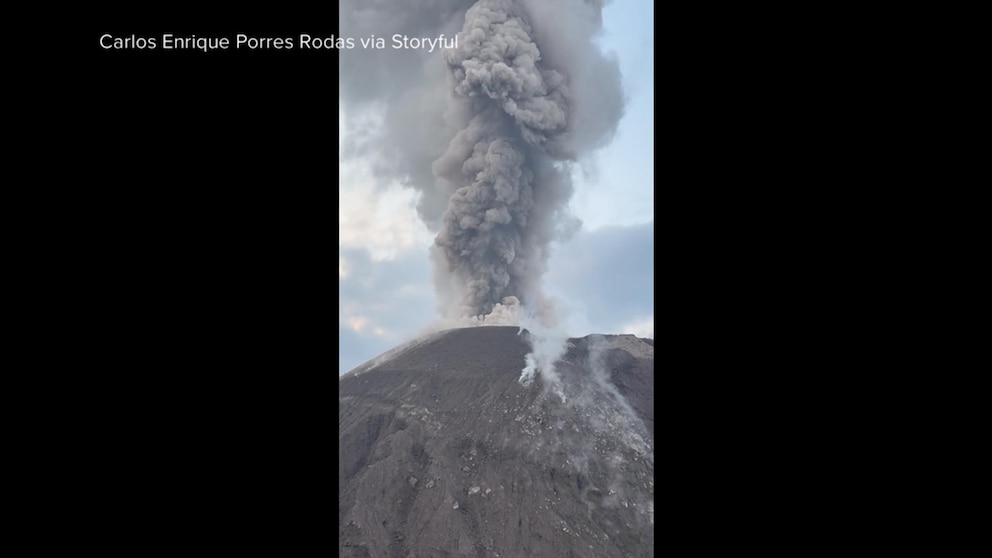
Harrowing video captured the moment the Santiaguito volcano in Guatemala suddenly erupted, sending hikers running for their lives as debris came raining down.

April 23, 2026


Source link

Amazon just put Elon Musk’s Starlink on notice

0
Amazon just put Elon Musk’s Starlink on notice


NEWYou can now listen to Fox News articles!

Chances are, you have never thought much about who owns the satellites keeping your phone connected in the middle of nowhere. That could change soon. Amazon is betting $11.57 billion that you will start paying attention. Its acquisition of Globalstar is a major move against Starlink, and the stakes go far beyond bragging rights.

Sign up for my FREE CyberGuy Report

  • Get my best tech tips, urgent security alerts and exclusive deals delivered straight to your inbox.
  • For simple, real-world ways to spot scams early and stay protected, visit CyberGuy.com trusted by millions who watch CyberGuy on TV daily.
  • Plus, you’ll get instant access to my Ultimate Scam Survival Guide free when you join.

AMAZON TAKES ON ELON MUSK, LAUNCHING 27 INTERNET SATELLITES

Amazon is making a major satellite push with Globalstar, aiming to challenge Starlink and expand direct-to-device connectivity for remote users. (Manuel Mazzanti/NurPhoto via Getty Images)

What Amazon’s Globalstar deal means for you

Globalstar has operated for more than 30 years as a mobile satellite services provider. It brings something Amazon needed badly: spectrum. The company operates in Band 53, a slice of spectrum from 2483.5 to 2495 MHz. It describes this aslicensed spectrum with global authorizations designed to support fast, low-latency connectivity with reduced interference. That matters. Spectrum is limited, and having access to it gives Amazon a real edge. 

Amazon is also getting Globalstar’s satellites, infrastructure and global licenses. It is a full package. But the real value is the spectrum. This deal is also about what that spectrum enables. Amazon plans to use it to power direct-to-device satellite services, allowing phones to send texts, make calls and access data even when there is no cellular signal. 

The system is expected to roll out starting in 2028 and will support features on devices like iPhones and Apple Watches, including emergency messaging and roadside assistance. That turns this into more than an infrastructure deal. It is a shift in how everyday devices stay connected beyond traditional networks.

Amazon vs Starlink: Where things stand now

Let’s be clear about the gap. Starlink serves more than nine million users and has about 10,000 satellites in orbit. Amazon’s Leo network has just over 200 satellites. Adding Globalstar’s two dozen barely moves the number. So why spend $11.57 billion? Because this deal is not about satellite count. It is about future capability. 

Amazon plans to launch a next-generation direct-to-device system in 2028. This would deliver voice, data and messaging straight to phones. The Globalstar deal gives Amazon the tools to make that happen. It brings spectrum, infrastructure and experience together.

MUSK CONFIRMS SPACEX SUCCESS IN PREVENTING RUSSIAN MILITARY FROM ACCESSING STOLEN STARLINK UNITS

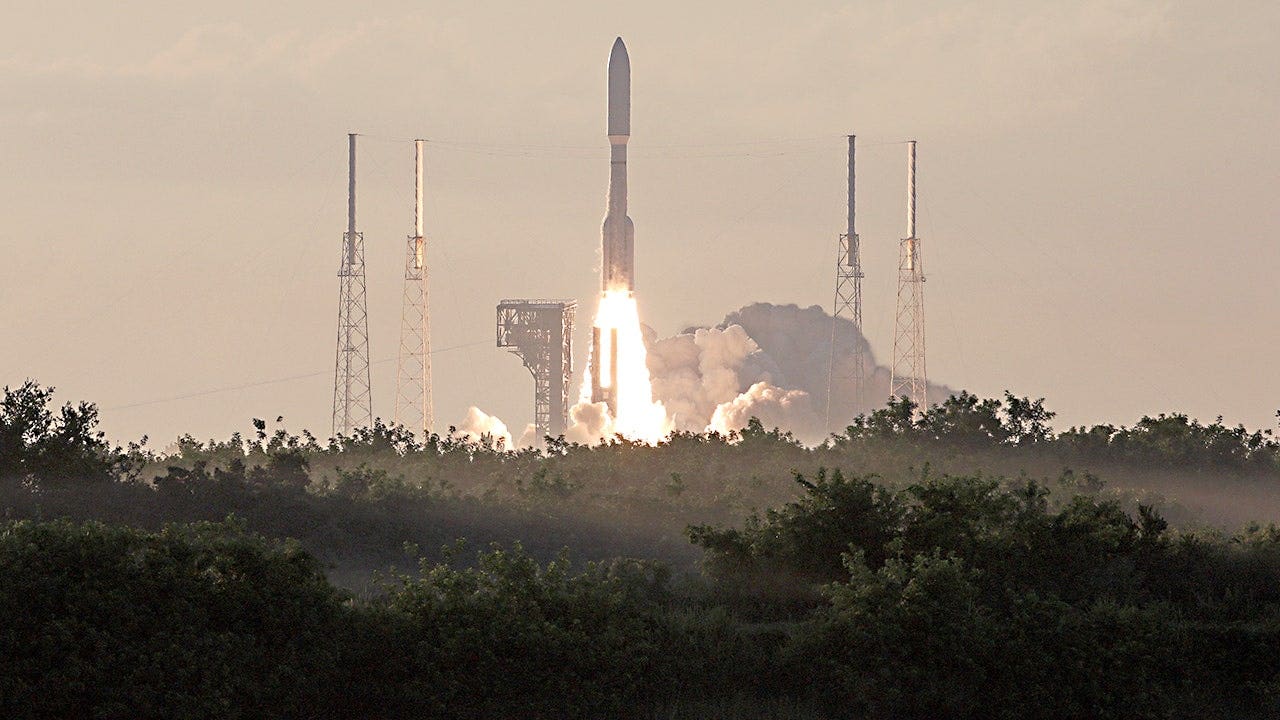
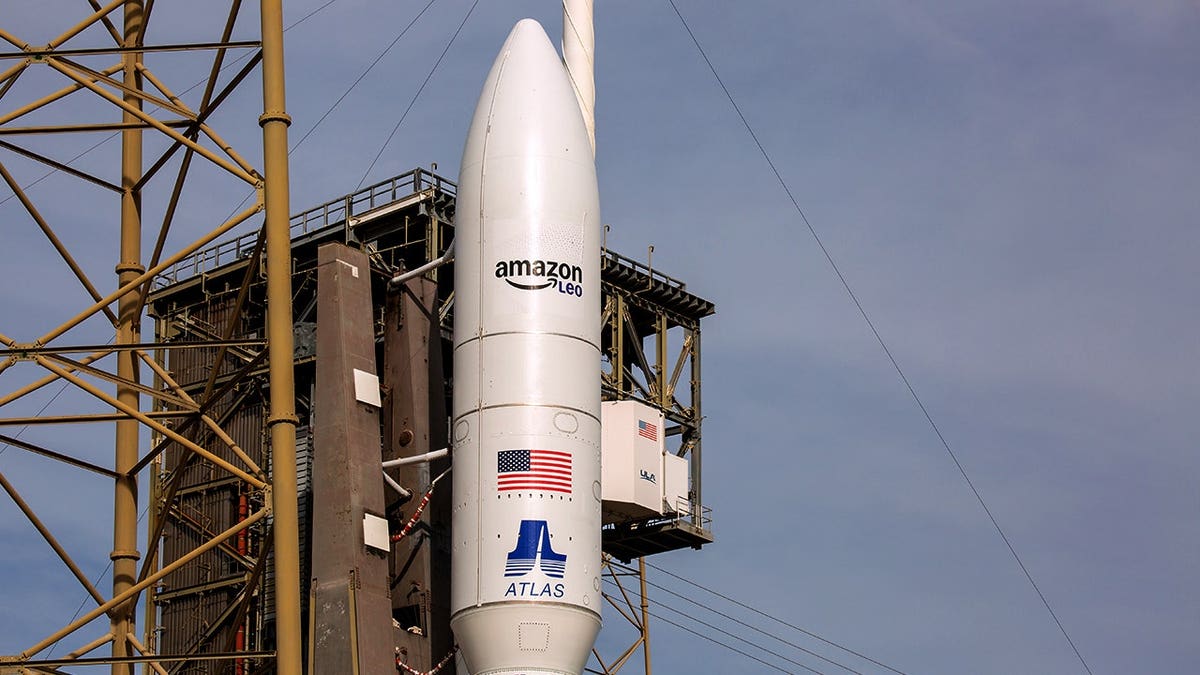
A rocket with Amazon Leo's branding stands on a launch pad.

Amazon’s planned Globalstar acquisition gives it spectrum, satellites and infrastructure to power satellite texting, calls and data beyond cell coverage. (Manuel Mazzanti/NurPhoto via Getty Images)

How Amazon’s satellite service will power iPhones and Apple Watches

This is where the story hits home. Amazon and Apple have an agreement for Amazon Leo to support satellite features on iPhones and Apple Watches. That includes Emergency SOS via satellite. If you rely on that feature in a dead zone, it will soon run through Amazon’s network. Apple says the service has already helped in real emergencies, including stranded hikers and crash victims rescued in remote areas. Amazon will continue supporting current devices using Globalstar’s system while working with Apple on future upgrades. So nothing breaks, but the system behind it changes.

Amazon satellite timeline and FCC approval

The deal still needs regulatory approval, and that takes time. Amazon expects it to close in 2027. The FCC will decide, though early signs look positive. Amazon also faces a deadline. It plans to deploy about 3,200 satellites by 2029. About half must be in orbit by July 2026. That timeline adds pressure to move fast.

What this means for rural and remote users

This deal matters most in places where cell towers do not reach. Satellite connectivity can act as a backup during disasters like hurricanes or wildfires. In those moments, having no signal can be dangerous. But the impact goes beyond emergencies. Remote workers, trucking fleets, maritime crews and rural communities all stand to benefit. These are places where traditional networks fall short. Amazon’s full Leo network will include thousands of satellites. It aims to support hundreds of millions of devices worldwide.

Take my quiz: How safe is your online security?

Think your devices and data are truly protected? Take this quick quiz to see where your digital habits stand. From passwords to Wi-Fi settings, you’ll get a personalized breakdown of what you’re doing right and what needs improvement. Take my Quiz here: Cyberguy.com    

BLUE ORIGIN LAUNCHES 38TH NEW SHEPARD FLIGHT INTO SPACE

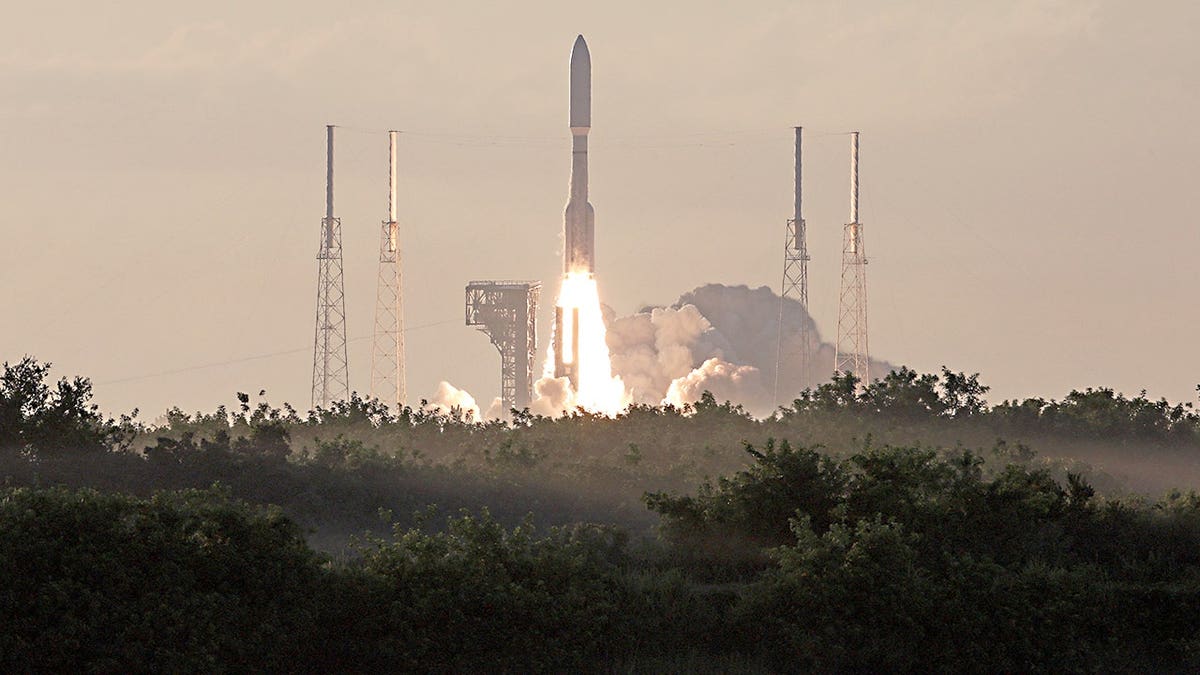
A rocket takes off from a launch pad in the distance.

Amazon launched its second fleet of 27 Project Kuiper internet satellites in Cape Canaveral, Florida, on June 23, 2025, to create a mega constellation which will offer global broadband internet access. (GREGG NEWTON/AFP via Getty Images)

Kurt’s key takeaways

Amazon’s $11.57 billion acquisition of Globalstar sends a clear message. It does not plan to let Starlink dominate the sky. Right now, the satellite gap is massive. Amazon knows that. Instead, it is betting on better spectrum, smarter technology and key partnerships like Apple. Amazon executive Panos Panay says billions of people still lack reliable connectivity. Amazon wants to close that gap. That is a real problem and a serious opportunity. The big question is speed. Can Amazon scale fast enough to compete before Starlink pulls further ahead?

If two of the richest companies in the world are racing to control the sky, who decides how that access is priced and delivered? And what does that mean for you? Let us know by writing to us at Cyberguy.com

CLICK HERE TO DOWNLOAD THE FOX NEWS APP

Sign up for my FREE CyberGuy Report

  • Get my best tech tips, urgent security alerts and exclusive deals delivered straight to your inbox.
  • For simple, real-world ways to spot scams early and stay protected, visit CyberGuy.com trusted by millions who watch CyberGuy on TV daily.
  • Plus, you’ll get instant access to my Ultimate Scam Survival Guide free when you join. 

Copyright 2026 CyberGuy.com.  All rights reserved.


Source link

Olympic legend Kaillie Humphries signs with activist sportswear brand XX-XY Athletics amid political rise

0
Olympic legend Kaillie Humphries signs with activist sportswear brand XX-XY Athletics amid political rise


NEWYou can now listen to Fox News articles!

The most accomplished Olympic women’s bobsledder in history is now an official brand ambassador in the movement to “save women’s sports”

Olympic bobsled legend Kaillie Humphries has signed with the activist sportswear company XX-XY Athletics, becoming the latest medal-winning Olympian to represent the brand.

“Being able to partner with a brand that believes in the same things I do, that’s willing to stand up and actively work on protecting the women’s space and women’s sports is huge,” Humphries told Fox News Digital. 

CLICK HERE FOR MORE SPORTS COVERAGE ON FOXNEWS.COM

Humphries first spoke out about her support for protecting women’s sports from biological male trans athletes in a Fox News Interview that went viral after the Milan-Cortina Olympics in February.

Humphries had just returned after winning bronze in women’s bobsled, marking her sixth career Olympic medal. She later revealed that she received backlash for coming out as a Republican with other conservative stances in that interview, but didn’t back down.

Humphries went on to be honored at a White House Women’s History Month event by President Donald Trump in March, and gave her Order of Ikkos medal to Trump, citing his actions to protect women’s sports. 

“Being able to come back to the USA after the Olympics and then be able to make connections and meet some people, I was able to, when I went to the White House, I was able to meet people that were connected obviously in working with XX-XY and that’s how the conversation started,” Humphries said.

Humphries, who is originally from Canada and competed in her first three Olympics for Canada, moved to the U.S. in 2016 and then competed for Team USA at the 2022 Beijing Winter Olympics.

FEMALE ATHLETES ANXIOUSLY AWAIT SUPREME COURT DECISION TO TAKE UP TRANSGENDER PARTICIPATION IN WOMEN’S SPORTS

Kaillie Humphries, U.S. Olympic bronze medalist bobsled athlete, presents the Order of Ikkos to President Donald Trump during a Women’s History Month event in the East Room of the White House in Washington, D.C., on March 12, 2026. (Al Drago/Bloomberg)

Just months after that, America was rocked by the news that male transgender swimmer Lia Thomas was winning championships for UPenn’s women’s swim team.

Humphries, who was following the story in the news, found it startling. 

Now, as a California resident and the mother of a newborn son, she is energized to help combat the wave of trans athletes in girls’ sports in the state, as California has become the nation’s biggest hotbed for the issue. 

XX-XY Athletics co-founder and former U.S. gymnast Jennifer previously told Fox News Digital one of her biggest goals for the brand was to land high-profile superstar women’s athletes as brand ambassadors, especially Olympic medalists.

Now, with Humphries, the brand has a three-time Olympic gold medalist and six-time Olympic podium finisher across her stints for Canada and the U.S. 

Humphries joins Olympic silver medalist gymnast MyKayla Skinner and gold medal swimmer Nancy Hogshead on XX-XY Athletics’ growing roster of Olympians.

CLICK HERE TO DOWNLOAD THE FOX NEWS APP

Kaillie Humphries holding a USA flag after bobsleigh women's monobob race

USA’s Kaillie Humphries holds a USA flag after winning bronze in the bobsleigh women’s monobob heat 4 at Cortina Sliding Centre during the Milano Cortina 2026 Winter Olympic Games in Cortina d’Ampezzo on Feb. 16, 2026. (Marco Bertorello/AFP)

“Kaillie is the GOAT of her sport. She is the only Olympian to win gold for two different countries. She is an elite athlete and a courageous, fierce woman who has fought for female athletes to have equal opportunities in sport.” Sey told Fox News Digital.

“The women’s monobob event exists because of Kaillie’s leadership, and she has gold-medal proof that women have the skill, strength, and speed to compete at the highest level. She has driven meaningful change and expanded opportunities for women at the Olympic level — more female athletes represent Team USA because of Kaillie. And that’s exactly why we’re leading with her as we grow in how we support female athletes.”

Follow Fox News Digital’s sports coverage on X, and subscribe to the Fox News Sports Huddle newsletter.


Source link

How to teach your children about money at different ages

0
How to teach your children about money at different ages


Financial education is set to become part of the national curriculum for primary and secondary school pupils from 2028 but parents can already start teaching their loved one about money from now.

It isn’t just up to teachers to educate children about money matters and there are lots of lessons that can be taught at home, without a child even noticing.

Starting money lessons early can help boost a child’s financial literacy skills and there are steps you can take even from the day they are born.

From playing shops to giving pocket money, here are the key ages that experts suggest money lessons should be taught.

At birth: Open a Junior ISA

Saving and investing may not be the first thing you consider when you have a baby but it can be a good time to open a Junior ISA (JISA).

The accounts can be opened by parents and up to £9,000 can be saved or invested tax-free per year, with anybody paying in, for your child who can access the money from age 18.

Sarah Coles, head of personal finance for AJ Bell, said: “The sooner you open a Junior stocks and shares ISA for them, the more time it will have to grow. You can gradually introduce them to their JISA as they grow up.”

Age 3-5: Learn the basics

Experts suggest age three to five is a good age for children to learn the basics of exchange and the value of things. This could be just by playing shop.

Financial coach Claire Saunders, of Mint Coaching, suggests that in the early years children are simply learning what money is, so it is worth finding real-world exposure such as paying in shops, handling coins, noticing prices, and working out simple change.

Get a free fractional share worth up to £100.
Capital at risk.

Terms and conditions apply.

Go to website

ADVERTISEMENT

Trading 212 logo

Get a free fractional share worth up to £100.
Capital at risk.

Terms and conditions apply.

Go to website

ADVERTISEMENT

Handling money together and talking about it can build understanding
Handling money together and talking about it can build understanding (Getty Images)

She said: “These small, practical moments build comfort and familiarity without pressure. It’s also where a child’s early money narratives begin to form. Phrases like ‘we can’t afford that’ or ‘money doesn’t grow on trees’ are absorbed quickly, so awareness of tone matters.

“The aim is for money to feel calm, normal, and part of everyday life rather than something stressful or avoided.”

Age 6-10: Introduce pocket money

Once your kids start school, it may be a chance to introduce pocket money either as a reward for chores or to teach them about spending choices.

Coles suggests this cuts “pester power” as instead of asking for sweets or small treats whenever you’re out such as on the way to or from school, you can tell them that if they want something they can spend their pocket money on it.

She said: “It doesn’t need to be much to start with, it’s just the idea of having their own money and getting to make some early decisions about prioritising spending. As they get older, you can give them a pay rise.”

Age 11-12: A child’s first bank account

Children’s bank accounts can be opened from age 11 and are a good way to teach kids about budgeting and managing their allowance, especially as many will be getting their first debit card.

Some accounts even pay interest, providing an opportunity to teach children about savings.

Coles said: “You can help them manage their money and encourage them to switch some into savings, to build good money habits as young as possible. At this age they’re likely to make some poor decisions, but they can’t go far wrong given the sums involved, and at least it’s a chance to learn.”

Some accounts let the parent ‘manage’ access or amounts via an app.

Age 13-15: Work for it

From around age 13 a child could start essentially earning their own money.

(Getty Images)

This could just be from doing chores around the house to odd-jobs such as dog walking or washing cars.

Some parents will pay their children for jobs they believe they should be doing anyway, like tidying their room.

Others will expect this as a bare minimum, and pay them for extra jobs like ironing or gardening – whichever way you choose, it’s about learning the value of work and effort to eventually exchange this for buying power.

Age 16-18: Prepare for adult life

From around age 16, your child will be looking towards higher education or even leaving school and getting a job. They may even be looking for ways to earn cash so they can go out with friends or pay for their own holidays.

Saunders said: “This is a good time to introduce a simple structure that mirrors adult life, where money is divided into different purposes: short-term spending, longer-term saving, something specific they are working towards, and a small buffer for unexpected costs.”

If you have done the work in their younger years, said Stacey Morris, financial adviser for BlackFin Independent Wealth, now is the time to trust your children.

She said: “It should be a matter of watching them put in place all the learning, but occasionally making a few bigger mistakes. They will splurge on items that you consider frivolous – but only through this process will they properly be thinking about money.”

And, perhaps, seeing and learning from the after-effects of those occasional impulse purchases.

Age 18: Time to cut the purse strings?

Your young one is now an adult and can spend, save or splurge that JISA you opened when they were a baby.

They can make their own financial decisions – but that doesn’t mean support should stop and Saunders said there should always be opportunities to talk openly about money.

Saunders said: “There is no fixed point at which financial support from parents should automatically stop. For many families, the ‘Bank of Mum and Dad’ now extends well beyond 18, into university, early careers, and even housing support.”

When investing, your capital is at risk and you may get back less than invested. Past performance doesn’t guarantee future results.


Source link

US economic chokehold on Iran reaches peak leverage as collapse risks emerge

0
US economic chokehold on Iran reaches peak leverage as collapse risks emerge


NEWYou can now listen to Fox News articles!

U.S. economic pressure on Iran has reached one of its most powerful points in decades, but inconsistent enforcement has prevented sanctions from achieving their full impact, according to a former Treasury sanctions expert.

Miad Maleki, who played a central role in Treasury Department sanctions campaigns against Iran and its network of proxy groups, said in an on-camera interview the current moment reflects a rare convergence of economic, political and diplomatic leverage against Tehran.

“We’ve never had the level of leverage that we have today with Iran in the history of our conflict … since 1979,” Maleki said. 

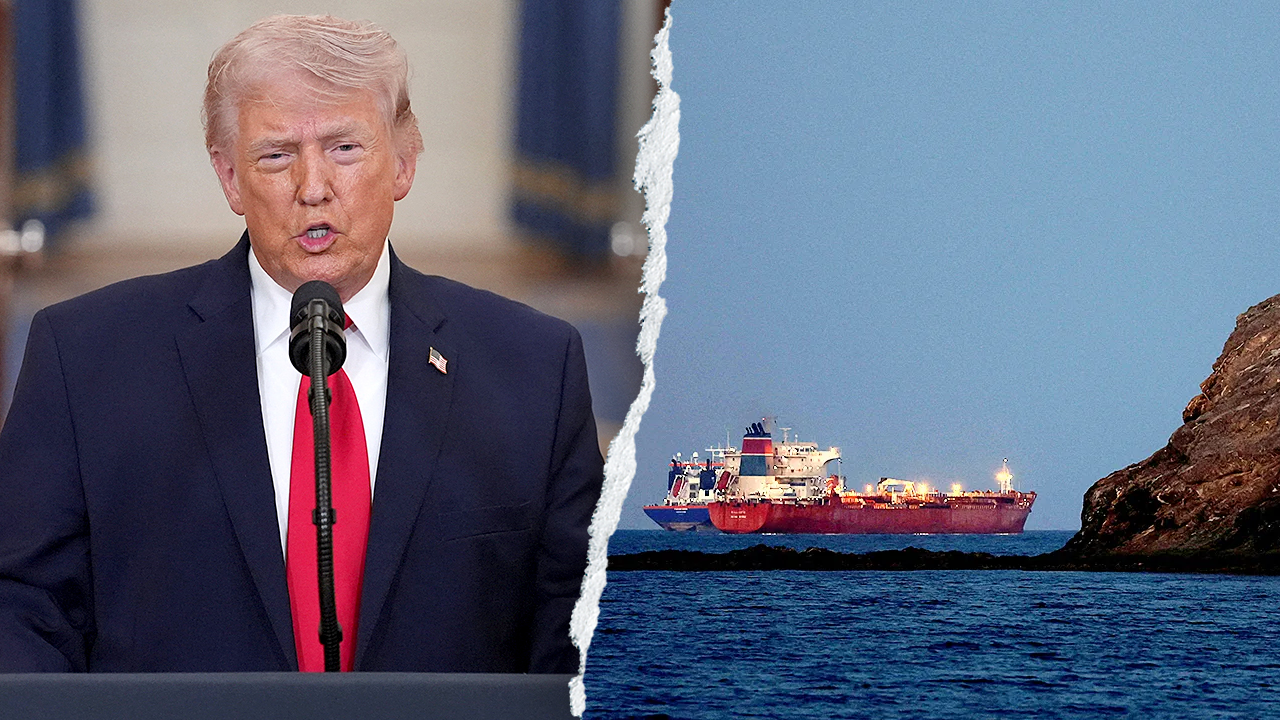
His assessment comes as President Donald Trump signaled escalating pressure Thursday, writing on Truth Social that the United States has “total control over the Strait of Hormuz” and that it is effectively “sealed up tight” until Iran agrees to a deal.

IRAN PRESIDENT VOWS DEFIANCE AS PROTESTS BUILD AGAINST REGIME AMID US MILITARY BUILD UP

Maleki argues the current moment marks a turning point because multiple pressure tools — sanctions, a U.S. naval blockade, and tighter enforcement — are being applied simultaneously for the first time in years. Unlike previous cycles, he said, the strategy is now directly targeting Iran’s oil exports and the networks that help move them, raising the risk of a rapid economic squeeze.

He said Iran may run out of oil storage in as little as two to three weeks, forcing production cuts, while gasoline shortages could hit on a similar timeline due to heavy reliance on imports. Combined with an estimated $435 million in daily economic losses, the pressure could spill into the financial system, leaving the regime struggling to pay salaries and raising the risk of renewed unrest.

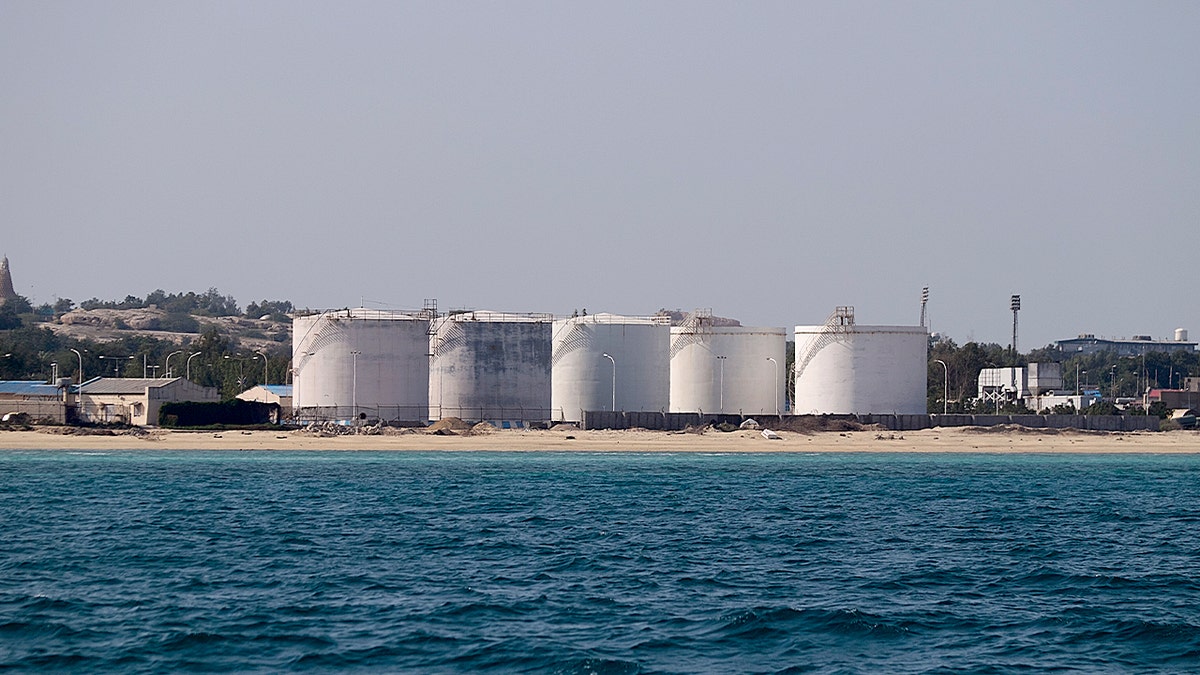
An oil tanker is seen near the terminal at Kharg Island, Iran, as U.S. officials and analysts consider whether seizing the island could significantly impact Iran’s oil exports. (Ali Mohammadi/Bloomberg)

Maleki said the real leverage lies in sustained economic pressure and enforcement.

At the core of that pressure is an Iranian economy he describes as “on the verge of collapse,” driven by years of sanctions and compounded by recent disruptions.

He pointed to triple-digit food inflation, a sharply devalued currency and a roughly 90% collapse in purchasing power, along with potential long-term oil revenue losses of up to $14 billion annually.

Maleki, who is currently a senior fellow at the Foundation for Defense of Democracies, estimated that current conditions are costing Iran “about $435 million a day in combined economic damage … with the blockade and closure of the Strait of Hormuz.”

A key driver of that pressure is the Strait of Hormuz, long viewed as one of Iran’s primary tools of leverage in global energy markets. Maleki said the dynamic has shifted.

IRAN IS ‘TRYING TO GIVE THE GLOBAL ECONOMY A HEART ATTACK’ BY CLOSING STRAIT OF HORMUZ, UAE MINISTER SAYS

oil hub at Kharg Island

President Donald Trump weighs a potential attack on Iran’s oil hub at Kharg Island amid expert predictions of market chaos. (Morteza Nikoubazl/NurPhoto)

“Iran’s economy relies on the Strait of Hormuz more than any other economy,” he said, calling its closure a form of “economic self-sabotage.”

While countries in Asia — including Japan, South Korea, India and China — are most exposed to disruptions, many have built up reserves. “Japan’s oil reserve is pretty significant. Same with China,” Maleki said.

Still, the region remains heavily dependent on the waterway, with roughly 75% of liquefied natural gas supplies for countries including India, China and South Korea flowing through the strait.

Inside Iran, however, vulnerabilities are more immediate. Despite vast oil reserves, the country imports between 30 million to 60 million liters of gasoline per day to cover a domestic shortfall of up to 35 million liters.

“If they run out of gasoline… they’re going to have a major crisis domestically,” Maleki said, noting that past shortages and price hikes have triggered widespread protests.

NUCLEAR EXPERTS WARN IRAN’S URANIUM ‘RIGHT’ IS A MYTH, SAY TRUMP IS RIGHT TO HOLD FIRM

The economic pressure is being reinforced by a U.S. naval blockade targeting Iran’s oil exports, the regime’s primary source of revenue.

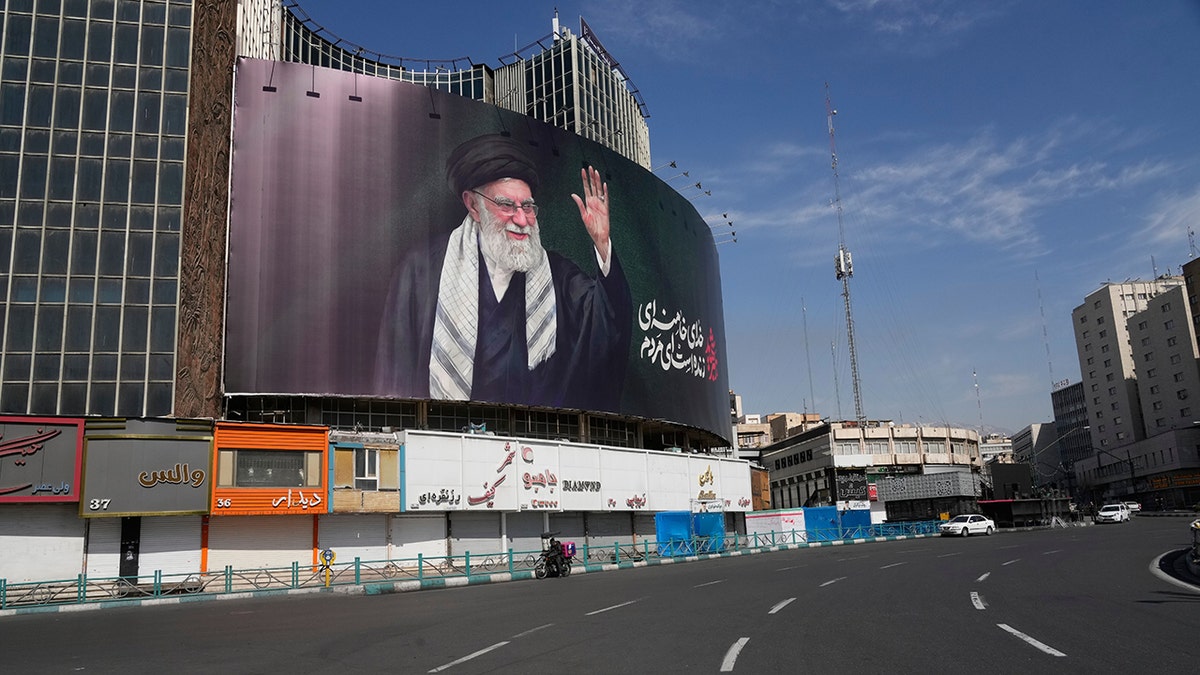
A billboard showing a portrait of the late Iranian Supreme Leader Ayatollah Ali Khamenei looming over an empty square.

A billboard showing a portrait of the late Iranian Supreme Leader Ayatollah Ali Khamenei, who was killed in U.S.-Israeli strikes, looms over an empty square in Tehran, Iran, Thursday, March 5, 2026. (Vahid Salemi/AP Photo)

A senior administration official said the Treasury Department is intensifying enforcement under what it describes as an “Economic Fury” campaign, using financial and maritime tools in tandem to squeeze Iran’s revenue streams.

The official said the strategy focuses on “systematically degrading Iran’s ability to generate, move, and repatriate funds,” including by constraining maritime trade through the naval blockade, which targets Iran’s primary source of revenue from oil exports.

Financial pressure is also expanding globally. The official said Treasury has warned banks in China, Hong Kong, the United Arab Emirates and Oman that facilitating Iranian trade could expose them to secondary sanctions, signaling a more aggressive approach to enforcement beyond Iran’s borders.

Treasury has issued sanctions on more than 1,000 targets since 2025 under the current maximum pressure campaign, the official said, aimed at disrupting Iran’s oil trade and financial networks.

The official added that Iran is facing immediate logistical constraints, warning that storage capacity at Kharg Island — the country’s main oil export terminal — could be filled within days if exports remain blocked, potentially forcing production shut-ins.

“Treasury will continue to freeze the funds stolen by the corrupt leadership on behalf of the people of Iran,” the official warned.

A new analysis from United Against Nuclear Iran said the blockade is already deterring high-value shipments, even as some Iran-linked vessels continue to transit the region.

TRUMP CLAIMS IRAN ‘STARVING FOR CASH,’ ‘COLLAPSING FINANCIALLY’ AFTER EXTENDING CEASEFIRE

Two oil tankers seized in the Strait of Hormuz

Iran seized two oil tankers Thursday while former Iranian minister Ezzatollah Zarghami threatened to make the Strait of Hormuz a “massacre and hell” for U.S. forces. (Giuseppe Cacace/AFP)

“Effectiveness should not be measured by the total number of Iran-linked vessels at sea,” the group said in an April 22 statement. “But by whether the U.S. is disrupting high-value Iranian oil exports… and deterring large-scale illicit shipments.”

At least 29 vessels have been turned around or forced back to port, including several very large crude carriers, according to the report.

The blockade, announced April 12 and enforced by U.S. Central Command, is designed to cut off Iranian crude exports, particularly shipments to China, while prioritizing high-impact targets.

While sanctions are clearly biting, Maleki said their impact has been limited by inconsistent enforcement across successive U.S. administrations.

U.S. sanctions on Iran have been in place in various forms for years, targeting the country’s oil exports, banking sector and access to global financial systems.

Under the Obama administration, sanctions pressure was partially lifted under the nuclear deal. The first Trump administration reimposed “maximum pressure,” but enforcement ramped up gradually and lasted only a limited period. The Biden administration later eased enforcement in pursuit of diplomacy.

He argued that cycles of tightening and relief — including sanctions rollback under the Iran nuclear deal and pauses in enforcement — have allowed Tehran to adapt.

“What’s different now,” Maleki said, is the combination of sustained sanctions with real-time enforcement measures that directly restrict Iran’s ability to export oil — a step that was largely absent in earlier phases.

To maximize pressure, Maleki said Washington must sustain enforcement, particularly through secondary sanctions targeting foreign banks and companies facilitating Iranian trade.

Crucially, he downplayed the likelihood that outside powers could offset the pressure.

CLICK HERE TO DOWNLOAD THE FOX NEWS APP

Anti-regime protesters marching in the streets of Tehran

Anti-regime protests engulf the streets of Tehran, Iran, on Jan. 6, 2025. (Reuters)

“I can’t really point to any other nation… that is going to jump in and give the Iranian regime a lifeline,” he said.

“At some point in the next few weeks to a few months, they’re going to face not just gasoline shortages and oil production disruptions, but also a major banking problem to pay salaries of government employees and IRGC personnel,” he said. “Iranians run out of patience again, as they did before, and they’re back on the street. I’m not quite sure if you’re going to have unpaid IRGC forces willing to go back on the street and kill their fellow Iranians who have the same grievances that they have now, which is a collapsed economy.”


Source link

Biobank data leak caused by ‘a few bad apples’, boss tells BBC

0
Biobank data leak caused by ‘a few bad apples’, boss tells BBC


Professor Sir Rory Collins said he was “angry” and “upset” about the incident, as both the bank’s boss and a participant.


Source link

Why should I care if share prices fall?

0
Why should I care if share prices fall?


Changes in the FTSE 100 and other indexes are not just for financial experts, they can affect our lives.


Source link

What NHS challenges does the next Welsh government face?

0
What NHS challenges does the next Welsh government face?


There are currently 687,958 people waiting for any type of NHS treatment in Wales.


Source link