
Home Blog Page 737

From pens to shaving cream: Everyday items facing price rises amid Iran war oil shock

0
From pens to shaving cream: Everyday items facing price rises amid Iran war oil shock


The far-reaching economic consequences of the Iran war are now extending to unexpected corners of the global market, notably impacting the cost of children’s beloved stuffed toys.

Even plush companions, with their whimsical names such as Snuggle Glove, Bizzikins, and Wobblies, are proving vulnerable as Middle Eastern oil shipments encounter restrictions.

The reason lies in the widespread use of polyester and acrylic in soft toy manufacturing – synthetic fibres directly derived from petroleum.

Ricardo Venegas, CEO of Florida-headquartered Aleni Brands, revealed that just three weeks into the conflict, their Chinese suppliers reported a 10 to 15 per cent cost increase for securing these essential materials.

“I think this situation demonstrates how much oil permeates throughout our system, and we can’t get away from it,” said Mr Venegas, who established Aleni Brands last year and is currently expanding its product lines.

“Who would have thought that the price of a toy would have a direct relationship with oil?”

Plush toys are displayed at a Camp store in New York (AP)

The impact, however, extends far beyond children’s playthings. Petrochemicals, derived from crude oil and natural gas, are used in more than 6,000 consumer products, according to the US Department of Energy.

These include computer keyboards, lipstick, tennis rackets, pyjamas, soft contact lenses, detergent, chewing gum, shoes, crayons, shaving cream, pillows, aspirin, dentures, tape, umbrellas, and nylon guitar strings.

For many outside the conflict zone, the war’s most tangible consequence has been the increase in petrol prices. Travellers are also encountering higher airfares and flight fees as airlines adjust to rising jet fuel costs.

Trading 212 logo

Get a free fractional share worth up to £100.
Capital at risk.

Terms and conditions apply.

Go to website

ADVERTISEMENT

Trading 212 logo

Get a free fractional share worth up to £100.
Capital at risk.

Terms and conditions apply.

Go to website

ADVERTISEMENT

Additionally, consumers may soon find themselves paying more for groceries, furniture, or any goods transported by diesel-powered lorries.

Yet, crude oil is not solely refined into fuel. It is transformed into chemicals, waxes, oils, and other mixtures found in countless everyday items, including plastic and rubber. Petroleum derivatives are also widely used in packaging.

With disruptions to global oil supplies now entering their eighth week, trade groups and companies warn that elevated production costs could translate into higher prices for shoppers.

Mr Venegas, a 30-year toy industry veteran, said he would absorb higher material costs for now but expects to increase prices for customers by early 2027, if the war goes on another three to six months.

Toothbrushes and other toiletries often contain petroleum
Toothbrushes and other toiletries often contain petroleum (AP)

From crude oil to ballpoint pens

While 85 per cent of global oil consumption is in the form of fuel, the rest goes into a wide range of consumer products, according to Gernot Wagner, a climate economist at Columbia University’s School of Business.

Crude oil is mostly a complex mixture of hydrocarbons, which are compounds made of carbon and hydrogen atoms. Refineries and chemical plants separate and break them down to convert them into smaller chemical building blocks known as petrochemicals.

Six petrochemicals — ethylene, propylene, butylene, benzene, toluene and xylenes — are the major foundations of plastics and synthetic materials like nylon and polyesters, which manufacturers in turn use to design and deliver products. More from the Department of Energy: Automobile parts, ballpoint pens, curtains, dice, eyeglasses, fertiliser, golf balls, hearing aids, insect repellant, kayaks, luggage, mops and nail polish.

Materials account for a big share of production costs for many manufacturers, including those that supply carpets, clothing and tires, according to Andrew Walberer, partner and global lead in the chemicals practice of global strategy and management consultancy Kearney.

Take a button-down shirt, for example. Mr Walberer estimated that materials account for 27-30 per cent of how much it costs a manufacturer to make one. Labour costs contribute 10-30 per cent. Business expenses tied to marketing, distribution and administration comprises the rest, he said.

The Iran war could push up the price of many everyday objects, like computer keyboards
The Iran war could push up the price of many everyday objects, like computer keyboards (AP)

A temporary cushion

Experts say if oil holds above $90 per barrel for the next several months, cost pressures will accelerate throughout the supply network.

Footwear Distributors and Retailers of America CEO Matt Priest said most of the trade organisation’s members keep a two- to three-month inventory of finished products, providing a temporary cushion against higher materials costs.

Roughly 70 per cent of the materials in synthetic shoes are petrochemical-based, and 30 per cent of the costs for those materials are directly tied to oil price rate swings, according to a report the organisation published in March on the US footwear industry’s “exposure to oil prices & the impact on shoe costs”.

The FDRA analysis estimated that between materials, factory energy and transportation, companies paying more for petroleum could translate into a 1.5 per cent to 3 per cent per cent increase in the price shoppers pay for a pair of shoes by late summer and the fall.

By the end of April, US shoe and clothing manufacturers need to start signing contracts with suppliers, mostly outside the US, for orders of polyester staple fibre and polyester filament yarn to get their designs on retail shelves and online for the holiday shopping season, according to Nate Herman, executive vice president of the American Apparel & Footwear Association.

One kilogram, or a little over two pounds, of the materials used in polyester textiles has increased in price from an average of 90 cents before the US and Israel attacked Iran to $1.33 per kilogram, Mr Herman said. He estimated that each garment will cost 10 cents to 15 cents more to produce as a result.

Six petrochemicals — ethylene, propylene, butylene, benzene, toluene and xylenes — are the major foundations of plastics and synthetic materials like nylon and polyesters
Six petrochemicals — ethylene, propylene, butylene, benzene, toluene and xylenes — are the major foundations of plastics and synthetic materials like nylon and polyesters (AP)

‘We want to stay at that sweet spot’

Some businesses are looking for ways to offset rising costs.

Lisa Lane is the founder of Rinseroo, which sells portable shower head, bathtub and sink attachments for cleaning, pet grooming, and bathing. She recently tripled the number of the slip-on hoses she procures from China each month after her manufacturer said the cost would be 30 per cent higher in another 30 days. She had a few days to decide whether to place a three-month advance order.

The components of Rinseroo’s products include petroleum derivatives like polyvinyl chloride, Ms Lane said. After purchasing 240,000 units instead of her usual 80,000, she is also evaluating cost-cutting options.

Ms Lane said she wants to hold off on increasing prices for retailers that sell the attachments since Rinseroo did that last year to offset higher US tariffs on imports from China. For example, a hose for washing pets in a bathtub went up to $33.95 from $29.95 on retail websites, she said.

“We want to stay at that sweet spot where people want to continue to buy from us and feel like they’re getting a good value,” Ms Lane said.

Another company, which sells wound care products like bandages, dressings, pads and sponges to nursing homes and other medical facilities, plans to raise its prices by 15 per cent in a matter of weeks. Gentell CEO David Navazio noted that adhesives in the products rely on several petrochemicals.

Including energy for production and materials, Mr Navazio estimated the company’s costs are going up by 20 per cent.

Gentell, which is based in Yardley, Pennsylvania but has its main manufacturing location in Toronto, also makes private label products for other companies, including a medical technology firm that supplies retail stores like CVS.

Because bandages and dressings are necessities, Mr Navazio said he doesn’t think his business will suffer if it raises customer prices. Less certain is whether prices will come down once the war ends and oil shipments stabilise.

“In the past, I’ve seen transportation costs come down, but I’ve never seen prices of raw material come down,” he said.



Source link

“You should never go to India”; the truth behind this foreign couple’s statement will leave you shocked | – The Times of India

0
“You should never go to India”; the truth behind this foreign couple’s statement will leave you shocked | – The Times of India


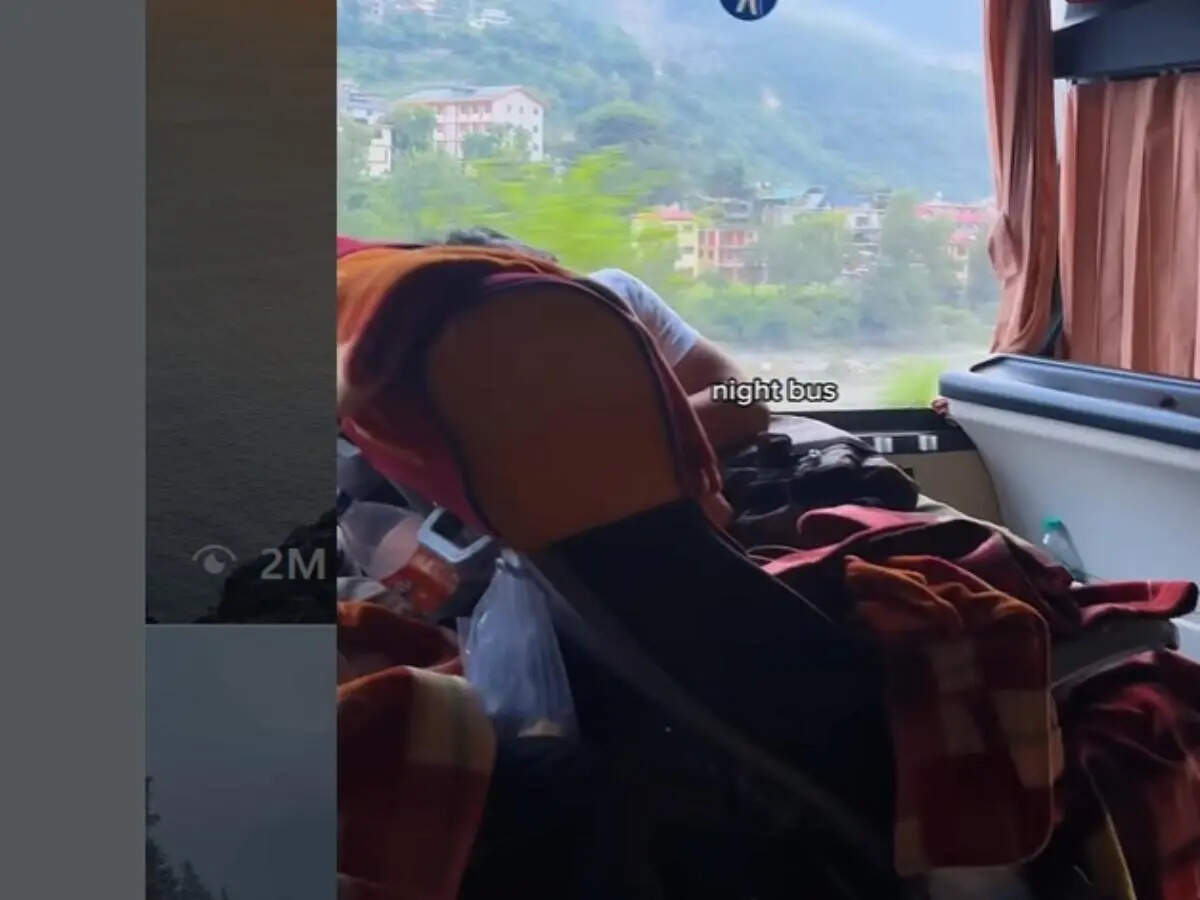
The video, which has attracted over one million views on Instagram, begins with a warning, “You should never go to India”. But what happens next is a surprise we were not expecting. In a now-viral Instagram reel by travel creators Toon and Lin (@noodlesandblisters) from The Hague, the Netherlands, the message has captured the imagination of travellers wanting, wishing and planning a trip to India. What follows next is not an ordinary journey but an unfiltered sojourn across the most difficult Himalayan terrains, far from civilisation in northern India.The journey is transformational, uncomfortable and unpredictable. Tale of two travellersTheir story begins in New Delhi, the beautiful capital of India. But there is no doubt that the city can overwhelm first time visitors. So they leave quickly and board a 15-hour overnight bus to reach for the Himachali mountains.Destination: Manali, Himachal Pradesh

Traveller

They reach Manali. Set in the Himalayas, the hill station is all about cool breeze, pine trees, and a slow life by the river. For the traveller couple, this was their calling. It is here where things begin to shift; exhaustion fades and beautiful experiences begin. “You eat the best meal of your life,” and that’s Manali for many travellers like them!The couple clearly is not looking for comfort but secluded terrains away from civilisation. They push further north and sit in a pickup truck with three monks. It is an image that feels almost movie-script. As the altitude rises, winding through rugged terrain toward Leh-Ladakh, crossing one of the highest motorable passes in the world.But now the altitude has started hitting them. Breathing becomes difficult and headaches, constant. Yet, they don’t lose hope.Destination: Leh-Ladakh

Traveller

Leh-Ladakh is just a normal destination but with extraordinary experiences! While the mountains here aren’t traditionally green, they’re virgin, raw and real! Weathered by wind and time. Some monasteries are clinging close to cliffs. Destination: Markha ValleStill not satisfied, the couple decide to go on a five-day unguided trek through the Markha Valley. No luxury, no itinerary, just will to explore the unexplored.“Leh-Ladakh which is unlike any place you have ever seen but even that doesn’t feel remote enough so you decide to do a 5-day unguided trek through the Markha Valley. You’ll sleep in a tiny tent and on the floors of locals. You eat soup with popcorn and use toilets with questionable hygiene.”They sleep in a small tent and on the floors of local homes. Meals are simple, toilets definitely questionable! Soup paired with popcorn is something you won’t try on a normal day but in the Himalayas, you eat to survive but at the same time, the meal feels soulfully comforting! But the journey only gets deeper and difficultNext destination: Markha Valley, Kongmaru La Pass

Traveller

In remote Himalayan villages, hospitality isn’t a service but a way of life where strangers are welcomed with open hearts and toothless smiles. Language barriers disappear with gestures and smiles. So they climb higher, and reach Kongmaru La Pass, the highest point on the Markha Valley Trek in Ladakh (17,060–17,273 feet).And that’s why the traveller warns, “You should never go to India because once you’re there you don’t want to leave.”For them, something changed. It is not about the place but the journey you experience. The chaos of Delhi, the calm of Manali, the raw beauty of Leh-Ladakh, the gorgeous Markha Valley; they become a part of you rather than an itinerary.The message behind their viral line is clear.Don’t go to India unless you’re ready to experience a change in ways you didn’t expect.


Source link

Dave Mason, co-founder of legendary British rock band Traffic, dead at 79

0
Dave Mason, co-founder of legendary British rock band Traffic, dead at 79


NEWYou can now listen to Fox News articles!

Dave Mason, co-founder of the British rock band Traffic, has died. He was 79.

“It is with deep and profound sadness that we share the news of the passing of Dave Mason,” a statement on the musician’s official Instagram read. “On Sunday, April 19, after cooking an amazing dinner with his beloved wife Winifred, he sat down to take a nap with sweet Star (the maltese) at his feet.”

“He passed away peacefully, in his favorite chair, surrounded by the beautiful Carson Valley that he loved so much. A storybook ending. On his own terms. Which is how he lived his life right up until the end. He leaves a lasting imprint on the soundtrack of our lives and the hearts he has lifted. His legacy will be cherished forever.”

PATRICK MULDOON, ‘DAYS OF OUR LIVES’ AND ‘MELROSE PLACE’ STAR, DEAD AT 57 AFTER SUDDEN HEART ATTACK

Dave Mason, co-founder of the British rock band, died on April 19. He was 79. (Getty Images)

In a statement to Deadline, the rock legend’s representative said, “On behalf of his family, it is with deep and profound sadness that we share the news of the passing of Dave Mason.”

“On Sunday, April 19, the Rock & Roll Hall of Fame inductee, celebrated songwriter, musician, singer, and author, passed away peacefully at his home in Gardnerville, NV.”

HOLLYWOOD STARS WHO DIED IN 2026

Dave Mason performing on stage at Winterland Arena in San Francisco

Dave Mason performs at the Winterland Arena in San Francisco, Calif., on April 27, 1974. (Larry Hulst/Michael Ochs Archives/Getty Images)

“Dave Mason lived a remarkable life devoted to the music and the people he loved,” the spokesperson added.

The cause of his death is unknown.

LIKE WHAT YOU’RE READING? CLICK HERE FOR MORE ENTERTAINMENT NEWS

Fans quickly flocked to social media to share their condolences.

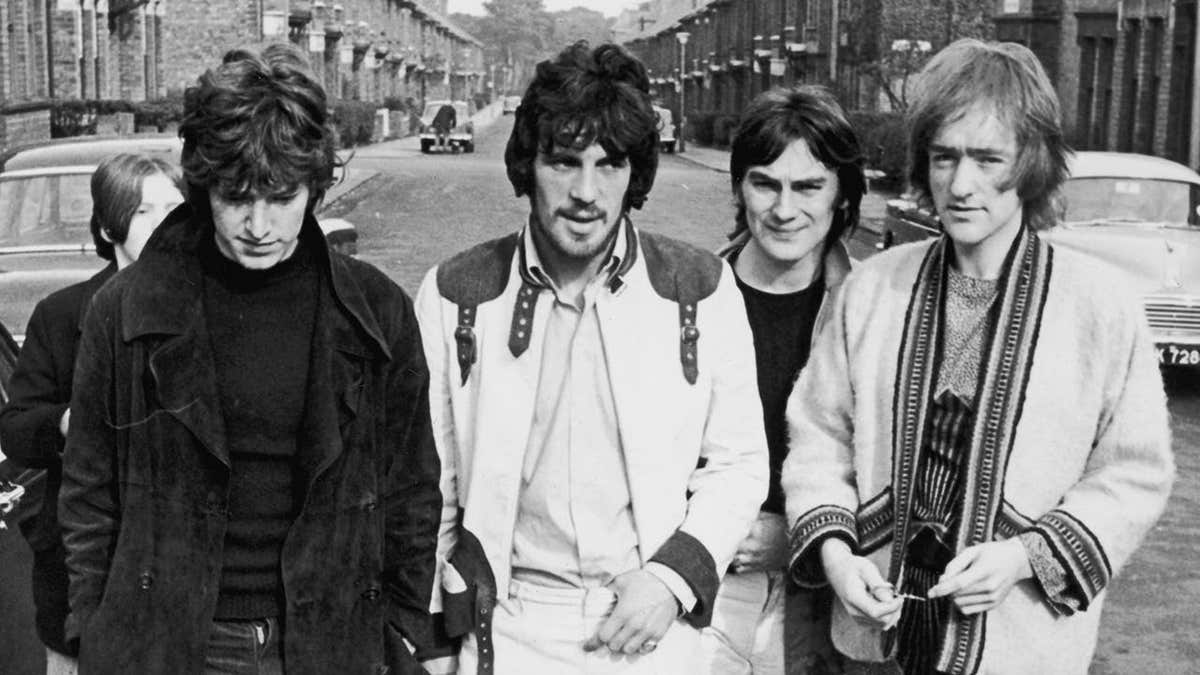
British psychedelic progressive rock group Traffic posing for a photo

British psychedelic progressive rock group Traffic, from left to right: Stevie Winwood, Jim Capaldi, Chris Wood and Dave Mason, circa 1967. (Keystone Features/Hulton Archive/Getty Images)

“I am so sad to hear about his passing. He was a GOAT – amazing song writer, guitarist and performer. He will be sorely missed. My sincere condolences to Winifred. May his memory be a blessing,” one user wrote on Instagram.

CLICK HERE TO SIGN UP FOR THE ENTERTAINMENT NEWSLETTER

“From a long, long time fan, roadie, and believer in his messages… thank you, Mr. Dave Mason for sharing your talents, gifts, and soul energies with us all. Rest in purity,” another added.

In 2024, Mason canceled his “Traffic Jam Tour” due to “a serious heart condition,” according to Deadline. A year later, the guitarist announced his retirement, citing “ongoing health challenges.”

CLICK HERE TO DOWNLOAD THE FOX NEWS APP

Mason is survived by his wife, Winifred Wilson, and daughter Danielle, as well as several nieces and nephews.


Source link

Xbox Game Pass price cut but day-one Call of Duty access ended

0
Xbox Game Pass price cut but day-one Call of Duty access ended


New Call of Duty games will be added to the subscription service “about a year” after release, Microsoft said.


Source link

Inside the ‘slow’ designer movement taking fashion back to the farm

0
Inside the ‘slow’ designer movement taking fashion back to the farm


Central Saint Martins is the holy grail of fashion schools that counts Alexander McQueen, John Galliano, Mary Katrantzou, Phoebe Philo, and Gareth Pugh as ex-pupils. So, when they launch a new initiative it’s wise to sit up and take note – and their Makers Camp is, as ever, on the money with its push for fashion to truly shift its mindset and launch a new generation of designers who not only rethink how clothes are made, but learn by a set of new rules that put the planet first.

MA fashion students have been signing up to the “Makers Camp: The West Africa Project”, which gives young designers all the information they need about fashion’s excessive extraction, pollution and waste. Berni Yates (knowledge exchange lead and senior lecturer) explained the project, “Originally, we were looking at waste and how Kantamanto Market in Accra was reproducing and upcycling the waste.

“We started with that and then we started sharing knowledge online, then we thought, let’s make it physical and let’s make it more around the bigger conversation. We also have these struggles. We’re losing our manufacturing. We’re losing our industry.”

Fast fashion companies may want to pull the wool over our eyes, but looking local can help put the planet first (Getty/iStock)

Yates continues, “We worked with Nubuke Foundation, who deal with all of the weavers across Ghana and had conversations with them and Harris Tweed, looking at comparisons with the crofts and how they work and build their own looms and weaves. It’s about thinking globally but reacting locally.”

Luke Hemingway, Oliver Roberts and Paris Ryan (MA fashion students) have since produced a road-trip documentary, It’s Still There, looking at British Wool’s infrastructure and considering what role they may play in its future. Their journey takes them from the Midlands through the northwest to the Scottish Borders, exploring the surviving skills and stories shaping British textile production today.

“The problem is that value is placed on exotic fibres like Kashmir and Merino when that value should instead be placed on the wool we grow domestically,” says Hemingway. “We have one of the greatest diversities of sheep breeds in the world and that should be a source of pride. The answer to climate change lies in working with what we already have.”

“When the actual person who is buying the clothes understands the whole journey, that will then hopefully shift the consumer attitude towards actually appreciating the fabrics.” Learning how heritage craft can inform a low-impact future, Ryan explains, “I feel, as younger designers, it helps modernise it and bring it to a new context. They’re all traditional methods”. The second episode available on their YouTube channel focuses on flax into linen, leather tanneries, knitting and lace-making.

Partnership with designers Phoebe English & Fabienne Gassmann and Plaw Hatch Farm, a Future Fashion Landscapes project - was facilitated by South East England fibreshed and the work created using fibershed principles - local, labour, local fibres, local dyes
Partnership with designers Phoebe English & Fabienne Gassmann and Plaw Hatch Farm, a Future Fashion Landscapes project – was facilitated by South East England fibreshed and the work created using fibershed principles – local, labour, local fibres, local dyes (Dr. Mila Burcikova)

Fibreshed is a fashion movement (and resource for Hemingway, Roberts and Ryan) that has now grown across the world since the term was first coined by founder Rebecca Burgess in 2011. A non-profit organisation developing regional fibre systems that expand opportunities to implement climate beneficial agriculture, rebuild regional manufacturing and educate the public about the benefits of soil-to-soil fibre and dye systems, Deborah Barker of Fibreshed South East England told me of their mission to reconnect fashion to farming.

“We encourage people to think about what’s behind the clothing and climate crisis. Taking designers and students on to farms helps them understand the connection between fibres, soil health and the health of the biosphere. We start with the compost heap because there is more biodiversity under the soil than above.”

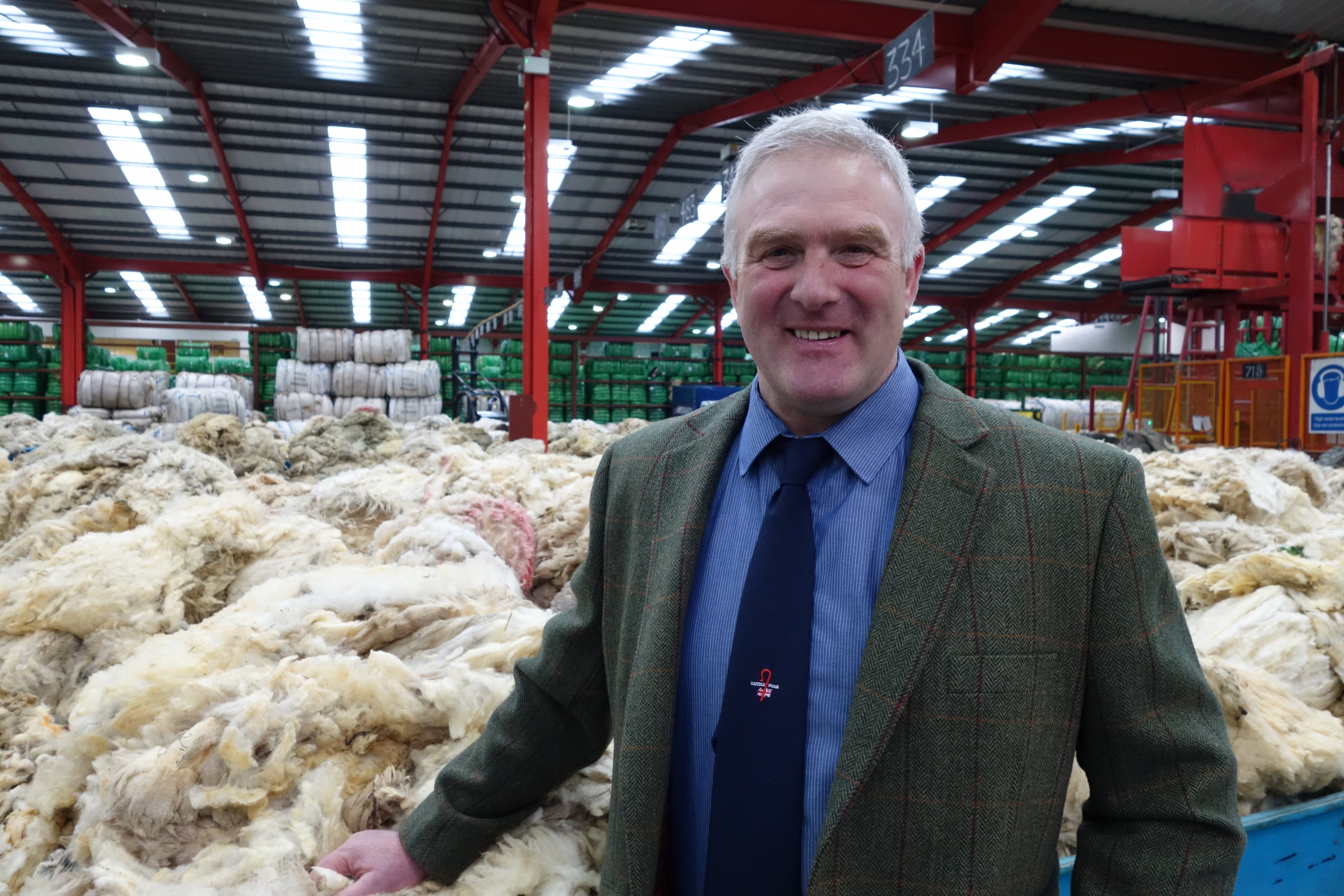
Jim Robertson, chair at British Wool, says looking locally has a positive environmental impact and provides clarity missing from complex global supply chains
Jim Robertson, chair at British Wool, says looking locally has a positive environmental impact and provides clarity missing from complex global supply chains (British Wool)

With farming at the centre of this natural fibres movement, Jim Robertson (British Wool chair and farmer) told me: “Reconnecting fashion to British farming and craft traditions is increasingly important. For years, fashion has relied on complex global supply chains where that connection has been lost, and with it, a clear understanding of environmental impact. Local fibres, like British wool, bring that transparency back. Consumers can trace a product right back to the farm; shorter supply chain supports a more transparent and responsible approach to production.”

When thinking of the bigger picture, Robertson explains: “British sheep farming helps maintain landscapes and supports rural communities; the UK’s textile heritage represents skills and knowledge that risk being lost if they’re not valued. Rebuilding that connection between the land, the fibre, and the finished product encourages a shift away from fast, disposable fashion. These materials and processes are designed to last.”

Few have championed that principle longer than Harris Tweed. Creative director Mark Hogarth describes life and work in the Outer Hebrides. “We are in an incredibly beautiful, albeit remote and socially and economically challenged geography, but no man is an island and that’s certainly the case up there. The communities work together in all facets, and that really comes together particularly with Harris Tweed and spiritually there’s a real connection to the land we always say from the land comes the cloth.”

Benedict Lamb, here wearing an Anthro Nomad Robe, sees his craft as a way to slow production to a ‘human tempo’
Benedict Lamb, here wearing an Anthro Nomad Robe, sees his craft as a way to slow production to a ‘human tempo’ (Darian Zahedi Photography)

Bringing craft from the countryside to a city context, in the heart of Soho, is veteran designer and activist Joe Corré (co‑founder of Agent Provocateur and A Child of the Jago). His new venture, The Light House, has been created to give small makers the one thing London has nearly lost: space.

The collective offers artisan designers affordable studios and retail frontage in a city where independent fashion has been priced out by rising rents and brand homogeneity. Corré calls it a return to the creative energy of old Kensington Market, a place where craftsmanship, conversation and community are back on display.

“I wanted to support craft and independent creatives for a number of reasons. One, because quality had become a luxury thing. Secondly, because if you really wanted to compete against online e-commerce, you have to offer something that you can’t repeat online, it has to be a personal experience that you have to participate in.” A call back to the real world from our digital age of endless consumption.

A piece from Hoh Pabissi’s first fashion week in Helsinki – 100 per cent biodegradable and made of blue raffia from Chanel dead stock, manufactured in London
A piece from Hoh Pabissi’s first fashion week in Helsinki – 100 per cent biodegradable and made of blue raffia from Chanel dead stock, manufactured in London (Hoh Pabissi)

Benedict Lamb, Anna Pabissi (Hoh Pabissi) and Owen Edward Snaith are just three of the 20 designers who make up this community. Lamb calls craft “labour‑intensive and transformative”. He sees the beauty in a slower practice. “In contrast to industrial systems that obscure origin and consequence, the beauty of craft is that it insists on visibility. It slows production to a very human tempo. Time is the ultimate luxury.”

Designer Owen agrees that tradition is a living language “It’s really important to keep traditional craft alive and show that it can be diversified and modernised,” he says. “The younger generation can pick it up and make it contemporary.” Snaith grew up in a Scottish fishing village “Seeing the fishermen and what they wore, my grandad was part of the lifeboat crew; they all wore these like big orange suits, a lot of the inspiration comes from that. From a young age, I felt alienated from it because it was a very masculine, male-dominated space. Through my work, I’ve rewritten my childhood and how I found myself amongst all of that, having story behind it.”

What makes The Light House so compelling is the way it unites the city and the countryside.

Climate action is too often framed as something that happens out in nature on farms, in fields, beneath open skies, but by championing slow, small‑scale making within London’s concrete landscape, The Light House has turned fashion itself into an ecosystem rooted, collaborative, and defiantly alive

Indilisi has a strong focus on heritage craft and handweaving, partnering with Fair Trade groups in Bangladesh, India and Kenya
Indilisi has a strong focus on heritage craft and handweaving, partnering with Fair Trade groups in Bangladesh, India and Kenya (Steve Nyman / Indilisi)

Safia Minney, founder, activist and visionary, has long been the industry’s moral compass, and now, through her new label Indilisi and the movement Fashion Declares, she continues to chart the way forward, urging the industry to commit to real climate action and a just transition.

“I see craft as a way of rapidly reducing production and consumption whilst redistributing wealth in favour of fibre farmers, artisans and makers,” she says. “Craft has always been part of activism, of a more humanitarian way of living, a lighter way of living.” For Minney, the revival of craft isn’t an indulgence in nostalgia but a blueprint for a fairer fashion economy.


Source link

NHL coach narrowly avoids disaster as glass shatters behind bench

0
NHL coach narrowly avoids disaster as glass shatters behind bench


NEWYou can now listen to Fox News articles!

Los Angeles Kings head coach D.J. Smith narrowly avoid disaster in Game 2 of the Stanley Cup Playoffs against the Colorado Avalanche on Tuesday night.

Raucous Avalanche fans banging on the glass behind Smith caused the pane to shatter after Colorado goaltender Scott Wedgewood made a stop on Quinton Byfield. Some pieces of glass rained down on Smith. He covered his head and brush the glass off his suit before running down the tunnel to get checked out.

CLICK HERE FOR MORE SPORTS COVERAGE ON FOXNEWS.COM

Members of the Colorado Avalanche conversion crew carry a new piece of glass to the Los Angeles Kings bench during the second period of Game 2 in the first round of the NHL Stanley Cup playoffs against the Colorado Avalanche in Denver on April 21, 2026. (Jack Dempsey/AP)

Smith was OK and he returned to the game.

“Whoever the guy (was) just kept pushing and pushing and pushing,” he called. “I looked back because it hit me a bunch of times, then it broke.”

The incident delayed the game for about 15 minutes. The score was even at zero when the glass broke. Colorado eventually picked up the 2-1 win in overtime thanks to Nicolas Roy’s game-winner. The Avalanche had a 2-0 series lead.

Avalanche star Gabriel Landeskog said he was “loud” when Wedgewood made the save and admitted that the “fans got a little too excited.”

Colorado Avalanche left wing Gabriel Landeskog arguing with referee TJ Luxmore on ice during NHL playoff game

Colorado Avalanche left wing Gabriel Landeskog argues a call with referee TJ Luxmore during the second period of Game 2 in the first round of the NHL Stanley Cup playoffs against the Los Angeles Kings in Denver on April 21, 2026. (Jack Dempsey/AP)

JOSH ALLEN ANNIHILATES A BEER TO FIRE UP THE SABRES CROWD

“There’s nothing you can do to control it. There’s nothing you can do about it, so you just deal with it,” he said of the delay. “I think maybe the only thing was that there were so many bodies on the ice that it (wore) the ice out a little bit for the rest (of the period).

“I thought the ice crew did a good job and they did their best to fix it as fast as possible. Doesn’t happen every day.”

Colorado head coach Jared Bednar said the delay was a first for him.

“That’s a different one,” Bednar said. “But, I mean, stuff happens. Fans get excited. Our guys were excited, competing hard. There was a bunch of melees on the ice today. It felt like playoff hockey.”

Los Angeles Kings interim coach D.J. Smith talking with center Samuel Helenius on ice during NHL game

Los Angeles Kings interim coach D.J. Smith talks with center Samuel Helenius during the first period of Game 2 in the first round of the NHL Stanley Cup playoffs against the Colorado Avalanche in Denver on April 21, 2026. (Jack Dempsey/AP)

CLICK HERE TO DOWNLOAD THE FOX NEWS APP

Game 3 is set for Thursday night in Los Angeles.

The Associated Press contributed to this report.


Source link

Researchers spent decades breeding better potatoes, and their work isn’t done

0
Researchers spent decades breeding better potatoes, and their work isn’t done


EAST LANSING, Mich. — There’s a surprising amount of science in a bag of potato chips.

Researchers have spent decades developing potatoes for chip makers that can grow in all kinds of climates, avoid diseases and pests, sit in storage for months and still deliver a satisfying crunch. They’ve also kept an eye on consumer trends; a shift to snack-size portions has increased the demand for smaller chipping potatoes, for example.

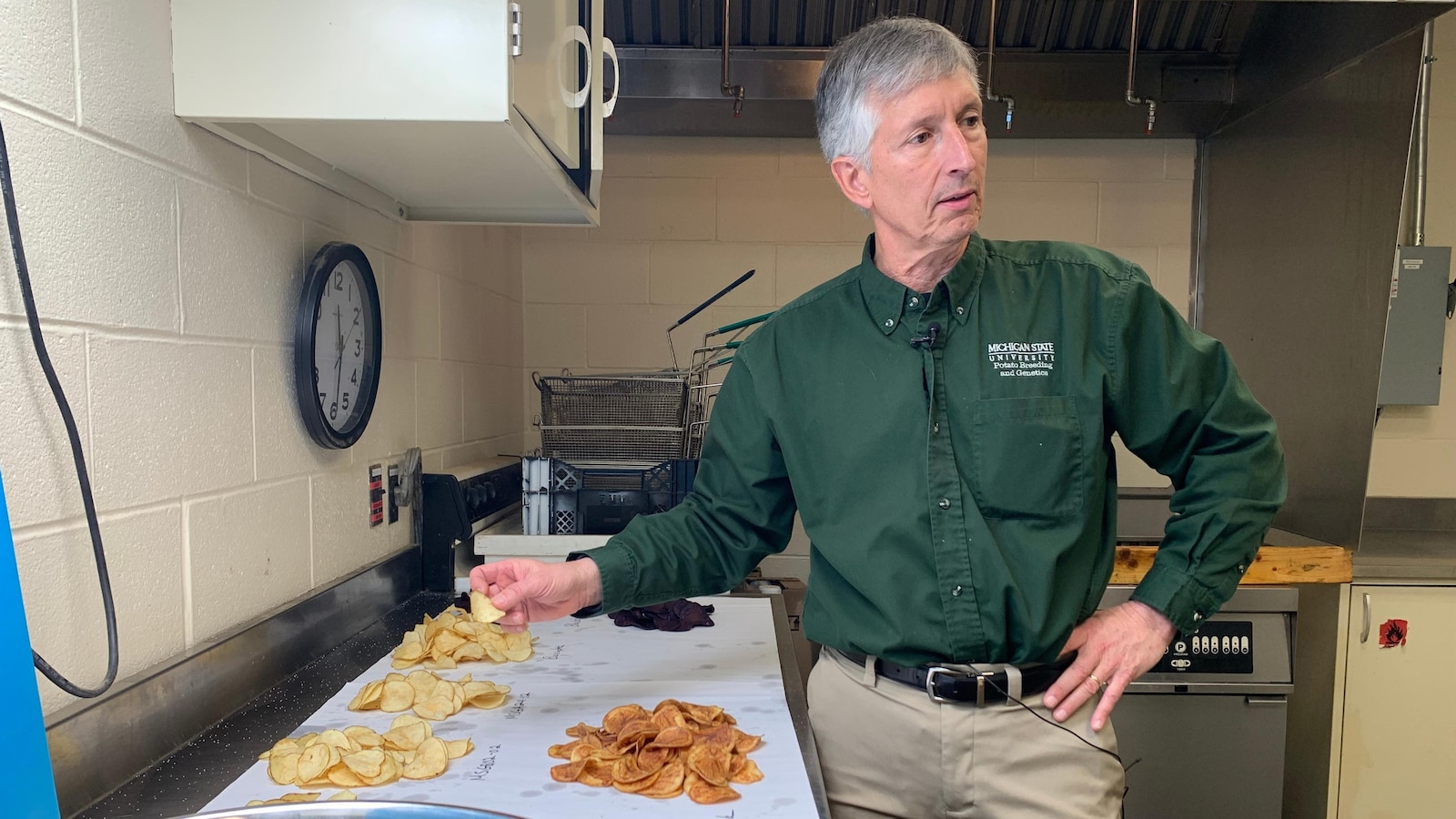
“The potato industry is dynamic,” said David Douches, a Michigan State University professor who leads the school’s Potato Breeding and Genetics Program. “The needs change, the costs, the pressures that they have, and the markets change. So we have to adapt to that with our varieties.”

Douches has developed five new potato varieties for chips in the the last 15 years. His latest breakthrough is a bioengineered potato that can maintain a proper sugar balance when stored at colder temperatures, which can help keep potatoes from rotting. He is currently growing seeds for commercial testing of the potato, which is not yet on the market.

Douches’ work helps fight world hunger; he has developed disease-resistant varieties for farmers in Nigeria, Kenya, Rwanda and Bangladesh. But he’s also helping U.S. chip makers, grateful snackers and Michigan’s $2.5 billion potato industry. While Idaho leads the U.S. in potato production, Michigan is the top producer of potatoes for chips.

There are around 50 unique potato varieties grown for chips in the U.S. right now, according to the National Chip Program, a cooperative that brings together Michigan State and 11 other university breeding programs with growers, companies that make chips, and the U.S. Department of Agriculture.

Efforts to improve those varieties are constant. The National Chip Program evaluates around 225 new potato varieties each year and selects 100 for further trials, said Tim Rendall, the director of production research at Potatoes USA, a trade group that oversees the chip program.

The close partnership between researchers, farmers and potato chip companies is unusual in the food industry, said Phil Gusmano, the vice president of purchasing at Better Made Snack Foods, which has produced potato chips in Detroit since 1930. Better Made worked closely with Douches when he was developing two of the varieties the company uses now, Gusmano said.

“We were able talk about size profile and different needs that make a really good chip,” Gusmano said. “And the great thing is, they’re willing to listen to what we have to say, because if they put together a potato that doesn’t really meet the needs for the end processor, it doesn’t do them any good.”

Breeding a new type of potato can take up to 15 years, Douches said. The simple potato has a surprisingly complicated genetic structure, with four chromosomes in each cell compared to two in most species, including humans. That makes it harder to predict which traits that cross-bred plants will inherit, he said.

“We’re never able to fix a trait and carry that over to the next generation, so it’s very difficult to find a potato that has all the traits that we want,” Douches said.

Douches became fascinated with potato breeding and genetics while in graduate school. At Michigan State, he focuses on chipping potatoes, since Michigan is a leading producer. Around 70% of the state’s potato crop is destined for chip processing, according to the Michigan Ag Council. The trade group estimates that one of every four bags of potato chips produced in the U.S. contains Michigan potatoes.

Breeding potatoes that can sit in storage for nearly a year has been one of the biggest challenges in Douches’ 40-year career. Historically, farmers harvested potatoes and then stored them in huge piles at around 50 degrees Fahrenheit (10 degrees Celsius). Temperatures any colder cause sugar levels to rise in the root vegetables, and higher sugar content leads to darker potato chips. But warmer storage conditions can lead to rot.

“You think they’re just these inanimate objects, but they actually are respiring and breathing,” Douches said. “When you do that to them, you’ve got, like, a two- to three-day window where they’re happy.”

His Manistee variety, which was released in 2013, can be safely stored until July at 45 F (7.2 C) degrees. His new bioengineered potato can be stored at 40 F (4.4 C).

Gusmano said Better Made used to source potatoes from outside of Michigan for half the year because the Michigan potatoes it harvested in the fall only could be stored until February. The company now uses newer varieties, like Douches’ Mackinaw potato, which can be stored until July and is resistant to several common diseases.

“We’re not shipping potatoes from all over the country to be fried here in Michigan,” Gusmano said. “Instead, they’re being shipped from an hour and a half away all year long.”


Source link

Car finance compensation scheme faces challenge and delay

0
Car finance compensation scheme faces challenge and delay


Kevin Durkin, from HD Law, which represented Marcus Johnson, who won his case in the Supreme Court, said: “The current scheme simply does not have the general public’s needs at the forefront. While a judicial review may result in a short-term delay, we hope it can deliver a fairer, more equitable outcome for consumers overall.


Source link

Grieving mom hospitalized with rare ‘broken heart syndrome’ after veteran son’s suicide

0
Grieving mom hospitalized with rare ‘broken heart syndrome’ after veteran son’s suicide


NEWYou can now listen to Fox News articles!

A distraught mother who thought she was having a heart attack was instead hospitalized with broken heart syndrome — otherwise known as takotsubo syndrome (TTS) — less than a year after her veteran son tragically took his own life.

Dawn Turner, 57, of the U.K., lost her son in August of last year. 

Just last month, the mom of three awoke with “unbearable” chest pains, she said — and called an ambulance, worried she was going into cardiac arrest. But when she arrived at the hospital, doctors told her she was suffering from the effects of grief caused by a broken heart, as news agency SWNS reported. 

SIMPLE DINNER TABLE HABIT LINKED TO POOR DIET AND HIGHER HEALTH RISKS IN ADULTS OVER 60

TTS is a temporary, reversible heart condition often triggered by extreme emotional or physical stress, such as grief, fear or severe illness, according to experts.

Symptoms usually mimic a heart attack, with sudden and severe chest pain and shortness of breath the most common — and it primarily affects women over the age of 50.

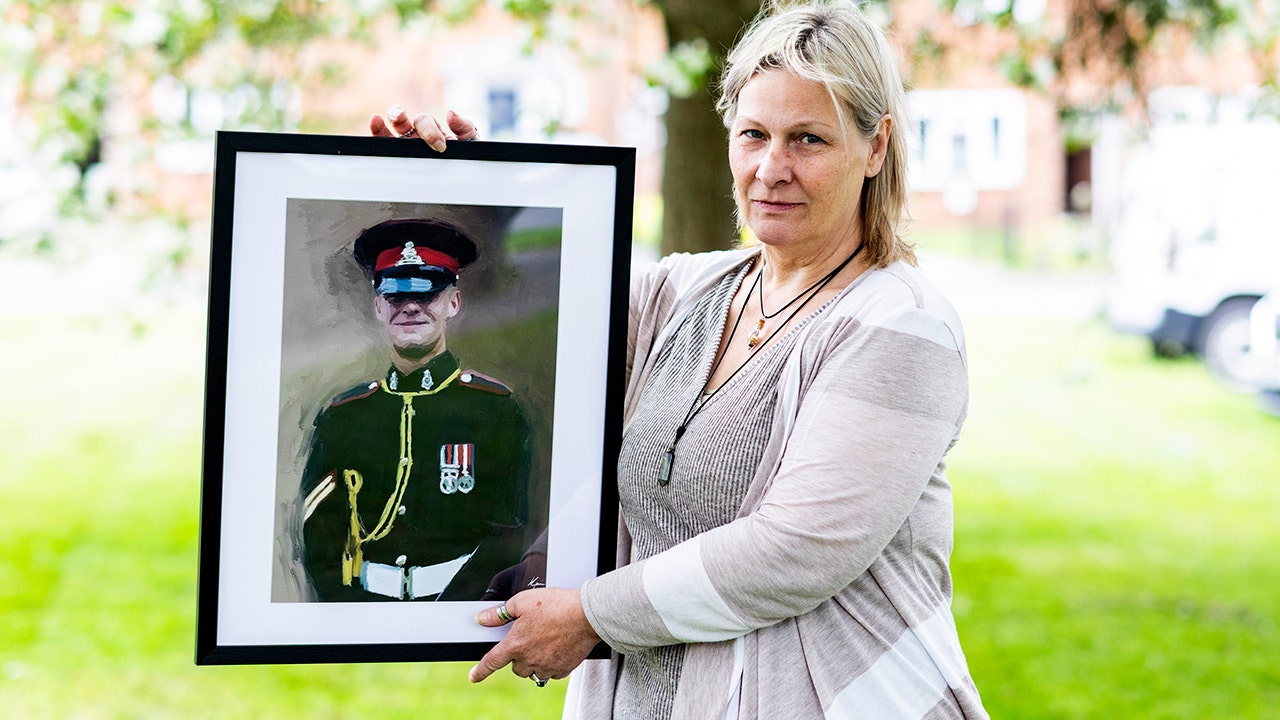
A mom whose soldier son took his own life feared she was suffering cardiac arrest — only to be told by hospital doctors that she was feeling the effects of grief caused by a broken heart. Dawn Turner, mother of deceased soldier Rob Homans, is pictured above, April 2026. (SWNS)

Turner, of Eckington in Worcester, said, “I was [sitting] downstairs earlier that night and thought I had a bit of indigestion. I went to bed and just couldn’t get comfortable — I was breaking out in a sweat and had heart palpitations.

“Then, around midnight, I had pain down my arm and in my jaw. I was still putting it down to indigestion… My partner Paul asked me if I was all right, and I said, ‘I think I’m having a heart attack.'”

HIDDEN CAUSE OF VETERANS’ STRUGGLES DRIVES RENEWED URGENCY IN VA MESSAGING

She said she couldn’t catch her breath — “and my heart felt as though it was missing a beat and then [started] thudding again. For those moments, I truly believed I was having a heart attack.”

“Your heart is all over the place — there’s an extra beat,” Turner was told. 

She said her partner called emergency services, and an ambulance arrived within five minutes.

“They came in and linked me up to an ECG. They said, ‘Your heart is all over the place — there’s an extra beat, and it’s all over the place,’” she said, as SWNS reported. 

Turner was rushed to the hospital by ambulance.

Rob Homans and Dawn Turner smiling together outside a brick building.

Turner is shown with her son in full dress uniform. He worked as an artilleryman and spent 10 years in the U.K.’s Royal Horse Artillery after joining in 2006. He was battling mental health challenges after his military service, and ultimately took his own life. (SWNS)

In emergency care, Turner was also given blood tests.

She added, “They came back and said I didn’t have the enzymes produced from a heart attack in my blood. But they said there [was] something going on.”

After undergoing more tests and seeing a cardiologist, Turner was told she had takotsubo syndrome.

WOMAN BEATS DEADLY BRAIN CANCER WITH EXPERIMENTAL STEM CELL THERAPY: ‘TRULY AMAZING’

“I told [the doctor] that my heart feels broken. I told her about [my son] Rob, and she said it’s exactly that. She said it’s a real thing, and that I’d been under so much stress. The body can only take so much, and the grief and the stress can be quite physical.”

Turner’s son committed suicide in August 2025 after struggling to get help with his mental health.

He spent 10 years in the Royal Horse Artillery after joining in 2006, when he worked as an artilleryman.

Dawn Turner squatting down and looking at flowers for her son Rob.

Turner’s son did two tours of duty in Afghanistan, she said. After he returned to civilian life, he began suffering from a number of health conditions. She’s shown above with a flower-draped memorial to her son. (SWNS)

He did two tours of duty in Afghanistan, she said, and returned to civilian life in 2016 before suffering several worsening health conditions.

Turner, who is also the CEO of a veterans charity called Stepway, “When he left the army, he got married, and they settled down in London. He walked straight into a job as a delivery driver. But then his health took a downward spiral, and he started having digestive troubles.”

YOUR HEART MAY BE OLDER THAN YOU THINK — AND THE NUMBER COULD PREDICT DISEASE RISK

He was eventually told he had PTSD — but those symptoms may be similar to those of mild traumatic brain injury, Turner said.

“He was deaf in one ear from using the guns,” she said. “He realized he was putting so much pressure on his marriage, so he moved back up with me. He started to build himself up — then COVID hit.

CLICK HERE TO DOWNLOAD THE FOX NEWS APP

Turner said there were unfortunate delays as her son tried to get access to various services and facilities.

“When people lose loved ones, you’re obviously distraught, but you eventually find closure,” she said, per SWNS. “I found peace when I lost my sister in 2015. But with Rob, I can’t find closure because there’s no justice there.”

Woman short of breath

“I had never really understood that a person could become so overwhelmed by stress and grief that it physically affects the heart,” said the grieving mom. “Broken heart syndrome can look and feel like a heart attack.” (iStock)

Turner is now on the mend and hopes to be fully recovered in a couple of weeks, SWNS reported. 

“Until that moment, I had never really understood that a person could become so overwhelmed by stress and grief that it physically affects the heart,” she shared. “Broken heart syndrome can look and feel like a heart attack. It was a warning sign for me, and for anyone. It can change the shape of one of your heart chambers … it can cause some serious damage.”

She added, “The cardiologist told me that thankfully, my heart itself is healthy and there was no damage, but that it will take around two weeks to a month for my heart to reboot itself.”

“Maybe the extra [heart]beat is for Rob. You are carrying on living for him,” her partner told her. 

Turner was told she needed to rest, seek counseling and make lifestyle changes to reduce stress.

“Things have settled down, and I’m taking things easy — I’m pacing myself now, and I feel a lot better. Paul said, ‘Maybe the extra beat is for Rob. You are carrying on living for him.'”

CLICK HERE TO SIGN UP FOR OUR HEALTH NEWSLETTER

Turner said, “That broke me and healed me a little bit all at once.”

Fox News Digital previously reported that broken heart syndrome, which causes the heart to temporarily weaken, has been linked to the brain’s reaction to stress, as studies have found. 

CLICK HERE FOR MORE HEALTH STORIES

In an article published in the European Heart Journal in March 2019, Swiss researchers said they found that the syndrome is linked to the way the brain communicates with the heart.

Woman doctor using stethoscope to examine man's chest in clinic

Broken heart syndrome, which causes the heart to temporarily weaken, has been linked to the brain’s reaction to stress, studies have found. (iStock)

Caused by intense emotional events, TTS is a rare, temporary condition that weakens the left ventricle and disrupts its normal pumping function.

The syndrome causes the heart’s main pumping chamber to change shape and get larger. The heart muscle becomes weaker, and its pumping action loses strength. 

TEST YOURSELF WITH OUR LATEST LIFESTYLE QUIZ

Symptoms include sudden, intense chest pain, pressure or heaviness in the chest, along with shortness of breath. 

It is treated with beta blockers and blood-thinning medicine to reduce risks of clots and other flareups.


Source link

Cardiff remain in WRU control as takeover deal with Ospreys owners collapses

0
Cardiff remain in WRU control as takeover deal with Ospreys owners collapses


The PRA is the deal negotiated between the WRU and the four regions.

It involves how the game will be run and includes details like how much money each side will have.

To emphasise the polarising nature of Welsh rugby, Ospreys and Scarlets currently are signed up to an old agreement which runs out in 2028, while Dragons and Cardiff put pen to paper in May 2025 on the new PRA25 deal which lasts until 2030.

The split occurred following the WRU’s acquisition of Cardiff in April 2025. Prior to this event, the WRU and regions announced in February proposals had been agreed.

Once Cardiff was taken over, Ospreys and Scarlets stalled on signing the new agreement because of concerns over the implications.

The pair voiced concerns there would be no clear limit on the level of investment the WRU could allocate to Cardiff, potentially placing the other teams at a financial disadvantage.

Dragons initially shared those concerns but changed tack and signed the deal, along with Cardiff, in early May.

With Scarlets and Ospreys waiting on a WRU response and missing deadlines, the governing body had an option to serve a two-year notice on its current PRA deal and the board agreed to this drastic measure.

The WRU formally told Ospreys and Scarlets of this intention and the decision not to have four equally funded businesses.

This started the process for the WRU to look at cutting teams, when previously Tierney had repeatedly committed to retaining all four regions.

A year later, the offer to sign PRA25 has been given back to Ospreys and Scarlets.

If both teams commit to the deal, all four sides will be on the same terms for the next four years, with the wage bill of each side forecasted to rise from £4.5m to £6.5m in the coming years.


Source link