Match of the Day pundits Wayne Rooney and Danny Murphy discuss how “two top players” in Erling Haaland and Gabriel went head-to-head in Manchester City’s 2-1 victory against Arsenal, with the Norwegian striker reaching “unplayable” levels.
An Essex woman, who unknowingly lived with a significant heart defect for over five decades, is now embarking on a challenging 54-mile charity cycle from London to Brighton.
This life-altering discovery, made after a dramatic collapse during a leisurely bike ride, has prompted her to undertake the endurance cycle for the British Heart Foundation.
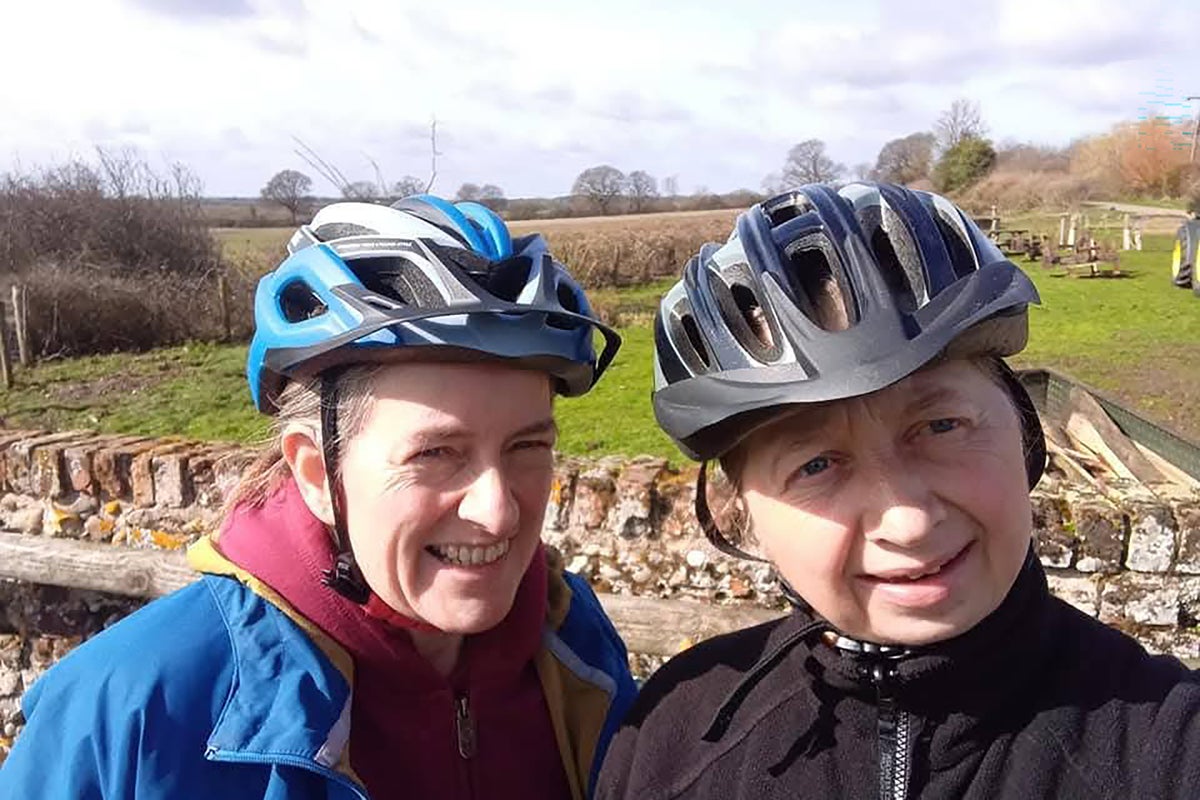
Diana Warren, 55, was enjoying a bike ride with her wife, Lisa, in June 2022 when she suddenly collapsed.
The couple had paused their 14-mile journey to Mersey Island at a local cafe, where Ms Warren, then 51, had chosen a coffee and a cream tea “for carbohydrates” to sustain them for the remainder of their trip.
“I’d put the cream on the scone ready to go for it, and I don’t remember much after that,” Ms Warren, who lives in Colchester, told PA Real Life.
“Apparently, I went face down into it, waste of a scone!” she laughed.
Diana Warren said learning of her condition was a ‘shock’ (PA)
“I came to (as) somebody (was) putting a cold cloth on the back of my neck, and they were phoning for an ambulance… and spent a couple of hours fully trying to come back to normal.
“We all put it down as me just having a faint, although it’s quite unusual to faint whilst you’re sitting down, which was a concern when I went to see the doctors about a week later.”
For a week afterwards, Ms Warren said that her wife “nagged” her to go and see a doctor, with the keen cyclist simply putting her fainting episode down to a side effect of menopause.
However, she eventually booked an appointment, still believing it could not be anything serious.
At her initial appointment, her GP told her he believed it could be to do with her heart, and promptly referred her to Colchester Hospital’s cardiology department.
“It was a bit of a shock, because I was just like: ‘How can it be anything to do with my heart when I’ve been pretty active?’” Ms Warren said.
“You know, I’m not a gym bunny, I don’t go to the gym every day, but we walk most places. We cycle when the weather’s good, or when the weather’s not so good and you just need the fresh air. We’re not lazy people.”
After further tests, including an electrocardiogram, Ms Warren was told that she had an Atrial Septal Defect – a hole in her heart.
Ms Warren, left, is doing the London to Brighton cycle for BHF as she feels it’s important “to give back, however you can” (PA)
“They said it’s been there your whole life, and it’s surprising it’s not been alerted or discovered before,” she said.
“But then, I’ve never really been in hospital to have any tests or anything done on it.”
Ms Warren was told that the hole was “the size of a two pence piece – which is quite big, apparently”.
According to the NHS, an Atrial Septal Defect (ASD) is a hole between the two collecting chambers of the heart, the atria, which allows blood to cross from the left chamber to the right, leading to extra blood flow through the lung arteries and lungs. Symptoms include shortness of breath, tiredness, irregular heart beats, fainting and lung infections.
They are usually treated with a device – a plug – made from metal mesh.
If left untreated, ASDs can lead to pulmonary hypertension, heart failure, stroke and other heart and lung problems, according to the BHF.
Ms Warren was referred to St Bartholomew’s Hospital in London for treatment, and surgeons attempted keyhole surgery – entering through her groin – to patch the hole, but none of the three surgery attempts were successful.
Instead, Ms Warren required open heart surgery, which took place in April 2024 after a six-month wait.
“I have to say, St Bart’s were absolutely amazing the whole way through it,” she said.
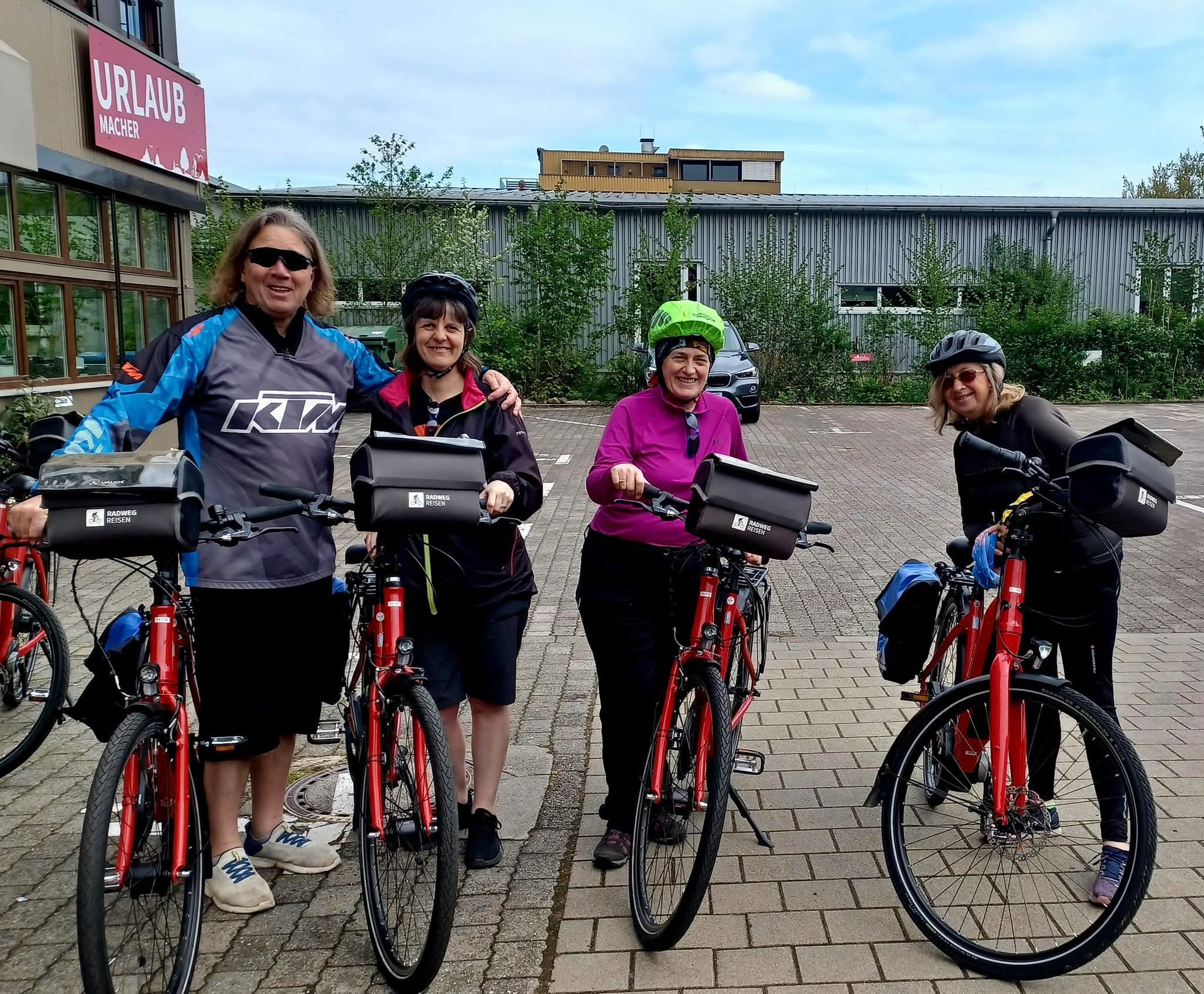
Ms Warren on a bike with Lisa, her brother Gary and sister-in-law Teresa (PA)
“They were very approachable, they gave you phone numbers if you wanted to speak to anybody before or after. They looked after my wife when I was in hospital. The surgeon was absolutely amazing.”
Ms Warren also had a pacemaker fitted during the surgery, and now has annual check-ups but is able to live a normal life.
This year, she is preparing for a mammoth 54-mile bike ride, having got back in the saddle as soon as she could after her major operation.
Along with her brother Gary and his wife Teresa, Ms Warren will ride from London to Brighton for the British Heart Foundation on Sunday June 21, a route that goes from Clapham Common to Brighton Seafront, and one she has always dreamed of completing.
She began training in January, gradually increasing her maximum mileage by 10 miles each month, and doing exercises recommended by the British Heart Foundation to get stronger for cycling.
“My squats are coming up really good!” she said.
Ms Warren said it feels it is important to fundraise for the British Heart Foundation as someone with lived experience of a heart condition in order to thank them for their work, adding that the “support they give all of the different heart conditions that people have is amazing”.
“To give back, however you can – those of us who have had a heart condition and are well enough to be able to do something to give back – I think is important, to help others who will, sadly, maybe get into the position where we are, where you don’t know where to turn, you don’t know who to speak to, you don’t know what to do.”
British Heart Foundation’s London to Brighton Bike Ride 2026 takes place on Sunday June 21.
To find out more and sign up, visit www.bhf.org.uk/l2b.
The average price tag on a home increased by nearly £3,000 month-on-month in April, according to a property website.
But the 0.8% monthly rise in the typical asking price was lower than the long-term average increase of 1.2% seen in the month of April, Rightmove said.
Across Britain, the average asking price in April is £373,971, which is £2,929 higher than the previous month.
Increased mortgage rates and strong competition among sellers to find a buyer are limiting new seller asking price growth this spring, with the number of homes for sale at an 11-year high for the time of year, Rightmove said.
Buyer demand has held up relatively stronger among first-time buyers, it said, suggesting that higher mortgage rates are not putting off new potential first-time buyers from making inquiries.
But it said price growth in April has been mainly driven by higher-priced, “top of the ladder” homes with four bedrooms or more, where some buyers are cash purchasers and are less sensitive to increased borrowing costs.
Colleen Babcock, a property expert at Rightmove, said: “With mortgage rates remaining elevated due to the war in Iran, it’s not a surprise that price growth is proving strongest in parts of the market less exposed to higher borrowing costs, such as top of the ladder homes, while sectors more exposed to interest rates are seeing slower momentum.
“Across Great Britain, Scotland stands out as an example of resilience, with average prices rising by over 4%. Lower average asking prices and a faster home-buying process continue to support price growth in the Scottish market.
Get a free fractional share worth up to £100. Capital at risk.
“However, for most of the market, the combination of rising mortgage rates and the number of homes for sale being at its highest level for the time of year over a decade, means that competitive pricing is crucial for sellers looking to attract buyer interest and secure a sale this spring.”
Matt Smith, a mortgage expert at Rightmove, said: “At the start of the year there was growing optimism that (the Bank of England) base rate would continue to fall, but that picture has shifted following the conflict in Iran.”
He added: “The initial shock appears to have passed, with mortgage rates stabilising over the past couple of weeks, but they remain elevated.
“The next moves will depend on upcoming UK inflation data and how the Bank of England responds. If policy decisions align with current market expectations, a period of relative stability is more likely than meaningful falls.”
Several lenders have made mortgage rate reductions in the past week following falls in swap rates, which are used by lenders to price mortgages.
Marc von Grundherr, director of Benham and Reeves, said: “The combination of heightened geopolitical uncertainty and the increase in mortgage rates has understandably caused some buyers to pause for thought, particularly across the higher end of the market where affordability is already stretched.
“However, what we’ve seen is not a collapse in confidence, but a more cautious and considered approach from both buyers and sellers.”
He added: “London is often one of the last markets to turn, but when momentum does begin to build it tends to do so strongly.
“We’re already seeing the early signs of that return, particularly in those areas where pricing remains realistic and buyers can still see long-term value.”
Mark Wiggin, director of Mark Wiggin Estate Agents, said: “Buyers start with three things: the price, the photos and how long a home’s been listed.
“If something’s been on the market for more than a few months, buyers immediately assume it’s overpriced. In this market, sellers must respond to that feedback – the market always tells you when the price isn’t right.”
Polly Ogden Duffy, managing director at John D Wood & Co said: “With an increased supply of homes – particularly flats lingering from 2025 – buyers have more choice and are less inclined to engage with overpriced properties, meaning sellers who price too ambitiously risk missing out on serious, proceedable buyers.
“In contrast, the family housing market is continuing to perform strongly, especially in areas with sought after schools, where demand can still outstrip supply and, in some cases, result in multiple bids.”
Peter Ryder, managing director at Thorntons Property Services, said: “The property market across the East of Scotland and Inverness continues to show resilience despite wider economic uncertainty.”
The report was released as separate research from property firm Hamptons said that rental price growth on newly-let homes accelerated in March.
The pace of rental price growth on newly-let homes picked up in March, with average annual growth across Britain doubling from 0.5% in February to 1.0% in March, to reach £1,373 on average per month, Hamptons said.
Aneisha Beveridge, head of research at Hamptons, said: “While rents fell last year, early signs suggest the pace of rental growth is beginning to pick up as tenant demand rebounds.”
The Hamptons lettings index uses data from the Connells Group to track changes to the cost of renting and is based on achieved rather than advertised rents.
Here are average monthly rents on newly-let homes in March and the annual change, according to Hamptons:
SOFIA, Bulgaria — A center-left coalition led by Bulgaria ’s former President Rumen Radev will win the parliamentary election, an exit poll suggested hours after polls closed on Sunday. The list is unlikely to garner enough votes to rule alone, which could prolong a yearslong political deadlock in the European Union country.
The election on Sunday was the country’s eighth in five years, illustrating a crippling political impasse that has gripped this Balkan nation. Preliminary results are expected on Monday.
The poll conducted by Trend research group showed Radev’s Progressive Bulgaria earning 39.2% support, edging out the center-right GERB party of its veteran leader, Boyko Borissov, which is expected to capture 15.1% of the vote. Despite the huge gap between the two groups, the predicted percentage may not be enough for Radev to form a one-party government, and he will face the uphill task of looking for partners to govern.
The exit poll also predicted that voter turnout stood at 43.4%, and that six parties could pass the 4% threshold to enter a fragmented parliament.
Radev said after the initial projections were announced that “we will do our best to prevent having to go to the polls” again.
“It (new election) will be a disaster for Bulgaria,” he said. “It would mean going from crisis to crisis when what we have to do is work very hard to emerge from these crises.”
The snap vote followed the resignation of a conservative-led government amid nationwide protests last December that drew hundreds of thousands, mainly young people, to the streets. The protesters called for an independent judiciary to tackle widespread corruption.
If confirmed in an official tally, the victory of Radev’s coalition could potentially bring to power a left-leaning leader who is seen by critics as pro-Russian. Last weekend, Hungarian voters rejected the authoritarian policies and global far-right movement of Viktor Orbán, who cultivated close ties with Russian President Vladimir Putin.
Radev resigned from the mostly ceremonial presidency in January, a few months before the end of his second term, to launch a bid to lead the government as prime minister.
The 62-year-old former fighter pilot and air force commander has promised to give the nation a fresh start. His supporters are split on those hoping he will put an end to the country’s oligarchic corruption and those lining up behind his Eurosceptic and Russia-friendly views.
Radev’s popularity surged as he has cast himself as an opponent of the country’s entrenched mafia and its ties to high-ranking politicians. At campaign rallies he vowed to “remove the corrupt, oligarchic model of governance from political power.”
Since 2021, the nation of 6.5 million has struggled with fragmented parliaments that produced weak governments, none of which managed to survive more than a year before being brought down by street protests or backroom deals in parliament.
After voting on Sunday, Radev said that Bulgaria now has a historic chance to change the alleged oligarchic model of governance. He urged people to go to the polls because mass “voting is the only way to drown vote-buying in a sea of free votes.”
Though Radev has officially denounced Russia’s invasion of Ukraine, he has repeatedly opposed military aid to Kyiv and has favored reopening talks with Russia as a way out of the conflict.
Radev’s relatively vague campaign has left him open for cooperation with almost any party in the future Parliament, according to Mario Bikarski, senior Eastern and Central Europe analyst at the risk intelligence company Verisk Maplecroft.
Radev, however, seems reluctant to enter a formal coalition with the hard right and openly pro-Russian Revival party, Bikarski said.
Bulgaria is a European Union and NATO member country that joined the eurozone on Jan. 1, shortly after entering the border-free Schengen travel area. However, it has been plagued by political instability since 2021, when Borissov — a three-time prime minister at the time — resigned following massive protests fueled by anger over widespread corruption and injustice.
Arsenal and Chelsea interested in Tottenham‘s Lucas Bergvall, Paris St-Germain in talks with Gabriel Martinelli, and Manchester United and Real Madrid consider appointing Unai Emery.
Paris St-Germain sporting advisor Luis Campos has held talks with the representatives of Arsenal‘s Brazil forward Gabriel Martinelli, 24, and RB Leipzig’s 19-year-old Ivory Coast winger Yan Diomande. (L’Equipe – in French, subscription), external
Southampton are confident they can keep 27-year-old Brazilian winger Leo Scienza despite interest from Leeds.(Football Insider), external
The agent of Barcelona’s Poland striker Robert Lewandowski, 37, is expected to meet with Juventus this week, while AC Milan are also interested. (La Gazzetta dello Sport – in Italian), external
A newly released survey of Long Island residents is raising alarm after a surprising share of respondents expressed skepticism about the need for Holocaust education in public schools.
The poll, conducted by national research firm McLaughlin Associates, surveyed roughly 400 residents in Nassau and Suffolk counties — the suburban area of Long Island, New York, just east of New York City. Nearly one-third of respondents said they do not believe the Holocaust should be a mandatory part of school curricula and that Jewish people should “move on,” according to The New York Post.
The survey also found that about 15% of participants either believe the Nazi genocide has been “exaggerated” or chose not to answer, the outlet reported.
The survey’s release coincided with the anniversary of the liberation of the Buchenwald concentration camp.
Child survivors stand behind a barbed wire fence at the Auschwitz-Birkenau concentration camp in southern Poland on Jan. 27, 1945, the day the Red Army liberated the camp.(Alexander Vorontsov/Galerie Bilderwelt/Getty Images)
Steven Krieger, a Long Island real estate developer who helped fund the study, said the findings highlight a broader need for awareness, according to The New York Post.
“The survey is intended to provide a roadmap for all of us — regardless of faith or ethnicity — because indifference or ignorance of how the Holocaust occurred threatens everyone,” Krieger said.
A memorial stone with the inscription “Buchenwald” stands near the gate of the former Buchenwald concentration camp in Weimar, Thuringia, on April 12, 2026, marking the 81st anniversary of the camp’s liberation.(Martin Schutt/picture alliance)
Gloria Sesso, president of the Long Island Council for Social Studies, called the results “inconceivable,” particularly the suggestion that Jews should “move on,” The New York Post reported.
She added that dismissing the Holocaust’s relevance in education is “irresponsible” and said the findings should serve as a wake-up call for teachers.
Commemorative plaques are displayed on a railtrack leading to the former Auschwitz-Birkenau Nazi death camp site in Brzezinka near Oswiecim, Poland, during the annual March of the Living on April 14, 2026, honoring Holocaust victims.(Wojtek Radwanski/AFP)
Although Jews account for about 12% of New York City’s population, they are the targets of most hate crimes, according to the American Jewish Committee.
Between January and March, the NYPD recorded 143 hate crimes across the city, with 55% —78 incidents — directed against Jewish individuals or communities.
In January alone, 31 anti-Jewish incidents were reported, marking an 182% increase compared to the same time the previous year.
McLaughlin Associates could not be immediately reached by Fox News Digital for comment.
Sophia Compton is a Writer at Fox News Digital. Sophia was previously a business reporter covering finance, energy and tourism and has experience as a TV news producer. She graduated with a journalism degree in 2021 from the University of Hawaii at Manoa. Story tips can be sent to [email protected].
Sen. Chuck Schumer, D-N.Y., has called for FIFA to cover the full rail cost for New Yorkers attending the World Cup, as NJ Transit train ticket prices are set for $150 to get to MetLife Stadium for matches.
Schumer released a statement on Sunday, calling on FIFA to pay the full fair, which is astronomically higher than the regular cost to travel from Penn Station to the Meadowlands, while understanding that “FIFA is set to rake in approximately $11 billion in revenue off the tournament while New York fans are being hit with $150 NJ Transit round-trip tickets to get to the game.”
MetLife Stadium in East Rutherford, New Jersey, will host eight matches during the World Cup, including the final on July 19. The usual price is $12.90 for the Meadowlands train from Penn Station, but it will rise to $150 beginning June 13 and ending July 19. There will also be shuttles available worth $80.
Senate Minority Leader Chuck Schumer, a Democrat from New York, during a news conference following the weekly Senate Democrat policy luncheon at the US Capitol in Washington, DC, US, on Tuesday, March 17, 2026.(Graeme Sloan/Bloomberg via Getty Images)
NJ Transit CEO Kirs Kolluri defended the fare hikes on Friday, saying the ultimate cost to the company shouldn’t burden New Jersey commuters.
“It is an exciting moment for New Jersey to showcase New Jersey’s diversity as well as its economic standing in the country and in the world. Equally important, (Gov. Mikie Sherrill) has said that New Jersey commuters cannot and will not subsidize the movement of fans going to the game, because that would not be fair,” Kolluri said, reiterating that the tournament will cost NJ Transit $48 million.
Penn Station is also scheduled to be partially closed for up to four hours before each World Cup match, which will obviously disrupt regular commuters and travelers eight times during the tournament.
Schumer argues it’s unfair for New Yorkers to have to deal with the price hike, especially considering FIFA is eliminating parking at MetLife Stadium. Also, parking at nearby American Dream mall is approximately $225, while walking access is being prohibited as well.
In turn, mass transit is “effectively the only way in or out of the stadium on match days,” Schumer’s statement read. But Schumer isn’t lambasting NJ Transit — he understands the financials the company has to deal with.
It’s FIFA he’s pointing the finger at for not helping with the cost.
“The total NJ Transit operation to move fans to and from MetLife is projected to cost $62 million, with approximately $11 million dedicated to security alone. The federal government is contributing $10.6 million and the NY/NJ Host Committee is contributing just over $3 million, leaving NJ Transit to foot a $48 million bill with zero financial contribution from FIFA.
“Meanwhile, FIFA has told other host cities they can offer fans mass rail for as little as $2.50 round trip, a fraction of what New York fans are being charged.”
A general view of MetLife Stadium and the Meadowlands Train Station is seen from a NJ Transit train before the FIFA Club World Cup 2025 semi-final match between Paris Saint-Germain and Real Madrid at MetLife Stadium in East Rutherford, New Jersey, on July 9, 2025.(Luke Hales/Getty Images)
Schumer added that, “Charging more than eleven times the normal fare for a train ride is a ripoff, plain and simple.”
FIFA’s budgeted revenue for the 2023 to 2026 cycle is approximately $11 billion, which marks a 71% increase over the previous cycle. It also marks the most lucrative World Cup in the tournament’s history.
Schumer’s statement also pointed out ticket prices for match-goers are around $700 for the group stage, and the final at MetLife Stadium is as high as $10,000 to get into the door under FIFA’s dynamic pricing model.
“We are carrying more fans, more riders, and more disruption than any other region in this tournament,” Schumer added. “FIFA needs to step up accordingly. Past practice does not cut it when you are eliminating parking, shutting down Penn Station, and forcing every fan onto one transit system. FIFA should cover the ride, not stick New York fans with the bill.”
FIFA may not have historically contributed to public transportation costs in previous tournaments, but Schumer argues New York and New Jersey isn’t every other host region. It’s the most densely populated area in the country, and it will be host to eight matches.
Kolluri also noted that, if the regular $12.90 fare were to stay in place, the $48 million bill for NJ Transit would be subsidized for commuters by 92%.
“No one that I have spoken to thinks that’s fair or reasonable. Commuters in New Jersey should not carry the cost years into the future for a wonderful event, no doubt. But the fans going to the games should burden the cost. That’s all we’re trying to say,” Kolluri said.
NJ Transit CEO Kris Kolluri and Alex Lasry, CEO of the 2026 FIFA World Cup New York New Jersey Host Committee, speak during a press briefing on the regional mobility plan for the World Cup in Newark, New Jersey, on April 17, 2026.(Charly Triballeau/AFP via Getty Images)
With the plan now officially in place, FIFA World Cup COO Heimo Schirgi issued the following statement to Fox News Digital:
“Ever since the host city agreements were signed in 2018, FIFA has worked in collaboration with the Host Committees and their partners to develop a transportation plan that provides efficient and accessible mass transit options for ticketed fans attending the eight matches at NY NJ Stadium. The goal is to minimize congestion, reduce reliance on private vehicles, and ensure the fan experience is positive and memorable, defined by the action on pitch, not delays on the roads.
“The NJ Transit current pricing model will have a chilling effect. Elevated fares inevitably push fans toward alternative transportation options. This increases concerns of congestion, late arrivals, and creates broader ripple effects that ultimately diminish the economic benefit and lasting legacy the entire region stands to gain from hosting the World Cup.”
During the winter months, when days are short and cold and nights are long and dark, creating a warm and cosy indoor atmosphere can feel especially important.
Where I live in Denmark, around 75 per cent of the population burns candles two or more times a week, and 34 per cent use them daily during the winter months.
In fact, Denmark is often said to be the country with the highest per-capita candle consumption in Europe. Danes burn around 5.8kg of candle wax per person per year – the equivalent of about six bags of sugar.
Yet, nice as they can look, studies show burning candles is one of the biggest sources of indoor air pollution. This is because when burning, candles emit a large number of ultrafine particles.
These particles are so small that they are invisible to the human eye, and more than a thousand times thinner than a human hair.
They can remain airborne for long periods, and when candles are blown out, the concentration of these particles (including soot) increases even further.
Burning candles is one of the biggest sources of indoor air pollution (Getty/iStock)
Candles vs cooking
In our experiments conducted in exposure chambers (where the climate is controlled) at Aarhus University, we examined how indoor air is affected both by burning candles and cooking pork in an oven.
Cooking – and especially frying – is known to emit high concentrations of particles due to combustion (the process of burning something). Particles from combustion processes are among the most harmful to human health – but less is known about the role that particles emitted from candles plays when it comes to indoor air pollution.
Our research found that while both candles and cooking emit high levels of particles, the number of particles from candles was much higher. Even more significant was the difference in particle size: cooking produced particles about 80 nanometers wide, whereas candles generated particles around seven-to=eight nanometers in size – much smaller and much easier for our lungs to inhale.
We also measured chemical compounds in the air, and found that burning candles produced not only soot particles but gases such as nitrogen dioxide and polycyclic aromatic hydrocarbons (PAHs) – a group of chemicals associated with inflammation and even cancer.
The particles we breathe
Ultrafine particles are of particular concern from a health perspective. They are easily inhaled into our lungs, but research has found they are excreted from the body very slowly.
About the author
Karin Rosenkilde Laursen is a postdoctoral fellow in Public Health at Aarhus University.
This article was first published by The Conversation and is republished under a Creative Commons licence. Read the original article.
Due to their extremely small size, particles from candles can penetrate deep into our smallest airways, known as the alveoli, and may even enter the bloodstream. From there, they can reach organs such as the heart and brain.
Indeed, the particles formed when candles are burning are remarkably similar to those found in diesel exhausts in size and composition. These particles have been linked to increased mortality rates from lung and cardiovascular diseases.
In our study, we also investigated how candle burning affects young adults with mild asthma. We found subtle but measurable biological changes following exposure to candle emissions.
Some markers of airway and blood inflammation were altered, and participants reported irritation and discomfort. Other studies among healthy adults have observed small decreases in lung function, changes in arterial stiffness and heart rate, and reduced cognitive function after exposure to burning candles.
Light and dark
You might be thinking: all this from just a candle? But it’s worth remembering that people with chronic conditions like asthma or chronic obstructive pulmonary disease are far more sensitive to particulate air pollution.
Because people with these conditions already have chronically inflamed airways, even relatively low levels of pollution — including particles released by burning candles — can be enough to trigger symptoms.
People with conditions like asthma are sensitive to air pollution (Getty/iStock)
Children, older adults and people with chronic illnesses are also particularly vulnerable to air pollution, due to immaturity of their lungs or weakened immune systems.
Indeed, for anyone with asthma or other respiratory conditions, the quality of indoor air is not a minor detail, but a key factor in day-to-day symptom control and long-term respiratory health.
Blow out all the candles?
But that’s not to say those without lung disease or asthma aren’t affected. As research shows, burning candles affects not only the indoor environment but potentially everyone’s health. Fortunately, a few simple steps can help maintain a healthier indoor climate.
Try using LED candles, for example, or light only a few candles at once. You should also place candles away from drafts to avoid a flickering flame, which can produce more soot and smoke. Trim your candles’ wicks to reduce soot formation, too. And candles should never be burned near (or by) people with respiratory disease.
Most importantly, air out the room afterwards by opening your windows. Such measures can help reduce the number of particles significantly, and make all the difference when it comes to keeping your cosy or hygge-time healthy.
The financial demands of parenthood often intensify significantly as children mature, transforming the parental role from primary caregiver to, increasingly, the “bank of mum and dad”.
While the financial outlay for younger children typically centres on smaller, more immediate expenses such as entertainment, pocket money, and birthday presents, the costs associated with older offspring escalate dramatically.
These can include substantial outlays for a first car, university tuition and living costs, crucial assistance with a property deposit, and even wedding expenses.
This financial lifeline is becoming ever more important, as Craig Rickman, personal finance editor at investment platform interactive investor, highlights: “The bank of mum and dad forms a crucial means of financial support for younger generations.”
“While any loving parent will naturally to want to give their child a leg-up in life, many face a delicate balancing act, being careful not to jeopardise their own financial future in the process.”
And Louise Hill, founder of GoHenry, the prepaid debit card and financial education app for young people, says: “The bank of mum and dad is a familiar part of family life, with many parents helping their children through some of their biggest milestones. Parents naturally want to give their kids the best possible start and support them where they can.”
However, she points out that 2023 research by GoHenry suggested more than half of parents (52 per cent) planned to reduce how much they loaned or gifted to adult children, and the majority of young people said they didn’t expect support for big life events like buying a house or paying for a wedding.
“While it’s natural for parents to want to step in financially, true long-term security for kids comes from being equipped with the right financial knowledge,” says Hill. “When kids understand how money works, they build independence that lasts a lifetime.
“But at the same time, supporting your kids shouldn’t come at the expense of your own financial wellbeing. Protecting your retirement, maintaining emergency savings, and planning for later life isn’t selfish – it’s responsible.”
It is important to leave yourself funds to enjoy your life – rather than giving all your spare cash to your children (Alamy/PA)
She stresses that modelling good financial habits is one of the most valuable lessons parents can pass on, adding: “It’s not about closing the bank of mum and dad, but helping it become a launchpad for financial confidence.”
Here are simple steps that can help support older children financially while maintaining your own financial goals…
1. Clarify your own financial goals
Understanding where you are in relation to your own financial goals gives you a better chance of working out whether any gift or loan to your kids is affordable both now and in the future, says Rickman.
“Knowing where you stand enables you to make an informed decision,” he explains. “For instance, you may decide you’re happy to continue working longer than anticipated if it means taking a massive bite out of your child’s university debt or helping them to buy a home.”
2. Invest for your child’s future early
Starting saving as soon as you can means you have more time for money to grow. Rickman points out that saving £100 a month from the day your child is born would grow to almost £35,000 by the time they reach age 18 (assuming 5% annual growth net of fees).
“In contrast, if you waited until your child is 10 years old, you’d have to commit £300 a month – three times as much – to accrue to the same sum,” he says.
3. Consider the stock market
If you have some time before your child needs money, Rickman suggests parents consider investing in the stock market rather than saving.
“While the eventual sum isn’t guaranteed and the money can move up and down in value, history tells us that over long periods investing gives you a better chance than cash savings of growing your wealth – or in this case your kid’s wealth,” he says.
4. Invest in a Junior Stocks and Shares ISA
Hill says one way to make financial support from the bank of mum and dad work harder is to consider investing in a Junior Stocks and Shares ISA. “Contributing to an account like this can allow your kids’ investments to grow over time, [it] teaches them about investing, and helps them see the value of long-term planning,” she advises.
“But remember, with investing your money can go down as well as up, so it’s always wise to only invest what works for your family’s budget.”
5. Get the whole family involved
The key to intergenerational wealth planning, which sits at the heart of the bank of mum and dad, is to use the family’s finances in the most effective way, stresses Rickman.
Intergenerational conversations about money can help with financial planning (Alamy/PA)
“It could be that your parents have surplus cash or assets and perhaps have an inheritance tax problem and would be more than happy to support their grandchildren to meet key financial goals while they’re alive, instead of passing on the money on death,” he says.
6. Set clear expectations about financial help
If you plan to contribute toward larger expenses in the future, Hill says transparency is key. “Be clear about what you can realistically offer and where you expect your kids to contribute themselves,” she advises.
7. Consider whether to loan or gift outright
In an ideal world, parents have sufficient money to give their children a financial head-start without compromising their own financial goals, but this isn’t the reality for many parents, who risk leaving themselves short in retirement by making outright gifts, warns Rickman.
He says one way around this is to loan the money instead.
“While it might be an uncomfortable thing to do,” he says, “it’s important to set clear terms of repayment, ideally drafted as part of a legal agreement, helping to avoid any friction or misunderstanding down the line.”
8. Understand the tax position with gifts
Knowing the tax rules before gifting is key to making sure you or your loved ones don’t get tripped up down the line, explains Rickman.
“This includes grasping the inheritance tax gifting rules and understanding how capital gains tax works, should you wish to pass on an asset such as a second home,” he says.
“If you plan to raid pension assets to support your children, learn about the possible tax implications here too, as well as appreciating the impact any withdrawal might have on your future lifestyle in retirement.”