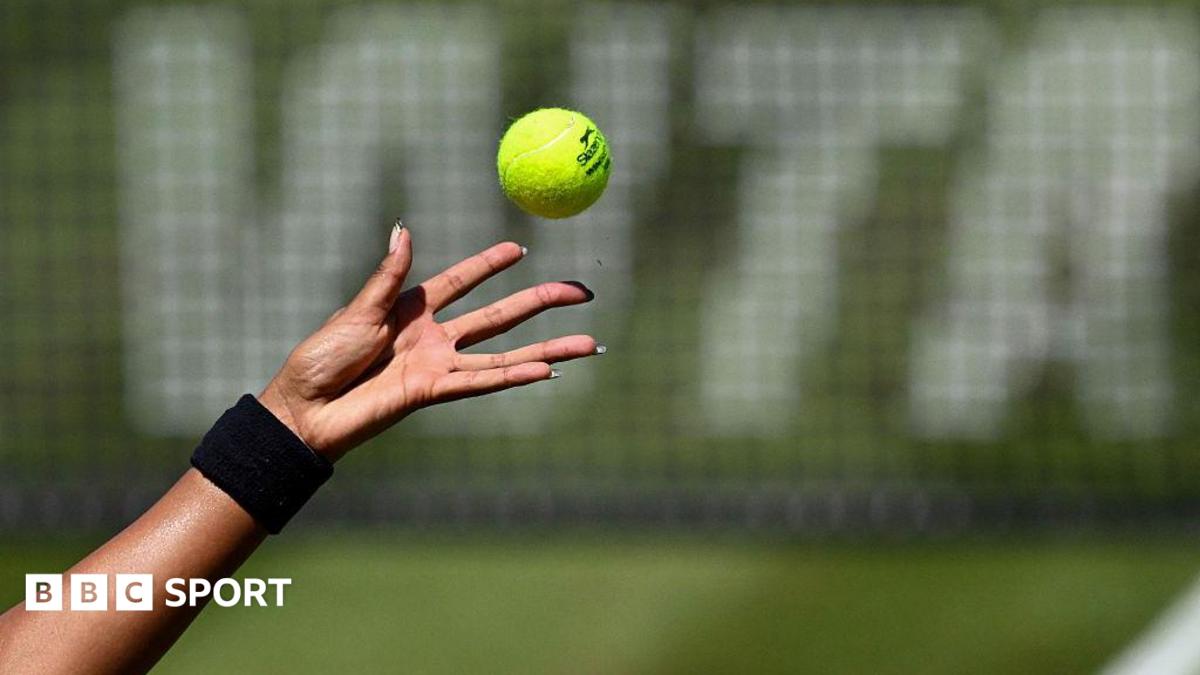
The Women’s Tennis Association (WTA) is to require all players to undergo genetic sex testing in order to compete on the WTA Tour.
In the latest edition of its women’s eligibility policy, which will come into effect on Tuesday, players will be required to provide a cheek swab, blood or saliva sample to test for the presence of the SRY gene which is part of the Y chromosome and causes male characteristics to develop.
Players will be tested just once in their lifetime and only a negative result, showing no presence of the gene, will permit them to compete on the Tour.
If they test positive, players will face further medical assessment before being allowed to play.
The new policy also requires players to sign a document that states they could face disciplinary action if they refuse testing.
The WTA’s previous policy, last updated in 2024, allowed transgender women to compete on the Tour if they had lowered their testosterone levels to below 2.5 nmol/L continuously for the previous two years.
There are no known transgender women currently playing on the WTA Tour.
“The WTA’s women’s eligibility policy is designed to promote equal athletic opportunities in women’s professional tennis and maintain fair competition for all players participating in WTA tournaments,” the governing body said.
“Since first being introduced in 1975, the eligibility policy has undergone periodic review in light of developments across international sport.
“Following the most recent review, which included consultation with WTA members and evolving standards across women’s sport, the WTA board approved an updated WTA women’s eligibility policy beginning in 2026 based on biological sex.”
It added: “The WTA recognises that this is a sensitive and complex issue and is committed to treating all players with dignity and implementing the policy in a respectful and thoughtful way.”
The policy change comes a year after World Athletics announced new regulations – brought into effect in September 2025 – requiring athletes wanting to compete in the female category for world ranking competitions to take a one-time gene test.
World Boxing also approved the use of the SRY test in May 2025 when it introduced mandatory sex testing for all athletes wanting to compete in the women’s category.
Gitanjali Angmo is leading a protest march to Parliament today. Her husband, Sonam Wangchuk, remains hospitalized after police intervention at Jantar Mantar. Angmo, a social entrepreneur and educationist, co-founded the Himalayan Institute of Alternatives, Ladakh. She is now spearheading Wangchuk’s legal and political fight for educational reforms. Angmo also holds a black belt in karate and trained in ballet.
Social activist Sonam Wangchuk stays in the hospital after being taken away by police from Jantar Mantar. His wife, Gitanjali J Angmo, has stepped up as one of the most visible faces of his protest demanding transparency and accountability in the education system.Wangchuk had been on a hunger strike for three weeks for an indefinite period, demanding the resignation of Education Minister Dharmendra Pradhan over the NEET paper leak, and through it all, his wife has stood firmly by his side.Now, Gitanjali J Angmo is set to lead the Cockroach Janta Party’s march to Parliament today, July 20.
Photo: Gitanjali J Angmo/LinkedIn
Who is Gitanjali Angmo?
Gitanjali J Angmo is a social entrepreneur and educationist, well known as the founding CEO and dean of the Himalayan Institute of Alternatives, Ladakh (HIAL), a role which she has held since 2017. She reportedly co-founded the institute alongside her husband, activist Sonam Wangchuk, focusing on sustainable education and practical solutions suited to mountain communities.
Her career spans consulting, healthcare, and education
Before HIAL, Angmo worked across renewable energy, healthcare, education, and business consulting. She began her career at Deloitte, later served as director at WinDForce Management Services and Pushan Projects, chaired AUM Hospitals, and headed Lister Technologies’ European operations and KC High School in Chennai.According to her LinkedIn profile, Angmo completed her doctorate in education from Sri Sathya Sai University for Human Excellence in 2025.She also holds an MBA from the Xavier Institute of Management (XIM), Bhubaneswar, and a bachelor’s degree from Fakir Mohan University in Balasore.
She holds a black belt in karate and trained as a dancer
Beyond her professional roles, Angmo is trained in Odissi and Russian ballet and holds a black belt in karate. She also teaches Vedanta and the Bhagavad Gita and was honoured with the Women Transforming India National Award by the Government of India for her work in education.
She is now leading Sonam Wangchuk’s legal and political fight
After the Delhi High Court refused to order Wangchuk’s transfer to a private hospital, Angmo moved court again, arguing the order violated his rights under Articles 19 and 21, including his right to choose treatment and continue his protest. She also announced she would personally lead the CJP’s July 20 Parliament march if Wangchuk remained unable to participate.
United States forces conducted another wave of attacks against Iran Sunday evening, marking the ninth consecutive night of strikes, according to U.S. Central Command.
“The strikes will continue degrading Iranian military capabilities used to attack commercial vessels and civilian mariners transiting the Strait of Hormuz,” CENTCOM said.
Strikes targeted “Iranian military command centers, air defense and coastal surveillance sites, maritime capabilities, missile and drone launch sites, and communications networks,” in an effort to weaken Iran’s ability to control the Strait of Hormuz, CENTCOM said.
Ryanair’s profits have fallen sharply as war in the Middle East sent jet fuel prices soaring and customers reluctant to book flights.
The Irish airline’s pre-tax profits dropped 34% to €593m (£503m) between April and June while sales were flat as the company was forced to cut fares to stimulate demand.
The price of fuelling a plane has jumped since the US and Israel launched strikes against Iran in February and while Ryanair said it had “hedged” or struck deals for the most future fuel costs, those not included in these arrangements had more than doubled.
Overnight, crude oil prices continued to rise, surpassing $90 (£67) a barrel for the first time in a month, after a weekend of intense exchanges of fire between the US and Iran.
Traffic through the Strait of Hormuz – an essential route for global oil and gas supplies – has ground to a halt.
Brent crude, the global benchmark for oil prices, rose by 2.5% on Monday.
The airline warned that its results for the year will be “highly sensitive” to external factors such as conflict escalation in the Middle East and Ukraine as well as the price of unhedged jet fuel.
Shane Oliver, head of investment strategy at AMP, a fund manager, said: “The longer the strait remains closed and the war escalates, the greater the risk that oil prices will have to rise to around $150 a barrel to bring demand down to match the hit to supply.”
He said: “This is not our base case but it’s a high risk again.”
Brits will want to know what is in store for them as the government leadership faces yet another change, with still some uncertainty over his policies and in particular his ideas for economic direction, with Shabana Mahmood set to be appointed chancellor.
We’ve all seen politicians say they plan to do one thing, and ultimately be incapable or unwilling to make it happen – so it remains to be seen if Mr Burnham in No 10 would be able to replicate the success he has seen as mayor of Greater Manchester.
Europe: The Way Back
We’re campaigning to rebuild Britain’s future in Europe
Here, The Independent takes a look at how your pocket might be affected once Mr Burnham becomes prime minister, based on what he previously spoken of and what he addressed in a speech at the People’s History Museum in Manchester.
Mortgages
The first thing to understand, or at least accept, is that money markets are a minefield of cause and effect.
So here’s an example: in September last year, Mr Burnham said: “We’ve got to get beyond this thing of being in hock to the bond markets.”
What does that mean? Well, it might run something like this: gilts, also called UK government bonds, are sold off if the markets don’t like a new economic plan (or lack thereof), which lowers the price but raises the yield. That yield is effectively the cost for the government to borrow money and spend on things like infrastructure and public services, so the amount the government must pay in interest is increased.
If it also sees overseas investors lose faith, the value of the pound could fall (as has slightly occurred since Friday, down 1.5 per cent), making imports more expensive and having an inflationary effect – or, if a Burnham government rapidly increases public spending and causes a surge in demand for products and services, that can also be inflationary.
Get a free fractional share worth up to £100. Capital at risk.
When prices are rising too fast (high inflation), the Bank of England (BoE) can step in to consider raising interest rates, and if the market smells that, it will far more quickly send swap rates up – they are basically future expectations of interest rate movements, and the tool which lenders base the price of their mortgage products on, even if the BoE base rate doesn’t move.
The choice of chancellor will also have an impact on how the bond markets react, including any promises to stick to the current fiscal plan, which Mr Burnham has previously stated he will.
Current chancellor Rachel Reeves is seen as stable, consistent and predictable – all things the market likes.
Ed Miliband was not favoured by markets but Ms Mahmood is seen as more credible and likely to stick to the current fiscal policy, which has calmed matters.
“Burnham’s choice of chancellor if he becomes prime minister could have a major impact on bond markets,” said Dan Coatsworth, head of markets at AJ Bell.
The market likes Rachel Reeves, who is seen as a stable figure on the economy (Getty)
“Bond investors like boring and dull – they want someone who has a plan where the maths stacks up and they stick to it.”
Oxford Economics senior economist Edward Allenby pointed out that the speed of change might mean Mr Burnham has little choice other than to run with what is already planned.
“There’s little to suggest Burnham’s team has a detailed policy package already in the works,” he said. “Developing that package in time for the autumn Budget will be made even harder if Burnham has to win a prolonged leadership contest first.”
Sign up to the award-winning Independent Money newsletter here and get practical advice on making your money work harder
Property costs
Mr Burnham has previously suggested stamp duty and council tax should be reformed, with a land value tax (LVT) replacing stamp duty on property sales – something he wrote about in TheGuardian back in 2010.
The idea is it makes buying more accessible for those with lower financial backing to get on the ladder, while it’s also harder to evade paying later on.
“It won’t be a top priority but a move to tax the asset rather than the transaction appears to be on Burnham’s radar,” said Tom Bill, head of UK residential research at estate agents Knight Frank.
“He supports a proposal by campaign group Fairer Share, which wants to replace stamp duty and council tax with a levy equivalent to 0.48 per cent of a property’s value.
“The simplicity of the proposal is commendable and scrapping stamp duty make sense given how it hinders social and economic mobility, but the proposal in question feels too overtly political. Shouldn’t the sole aim be to maximise tax revenue?”
It won’t be popular with everyone, obviously.
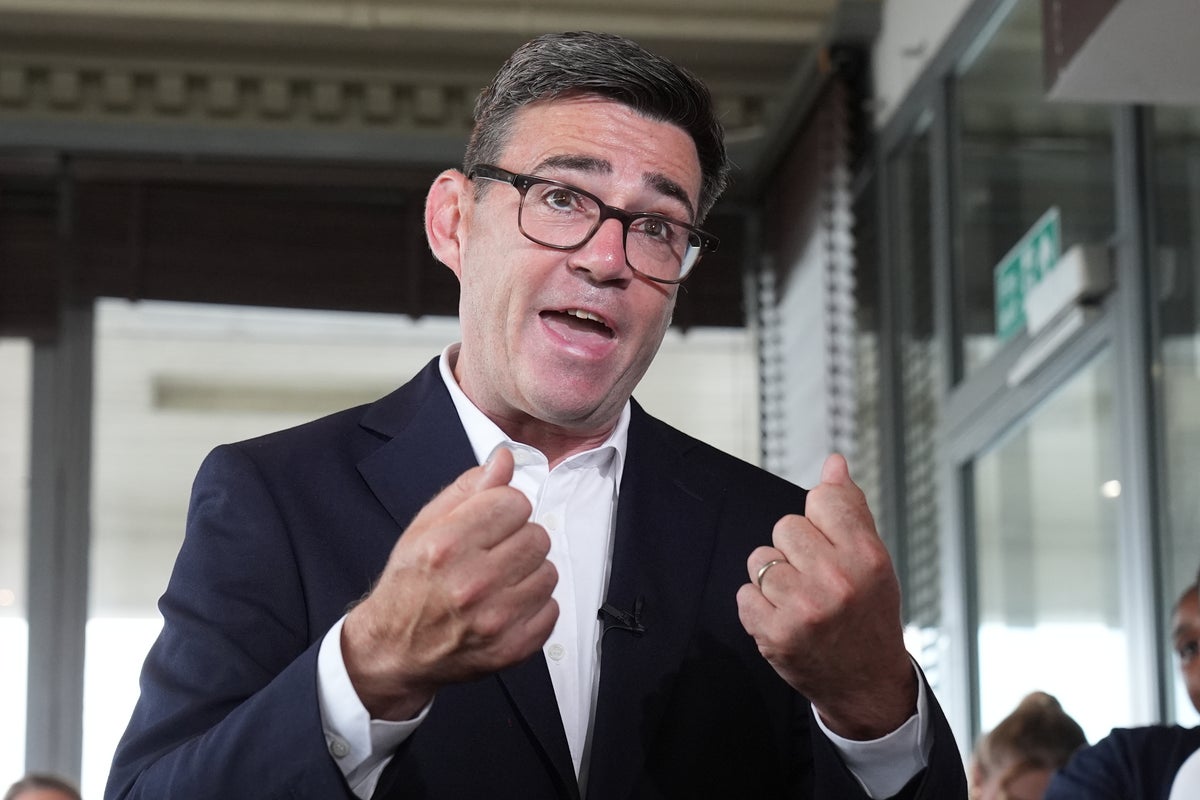
Andy Burnham is favourite to become the Labour Party’s next leader (Yui Mok/PA) (PA Wire)
“Under the plan, landlords, developers, overseas buyers and second-home owners would pay more,” said Mr Bill.
“A similar approach with stamp duty since 2014 has curbed activity in exactly the sort of high-value locations where most revenue is presumably being targeted. A regular flow of tax receipts has obvious benefits for the Chancellor, but politicising the housing market feels like an approach that’s been tried and failed.”
The process could also lead to higher rents through lower numbers of properties being available, Mr Bill adds, while there are also implementation costs to consider.
Tim Stovold, head of tax at accountancy firm Moore Kingston Smith, told the Financial Times: “A tax of this type will reduce property values when introduced.”
Income, council and inheritance tax
Three taxes to mention around Mr Burnham are income tax, inheritance tax (IHT), and council tax.
For the first, the current threshold at which an earner becomes a basic-rate taxpayer is £12,570. He has spoken about raising that personal allowance, which has been frozen for more than five years. That move would put more money in the pockets of low earners and basic rate taxpayers, while recent lifts to the state pension has put retirees on the verge of paying tax even if they don’t have any other income.
At the other end of the scale, he has suggested there’s “definitely a case” to reintroduce the 50p top rate of income tax; it is currently 45 per cent on income above £125,140.
Inheritance tax would be abolished under one bold idea he has, and replaced with a social care levy on inherited assets. It is set to soon incorporate unused pensions, which it hasn’t previously, and which will make succession planning far more important and tricky for families.
One notable change made in Manchester was was halving bus fares after bringing the transport network into the public control setup. Usage rose accordingly, but council taxes were raised to subsidise the move.
Share prices in FTSE 100 water firms Severn Trent and United Utilities were both down 1.5 per cent on Friday, as investors showed early caution over the potential for nationalisation, though with those firms in particular it’s a markedly different conversation to Thames Water, which has been in financial difficulty for some time.
“Public ownership is absolutely an option. I would say for Thames Water, that is what should be done,” said Burnham at the start of June – but that’s about a private firm tens of billions in debt which serves a quarter of the UK population, not a profitable public-listed firm.
Mr Burnham also told The Guardian earlier this month: “If you look at water as an industry as a whole, it’s run predominantly in the private interest rather than the public interest, or in other words, it’s an industry where the shareholders can never lose and the bill payers never win.”
When investing, your capital is at risk and you may get back less than invested. Past performance doesn’t guarantee future results.
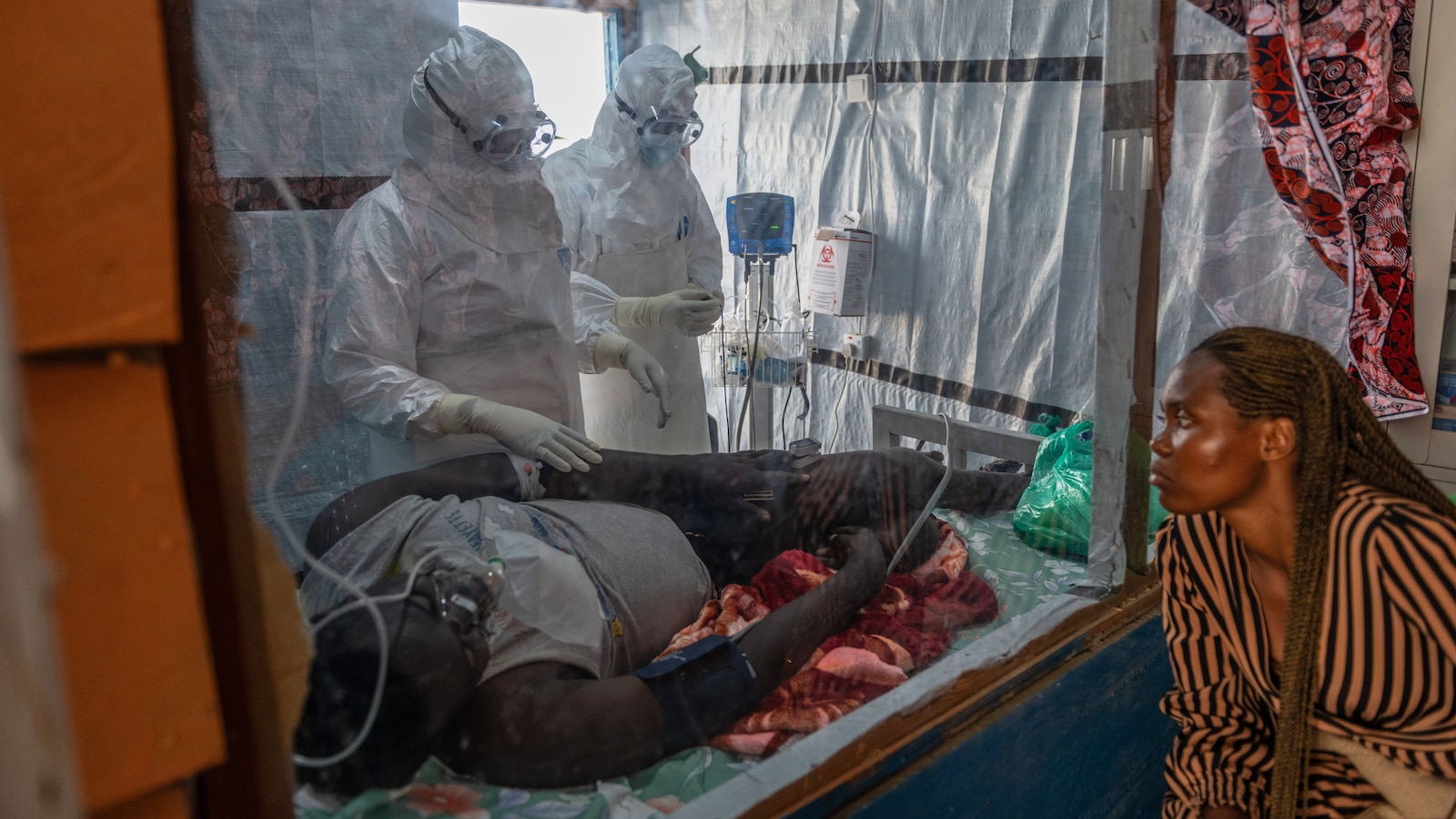
BUNIA, Congo — At least 930 people have died in Congo’s Ebola outbreak, the country’s Ministry of Health said.
The deaths were recorded out of the 2,344 cases confirmed as of Saturday, the health ministry said overnight into Monday. Thirty-seven new deaths were recorded in the previous 24 hours in one of the highest single-day totals.
The Ebola outbreak that was declared in eastern Congo on May 15 is the fastest-growing Ebola outbreak on record. The Bundibugyo virus responsible for the outbreak is less common than others that cause Ebola disease, and there is no approved vaccine or treatment.
Many people think about compact laminates negatively, but this kind of worktop material has been improved greatly, and now it looks better than ever. Compact laminate looks very much like wood, stone or concrete and comes in a wide variety of patterns. Also, this material is lightweight, easy to install, and resistant to daily activities.
Anyone who thinks they’ll only see a moth if they switch on an outdoor light in the evening is much mistaken, because hundreds of moths fly during the day, says Rebecca Levey, senior ecologist at Butterfly Conservation.
There are around 2,500 species of moths in the UK, with more establishing every decade after migration from continental Europe, the charity says. This is compared with 60 butterfly species.
“They support a lot of the other wildlife that we see in our gardens as part of the food chain. Caterpillars are the natural foods that a lot of birds like blue tits choose when they’re raising their young and they need hundreds of caterpillars to raise their chicks successfully,” says Levey.
“Some 10% of moths in the UK are day-flying – that’s 250 species of moths, and you can walk through a grassland and they’ll be disturbed and just flutter up. A lot of moths are pollinating just the same as butterflies.”
Their natural predators include bats, birds and even frogs.
You can often tell a moth from a butterfly by its antennae, she continues. Butterflies have a thick club-shaped antennae, whereas moth antennae will be quite feathery with little projections coming off them. They won’t be thick at the tip.
So which moths might we see through Big Butterfly Count, which runs to August 9, and throughout the summer, in our garden?
1. Hummingbird hawk-moth
(Alamy/PA)
This large moth, which looks a bit like a hummingbird in flight, used to be a migratory species in the UK, flying across the Channel when Europe was having a heatwave and they’d run out of nectar there. They’d fly north and come to feed in British gardens, she explains.
“It’s just about warm enough here now that they are surviving our winters and breeding here, too. ” You can even find them in Scotland.
“As its name suggests, the first time we had it in the UK, it came to the island of Jersey, but it’s now spread and potentially, because the climate is warming, a population was found on the south-west coast, then in London and now its spreading out from there.”
The Jersey tiger moth has bright red underwings that flash when they fly. It feeds on nectar from many plants, includes scabious, buddleia and hemp-agrimony, which bears pink flowers and is found in damp grassland, marshes and bordering ponds.
3. Six-spot burnet
(Alamy/PA)
This common moth, which frequents flowery grasslands, has six red spots on each forewing, although in some cases the outermost spots can be fused. It tends to go for purple and pink flowers and loves knapweeds, thistles, scabious, valerian, clover and wild thyme. Its caterpillars feed primarily on bird’s-foot-trefoil.
4. Mint moth
(Alamy/PA)
This smaller species loves mint and if you have catmint or other types of mint you may well see one in your garden, she says.
Are moths more timid than butterflies?
“It completely depends on the species,” say Levey. “The ones coming into gardens are probably some of the more confident ones that are looking for a really good nectar source, which they often find in gardens, especially in a year like this one, where a lot of their other habitats are looking quite dry.
“In a garden that’s receiving quite a bit more water, your plants are going to be providing more nectar potentially than some of the native plants in the surrounding areas.”
You’re more likely to see day-flying moths in the sunshine. It it’s cloudy or rainy, they may be hidden in a hedge or bush.
Where will you find moth caterpillars?
Mullein moth caterpillar (Alamy/PA)
“Pretty much every native tree species in the UK will have moth caterpillars that will only feed on that specific native tree,” Levey explains. “The best thing someone can do, when they’re considering planting a small tree in their garden, is to make it a native tree, then you’ll be supporting native caterpillars of moths.”
If you have mullein in your garden, you’re more likely to see the bright yellow and black spotted mullein caterpillar on it than the mullein moth.
To encourage hummingbird hawk-moth caterpillars into your garden, consider planting something in the bedstraw family, such as lady’s bedstraw, a scrambling, carpeting perennial with small yellow flowers and a scent which smells of hay when dried. Its vigorous growth, though, can make it a bit of a garden thug if it isn’t kept in check.
A caterpillar feeding on lady’s bedstraw (Alamy/PA)
Red campion, which has pretty pink flowers suited to a more shady area, is also a magnet for moth caterpillars, which feed on its seeds.
Night-flying moths are likely to be attracted to plants which have a night scent and to plants which are a pale white or yellow, which are more noticeable at night, including flowering jasmine, night-scented stock and evening primrose.
Avoid sharp UV light
“Most moths will be attracted to lights that are slightly blue or purplish on the UV spectrum, which can be more distracting to them and put them off laying their eggs nearby. If the light is a warm orangey colour, that’s not as attractive to them,” she says.
Jessica Lewis, 25, was diagnosed with endometriosis two years ago. She first started experiencing symptoms when she was 14 years old.
“It is just excruciating. There have been times that I have literally collapsed on my way home from work because I am in agony,” Lewis, from Broadstairs, said.
“It affects every single thing I do day to day, the plans I make.
“It is just really sad because I feel like a lot of the things I used to really look forward to I would now dread.”
She says according to her NHS notes she went to the doctor 22 times before eventually getting her diagnosis following surgery in 2024.
“I would love for there to be actual change within the NHS in terms of how medical professionals are trained. I would love to see more funding for it,” she added.
Hansen wants a local wellbeing hub to include a safe space for sharing experiences as well as a fitness centre.
Like Lewis, she also wants to see more funding going to the diagnosis and treatment of endometriosis.
She is supported by her local MP for Chatham and Aylesford, Tristan Osborne.
“We have wellbeing hubs already – I think having one dedicated to women’s and girls’ issues is not only sensible, it is also appropriate,” Osbourne said.
He added that he would be working with Medway and with Tonbridge and Malling councils to try and get similar provision there.