Home Blog Page 779

Living along the coast may elevate your risk of high blood pressure

0
Living along the coast may elevate your risk of high blood pressure


When people consider what causes high blood pressure, they often think of lifestyle factors, such as eating salty foods, lack of exercise or smoking. However, an unexpected source of salt might also be raising blood pressure for millions of people: the water they drink.

As sea levels rise, more and more salt water tends to infiltrate global freshwater sources. I’m a public health researcher, and this raised a question for my team: Could saltwater intrusion be increasing the risk of high blood pressure worldwide?

In our analysis of existing research, we found that people exposed to saltier drinking water tend to have significantly higher blood pressure and a greater risk of hypertension. This link, as expected, appears strongest in coastal areas where seawater is increasingly contaminating freshwater supplies.

Our findings highlight an often overlooked environmental factor in cardiovascular disease that could become more problematic as climate change accelerates.

Environmental health and hypertension

Hypertension – persistent elevated blood pressure – affects over a billion people worldwide and remains a leading cause of heart disease and stroke. However, global prevention efforts mainly focus on lifestyle – environmental factors generally receive much less attention.

One such factor is drinking water salinity, defined as the concentration of dissolved salts – primarily sodium – in water. In many coastal areas, groundwater is becoming saltier as rising sea levels push sea water into freshwater aquifers.

This view from the air shows coastal vegetation (grey-white) which died after being enveloped by salt water on Katchal Island, part of the Andaman and Nicobar Islands in 2005 (AFP via Getty Images)

This is particularly problematic, since over 3 billion people live in coastal or near-coastal regions globally, many in low- and middle-income countries where groundwater is their main source for drinking water. In these coastal communities, people might inadvertently ingest large amounts of sodium just from drinking and cooking with saline water they cannot taste.

Water salinity is as risky as being sedentary

Researchers have long suspected that exposure to high salinity drinking water could affect people’s blood pressure and cardiovascular disease risk. However, previous research on this topic has often been limited by variable study designs, mixed results, inconsistent and imprecise methods to measure salinity, and small sample sizes. It’s also unclear whether this risk, if it exists, varies by population.

To address this uncertainty, my team and I conducted a systematic review and meta-analysis that pooled data from 27 population-based studies involving more than 74,000 participants in the U.S., Australia, Israel, Bangladesh, Vietnam, Kenya and several European countries. Combining data across studies can address some of the core limitations of individual studies by enabling detection of relevant effects. Synthesizing evidence across diverse populations, settings and study designs can also improve generalizability by providing a more comprehensive picture.

(Alamy/PA)
(Alamy/PA) (Alamy/PA)

The studies we examined focused on the association between sodium levels in drinking water and cardiovascular outcomes, including blood pressure, hypertension and other heart-related conditions. When we compared the health outcomes of people exposed to higher levels of drinking water salinity with those exposed to lower levels, we found a consistent pattern.

Those drinking saltier water experienced about 3.22 mmHg higher systolic blood pressure and about 2.82 mmHg higher diastolic blood pressure, on average. Overall, exposure to high salinity water was linked to a 26% increased risk of developing hypertension. These associations were strongest among coastal populations.

About the author

Rajiv Chowdhury is a Professor of Global Health at Florida International University. This article is republished from The Conversation under a Creative Commons license. Read the original article.

While these are modest increases at the individual level, even small shifts in blood pressure among large populations can have significant public health effects. To put it in perspective, the risk that higher water salinity levels poses to hypertension is similar to that of other cardiovascular risk factors, such as low physical activity, which increases hypertension risk by approximately 15% to 25%.

Studying sodium levels

Our findings highlight the importance of considering environmental exposures alongside individual behaviors when addressing risk factors for high blood pressure.

Despite increasing evidence linking drinking water salinity to blood pressure, researchers still know relatively little about its effects on long-term cardiovascular diseases, such as heart attacks or strokes. My team and I identified very few studies examining these outcomes. Future research could explore how drinking saline water influences cardiovascular disease risk and what salinity levels are harmful to health.

Interestingly, current World Health Organization guidelines do not set any health-based standard for sodium levels in drinking water. This further highlights the need for stronger scientific evidence.

For most people, food remains their primary source of sodium. But when water salinity is elevated, drinking sources may add to a person’s total intake. Checking local water quality reports, if available, and focusing on overall dietary sodium could help people manage their blood pressure.


Source link

Dr Chris: ‘Why do so many of us have problems with our feet?’

0
Dr Chris: ‘Why do so many of us have problems with our feet?’


Drs Chris and Xand explore common foot problems, from bunions to verrucas, and why diseases affecting our blood vessels or nerves seem to often show up in the feet.


Source link

EU threatens to force Meta to restore WhatsApp full access for rival AI chatbots

0
EU threatens to force Meta to restore WhatsApp full access for rival AI chatbots


LONDON — European Union regulators have threatened to force WhatsApp parent Meta Platforms to reverse a move that they say effectively limits the AI chatbots of rival companies from accessing the messaging app.

Meta’s attempt to resolve the bloc’s antitrust investigation of WhatsApp by charging third-party AI companies for access is unsatisfactory, the European Commission said Wednesday.

The commission, which is the 27-nation bloc’s executive arm and top antitrust enforcer, opened the investigation last year over concerns that WhatsApp was blocking competing artificial intelligence companies from offering their AI assistants on the platform.

Officials said Meta’s decision in March to start charging third-party AI providers for access was essentially equivalent to the ban it had in place.

“Replacing the legal ban with pricing that has a similar effect does not change our preliminary view that Meta’s conduct appears to be an abuse of its dominant position, that may seriously harm competition on the market for AI assistants,” Teresa Ribera, the commission’s executive vice president overseeing competition, said in a statement.

When Brussels opened its investigation in December, officials said they were scrutinizing new terms and conditions that blocked providers of AI chatbots from using a tool to communicate with customers.

The bloc said it intends to issue its order to reinstate access for third-party chatbots under previous terms until it reaches a final decision on the case.

Meta said the commission’s decision means that the company will have to provide its service for free and would amount to subsidizing select companies rather than clearing the way for more competition.

It could mean, for example, that “a small bakery in France paying to use the service to take croissant orders will be picking up the tab for OpenAI,” Meta said of one of its competitors in a statement. “Small European businesses shouldn’t foot OpenAI’s bill.”


Source link

5 worrisome privacy clauses hidden in smart home devices

0
5 worrisome privacy clauses hidden in smart home devices


NEWYou can now listen to Fox News articles!

Many of the apps and devices we use every day contain privacy terms most people never read. Yet those clauses often allow extensive data harvesting, behavioral tracking and long-term storage of personal information. Some even allow companies to access recordings or share data with partners.

The reality is simple. Smart devices inside your home and car can build detailed profiles about your daily life. Your schedule. Your habits. Even your conversations. One way I explain this to people is simple. Your phone knows where you go. Your smart home knows what you do when you get there. I unpack how this works in everyday life on my Beyond Connected podcast at getbeyondconnected.com. In many cases, these devices are not just reacting to you. They are actively logging, analyzing, and storing your behavior by default, often without you realizing it.

Let’s walk through five privacy clauses that surprise most people. We will start with number five and count down to the most unsettling one.

YOUR PHONE SHARES DATA AT NIGHT: HERE’S HOW TO STOP IT

The Nest Audio, the newest speaker with a virtual assistant by Google, is being exhibited on the Android Smart Home display during the Mobile World Congress 2023 on March 2, 2023, in Barcelona, Spain. (Joan Cros/NurPhoto)

Sign up for my FREE CyberGuy Report

  • Get my best tech tips, urgent security alerts and exclusive deals delivered straight to your inbox.
  • For simple, real-world ways to spot scams early and stay protected, visit CyberGuy.com trusted by millions who watch CyberGuy on TV daily.

Plus, you’ll get instant access to my Ultimate Scam Survival Guide free when you join.

Clause No. 5: ‘We log and share your driving data’

Today’s vehicles are no longer just transportation. Many now operate as connected computers on wheels. Connected vehicle platforms and systems, such as Android Automotive OS, collect large amounts of telemetry data.

That can include:

  • Vehicle speed
  • Seat usage
  • Climate controls
  • Location and trip data

Researchers have found that vehicles may gather dozens or even hundreds of data points during normal driving. In some cases, researchers found that vehicle speed can be logged as frequently as 25 times per second, creating a highly detailed record of how you drive.

What this means for drivers

Your car may know:

  • Where you drive
  • When you drive
  • How aggressively you accelerate or brake
  • Which seats are occupied

That data can be used to infer stops, turns, and even risky driving behavior. In some cases, it may also be shared with third parties for advertising, insurance, or financing purposes. In other words, your vehicle can create a detailed picture of your driving behavior and routines. Many drivers never realize how much information their car collects.

Alexa+ device displaying a blue light ring on a table

The new Alexa+ is powered by a more responsive AI. (iStock)

Clause No. 4: ‘We track what you watch’

Your television may be one of the most active data collectors in your home. Many smart TVs from brands like Samsung, LG, and Roku use a technology called Automatic Content Recognition, often shortened to ACR.

ACR can analyze what appears on your screen across:

  • Streaming apps
  • Cable television
  • Gaming consoles
  • HDMI devices

This technology works in real time, identifying what you are watching and reporting that information back to the company. Some policies even state that snippets of audio or video may be shared with third parties to match ads to your viewing. Some lawsuits have alleged that certain TVs capture screenshots extremely frequently to identify content.

Why this matters

Your TV can learn:

  • What shows you watch
  • When you watch them
  • How long you stay on each program
  • Which devices you connect to the TV

That means the show you binge, the time you watch it, and even how long you stay engaged can be packaged and sold to advertisers almost instantly. That viewing data may then be shared with advertising partners to build detailed marketing profiles.

Clause No. 3: ‘We track your behavior and location’

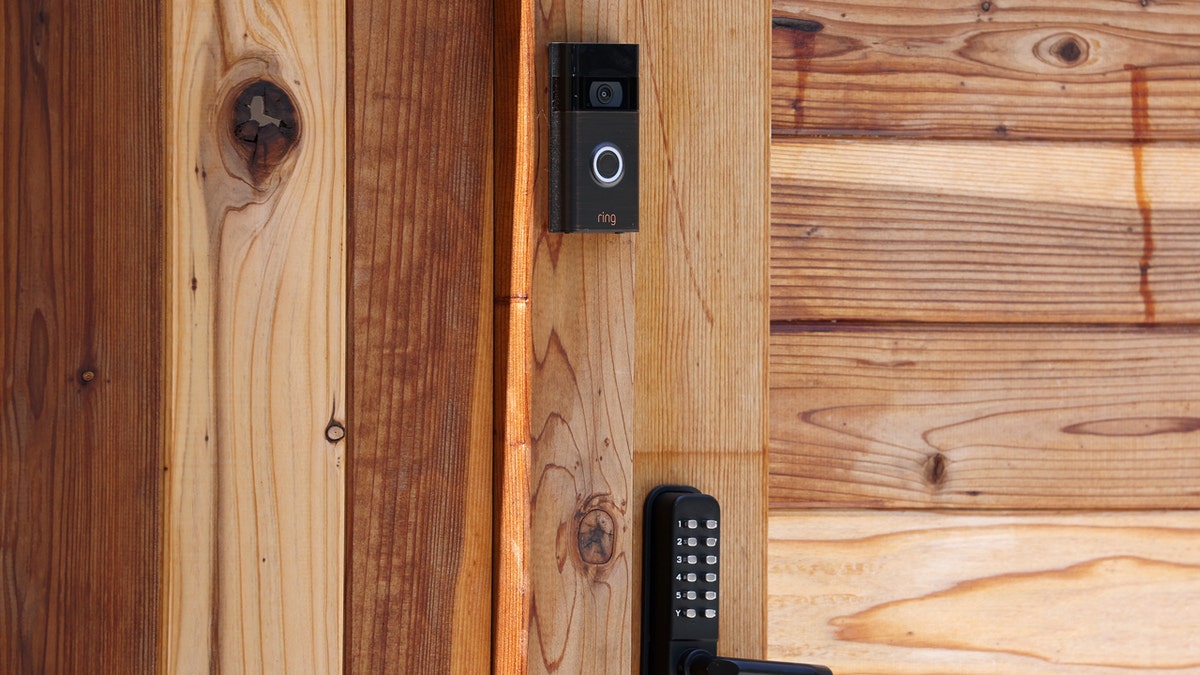
Video doorbells are designed to increase home security. Yet they can also gather large amounts of behavioral data. Devices like the Ring Video Doorbell may automatically collect information such as:

  • Device identifiers
  • Browsing activity
  • Usage patterns
  • Timestamps

Privacy disclosures also show that these devices can collect geolocation data, IP addresses, and details about the devices connected to your network.

What that data can reveal

Over time, a doorbell camera can build a timeline that shows:

  • When you leave home
  • When deliveries arrive
  • How often visitors come
  • Which devices connect to your network

Put together, this creates a detailed map of your daily routine, including when you are home, when you are away, and how your household operates. Individually, these signals seem harmless. Together, they can reveal detailed patterns about your household. If an account is ever compromised, that data can act as a blueprint of your life, not just a camera feed.

Clause No. 2: ‘Humans may review your recordings’

Some smart devices store recordings that help improve voice recognition and AI systems. Devices that may store recordings include:

Past regulatory findings have raised concerns about how companies manage that stored data. In some cases, recordings may be accessed by:

  • Human reviewers
  • Contractors
  • Internal teams that are training AI systems

Some company disclosures state that a small number of recordings may be reviewed by research and development teams to improve products and services.

Why this clause raises eyebrows

The goal of human review is often to improve voice assistants or detect errors. Still, many users never realize that recordings captured inside their homes may be reviewed by people. That means a conversation in your living room or a clip from your front door could be seen or heard by someone you have never met. Transparency about how this process works remains an ongoing discussion across the tech industry.

Clause No. 1: ‘We store your voice indefinitely’

Voice assistants sit quietly in kitchens, bedrooms, and living rooms waiting for their wake word. Devices like the Amazon Echo process voice commands in the cloud.

According to company disclosures, voice interactions can include:

  • Audio recordings sent to cloud servers
  • Transcripts stored in your account
  • Voice data used to improve services

In many cases, these recordings are saved by default and can remain stored indefinitely unless you manually delete them or change your settings.

Why this is the most surprising clause

Over time, your voice assistant may accumulate years of audio interactions. That can include everything from grocery lists and song requests to conversations you did not even realize were captured. That history can reveal daily routines, requests, shopping habits, and personal questions. Most people never review or delete those recordings.

Why smart devices are a privacy multiplier

Each individual device collects only part of the picture. Together, they can reveal an astonishing amount of detail about your life. Smart devices inside your home and vehicle may capture:

  • Conversations
  • Daily schedules
  • Viewing habits
  • Location history
  • Visitor patterns
  • Voice biometrics

Combined, this data allows companies to build extremely detailed behavioral profiles. That is why privacy experts call connected homes a data multiplier. In many cases, the value of that data is part of the business model, helping offset the cost of the devices themselves.

5 privacy moves to take back control of your tech

The good news is you still have ways to reduce how much information your devices collect. Here are a few practical steps that can make a big difference. 

Amazon Echo Show 8 smart-home device on kitchen counter

An Amazon Echo Show 8 smart-home device during the Amazon Devices and Services event at the HQ2 campus in Arlington, Virginia, US, on Wednesday, Sept. 20, 2023. Amazon.com Inc. previewed a push into generative artificial intelligence with new features for its Alexa voice assistant. (Al Drago/Bloomberg)


No. 5: Audit your app permissions

Start by reviewing what access your apps have to your devices. If you use smart home apps like Ring, also check in-app privacy settings such as Control Center and turn off sharing with third parties where available.

On iPhone

  • Open Settings
  • Tap Privacy & Security
  • Select Location Services, Microphone or Camera
  • Review which apps have access

Whenever possible, set location access to While Using the App rather than Always.

On Android

Settings may vary depending on your Android phone’s manufacturer

DATA BROKERS ACCUSED OF HIDING OPT-OUT PAGES FROM GOOGLE

  • Open Settings
  • Tap Security and Privacy
  • Tap More privacy settings 
  • Select Permission Manager
  • Review Location, Microphone, and Camera permissions

Whenever possible, set location access to Allow only while using the app rather than Allow all the time.

Removing unnecessary permissions helps limit background tracking.

No. 4: Turn off smart TV tracking

Most TVs include a setting that controls content tracking.

Look for options such as:

  • ACR
  • Viewing Data
  • Interest-Based Ads

On Roku, go to Settings → Privacy → Smart TV Experience and disable it. On Samsung, look for Viewing Information Services and turn it off.

Turn these features off in the privacy or advertising section of your TV settings. 

No. 3: Use stronger passwords

Smart home devices often connect to important accounts. If attackers access those accounts, they may control cameras, speakers, or home automation systems. Use strong, unique passwords and enable two-factor authentication (2FA)  whenever available. A password manager can help generate and store secure passwords.

Next, see if your email has been exposed in past breaches. Our No. 1 password manager (see Cyberguy.com) pick includes a built-in breach scanner that checks whether your email address or passwords have appeared in known leaks. If you discover a match, immediately change any reused passwords and secure those accounts with new, unique credentials.

Check out the best expert-reviewed password managers of 2026 at Cyberguy.com.

5 TECH TERMS THAT SHAPE YOUR ONLINE PRIVACY

No. 2: Delete old apps and accounts

Dormant apps and forgotten services often keep your personal information for years.

Take time to:

  • Remove apps you no longer use
  • Close accounts tied to old services
  • Revoke unused permissions

Cleaning up digital clutter reduces your data footprint.

Remove apps you no longer use

On iPhone (iOS 18 and newer)

  • Find the app on your Home Screen
  • Press and hold the app icon
  • Tap Remove App
  • Tap Delete App
  • Tap Delete to confirm

You can also remove apps through storage settings:

  • Open Settings
  • Tap General
  • Tap iPhone Storage
  • Select the app
  • Tap Delete App
  • Tap Delete to confirm

Deleting the app removes it from your device and frees up storage space.

On Android (Android 14 and newer)

Settings may vary depending on your Android phone’s manufacturer.

  • Find the app on your Home Screen or App Drawer
  • Press and hold the app icon
  • Tap Uninstall
  • Tap OK or Uninstall to confirm

You can also remove apps through settings:

  • Open Settings
  • Tap Apps or Apps & notifications
  • Select the app you want to remove
  • Tap Uninstall
  • Tap OK or Uninstall to confirm

Removing unused apps helps reduce the amount of data stored on your device.

Revoke unused permissions

Some apps continue accessing your camera, microphone or location even when you rarely use them.

On iPhone

  • Open Settings
  • Tap Privacy & Security
  • Select a category such as Location Services, Microphone or Camera
  • Review the apps listed
  • Turn off access for apps that do not need it

You can also control tracking:

5 MYTHS ABOUT IDENTITY THEFT THAT PUT YOUR DATA AT RISK

  • Go to Settings
  • Tap Privacy & Security
  • Tap Tracking
  • Turn off tracking for apps you do not trust.

On Android

Settings may vary depending on your Android phone’s manufacturer

  • Open Settings
  • Tap Security & Privacy
  • Tap Privacy or More privacy settings 
  • Tap Permission Manager
  • Select Location, Camera or Microphone
  • Review the apps listed and remove access if needed

Android groups permissions by type so you can quickly see which apps access sensitive features.

Ring security camera mounted on a fence outside a home in San Anselmo, California

A Ring security camera is seen on the fence of a home on June 1, 2023, in San Anselmo, California. Amazon has agreed to pay the Federal Trade Commission over $30 million in a privacy settlement over its Ring cameras. The company’s Ring doorbell division paid $5.8 million for violating a portion of the FTC Act that prohibits unfair or deceptive business practices and $25 million for violating the Children’s Online Privacy Protection Act by illegally retaining Alexa voice assistant profiles of thousands of children. (Justin Sullivan/Getty Images)

Today’s phones may automatically remove permissions from apps you have not used for a long time, but many apps still retain data tied to your account. Reviewing them manually helps reduce tracking and background data collection.

No. 1: Limit always-listening devices

Smart speakers constantly wait for wake words like “Alexa” or “Hey Google.” That means the microphone stays active so the device can detect commands. If you rarely use these features, limiting them can reduce how much audio data leaves your home. Here are some simple ways to reduce always-listening devices. 

Mute the microphone on smart speakers

Most smart speakers include a physical microphone mute button.

Press the mic mute button on devices like:

  • Amazon Echo
  • Google Nest speakers
  • Apple HomePod

When muted, the device stops listening for wake words. 

Unplug devices in private spaces

Bedrooms and home offices are common places where people prefer extra privacy. If a speaker or smart display is rarely used in those rooms, unplugging it removes the microphone entirely.

Review voice recordings in your account

Many voice assistants store past interactions. You can review and delete recordings inside the companion apps, such as:

  • Alexa app
  • Google Home app
  • Apple Home app

Set recordings to auto-delete or choose not to save them at all, where that option exists. Removing stored recordings prevents them from accumulating over time.

Disable voice activation on some devices

Some smart TVs, phones and tablets include voice assistants. Look in device settings for options such as:

  • Voice assistant
  • Voice wake word
  • Hands-free voice control

Turning those features off stops devices from constantly listening. Even though devices listen only for wake words, the microphones remain active. Limiting where these devices operate helps reduce the amount of audio data collected inside your home. 

Kurt’s key takeaways

Smart devices make daily life easier. They play music, answer questions, show visitors at the door and control lights with a voice command. But convenience often comes with hidden trade-offs. Many privacy clauses are buried deep in policies that most people never read. Over time, those permissions allow companies to gather enormous amounts of behavioral data. That does not mean you need to abandon smart technology. It simply means understanding what your devices collect and deciding what level of access you are comfortable with. Many of these settings are enabled by default, not because you chose them, but because you never knew they were there. A quick privacy audit today can prevent years of unnecessary data collection tomorrow. Oh, and if you want a deeper dive into how these hidden data practices affect your daily life, check out the latest episode of my Beyond Connected podcast at getbeyondconnected.com, where we break it down.

Here is a question worth asking yourself: If every smart device in your home combined its data into one timeline of your life, how comfortable would you feel with someone seeing it? Let us know by writing to us at Cyberguy.com.

CLICK HERE TO DOWNLOAD THE FOX NEWS APP

Sign up for my FREE CyberGuy Report

  • Get my best tech tips, urgent security alerts and exclusive deals delivered straight to your inbox.
  • For simple, real-world ways to spot scams early and stay protected, visit CyberGuy.com trusted by millions who watch CyberGuy on TV daily.
  • Plus, you’ll get instant access to my Ultimate Scam Survival Guide free when you join.

Copyright 2026 CyberGuy.com. All rights reserved.  


Source link

Why your biological clock may have you waking up at the same time every night

0
Why your biological clock may have you waking up at the same time every night


It’s 3 am. The room is dark, the house is silent, but your brain is suddenly wide awake.

Many people find themselves waking at roughly the same time each night and start to wonder whether something is wrong with their sleep.

Waking during the night is actually a normal part of sleep. Most people wake briefly several times, but usually fall back asleep so quickly they do not remember it the next morning. It becomes more of a problem when those awakenings last longer, or start happening at the same time every night, leaving you less refreshed the next day.

Sleep does not unfold in one long, uninterrupted stretch. Throughout the night, the brain moves through repeating sleep cycles that last around 90 to 110 minutes. Each cycle includes several stages: light sleep, deep sleep and rapid eye movement (REM) sleep, when most dreaming occurs. Most adults go through four to six of these cycles each night.

Towards the end of each cycle, sleep becomes lighter, making brief awakenings more likely. Deep sleep also occurs mostly in the earlier part of the night and becomes less frequent as morning approaches. That means waking in the early hours is not unusual.

Stress can make these awakenings feel much more noticeable. In the early morning, the body begins preparing to wake up and levels of cortisol, a hormone involved in alertness, start to rise. This increase is part of the body’s normal daily rhythm and helps us feel more awake as morning gets closer.

But if your mind is already crowded with worries about work, relationships or everyday pressures, a brief awakening can quickly turn into a full spell of overthinking. At night there are fewer distractions, so thoughts that might seem manageable during the day can feel louder and harder to escape. Unsurprisingly, stress and rumination are strongly linked to insomnia symptoms, and can make it much harder to fall back asleep after waking.

Experts say adults should aim to get seven to nine hours of sleep a night (Getty Images/iStockphoto)

Daily habits can also shape when and how often people wake during the night. Alcohol, for example, may help people fall asleep faster, but it often fragments sleep later on and increases awakenings in the second half of the night. Caffeine can have a similar effect. Even when consumed in the afternoon, it can linger in the body for hours, making sleep lighter and increasing the likelihood of waking. Caffeine taken up to six hours before bedtime can still interfere with sleep.

Other factors matter too. Irregular sleep schedules, going to bed much earlier than usual to catch up on rest, late-evening light or screen exposure, or a bedroom that is too warm or too cold can all reduce sleep quality and make waking during the night more likely.

For some people, repeated awakenings can become part of a vicious cycle and, if they persist, develop into insomnia. After enough nights spent lying awake and worrying about sleep, the brain can start to associate nighttime with stress and alertness rather than rest. The more someone worries about being awake, the harder it can become to drift off again.

Small habits can strengthen this pattern. Checking the clock during the night, for example, can increase frustration and make the mind more alert. Treatments such as cognitive behavioural therapy for insomnia aim to break this cycle by changing the thoughts and behaviours that keep the brain switched on at night.

About the author

Talar Moukhtarian is an Assistant Professor in Mental Health, Warwick Medical School at University of Warwick. This article is republished from The Conversation under a Creative Commons license. Read the original article.

Small changes in routine can help the body settle into a steadier rhythm. These are often referred to as good sleep hygiene: habits that support healthy sleep. Keeping a consistent wake-up time, even after a poor night, helps anchor the body clock and stabilise sleep patterns.

Allowing time to unwind before bed, limiting caffeine and alcohol later in the day, and creating a calm sleep environment can also reduce night awakenings. If you lie awake for a long time, it can help to get out of bed briefly and do something relaxing until you feel sleepy again. That helps break the link between bed and wakefulness.

Managing stress during the day can also make a difference, reducing the chance of going to bed already tense and alert. Journaling, yoga, meditation, breathing exercises and mindfulness can all help calm the mind before sleep.

So while waking at 3am can feel unsettling, occasional nighttime awakening is part of how sleep works. Understanding what is happening in the body, and how stress and daily habits can shape sleep, can make those middle-of-the-night moments feel a little less alarming.


Source link

Nine killed in second Turkish school shooting in two days

0
Nine killed in second Turkish school shooting in two days


Eight students and one teacher died in the attack, according to Interior Minister Mustafa Cifci.


Source link

Ramy Youssef talks new comedy special and why love is his inspiration

0
Ramy Youssef talks new comedy special and why love is his inspiration


Golden Globe-winning actor and comedian Ramy Youssef talks about his new comedy special, “Ramy Youssef: In Love,” which tackles topics like AI and religion but through a “lens of love.” He explains his inspiration and how he includes personal stories about his family and marriage.


Source link

The data center boom meets resistance in Maine as lawmakers pass a yearlong moratorium

0
The data center boom meets resistance in Maine as lawmakers pass a yearlong moratorium


PORTLAND, Maine — Maine is set to impose the nation’s first statewide moratorium on energy-hungry data centers in a sign of growing political opposition to tech giants’ massive structures that have stoked fears about blackouts, rising electricity bills and voracious water needs.

The legislation arose in a state that isn’t necessarily a destination for the computer-stocked warehouses that power artificial intelligence, but a couple of proposals there generated intense community backlash and helped propel a measure quickly through the state’s Democratic-controlled Legislature. Lawmakers on Tuesday approved sending the bill to Gov. Janet Mills, a Democrat who is running for U.S. Senate.

It’s the latest sign that increasingly stiff opposition at the local level is gaining a foothold higher up the political ladder. Tech giants and the data centers they are building have high-level support from President Donald Trump’s administration and many governors, who see them as economic engines and essential for winning the artificial intelligence race with China, even as voters raise concerns about the enormous amount of power data centers use. Analysts also warn of the possibility of blackouts in the mid-Atlantic grid in the coming years.

Proposals to slap a moratorium on data centers have been introduced in at least a dozen states, but none have passed a legislative chamber.

Maine’s legislation would institute a moratorium for more than a year on data centers above a certain size, and create a special council to help towns vet potential projects. Mills has not said whether she will sign the bill.

“It’s not that there’s no place for data centers in Maine,” said Democratic Rep. Melanie Sachs, who sponsored the measure. “Frankly, the tradeoffs have not been shown to be of benefit to our ratepayers, water usage or community benefit in terms of economic activity.”

Despite Maine’s relatively low profile among developers of massive data centers, called hyperscalers, supporters of the projects said the moratorium will still matter long into the future to all sorts of industries.

“It says that the state is willing to essentially put a blanket ban on you if it decides that you may be politically unfavorable,” said Dan Diorio of the Data Center Coalition, a trade association that includes tech companies and developers.

They said it could deter data center developers from going to Maine and deprive the state of a long-term economic development anchor that attracts other industries. It also means local builders and labor unions won’t develop the skills necessary to build the facilities and might leave them lagging behind other states, they said.

“We think that these data centers could bring good jobs, good opportunities to these regions,” said Montana Towers, a policy analyst with the free market Maine Policy Institute. “And a lot of these concerns about them are luddite in nature.”

Nonetheless, several communities in Maine have raised concerns about a lack of transparency in potential data center projects. The Maine moratorium is largely about getting those communities to have input in the development process, said Joe Oliva, a spokesperson for the Maine Broadband Coalition, which supported the moratorium.

“If this is going to come, we want to be in early and often on the conversation,” Oliva said.

Since last summer, community opposition has become a serious concern for data center developers, with numerous municipalities defeating their proposals in planning and zoning board votes before packed rooms of angry residents.

A handful of counties and municipalities in the U.S. have imposed a moratorium, and some bills emerged in states where development is brisk such as Virginia, Michigan and Wisconsin.

Some bills died without action, like one in Georgia, a data center hotspot. Other states have explored other ways to rein in data centers, such as by imposing tougher standards around water and energy use, transparency and protection of ratepayers and communities.

In Ohio, residents are trying to bypass the Legislature and get a measure on the ballot in November that is designed to permanently ban hyperscale data centers. They’ll need to gather more than 400,000 voter signatures by July 1 in what is perhaps the strictest measure of any under consideration.

Public officials, developers and other interests could otherwise “make this state a virtually unbroken field of data centers,” said Austin Baurichter, a Cincinnati-area lawyer who is helping organize the effort.

In South Dakota, a one-year moratorium bill failed in a state Senate committee amid opposition from power plant owners and data center developers. The governor also opposed it, telling senators that such planning is best done at the local level and that a statewide moratorium holds back municipalities that want a data center.

The sponsor, Republican Sen. Taffy Howard, told senators that “citizens are asking for this” and that the opponents are all lobbyists, “billion-dollar corporations” and government officials.

“Are you going to listen to the people or the paid lobbyists?” she asked.

___

Levy reported from Harrisburg, Pennsylvania.

___

Follow Patrick Whittle on X at https://x.com/pxwhittle and Marc Levy at https://x.com/timelywriter


Source link

‘Manosphere’ influencer Sneako attacked during livestream in NYC

0
‘Manosphere’ influencer Sneako attacked during livestream in NYC


Controversial influencer Sneako is recovering after he was assaulted during a livestream in New York City.

A clip from the Kick streamer’s recent broadcast showed Sneako, whose real name is Nicolas Kenn De Balinthazy, walking Tuesday in Manhattan while staring at his phone until a man suddenly comes up and punches him in the face. He then wraps his arms around Sneako’s neck and dragging him to the ground in a chokehold before the video cuts off.

Sneako, 27, is known for spouting right-wing ideology and offensive takes, including those of the “manosphere,” which refers to harmful online communities that promote misogyny and toxic masculinity.

Just moments before he was attacked on Tuesday’s stream, he was ranting that men who masturbate should be publicly executed.

Shortly after the video, Sneako posted on X, “Im fine we got it handled,” adding that he would go live again in an hour.

Influencer Sneako was punched on the streets of New York City in a recent livestream (Sneako)

In his livestream after the attack, he showed off a chipped tooth and said that he had been beaten and maced.

“I got hit, you can see it in the video,” he said. “I’m just going to be honest [because] everybody said that I could manipulate the situation and lie and stuff like that.”

He continued, “I got hit a few times, I get up and [he] immediately pulls out mace and runs away. I had never been maced before. It was okay, [I] just washed it out I’m fine. This was literally one hour ago.”

Sneako then implied that the attack was targeted.

“One hundred percent, this doesn’t make sense that it was a random person. He had it ready like that,” he said.

He walked through the video of the scuffle and said that the man was a coward for hitting him when he was not looking. He also clarified that he was not knocked out in the attack.

“It could have been way worse,” he said. “Don’t worry about me.”

Sneako’s attacker has not been identified, and it is unclear why he confronted him.

The clip of Sneako being attacked was removed from his archived livestream, but it still made the rounds on X as his critics taunted him for being assaulted.

Sneako was included in Louis Theroux’s Inside the Manosphere documentary, alongside other controversial influencers like HSTikkyTokky, Myron Gaines and Ed Matthews.

Elsewhere in the “manosphere,” streamer Clavicular was hospitalized Tuesday night after a suspected overdose during livestream, but is now reportedly in stable condition.


Source link

T20 Series: Scotland chase 160 to beat Namibia in convincing fashion

0
T20 Series: Scotland chase 160 to beat Namibia in convincing fashion


Scotland started their T20 series against Namibia in convincing fashion as they chased down 160 with seven balls to spare in Windhoek.

Having won the toss and opted to bat, the hosts slumped to 94-6 as seamer Jasper Davidson and left-arm spinner Mark Watt both took two wickets while bowling economically.

However, Namibia hauled themselves to a competitive total of 159-7 thanks to 54 from captain Gerhard Erasmus and a powerful late cameo from Jan Balt, who hit an unbeaten 19.

Louren Steenkamp – who struck 67 in Sunday’s ODI between these sides – was dismissed for 27 to provide Scotland debutant Zainullah Ihsan a first international wicket.

In reply, openers George Munsey (44) and Finlay McCreath (16) got off to a quick start in the powerplay and the tourists never ceased control in their run chase.

Off the back of a supreme hundred on Sunday, Brandon McMullen struck an unbeaten 44 to guide his team home, supported by 34 from captain Richie Berrington on his 350th Scotland appearance.

Berrington fell to a superb one-handed catch on the square-leg boundary by Ruben Trumpelmann, but wicketkeeper Matthew Cross struck the winning runs with two into the off-side.

There are two further matches in the series, on Friday and Saturday (both 13:00 BST).


Source link