Following their historic lunar flyby, the Artemis II crew is nearing the end of their 10-day mission, which will conclude Friday with the most intense phase of any astronaut’s journey: reentry into Earth’s atmosphere, followed by splashdown.
This is the critical moment where the spacecraft proves it can safely carry its crew back home. But when reentry begins, the world will need to wait about six minutes for that proof — the length of time that Mission Control will lose communication with the Artemis II crew.
Watch live coverage as the Artemis II crew returns to Earth beginning at 7 p.m. ET on ABC News Live, Disney+ and Hulu with special coverage beginning at 7:30 p.m ET on ABC.
A visualization of the Artemis I spacecraft reentering Earth’s atmosphere as Artemis II prepares to splash down in the Pacific Ocean on April 10, 2026.
NASA
Unlike the 40-minute loss of communications experienced when the Orion crew module passed behind the moon, which physically blocked radio signals from reaching the spacecraft, loss of communication during reentry results from Orion’s passage through Earth’s atmosphere.
What happens when reentry begins
Orion will be falling to Earth at over 24,000 mph when it encounters the atmosphere. As the atmosphere thickens, friction will slow the spacecraft. It will also create a lot of heat – up to 5,000 degrees Fahrenheit, which is more than twice as hot as lava from a volcano – turning Orion into a fireball.
It will take Orion about 13 minutes to travel the 400,000 feet from space to splashdown off the coast of San Diego, Calif.
“Everything’s different,” retired NASA astronaut Barry “Butch” Wilmore told ABC News. “The speeds are much, much greater coming back from deep space.”
Together, the friction and compression of the atmosphere as Orion falls creates a plasma bubble that will engulf the spacecraft, according to NASA. It’s that engulfing plasma that doesn’t allow radio signals in or out.
Orion snapped this high-resolution selfie in space with a camera mounted on one of its solar array wings during a routine external inspection of the spacecraft on the second day into the Artemis II mission, April 3, 2026.
NASA
Within seconds, the Artemis II crew will lose communication with ground controllers as what NASA calls a “planned six-minute blackout period” begins.
What’s happening inside Orion?
“You know the blackout’s coming,” said Wilmore, who experienced reentry from space three times during his time as an astronaut. “Because of that, you just go press through just like your normal processes, you’re monitoring. There’s not a lot you can do.”
Everyone inside the spacecraft is laser-focused on monitoring the onboard systems during their descent through the atmosphere, according to Wilmore, who added that astronauts train for “all types of failures,” so their mindset is just to concentrate on the jobs at hand.
“You can’t let apprehension involve you in those time frames,” Wilmore told ABC News. “You have to focus on your task, whatever that might be, and you have to perform because if you don’t, the consequences are pretty dire.”
When the signal steps out, the heat shield steps in
Those six minutes of radio silence are also when Orion’s heat shield, located on the underside of the spacecraft, does its most critical work, protecting Orion and its crew from the intense temperatures of reentry. Onboard maneuvering jets ensure Orion maintains the orientation required to keep the heat shield pointed toward Earth during reentry.
Commander Reid Wiseman gazes at Earth from Orion’s windows, a reminder of home as they travel toward the moon.
NASA
After Orion completes its passage through the outer atmosphere and emerges from its communications blackout, it will still be traveling too fast for it to survive the splashdown into the Pacific. That’s when a series of specially designed parachutes will deploy, slowing Orion’s speed to a far safer 20 mph at the time of splashdown.
Orion is scheduled for splashdown at 5:07 p.m. PT/8:07 p.m. ET Friday, April 10, at a site off the coast of San Diego.
Gardeners are finding a simple solution to help birds and hedgehogs navigate icy winter conditions: tennis balls. Strategically placed, these textured balls offer much-needed traction on slippery surfaces like garden netting and patios.
The winter season presents genuine threats to the native fauna while moving around the frosted gardens. The birds and hedgehogs are among the smallest animals that are more susceptible to falling due to the slippery surface as they look for something to eat or a place to stay during the cold days.There is an interesting home remedy that is gaining popularity. This is the use of tennis balls, which you should hang where animals like to walk, such as garden netting and patios. This can easily be done and is supposed to give the surface some traction.The importance of stable surfaces in winterAs soon as temperatures drop and ice covers garden nets, feeders, and patios, the surface becomes slippery and dangerous for birds. Research studies prove that textured rubber greatly improves traction in icy conditions.The article Efficacy of a Rubber Outsole with a Hybrid Surface Pattern for Preventing Slips on Icy Surfaces from Applied Ergonomics reveals that the texture of the rubber sole increases its resistance to sliding on icy surfaces compared to non-textured ones, thus minimising slip and fall accidents during winter weather. Although the study focuses specifically on shoe soles, the principle can be applied generally to any surface of rubber; therefore, it can also be applied to tennis balls in a garden setting.Due to their rubber skins, which have a textured surface, tennis balls become little grip devices when they find themselves on icy surfaces. The textured surface improves the ability of birds and hedgehogs to step on or land on the ice. Additionally, the colourful appearance of the tennis balls attracts the attention of any animal searching for a meal.Offering birds reliable landing and foraging locationsThe freezing temperatures force birds to search for a reliable source of food as well as a place to land. Freezing conditions can create dangerous landing conditions for the birds, making it difficult for them to balance. Therefore, the placement of the tennis balls around the bird feeder provides a secure and non-slippery landing place for the birds and energy that would otherwise be spent on regaining balance.The balls with rough textures act as reliable, easily-grasped attractants to lure birds from gardens into open areas during the cold season. When strategically placed, they encourage the birds to visit more often, thus ensuring their survival in the winter season.Helping hedgehogs to move safely over icy pathsGarden paths covered with ice become difficult for hedgehogs and other small mammals to navigate in winter. It becomes risky for hedgehogs to forage at night as the icy path becomes slippery due to fallen leaves and grass.The provision of a good footing using tennis balls placed along the known trails and areas around the shelters ensures that the hedgehogs remain stable and do not slip, allowing them to access places with the possibility of having food. This will allow them to conserve their energy by minimising sliding on slippery ground.
This innovative home remedy provides safe landing spots and foraging paths, significantly aiding wildlife survival during the cold months.
This method aligns with other general concepts of wildlife conservation that encourage assisting wildlife in adapting to human-modified environments. Based on the Woodland Trust’s tips for surviving winter, methods such as offering refuge and readily available food assist small mammals and birds in maintaining their strength during cold weather and improving their chances of survival.Where to put the tennis balls for optimal resultsFor optimal results, tennis balls should be put where there is frequent animal movement and areas where ice usually forms first. Examples include areas around bird feeders, underneath garden netting, on patios, and hedgehog highways or at entryways to refuges. Since tennis balls are highly visible due to their vibrant colours, they are easily visible against snow-covered areas, aiding animals in finding safe surfaces more easily.The frequent check-ups will help maintain the balls at appropriate places and avoid cases when snow covers them or moves them away by itself. Adjust their locations if animals divert their route or bad weather comes along. Little pre-planning will make the technique more effective for wildlife in your garden through winter and boost chances that the local animals and birds will continue to benefit from it.Complementary winter wildlife careIn addition to providing tennis balls, a number of other simple measures that are friendly for wildlife during winter could come in handy. For example, add floating elements to bird baths to allow continuous movement of water and prevent it from freezing. The tiny floating elements cause minimal movement, allowing the water not to freeze in cold weather.According to the Woodland Trust, the Royal Society for the Protection of Birds, and the National Wildlife Federation, providing adequate food, unfrozen water, and safe footholds is an important action that gardeners can take to help birds and hedgehogs survive the harsh weather conditions.Maintaining the garden’s natural components, such as the leaves, seeds, and indigenous plants, provides both nourishment and a habitat for insects and small mammals. Avoiding synthetic grass and reducing the use of pesticides maintains the balance and supports the natural cycle of seasons, making sure that animals have something to survive on during winter.Small steps, great resultsA few minor measures, including placing tennis balls around the garden nets and on the pathways, can have a significant impact on birds and hedgehogs who struggle with the cold weather. It is important to provide them with a safe and non-slippery surface to reduce injuries while helping them access food and shelter sources.With these simple techniques combined with other winter practices, such as preventing freezing of bird baths and maintaining natural habitats in gardens, gardeners encourage the presence of winter wildlife in their yards.
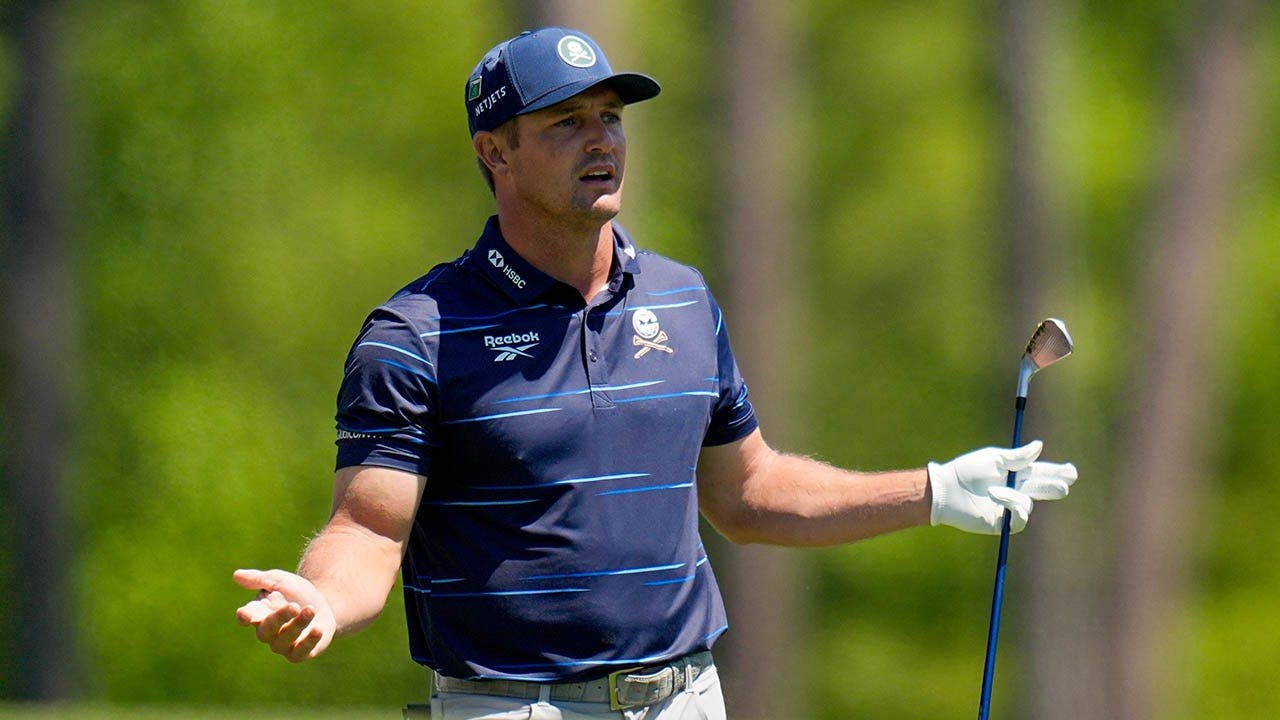
Bryson DeChambeau had a tumultuous first round of the Masters.
DeChambeau, 32, who shot 4 over par on the day, hit a patron with a tee shot on the sixth hole before later struggling to get out of a bunker on the 11th hole, hitting out of the sand three times before escaping the trap.
On the 180-yard, par 3, DeChambeau pulled his tee shot toward the left and hit a patron in the leg. The ball bounced back toward the hole and ended up settling off the green.
Bryson DeChambeau watches his tee shot on the 12th hole during the first round of the Masters at Augusta National Golf Club in Augusta, Ga., April 9, 2026.(Eric Gay/AP Photo)
DeChambeau covered his mouth with his hand when he saw the ball strike the patron. When he walked toward the green, he found the patron, gave him a golf ball and shook his hand.
DeChambeau, who was even par at the time, made an outstanding recovery, chipping the ball to three feet from the hole despite being 24 yards out and eventually saved par by making the ensuing putt.
The Clovis, California, native, remained at even par until the 11th hole, when he had difficulty escaping a greenside bunker.
DeChambeau’s second shot was from the fairway, hitting down toward a green that was flanked by a pond and a bunker. DeChambeau stayed far away from the pond, and his ball ended up rolling in the bunker.
Bryson DeChambeau hits from the bunker on the 11th hole during the first round of the Masters at Augusta National Golf Club in Augusta, Ga., April 9, 2026.(Eric Gay/AP Photo)
The LIV Golf star hit his first bunker shot just three yards, not even nearing the lip of the bunker. His second bunker shot went nowhere, and he appeared to completely miss the ball.
DeChambeau finally escaped the bunker on his third attempt, hitting the ball just over the ledge of the sand trap before letting it roll about 15 feet away. He ended up two-putting for triple bogey, bringing him to three over par for the day.
His struggles continued on the 16th hole, when he three-putted for bogey to bring him to four over par on the day. DeChambeau erased the stroke gained with a birdie on the 17th hole after a great iron shot from the rough left him eight feet from the hole.
Bryson DeChambeau hits his tee shot on the 12th hole during the first round of the Masters at Augusta National Golf Club in Augusta, Ga., April 9, 2026.(Eric Gay/AP Photo)
However, DeChambeau bogeyed the 18th hole, finishing with a 4-over 76 for the day.
For DeChambeau, his start to the Masters was similar to last year’s, when he shot an opening-round 73. DeChambeau rallied in the second and third rounds, and he entered the final round in the final pairing with Rory McIlroy before shooting a 75 on Sunday to end in a tie for fifth place.
DeChambeau will look to turn things around Friday, when he tees off at 1:20 p.m. ET.
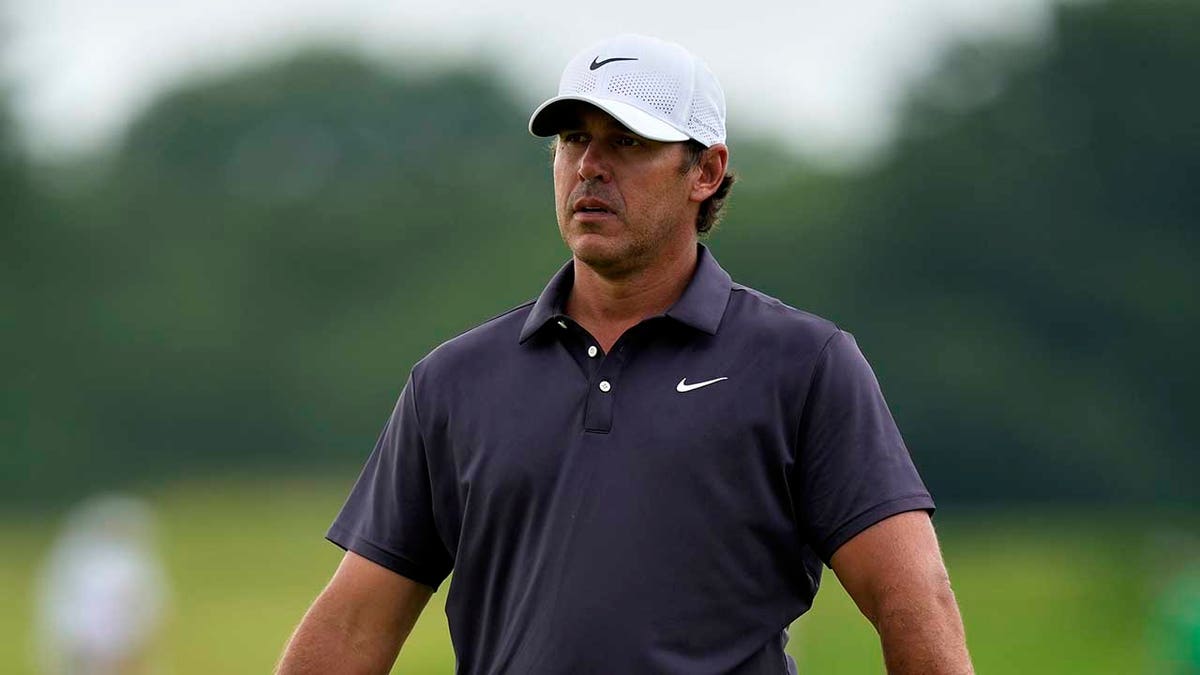
Legendary golfer Tom Watson offered a blunt take on the new program that paved the way for Brooks Koepka’s return to the PGA Tour.
Koepka left LIV Golf in December 2025. At the time of his departure, the three-time PGA Championship winner had roughly one year remaining on his contract with the Saudi-backed circuit.
Koepka applied for PGA Tour reinstatement and quickly gained approval under the tour’s new Returning Member Program. Watson, a two-time Masters champion who participated in Thursday morning’s ceremonial tee off at Augusta National, voiced strong criticism about the process.
Brooks Koepka of the United States reacts on the fifth green during the third round of the Valspar Championship 2026 at Copperhead Course at Innisbrook Resort and Golf Club March 21, 2026, in Palm Harbor, Fla.(James Gilbert/Getty Images)
“The tour made a decision to renege on what they promised when the players left for LIV. They felt that the compensation that he’s paid is good enough,” Watson said at the 90th edition of the Masters.
Watson then laid out what he believes should happen going forward.
“I thought the LIV players, when they left, they were supposed to be banned for life. If I was commissioner, that’s what I would do. I’d say if you’re finished with your contract with LIV Golf, if you want to play the PGA Tour again, you come back, and you must play the Korn Ferry Tour for a year to qualify for it.”
Koepka addressed his return to the PGA Tour in a post on social media.
“When I was a child, I always dreamed about competing on the PGA Tour, and I am just as excited today to announce that I am returning to the PGA Tour,” Koepka said in a statement posted to X Jan. 12.
“Being closer to home and spending more time with my family makes this opportunity especially meaningful to me. I believe in where the PGA Tour is headed with new leadership, new investors, and an equity program that gives players a meaningful ownership stake.
“I also understand there are financial penalties associated with this decision, and I accept those.”
He agreed to five years in the player equity program, a penalty worth up to $85 million, according to tour CEO Brian Rolapp. The pro golfer also committed to $5 million in charity donations and will have to earn his way into the tour’s signature events.
Brooks Koepka reacts after missing a putt on the eighth hole during the third round of the U.S. Open at Oakmont Country Club June 14, 2025, in Oakmont, Pa.(Carolyn Kaster/AP)
Several LIV golfers, including Bryson DeChambeau, Jon Rahm and Cameron Smith, rejected the PGA Tour’s controversial offer. Hideki Matsuyama and Wyndham Clark, who reportedly passed on financially advantageous LIV deals, said Koepka’s move left them conflicted.
Matsuyama told Golf Digest Japan he was “shocked” by Koepka’s return, adding he respected the decision but was discouraged by what he saw as a lack of communication from the tour.
Watson joined the PGA Tour in 1971, winning eight majors during his storied career.
Tom Watson smiles as he walks past the Claret Jug on the first tee during the Celebration of Champions Challenge during practice for The 150th Open Championship on The Old Course at St Andrews July 11, 2022, in St. Andrews, Scotland.(Keyur Khamar/PGA Tour)
He also suggested that LIV defections created a fundamental breach of the sport’s core principles.
“When the players left, they violated the No. 1 rule that we really had out here, which is to protect the sponsors,” he said. “Sponsors need players. They need the names to be able to promote their tournaments.
“If the players play wherever they want to play without a conflicting-event rule — where you had to seek the permission of the PGA Tour to play in a tournament opposite of a PGA Tour tournament — the sponsors would be hurt by that. I think we all understood that.
“When the players left for LIV, I think it was basically over. They chose to go for the money, which is fine. But to return to the tour, I thought, was a nonstarter. But apparently it’s not.”
Watson last played competitively at the 2019 Senior Open Championship and continues as an honorary starter to open the Masters a fifth consecutive year.
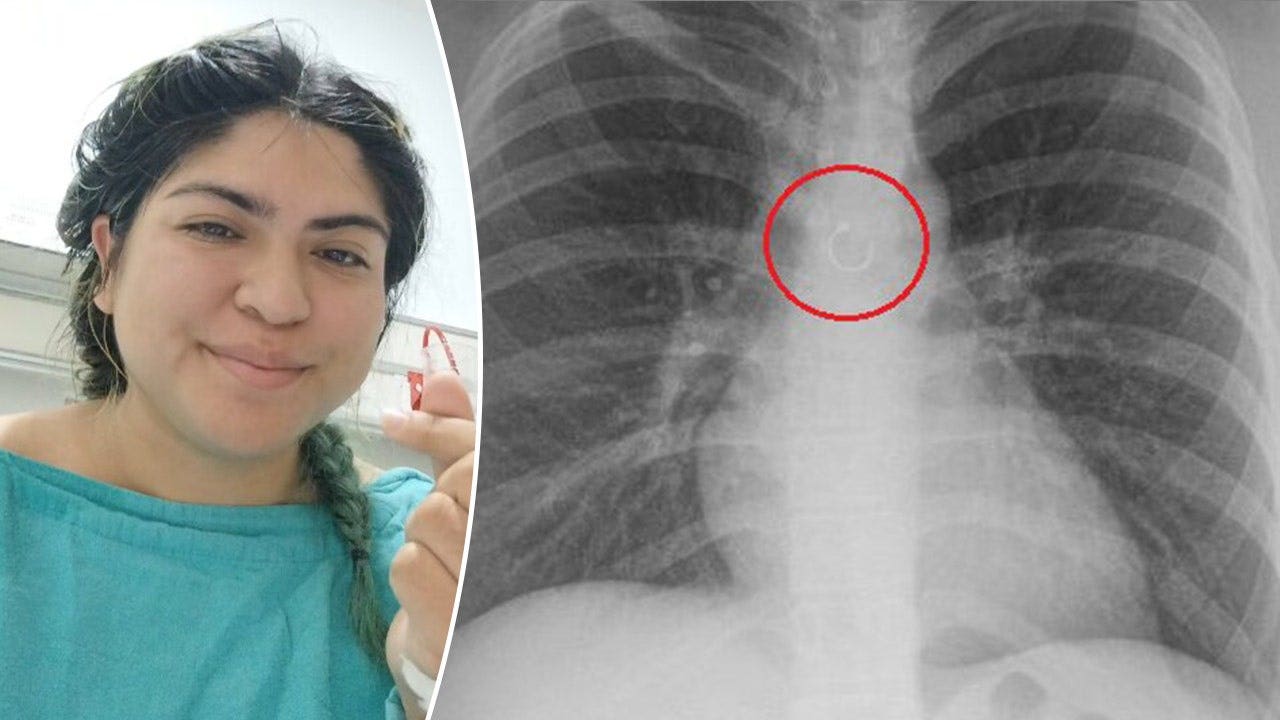
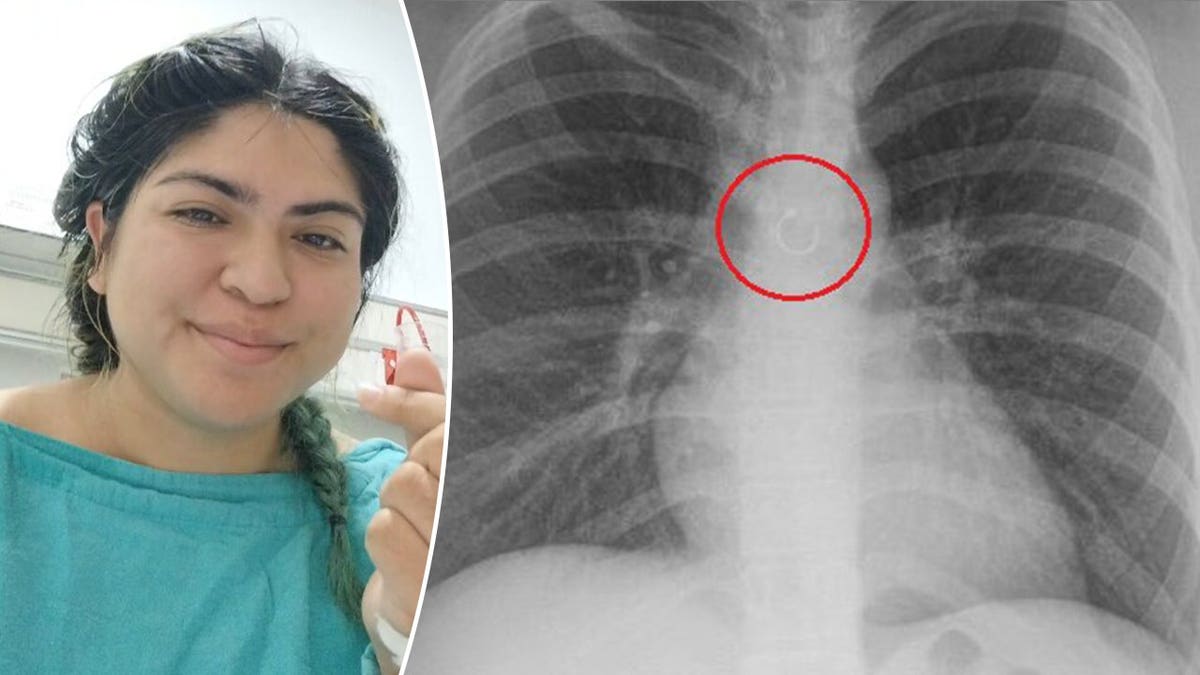
A TikToker in Mexico thought her cough that wouldn’t go away was just a reaction to the changing weather. Instead, it was her own nose ring, lodged deep within her lungs.
The 26-year-old, Monica Deyanira Cabrera Barajas, recently went viral on TikTok, amassing 4.7 million views after revealing the freak medical accident.
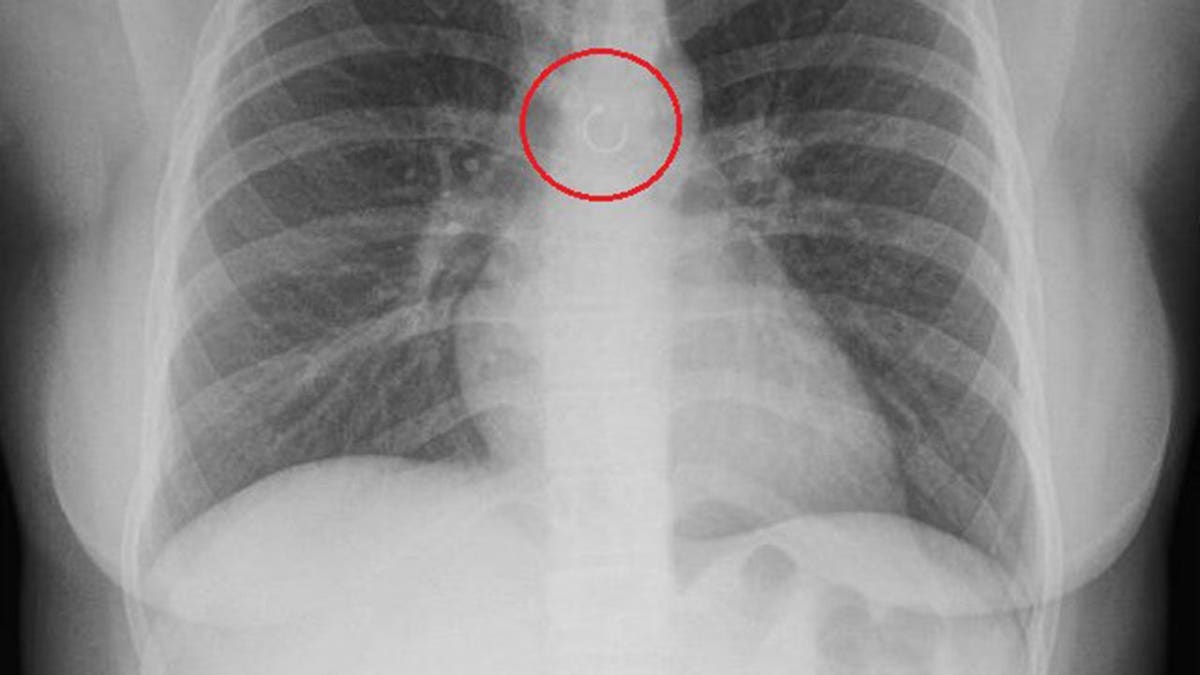
In videos, she shared that the stray accessory sat a mere 0.5 millimeters from her aorta, Jam Press reported.
Deyanira, who has a large number of piercings, didn’t initially notice the jewelry was missing. It wasn’t until she developed a “chronic cough” lasting over a month that she went to see a doctor.
“The only theory I have, which I told the pulmonologist, is that I fell asleep, the little ball fell out, and that was it,” Deyanira told creatorzine.com.
What was supposed to be a routine 20-minute extraction turned into a high-stakes medical procedure.(Jam Press)
“I was lying on my back, I didn’t realize, and that’s how I messed up.”
What was supposed to be a routine 20-minute extraction turned into a high-stakes medical procedure. During the initial attempt, surgeons were unable to budge the object because it had already begun attaching to her internal tissue.
“It ended up taking an hour and 20 minutes, and they still couldn’t remove it because it was attached to my body,” she said, according to the Jam Press report.
Facing a second, more invasive surgery and the risk of a fatal hemorrhage, Deyanira prepared for the worst. The night before the surgery, she wrote a farewell letter to her loved ones.
The nose ring was lodged dangerously close to her aorta, the body’s primary artery.(Jam Press)
“I was honestly thinking, ‘I’m going to die,'” she said. “It’s a horror I wouldn’t wish on anyone.”
The woman’s surgeon was equally stunned by how close the metal was to her heart. According to Deyanira, the doctor told her, “It seems God takes care of his creatures.”
If the metal had punctured her lung or heart before doctors discovered it, Deyanira said she likely would have died from a lung collapse or perforated aorta.
Followers commented that the ordeal “unlocked a fear I didn’t know I had.”
Khloe Quill is a lifestyle production assistant with Fox News Digital. She and the lifestyle team cover a range of story topics including food and drink, travel, and health.
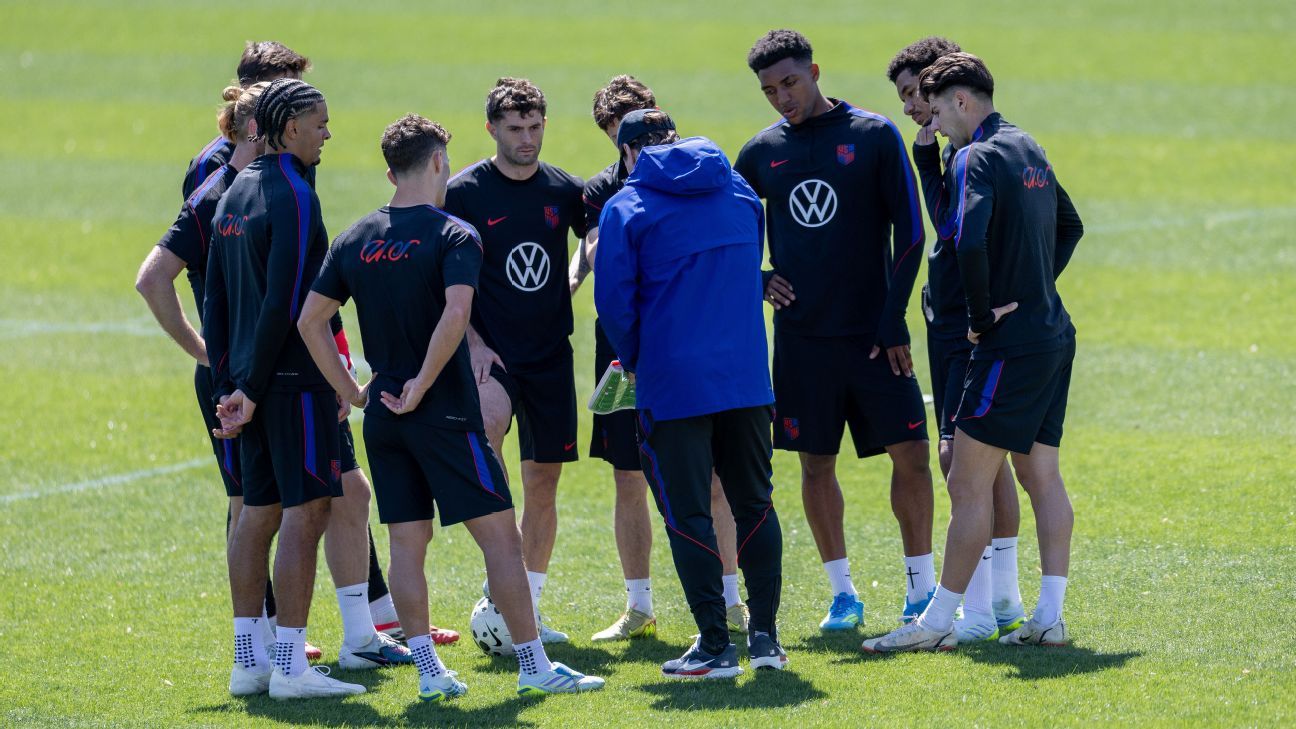
Watching from afar, and typically from one of the loftiest perches in a stadium, sits a collection of secret weapons for U.S. Soccer. “The best seats in the house that we can see everything,” said Natasha Patel, the federation’s director of sporting analytics. “[To] support the decision-making process.”
Relaying in-game information that can help with tactical and technical adjustments, analysts quietly work away from the spotlight as indispensable contributors, crunching numbers and sifting through data that can be the difference between an arduous draw and an emotional late victory for the U.S. men’s national team.
At this summer’s FIFA World Cup on home soil, the stakes will be even higher for the group that is, to quote Patel, “one of the most integrated departments with the technical staff.”
Along with in-game support in the lead-up to the tournament, U.S. Soccer’s analysts also have a hand in the creation of training sessions, video reviews, performance evaluations, opposition preparation, talent identification and much more. Although it’s the players who score the goals and the coaches who make the ultimate decisions, the federation’s analysts remain invaluable actors in the overarching direction of the USMNT.
“What a lot of fans don’t see is there’s so many things and people going on behind the scenes,” said San Diego FC sporting director Tyler Heaps, a former director of sporting analytics at U.S. Soccer. “Many different things going on in the background.”
Stepping up as the “support engine” for manager Mauricio Pochettino and his squad, can these data gurus and performance specialists guide the U.S. to success on soccer’s biggest stage?
Drones and hype videos, all in a day’s work
Getting a drone license isn’t the first thing that comes to mind when thinking of an analyst for U.S. Soccer, but that’s just one task in a long list of responsibilities. “Especially with the senior teams, we’ll have multiple drones filming the sessions so we can see things live in action,” said Patel of reviewing trainings. “To get multiple angles.”
With video being sent directly to a laptop, the analysts can then reach out to a point of contact within the training staff if there’s something they want to highlight. TVs are nearby to showcase these moments to players.
“It’s almost like an outdoor meeting space, where you can maybe drip feed some information. There’s an opportunity to reinforce some positive action that’s occurred or adjust,” Patel said. “We can do that live in the moment.”
Of course, the job entails much more than just flying small aircraft (which requires lessons and a two-to-three-hour test). For Patel, who oversees all of the performance analysts at U.S. Soccer, another key duty for her group is opposition preparation. Using video and data, the director will “paint a picture” of the upcoming rival. These reels call attention to strengths and weaknesses, individual players and opportunities at hand for the U.S. game model.
Rather than having the USMNT players watch hours of game footage, Patel and her staff condense that down into a shorter playlist. As she notes, they’re telling “the players a little bit of a story.” Those stories require plenty of information, which is where Sam Gregory, director of data analytics, steps in.
“Our department essentially deals with everything to do with data on the sporting side,” he said. “Anything about the team’s performance on the field, whether that’s the tactical side, preparing for upcoming opponents, analyzing our performances, anything to do with the physical performance.”
Working in tandem, the clear goal is to inform players and coaches as much as needed while stopping short of overloading them with too much material. On matchdays, there are reminders of game-day goals and clips from training sessions, but there’s also the occasional hype video for players to watch before stepping onto the field.
“A motivational video, or it doesn’t have to necessarily be motivational, but it’s like, what is the emotion and what are the messages that you want to portray,” Patel said. “How are you trying to bring that emotion and passion and really connect them to the importance, not only of the game, but of them putting on the shirt and playing for the crest?”
For club, for country
Things are a bit different when you’re an analyst at a national team instead of a club team.
“The player pool, the main difference is that in the federation, you’re constrained. You’re constrained by the number of players that you can look at,” Heaps said of recruitment and talent identification. “[But] it can be a good thing because then you’re able to focus on a subset where, in club recruitment, you can get overwhelmed by the number of leagues and the number of players.
“Sometimes the hardest thing to do with data and analytics is to be able to filter it down.”
Gregory, a former analyst for Inter Miami CF, shared a similar sentiment about player recruitment.
“When I was in the club game with Inter Miami, typically, the question would be: We’re looking for a right back with these qualities; can you do a search of all the right backs in the world and bring me back 20 players,” he said. “Here, if we’re starting to narrow down our World Cup roster for the men, for example, I’m not going to introduce a right back to Mauricio … who he’s never heard of.”
Instead, the questions are more directed. How can the current crop of Americans compete in specific situations? What are they being asked to do at club level? What can a select group in distinct positions offer to U.S. Soccer?
“Whereas at the club level, it’s kind of like the world’s your playground,” Gregory said.
Diving into data also presents a unique hurdle. “When you’re in a club, the sample size becomes much easier to look at,” Heaps said. “[But] when you’re in an international setting, oftentimes, data can be skewed … because of the lack of sample size, because you don’t play a ton of games.”
In 2025, the USMNT played 18 matches in all competitions. For Heaps’ San Diego team, that number is more than double at 44, which would be even higher if counting preseason friendlies last year. Because of this, working with clubs is vital for not only accessing information, but also to help create a blueprint for the USMNT players on those teams.
“One thing we’re working on more and more as a federation is the club-country collaboration, in terms of every player has their own individual development plan,” Patel said.
For Gregory, a practical example of this collaboration is data sharing.
play
1:57
Klinsmann hopes the USMNT learn from Belgium and Portugal defeats
Jurgen Klinsmann reacts to the USMNT’s back-to-back defeats at the hands of Belgium and Portugal.
“Players will share their data from the couple weeks before they come into camp; the clubs will share the data with us so that we know the training load that’s been on the player in the weeks prior to camp,” the analyst said, “and then we return that favor by sharing the training load data that the players had in our environment back with the clubs.”
Players are also interested in this information. No exact name was revealed, but Gregory did note that, during camps, sometimes a member of the roster will approach him and ask questions. “The worst thing that we can do as data analysts is try and force players to care about this, but we have so many players who really do care about this,” he said. “Players who are really curious.”
‘The U.S. Way’ and the World Cup ahead
With all these details at hand, does this mean that analysts are the ones pulling the strings for the USMNT?
“I’m never going to go to Mauricio and tell him how to play … he has way more insight and background in that than me,” said Gregory, who added that the manager has the final say. “What we focus on is making sure the coaches always have [the data].”
Instead, Gregory, Patel and others are there for guidance when needed for not only the USMNT, but all of U.S. Soccer.
“When I think about our support of the men’s national team, the idea is that this isn’t fundamentally different from the way that we support the rest of our national teams,” Gregory said. “At the senior level, we do provide a higher level of support than we will at our U20 and U17 levels, but we try and keep that as consistent as possible.”
That perspective means viewing the senior national teams as part of a wider mosaic. When reviewing each year, analysts also take into account significant trends and insights from youth matches and tournaments that can inform “the U.S. Way,” an all-encompassing philosophy for the entire U.S. Soccer ecosystem.
“Obviously that relates to the men’s national team, but again, I would see these questions as much bigger federation-wide questions,” Gregory said. “What I hope that we get out of this is that we can use some of that insight to help develop how we play across the entire federation, not just with the men’s national team.”
We’ll soon see some forces being joined at the federation for the World Cup. Patel kept her cards close and stated that she “won’t give too much away” on the full size of the data/analytical staff that will be assisting the USMNT this summer, but she did reveal that they’ll have a team behind their core team.
“We want to really bring the federation together. It’s an opportunity to do that when it’s based here,” she said. “We have Y and Z head coaches that will be supporting with someone on the opposition prep. We have our analysts as well across the federation that might be helping getting our video together, data.”
Whether sitting high up in the stands or crunching numbers off stage, so begins the countdown for the USMNT’s tournament opener on June 12.
“The goal is really to be that support engine,” Gregory said. “I think if we’ve done our job well, we’ll be the most prepared team going into this World Cup.”
President Trump pressures Iran as traffic slows in the Strait of Hormuz, emphasizing that a ‘REAL AGREEMENT’ is needed. VP Vance, Witkoff, and Jared Kushner are set to hold peace talks with Iran in Pakistan this Saturday, April 11, 2026. The administration explores potential punishment for NATO allies that did not support the Iran war effort, amid concerns about a fragile Mideast ceasefire and ongoing regional instability.
NEWYou can now listen to Fox News articles!
Israeli authorities arrested a 22-year-old Haifa resident for his involvement in an Iranian-backed plot to assassinate a high-ranking Israeli official, with the intended target believed to be former Prime Minister Naftali Bennett, reports say.
Ami Gaydarov, 22, was arrested last month on suspicion that he was working with an Iranian agent to gather intelligence and build a bomb for use in a terror plot against a high-ranking Israeli official. Gaydarov was unaware of the target’s identity. A gag order on his arrest was recently lifted, allowing Israeli media outlets to report on the case.
Authorities said Gaydarov first made contact with his Iranian handler in August 2025 and was paid roughly $23,000 — most of it in cryptocurrency — to carry out tasks in preparation for the assassination plot.
Gaydarov allegedly rented an apartment in the city’s downtown area to serve as a laboratory for the bombs.
Ami Gaydarov was arrested on March 9 by Israeli authorities on suspicion of working with Iranian handlers to harm a high-ranking official.(Israeli Police)
“To facilitate the contacts with his handlers, Gaidarov purchased dedicated phones and rented an apartment in Haifa where he produced the explosive substance, while documenting his activities in videos and photos that were sent to his handler as proof of compliance,” the Israeli police force said.
In connection with the plot, Israeli authorities have also arrested three other suspects, including Sergey Leibman and Edward Shovtiuk. The fourth suspect has not been named. Authorities said indictments for the four suspects should occur in the “coming days.”
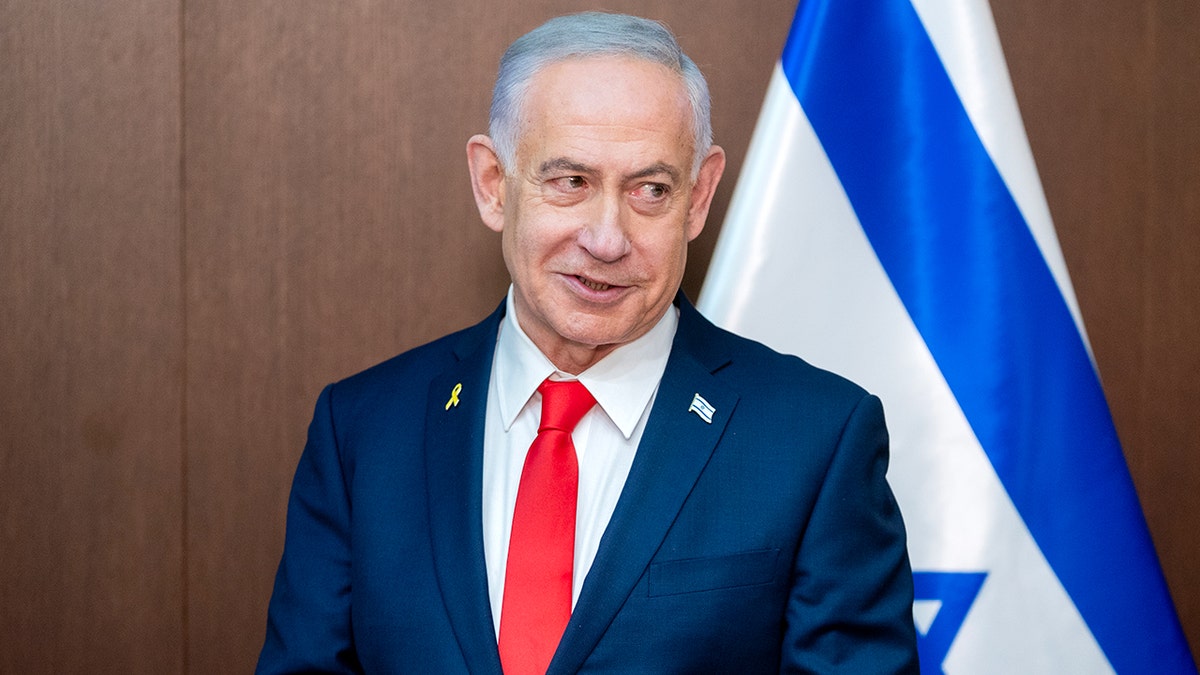
Israeli Prime Minister Benjamin Netanyahu meets with U.S. Vice President J.D. Vance at the Prime Minister’s Office on October 22, 2025, in Jerusalem, Israel.(Nathan Howard/Pool/Getty Images)
The terror plot was uncovered as part of Israel’s “Operation Roaring Lion,” a major military campaign launched against Iran on February 28, coinciding with the start of the war with Iran.
The arrest of the four men comes as Israeli authorities have won more than 40 indictments against more than 60 defendants working on behalf of the Iranian government. Just two months ago, Israeli Prime Minister Benjamin Netanyahu ordered that the citizenship of Israelis convicted of espionage for Iran be stripped of their citizenship.
Illustration shows a missile launch from Iran with the country’s flag in the background.(iStock)
Since the outbreak of the war with Iran, pro-Iranian attacks linked to radical groups have been on the rise. Just last week, French officials reported that a pro-Iran group was behind a failed bomb plot on a Bank of America office in Paris.
Elaine Mallon is a writer for Fox News Digital and Fox Business covering national politics.
Property taxes across the U.S. are rising faster than inflation, with the average homeowner last year paying $4,427, up 3.7% from 2024, according to a new analysis from real estate data firm ATTOM.
By comparison, the Consumer Price Index — a basket of commonly purchased goods and services — rose 2.7% last year. Homeowners in some states have faced considerably larger property tax increases, including an 18% hike in Delaware and an 11.6% jump in Maryland.
Property taxes are typically levied by local governments to raise revenue for public services, including public schools, road construction, and police and fire departments. They account for 70 cents of every dollar in local tax collections, according to the nonpartisan Tax Foundation.
Property taxes rose last year even as the average estimated value for single-family homes dropped 1.7% to $494,231 — still among the highest on record but representing a slight year-over-year dip. This shows property taxes are influenced by factors other than property assessments, with some local governments hiking taxes due to the rising cost of providing public services, according to the Tax Policy Center.
“Property taxes often rise faster than inflation because they’re driven by local government funding needs, not consumer prices,” ATTOM chief executive Rob Barber told CBS News. “Municipalities may increase tax rates or maintain higher levies to keep up with rising costs for schools, infrastructure and public services, regardless of broader inflation trends.”
Where property taxes are falling
While property taxes rose in 40 states and the District of Columbia last year, they fell in 10 states, mostly in the West, according to the ATTOM analysis.
Those declines reflect a push in some states to reduce property taxes, with Wyoming lawmakers approving a 25% cut for properties valued at up to $1 million. About 8 in 10 Montana homeowners got a property tax cut last year because of a new law that introduced a rebate and a tiered tax system.
“In states with year-over-year declines, property tax reductions are typically driven by policy changes and alternative revenue sources rather than just home price trends,” Barber said. “Strong revenues from sectors like energy or tourism can ease reliance on property taxes, while legislative actions such as rate cuts or tax relief measures can further lower the overall burden.”
Homeowners in the Northeast, California and Illinois typically pay the most in property taxes, with the average New Jersey homeowner paying about $10,500 a year, the analysis found. The lowest property taxes were in West Virginia, with an average levy of $1,081 per home.
CARACAS, Venezuela — Union leaders, retirees and public sector workers in the Venezuelan capital marched Thursday toward the presidential palace to demand higher wages and dignified pensions, only to be met by police blockades.
Workers’ wages for years have not allowed them to afford basic necessities. Many public sector workers survive on roughly $160 per month, while the average private sector employee earned about $237 last year.
National Police officers deployed early Thursday across downtown Caracas to intercept the march. Several times, demonstrators successfully breached initial barriers. Reinforced blockades eventually halted the crowd, leaving the majority of protesters roughly 2 kilometers (1.2 miles) from the Miraflores presidential palace.
There were no immediate reports of injuries or arrests during the scuffles between police and protesters.
Rodríguez in her address promised workers a wage increase on May 1. She did not disclose the amount but said it would be done in a way meant to avoid the inflationary spike that followed the last minimum wage increase.
Venezuela’s minimum wage of 130 bolivars, or $0.27 a month, has not increased since 2022, putting it well below the United Nations’ measure of extreme poverty of $3 a day.
“This increase, as we have indicated, will be a responsible increase,” Rodríguez said. “Likewise in the near future, as Venezuela enjoys more resources that allow for the sustainability of salary improvements and workers’ income, we will continue moving forward on this path.”