According to sources at WSL clubs, Bompastor’s comments are widely agreed with.
At the leading English clubs, players are developed by Professional Game Academies (PGA), funded and operated by the Football Association.
The FA first awarded 20 initial PGA licences to clubs in England’s two top tiers in 2023 as part of a major revamp.
From the 2028-29 season, WSL Football – the company that operates the Women’s Super League – will take over full responsibility.
As well as the PGAs, lower-tier clubs often create partnerships with schools and colleges to form a local talent pool. They can also set up their own youth teams and academies but would not be part of a professional league.
The FA has linked up with Women’s National League clubs – the third tier – to provide funds and resources for developing young talent, as well as building connections with WSL sides who want to loan players out to clubs at that level.
Some academies have also been involved in the Women’s National League Cup and Plate competitions, and they can enter local Senior County Cup tournaments.
The maximum number of matches teams can play in a PGA league – competitions set up for age groups up to Under-21 level – has increased from 19 to 27 in the past five seasons.
In summary, England’s youngsters are getting more game time and playing in a wider range of competitions – but it is not at the elite level.
There are gaps in the data but both the FA and WSL Football have confirmed the number of minutes played in the top tier by English academy graduates has dropped dramatically in recent seasons because of the increased competition for places.
Manchester City manager Andree Jeglertz told BBC Sport it is “the biggest step a young player will take” when they break into a WSL squad.
“I can only look at our own academy and it is a big step to go from there to being a senior player, especially for clubs like Chelsea and Manchester City – teams who want to be competing in Europe,” he added.
“What is the best solution to that? I don’t know. There definitely has to be some way to bridge that gap, whether that’s how they are training or [the] professional [environment].”
FA Cup semifinalists Southampton continued their Championship charge as they thrashed Wrexham 5-1 at Stok Cae Ras to replace the Welsh side in the playoff places.
Fuelled by their stunning weekend triumph over Arsenal, in-form Saints raced ahead with early goals from Kuryu Matsuki and Flynn Downes having already hit the woodwork twice.
Wrexham pulled one back through Josh Windass, but a breakaway strike from Cyle Larin and late goals from Ross Stewart and Finn Azaz secured the visitors’ fifth successive victory in all competitions.
The win was also their 10th in an unbeaten sequence of 13 league games and, now sitting sixth, Tonda Eckert’s side look to be timing their run superbly.
The German said: “I think the team is so focused at the very moment, there’s not much that I need to say.
“My job is just to make sure that I prepare them in the best way possible for the games coming up.”
Saints, who were 21st in the table when Eckert replaced Will Still in November, have won 10 of their last 13 in the league, drawing the other three.
Their intent was evident early on as Larin and Azaz both hit the bar in the eighth minute.
Larin was unlucky after meeting Ryan Manning’s cross with a deft header but Azaz should have done better than to plant the rebound against the woodwork.
Azaz quickly made up for that miss as he teed up the opener on 12 minutes by threading a fine ball through to Matsuki, who took a touch and slotted a shot past a wrong-footed Arthur Okonkwo.
Saints continued to control the game and doubled their lead 10 minutes later as Wrexham failed to clear a James Bree free kick. The ball rolled out for Downes to thump home.
Coming after the international break and their FA Cup heroics, Eckert was pleased with the strong return to league action.
Wrexham’s Kiefer Moore reacts after his team conceded a goal to Southampton in the Championship.
He said: “To kick off Championship football again — it’s been some time since the last game. It feels like forever.
“We just needed to make sure that we kickstarted again and I think the boys did that very well.
“We play Saturday-Tuesday now until the end of the season, but I think the rhythm is good.
“Now we need to finish off games quickly, stay humble, and always keep working.”
Wrexham did not create a meaningful opportunity until after the half-hour when Nathan Broadhead managed to reach a deflected cross and glance a header against the post.
That rallied the crowd and moments later the hosts got back into the game.
A long ball from Okonko was flicked on by Kieffer Moore and Windass produced a moment of class as he controlled and flicked past Jack Stephens to fire into the bottom corner.
Larin should have restored a two-goal cushion as he blasted over and he brought a good save out of Okonkwo from a volley early in the second half.
After Max Cleworth had an effort deflected just wide for Wrexham, Larin finally got the goal he had deserved after 61 minutes as he raced clear from halfway and calmly lifted over Okonkwo.
Wrexham were not quite beaten as Moore headed against the post from close range but Azaz struck an upright at the other end moments later.
Saints underlined their superiority nine minutes from time when Stewart headed in from a Welington free-kick and Azaz put the seal on victory two minutes later.
The defeat dropped Wrexham to seventh in the table and was a blow to their hopes of a fourth-successive promotion.
Manager Phil Parkinson said: “We’ve got to use this as a lesson, even at this late stage of the season.
“We knew coming into this game the importance of it, and it hurts a lot that we haven’t put in a competitive performance.
“It shows if your levels drop you can get punished. We got cruelly punished in that first 20 minutes. We were nowhere near it in many aspects of the game.
“But there’s still all to play for. I’ll look at it closely and make sure we’re ready for the weekend.”
Djibouti is a country of fewer than a million people with no significant natural resources.
It also hosts the densest cluster of foreign military bases in the world, with bases from the United States, China, France, Japan and Italy operating within miles of each other along its coastline.
Recommended Stories
list of 3 itemsend of list
These countries, seeking bases for both commercial and security purposes, have been warmly welcomed by President Ismail Omar Guelleh, who has ruled for at least two decades and leveraged the country’s strategic location to advance his own aims.
As Djiboutians go to the polls on Friday with Guelleh safely expected to win his sixth term, it is a strategy that has never looked more consequential.
The reason is the maritime chokepoint just beyond Djibouti’s shore.
Bab-el-Mandeb — the Gate of Tears — is a narrow corridor barely 30 kilometres wide at its tightest point, through which roughly 12 percent of global maritime trade passes every day, while at least 90 percent of Europe-Asia internet capacity runs through cables laid along the same route.
“This region sits at the centre of many things from global trade, shipping, to fibre optic connectivity, energy, and is related to the Suez Canal, the Indo-Pacific,” Federico Donelli, author of the book, Power Competition in the Red Sea, told Al Jazeera.
With the US and Israel at war with Iran since February 28, and the Strait of Hormuz under Iranian control, Djibouti and its position at the entrance to the Red Sea have come into sharp focus.
(Al Jazeera)
‘Geography is our main national resource’
When the September 11, 2001, attacks pushed the US to seek forward bases in East Africa, Djibouti was the obvious answer.
Camp Lemonnier, a former French Foreign Legion base on the edge of Djibouti City, became the headquarters of US Africa Command’s Horn of Africa task force. It remains the only permanent US military base on the continent, home to more than 4,000 personnel.
France, which had colonised and then stayed on in Djibouti after independence in 1977, was already there. French President Emmanuel Macron recently described it as sitting at the “heart” of Paris’s Indo-Pacific strategy, and has a mutual defence pact which was renewed in 2024.
Piracy off the Somali coast in the late 2000s brought Japan, Italy, and eventually China.
“Many countries with military bases in Djibouti emphasise protecting their commercial and investment interests,” said Djibouti’s president, in a 2024 interview with Saudi Arabian-owned news outlet Asharq Al-Awsat.
As a major trading power, Japan was especially exposed to insecurity in the Red Sea, through which a significant share of its traded goods transited.
One fifth of Japan’s vehicle exports and roughly 1,800 Japan-linked commercial vessels traverse the Bab-el-Mandeb annually, according to a government report published in March.
In 2017, Djibouti Finance Minister Ilyas Dawaleh outlined how much the country was charging for the privilege of hosting: the US was paying $65m a year, France $30m, China $20m, Italy and Japan just over $3m each.
“Our geography is our main national resource,” a Djiboutian official told Al Jazeera. “Like oil for Gulf states,” he said, speaking on condition of anonymity because he is not authorised to speak to the media.
Djibouti’s base-for-cash model is not solely extractive, though, and sits at the heart of a broader development strategy.
Larry Andre, a former US ambassador to Djibouti, told Al Jazeera that the opening of China’s base was part of a “package deal” that included a new railway linking landlocked Ethiopia to the coast through Djibouti, enabling about 90 percent of Addis Ababa’s external trade. “Eighty-five percent of Djibouti GDP is derived from servicing Ethiopian trade,” he added.
This was accompanied by significant infrastructure investment from Chinese firms, including in Djibouti’s ports, along with a major loan, which was renegotiated.
That marked the start of an economic and political pivot towards China, initially triggered when Djibouti’s government nationalised a port owned by the Emirati state firm DP World after a dispute over its operations.
In September 2024, Xi Jinping and Guelleh elevated their relationship to Beijing’s highest diplomatic tier, “comprehensive strategic partnership”.
“They thought hard about how to monetise that chokepoint,” said Samira Gaid, a regional security analyst at think tank, Balqiis Insights, “and how to go about that whilst not becoming dependent on one state.”
A year later, Marco Rubio — who as a senator in 2018 had publicly warned that China’s base risked destabilising the region — called Guelleh as US secretary of state to reaffirm what he described as a “long-standing strategic partnership”.
Djibouti was the only African country mentioned in Project 2025, a 900-page conservative blueprint by the Trump-linked Heritage Foundation, which warns of a US “deteriorating position” in Djibouti and urges recognition of Somalia’s breakaway region of Somaliland.
“The US is happy to remain in Djibouti for now despite China’s presence because they don’t have a better option at present,” Donelli said, adding that while Berbera, further east in Somaliland, has been speculated as an alternative base, nothing has yet materialised.
Djibouti’s former foreign minister Mahmoud Ali Youssouf, now chair of the African Union Commission, pushed back against rising criticisms in Washington in 2017. “China does not represent an obstacle to those common goals and Djibouti will preserve balanced relationships with these two great nations,” Youssouf added.
US military aircraft as seen at the US military base, Camp Lemonnier, in Djibouti [File: Getty]
A route in crisis
The Red Sea, transformed from a geographic cul-de-sac into a vital trade corridor after the opening of the Suez Canal in 1969, is no longer the reliable passage it once was.
Between late 2023 and the ceasefire in Israel’s war on Gaza in late 2025, Yemen’s Houthi movement waged a sustained campaign against shipping in the strait. The group launched more than 520 attacks targeting at least 176 ships, according to conflict monitor ACLED.
According to UNCTAD’s Review of Maritime Transport 2025, tonnage through the Suez Canal was still 70 percent below 2023 levels as of May 2025.
“In some ways, Djibouti is even more indispensable in this moment than it was when shipping and trade and geopolitics was going as normal,” Jatin Dua, who specialises in East African security and logistics at the University of Michigan, told Al Jazeera.
“There is a recognition that they are a safe haven in what is something of an unstable neighbourhood,” he added.
The disruption has, however, paradoxically also begun shaking Djibouti’s regional monopoly on military bases.
The Mediterranean Foundation for Strategic Studies, a French think tank, has warned that the Red Sea is at a “strategic inflection point,” shifting from “episodic rivalries” to “structured competition,” a trend it links to developments such as Israel’s recognition of Somaliland.
Somaliland’s leaders have pitched Berbera to the US in exchange for further recognition, while it has also refused to rule out the possibility of an Israeli base, despite threats from the Houthis, who control northwestern Yemen.
Somalia, which claims Somaliland, has warned its territory cannot become “a launching pad for military operations.” Djibouti’s Guelleh, whose country borders Somaliland to the east, has voiced alarm at the development, warning that Somaliland’s new president appears willing to accept any support “even if it’s the devil’s”.
Further up the coast, Russia has been attempting to revive a long-stalled agreement with Sudan to establish its first naval base in Africa on the Red Sea.
Djibouti President Ismail Omar Guelleh [File: Eduardo Soteras/AFP]
What the rents don’t buy
The gap between the country’s strategic importance and its citizens’ daily reality is not subtle. Official unemployment stands at nearly 40 percent and more than one in five people live in extreme poverty.
“The rents they are accruing don’t seem to trickle down,” Gaid said. “Everything to do with these military bases is basically imported, they’re just renting space. They aren’t really utilising your people.”
The opposition leader Daher Ahmed Farah has previously told Al Jazeera that the “country is in a strategic position and hosts many bases, but these interests lie with the Djiboutian people, not with a single man”.
Guelleh has been in power since 1999.
He removed term limits in 2010, won a fifth term in 2021 with 98 percent of the vote, and earlier this year removed the presidency’s age restrictions. When asked last May whether he intended to relinquish power, he told Jeune Afrique magazine: “I love my country too much to embark on an irresponsible adventure and be the cause of divisions.”
Gaid argues that the foreign powers based in Djibouti have “enabled” and “empowered” Guelleh “to dominate politics in that country”. The bases that were meant to guarantee stability, in other words, have also helped guarantee him.
Finance Minister Dawaleh has recently warned, however, that the Iran war risks pushing smaller states like Djibouti into “deeper economic uncertainty,” while the US embassy has repeatedly warned Americans to avoid areas near Camp Lemonnier, citing threats against US interests.
These two related developments risk both Djibouti’s internal stability and its effort to remain equidistant from the countries it hosts.
Dua, the Michigan academic, says that Djibouti’s model has traditionally worked through its careful branding of itself as a “space of stability” in an unpredictable region. “If that disappears, then the kind of power Djibouti has in the region in terms of attracting trade and geopolitical interest, which also means resources, can slowly disappear,” he said.
“It is a bit of a gamble to host as many countries militarily as they do,” Donelli said. “But for Guelleh, it appears to be working.”
The average UK house price fell by 0.5% month on month in March, according to an index.
It was the first monthly fall of 2026, with increases of 0.8% in January and 0.3% in February.
Across the UK, the average house price in March was £299,677, Halifax said.
Annual growth in property values also slowed, reaching 0.8% in March, softening from 1.2% in February.
Amanda Bryden, head of mortgages, Halifax, said: “The recent slowdown in the housing market reflects the wide uncertainty regarding the conflict in the Middle East.
“Concerns about higher energy prices have pushed up inflation expectations, which in turn led to a rise in mortgage rates, reducing confidence that interest rates will be cut this year and dampening the initial momentum in the market seen at the start of the year.”
She added: “The recent increase in UK mortgage rates has been more modest than the sharp rises seen during the mini-budget of 2022.
“Further, many households will already be on fixed deals, protecting them from the latest rate rises.
“Taking all this into account, house prices may prove resilient, even if uncertainty weighs on market activity in the near term.”
The report said that Northern Ireland continued to lead UK annual house price growth, with average prices up by 8.7% over the past year to reach £224,809.
Get a free fractional share worth up to £100. Capital at risk.
Strong growth was also recorded in Scotland, with average house prices rising by 4.4% annually to reach an average price of £222,716.
Wales saw a more modest average house price increase of 1.6% on an annual basis, taking the typical home value to £230,909.
In England, stronger price growth remains concentrated in northern regions, the report said.
House prices in the North East have increased by around 5% typically annually to reach £184,119 while the North West recorded annual growth of 3.1%, with the average home costing £247,442.
Tom Bill, head of UK residential research at Knight Frank, said: “What goes up must come down, but for mortgage rates the drop will be more gradual than the sharp increase triggered by the Middle East conflict, even if the two-week ceasefire deal holds.”
He said factors including the longer-term inflationary impact “means mortgage rates won’t snap back to where they were in February”.
“This will keep demand and house prices in check this year.”
Karen Noye, a mortgage expert at wealth manager Quilter, said: “Changes in mortgage costs do not feed through to house prices immediately, so any meaningful shift in price momentum linked to the recent rise in borrowing costs is likely to emerge from this point onwards.
“Looking ahead, the path for house prices will depend largely on how the conflict evolves.
“For households with mortgages due to mature later this year, the lesson from recent weeks is that geopolitical risk can feed through to borrowing costs very quickly. Securing a rate early can provide certainty in an unpredictable market while still allowing flexibility should conditions improve.”
Nathan Emerson, chief executive officer of property professionals’ body Propertymark, said: “We started the year with positivity in terms of seeing an uplift in the average number of viewings per available property, coupled with general consumer positivity regarding affordability.
“However, a lot has changed in a short space of time, with numerous sub-4% mortgage deals being withdrawn over the last few weeks as the wider economy adjusts to potential uncertainties.”
Amy Reynolds, head of sales at London-based estate agency Antony Roberts, said “the underlying market remains robust”, adding: “Serious buyers are still very active, with second viewings continuing and sales being agreed at levels typical for this time of year.
“While there is greater awareness of cost, for the right property, committed buyers are continuing to move forward with confidence.”
Iain McKenzie, chief executive officer of The Guild of Property Professionals, said: “Sales agreed remain relatively stable.”
Here are average house prices and the annual change, according to Halifax (regional annual change figures are based on the most recent three months of approved mortgage transaction data):
A gleaming new kitchen often tops the list for home renovations, promising renewed confidence in the heart of the home.
However, a successful kitchen upgrade involves far more than just aesthetic changes or new fixtures.
Beyond the superficial, critical layout decisions – from optimising circulation and storage to correctly sizing and positioning an island – are paramount for everyday functionality.
Experts are now highlighting common kitchen layout challenges and offering practical design solutions to overcome them.
Consider circulation and spacing
“We’re seeing kitchens take on more roles than ever, from cooking and dining to working and entertaining,” highlights Kiya Kelly-Paine, design expert from home and design platform Houzz, who specialises in design trends and how people are improving their homes.
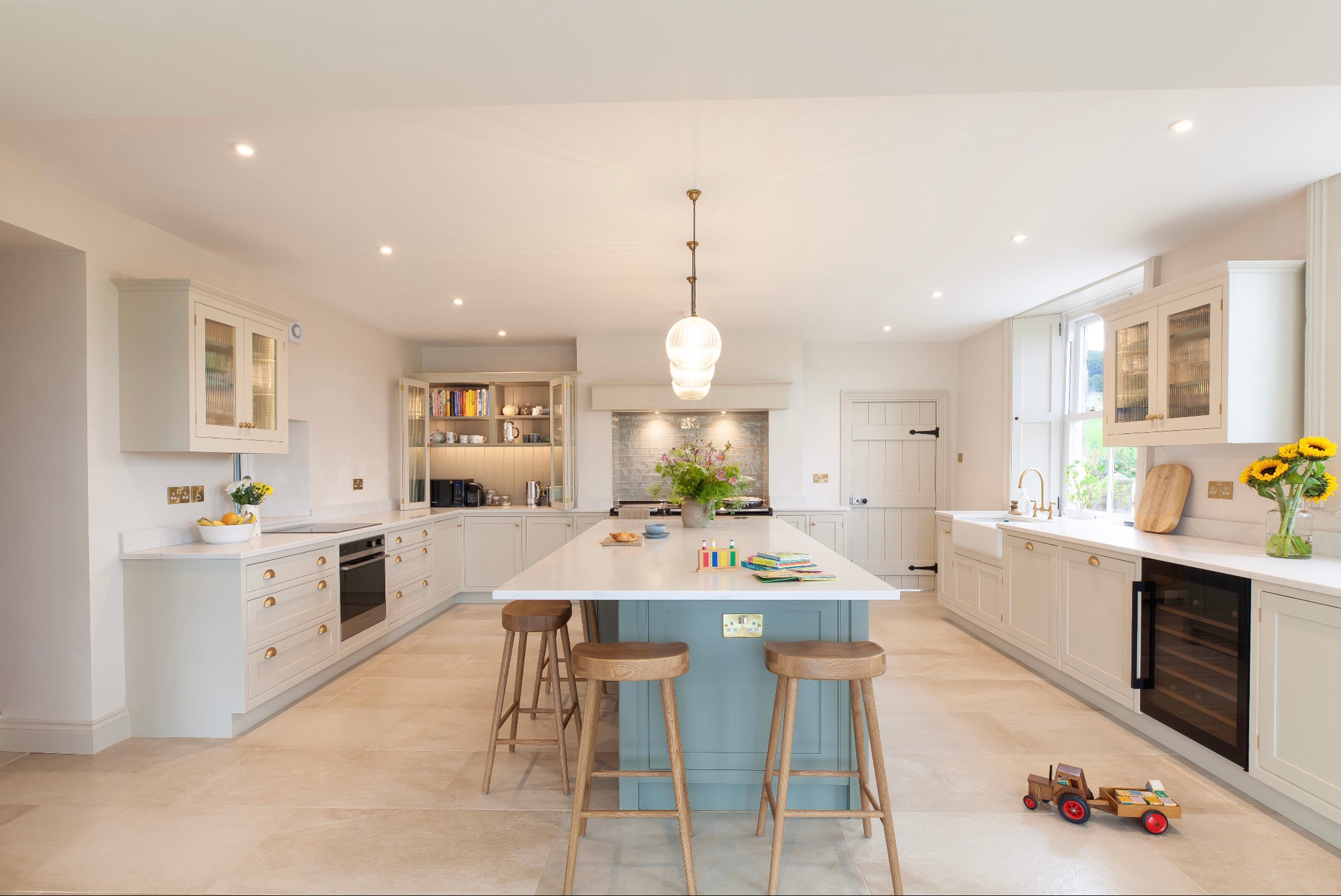
Thoughtfully planned kitchen with generous circulation space between cabinetry and island, supporting smooth movement and everyday use (
“Meaning circulation space plays a much bigger role in how well a layout functions day-to-day.”
Moreover, she suggests freeing up room to move around is a key consideration, with the Houzz Kitchen Trends Study 2026 indicating a third of renovations “are being driven by functionality rather than just aesthetics.”
Mark Andrews, director of Dual Designs, who has been creating bespoke kitchens and furniture since 1988, says: “A kitchen is a busy working space, so correct spacing is absolutely vital.
“Every zone, from cooking and cleaning to storage, needs to work well on its own, but also collectively.
“When spacing is ignored, everyday tasks become harder – and the kitchen quickly stops feeling like the space you imagined.”
Find the correct island size for your space
“An island is often the most desired feature in a kitchen, but it has to suit the space,” underlines Andrews.
“If it’s too large, it can dominate the room and restrict movement. Too small, and it looks out of proportion and doesn’t work practically.”
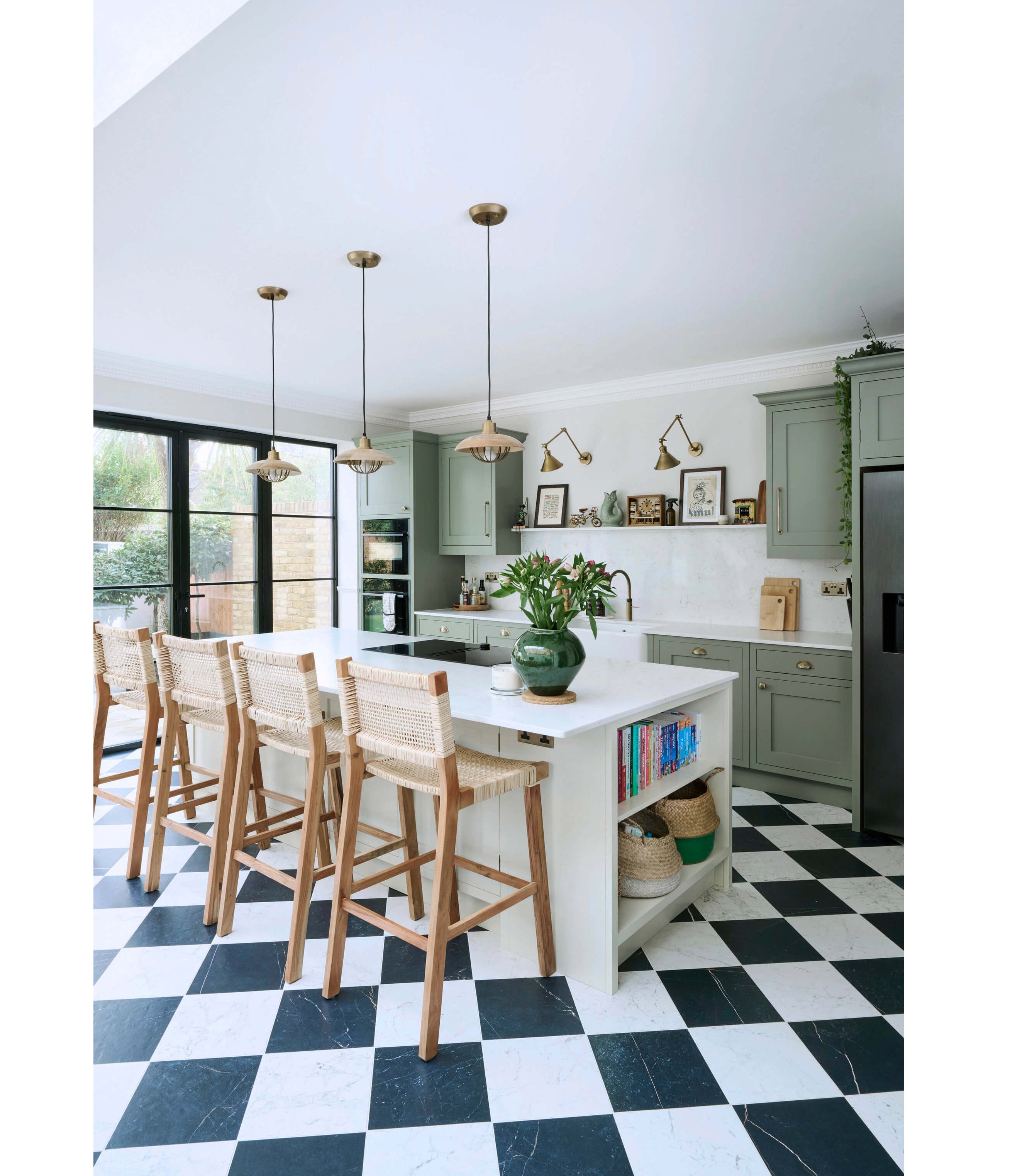
A bright, contemporary kitchen featuring a well-proportioned island that balances workspace, seating and circulation (Ray Munn Kitchens/Germaine Thurgood Photography/PA)
He continues: “Correct spacing around an island is key. You want natural movement between the main worktop and the island.
“With enough room to open doors, unload appliances and move around comfortably; especially if seating is involved.”
A design preference for sure, Kelly-Paine says islands increasingly function as multi-purpose hubs, supporting a wide range of activities, “including cooking, dining, entertaining and baking.”
“That makes proportion and spacing especially important,” and that “tools such as 3D floor plans can help homeowners really visualise how an island will function within the space.”
When choosing cabinetry, Kelly-Paine says there’s a strong shift towards task-specific zones in kitchens.
Fundamental to the overall aesthetic, she says speciality built-in features such as pantries, butler’s kitchens or beverage stations are gaining traction, “with designers increasingly planning kitchens around specific activities rather than a single central workspace.”
Contemporary kitchen layout with clearly defined zones for cooking, prep and dining, designed to support a range of daily activities (Dual Designs/PA)
Helping to boost efficiency, if kitchen zoning is overlooked “simple tasks can become frustrating very quickly,” warns Andrews.
“We often hear clients say certain areas of their kitchen ‘just don’t work,’ which usually comes down to poor relationships between prep, sink and cooking zones.
“Small layout changes, such as positioning bins, dishwashers or work surfaces more thoughtfully, can have a noticeable impact on everyday use.”
Plan clever storage
It may not come as much of a surprise, but storage still remains a top priority, notes Kelly-Paine, with integrated speciality storage features such as pull-out bins, deep drawers and organisers to optimise storage space.
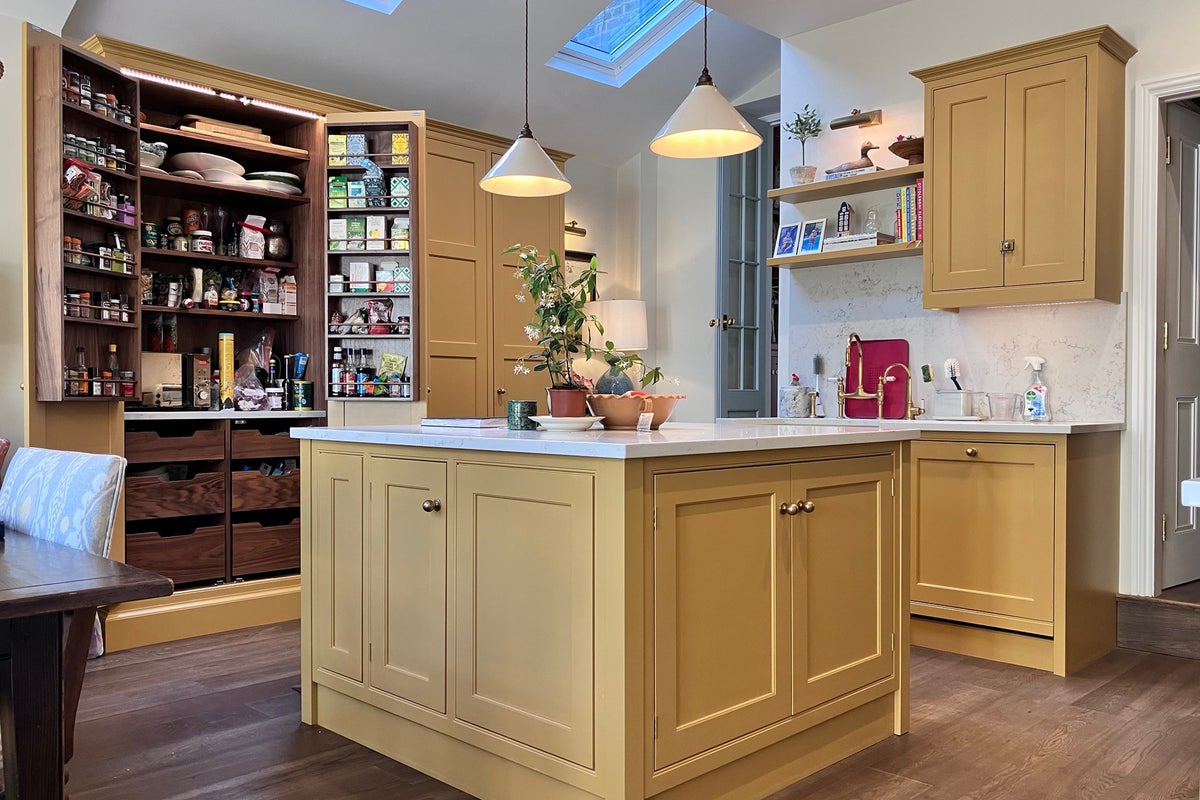
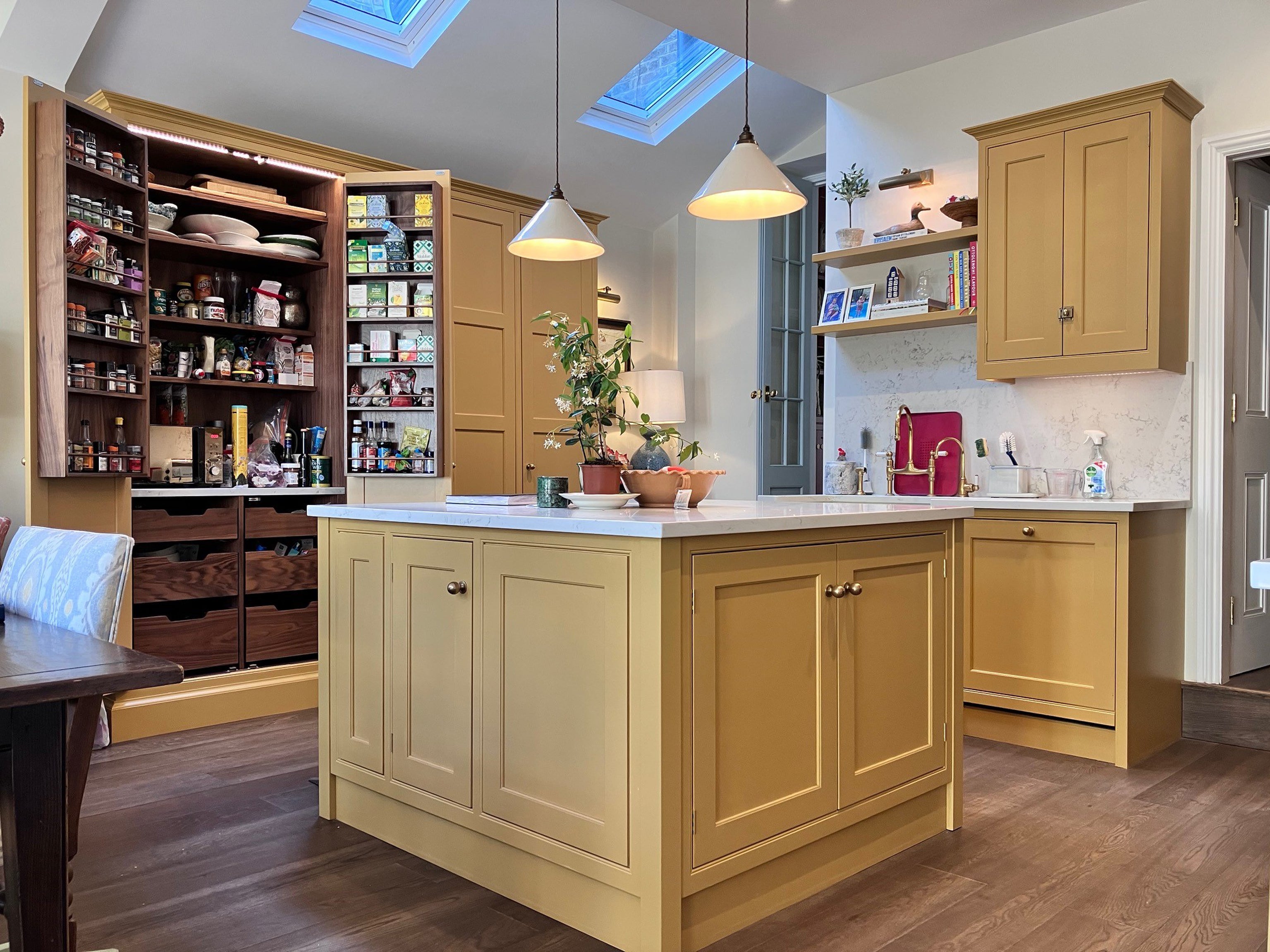
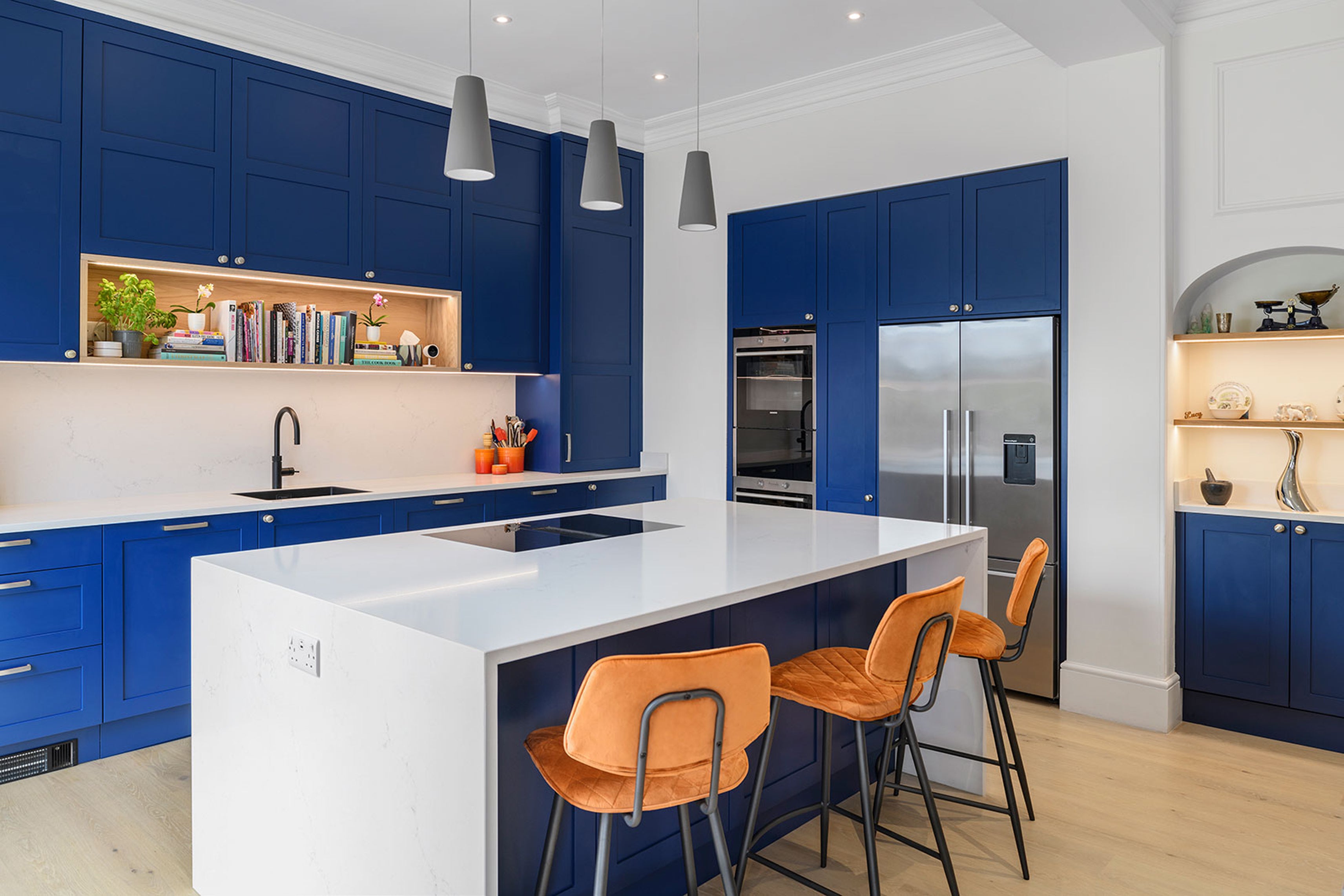
Shaker kitchen with integrated storage and considered lighting, helping to keep work areas practical and clutter out of sight
And the Houzz pros suggest layouts work best when storage is planned around daily routines, keeping clutter out of sight; but making frequently used items easy to access.
Andrews says: “When storage isn’t planned properly, items can end up spilling into other rooms. Deep pan drawers and well-designed larders make a huge difference.
“They allow everything to be accessed easily, reduce wasted space, and help keep everyday items organised and close to where they’re used.”
Consider lighting early in your renovation journey
Lighting is often left until later, notes Andrews, “but it has a huge impact on how usable a kitchen is.”
Thoughtfully considered and layered lighting choices in a fun contemporary kitchen (Deborah Law Interiors/Jonathan Little Photography/PA)
Poorly positioned lighting can cast shadows over prep and sink areas, warns the kitchen expert, “turning what should be practical spaces into problem zones.
He continues: “Good lighting needs to be planned alongside the layout. From task lighting under wall units to internal lighting in larders, these details work best when they’re considered from the very beginning.”
Kelly-Paine says: “Lighting is one of the most commonly upgraded features, with task lighting, such as under-cabinet lights, particularly popular.
“Highlighting how closely lighting choices are tied to layout – and how the kitchen is used day-to-day,” she adds.
Money plants are perhaps one of the most favourite indoor plants because they symbolise luck and positivity, and require very little care. Nevertheless, there is a popular myth that a money plant keeps attracting insects at home. Such a notion may have confused some people and discouraged them from cultivating such a lovely plant. But is it really the case? In fact, this myth is much more complicated. It should be clarified that it is not the plant itself that attracts bugs; on the contrary, it is the environment where the plant lives that does so.
Money plant and insects: What is the real connection
The obvious explanation would be that the money plant does not attract insects by nature. Like all other houseplants, they will get attacked only when certain factors create conditions favourable for pests.Money plants do not inherently attract insects any more than any other common houseplants. Thus, the money plant itself is not the issue; it is its surrounding environment.As explained on the Balcony Garden Web, insects like moisture, food sources, and a place for shelter. Money plants, along with many other indoor plants, can serve as such when not taken care of properly.Thus, when one finds pests around a money plant, it is not because the plant attracts them; rather, the reason lies somewhere else.
Why do pests appear on money plants
According to Colorado State University, there are numerous factors that may contribute to insect infestations on your money plant. One of the main factors is over-watering. An abundance of water leads to increased humidity in the soil and, hence, a favourable environment for the growth of pests like fungus gnats.Another key contributing factor is a lack of proper air flow. Lack of air movement results in fast-growing pests like spider mites and mealybugs.Other factors that could lead to insect infestation include dusty leaves as well as poor condition of the plant due to stress.Some insects might be drawn towards the sap contained in the plant.Common insects found in a money plant include:
Aphids
Spider mites
Mealybugs
Fungus gnats
Note that these pests are common in any other indoor plant and are not limited to the money plant alone.
How to keep your Money Plant pest-free
Fortunately, the prevention of such pests is not difficult at all, and all you need to do is to apply some of the basic care principles. First, do not overwater the plant and allow the soil on its surface to dry before watering again. Secondly, make sure that the plant gets enough fresh air and light. It is also necessary to clean the leaves of the plant from dust to deprive pests of places where they could hide.Finally, when getting a new plant, be very cautious, as pests may spread from one plant to another quite easily. Perhaps the most crucial aspect here is that healthy plants have much higher immunity than those that are poorly maintained. Proper care is the key factor.To sum up, the notion that money plants draw pests is nothing but a myth. The matter is not in what the plant is but rather in how it is grown. Provided that proper care and some attention are applied, the plant will remain beautiful and pest-free.
JAKARTA, Indonesia — JAKARTA, Indonesia (AP) — Indonesian authorities on Wednesday extradited an alleged Scottish crime boss to Spain, after his removal was delayed multiple times as police pursued an ongoing investigation, officials said.
Steven Lyons, 45, described by law enforcement as a senior figure in an international crime syndicate, was flown from Indonesia to Amsterdam early Wednesday morning, said Husnan Handano, a spokesperson for the island of Bali’s immigration office.
From there, he was to be transferred onward to Spain to face charges related to drug trafficking and money laundering, Handano said.
Lyons was arrested on March 28 upon arrival at Bali’s Ngurah Rai International Airport from Singapore after Indonesia’s immigration system flagged him through an Interpol Red Notice issued at Spain’s request. A Red Notice is an international alert seeking the arrest of a suspect for extradition.
Alleged to be the leader of the Lyons crime family, Lyons has been wanted by authorities in Spain and Britain. He has been on Spain’s wanted list for about two years, following a killing there in 2024.
Bali Police Chief Daniel Adityajaya said Lyons’ arrest was part of a joint investigation involving Indonesian, Spanish and Scottish authorities.
Police in Indonesia allege Lyons led a transnational criminal network, operating out of Scotland, that controlled narcotics trafficking routes between Spain and the U.K. Authorities also suspect the group laundered money through shell companies across Europe and the Middle East, including in Spain, Scotland, England, Dubai, Qatar, Bahrain and Turkey.
Prior to his arrest in Bali, police in Scotland and Spain carried out raids linked to the investigation that resulted in multiple arrests. Additional suspects were detained in Turkey, the Netherlands and the United Arab Emirates.
Lyons arrived in Bali with two companions who are believed to be still on the island, although Lyons told authorities he traveled alone, said Bugie Kurniawan, head of the Bali immigration office. He said Spain’s Interpol has identified them as members of the same criminal cartel but they are not the targets of any arrest warrants or Interpol Red Notices.
Bali Police spokesperson Ari Sandy refused to comment on the investigation.
Scottish media have reported that Lyons survived a shooting in Glasgow in 2006 that killed his cousin, later moved to Spain and eventually settled in Dubai. Last year, his brother and an associate were shot and killed in what authorities described as a suspected gangland attack at a beachfront bar in Fuengirola, southern Spain.