Home Blog Page 849

Passengers stranded in moving traffic after robotaxi outage in China’s Wuhan

0
Passengers stranded in moving traffic after robotaxi outage in China’s Wuhan


BEIJING — Some robotaxi passengers were left stranded in the middle of fast-moving traffic in a major Chinese city after their driverless vehicles stopped running, according to police and media reports on Wednesday.

A preliminary investigation indicates more than 100 robotaxis came to a halt because of a “system malfunction,” police in the city of Wuhan said in a statement, without elaborating. No injuries were reported.

One passenger told Chinese media that their robotaxi stopped after turning a corner. An instruction on a screen read: “Driving system malfunction. Staff are expected to arrive in 5 minutes.” After no one showed up, the passenger pushed an SOS button and was told that staff were on their way. The car door could be opened, so the passenger got out on their own.

It is the first time a mass shutdown of robotaxis has been reported in China. In December, many of Waymo’s self-driving cars came to a stop in San Francisco because of a power outage.

The taxis in Wuhan are operated by Baidu, a major Chinese internet and AI company that is expanding its Apollo Go robotaxi business to overseas locations in Europe and the Mideast.

Baidu did not have any immediate comment.

Police said reports that taxis were coming to a halt started coming in around 9 p.m., while media reports said multiple people were rescued.

While some passengers were able to exit their taxis on their own, others were afraid to get out because their vehicle had stopped in the middle lane of a ring road with other vehicles passing on both sides, the reports said. Ring roads are elevated roads without traffic lights designed to move traffic quickly in urban areas.

Baidu operates hundreds of robotaxis in Wuhan, which hosted an early pilot project for the company.

The company, which operates more than 1,000 robotaxis, mostly in China, started a service in Abu Dhabi and Dubai this year and is working with partners to launch service in Britain and Switzerland.


Source link

Apple’s 50-year odyssey has redefined technology, pop culture and comeback stories

0
Apple’s 50-year odyssey has redefined technology, pop culture and comeback stories


CUPERTINO, Calif. — A scrawny hippie and a nerdy engineer who became prank-playing friends vowed to change the world when they founded a Silicon Valley startup on April Fools’ Day 50 years ago and then — no joke — pulled it off.

The improbable odyssey began April 1, 1976, when a then-shaggy Steve Jobs and his gadget-tinkering friend Steve Wozniak signed a two-page partnership document that created Apple Computer Co.

Jobs, a 21-year-old college dropout, and Wozniak, a 25-year-old Hewlett-Packard employee, each received a 45% stake in Apple, with the remaining 10% going to their 41-year-old adviser, Ron Wayne.

The company got off to such a shaky start while trying to build a personal computer in the Los Altos, California, home of Jobs’ parents that Wayne relinquished his stake for $2,300. It proved to be a $370 billion mistake, based on how much his holdings would have grown now that Apple boasts a $3.7 trillion market value.

But Apple nearly toppled before building its current empire.

After casting aside Jobs in a bitter 1985 breakup, the tech firm engineered a surprise deal that brought back its exiled cofounder in 1997. After reluctantly agreeing to be a temporary adviser, Jobs took over as CEO and masterminded an innovation factory that churned out the iPod, the iPhone and the iPad in a decade-long burst of feverish creativity.

Here’s a look at Apple’s odyssey so far:

Although it was founded in 1976, Apple didn’t enjoy its first smash success until June 1977, with the release of the Apple II computer priced at $1,298 (about $7,000 now, adjusted for inflation).

With its sales booming, Apple went public in late 1980 at $22 per share, which translates into 10 cents per share after adjusting for stock splits. That means $2,200 spent to purchase 100 shares at the IPO price would be worth more than $5.5 million today.

Apple’s next big thing came at Apple’s annual shareholders meeting on Jan. 24, 1984, when Jobs read the opening lines of the Bob Dylan song, “The Times They Are A-Changin’” and unveiled the first Macintosh — a machine that introduced the computer mouse and a graphical interface to the public.

That coming out party came two days after Apple teased the Macintosh computer with a 60-second commercial directed by Ridley Scott that evoked George Orwell’s “ 1984 ” novel during that year’s Super Bowl. The ad created such a huge buzz that it’s widely credited for turning Super Bowl commercials into an art form and part of the cultural zeitgeist.

Despite its breakthrough features, the Macintosh (named after an engineer’s favorite kind of apple) cost $2,500 (equal to nearly $7,900 today) — one of the reasons that it didn’t sell as well as anticipated.

The letdown resulted in layoffs and other cost-cutting by Apple CEO John Sculley, a former PepsiCo executive whom Jobs had personally helped recruit to the company in 1983. A year after the Macintosh’s release, the once-close relationship between Sculley and Jobs had disintegrated into a power struggle. Apple’s board sided with Sculley, prompting Jobs to resign in September 1985 with a feeling of betrayal that cut so deep that he sold all but one share of his Apple stock.

After Jobs left, Apple produced popular versions of the Mac with Sculley at the helm.

But Apple’s sleekly designed computers couldn’t slow the sales momentum of more lower-priced PCs that ran on Microsoft software, whose brazen tactics of replicating the Mac’s graphical interface triggered a seven-year legal battle that ended with a 1994 U.S. Supreme Court decision that shot down Apple’s copyright claims.

Before that setback, Apple fired Sculley in mid-1993 and replaced him with Michael Spindler, who lasted until early 1996, when he too was ousted amid the company’s mounting losses.

In desperation, Apple plucked its next CEO from its own board, Gil Amelio, who had engineered a turnaround at computer chipmaker National Semiconductor.

Almost all of Amelio’s moves didn’t pay off except one — a surprising $428 million deal for an operating system made by NeXT, a computer startup that Jobs launched after he left Apple.

Jobs wanted to only spend a few months advising Amelio during 1997, insisting he wanted to focus on his family when he wasn’t busy as CEO of Pixar, the computer animation studio he bought from “Star Wars” director George Lucas for $5 million in 1986.

But those plans changed in July 1997, when Apple fired Amelio, setting the stage for Jobs to orchestrate a stunning turnaround.

By August 1997, Jobs had made peace with his longtime rival, Microsoft founder Bill Gates, and had worked out a deal that included a $150 million cash infusion from the Windows maker. The money paved the way for Jobs to introduce a new lineup of candy-colored, translucent computers dubbed the “iMac.” The ‘i” prefacing the Mac heralded a new five-point creed consisting of “internet, individual, instruct, inform, and inspire.”

Jobs introduced the first iPod in October 2001, a music storage device that initially could hold up to 1,000 songs. Apple would sell 450 million of the devices in different designs while all but killing the CD format and setting the stage for the age of music streaming.

In what would become his crowning achievement, Jobs walked onto a stage in San Francisco on Jan. 9, 2007, and informed a crowd that he was about to show them three breakthroughs: an iPod with touch-screen controls, a revolutionary cellphone and an internet communicator. Then came his bombshell revelation: “These are not three separate devices. This is one device! And we are calling it the iPhone.”

More than 3 billion iPhones have been sold since then, and the device still accounts for more than half of Apple’s annual revenue of $416 billion, nearly 15 years after Jobs died of cancer. Apple’s ongoing dependence on the iPhone stems in part from the company’s inability to create another mesmerizing product under the leadership of Jobs’ hand-picked successor, Tim Cook.

Even so, Apple is worth 10 times more than its $350 billion market value at the time Jobs died — proof that Cook has been a worthy caregiver of a legacy left behind by a visionary who embraced an advertising campaign celebrating “the ones who see things differently.”


Source link

Advocacy groups urge YouTube to protect kids from ‘AI slop’ videos

0
Advocacy groups urge YouTube to protect kids from ‘AI slop’ videos


Advocacy groups and experts condemned YouTube for serving up low-quality artificial intelligence-generated videos to its most vulnerable audience: children.

In a letter to YouTube CEO Neal Mohan and Sundar Pichai, the CEO of YouTube’s parent company Google, children’s advocacy group Fairplay expresses “serious concern” about the spread of AI-generated videos on both YouTube and YouTube Kids. The letter, which was sent on Wednesday morning, was signed by more than 200 organizations and individual experts such as child psychiatrists and educators.

“This ’ AI slop ’ harms children’s development by distorting their sense of reality, overwhelming their learning processes and hijacking their attention, thereby extending time online and displacing offline activities necessary for their healthy development,” the letter reads. “These harms are particularly acute for young children.” The letter calls on YouTube to clearly label all AI-generated content and ban any AI-generated content on YouTube Kids. They also propose barring AI-generated videos from being recommended to users under 18 and implementing an option for parents to turn off AI-generated content even if their child searches for it.

The letter is signed by 135 organizations including the American Federation of Teachers and the American Counseling Association, and around 100 individual experts like “The Anxious Generation” author Jonathan Haidt. The letter is part of a larger campaign from Fairplay that also includes a petition.

Much of this AI-generated content is fast-paced with bright colors, lively music and clickbait titles that work to grab the attention of young viewers, the letter outlines. There has been a growing movement online against AI-generated content, particularly when it looks or feels low quality or leans into the meaninglessness of “ brainrot.”

Spokesperson Boot Bullwinkle said in a statement that YouTube has “high standards for the content in YouTube Kids, including limiting AI-generated content in the app to a small set of high-quality channels.”

“We also provide parents the option to block channels. Across YouTube, we prioritize transparency when it comes to AI content, labeling content from our own AI tools, and requiring creators to disclose realistic AI content,” Bullwinkle said. “We’re always evolving our approach to stay current as the ecosystem evolves.”

YouTube’s current policy regarding AI-generated content requires creators to disclose when content that’s “realistic” is made with altered or synthetic media, including generative AI. Creators are not required to disclose when generative AI is used to create content that is clearly unrealistic, including animated videos and those with special effects.

YouTube said it is actively working on developing labels for YouTube Kids.

In its letter, Fairplay argues that voluntary disclosure policy and what it sees as an “extremely limited” definition of altered and synthetic content mean kids still see a flood of AI-generated videos that are not labeled as such. They also argue that many children who watch YouTube videos are not yet able to read or to comprehend something like an AI disclosure. That leaves children “to fend for themselves or their parents to play whack-a-mole,” the letter reads.

Fairplay’s campaign comes shortly after Google’s AI Futures Fund invested $1 million into Animaj, an AI animation studio that makes videos for kids and draws in staggeringly high viewership numbers, according to Bloomberg.

The campaign follows a landmark verdict in a social media addiction trial in which a California jury found that YouTube designed its platform to hook young users without concern for their well-being. Meta was also found liable on the same counts as YouTube in the same case.

“Pushing AI slop onto young children is just another testament to how YouTube and YouTube Kids are designed to maximize children’s time online — including babies. AI slop hypnotizes young children, making it hard for them to get off their screens and move onto essential activities like play, sleep and social interaction,” said Rachel Franz, the director of Fairplay’s Young Children Thrive Offline program, in a statement. “What’s more, YouTube’s algorithm makes it impossible for kids to avoid AI slop.”

Earlier this year, YouTube head Mohan listed out “managing AI slop” as one of the company’s priorities for 2026. In a January blog post, he wrote that the company was “actively building on our established systems that have been very successful in combatting spam and clickbait, and reducing the spread of low quality, repetitive content.”


Source link

Warning to patients ahead of next doctors’ strike

0
Warning to patients ahead of next doctors’ strike


Sam Peate, from the NHS Humber Health Partnership, which has hospitals in Goole and Hull that will be affected by the strike, said: “Unfortunately, it is unavoidable that some patients will have their appointments and procedures postponed as a result of the action.”


Source link

Routine blood test reveals cancer diagnosis before symptoms: ‘Caught it early’

0
Routine blood test reveals cancer diagnosis before symptoms: ‘Caught it early’


NEWYou can now listen to Fox News articles!

A Miami man credits a routine blood test for saving his life.

Ian Ferguson, 37, had no symptoms when he got standard blood work as part of a regular physical. When the test showed microscopic blood loss, his physician recommended a colonoscopy.

That procedure revealed a diagnosis of early-stage colon cancer, leading to life-saving surgery at Mount Sinai Medical Center.

WOMAN’S ALARMING CANCER SYMPTOMS BLAMED ON PREGNANCY FOR YEARS BEFORE STAGE 3 DIAGNOSIS

Ferguson, who works as a safety manager for an elevator company, said he asked for the blood work just because “it had been a while.”

When the tests revealed a few anomalies, the doctors recommended that Ferguson take iron pills and return for more blood work the following week. 

Ian Ferguson (center) is pictured with his brother, Eric Ferguson, and his mother, Cheryl Campbell-Dixon, at his promotion to staff sergeant. (Ian Ferguson)

“When I went back, it wasn’t the change they were looking for,” he told Fox News Digital. 

Because of Ferguson’s age range and the uptick of younger men getting abdominal cancer – along with his family history of the disease – doctors recommended that he undergo a colonoscopy.

“They found a growth,” he said. “Thankfully, they caught it early. I was able to get surgery done and get it pulled out.”

MOM WITH NO SYMPTOMS HAD STAGE 4 COLORECTAL CANCER — AND A RARE SURGERY SAVED HER LIFE

Because the disease was caught so early, Ferguson did not have to undergo chemotherapy or radiation. He is now cancer-free and healthy, only requiring annual colonoscopies.

“I really don’t mind if it allows me to find the problem fast, before it turns into a serious mitigation, like walking around with a colostomy bag,” he said. “If we find it early, maybe we don’t have to do those things.”

Ian Ferguson, colorectal cancer patient

Ian Ferguson, 37, had no symptoms when he got standard blood work as part of a regular physical. (Fox News Digital)

While Ferguson didn’t have the typical, obvious symptoms of colorectal cancer, he acknowledged that there may have been signs he didn’t recognize, like fatigue.

“I just thought maybe I hit the gym a little harder that day, or maybe I wasn’t getting enough protein, or just didn’t get enough sleep,” he said. He was also in the midst of moving and starting a new job.

“There’s always an excuse, always a reason to not be seen by a professional,” Ferguson noted.

HIDDEN VIRUS INSIDE GUT BACTERIA LINKED TO DOUBLED COLORECTAL CANCER RISK, STUDY FINDS

“I’m glad that I was able to take the medical professional’s words seriously and move forward, because they were able to find something deadly and take it out.”

In light of colorectal cancer affecting people at younger ages, Ferguson recommends that everyone gets regular blood work, regardless of age. “It’s not difficult to do – there’s really no excuse to not do it.” 

Dr. Kiranmayi Palla Muddasani, MD

Dr. Kiranmayi Palla Muddasani, MD, a staff surgeon in the Department of Colorectal Surgery at Mount Sinai Medical Center, confirmed that she is seeing a marked increase in younger colorectal cancer patients. (Fox News Digital)

Dr. Kiranmayi Palla Muddasani, MD, a staff surgeon in the Department of Colorectal Surgery at Mount Sinai Medical Center, confirmed that she is seeing a marked increase in younger colorectal cancer patients.

“When I started my practice, I would see maybe one every six months, one or two cases a year. And now I see literally one to two cases a month,” she told Fox News Digital.

“Most people who have symptoms usually have advanced disease or metastatic disease.”

Muddasani, who treated Ferguson, said she suspects the trend is due to “something in the environment.”

“There is no rhyme or reason to it,” she said, adding that she has treated triathletes and vegans who were diagnosed.

CLICK HERE FOR MORE HEALTH STORIES

Many younger patients have persistent anemia as the first warning sign, she noted, which leads to about nine out of 10 colonoscopies.

The doctor recommends getting a routine complete blood count (CBC) and basic metabolic panel (BMP) yearly or every other year.

Symptoms to watch for

Most people who are detected in early stages don’t have symptoms, according to Muddasani.

“Most people who have symptoms usually have advanced disease or metastatic disease,” she said.

Doctor talking to patient with colonoscopy exam report on computer screen in background and colon model out on desk.

The biggest red flags linked to colorectal cancer include ongoing bleeding, persistent anemia and changes in bowel habits, according to the doctor. (iStock)

The biggest red flags linked to colorectal cancer include ongoing bleeding, persistent anemia and changes in bowel habits, according to the doctor.

The location of the cancer can also influence symptoms, she noted.

CLICK HERE TO SIGN UP FOR OUR HEALTH NEWSLETTER

“Patients with right-sided cancers can get to a very advanced stage while having no symptoms,” the doctor said. This is likely because the right side of the colon is wider and stool is more liquid, so tumors don’t block things as easily, according to medical sources.

Left-sided cancer patients are more likely to see noticeable signs, such as changes in bowel habits, blood in stool, or cramping and obstruction.

Prevention tips

While some risk factors, like age and family history, can’t be controlled, Muddasani said certain lifestyle changes can reduce the chance of colorectal cancers.

CLICK HERE TO DOWNLOAD THE FOX NEWS APP

“A high-fiber diet is protective,” she said. “Exercise is also protective, as is decreasing your BMI to a healthy level.”

The doctor also recommends avoiding ultraprocessed foods.

woman in kitchen pours dried oats into a bowl from a spoon

Eating a high-fiber diet and avoiding ultraprocessed foods can help to reduce colorectal cancer risk, the doctor advised. (iStock)

“Having processed meat increases the risk of colon cancer by two to three times, which is a big deal,” she said. 

“We can’t control everything, but we can control diet, fiber, exercise, avoiding processed meat, just to start with some basics.”

TEST YOURSELF WITH OUR LATEST LIFESTYLE QUIZ

Overall, Muddasani said, it’s critical for people to “listen to their bodies.”

“Sometimes I have patients showing up in my office and they can’t pinpoint anything specific, but they’re like, ‘I don’t feel well. I don’t feel normal.’ And that’s enough to start an investigation.”


Source link

Warning Iran war ‘shock’ could push up mortgages for 1.3m homeowners

0
Warning Iran war ‘shock’ could push up mortgages for 1.3m homeowners


Higher energy prices could lead to higher borrowing costs for homeowners, the Bank warns.


Source link

AI robot now helps travelers at San José airport

0
AI robot now helps travelers at San José airport


NEWYou can now listen to Fox News articles!

If you’ve ever wandered through an airport struggling to find your gate, something to eat or a place to charge your phone, this could make things a lot easier.

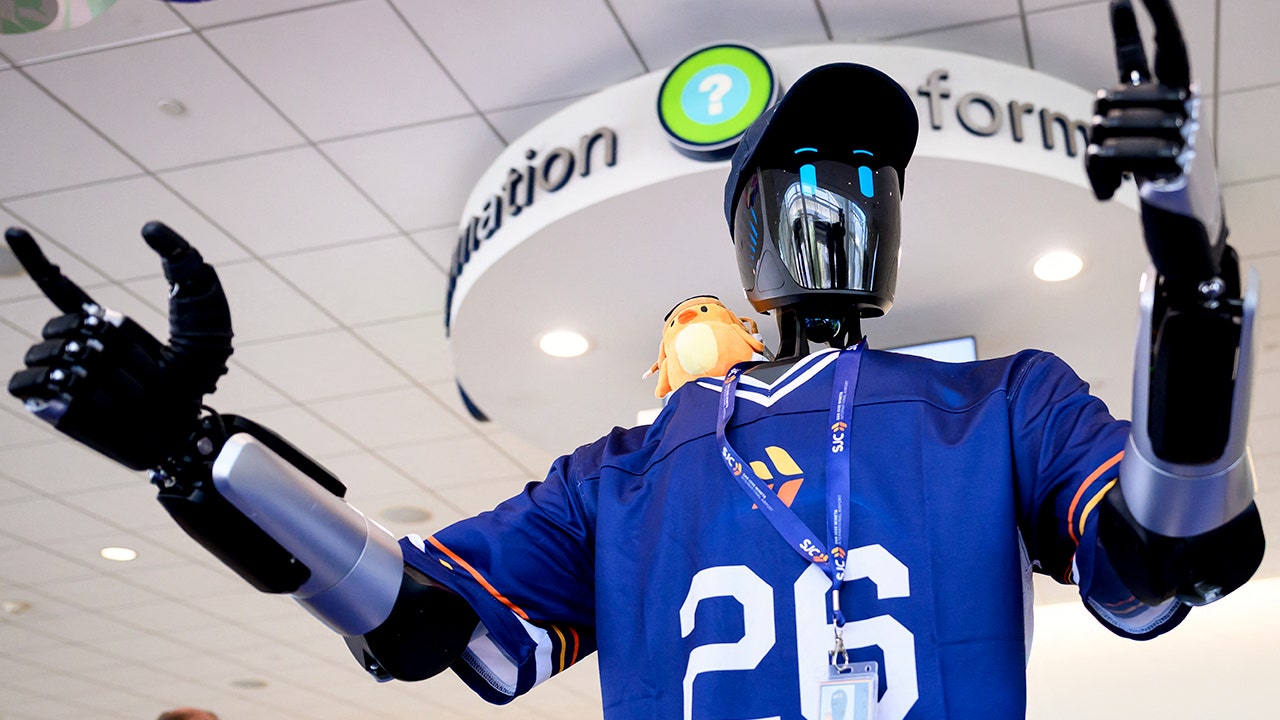
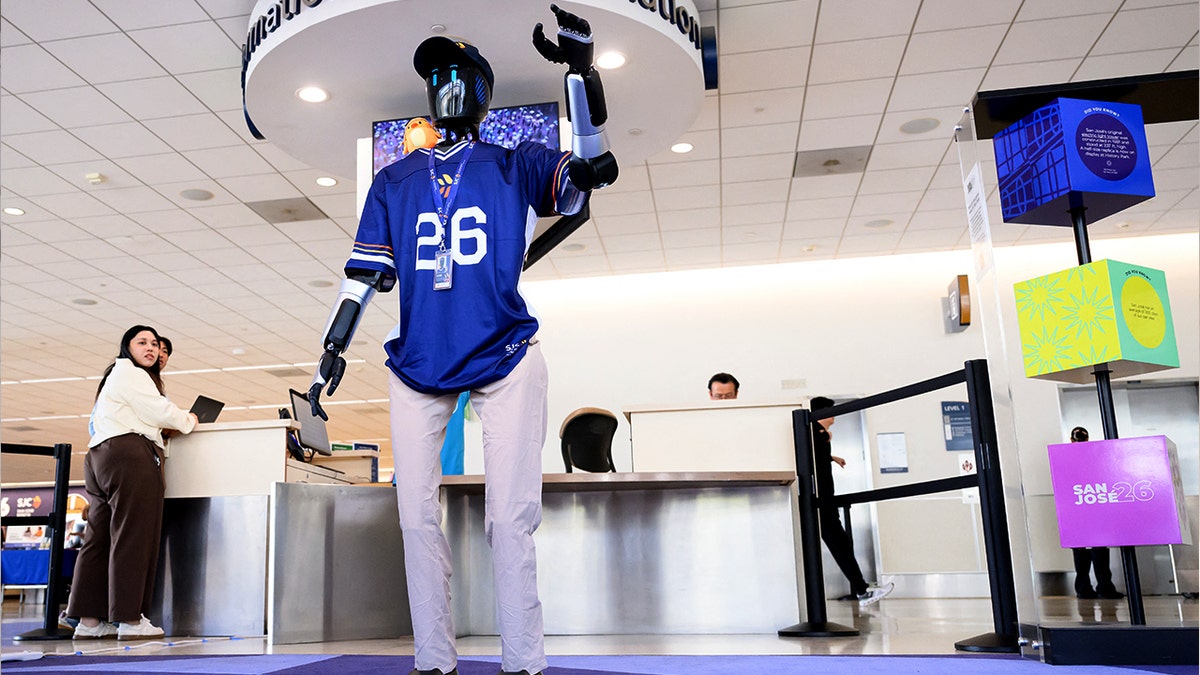
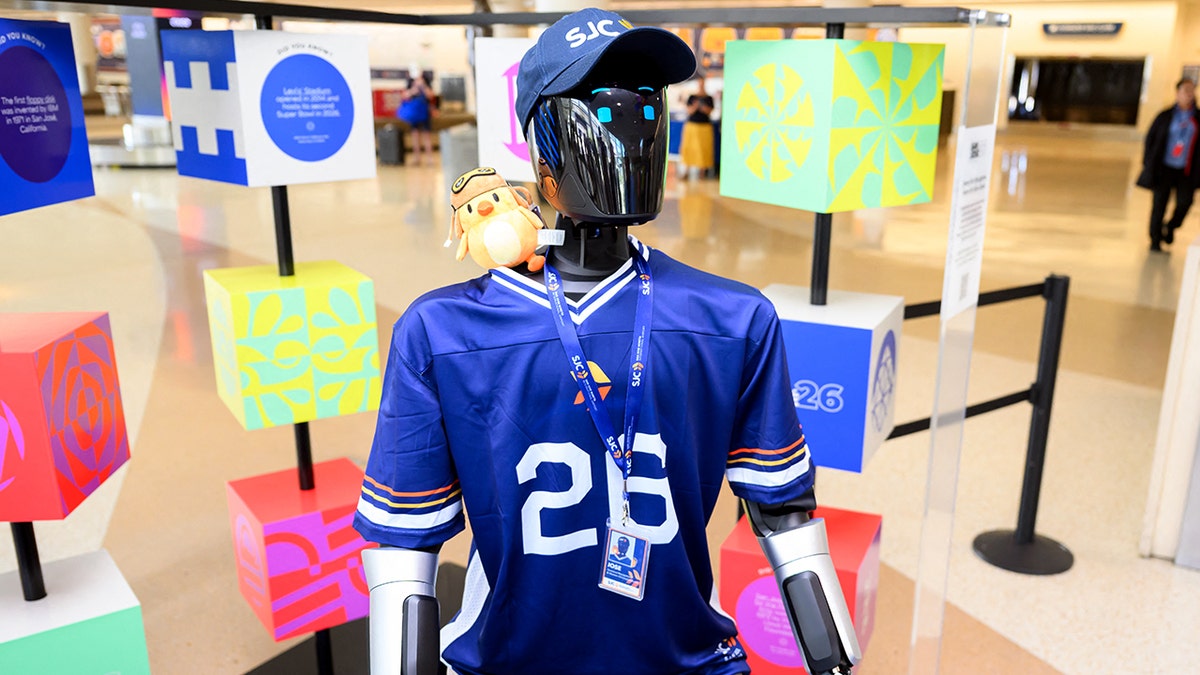
At San José Mineta International Airport in California, travelers can now get help from a humanoid robot named José. It greets passengers, answers questions and helps people find their way around the terminal.

You’ll find it in Terminal B near Gate 24, where travelers are already stopping to try it out.

Sign up for my FREE CyberGuy Report
Get my best tech tips, urgent security alerts and exclusive deals delivered straight to your inbox. For simple, real-world ways to spot scams early and stay protected, visit CyberGuy.com – trusted by millions who watch CyberGuy on TV daily. Plus, you’ll get instant access to my Ultimate Scam Survival Guide free when you join.

ARE ROBOTS COMING TO A MCDONALD’S NEAR YOU?
 

Travelers at San José Mineta International Airport can now get help from José, a humanoid robot answering questions and guiding passengers through Terminal B. (Josh Edelson / AFP via Getty Images)

What the AI airport robot José can actually do

José was developed by IntBot, a Silicon Valley startup focused on building machines that understand human behavior and intent.

José is powered by IntEngine, IntBot’s proprietary system that combines vision, audio and language in real time to coordinate speech, facial expressions and gestures. This allows the robot to understand social context and decide when and how to interact with people in busy public spaces. Here’s what stands out:

  • Communicates in more than 50 languages
  • Provides directions and real-time terminal updates
  • Answers questions in a natural, conversational way
  • Handles busy public spaces without constant human oversight.

José stands about 5 feet, 6 inches tall, weighs roughly 152 pounds and runs on a 700wh battery that lasts about two hours per charge. It also features more than 40 points of movement and can turn within about 2 feet, helping it navigate tight airport spaces.

“This marks our first airport deployment,” Lei Yang, CEO at IntBot, told CyberGuy. “José is our first real-world test of how humanoids can help travelers navigate airports across language barriers. Our goal is to help travelers feel more confident before they depart. But we’re also learning something harder to measure, which is how people actually respond to embodied AI systems in their daily path. These learnings will shape how IntBot brings humanoid robots into the world responsibly.”

ROBOT FIREFIGHTERS ENTER BURNING BUILDINGS FIRST
 

A humanoid robot waves.

José, a new AI-powered airport robot at San José Mineta International Airport, speaks more than 50 languages and offers directions, updates and travel help. (Josh Edelson / AFP via Getty Images)

Why airports are rolling out AI robots now

Airports are under pressure to move people faster while improving the experience. At the same time, cities want to show they can lead in tech innovation. San Jose is leaning into both.

“San José continues to lead in applying emerging technologies in ways that improve everyday experiences for residents and visitors,” said San José City Manager Jennifer Maguire. With major global events like the FIFA World Cup expected to bring in waves of international travelers, language barriers and navigation challenges become a bigger issue.

José helps solve that. It offers instant answers without lines, confusion or the need to track down staff. “By piloting IntBot, we’re exploring how artificial intelligence can enhance the passenger journey while reinforcing SJC’s role as the gateway to Silicon Valley,” said Mookie Patel, director of aviation at San José Mineta International Airport.

City officials also see this as a live test. The airport becomes a real-world lab to see how AI performs under pressure.

This airport robot is testing the future of AI

This rollout is not permanent yet. It is part of a four-month pilot program. That means the airport is watching closely:

  • Do travelers actually use it?
  • Does it reduce confusion or delays?
  • Can it operate reliably in a crowded environment?

If it works, you can expect more robots like this, not just in airports but in hospitals, hotels and public buildings. The bigger idea is “social intelligence” for machines. That means robots that don’t just follow commands but understand context, tone and human behavior.

ROBOT PLAYS TENNIS WITH HUMANS IN REAL TIME
 

A humanoid robot stands in an airport terminal.

Located near Gate 24 in Terminal B, José is giving travelers a first look at how AI robots could change the airport experience. (Josh Edelson / AFP via Getty Images)

What this means to you

Whether you fly once a year or all the time, this could change how you get around busy airports. Instead of searching for signs or waiting in line, you might just walk up to a robot and ask:

“Where’s my gate?”
“Is my flight delayed?”
“Where can I grab food nearby?

For international travelers, the impact could be even bigger. Language barriers can slow everything down. A system that instantly switches languages helps make things clearer and quicker. That said, there are still questions. Not everyone will feel comfortable interacting with a robot. Some people will prefer a human. Others may wonder how much data is being collected during those interactions and what happens to it.

Take my quiz: How safe is your online security?

Think your devices and data are truly protected? Take this quick quiz to see where your digital habits stand. From passwords to Wi-Fi settings, you’ll get a personalized breakdown of what you’re doing right and what needs improvement. Take my Quiz here: Cyberguy.com.

Kurt’s key takeaways

Seeing a robot like José in an airport changes the feel of the place right away. It’s a clear sign of where things are headed. AI is no longer limited to your phone or laptop. It’s starting to show up in the spaces you move through every day, ready to answer questions and guide you in the moment. Airports are just the beginning. The real question is how far this goes and how quickly people get comfortable with it.

Would you trust a robot for travel help at the airport, or do you still prefer a real person? Let us know by writing to us at Cyberguy.com.

CLICK HERE TO DOWNLOAD THE FOX NEWS APP

Sign up for my FREE CyberGuy Report
Get my best tech tips, urgent security alerts and exclusive deals delivered straight to your inbox. Plus, you’ll get instant access to my Ultimate Scam Survival Guide – free when you join my CYBERGUY.COM newsletter.

Copyright 2026 CyberGuy.com. All rights reserved.


Source link

People-pleasing is officially giving women chronic health issues: why do we do it?

0
People-pleasing is officially giving women chronic health issues: why do we do it?


The compulsion to please others is inherently female. Say what you like about the evolution of gender roles and power dynamics between men and women in the modern age – everywhere you look, people-pleasing does not bear the same weight across genders.

Thanks to a combination of factors – social conditioning, emotional vigilance, and straightforward sexism – women have a propensity to bend to the will of others much more than men, often putting their own needs to one side to prioritise (and please) others. This can mean saying “yes” when we mean “no”, taking on additional responsibilities we don’t have the time or energy for, and never making time to do something just for ourselves, seeing it as self-indulgent and wasteful.

Now, research has found how much of a toll this is taking on our bodies, particularly if your people-pleasing involves something known as “self-silencing,” ie, when you suppress your own emotional needs, overly monitor your behaviour, and refrain from self-expression to avoid upsetting others.

One study conducted by the University of Plymouth found that women with fibromyalgia were more likely to report lifelong patterns of self-silencing. Additionally, a study of a group of Chinese university students in 2025 and published in PsyCh Journal found that higher levels of people-pleasing tendencies were significantly associated with lower levels of mental wellbeing, highlighting their potential impact on students’ psychological health.

As Easter weekend approaches, and women around the country inevitably prepare to host families, children, and friends, how can we go about ensuring everyone has a lovely time without compromising our own needs and putting our own health at risk as a result? First, it’s important to understand where the people-pleasing compulsion actually comes from. And remembering that this may differ between people depending on their childhood, their confidence levels, and the network they’re surrounded by.

“People-pleasing is a learned behaviour, our brain and nervous system are always scanning our environment for threats, which can include rejection, conflict, and disapproval,” explains Ruth Kudzi, coaching psychologist, and the author of How to Feel Better. “On perceiving or anticipating a threat, many women have learned the ‘fawn’ response, where they pretend all is okay to avoid any fallout. By being agreeable and saying yes, they often feel relief and receive positive reinforcement, therefore releasing dopamine and reinforcing neural pathways, embedding these behaviours in the brain.”

Shake it off: Taylor Swift called herself a ‘pathological people pleaser’ on 2022 song ‘You’re Losing Me’ (Getty)

It doesn’t help that, for the most part, women are rewarded for this behaviour. Hence why we may continue doing it. Of course, we’re going to keep people-pleasing if we’re constantly being told how happy we’re making everyone around us; being thanked and receiving appreciation is like kryptonite to a people-pleaser’s brain. If you’ve just spent three hours creating and running an Easter egg hunt for your family but forgotten to eat lunch, nobody is going to come up to you to remind you. They’ll simply thank you and ask if you’ll be doing the same next year.

“This may lead to a pattern of behaviour where a person’s self-worth is linked to being needed and approved of by others,” explains Bonnie Lambert, psychiatric nurse practitioner at Crestview Recovery. “In a clinical context, particularly for individuals who have a history of trauma, being pleasing to others is a survival mechanism.”

In the long term, the ramifications of this kind of behaviour can be severely detrimental, particularly in cases when it’s so deeply entrenched that we might not even be aware we’re doing it. Again, this is common. “I have worked with women who accept that they’re a ‘people pleaser’, but the sense of nurturing their responsibilities and obligations feels somewhat natural to them, which is historically linked to both biology and societal expectations,” says psychologist Dr Candice O’Neil.

Over Easter, this can get worse, particularly because of how many people you tend to be surrounded by – and therefore feel obligated to please. This is especially true if you plan to be around young children. “Children will be home more, and we might naturally feel responsible for them having had a good time away from the monotony of school, and to be socially engaged,” adds Dr O’Neil. “There will typically be much less time to invest in our own individual emotional wellbeing at a particularly social time of year, and for parents, we might feel responsible for our children’s emotional wellbeing.”

If you’re a people-pleaser, you don’t just attend Easter; you run Easter

Jane Ollis, medical biochemist and founder of Neurotech Company SONA

It can take a serious toll on your nervous system in particular, triggering stress responses that can lower your immunity and lead to illnesses down the line. “If you’re a people-pleaser, you don’t just attend Easter; you run Easter,” says Jane Ollis, medical biochemist and founder of Neurotech Company SONA. “I sometimes think of it as becoming the central nervous system for the entire family. You’re regulating everyone, smoothing tensions, and making sure no one feels left out. From a neuroscience perspective, that is a huge amount of emotional labor, effectively co-regulating multiple nervous systems at once. It’s a lovely gesture, but it also means your own system never truly switches off. ”

There are ways to combat all this, and ensure you’re giving your mind and body some much-needed rest, though it will take some hard unlearning. Firstly, it’s important to recognise when you can feel your brain switching into people-pleasing gear. “That lightning-fast, ‘yes, of course!’ before you’ve even checked in with yourself is your clue,” says Ollis. “It’s often a fast, subcortical response triggered before the thinking brain has caught up.”

Once you’ve identified what your brain is doing, normalise the process of challenging yourself. This might involve buying yourself a bit of time, telling someone you’ll get back to them rather than responding straight away. It could also be worth trying to understand how your body has responded to what is being asked of you: do you feel anxious? Is your heart beating faster? Has your breath shortened? If so, take this as a sign from your body not to proceed. “The real shift happens when you stop outsourcing your decision-making to everyone else’s needs,” adds Ollis.

Of course, all this is easier said than done. The good news is that once you’ve started subverting these patterns, it will become easier to continue doing so. “The shift is subtle but powerful: moving from managing the external environment to creating a sense of internal stability,” notes psychologist and life coach, Dominique Stelling. “In doing so, a woman realises she can remain deeply caring and connected, without abandoning herself to keep the peace.”

Not abandoning oneself sounds like as good an Easter weekend goal as any – especially knowing the health benefits. Good luck.


Source link

Artemis II live updates: Window for launch opens today

0
Artemis II live updates: Window for launch opens today


The Artemis II moon mission will see four astronauts go on a 685,000-mile, 10-day journey around the moon. Here is what the timeline looks like:


Day 1 is launch day. The astronauts lift off aboard NASA’s newest spacecraft, Orion, which will sit atop the Space Launch System rocket. The spacecraft will reach initial orbit and then high-Earth orbit to make a push toward the moon.

Days 2 through 4 are transit days, with the journey to the moon taking three days. Over the course of the journey, the crew will continue to evaluate Orion’s systems and practice emergency procedures, in addition to other activities.

Astronauts Reid Wiseman, Victor Glover, Christina Koch and Jeremy Hansen stop for a group photo during a visit to NASA’s Artemis II SLS rocket and Orion spacecraft, March 30, 2026, at Launch Complex 39B of NASA’s Kennedy Space Center in Fla.

Bill Ingalls/NASA/AFP via Getty Images


On day 5, Orion will enter the lunar sphere of influence, meaning the moon is the main gravitational pull. On day 6, the crew will come its closest to the moon while traveling the farthest from Earth, according NASA.

Days 7 through 10 will see the astronauts make their way back to Earth before re-entering Earth’s atmosphere at high speed, up to 25,000 miles per hour.

The Orion spacecraft will deploy a series of parachutes once through the heat of re-entry to slow down and it will splash down in the Pacific Ocean The U.S. Navy will recover the capsule.

-ABC News’ Mary Kekatos


Source link

Italy makes heartbreaking history by missing out on third straight World Cup after shootout loss

0
Italy makes heartbreaking history by missing out on third straight World Cup after shootout loss


NEWYou can now listen to Fox News articles!

Italy made heartbreaking history on Tuesday night, as they missed their third straight World Cup bid following a loss to Bosnia and Herzegovina. 

Italy is now the first World Cup-winning team to miss three consecutive tournaments following the penalty-kick shootout loss in the European playoffs. 

The nation was once a soccer powerhouse, winning it all four times with its most recent in 2006. But recent years have not been kind to the Italian squad, and they were feeling the pain of the loss after the match. 

CLICK HERE FOR MORE SPORTS COVERAGE ON FOXNEWS.COM

Pio Esposito of Italy disappointment  during the FIFA World Cup 2026 European Qualifiers KO play-offs  match between Bosnia & Herzegovina and Italy at Stadion Bilino Polje on March 31, 2026 in Zenica, Bosnia and Herzegovina. (Image Photo Agency)

“We still don’t believe it – that we’re out and that it happened in this manner,” Italy’s Leonardo Spinazzola said to reporters, per the New York Post. “It’s upsetting for everyone. For us, for our families and for all the kids who have never seen Italy at a World Cup.”

After 90 minutes and extra time, both nations were stuck in a 1-1 tie, and the penalty shootout was needed to determine a winner. Italy eventually fell to Bosnia and Herzegovina, 4-1, in the shootout, as Esmir Bajraktarevic secured the victory with the final goal. 

SIX WORLD CUP SPOTS LEFT! ITALY, POLAND, JAMAICA AMONG TEAMS WHO CAN QUALIFY

It didn’t help that Italy was playing with just 10 men on the field after Alessandro Bastoni received a red card before halftime. Bosnia and Herzegovina used the man advantage to tie the game in the 79th minute, as Haris Tabakovic scored the equalizer. 

Italy gets red card

Italy’s defender Alessandro Bastoni receives a red card from the referee during the FIFA World Cup 2026 European qualification final football match between Bosnia-Herzegovina and Italy at the Bilino-Polje stadium in Zenica on March 31, 2026. (Elvis BARUKCIC / AFP)

Moise Kean was able to strike first for Italy in the 15th minute, giving them the momentum they were searching for coming into the match. However, they were never able to rally in the end. 

While Italy remains one of only three nations to ever win the World Cup four times in history, they can’t seem to find what it takes to get to the tournament. 

In 2018, Italy fell at the hands of Sweden, while North Macedonia shocked them in 2022 in the qualifiers. 

Italy reacts on pitch

Gianluigi Donnarumma of Italy reacts during the FIFA World Cup 2026 European Qualifiers KO play-offs match between Bosnia & Herzegovina and Italy at Stadion Bilino Polje on March 31, 2026 in Zenica, Bosnia and Herzegovina. (Srdjan Stevanovic – UEFA)

CLICK HERE TO GET THE FOX NEWS APP

Now, Bosnia and Herzegovina will try their luck in Group B when the World Cup kicks off, starting with a match against Canada. They will also face Qatar and Switzerland in the group stage. 

Follow Fox News Digital’s sports coverage on X and subscribe to the Fox News Sports Huddle newsletter.


Source link