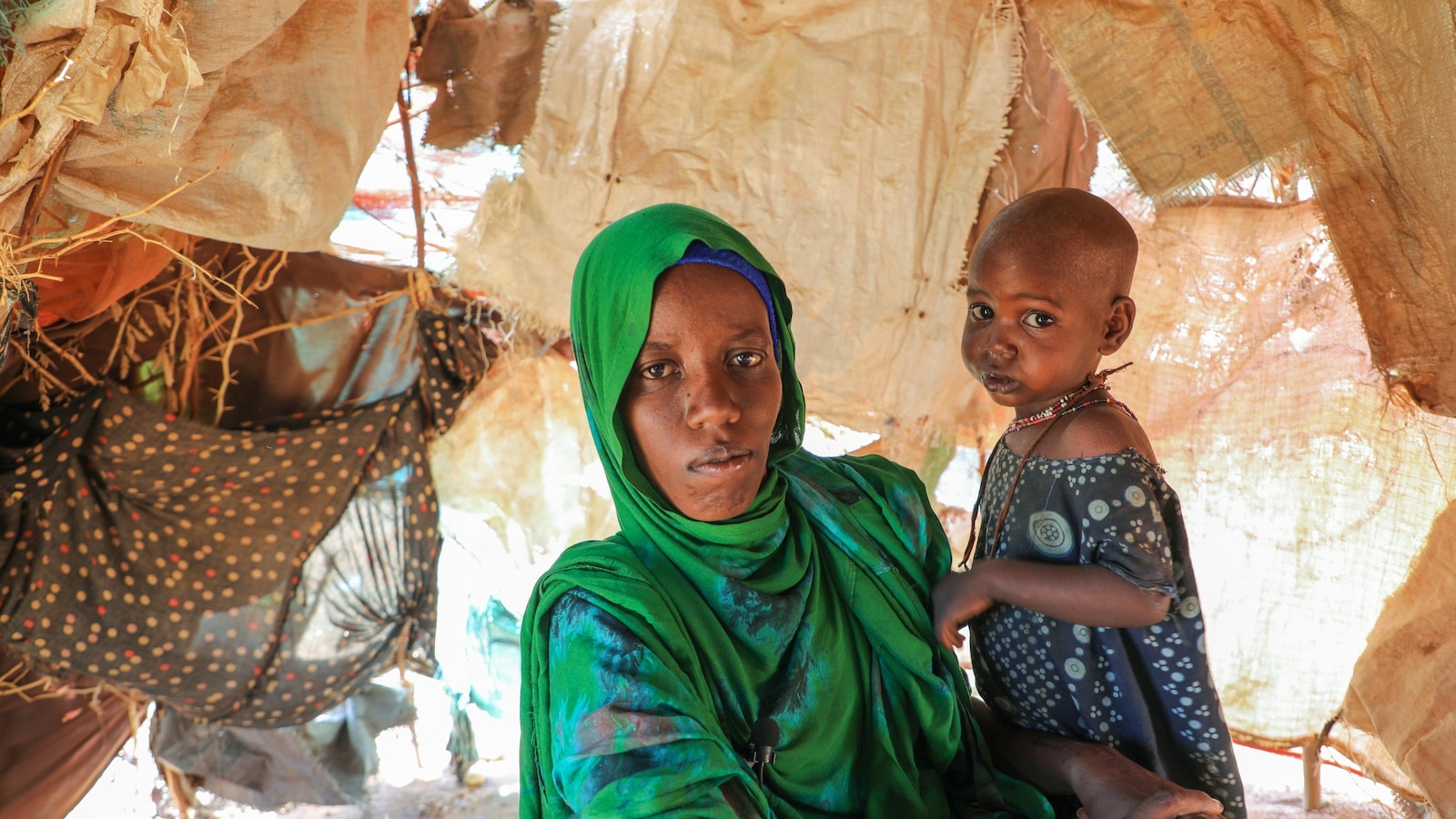
DOLLOW, Somalia — The sound of a crying child is a sign of hope in a crowded displacement camp in southern Somalia — the most malnourished children are too weak to even cry.
Their crops and livestock devastated, they show up at the camp, often with nothing but their children.
Aid workers at Ladan say the raging war in the Middle East — more than 3,000 kilometers (1,800 miles) away — has made their work harder, disrupting supplies and sending fuel costs soaring.
UNICEF says it has $15.7 million worth of lifesaving supplies — including therapeutic food, vaccines, and mosquito nets — in transit or being prepared for delivery to Somalia. But those shipments now are uncertain.
Transport costs could rise by 30% to 60%, and even double on some routes, while delays caused by rerouting and backlog become more likely, the U.N. agency says.
During a visit to Dollow on Wednesday, Catherine Russell, UNICEF’s executive director, said the Iran war has been a “shock to the system” for the agency’s work on the ground in Somalia.
“It means that we can’t get supplies in as easily, and that fuel costs are really high,” she said. “It’s another problem that we have to try to deal with, and it means that more and more children will suffer.”
At the same time, more than 400 health and nutrition facilities have closed over the past year across Somalia, due mainly to U.S. funding cuts, leaving many communities without access to support. Aid agencies warn more closures could follow.
All those issues have compounded the situation in Laden, where hunger threatens especially the youngest.
“What we’re seeing is that children are really on the edge already,” Russell said.
In Mogadishu, Somalia’s capital, the government warned last month that nearly 6.5 million people — out of the population of more than 20 million — face severe hunger as the drought worsens and conflict and global aid cuts intensify the country’s crisis.
The humanitarian needs are just the tip of the iceberg as the Somali government grapples with its long-running war against the al-Qaida-linked al-Shabab militant group, fighting to reclaim territory from the extremists.
The latest data from a report by the Integrated Food Security Phase Classification, a global hunger monitoring group, estimates that 1.84 million children under the age of 5 in Somalia are expected to suffer acute malnutrition in 2026.
In Ladan, spread across the town’s dusty outskirts, rows of makeshift shelters stretch under the harsh sun, fragile structures of plastic sheets and torn fabric held together by sticks and thorn branches. The camp is home to about 4,500 households.
“We just want our children to survive,” said Shamso Nur Hussein, a 20-year-old widow with three children. She fled their village in the Bakool region after losing all her farm animals.
Her cooking hearth at the camp — three stones and ash — was cold, with no sign of a recent fire.
“Since morning we have only had black tea,” she told The Associated Press at the camp.
At the hospital in Dollow, mothers sat shoulder to shoulder on narrow beds holding frail children, some too weak to cry while others let out soft whimpers.
Liban Roble, a nutrition program coordinator, said the hospital used to see mainly “moderate cases.”
“Now we are receiving children in extremely critical condition — severely malnourished, weak, and in some cases almost skeletal,” he said.
Roble said the hospital has only supplies to treat the malnourished “until mid-April or the end of April.”
“If new stock doesn’t arrive, more children will deteriorate and potentially die,” he said.
At Ladan’s nutrition center, health workers weighed children and dispensed a peanut-based paste, squeezing it into the children’s mouths.
It’s a lifeline, a means to prevent rapid decline of the malnourished children, nurse Abdimajid Adan Hussein said.
“Their weakened bodies make them vulnerable to pneumonia, diarrhea and other illnesses,” Hussein said.
Community leaders say support is already falling short.
“We used to receive assistance from humanitarian agencies, but that stopped in September 2025,” said Abdifatah Mohamed Osman, Ladan’s deputy chairman. “Now the little support we get is mainly therapeutic food for malnourished children.”
The Associated Press receives financial support for global health and development coverage in Africa from the Gates Foundation. The AP is solely responsible for all content. Find AP’s standards for working with philanthropies, a list of supporters and funded coverage areas at AP.org.
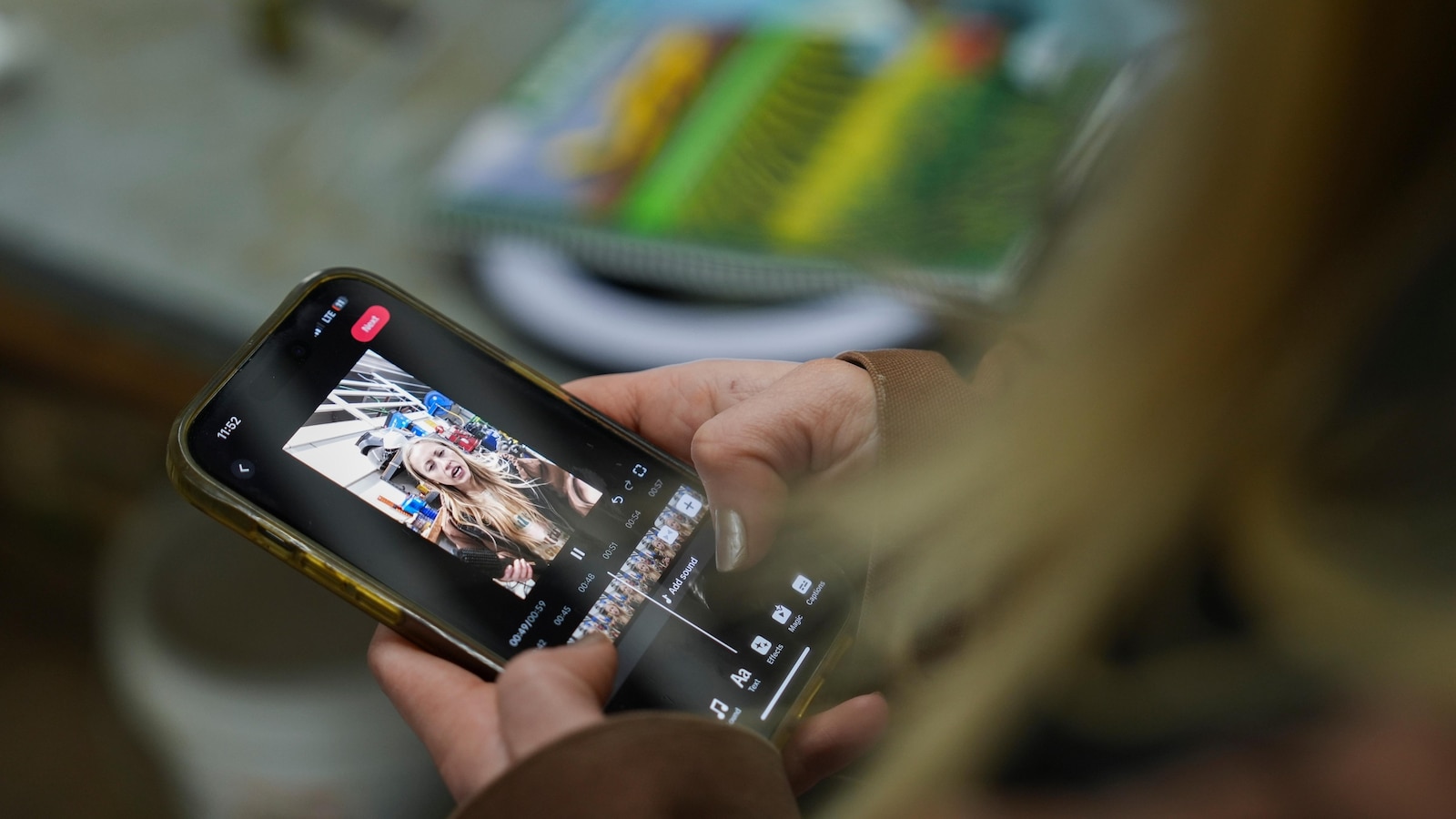
BATON ROUGE, La. — In a pivotal moment that underscored how powerful and immersive social platforms can be for children and teens, a jury in California this week found both Meta and YouTube liable for mental health harms to kids using their services.
The jury’s decision in the first-of-its-kind lawsuit — centered on social media addiction — was applauded by doctors and advocates, who say they are hopeful it could eventually lead to industrywide changes.
“I am excited about the outcome of the litigation, in part because we’ve had basically seen these platforms sort of go unregulated for many years … and they didn’t really consider, that much, the effects on children,” Carol Vidal, a child and adolescent psychiatrist at Johns Hopkins Children’s Center, told The Associated Press.
Experts say this moment provides a renewed opportunity to rethink how families approach social media. Here is some guidance for parents on conversations to have with their children about social media and practices to protect them.
For many parents, battles over screen time, fears of online harm and difficulty pulling kids away from endlessly scrolling has become a part of navigating an increasingly digital childhood.
And while there are decades’ worth of articles, research papers, podcasts and — yes — social media posts outlining tips, tricks and rules when it comes to kids’ screen time, experts say the most helpful thing a parent can do is simply talk to their kids.
Asking children what they enjoy online, the type of influencers they are following, how they are engaging and how they are feeling about certain apps can reveal a lot about their online experience and be more impactful than setting rigid rules.
Jenny Radesky, the division director of Developmental and Behavioral Pediatrics at the University of Michigan Medical School, said the best way to begin conversations is with open-ended questions and “leaving space for teens to share their opinion.”
“By listening as a parent, it lets you peek under the hood to understand how your child is thinking about things. It’s way easier to solve a tricky problem when you really understand your child’s perspective, instead of just trying to force a new limit,” Radesky said.
Among conversations starters, Radesky suggested asking kids about posts they are seeing — things they saw that they think are funny, entertaining, creepy, cool or frustrating. From there, parents can ask if their child is seeing things they dislike and how to address that, such as resetting their feed, only looking at content from their friends or taking a break from the platform.
But when it comes to social media boundaries, there is no one-size-fits-all solution. Radesky said framing rules around a child’s well-being and needs, rather than restrictions that can feel like a punishment, can help children better understand how to use social media in a healthy way.
“As the parent, you know your kid best,” Radesky said. “You’ve seen their anxious days. You’ve seen those days when they’re out of control. You know what really grabs their attention and what calms them down. So think of all of your solutions centered around who your kid is.”
Experts say setting timers, designating “phone free zones” or even taking a multiday break from social media can be very useful.
“It helps teens be more intentional about getting what they want out of their phone or out of that social media site — not it turning into this mindless, ‘Oh, I’ve got nothing else to do so I’ll just keep scrolling,” Radesky said.
Again, figuring out a child’s specific needs, patterns of use and challenges is beneficial to finding solutions that work for them.
Is social media interfering with their sleep? Have them leave their phone downstairs at night. Are they scrolling for hours at a time? Set a 20-minute timer to notify them when to put their phone down. Do they turn to social media out of boredom? Maybe set aside one day every week to go do something as a family.
Is there a specific age when kids should be allowed to go on social media, is the age-old question.
Nearly all major social media platforms have a minimum age requirement of 13, primarily due to the Children’s Online Privacy Protection Act that restricts data collection on younger children. However, enforcement is often limited as there’s no easy way to verify a person’s age when they sign up for apps and online services.
Additionally, individual states have taken action to prohibit children — in some cases up to the age of 16 — from opening accounts without parental permission.
The American Academy of Pediatrics does not recommend social media under the age of 13; “That doesn’t mean you need to start an account at age 13. Many kids benefit from waiting longer,” Radesky said.
Beyond just signing up for social media platforms, there is a push among parents, educators and tech experts to hold off on giving children phones until they are older. Some parents have joined the “Wait Until 8th” movement, pledging not to give their kids a smartphone until the 8th grade, or about age 13 or 14.
When it comes to social media habits, experts say, it is crucial that parents lead by example.
“The most powerful thing that parents can do is actually model good behaviors, because kids sometimes respond more to what they see than what they’re told,” Vidal said.
While being on a phone can be necessary at times, experts say it is helpful when parents explain why they are on their phone around their child. Instead of aimlessly scrolling, perhaps a parent is checking a work email, looking up a recipe for dinner or paying a bill.
Ultimately, if parents want their child to change their social media use, then they should partner with them. Vidal suggested utilizing the American Academy of Pediatrics’ family media plan — a free online tool that creates recommendations for a person’s social media use based on that specific individual.
“This is not just a problem that teens experience. The designs are in everyone’s feeds and everyone’s social media,” Radesky said. “So try to make a change together.”
Premium Bonds are one of the nation’s much loved savings products, with savers foregoing regular interest for the monthly chance of winning a tax-free cash prize between £25 to £1m.
And research by Vanguard shows two thirds of account holders have never actually won a prize.
A freedom of information request by the asset manager revealed that of the 23 million people holding a total of £135.7 billion in Premium Bonds between them, around 14.3 million (62 per cent) have never won a single prize, let alone a big one.
How hard is it to win a Premium Bonds prize?
Some of the above data is attributed to the small amounts of money held in many Premium Bond accounts.
But the odds of winning are set to get even worse in April when the equivalent prize rate drops from 3.6 per cent to 3.3 per cent. This will cut the level of prizes available, with the total amount dropping from around £408m to £375m.
The odds of winning will lengthen from 22,000 to one, to 23,000 to one, per £1 Bond number.
Some providers, such as TSB, occasionally run prize draws for customers or may make extra payments. For example, Nationwide often makes an annual Fairer Share payment for eligible current account, savings or mortgage customers worth £100.
And there are also alternative Premium Bond-style savings products available – where you can get better odds of winning a prize.
Get a free fractional share worth up to £100. Capital at risk.
Fintech app Chip offers a Prize Savings account with £75,000 worth of prizes each month.
This ranges from £5 to a jackpot of £10,000.
There is no interest on money in the account, but instead your cash goes towards the prize draw and anything you win is added to your account.
The number of entries is decided by a saver’s average balance over the calendar month.
Odds of winning fluctuate depending on the number of accounts and the total value but last year there was a one in 964 chance of winning for every £10 held – far better than the odds of a Premium Bond win.
Credit unions
If you have a savings account with a credit union it is worth checking if it participates in the PrizeSaver competition.
PrizeSaver is run by the Association of British Credit Unions and is a monthly prize draw with a top prize of £5,000.
There are also 10 prizes worth £50 and another 10 of £20.
Every £1 held in a PrizeSaver account with a participating credit union is entered into the monthly prize draw. Account holders can only save up to £200 in the accounts though.
Family Building Society’s Windfall Bond
You could win a jackpot worth £50,000 in Family Building Society’s Windfall Bond.
There is a catch though as you need a minimum of £10,000 to open an account.
Each account is entered into a monthly prize draw where you are in with a chance of winning the jackpot prize and also £100, £500, £1,000 and £10,000.
(Getty/iStock)
The value of prizes on offer each month is calculated by taking the total value of Windfall Bonds from the previous month and multiplying it by one twelfth of one per cent.
There is an extra bonus though as the account also pays a rate of 2.75 per cent. Meaning you will still earn some money even if you don’t win a prize.
Family Building Society says there is a one in 714 chance of winning a prize in each month’s draw, which are significantly better odds than Premium Bonds.
Royal Bank of Scotland
It isn’t only savings accounts that offer prize draws – you could even get a bonus through a stocks and shares ISA.
At RBS, every £50 invested in its stocks and shares qualifies for one entry into the Royal Bank prize draw.
The top prize is £20,000 and 10 winners each could get £1,000, with 200 and £100 prizes on offer. The more you invest, the more chances you have of winning.
When investing, your capital is at risk and you may get back less than invested. Past performance doesn’t guarantee future results.
How much would you have to loathe someone to (allegedly) steer them into a candlelit chandelier? According to 1940s Vogue editor Bettina Ballard, Coco Chanel did just that to her main rival, Elsa Schiaparelli, at a costume ball ahead of the Second World War. Dressed as a surrealist tree, Schiaparelli reportedly went up in flames, with guests squirting soda water on her to put out the blaze.
It’s fair to say that Schiaparelli – now set to be the subject of a new V&A exhibition, “Schiaparelli: Fashion Becomes Art”, which opens on 28 March – rubbed Chanel up the wrong way to rather epic proportions. The pair were known to exchange insults, with the barely five-foot designer dubbing Chanel “that dreary little bourgeoisie”, while the French fashion superstar referred to Schiaparelli not as a designer but “that Italian artist who makes clothes”.
Ironically, that backhanded moniker was how Schiaparelli, the first major couturier to closely collaborate with the surrealist artists Salvador Dalí, Jean Cocteau and Meret Oppenheim, wanted to be known: “For me, dress designing is not a profession but an art,” the innovator wrote in her memoir Shocking Life, titled in reference to the vivid “shocking pink” that became Schiaparelli’s signature in 1937.
The colour was intended to be “bright, impossible, impudent” – much like its creator. After the designer died in Paris in 1973 following a stroke, aged 83, she was buried in a magenta-hued outfit.
“Chanel and Schiaparelli didn’t need to compete really because their clothes were so different,” says Sonnet Stanfill, the senior curator of fashion and textiles at the V&A. “You could tell at a glance that a dress was Schiaparelli. They were so distinctive in their use of colour, their unusual buttons, and their vibrant embroidery and embellishments. They were very, very unlikely to be confused with each other.”
Schiaparelli challenged the cliche of conventional beauty with her eye-catching designs (Getty)
Chanel seemingly disliked Schiaparelli precisely because of their wildly different views of what clothes should be made for. Chanel opted for minimalist elegance in neutral colours and simple lines, intended for everyday modern life. Schiaparelli, meanwhile, put Dalí’s lobsters on her dresses and added quilted padding to evening gowns so it looked like human bones were protruding. “I like to amuse myself through some of my creations,” Schiaparelli, ever the maverick, once said. “If I didn’t, I should die.”
Schiaparelli was born in Rome into an intellectual upper-middle-class family (her father was an Arabic and Islamic studies scholar, her cousin an Egyptologist and her uncle an astronomer). She published a book of poetry in 1911, before marrying theosophist Count William de Wendt de Kerlor in London in 1914, within 24 hours of meeting him. De Kerlor left Schiaparelli almost immediately after their child, Marie (nicknamed Gogo), was born. The designer later told her daughter her father was dead.
By the time Schiaparelli was 32, she had no money or career – and an 18-month-old daughter who was sick with polio. While many would have returned to the safety of their family home, Schiaparelli went to Paris, where she designed clothes for herself and her friends, who by now included the surrealist artist Man Ray and Marcel Duchamp, whom she’d modelled for while living with her husband in New York.
Despite being told she was “ugly” compared to her sister throughout her childhood, Schiaparelli later appearedin Vogue in photos taken by Ray, Horst P Horst and George Hoyningen-Huene and spent her career challenging the cliché of generic beauty.
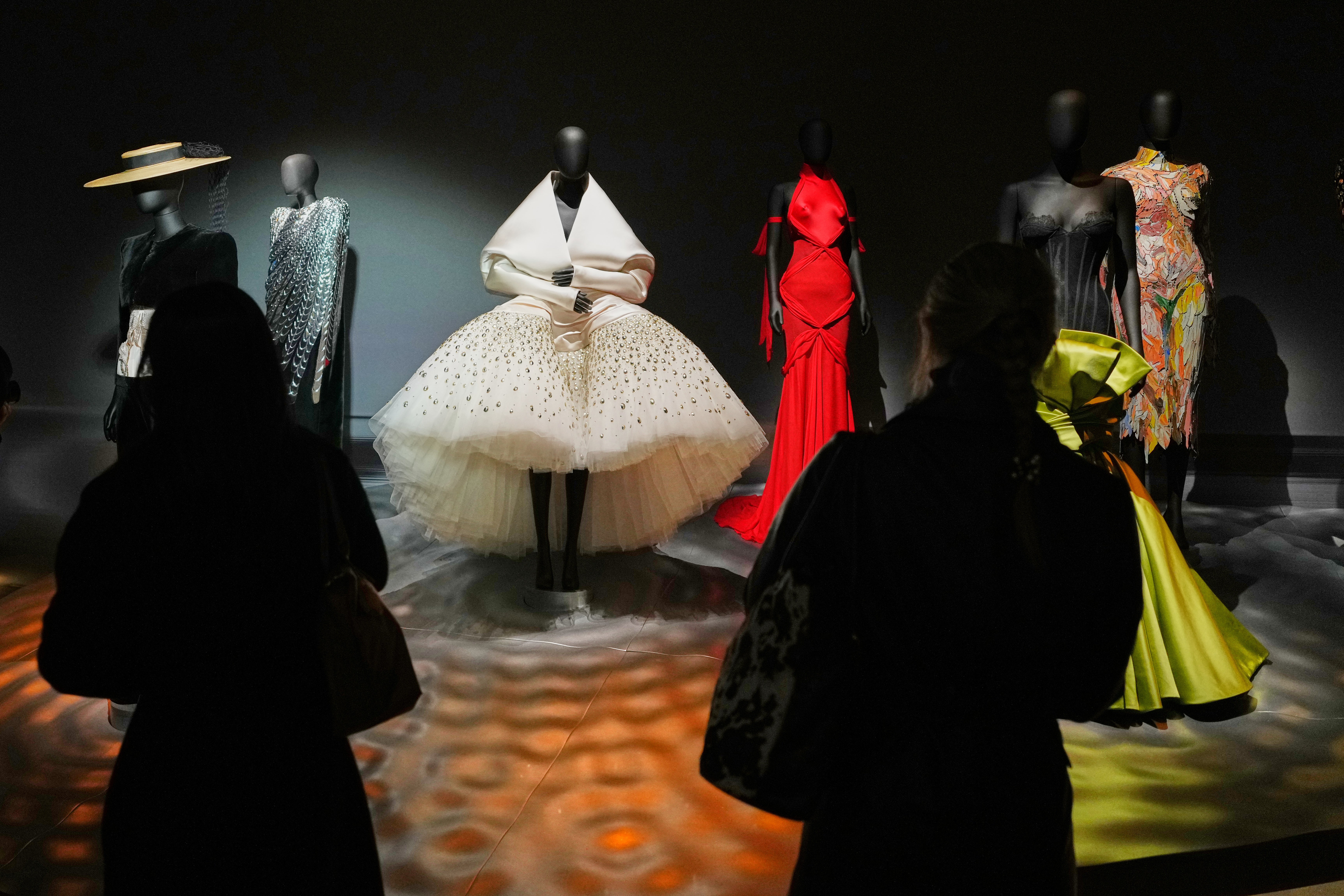
Britain Schiaparelli Exhibition opens at the V&A this week (AP)
She was encouraged by designer Paul Poiret (known as “Le Magnifique” or the King of Fashion) to take her interest in design seriously and, in 1927, a trompe-l’oeil effect sweater she’d knitted, emblazoned with a bow, caught the attention of guests at a society luncheon, resulting in numerous orders. Trompe-l’oeil ties and handkerchiefs followed and she soon opened her first salon, launching her career. A 98-room salon in Paris followed, complete with shell lamps by Alberto Giacometti, a shocking pink edition of Dalí’s Mae West lips sofa.
“Often, there was an element in her designs that made the onlooker look twice,” says Stanfill. “Whether it was an accessory, like a hat shaped like an upside-down shoe, or an unusual button – from butterflies to peanuts to a naked mermaid – these unusual details broke the conventional beauty and style rules and marked the wearer as a daring dresser.”
The designer frequently went where others wouldn’t. In the 1930s, her love of trousers angered newspapers, with the Daily Mail dubbing the wardrobe choice “the decay of feminine grace”. She loved oversized shoulder pads, made zips a decorative feature on gowns rather than hiding them, experimented with synthetic fabrics such as rayon and Lurex and supersized her buttons. She even introduced a number of patents, including one for a backless swimsuit. By 1934, Vogue had dubbed her “the designer of the most exciting clothes in Paris”.
Schiaparelli (right) in trousers in London in 1931 (Getty)
Yet, despite Schiaparelli’s pioneering vision that saw her unveil butterfly, Zodiac, and circus-themed collections, she never became a household name like Chanel or Christian Dior. Once the Second World War was over, her fantastical designs didn’t match the mood of the time. By 1954, she declared bankruptcy and was forced to close her fashion house after 27 years in operation.
“It was a moment where, after the war, a new generation of designers were coming to the fore,” says Stanfill. “There was competition.”
The house lay dormant for almost six decades, until Italian luxury mogul Diego Della Valle (and long-time Schiaparelli fan) acquired the rights to the brand in 2006 and waited for six years for the designer’s original atelier location in Paris to become available to launch a full-scale revival.
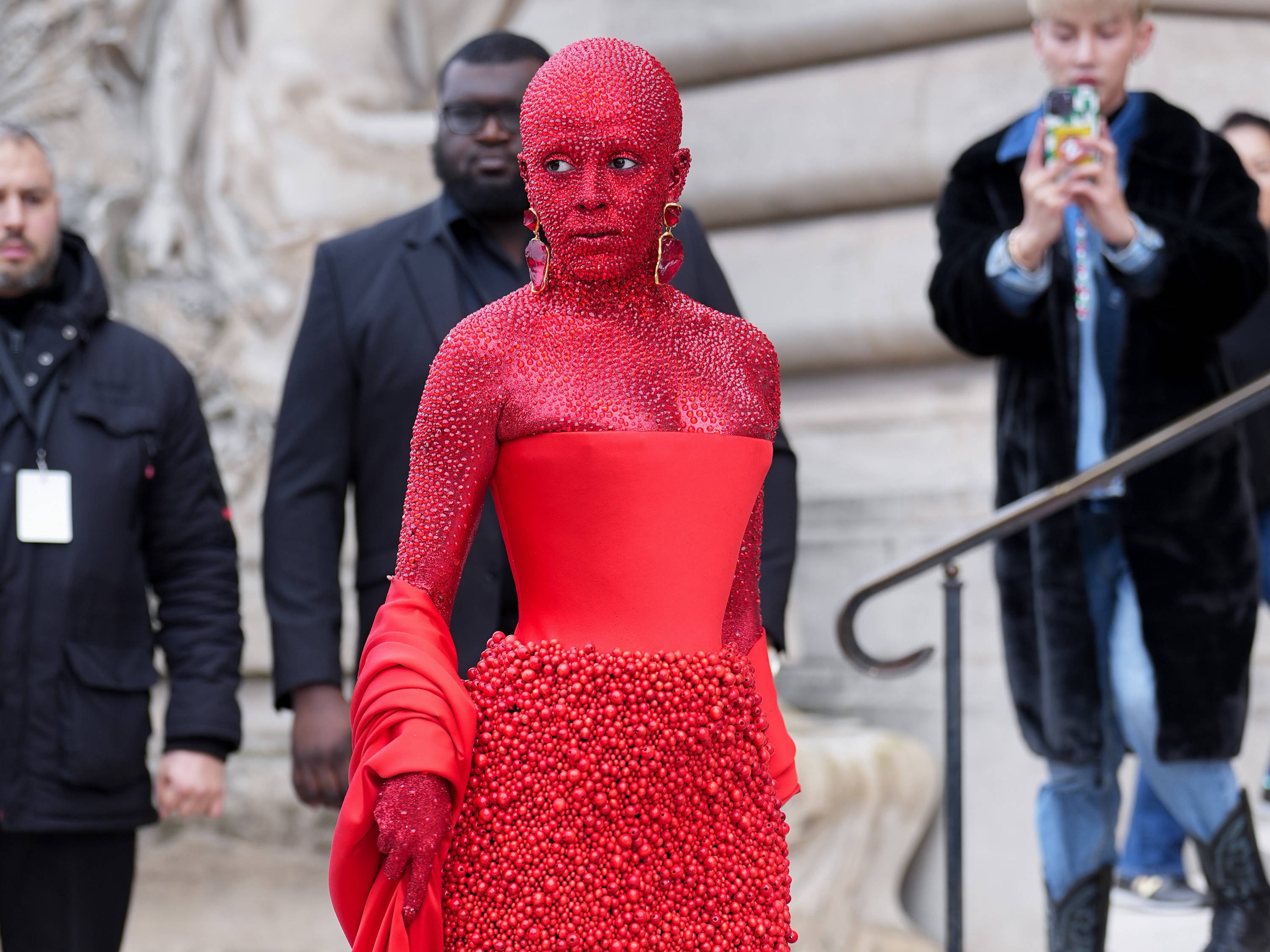
Proceedings have sometimes veered towards the gimmicky. Rapper Doja Cat made headlines when she stepped out at the 2023 Schiaparelli show at Paris Fashion Week studded with 30,000 red crystals. Meanwhile, Kylie Jenner rocked up with a hyperrealistic lion’s head.
Doja Cat at the Schiaparelli FW23 show at Paris Fashion Week (Laurent VU/SIPA/Shutterstock)
But cut to 2026 and Schiaparelli’s flowers are more than in bloom – her legacy languishing across the catwalks in a way that feels more in keeping with her experimental ethos.
At January’s Paris couture week, the house’s creative director, Daniel Roseberry, unveiled a collection featuring 3D hand-cut lace and airbrushed, hand-printed, crystal-coated feathers. Elsewhere, dinosaur-like horns protruded from the model’s chests. By March – for the fall 2026 collection – he’d debuted playful kitten heels complete with l’œil cat heads made from resin and felt on the front. “We try to walk a fine line between humour and camp,” Roseberry has previously remarked.
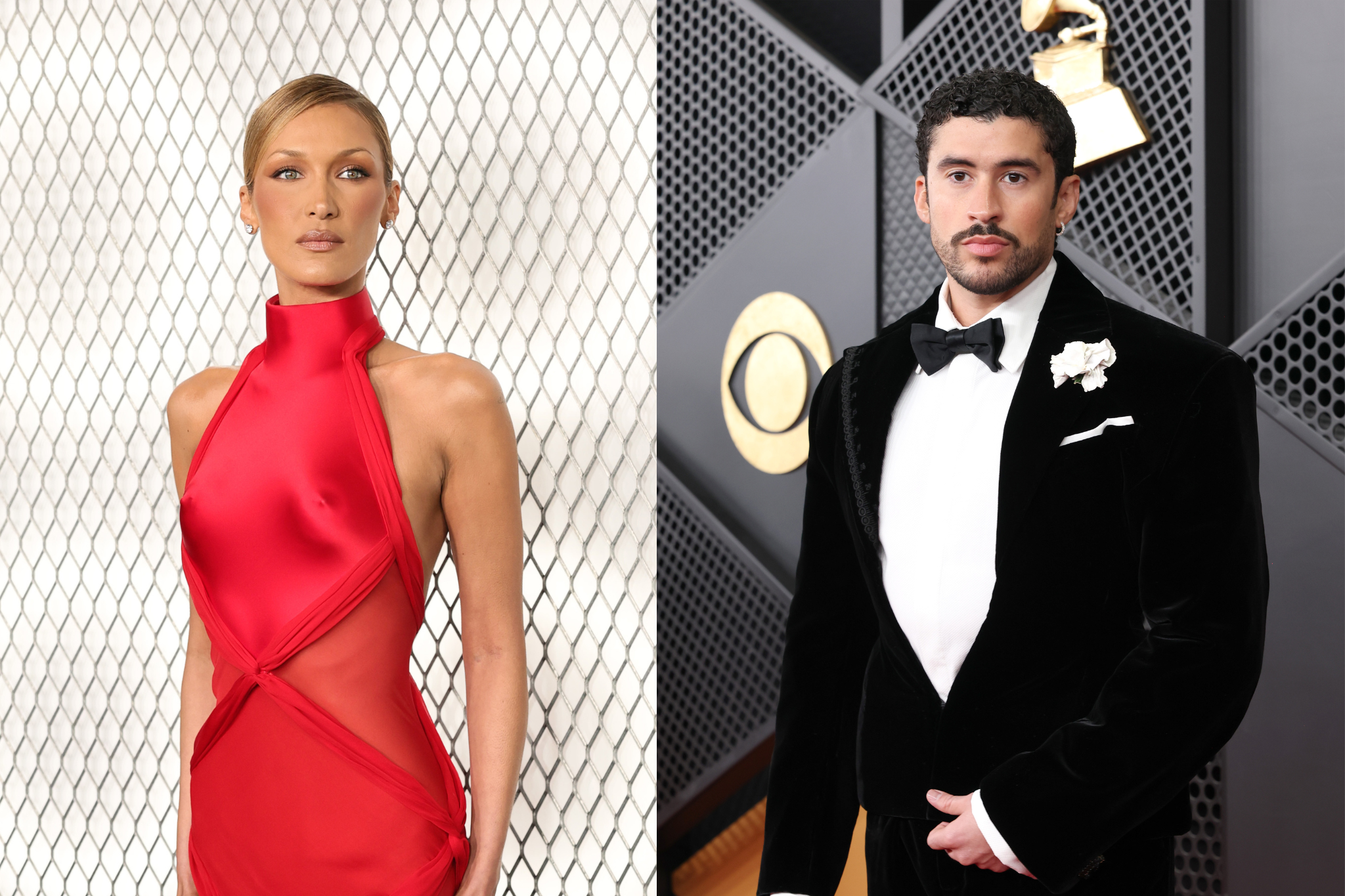
This vision has earned Roseberry an A-list collection of “Schiap pack” members. Bella Hadid wore a fiery red silk custom gown to The Beauty premiere in January, after making headlines in another black dress finished with a lung-shaped brass necklace in Cannes in 2021.
Bella Hadid wearing Schiaparelli at the Cannes Film Festival in 2021 (Getty)
Margot Robbie followed suit in a lace Schiaparelli corset dress for the “Wuthering Heights” premiere in Los Angeles this January. A month later, when Bad Bunny collected the Grammy for best album, he donned a Schiaparelli blazer, which was corseted at the back – the first-ever custom Schiaparelli Haute Couture menswear look on a major red carpet. The world applauded.
“Both Elsa Schiaparelli and Roseberry have been very adept promoters,” says Stanfill. “Elsa was her own best model; whatever she wore, wherever she went, she made headlines, and she got her brand in the newspaper by doing clever things like dressing Amy Johnson, an aviator who did the first solo flight from London to South Africa.
“Roseberry doesn’t copy the archive, but he takes the spirit of disobedience and rule-breaking and moves away from conventionally pretty clothes to clothes that allow the wearer to be daring. He describes it as ‘helping the woman to meet the moment’. And, often, the moment is a very high-profile red carpet appearance. That’s when you want people to remember you. Clothes help do that.”
Bella Hadid in Schiaparelli at ‘The Moment’ premiere and Bad Bunny at the 68th Grammy Awards (Getty)
More than half a million people visited the V&A’s Dior exhibition in 2019. If the museum’s Schiaparelli retrospective – the UK’s first dedicated to the designer – doesn’t get Elsa her recognition, Hollywood certainly will. Just look at the theme for this year’s Met Gala: Fashion Is Art.
“I don’t consider Elsa to be a dressmaker,” Roseberry said of the founder. “She was an image-maker, a culture creator, and she has been our north star moment with every red carpet moment since.”
‘Schiaparelli: Fashion Becomes Art’ is at the V&A from 28 March
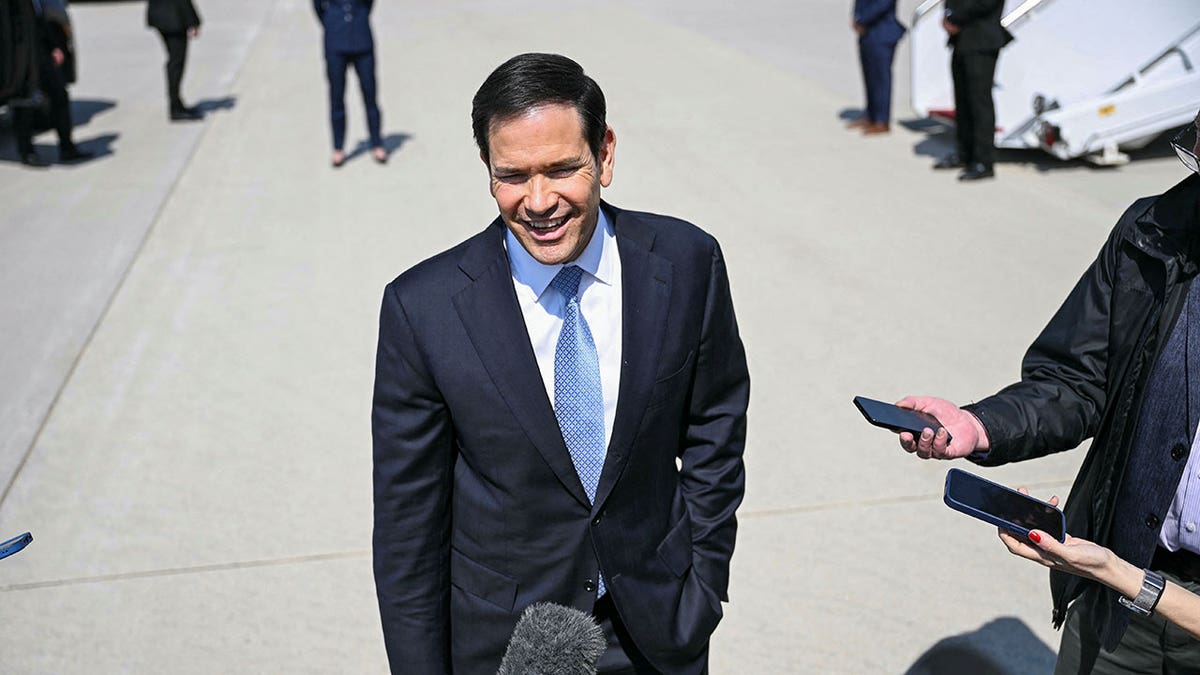
Secretary of State Marco Rubio arrived in France on Friday to attend the G7 foreign ministers’ meeting where he will deliver a clear message on U.S. priorities for the ongoing war with Iran.
In the days leading up to the meeting, other members have taken markedly different approaches to the war. Nearly all of Washington’s partners — Britain, Canada, France, Germany, Italy and Japan — have reacted cautiously to the U.S.-Israeli military campaign and declined to participate in offensive operations, even as they condemn Iranian actions.
Before departing on Thursday, Rubio signaled a defiant approach to the talks: “I don’t work for France or Germany or Japan … the people I’m interested in making happy are the people of the United States. I work for them,” he said in a video posted on X.
The divergence has drawn frustration from President Donald Trump, who has pressed allies to contribute more, particularly in securing key maritime routes such as the Strait of Hormuz. While some countries have signaled a willingness to support defensive or maritime security efforts, they have stopped short of joining direct military strikes.
“The U.S. is constantly asked to help in wars, and we have. But when we had a need, it didn’t get positive responses from NATO. A couple leaders said that Iran was not Europe’s war. Well, Ukraine isn’t our war, yet we’ve contributed more to that fight than anyone,” Rubio added.
“The Strait of Hormuz could be open tomorrow if Iran stops threatening global shipping, which is an outrage and a violation of international law. For all these countries that care about international law, they should be doing something about it,” he said before boarding his plane to France.
The remarks set the tone for a summit already marked by growing friction between Washington and some of its closest allies over how to handle the Iran conflict. Rubio has framed the stakes in stark terms. “Iran has been at war with the United States for 47 years . . . Iran has been killing Americans and attacking Americans across this planet,” he said during a White House cabinet meeting, adding that allowing Tehran to obtain nuclear weapons would be “an unacceptable risk for the world.”
But even before Rubio arrived at the meeting, European officials were signaling a markedly different approach.
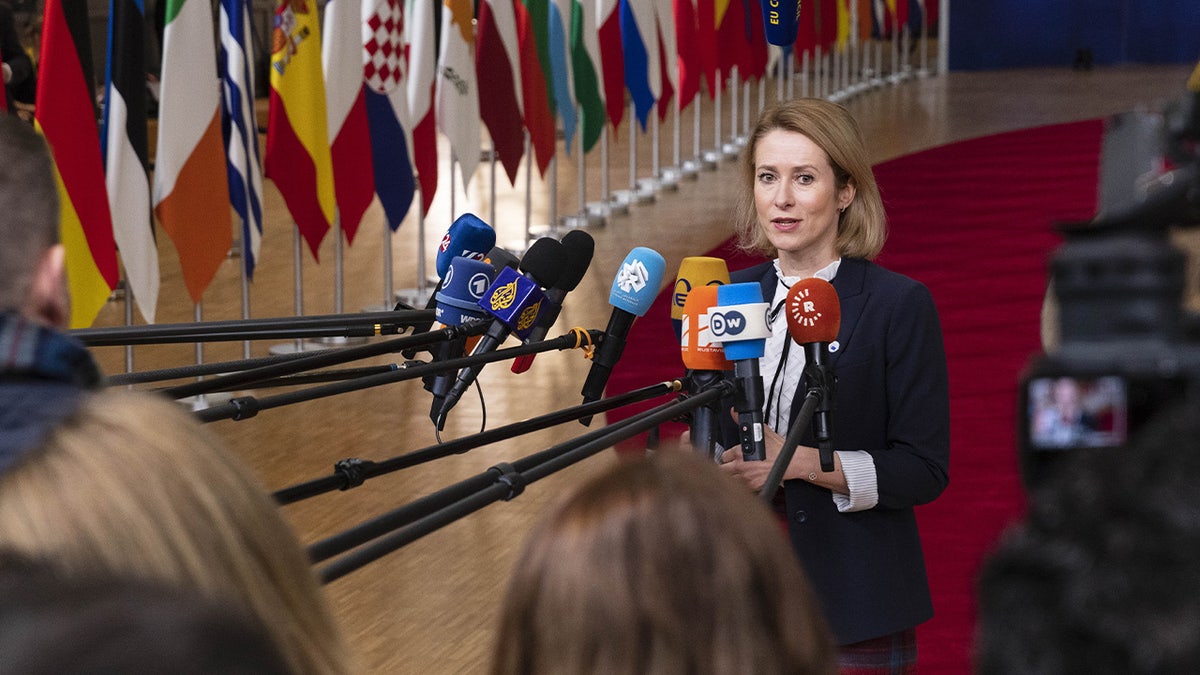
“We need to exit from the war, not escalate this further, because the consequences for everybody around the world are quite severe,” Vice President of the European Commission Kaja Kallas said during a briefing on the sidelines of the G7 on Thursday.
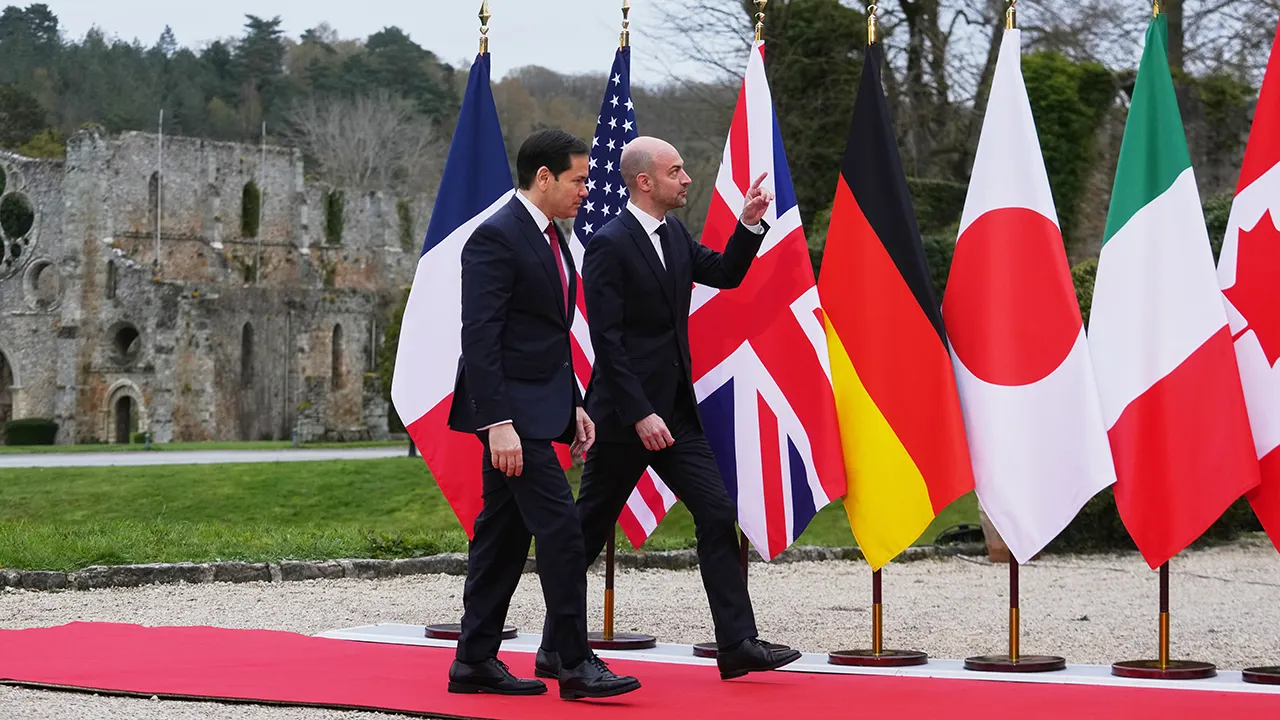
France’s Foreign Affairs Minister Jean-Noel Barrot, right, greets U.S. Secretary of State Marco Rubio as he arrives at the G7 Foreign Ministers’ meeting with partner countries in Cernay-la-Ville outside Paris, France, Friday, March 27, 2026. (AP Photo/Michel Euler)(Michel Euler/AP Photo)
“It can only be a diplomatic solution … sit down and negotiate to have a way out,” she added.
The contrast between Rubio’s framing and Kallas’s message captures the core tension shaping the meeting.
U.S. officials say Rubio is heading into the talks with a broader agenda that goes beyond Iran.
According to a State Department spokesperson, who spoke to Fox News Digital on background, Rubio will use the meeting to “advance key U.S. interests” and push discussions on the wars in Ukraine and the Middle East, as well as “international burden sharing” and the overall effectiveness of the G7.
The U.S. is also expected to emphasize maritime security, including freedom of navigation in the Strait of Hormuz and the Red Sea, while urging allies to take on a greater share of responsibilities in conflict zones and international organizations, the spokesperson said.
U.S. Secretary of State Marco Rubio speaks to reporters before boarding a plane as he is headed to France where he will take part in the G7 foreign ministers’ meeting, at Joint Base Andrews in Maryland, U.S., March 26, 2026. (Brendan Smialowski/Pool via Reuters)
European officials have instead emphasized the broader risks of the conflict.
France’s foreign minister, Jean-Noël Barrot, said discussions at the G7 would build on a recent joint statement condemning Iran’s actions while also addressing maritime security concerns.
He said the “discussions will provide an opportunity to revisit positions already agreed at the G7 level… including the unjustifiable attacks carried out by Iran against Gulf countries … which we condemned in the strongest possible terms.”
Barrot added that ministers would also focus on securing global shipping routes.
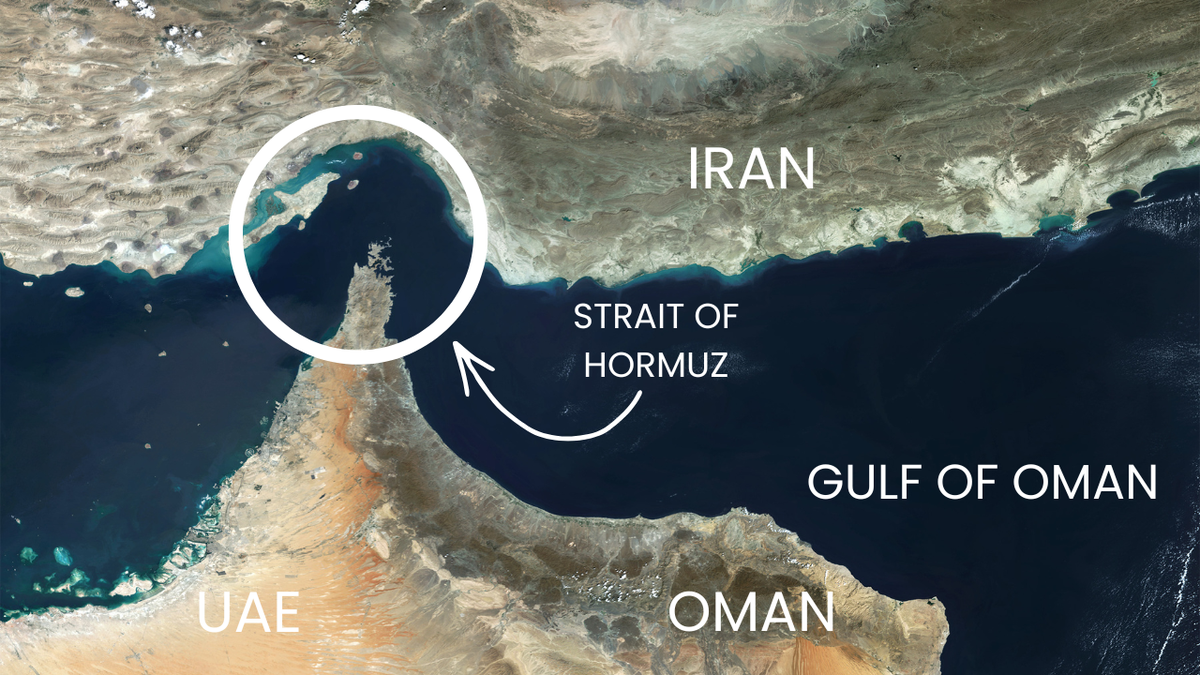
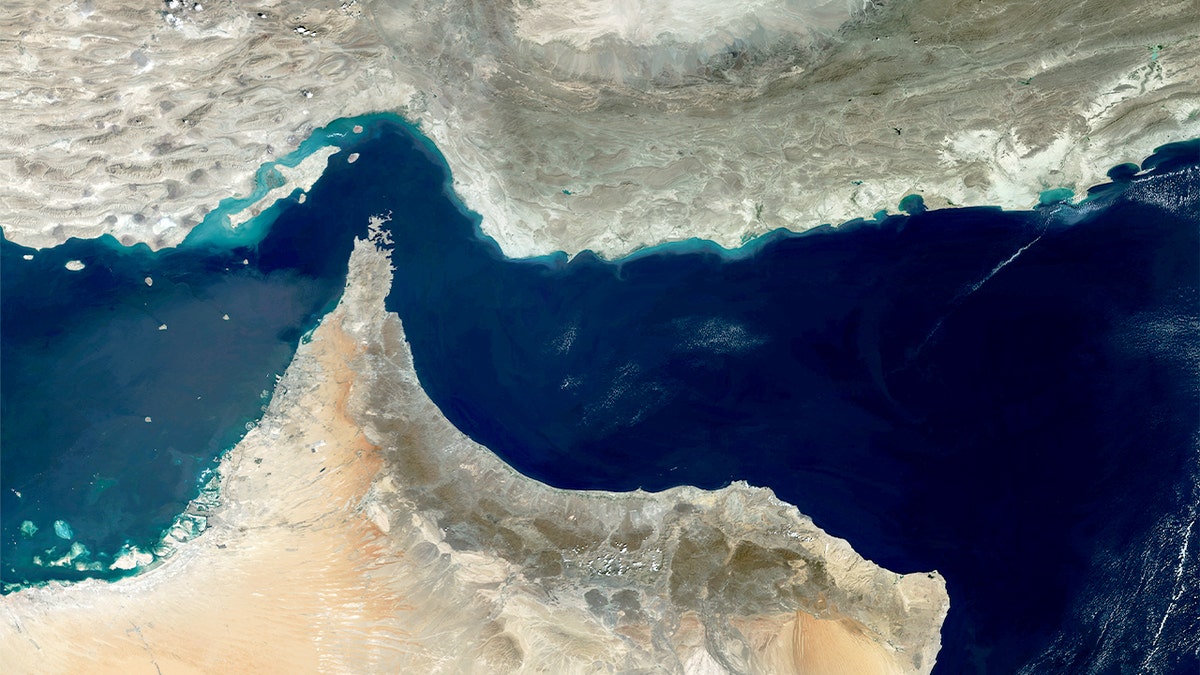
A satellite image shows the Strait of Hormuz, a key maritime passage connecting the Persian Gulf to the Gulf of Oman, vital for global energy supply.(Amanda Macias/Fox News Digital)
“We will also have the opportunity to address maritime security and freedom of navigation … including an international mission … to ensure the smooth flow of maritime traffic in a strictly defensive posture, thereby helping to ease pressure on energy prices,” he said.
Kallas echoed that global framing. “All the countries in the world are one way or another affected by this war … it is in the interest of everybody that this war stops,” she said.
Kaja Kallas, High Representative of the European Union (EU) for Foreign Affairs and Security Policy speaks to the press during EU Summit in Brussels, Belgium on Dec. 19, 2024. (Photo by Nicolas Landemard/Anadolu via Getty Images)
Her remarks also pointed to the interconnected nature of the crisis. “Russia is helping Iran with intelligence … and also supporting Iran now with drones,” she said, linking the Iran conflict to the war in Ukraine.
That uncertainty is already affecting the structure of the summit, with officials dropping plans for a unified final communiqué to avoid exposing divisions, Reuters reported.
Analysts say those differences reflect deeper structural tensions in the alliance. “Europe has criticized Donald Trump’s ‘maximum pressure’ strategy towards Iran while pursuing a failed diplomatic approach that has enabled the regime to expand its terrorist networks and edge closer to nuclear threshold status,” Barak Seener, senior research fellow at the Henry Jackson Society, told Fox News Digital.
“This reflects a lack of European capability to project power in the region, particularly in safeguarding the Strait of Hormuz.”
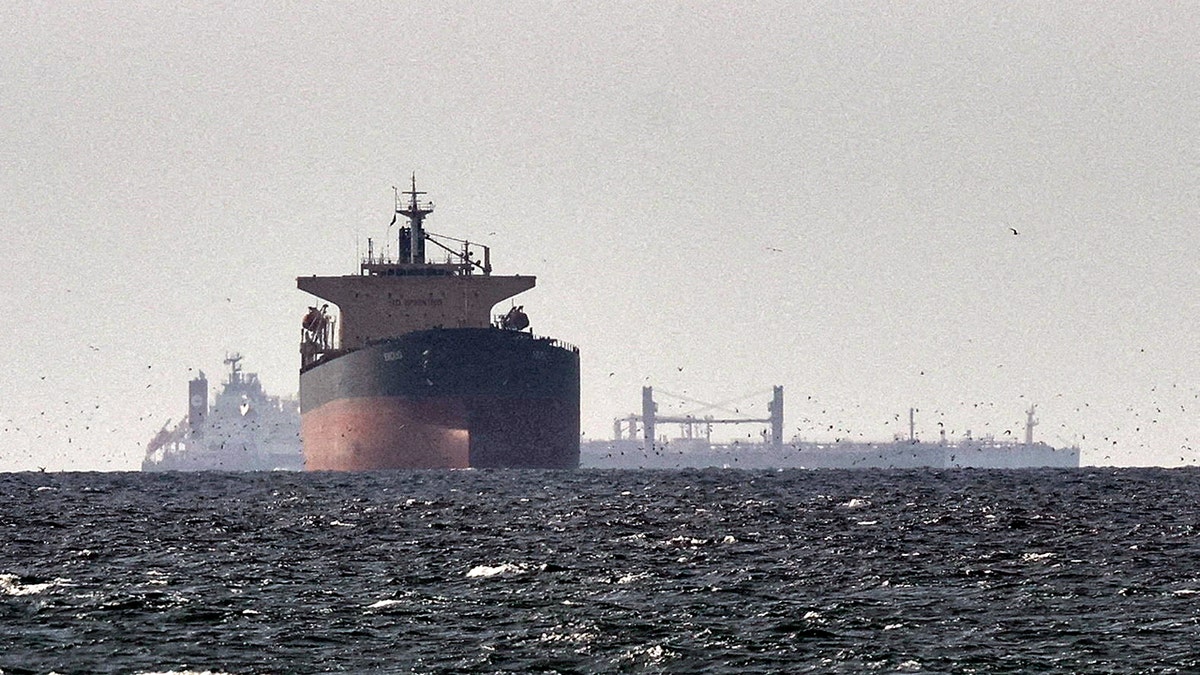
FILE PHOTO: Cargo ships in the Gulf, near the Strait of Hormuz, as seen from northern Ras al-Khaimah, near the border with Oman’s Musandam governance, amid the U.S.-Israeli conflict with Iran, in the United Arab Emirates, March 11, 2026.(REUTERS/Stringer/File Photo/File Photo)
Seener added that years of reliance on Washington have left Europe increasingly exposed as the U.S. shifts its strategic priorities. “Years of underinvestment in defense and reliance on the United States have created a dependency that Washington increasingly views as a betrayal of the peace it has guaranteed Europe since the Second World War,” he said.
“With the U.S. placing greater value on its relationship with Israel than NATO, the result may be further erosion of the alliance, reduced support for Ukraine and rising economic pressure on Europe.”
He warned that the immediate test will come at the G7 itself. “Divisions over how to respond to Iran and to any U.S. request for support are likely to expose a deeper transatlantic split,” Seener said.
“Operation Epic Fury has showcased President Trump’s ability to assemble a coalition of allies to eliminate a common threat — in this case the Iranian regime — and stabilize international trade,” Jacob Olidort, chief research officer and director of American security at the America First Policy Institute, told Fox News Digital.
A satellite view shows the Strait of Hormuz, a key global energy chokepoint connecting the Persian Gulf to the Gulf of Oman, on Oct. 2, 2024.(Gallo Images/Orbital Horizon/Copernicus Sentinel Data via Getty Images)
“The failure of Western Europe to participate in securing the Strait of Hormuz is particularly egregious because those countries depend on it more than we do,” he added.
“At the same time, the historic successes of Operation Epic Fury have awakened a new confidence in our Middle East partners to eradicate the threats from the Iranian regime and to work together to shape a more peaceful and prosperous region.”
Efrat Lachter is a foreign correspondent for Fox News Digital covering international affairs and the United Nations. Follow her on X @efratlachter. Stories can be sent to [email protected].
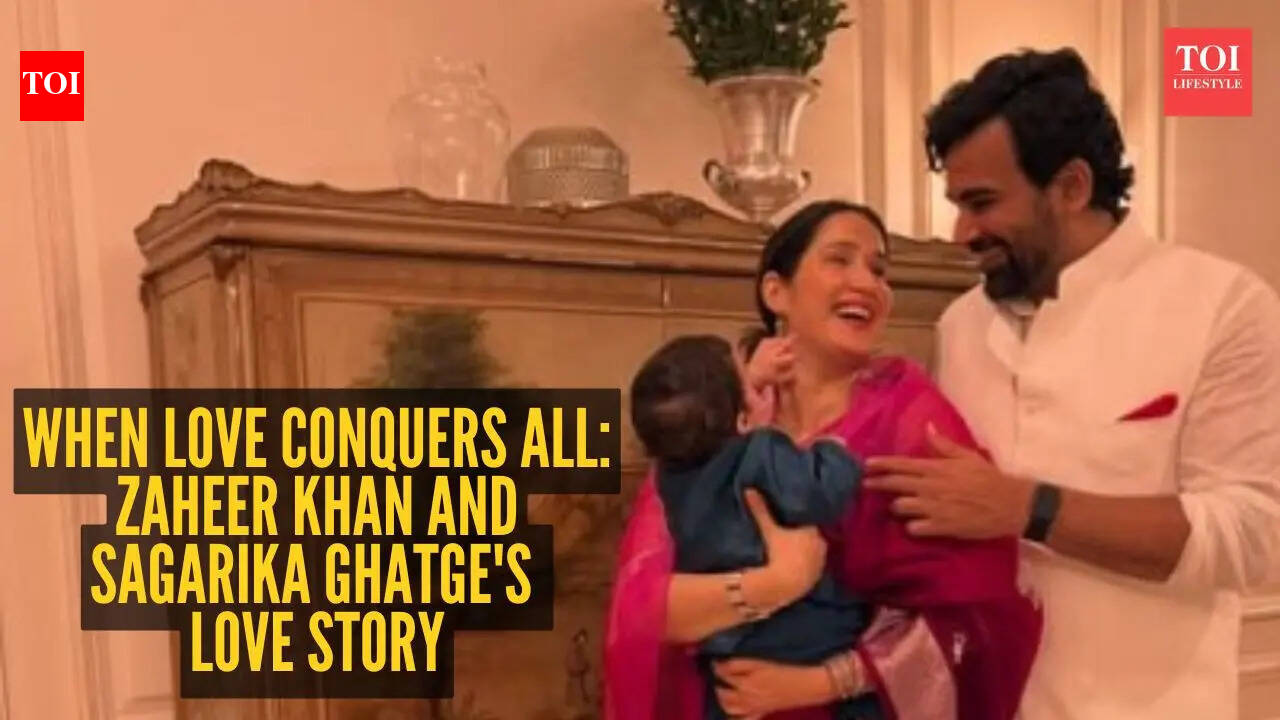
Every epic love needs a charming twist, and theirs has one straight out of Bollywood. Zaheer’s family needed convincing at first, as per reports—fair enough, big life steps invite caution. “Show us who she is,” they said. Zaheer grabbed the Chak De! India DVD, where Sagarika shone as Preeti Sabarwal, the fierce hockey player. The entire Khan clan huddled for a movie night. By the time the film ended, her talent, grit, and warmth won them over. That screening was the bridge to Zaheer and Sagarika’s forever.
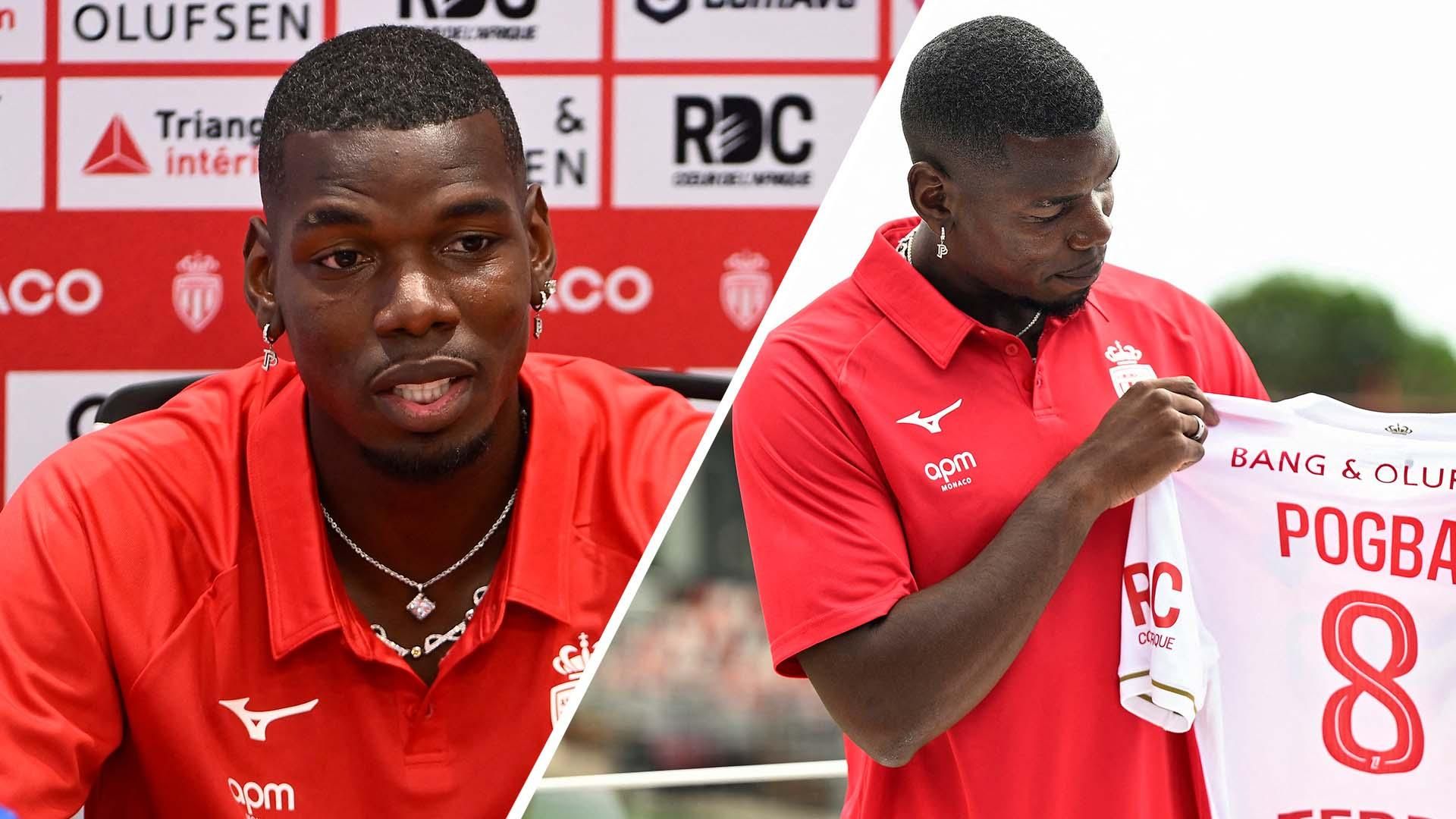
AS Monaco‘s bid for a Champions League spot next season could be boosted by the return of midfielder Paul Pogba.
The former France star recently returned to light training following a lengthy injury layoff due to a persistent left calf problem, and on Thursday he scored in a friendly match against Premier League team Brentford.
The 2018 World Cup winner Pogba joined Monaco on a two-year contract last summer, but has played only about 30 minutes since making his debut at the end of November.
Monaco is sixth in Ligue 1 with seven rounds remaining. The top three qualify directly for next season’s Champions League and the team finishing fourth goes through qualifying.
Coach Sébastien Pocognoli has turned Monaco’s fortunes around and his side is on a six-game winning run and just three points behind third-place Marseille. Monaco host Marseille on April 5, after the international break, with sources telling ESPN Pogba has a chance to play in that game or their next game against Paris FC on April 10.
Former star Pogba scored in the World Cup final win over Croatia eight years ago, when he was considered among the best midfielders in the world.
He also dealt with thigh and ankle problems since joining Monaco, after more than two years out of the game in a career derailed by injuries, off-field problems and a doping ban.
In February, Monaco dropped the injured Pogba from their Champions League squad in order to include signing made in January ahead of their playoff knockout round matchup with Paris Saint-Germain.
PSG eliminated Monaco in that tie in a hard-fought 5-4 aggregate win for the defending champions.
In 2016, Pogba became the then-most expensive soccer player in history when he returned to United from Juventus for a fee of 105 million euros (then $116 million).
Information from The Associated Press was used in this report. ESPN writer Julien Laurens also contributed.



.jpeg)
-copy.jpeg?trim=0,0,0,0&width=1200&height=800&crop=1200:800 "Schiaparelli: Inside the world of the ‘ugly’ designer who rivalled Chanel")