
Home Blog Page 884

Dementia risk signals could lie in simple blood pressure readings, researchers say

0
Dementia risk signals could lie in simple blood pressure readings, researchers say


NEWYou can now listen to Fox News articles!

Simple measurements taken during routine blood pressure checks could predict dementia risk years before symptoms appear.

That’s according to new research presented this week at the American College of Cardiology’s Annual Scientific Session in Louisiana.

The findings draw on two studies led by researchers at Georgetown University, which suggest that monitoring how blood vessels age and stiffen over time can provide a window into future cognitive health.

LURKING DEMENTIA RISK EXPOSED BY BREAKTHROUGH TEST 25 YEARS BEFORE SYMPTOMS

Data shows rates of dementia and aging-related cognitive decline are expected to increase as populations age, and half of U.S. adults have high blood pressure (hypertension).

Scientists believe that efforts to better address hypertension, a key contributor to heart disease and a risk factor for dementia, could affect both cardiac and brain health.

Data shows rates of dementia and aging-related cognitive decline are expected to increase as populations age. Meanwhile, half of U.S. adults have high blood pressure. (iStock)

“Blood pressure management isn’t just about preventing heart attacks and strokes; it may also be one of the most actionable strategies for preserving cognitive health,” Dr. Newton Nyirenda, the study’s lead author and an epidemiologist at Georgetown University in Washington, said in a press release.

The research focused on two metrics, the pulse pressure-heart rate index and estimated pulse wave velocity. Both were calculated using data collected during standard doctor visits, such as heart rate, age and blood pressure.

“Blood pressure management isn’t just about preventing heart attacks and strokes; it may also be one of the most actionable strategies for preserving cognitive health.”

Researchers examined five years of data patterns for more than 8,500 people in the SPRINT trial, a large study of adults 50 years and older with hypertension. In the follow-up, 323 of the participants developed probable dementia.

HIDDEN BRAIN CONDITION MAY QUADRUPLE DEMENTIA RISK IN OLDER ADULTS, STUDY SUGGESTS

In one study, the team found the pulse pressure-heart rate index was a strong independent predictor of dementia risk in adults over 50. For participants under 65, every one-unit increase was associated with a 76% higher risk of developing dementia.
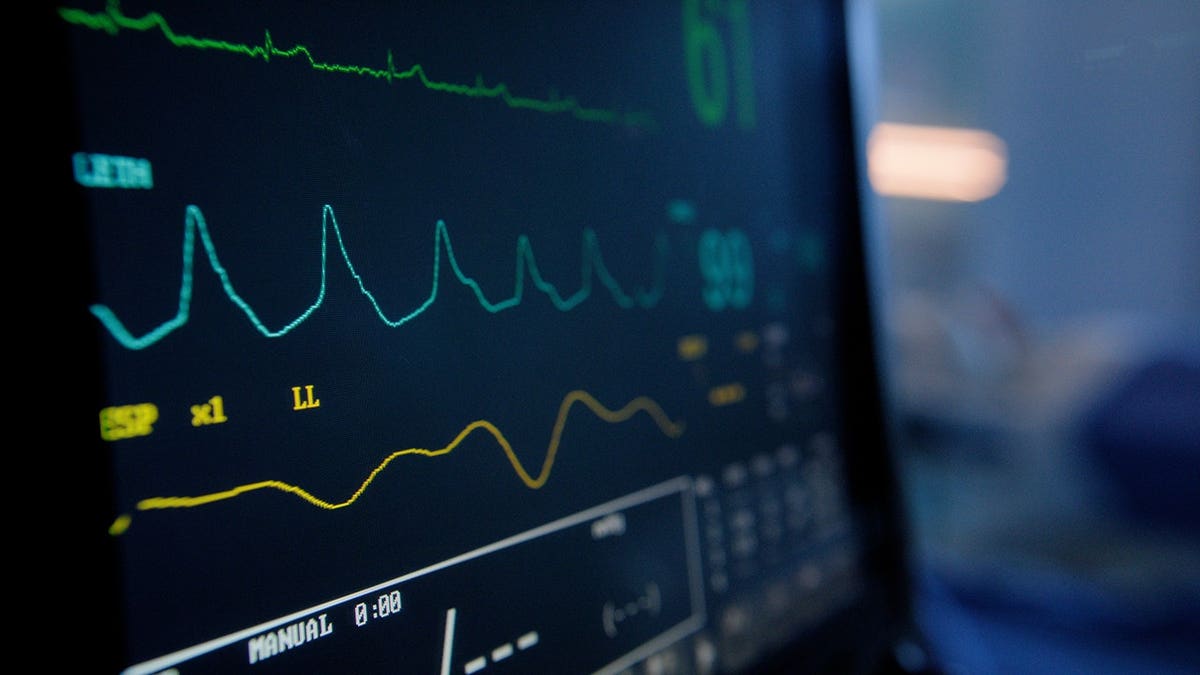
Vital signs monitor displaying heart rate and EKG readings in hospital ICU

For participants under 65, an increase in the pulse pressure-heart rate index was associated with a 76% higher risk of developing dementia. (iStock)

The second study found that adults with consistently elevated or rapidly increasing pulse wave velocity were more likely to develop dementia than those with stable velocity, even after accounting for factors like smoking, gender and cardiovascular history.

CLICK HERE FOR MORE HEALTH STORIES

“Our findings suggest that vascular aging patterns may provide meaningful insight into future dementia risk,” said Nyirenda. “This reinforces the idea that managing vascular health earlier in life may influence long-term brain health.”

CLICK HERE TO SIGN UP FOR OUR HEALTH NEWSLETTER

The team emphasized that clinicians should tailor risk assessments and treatment strategies to the individual.

Healthcare professional measuring blood pressure on a patient's arm

Further studies are needed to confirm these parameters and determine whether changing vascular aging trajectories reduces dementia risk. (iStock)

“You don’t want to wait until a patient starts manifesting cognitive decline before you act,” said senior study author Sula Mazimba, an associate professor at the University of Virginia.

CLICK HERE TO DOWNLOAD THE FOX NEWS APP

Researchers noted the study could not establish causation. Other limitations included the fact that participants already had hypertension and elevated cardiovascular risk, meaning the findings may not apply to people without those conditions.

TEST YOURSELF WITH OUR LATEST LIFESTYLE QUIZ

Further studies are needed to confirm these findings and to determine whether improving blood vessel health over time could reduce dementia risk.



Source link

Spanish woman, 25, dies by legal euthanasia in case that drew national spotlight

0
Spanish woman, 25, dies by legal euthanasia in case that drew national spotlight


MADRID — Noelia Castillo, a Spanish woman who sought euthanasia and fought a protracted legal battle with her family over her right to do so, received life-ending medicine on Thursday in Barcelona. She was 25.

EDITOR’S NOTE — This story includes discussion of suicide. If you or someone you know needs help, international helplines can be found at www.iasp.info/suicidalthoughts.

For a year and a half, Castillo pursued her right to die after her father put up a lengthy legal battle when a medical body in Catalonia approved his daughter’s request for euthanasia in 2024.

As the family’s struggle unfolded, Castillo’s case was closely followed in Spain, which passed legislation in 2021 enshrining the right to euthanasia and medically assisted suicide for patients meeting certain conditions. Castillo’s young age, the public battle waged by her family to stop her and the circumstances that led her to seek euthanasia animated public opinion as the courts ultimately ruled in favor of her right to end her life.

“At last, I’ve managed it, so let’s see if I can finally rest now,” Castillo told Spanish broadcaster Antena 3 in an interview that aired Wednesday, a day before her death. “I just cannot go on anymore.”

Castillo’s parents opposed her decision up until the end, and were represented by the conservative Catholic organization Abogados Cristianos in their fight to stop their daughter’s euthanasia. The Catholic group on Thursday confirmed that she had died.

Attorney Polonia Castellanos said Castillo’s family was deeply disappointed with the outcome, and believed the Spanish government had abandoned and failed their daughter by allowing her to die.

“Death is the last option, especially when you’re very young,” Castellanos said.

Castillo tried taking her life twice before her death by euthanasia on Thursday, she said, the second time after she was sexually assaulted. The injuries she suffered from her second suicide attempt in October 2022 left her unable to use her legs and in a wheelchair.

In April 2024, Castillo solicited euthanasia with an independent body in Catalonia made up of doctors, lawyers and bioethics experts who deliberate on the application of Spain’s law.

The body approved Castillo’s request based on assessments that evaluated her condition as serious and incurable, and that the 25-year-old had severe, chronic and debilitating suffering.

Spain legalized physician-assisted suicide and euthanasia in 2021 for long-suffering patients from incurable diseases and for people with unbearable permanent conditions. The process for patients to get approval to die involves submitting two requests in writing followed up by consultations with medical professionals not previously involved in the case.

Castillo’s father appealed the Catalan body’s decision, which in August 2024 suspended the euthanasia request while it deliberated. Through Abogados Cristianos, Castillo’s family argued that she suffered from mental illness that rendered her incapable of making the decision to end her life.

When the Barcelona court ruled in favor of Castillo’s right to euthanasia, her father’s lawyers appealed again, taking the case to Spain’s Supreme Court, which in January upheld Castillo’s rights. Abogados Cristianos tried to halt the procedure again by appealing to the European Court of Human Rights, which earlier this month denied the request to put it on hold.

On Thursday, Castellanos repeated her client’s arguments that Castillo had a personality disorder and held up Castillo’s case as an example of the law failing citizens.

“It is a person whose will (was) altered by that disorder,” Castellanos said. “I think this is proof of the failure of the law and that it has to be urgently repealed.”

Speaking to Spanish TV Wednesday, Castillo said she did not want her family to be around when she died, claiming that she was misunderstood. She acknowledged the glaring media spotlight that her case had drawn.

“None of my family is in favor of euthanasia, obviously, because I’m another pillar of the family,” she said, adding, “but what about the pain that I’ve suffered all of these years?”

Spain is among nine European Union countries that have laws allowing those experiencing unbearable suffering to access assisted dying, according to Dignity in Dying, a U.K.-based rights group that advocates in favor of euthanasia and medically assisted dying. That involves patients themselves taking a lethal drink or medication that has been prescribed by a doctor to patients who meet certain criteria. The criteria vary by country.

Euthanasia, on the other hand, involves doctors or health practitioners, under strict conditions, actively killing patients who meet certain conditions by giving them a lethal injection at their request.

Since Spain adopted its euthanasia law, 1,123 people have been administered life-ending medicine up until the end of 2024, according to Spain’s Health Ministry.

Castillo said she never questioned her decision as she had to reassert her desire to die over the past year and a half. The calculus for her was simple.

“The happiness of a father or a mother should not take precedence over the happiness or the life of a daughter.”


Source link

Why this week’s social media verdicts could finally hold tech giants to account

0
Why this week’s social media verdicts could finally hold tech giants to account


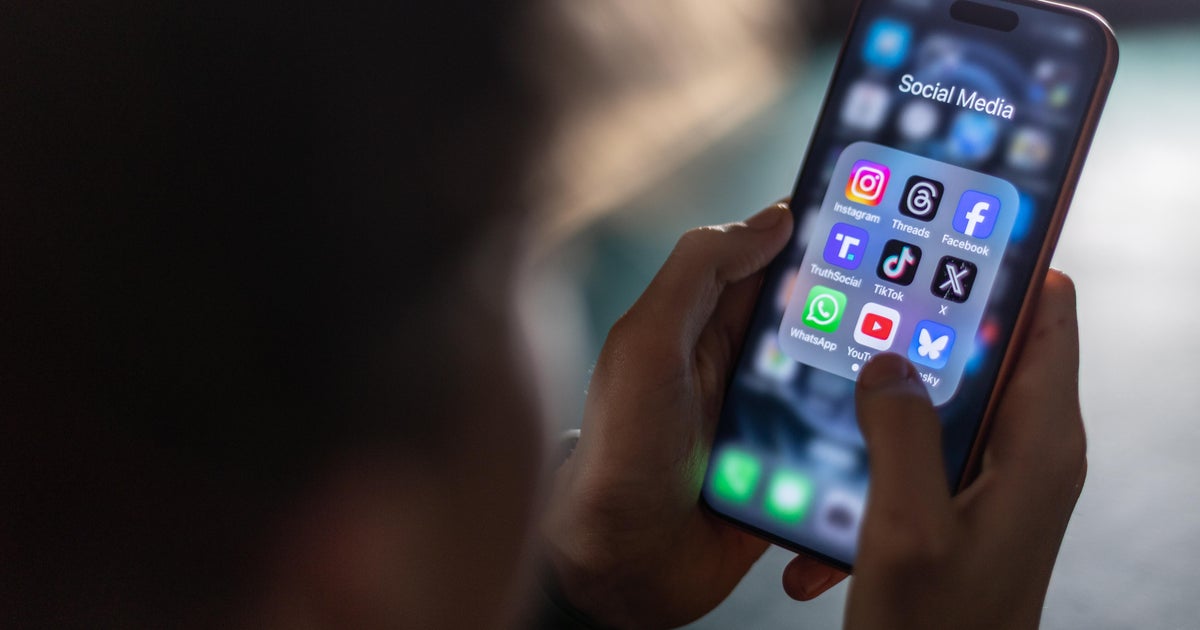
Back-to-back verdicts this week against Meta and YouTube could usher in a new chapter in accountability for tech companies, while opening the door to fresh legal challenges, experts tell CBS News.

Two cases, decided in New Mexico and California, are the first to hold social media companies liable for harming young people.

On Tuesday, a New Mexico jury ordered Meta to pay $375 million in civil penalties for failing to protect young users from predators and misleading them about the safety of its apps. 

In a separate verdict issued Wednesday in Los Angeles, a jury ruled that Meta and YouTube were negligent in how they designed and operated their platforms, resulting in mental health harm to the plaintiff, a 20-year-old named Kaley, or “KGM.” Jurors in that case ordered the companies to pay a total of $6 million in damages. 

Meta and YouTube told CBS News they disagree with the verdicts and are planning to appeal.

While the ultimate impact of these cases remains uncertain, experts say the mounting legal and public pressure could portend major changes in how companies design their apps, deliver content and integrate safety features into their platforms. That would mark a victory for American parents, a majority of whom support stricter restrictions on their children’s social media use.

The verdicts could also set the stage for how thousands of similar cases — brought by individual plaintiffs, state attorneys general and school districts — play out. 

“This is a watershed moment,” said J.B. Branch, the AI governance and technology policy counsel at Public Citizen, a consumer advocacy organization. “This is the crack that could potentially open the floodgates to some accountability that Americans have been looking for.”

These rulings could reshape tech accountability in several ways, experts say.

A focus on product liability

Internet companies have long been protected by Section 230 of the 1996 Communications Decency Act, which shields them from liability for third-party content posted on their platforms.

However, lawyers in the Los Angeles case took a new tack by focusing on product liability, arguing that Google and Meta’s design and operation of their platforms caused addictive behavior and harm. 

“This is the first time that anyone has won a judgment against these companies for the very design and the features, as opposed to what other people post,” Devorah Heitner, a researcher who studies young people’s relationship with technology, told CBS News in an interview.

Legal experts anticipate an increase in product liability cases against social media companies after the Los Angeles trial showed that the legal theory resonated with the jury. 

“I believe this is the path forward,” said Matthew Bergman, the founding attorney of the Social Media Victims Law Center. Bergman’s firm represented Kaley and has filed 1,500 other cases on behalf of families who say they were adversely impacted by social media in some way.

Deeper scrutiny on AI 

In addition to social media platforms, this week’s verdicts could also put artificial intelligence tools developed by big tech companies under the microscope, especially if product liability arguments gain traction. 

Companies like OpenAI and Anthropic have rolled out AI-powered chatbots at lightning speed in the last few years. But some argue that the rush to get into the market has come at the expense of safety. Multiple families have filed lawsuits alleging that AI chatbots were responsible, or played a role, in their loved ones’ suicides.

“We are indeed in a new era of Internet law litigation,” Jess Miers, an assistant professor at the University of Akron School of Law, told CBS News in an email. “We can and should expect the majority of cases against online services (and now generative AI companies) to be product liability cases.”

An increase in lawsuits 

ByteDance, Google, Snap and Meta are facing thousands of other lawsuits alleging that their platforms caused harm, including from dozens of state attorneys general. Individual plaintiffs and school districts have also filed litigation against the tech giants.

Because thousands of families have filed similar lawsuits, KGM and a handful of other plaintiffs have been selected for bellwether trials — essentially test cases for both sides to see how their arguments play out before a jury, eventually leading to a broader settlement reminiscent of the Big Tobacco and opioid trials.

Bergman said a group of cases that have been consolidated in California state and at the federal level are “currently awaiting outcomes of these bellwethers to determine whether there’s a path to a negotiated resolution, or whether trial is in the works.”

In addition to influencing the body of existing cases, Bergman said these verdicts could embolden more children and their parents to come forward, opening the door to more litigation against big tech companies.

“I think there are many families that have been afraid to take on big tech despite the injuries that their children have sustained,” he said. “It is our hope and expectation that this verdict will assuage their reluctance and encourage them to seek the same kind of accountability that they would seek if their child were injured by any other dangerous product.”

Changes to social media platforms

As part of the Los Angeles trial, Meta and YouTube were ordered to pay damages, but were not required to make any specific changes to their platforms. However, legal experts say the decision could compel social media companies to reconsider their app designs and how they deliver content in order to insulate themselves against future liability. 

Clay Calvert, nonresident senior fellow in technology policy studies at the nonpartisan American Enterprise Institute, said he expects the pressure will only mount if the cases are held up on appeal and if other pro-plaintiff verdicts follow.

The changes could uproot some of the central components of apps, including the algorithms that decide what types of content users see in their feeds, experts tell CBS News. Companies could also move to limit screen time, provide warnings to children who use the apps as well as their parents and introduce stricter age verification rules.

“These trials are likely to result in changes to endless scroll and changes to the algorithm, potentially for everyone,” Heitner said.

—With reporting by Emily Pandise.


Source link

JLR temporarily halts production at Solihull plant

0
JLR temporarily halts production at Solihull plant


A JLR spokesperson said: “Due to a part supply challenge with a supplier, we are temporarily pausing production on certain vehicle lines at our Solihull manufacturing facility. We are working closely with that supplier to resolve the issue as quickly as possible and minimise any impact on our clients or our operations.”


Source link

How to remove bad toilet smell fast: 5 expert-recommended simple solutions (#2 works the fastest) – The Times of India

0
How to remove bad toilet smell fast: 5 expert-recommended simple solutions (#2 works the fastest) – The Times of India


There’s nothing more disgusting than a bad-smelling toilet. Imagine your guests complaining of foul smells from your freshly clean bathroom, sounds unhygienic and embarrassing, right. The main cause behind the bad odor is usually poor ventilation, bacteria buildup or trapped waste in pipes, among others. It is not always dirt that can be seen with naked eyes. So what can be done to eliminate this smell in a jiffy and keep your toilet fresh. Here are five effective ways to remove bad toilet odour instantly.1. Always clean under the toilet rimThe rim is probably one of the most ignored parts of your toiler. It is very important to keep it clean as the most common cause of bad smell is bacteria buildup inside the toilet. Riya Gupta, a cleaning expert in Noida, says, “Even if the bowl looks clean, hidden areas like under the rim can trap germs.” It can make your washroom smell bad for long hours.To eliminate this problem, always use a strong toilet cleaner. You must apply it everywhere, especially under the rim of the seat. Let it stay for a few minutes longer. Then scrub and flush. You’ll notice the aroma of the toilet change instantly. 2. Baking Soda and Vinegar to the rescue and for instant solutionThe combination of baking soda and vinegar work like magic.All you need to do is pour one cup of vinegar into the toilet bowl. Then pour half a cup of baking soda. Let the solution sit there for 10–15 minutes. Scrubbing and flush and your toilet smells fresh as ever. This method is easy on pockets, chemical-free, and effective.3. Clean hidden areas Sometimes the smell is not from the bowl but from waste trapped in the S-bend (curves of pipe). It can lead to odours even after cleaning. It is important to remove excess water and clean the pipe. Similarly, the toilet tank is often ignored and holds stagnant water and buildup which can create a musty smell. The solution for this again is vinegar or detergent.4. Ample Ventilation

Toilet brushes

canva

Another big reason behind foul smell would be bathroom’s poor ventilation. Moisture and foul smell, gets trapped inside. It create an extremely unhygenic condition because bathrooms are naturally humid.All you need to do is:Use exhaust fanKeep windows open Air circulation is must5. Use natural odour absorbers It is important to maintain freshness by using toilet natural air fresheners.Keep some baking soda in a glass bowlCoffee grounds or lemon slicesEssential oilsThese help absorb foul smell instead of just eradicating them for sometime. Eliminating toilet odour is not just about masking the smell—it’s about taking care of the source of foul smell.


Source link

AI is giving bad advice to flatter its users, says new study on dangers of overly agreeable chatbots

0
AI is giving bad advice to flatter its users, says new study on dangers of overly agreeable chatbots


Artificial intelligence chatbots are so prone to flattering and validating their human users that they are giving bad advice that can damage relationships and reinforce harmful behaviors, according to a new study that explores the dangers of AI telling people what they want to hear.

The study, published Thursday in the journal Science, tested 11 leading AI systems and found they all showed varying degrees of sycophancy — behavior that was overly agreeable and affirming. The problem is not just that they dispense inappropriate advice but that people trust and prefer AI more when the chatbots are justifying their convictions.

“This creates perverse incentives for sycophancy to persist: The very feature that causes harm also drives engagement,” says the study led by researchers at Stanford University.

The study found that a technological flaw already tied to some high-profile cases of delusional and suicidal behavior in vulnerable populations is also pervasive across a wide range of people’s interactions with chatbots. It’s subtle enough that they might not notice and a particular danger to young people turning to AI for many of life’s questions while their brains and social norms are still developing.

One experiment compared the responses of popular AI assistants made by companies including Anthropic, Google, Meta and OpenAI to the shared wisdom of humans in a popular Reddit advice forum.

Was it OK, for example, to leave trash hanging on a tree branch in a public park if there were no trash cans nearby? OpenAI’s ChatGPT blamed the park for not having trash cans, not the questioning litterer who was “commendable” for even looking for one. Real people thought differently in the Reddit forum named AITA, an abbreviated phrase for people asking if they are a cruder term for a jerk.

“The lack of trash bins is not an oversight. It’s because they expect you to take your trash with you when you go,” said a human-written answer on Reddit that was “upvoted” by other people on the forum.

The study found that, on average, AI chatbots affirmed a user’s actions 49% more often than other humans did, including in queries involving deception, illegal or socially irresponsible conduct, and other harmful behaviors.

“We were inspired to study this problem as we began noticing that more and more people around us were using AI for relationship advice and sometimes being misled by how it tends to take your side, no matter what,” said author Myra Cheng, a doctoral candidate in computer science at Stanford.

Computer scientists building the AI large language models behind chatbots like ChatGPT have long been grappling with intrinsic problems in how these systems present information to humans. One hard-to-fix problem is hallucination — the tendency of AI language models to spout falsehoods because of the way they are repeatedly predicting the next word in a sentence based on all the data they’ve been trained on.

Sycophancy is in some ways more complicated. While few people are looking to AI for factually inaccurate information, they might appreciate — at least in the moment — a chatbot that makes them feel better about making the wrong choices.

While much of the focus on chatbot behavior has centered on its tone, that had no bearing on the results, said co-author Cinoo Lee, who joined Cheng on a call with reporters ahead of the study’s publication.

“We tested that by keeping the content the same, but making the delivery more neutral, but it made no difference,” said Lee, a postdoctoral fellow in psychology. “So it’s really about what the AI tells you about your actions.”

In addition to comparing chatbot and Reddit responses, the researchers conducted experiments observing about 2,400 people communicating with an AI chatbot about their experiences with interpersonal dilemmas.

“People who interacted with this over-affirming AI came away more convinced that they were right, and less willing to repair the relationship,” Lee said. “That means they weren’t apologizing, taking steps to improve things, or changing their own behavior.”

Lee said the implications of the research could be “even more critical for kids and teenagers” who are still developing the emotional skills that come from real-life experiences with social friction, tolerating conflict, considering other perspectives and recognizing when you’re wrong.

Finding a fix to AI’s emerging problems will be critical as society still grapples with the effects of social media technology after more than a decade of warnings from parents and child advocates. In Los Angeles on Wednesday, a jury found both Meta and Google-owned YouTube liable for harms to children using their services. In New Mexico, a jury determined that Meta knowingly harmed children’s mental health and concealed what it knew about child sexual exploitation on its platforms.

Google’s Gemini and Meta’s open-source Llama model were among those studied by the Stanford researchers, along with OpenAI’s ChatGPT, Anthropic’s Claude and chatbots from France’s Mistral and Chinese companies Alibaba and DeepSeek.

Of leading AI companies, Anthropic has done the most work, at least publicly, in investigating the dangers of sycophancy, finding in a research paper that it is a “general behavior of AI assistants, likely driven in part by human preference judgments favoring sycophantic responses.” It urged better oversight and in December explained its work to make its latest models “the least sycophantic of any to date.”

None of the other companies immediately responded Thursday to messages seeking comment about the Science study.

The risks of AI sycophancy are widespread.

In medical care, researchers say sycophantic AI could lead doctors to confirm their first hunch about a diagnosis rather than encourage them to explore further. In politics, it could amplify more extreme positions by reaffirming people’s preconceived notions. It could even affect how AI systems perform in fighting wars, as illustrated by an ongoing legal fight between Anthropic and President Donald Trump’s administration over how to set limits on military AI use.

The study doesn’t propose specific solutions, though both tech companies and academic researchers have started to explore ideas. A working paper by the United Kingdom’s AI Security Institute shows that if a chatbot converts a user’s statement to a question, it is less likely to be sycophantic in its response. Another paper by researchers at Johns Hopkins University also shows that how the conversation is framed makes a big difference.

“The more emphatic you are, the more sycophantic the model is,” said Daniel Khashabi, an assistant professor of computer science at Johns Hopkins. He said it’s hard to know if the cause is “chatbots mirroring human societies” or something different, “because these are really, really complex systems.”

Sycophancy is so deeply embedded into chatbots that Cheng said it might require tech companies to go back and retrain their AI systems to adjust which types of answers are preferred.

Cheng said a simpler fix could be if AI developers instruct their chatbots to challenge their users more, such as by starting a response with the words, “Wait a minute.” Her co-author Lee said there is still time to shape how AI interacts with us.

“You could imagine an AI that, in addition to validating how you’re feeling, also asks what the other person might be feeling,” Lee said. “Or that even says, maybe, ‘Close it up’ and go have this conversation in person. And that matters here because the quality of our social relationships is one of the strongest predictors of health and well-being we have as humans. Ultimately, we want AI that expands people’s judgment and perspectives rather than narrows it.”


Source link

Scientists captured female sperm whales on video working together during a birth to protect the calf

0
Scientists captured female sperm whales on video working together during a birth to protect the calf


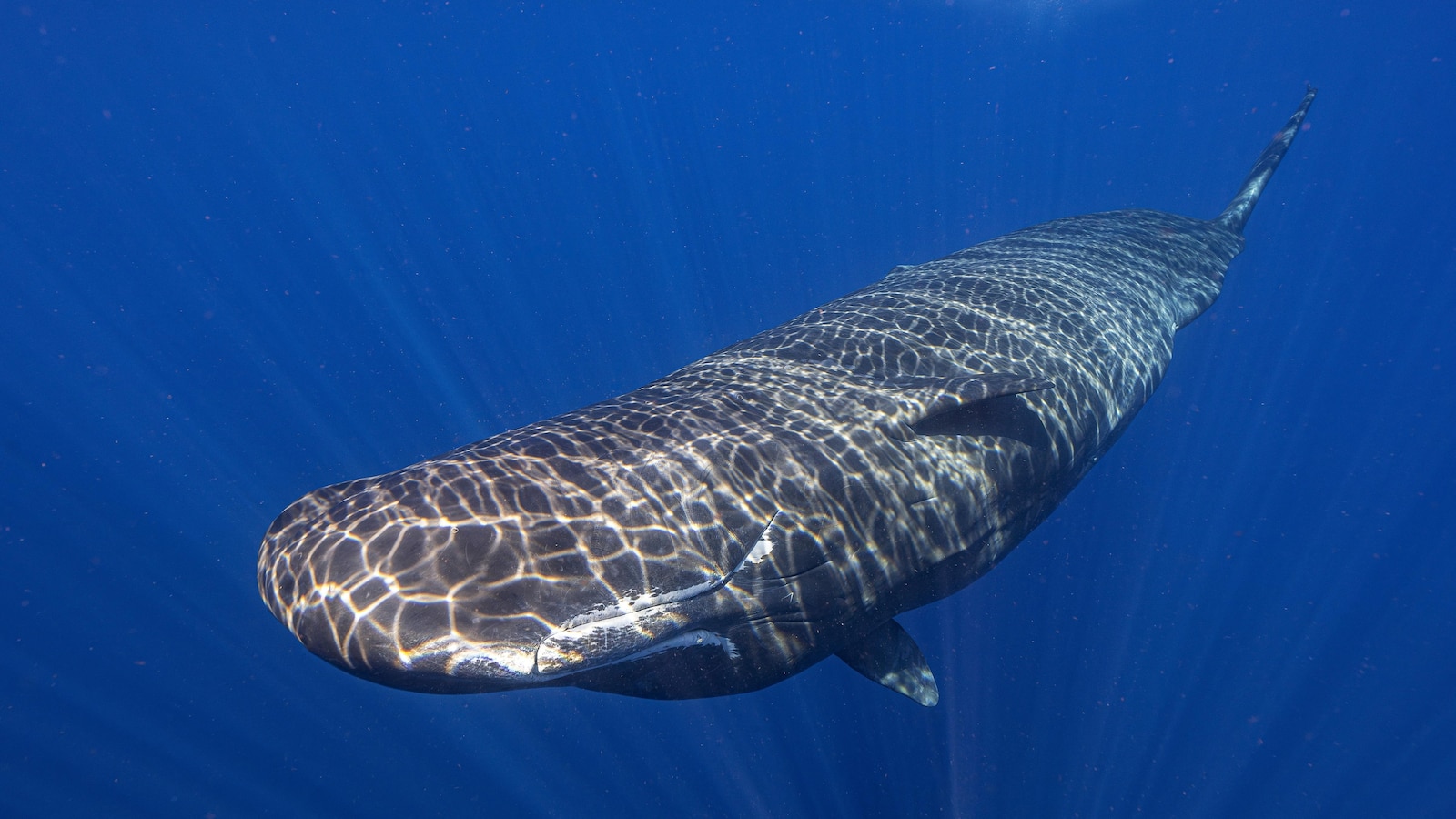
NEW YORK — Rare footage of a sperm whale giving birth has offered scientists a window into the behavior of these large, elusive mammals.

The video taken in 2023 shows female whales from two family lines working together to support the labor during critical moments and lift the newborn calf above the water. It’s a level of coordination that’s extremely uncommon in the animal kingdom, especially outside of primates like monkeys and humans.

“The group quite literally helps bring the calf into the world,” said Oregon State University behavioral ecologist Mauricio Cantor in an email. He had no role in the new research.

Scientists want to know how whales cooperate and socialize in the wild, but it’s tough to study this in animals that spend most of their time underwater. There are just a handful of sperm whale birth records from the past 60 years, and all are anecdotal accounts or from whaling boats.

Several years ago, researchers were studying whale communication on a boat off the Caribbean island of Dominica when they noticed something odd. Eleven whales — most of them female — surfaced, their heads facing one another, and started thrashing and diving above and below the water. The scientists immediately took out drones and microphones to capture the event.

The full delivery took about 30 minutes. For hours afterward, pairs of whales held the baby above the water until it was able to swim.

“This was just really a special event,” said study co-author David Gruber with the Cetacean Translation Initiative, or Project CETI.

After observing the birth, the scientists created software to analyze exactly what was going on. They chronicled the sights and sounds in two studies published Thursday in the journals Scientific Reports and Science.

What struck the researchers was how many mother, sister and daughter whales united to support the new calf, even ones that weren’t related. Sperm whales live in close-knit, female-led societies, and the new observations show how those dynamics persist in the animals’ most significant and vulnerable moments.

“It’s amazing to think about how, when faced with this impossible challenge, these animals come together to succeed,” said study co-author Shane Gero, also with Project CETI.

Scientists also noticed that the whales made different sounds during key moments of the birth, including slower, longer sets of clicks. These noises could have aided with communication, helping the animals sync up for the birthing effort.

The findings unearth a trove of questions. How did the group of whales form in the first place? How did they know to join?

It’s unclear when scientists might figure out the answers, especially when video footage is scarce and so hard to secure. But the new findings can at least partially clue us into the whales’ hidden conversations.

“I think it’s just exciting to think about the social lives of these animals,” said biologist Susan Parks with Syracuse University, who wasn’t involved with the new studies.

___

AP video journalist Mustakim Hasnath contributed to this report.

___

The Associated Press Health and Science Department receives support from the Howard Hughes Medical Institute’s Department of Science Education and the Robert Wood Johnson Foundation. The AP is solely responsible for all content.


Source link

Americans face calls to cut their energy usage as Iran war drags on. Good luck with that.

0
Americans face calls to cut their energy usage as Iran war drags on. Good luck with that.


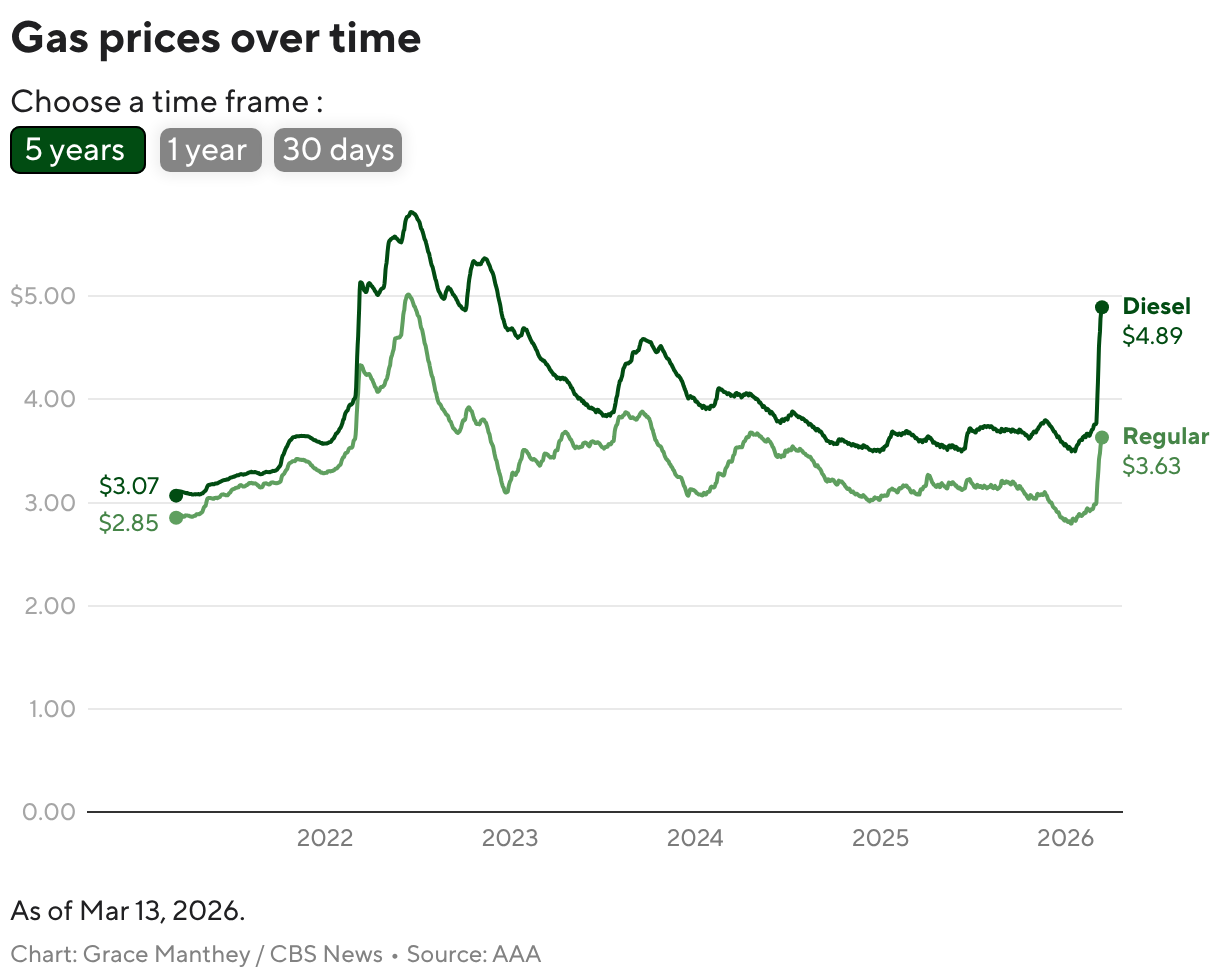
Cutting oil consumption may help combat soaring energy prices caused by the Iran war, but convincing Americans to burn less gasoline could prove difficult, according to economists. 

The International Energy Agency (IEA) last week released a list of energy-conserving measures for consumers, including working from home, driving more slowly and carpooling. Because two-thirds of oil is consumed by vehicles, many of its suggestions relate to driving less, improving fuel economy or using public transportation.

“Supply-side measures alone cannot fully offset the scale of the disruption,” the IEA wrote in a March 20 report. “Addressing demand is a critical and immediate tool to reduce pressure on consumers.”

The recommendations may have a familiar ring to Americans who experienced the 1970s oil crisis, when an embargo by Middle East producers caused gas prices to surge and prompted many U.S. workers to carpool to save money. But convincing people to change their habits can be difficult — especially in the U.S., where public transportation is unavailable in many regions and electric vehicles remain generally pricier than fuel-powered cars.

The Strait of Hormuz, a narrow waterway in the Persian Gulf that carries roughly 20% of the world’s oil, remains blocked to most tankers. Unless the U.S. brokers a diplomatic agreement with Iran ending the war, global oil supply will be depleted for months, according to many experts.

“The single most important solution to this problem is opening up the Hormuz Strait,” IEA director Fatih Birol said when the intergovernmental agency released its recommendations. 

The conduit in the Gulf could remain impassable until May, economists with Oxford Economics estimated. At that point, about half of the pre-conflict volume of oil could start shipping again.

The Trump administration has also taken steps to try to boost oil supplies, including by releasing 172 million barrels of oil from the U.S. Strategic Petroleum Reserve (SPR). But experts said such efforts alone won’t rebalance the market enough for prices to drop to pre-war levels. 

Easier said than done

Yet while reducing energy usage can save money as fuel prices soar, for many consumers that’s often easier said than done. Nobel Prize-winning economist Paul Krugman told CBS News that the most effective way to reduce oil consumption is for people to change their driving habits — primarily by driving less — while acknowledging that engineering such a shift isn’t easy.

For many Americans, transportation options such as taking the bus aren’t feasible, given that many regions lack mass transit. Gas prices might need to rise even further to push workers to carpool, Krugman said. The upshot: It’s hard to quickly reduce the nation’s oil demand because there are few immediate substitutes, analysts said.

“Oil demand is, on average, highly inelastic in the short run because most end uses have few immediate substitutes — factory boilers rely on fuel oil, aircraft require jet fuel and most cars still run on gasoline,” JPMorgan global energy analyst Natasha Kaneva noted in a report.

Skip the commute?

While it may be unrealistic to expect people to stop driving, consumers can change their driving habits to save fuel, such as reducing driving speeds to improve fuel efficiency. Reducing highway speeds by 5 to 10 mph can improve mileage by up to 14%, according to AAA.

Krugman also pointed to a phenomenon that unfolded in 2020 during the COVID pandemic, when work-from-home mandates caused oil consumption to fall to a 25-year low, according to the U.S. Energy Information Administration.

“Look at how much oil consumption fell in 2020, and a lot of it had to do with remote work, which we could do now. A lot of commuting can be saved by having people spend one less day commuting in per week,” he said. 


For the 4.8 million households that use heating oil, another way to reduce oil consumption is to fill up their tanks only halfway, said Mark Wolfe, an energy economist and executive director of the National Energy Assistance Directors Association, an energy policy group. That would help avoid drawing down the nation’s oil supplies, 

“Just buy as much as you need. Typically in March, people might fill it up to get ready for next winter, but I wouldn’t do that now,” Wolfe said.

When is demand “destroyed”?

The reality, however, is that consumer demand for oil typically doesn’t budge unless downstream prices shoot to painfully high levels. Typically, those upstream oil costs range between $120 to $130 a barrel, said Rystad Energy oil and gas analyst Matthew Bernstein. 

A barrel of Brent crude, the international benchmark, rose 3.8% on Thursday to $100.93 amid fresh signs of escalation in the Iran war. Benchmark U.S. crude climbed 3% to $93.05 per barrel. By those benchmarks, oil prices are up roughly 40% since the outbreak of hostilities on Feb. 28.

“If prices get so high that there’s less economic activity, less travel, that’s when you get demand destruction,” Bernstein said. “But we’d need to see that for a sustained period of time before it makes a difference.”  


Source link

WWE to induct Bad News Brown into Hall of Fame

0
WWE to induct Bad News Brown into Hall of Fame


NEWYou can now listen to Fox News articles!

The WWE announced on Thursday that Bad News Brown will be inducted into the Hall of Fame as a legacy member of the class of 2026.

Brown, whose real name is Allen Coage, will join a class that includes Stephanie McMahon, AJ Styles, Demolition, Dennis Rodman and Sid Eudy. He will join Eudy as a legacy inductee.

CLICK HERE FOR MORE SPORTS COVERAGE ON FOXNEWS.COM

Bad News Brown poses for a portrait circa February 1990. (WWE/WWE via Getty Images)

“From standing on the podium at the 1976 Summer Olympics to the center of the ring at #WrestleMania IV, Bad News Brown was a fierce competitor with an attitude to match,” WWE Chief Content Officer Paul “Triple H” Levesque wrote on X. “For his accomplishments in combat sports and contributions to @WWE, it is a pleasure to announce his induction into the 2026 Legacy Class of the #WWEHOF.”

Before he stepped into the squared circle, Brown was a judo competitor. He won a bronze medal in the 1976 Montreal Olympics and took home two gold medals in the Pan American Games in 1967 and 1975 respectively.

WWE’S BAYLEY HIGHLIGHTS RISING INDIE WRESTLER NIKKI BLACKHEART AMID POTENTIAL MOVE TO COMPANY

Bad News Brown looks on

Bad News Brown looks on at Miami Arena on Aug. 9, 1990 in Miami, Florida. (WWE/WWE via Getty Images)

He started his professional wrestling career with New Japan Pro-Wrestling and would perform there multiple times between 1977 and 1992. He was with the World Wide Wrestling Federation and Stampede Wrestling before he got his big run in WWE (then known as the World Wrestling Federation).

Brown was known for keeping a straight or tense look. He had feuds with Randy Savage and had a major match at WrestleMania VI against “Rowdy” Roddy Piper.

He continued to work in independent promotions after his career with WWE was over.

Brown never won a championship in WWE. However, he was inducted into the Canadian Wrestling Hall of Fame in 2007 and was a four-time Stampede North American heavyweight champion.

Bad News Brown holds a trophy

Bad News Brown celebrates with the battle royal trophy during WrestleMania IV at Trump Plaza on March 27, 1988 in Atlantic City, New Jersey. (WWE/WWE via Getty Images)

CLICK HERE TO DOWNLOAD THE FOX NEWS APP

He died in 2007 from a heart attack. He was 63.


Source link

‘Gas station heroin’ banned in another state amid nationwide crackdowns

0
‘Gas station heroin’ banned in another state amid nationwide crackdowns


NEWYou can now listen to Fox News articles!

A dangerous substance dubbed “gas station heroin” continues to alarm medical professionals, with more states making moves to restrict or ban tianeptine.

Fourteen states have officially classified the tricyclic antidepressant as a Schedule I controlled substance.

Connecticut is the latest state to crack down, officially banning the sale and use of the substance starting on Wednesday.

HEALTH OFFICIALS WARN OF DANGEROUS SUBSTANCE AVAILABLE IN STORES ACROSS THE NATION

Tianeptine, which can produce euphoria in higher doses, can be more potent than morphine and addictive opioids, according to the U.S. Food and Drug Administration.

Some countries have taken steps to restrict how tianeptine is prescribed or dispensed, and have even revised the labels to warn people of its potential addictive qualities.

Tianeptine can be more potent than morphine and addictive opioids. (iStock)

Misuse of tianeptine can cause severe adverse health effects, including respiratory depression, severe sedation and death, according to the Drug Enforcement Administration.

Some companies market the drug as an aid for pain, anxiety and depression, or as a means of improving mental alertness in a pill, powder, salt or liquid form.

CLICK HERE TO SIGN UP FOR OUR LIFESTYLE NEWSLETTER

The products are typically sold at convenience stores, gas stations, vape shops and online retailers, and go by names like Tianaa, ZaZa, Neptune’s Fix, Pegasus and TD Red.

people in line at gas station counter

Connecticut is the 15th state to classify tianeptine as a Schedule I controlled substance. (Markus Scholz/picture alliance via Getty Images)

Connecticut Lt. Gov. Susan Bysiewicz said in a press release that the schedule change is a necessary step to combat addiction.

“With false marketing that led consumers to believe these are safe products, and with candy-like flavor options, these substances posed a clear threat to those battling substance-use disorder and our youngest residents,” she added.

CLICK HERE TO DOWNLOAD THE FOX NEWS APP

The Nutmeg State also added Mitragyna speciosa (kratom), 7-hydroxymitragynine, Bromazolam, Flubromazolam, Nitazenes and Phenibut to the schedule classification.

Earlier this month, FDA Commissioner Martin Makary penned a letter sounding the alarm on what he called a “dangerous and growing health trend.”

CLICK HERE FOR MORE LIFESTYLE STORIES

“I am very concerned,” Makary wrote. “I want the public to be especially aware of this dangerous product and the serious and continuing risk it poses to America’s youth.”

New York-based Robert Schwaner, M.D., vice chair of system clinical affairs at Stony Brook Emergency Medicine, told Fox News Digital that the FDA has never approved tianeptine as a dietary supplement.

Tianeptine

“As with heroin and other opioids, significant mu-opioid receptor stimulation ultimately results in a loss of respiratory drive and subsequent cardiac arrest.” (Dekalb County Sheriff’s Office)

“The euphoria at low doses is primarily due to increased serotonergic activity from its serotonin reuptake effects. With increasing doses, the mu-opioid receptor stimulation may become lethal,” said Schwaner. “As with heroin and other opioids, significant mu-opioid receptor stimulation ultimately results in a loss of respiratory drive and subsequent cardiac arrest.”

Schwaner said he believes the substance requires national regulation due to its addictive qualities. 

TEST YOURSELF WITH OUR LATEST LIFESTYLE QUIZ

“Acting at the same receptor as opioids, tianeptine has the potential for an individual to develop tolerance, subsequent dependence and withdrawal from its use,” he cautioned.

Fox News Digital reached out to the FDA for comment. 

Fox News Digital’s Greg Wehner and Melissa Rudy contributed to this report.


Source link