

Airlines allow passengers to rebook flights for free at some airports amid TSA chaos

Security screening lines are so long at some U.S. airports that major airlines are letting passengers cancel or rebook their tickets free of charge during the ongoing partial federal government shutdown.
Travelers face hours-long wait times at TSA checkpoints, while others struggle to determine how early they should show up before a flight, given seemingly conflicting information from airports and airlines. TSA officers are also quitting in droves as they work without pay for a sixth straight week, with lawmakers still unable to pass a spending bill to fund the Department of Homeland Security, which oversees TSA.
Frustrated passengers at Houston’s George Bush Intercontinental Airport, for example, described the chaos to CBS News, saying they had waited five hours to be screened, leading to missed flights.
One such flier, Summer Martinez, told CBS News that long lines caused her to miss three flights, and that she hoped she’d have better luck at her fourth attempt to fly to Tulsa, Oklahoma.
Amid the chaos, airlines including Allegiant Air, Delta Air Lines and United Airlines are temporarily waiving cancellation and change fees in some instances.
“It’s probably about time they started doing this, given the chaos at key hubs like Houston and Atlanta,” Eric Rosen, director of content for The Points Guy, a travel site, told CBS News. “It appears airlines are facing the fact that there doesn’t appear to be an end in sight to this anytime soon.”
Here’s what to know.
Allegiant
Allegiant has issued a “travel with confidence” guarantee that lets customers traveling during the partial government shutdown “change or cancel their itineraries at no additional cost, making it easier to plan trips with confidence.”
For a limited time, the carrier is offering fliers no change fees for eligible bookings, plus the option to cancel a flight for a refund. Customers must contact Allegiant’s customer service team directly by phone, chat, text or email to change or cancel a flight.
At the same time, the airline is encouraging passengers who choose to travel to allow for extra time at airport security screening lines. It urges customers to check either their local airport’s website or social media channels for projected TSA wait times.
Delta
Delta’s waiver specifically applies to Hartsfield-Jackson Atlanta International Airport, which advises flight passengers to allow at least four hours for domestic and international flight security screening.
Passengers with plans to travel on Tuesday may rebook their trips to fly on or before March 30, according to Delta. The carrier said it will waive any fare differences in flights for passengers who book tickets in the same cabin of service they originally selected.
United
United Airlines, which notes that it has already eliminated most ticket change fees, has issued a special waiver for travelers flying to or from George Bush Intercontinental Airport in Houston, where passengers have faced wait times of up to six hours due to TSA worker absences.
United passengers with original travel dates on March 23-24 may reschedule trips, with the airline saying it will waive all change fees and fare differences. Some conditions apply — the new flight must depart on or before March 31, and tickets must be in the same cabin and between the same cities as originally booked.
Fortnite-maker Epic Games lays off another 1,000 staff

It is the second time in recent years the company has announced lays offs due to struggles with its blockbuster online game.
Source link
Poland faced a surge in cyberattacks in 2025, including a major assault on the energy sector

WARSAW, Poland — Poland experienced 2½ times more cyberattacks in 2025 compared to the previous year, and the numbers are constantly rising, a government official said Tuesday.
In December, the country faced a destructive attack on its energy system believed to be unprecedented among NATO and European Union members, and suspected of originating in Russia.
Over the last year, Poland was the target of 270,000 cyberattacks, Deputy Minister of Digital Affairs Paweł Olszewski said on Tuesday.
“We’ve been waging a war in cyberspace for many years now,” the official said. “The number of incidents and attacks has been increasing significantly and radically year after year.”
The government, now led by Prime Minister Donald Tusk, has beefed up its cyber defences since the start of Russia’s full-scale invasion of Ukraine on Feb. 24, 2022, in response to what it believes to be a rising threat from Russia.
During the morning and afternoon of Dec. 29, coordinated cyberattacks hit a combined heat and power, or CHP, plant supplying heat to almost 500,000 customers, as well as multiple wind and solar farms in Poland.
Polish authorities said that the actions were likely performed “by the same threat actor,” with multiple experts pointing to malicious actors linked to Russian secret services.
The electricity supply wasn’t disrupted, but the nature of the sabotage attack alarmed Polish authorities so much so that they put out a report detailing the technical details of the incident and asking the cyber community to chip in with any observations about what happened.
“The attack was a significant escalation,” Marcin Dudek, head of CERT Polska, or Computer Emergency Response Team Poland, told The Associated Press. The team is responsible for responding to computer security incidents operating within the state research institute NASK.
It was Dudek’s team that prepared the governmental report.
“We’ve had such incidents in the past, but they were of the ransomware type, where the motivation of the attacker is financial,” Dudek said. “In this case, there was no financial motivation — the motivation was just destruction.”
He said that Poland has seen few destructive incidents in the past and none of them were in the energy sector.
Dudek said that he wasn’t aware of any other destructive cyberattacks on the energy sector in either NATO or EU countries. There have been many espionage incidents as well as situations in which activist groups managed to cause marginal damage to devices, but “advanced attacks” like the December one in Poland are likely unprecedented, he said.
If the scale of the attack was bigger and larger energy units were targeted, an action like this “could impact the stability of the Polish grid system,” Dudek said.
The Polish secret services haven’t yet publicly identified an alleged culprit. Dudek’s team only has the prerogatives to describe the modus operandi and point to a likely “threat actor” responsible. In cyber jargon, a threat actor is an individual or group engaging in malicious activity.
According to the CERT analysis, the infrastructure used for the Polish attack, including domains and internet protocol, or IP, addresses — a numeric designation that identifies its location on the internet — had been used before by a Russian threat actor known by the name “Dragonfly,” also called “Static Tundra” or “Berserk Bear.”
Dudek says Dragonfly is known to have engaged in espionage cyber actions against the energy sector, but so far it hasn’t been associated with a destructive one.
According to an alert issued by FBI in August 2025, Dragonfly is a cybersecurity cluster associated with FSB Center 16 unit, a key unit within Russia’s Federal Security Service responsible for signals intelligence, electronic espionage and cyber operations.
“For over a decade, this unit has compromised networking devices globally,” the FBI wrote.
Experts unrelated to Polish authorities agree that the traces lead back to Russia.
ESET, one of the largest cybersecurity companies in the EU, was alerted when the attack happened because one of the Polish companies affected had purchased its cyber solutions. After analyzing the malware used in the attack, ESET experts concluded that the threat actor involved was likely Sandworm.
The group says it recognized patters it had seen before in more than 10 incidents, including destructive malware, most happening in Ukraine, which it had investigated before.
The U.S. government has in the past attributed Sandworm to the Main Intelligence Directorate of the General Staff of the Armed Forces of the Russian Federation, or GRU.
Anton Cherepanov, senior malware researcher at ESET, told The Associated Press that “the use of data-wiping malware and its deployment” in the Polish case “are both techniques commonly employed by Sandworm.”
The threat actor frequently targets energy companies, he said. This specific type of destructive attack, however, was only typical in Ukraine recently.
“We are not aware of any other recently active threat actors that have used data-wiping malware in their operations against targets in European Union countries,” Cherepanov added.
CERT, the body affiliated with the Polish government, is less certain about Sandworm.
“CERT Polska cannot conclusively determine whether the actor behind the ‘Sandworm’ activity cluster participated in the attack to any extent,” it wrote in its report.
Whether Dragonfly or Sandworm, none of the experts deny the threat actor likely involved is one Western services previously affiliated with Russia.
“Whether it’s these Russians or those Russians is a detail,” Cherepanov said.
The Russian Embassy in Warsaw didn’t respond to requests for comment.
I study nutrition. Here’s why the MIND diet is believed to help lower dementia risk

The Mediterranean diet – rich in olive oil, fish, vegetables and legumes – has long been linked to better heart health. Growing evidence suggests it may also help support brain health as we age, with a brain-focused variation of the diet drawing increasing scientific attention.
It is called the Mind diet. The name stands for Mediterranean-Dash Intervention for Neurodegenerative Delay – though what matters more than the acronym is what it actually involves: plenty of green vegetables, beans, whole grains, nuts, berries, poultry and fish, with olive oil as the main cooking fat, and limited amounts of red meat, butter, cheese, fried food and sweets. It combines the most brain-friendly elements of two well-studied eating patterns: the traditional Mediterranean diet and the Dash diet, which was originally developed to lower blood pressure.
A recent analysis from the long-running Framingham Heart Study examined the diets of adults aged 60 and over and assessed how these dietary patterns were associated with brain scan data collected later in the study. Those who followed the Mind diet most closely tended to have more grey matter – the tissue associated with memory and decision-making – and showed less overall loss of brain volume over time.
Both findings point in the same direction: that this way of eating may help keep the brain in better shape as we get older.
This is not the first study to suggest a link between diet and dementia risk. An earlier analysis combining 12 observational studies found an overall reduction in dementia risk of between 15 and 22% among people who followed Mediterranean-style diets, with the Mind diet showing the strongest effect of the three patterns studied. That is a meaningful difference, even if it cannot be taken as proof that diet alone is responsible.
Within the Framingham study, berries and poultry stood out as particularly beneficial for grey matter. This fits with what other research has suggested. Blueberries, for instance, have been the subject of several small trials, with one recent study finding improvements in memory even in people already showing early signs of memory problems.
Since red and processed meat have been linked to higher dementia risk in other studies, replacing them with chicken may be part of why poultry appears beneficial.
Some of the findings were less straightforward. Fried food, as expected, was associated with worse outcomes. But whole grains, generally considered one of the healthier staples, produced a surprisingly weak result.
The reasons are unclear, though large amounts of bread and pasta – even wholegrain varieties – may raise blood sugar enough to offset some of the benefits. The evidence on whole grains and brain health remains mixed, and this is one area where more research is needed.

It is also worth noting who, in the Framingham study, was most likely to follow the Mind diet. They tended to be women, non-smokers, well-educated, and less likely to be overweight or to have diabetes, high blood pressure or heart disease. All of these factors are independently associated with better brain health, which makes it genuinely difficult to untangle how much of the benefit comes from the diet itself, and how much from the broader lifestyle it tends to accompany.
What the science can and can’t tell us
This is the central challenge facing all research in this area. Most of the studies are observational, meaning they track what people eat and what happens to them over time, rather than randomly assigning people to follow a particular diet and measuring the results.
Observational studies can show associations, but they cannot prove cause and effect. Self-reported diet data is also unreliable at the best of times – and particularly so among people whose memory is already beginning to fail.
The few trials that have actually put the Mind diet to the test have produced mixed results. One small three-month study found no improvement in memory or thinking skills, though participants did report better mood and quality of life.
About the author
Eef Hogervorst is a Professor of Biological Psychology at Loughborough University. This article is republished from The Conversation under a Creative Commons license. Read the original article.
Another trial found improvements in both brain scans and mental performance, but the participants were obese middle-aged women who also lost weight during the study, making it hard to know how much the diet itself contributed. Three months is also a short window in which to expect measurable changes in brain structure, and longer trials may yet tell a different story.
None of this means the Mind diet is not worth following. The broader evidence – across multiple studies and populations – consistently points in the same direction, and there is little downside to eating more vegetables, berries, fish and olive oil.
But diet is only one piece of a much larger picture. Not smoking, staying active, keeping blood pressure and blood sugar under control, and maintaining social connections all appear to matter at least as much when it comes to keeping the brain healthy in later life.
The Mind diet is not a cure for dementia, and it would be misleading to present it as one. What the evidence does suggest is that the food choices we make over decades – not just in later life, but across adulthood – may quietly shape the health of our brains in ways that only become visible much later. That is not a guarantee, but it is a reasonable basis for eating well.
CNN, MS NOW avoid covering Loyola student Sheridan Gorman murdered by illegal immigrant in Chicago
NEWYou can now listen to Fox News articles!
Viewers of CNN and MS NOW are being kept in the dark about the illegal immigrant accused of murdering 18-year-old Loyola University Chicago student Sheridan Gorman.
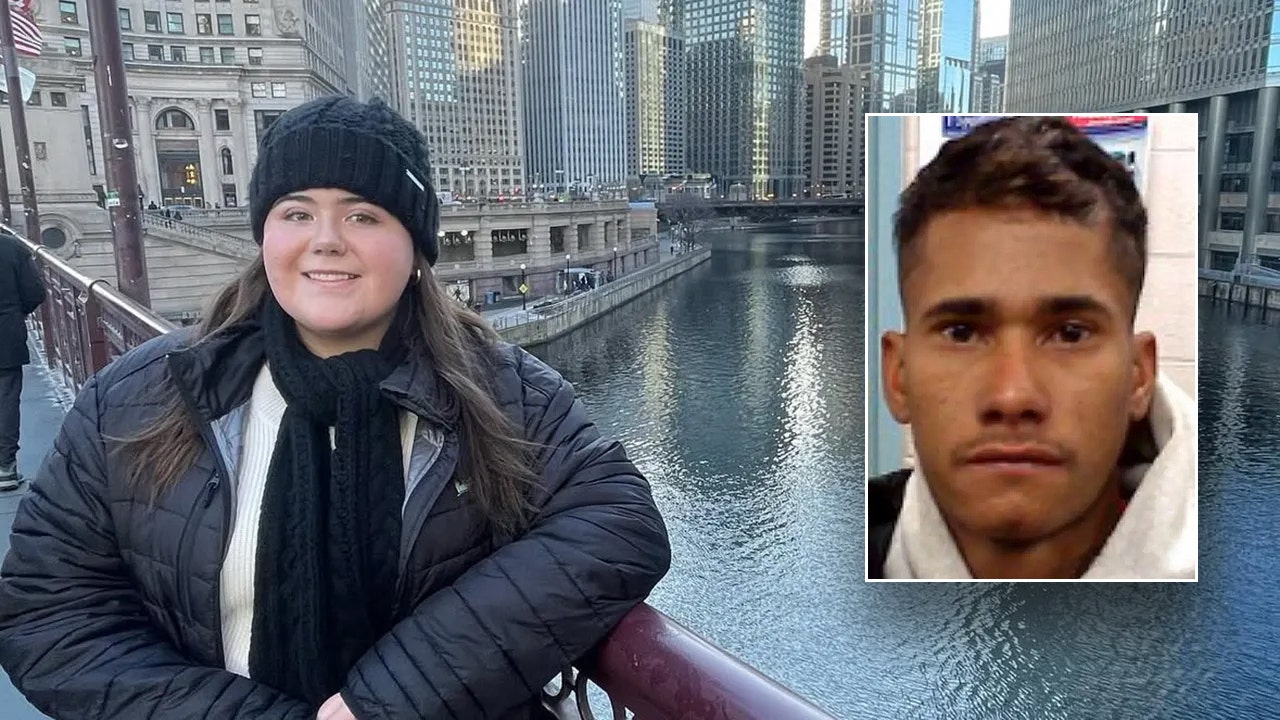
The Department of Homeland Security (DHS) confirmed on Sunday that the suspect, Jose Medina-Medina, is “a Venezuelan criminal illegal alien” who was apprehended by the U.S. Border Patrol and released into the country under the Biden administration in 2023. Medina-Medina was released again one month later after being arrested for shoplifting.
CNN and MS NOW have ignored the story through Monday night, according to network transcripts via Grabien Media, as well as their website search results.
ILLEGAL IMMIGRANT CHARGED WITH KILLING LOYOLA STUDENT RELEASED UNDER BIDEN, DHS SAYS
Jose Medina-Medina, a Venezuelan national, was also arrested for shoplifting and released before the alleged murder, DHS confirmed. (DHS)
Representatives for CNN and MS NOW did not immediately respond to Fox News Digital‘s requests for comment.
On Thursday morning, Gorman was shot in the back while walking along Chicago’s lakefront with a group of friends, who all attempted to flee after the suspect came towards them with a gun. She was pronounced dead at the scene.
The story is reminiscent of the 2024 murder of Laken Riley at the hands of an illegal immigrant. At the time, the legacy press was frequently scolded by conservatives for downplaying or ignoring the killer’s immigration status.
The liberal networks appear to be following a similar script, this time failing to mention a senseless murder altogether.
President Donald Trump has called the murder of Gorman “devastating.” But anyone who relies on CNN or MS NOW for information would have no idea.
The Chicago Police Department formally charged Medina-Medina on Sunday with murder in the shooting of Gorman.
GOV PRITZKER IGNORED MY LETTER — AFTER HIS SANCTUARY POLICIES KILLED MY DAUGHTER
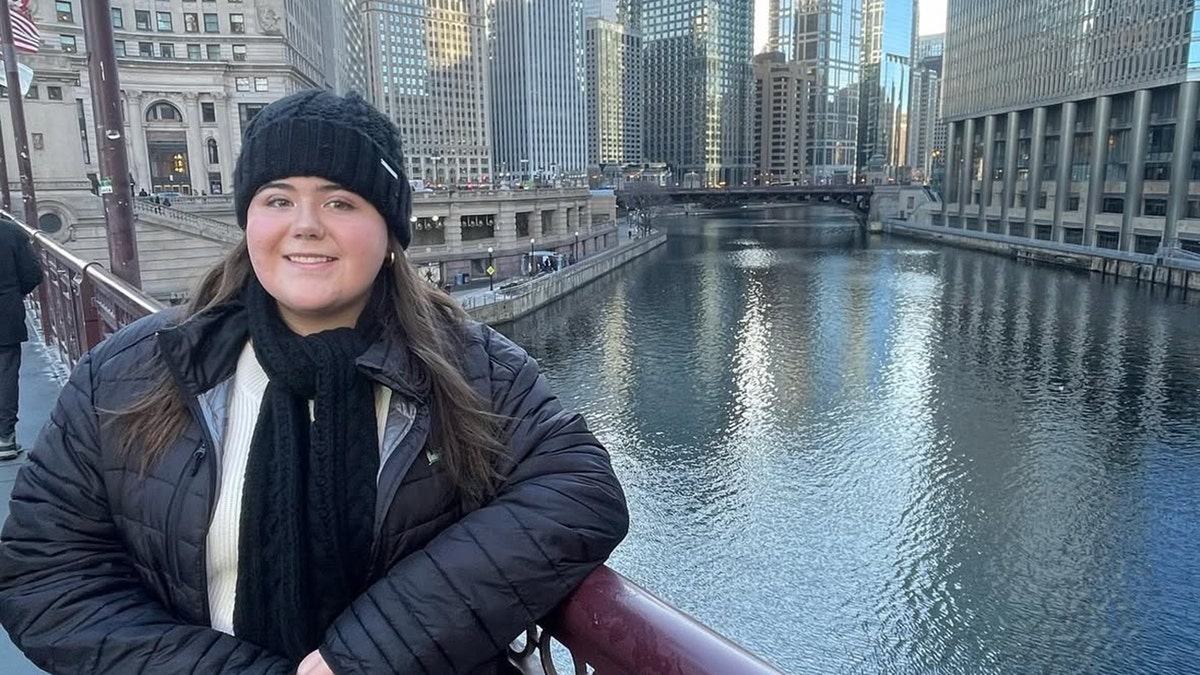
Sheridan Gorman smiles alongside the Chicago skyline in Illinois. (Sheridan G. Gorman via Instagram)
In a statement, the department said Medina-Medina was currently facing six felony charges: one count of first-degree murder, one count of first-degree attempted murder, three counts of aggravated assault involving the discharge of a firearm, and one count of aggravated unlawful possession of a weapon, the department said.
A police source also told Fox News Digital that the shooting Thursday was an apparent ambush, with the gunman reportedly wearing a mask or face covering. The suspect is believed to have been living in Chicago’s Rogers Park neighborhood.
Investigators have since recovered a gun believed to be connected to the killing, sources said, and are awaiting the results of a gunshot residue test.
The suspect is being treated for tuberculosis and is expected to appear at a detention hearing on Friday via teleconference.
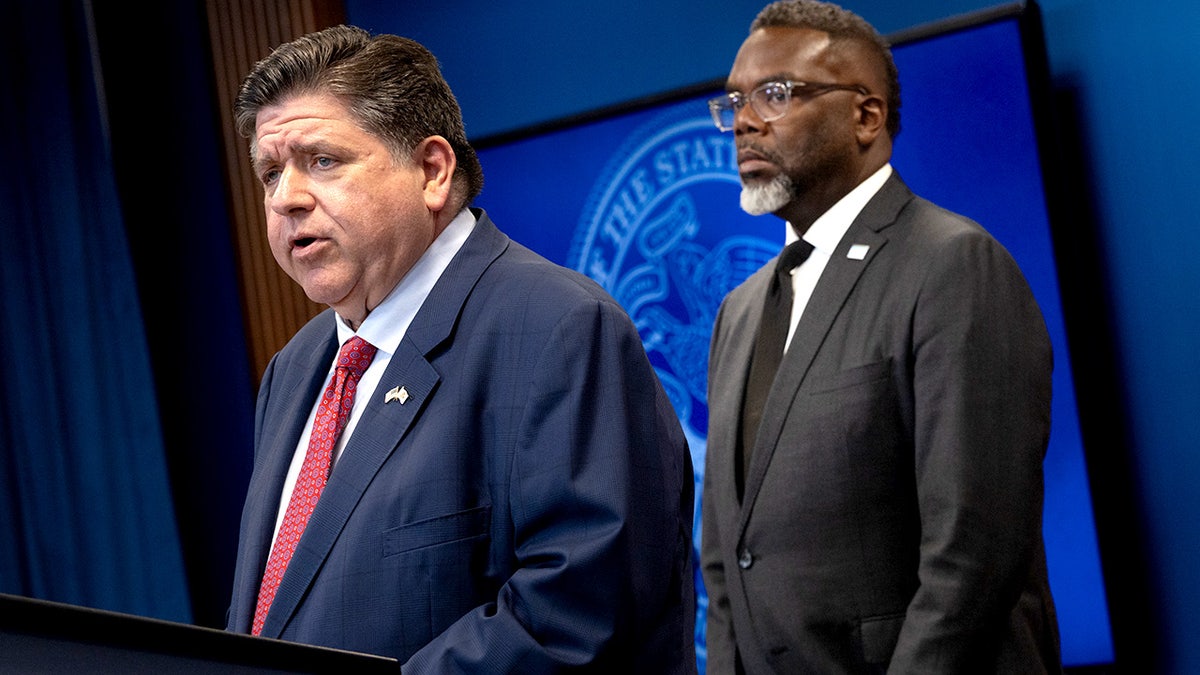
Democratic Illinois Gov. JB Pritzker and Democratic Chicago Mayor Brandon Johnson have been under fire for their refusal to cooperate with ICE to deport illegal immigrants. (Getty Images; Scott Olson)
Illinois Gov. JB Pritzker, widely seen as a 2028 Democratic hopeful, issued a delayed response Monday afternoon after Gorman’s murder began dominating headlines in Chicago. But he took a moment to swipe at the Trump administration, which he accused of “politicizing” her death.
CLICK HERE TO DOWNLOAD THE FOX NEWS APP
“Our thoughts are with the family, friends, and Loyola University community grieving the senseless murder of Sheridan Gorman. Violent crime has no place in our streets, and we expect the alleged perpetrator to be held accountable to the fullest extent of the law. The Trump Administration needs to stop politicizing heinous tragedies and instead focus on real solutions, like reinstating federal funds to prevent violence that support our public safety efforts,” Pritzker said.
Fox News Digital’s Matt Finn, Phillip Bodinet, Emma Bussey and Bill Melugin contributed to this report.
Anthropic and Pentagon head to court as AI firm seeks end to ‘stigmatizing’ supply chain risk label

SAN FRANCISCO — Artificial intelligence company Anthropic is asking a federal judge on Tuesday to temporarily halt the Pentagon’s “unprecedented and stigmatizing” designation of the company as a supply chain risk.
A hearing scheduled for Tuesday in a California federal court marks a critical step in the feud between Anthropic and the Trump administration over how the company’s AI technology could be used in war.
Anthropic sued earlier this month to stop the Trump administration from enforcing what the company calls an “unlawful campaign of retaliation” over its refusal to allow unrestricted military use of its technology.
The company is asking U.S. District Judge Rita Lin for an emergency order that would temporarily reverse the Pentagon’s decision to designate the AI company a “supply chain risk.” Anthropic also seeks to undo President Donald Trump’s order directing all federal employees, not just those in the military, to stop using its AI chatbot Claude.
Lin is presiding over the case in federal court in San Francisco, where Anthropic is headquartered. The AI firm has also filed a separate and more narrow case in the federal appeals court in Washington, D.C.
Lin sent both sides a number of questions she wants them to answer at a Tuesday hearing, including about discrepancies between Defense Secretary Pete Hegseth’s formal directive declaring Anthropic a potential threat to national security, and what he posted about it on social media.
Aid vessel arrives in Havana as Cuba’s economic and energy crises deepen
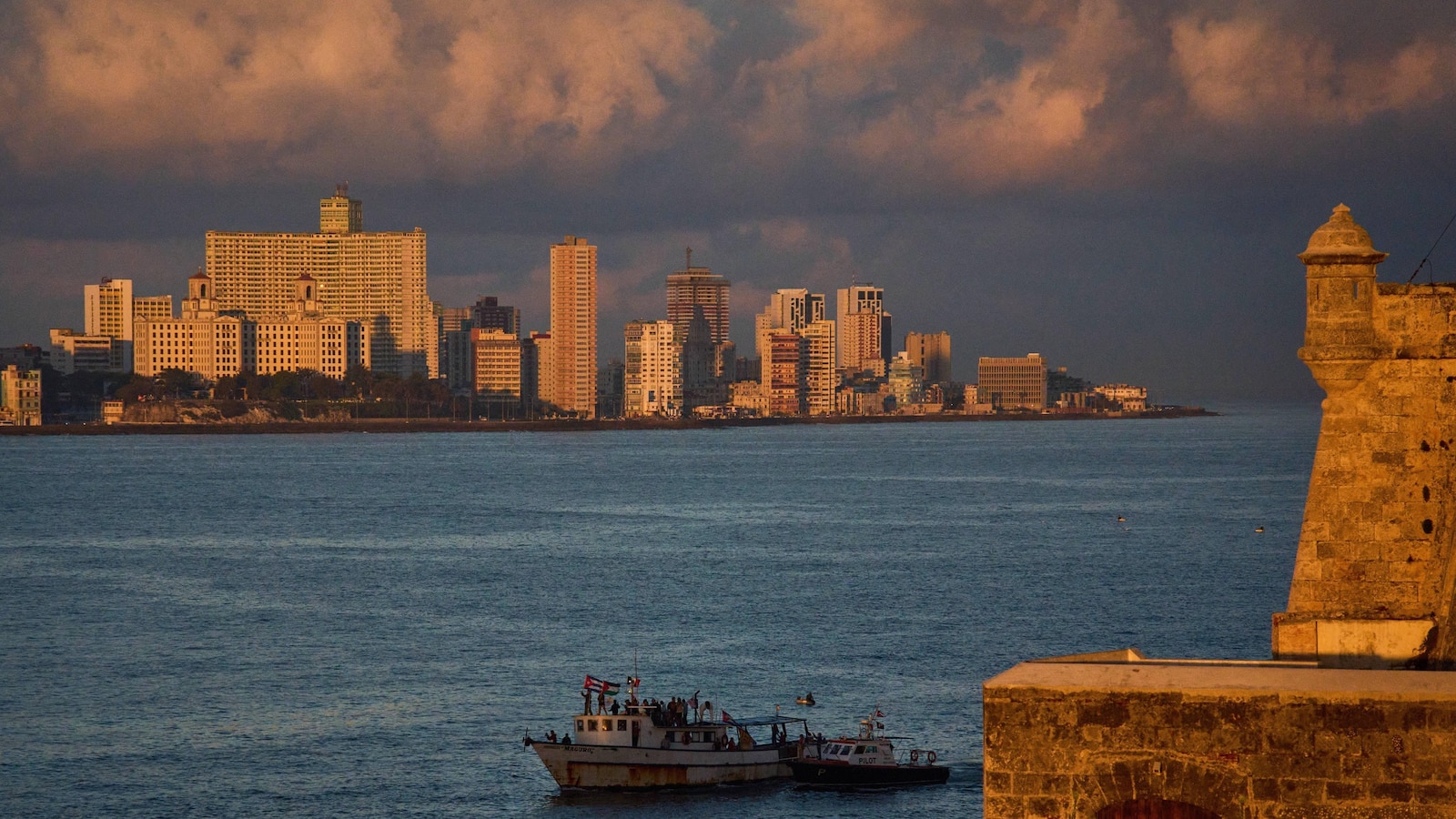
HAVANA — A ship bringing humanitarian aid to Cuba arrived in Havana on Tuesday loaded with solar panels, bicycles, food and medicine as the island’s economic and energy crises deepen.
Some 30 people were aboard the first of three ships expected to arrive in Cuba as it grapples with severe blackouts, a crumbling power grid and a U.S. energy blockade.
“This type of economic warfare shouldn’t exist, this attitude of a pirate state that doesn’t respect international law,” activist Thiago Ávila told reporters as he disembarked from the ship, christened “Granma 2.0” in homage to the ship that ferried revolutionary leader Fidel Castro to the island in 1956.
“These ships are a drop in an ocean of need…at the same time, it’s a gesture of solidarity,” Ávila said.
The ship departed Puerto Progreso, in Mérida, Mexico, last week and two others are heading to Cuba.
The flotilla is part of a caravan called “Our America Convoy to Cuba,” with more than 650 participants from 33 countries who arrived on the island last weekend with tons of aid and were received by President Miguel Díaz-Canel.
Visitors included British parliamentarian Jeremy Corbyn, Colombian Sen. Clara López, Spanish politician Pablo Iglesias, and U.S. labor leader Chris Smalls. The popular Irish hip-hop trio Kneecap also participated.
The energy embargo imposed by U.S. President Donald Trump in late January to bring pressure for a change in the island’s political model has compounded five years of profound economic crisis stemming from the paralysis caused by the COVID-19 pandemic and previous U.S. sanctions against the Caribbean nation.
Cuba is suffering from transportation shortages, reduced working hours, flight cancellations, and, above all, blackouts, including two island-wide blackouts in recent days.
Trump and U.S. Secretary of State Marco Rubio — whose parents emigrated from Cuba in the 1950s — have said they were prepared to “take” the island. Authorities from both countries acknowledged that they are holding talks, although they have not disclosed details.
Cuba’s Deputy Minister of Energy and Mines Argelio Abad Vigo last week said the country has gone three months without receiving supplies of diesel, fuel oil, gasoline, jet fuel, and liquefied petroleum gas, all of which are vital for the economy and electricity generation. Cuba produces barely 40% of the fuel it needs.
Meanwhile, a Hong Kong-flagged vessel that was reportedly carrying 200,000 barrels of diesel from Russia to Cuba has instead docked in Venezuela, according to MarineTraffic, a project that tracks the movement of vessels around the globe using publicly available data.
Leaders from several countries and social organizations have warned that Cuba could be on the verge of a humanitarian crisis.
Countries including Mexico, China, Brazil and Italy and non-governmental groups from the United States are among those that have sent aid.
The international aid is usually distributed free of charge by the state through the network of stores that Cubans use to buy food, except in cases where a donor specifies that a shipment should have a specific destination, such as medicine for hospitals.
Is a morning cup of hot water better than cold?

A GP looks at the social media trend of drinking hot water in the morning.
Source link
Expert shares simple £10 device that could slash £100 off bills

An expert has revealed how a simple £10 device could help you potentially save £100 every year.
Kate Hall, a culinary specialist, told BBC Morning Live on Monday (24 March) that anyone with a fridge freezer should purchase a digital freezer thermometer to monitor the temperature of their freezer.
She explained that electricity, and therefore money, is being squandered if your freezer is running at too high a level.
“The reason this is helpful is that it can cost about £110 a year to run a fridge/freezer, so if this is too cold, then you are wasting energy. If it’s colder than minus 22C you don’t need it to be that cold. You can adjust it – but minus 18C is fine. “
“Minus 18C could save you potentially £100-plus a year,” Helen Skelton added.