
Australia and the EU sign sweeping trade and security deals after years of negotiations.
Source link
More Australian beef headed for Europe under new trade deal

Denmark votes in an early election that follows a crisis over US designs on Greenland

COPENHAGEN, Denmark — Danish voters went to the polls Tuesday in a general election, with Prime Minister Mette Frederiksen seeking a third term at the helm of the Scandinavian country after a standoff with U.S. President Donald Trump over the future of the kingdom’s semiautonomous territory of Greenland.
More than 4.3 million people are eligible to have their say in the vote for the new Folketing, or parliament, in Copenhagen, which is elected for a four-year term.
Frederiksen called the election in February, several months before she had to in apparent hopes that her resolute image in the crisis over Greenland would help her with voters in the European Union and NATO member country.
In her second term, her support had waned as the cost of living rose — something that, along with pensions and a potential wealth tax, has been a prominent campaign issue.
The 48-year-old center-left Social Democrat is known for strong support of Ukraine in its defense against Russia’s invasion and for a restrictive approach to migration — continuing a tradition in Danish politics that now goes back two decades.
Seeking to counter pressure from the right and pointing to a possible surge in migration because of the Iran war, Frederiksen announced proposals this month that include a potential “emergency brake” on asylum and tighter controls on criminals who lack legal residence. Her government had already unveiled a plan to allow the deportation of foreigners who have been sentenced to at least one year in prison for serious crimes.
Two center-right challengers hope to oust Frederiksen as prime minister. One is in her current government — Defense Minister Troels Lund Poulsen of the Liberal, or Venstre, party, which headed several recent administrations.
The other is Alex Vanopslagh, 34, of the opposition Liberal Alliance, which calls for lower taxes and less bureaucracy, and for Denmark to abandon its refusal to use nuclear power. But a recent admission from Vanopslagh to taking cocaine earlier in his time as party leader may have dented his chances.
Further to the right, the anti-immigration Danish People’s Party looks well-placed to bounce back from a very weak showing at the last election in 2022.
No single party is expected to come anywhere near winning a majority. Denmark’s system of proportional representation typically produces coalition governments, traditionally made up of several parties from either the “red bloc” on the left or the “blue bloc” on the right, after weeks of negotiations.
Frederiksen’s outgoing three-party administration was the first in decades to straddle the political divide. It remains to be seen whether this election will result in a repeat, with the centrist Moderate party of Foreign Minister Lars Løkke Rasmussen possibly acting as the kingmaker.
Greenland, which took up much of the government’s energy in recent months, hasn’t been a significant issue in the campaign because there is broad agreement on its place in the kingdom.
Frederiksen warned in January that an American takeover of Greenland would amount to the end of NATO. But the crisis has simmered down, at least for now.
After Trump backed down on threats to impose tariffs on Denmark and other European countries that opposed the U.S. taking control of the vast Arctic island, the U.S., Denmark and Greenland started technical talks on an Arctic security deal.
Denmark’s single-chamber parliament has 179 seats. Of those, 175 go to lawmakers from Denmark itself and two each for representatives from thinly populated Greenland and the kingdom’s other semiautonomous territory, the Faroe Islands.
___
Moulson reported from Berlin.
On the road with antiprotons: CERN runs delicate test on transporting antimatter
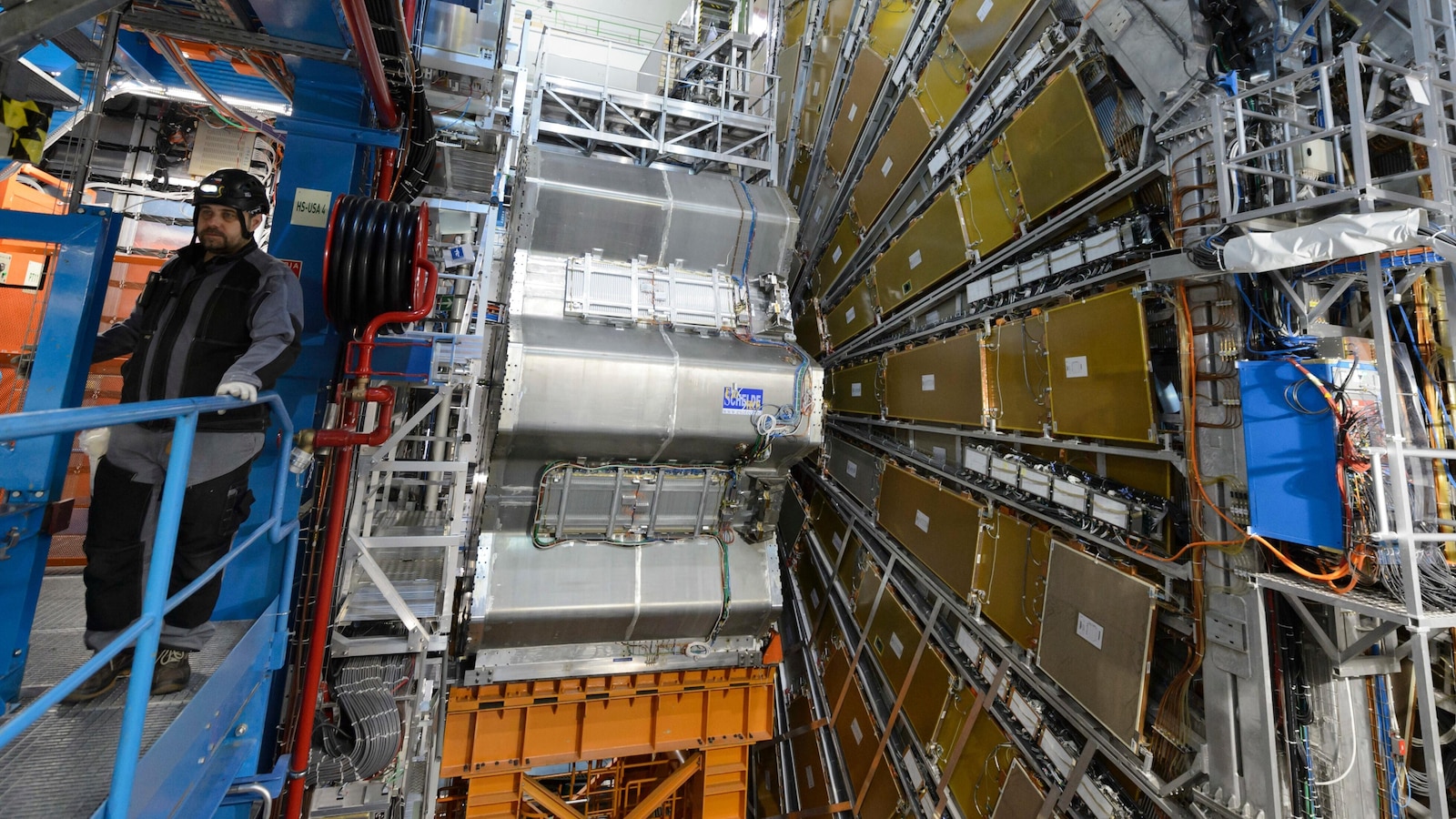
GENEVA — Scientists in Geneva are taking some antiprotons out for a spin — a very delicate one — in a truck, in a never-tried-before test drive.
If this so-called antimatter comes into contact with actual matter — even for a fraction of an instant — it will be annihilated in a quick flash of energy. So experts at the European Organization for Nuclear Research, known as CERN, will, over the course of four hours Tuesday, gingerly wheel out from its lab about 100 antiprotons. They are suspended in a vacuum inside a specially designed box and held in place by supercooled magnets.
Then, they’ll ease it into a truck, and take about a half-hour drive to test how — if at all — the infinitesimal particles can be transported by road without seeping out. If all goes well, the antiprotons will be returned back to the lab.
The hard part: Manipulating antimatter, like antiprotons, can be tricky business. As scientists understand the universe today, for every type particle that exists, there is a corresponding antiparticle, exactly matching the particle but with an opposite charge.
If those opposites come into contact, they “annihilate” each other, setting off lots of energy, depending on the masses involved. Any bumps in the road on the test journey that aren’t compensated for by the specially-designed box could spoil the whole exercise.
Tuesday’s practice is a first step toward making good on hopes, one day, to deliver CERN antiprotons to researchers at Heinrich Heine University in Düsseldorf, Germany, which is about eight hours away in normal driving conditions.
The antiprotons have been encased in a 1,000-kilogram (2,200 pounds) box called a “transportable antiproton trap.” It’s compact enough to fit through ordinary laboratory doors and fit on a truck. It uses superconducting magnets cooled to -269 degrees Celsius (-452 Fahrenheit) that allows the antiprotons to be remain suspended in a vacuum — not touching the inner walls, which are made of … matter.
The mass in Tuesday’s test — slightly less than that of about 100 hydrogen atoms — is so little, experts say, that the worst possible outcome is the loss of the antiprotons. Even if they do touch matter, any release of energy would be unnoticeable, only an oscilloscope, which picks up electrical signals, would be able to detect it.
The trap, says CERN spokeswoman Sophie Tesauri, “is supposed to contain these antiprotons no matter what: if the truck stops, if it starts again, if it has to slam on the brakes — all that.” Work remains: The trap can contain the antiprotons on its own for only about four hours, and the drive to Düsseldorf is twice that.
The Geneva-based center is best known for its Large Hadron Collider, a network of magnets that accelerates particles through a 27-kilometer (17-mile) underground tunnel and slams them together at velocities approaching the speed of light. Scientists then study the results of those collisions.
But the sprawling, buzzing complex of scientific experiment is more than just about smashing atoms together: the World Wide Web, for example, was invented here by Britain’s Tim Berners-Lee in 1989.
Heinrich Heine University is seen as a better place to study antiprotons in-depth, because CERN — with all its other activities — generates a lot of magnetic interference that can skew the study of antimatter.
But to get them there, those antiprotons will have to avoid touching anything on the way.
The center’s Antiproton Decelerator, where a proton beam gets fired into a block of metal, causes collisions that generate secondary particles, including lots of antiprotons. It’s billed as a unique machine that produces low-energy antiprotons for the study of antimatter.
CERN’s “Antimatter Factory,” lab officials say, is the only place in the world where scientists can store and study antiprotons.
The center has been experimenting with antimatter for years, and has made breakthroughs on measurement, storage and interaction of antimatter. Two years ago, the team transported a “cloud” of about 70 protons — not antiprotons — across CERN’s campus.
It’s a similar drill this time, except that with antiprotons, a much better vacuum chamber is needed, according to Christian Smorra, head of a team behind the apparatus designed to store and transport antimatter.
Jittery test teams weren’t available for interviews before the exercise, but were expected to explain the results afterward on Tuesday.
Premier League: Is the international break good for your side?

Premier League leaders Arsenal head into the international break in a strong position as they sit nine points clear of second-place Manchester City, albeit having played a game more than Pep Guardiola’s side.
But with their next league game not until 11 April when they host Bournemouth, it’s a long time to stew on their League Cup final loss to City.
They are not completely without fixtures until then as they play Southampton in the FA Cup quarter-finals on 4 April and then Sporting in the Champions League last eight on 7 April – but even almost two weeks is a long time to dwell.
“They were unbeaten in 14 so it’s about how they react to this loss,” former Newcastle goalkeeper Tim Krul said on BBC Radio 5 live.
“The nerves are clearly there because they’ve been that close [to winning the Premier League] in the past few years.
“If they just keep their cool in the next few weeks – how the club reacts is going to be so important.
“They’ve still got City away in April and that game is going to be huge for the title.”
For Manchester City‘s players, it probably presents a different problem in that they will be itching to keep their momentum going.
“It is a blow for them and we need to build on it and get some momentum from this win now,” said Nico O’Reilly, who scored both of City’s goals in the League Cup final.
“As soon as the international break is over, we need to kick on and fight hard.
“Who knows [whether it will dent Arsenal‘s momentum], I don’t know how they are feeling. Obviously they will be upset they haven’t won a trophy.”
Amber alert issued for Texas teenager in abduction emergency

An amber alert has been issued for a 17-year-old from New Caney, Texas, who was last seen around 7 a.m. local time on Monday.
The missing teenager has been identified as Eric Crenshaw, who was described by local authorities as a “white male last seen wearing a black hoodie, white sweat pants with the Grinch logo, and camo Crocs.” He was last seen at 21650 Loop 494 in New Caney.
Montgomery County 911 wrote on social media that the case was a “child abduction emergency,” though it gave no more details surrounding Crenshaw’s disappearance.
Anyone with any information on the Crenshaw’s whereabouts is urged to call New Caney ISD Police Department or ring 911 if they see him.
This is a developing story. More to follow.
The hobby that can rewire your brain and help you build resilience

Ordinary and universal, the act of writing changes the brain. From dashing off a heated text message to composing an op-ed, writing allows you to, at once, name your pain and create distance from it. Writing can shift your mental state from overwhelm and despair to grounded clarity — a shift that reflects resilience.
Psychology, the media and the wellness industry shape public perceptions of resilience: Social scientists study it, journalists celebrate it, and wellness brands sell it.
They all tell a similar story: Resilience is an individual quality that people can strengthen with effort.
The American Psychological Association defines resilience as an ongoing process of personal growth through life’s challenges.
News headlines routinely praise individuals who refuse to give up or find silver linings in times of hardship. The wellness industry promotes relentless self-improvement as the path to resilience.
In my work as a professor of writing studies, I research how people use writing to navigate trauma and practice resilience. I have witnessed thousands of students turn to the written word to work through emotions and find a sense of belonging. Their writing habits suggest that writing fosters resilience. Insights from psychology and neuroscience can help explain how.
Writing rewires the brain
In the 1980s, psychologist James Pennebaker developed a therapeutic technique called expressive writing to help patients process trauma and psychological challenges. With this technique, continuously journaling about something painful helps create mental distance from the experience and eases its cognitive load.
In other words, externalizing emotional distress through writing fosters safety. Expressive writing turns pain into a metaphorical book on a shelf, ready to be reopened with intention. It signals the brain, “You don’t need to carry this anymore.”
Translating emotions and thoughts into words on paper is a complex mental task. It involves retrieving memories and planning what to do with them, engaging brain areas associated with memory and decision-making. It also involves putting those memories into language, activating the brain’s visual and motor systems.
Writing things down supports memory consolidation — the brain’s conversion of short-term memories into long-term ones. The process of integration makes it possible for people to reframe painful experiences and manage their emotions. In essence, writing can help free the mind to be in the here and now.
Taking action through writing
The state of presence that writing can elicit is not just an abstract feeling; it reflects complex activity in the nervous system.
Brain imaging studies show that putting feelings into words helps regulate emotions. Labeling emotions — whether through expletives and emojis or carefully chosen words — has multiple benefits. It calms the amygdala, a cluster of neurons that detects threat and triggers the fear response: fight, flight, freeze or fawn. It also engages the prefrontal cortex, a part of the brain that supports goal-setting and problem-solving.
About the author
Emily Ronay Johnston is an Assistant Teaching Professor of Global Arts, Media and Writing Studies at University of California, Merced.
This article was first published by The Conversation and is republished under a Creative Commons licence. Read the original article.
In other words, the simple act of naming your emotions can help you shift from reaction to response. Instead of identifying with your feelings and mistaking them for facts, writing can help you simply become aware of what’s arising and prepare for deliberate action.
Even mundane writing tasks like making a to-do list stimulate parts of the brain involved in reasoning and decision-making, helping you regain focus.
Making meaning through writing
Choosing to write is also choosing to make meaning. Studies suggest that having a sense of agency is both a prerequisite for, and an outcome of, writing.
Researchers have long documented how writing is a cognitive activity — one that people use to communicate, yes, but also to understand the human experience. As many in the field of writing studies recognize, writing is a form of thinking — a practice that people never stop learning. With that, writing has the potential to continually reshape the mind. Writing not only expresses but actively creates identity.
Writing also regulates your psychological state. And the words you write are themselves proof of regulation — the evidence of resilience.
Popular coverage of human resilience often presents it as extraordinary endurance. News coverage of natural disasters implies that the more severe the trauma, the greater the personal growth. Pop psychology often equates resilience with unwavering optimism. Such representations can obscure ordinary forms of adaptation. Strategies people already use to cope with everyday life — from rage-texting to drafting a resignation letter — signify transformation.
Building resilience through writing
These research-backed tips can help you develop a writing practice conducive to resilience:
1. Write by hand whenever possible. In contrast to typing or tapping on a device, handwriting requires greater cognitive coordination. It slows your thinking, allowing you to process information, form connections and make meaning.
2. Write daily. Start small and make it regular. Even jotting brief notes about your day — what happened, what you’re feeling, what you’re planning or intending — can help you get thoughts out of your head and ease rumination.
3. Write before reacting. When strong feelings surge, write them down first. Keep a notebook within reach and make it a habit to write it before you say it. Doing so can support reflective thinking, helping you act with purpose and clarity.
4. Write a letter you never send. Don’t just write down your feelings — address them to the person or situation that’s troubling you. Even writing a letter to yourself can provide a safe space for release without the pressure of someone else’s reaction.
5. Treat writing as a process. Any time you draft something and ask for feedback on it, you practice stepping back to consider alternative perspectives. Applying that feedback through revision can strengthen self-awareness and build confidence.
Resilience may be as ordinary as the journal entries people scribble, the emails they exchange, the task lists they create — even the essays students pound out for professors.
The act of writing is adaptation in progress.
Preliminary magnitude 7.6 earthquake strikes near Tonga in South Pacific Ocean: USGS

WELLINGTON, New Zealand — A strong preliminary magnitude 7.6 earthquake struck near Tonga in the South Pacific Ocean on Tuesday, prompting coastal evacuations but no wider tsunami warnings.
The United States Geological Survey said the quake struck early Tuesday evening local time at a depth of about 237 km (148 miles). Earthquakes at shallower depths are felt more strongly at the surface.
The jolt was centered at sea, 153 km (95 miles) west of Neiafu, the second largest town in the island nation.
There were no immediate reports of damage.
Tonga’s National Disaster Risk Management Office warned all in the low-lying island nation to move immediately to higher ground or inland.
People should avoid beaches, shorelines, and low-lying coastal areas until an all-clear was given, said a post on the office’s Facebook page.
The USGS did not issue a tsunami warning for the region, and the Pacific Tsunami Warning Center in Hawaii said in a bulletin that there was no tsunami threat because the quake was “located too deep inside the earth.”
Tonga is an archipelago in Polynesia made up of 171 islands with just over 100,000 people, most of whom live on the main island of Tongatapu. Tuesday’s quake was centered nearer to the Vava’u island group.
A person who answered the phone at the Tanoa International Dateline Hotel on the beachfront at Nuku’alofa, which is on Tongatapu, said she wasn’t aware of any damage.
“The whole building shaked. No further damage. Everything was ok,” she said.
Tonga police did not immediately respond to an emailed request for comment.
Tonga is situated on the Pacific Ring of Fire, the arc of seismic faults where much of the world’s earthquake and volcanic activity occurs. A tsunami set off by a volcanic eruption in 2022 killed three people.
The island nation is about 1,800 kilometers (1,100 miles) northeast of New Zealand, where disaster management officials said Tuesday that there was no tsunami threat to the country.
___
Associated Press writer Rod McGuirk contributed from Melbourne, Australia.
UK transplant system, once world-leading, now lags behind

The UK has failed to keep pace with the rest of the world. Can it regain its status, and how?
Source link
File on 4 Investigates – The battle for hearts and lungs: Transplants in trouble. – BBC Sounds
Available for over a year
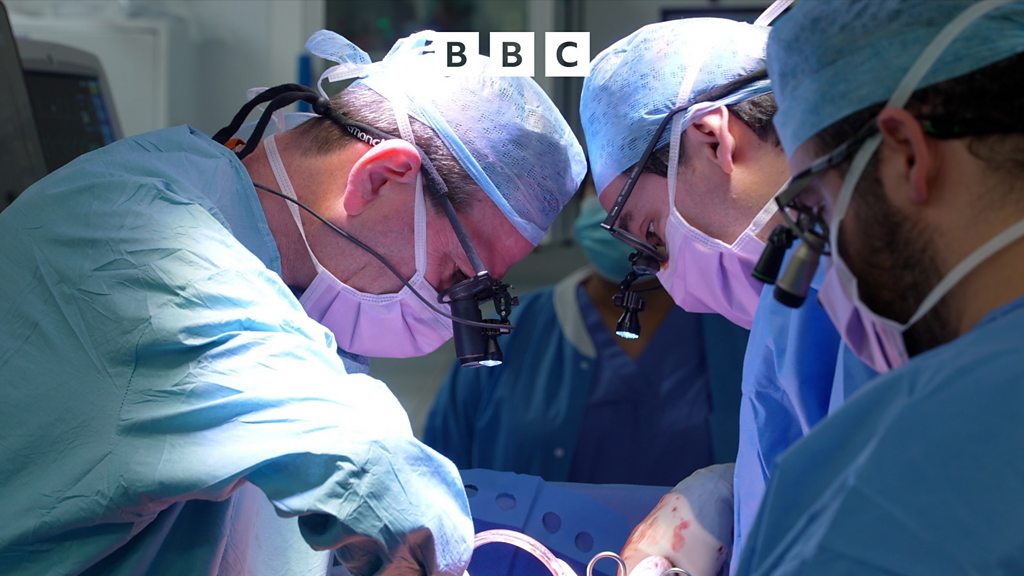
The UK was once a world leader in heart and lung transplantation. Pioneering surgeons attracted patients from all over the world. But the NHS has not kept pace with medical and technological developments and today the UK lags far behind most similar countries. It carries out fewer transplants and a lack of resources mean it doesn’t routinely use modern technologies. Many of the health service’s leading surgeons have left to work overseas in recent years, frustrated, they say, at the lack of attention transplant services have received from NHS England.
Through speaking to patients, surgeons and experts, File on Four Investigates looks at what the UK needs to do to update and transform this life-changing service.
Reporter Michael Buchanan
Producers: Adam Eley & Paul Grant
Technical Producer: Nicky Edwards
Production Co-ordinator: Tim Fernley
Editor: Tara McDermott
Lemon tree growing but not bearing fruit? Try these simple tips to fix it | – The Times of India

In many homes in India, it is a common scene to see a healthy and green lemon tree growing in the garden without bearing any fruit. It may be disappointing when you have taken care of your plant over the years. The good news, however, is that it is a common problem and can be fixed by making a few simple changes. It is known that lemon trees are slightly delicate and need to be provided with the correct combination of sunlight, water, and nutrients. If there are any changes in these elements, the tree may stop bearing fruit. It is important to first know the causes of the problem.
Why is your lemon tree not bearing fruits
The first thing to ask yourself in such a case is what the source of the problem is. Experts say that there are a number of possible reasons why the lemon tree may not be bearing fruit, and these include a lack of sunlight, improper watering, and nutrient deficiencies.According to Yarden, “lack of nutrients, insufficient light, improper watering and environmental stress” are among the most common causes for poor fruiting.
If the tree does not have flowers, then it certainly will not have any fruit.
Pay attention to sunlight and placement
Lemon trees need sunlight to grow well. The tree needs at least 6-8 hours of direct sunlight per day. If the tree is placed in a shaded area, both flowering and fruiting are impacted.Experts say that “lemon trees need plenty of sunlight… without enough light, they are unlikely to flower”. Tip:
- Place the tree in a location that gets plenty of sunlight, preferably facing south or west.
- Watering correctly is essential
- Overwatering as well as underwatering may affect the plant.
- Excessive water may cause root rot, whereas insufficient water may affect the tree, which may hinder fruiting.
Research points out that improper techniques of watering are one of the primary causes of not bearing fruit.Tip:
- Soil should be moist but not too wet
- More frequent watering in summer and less frequent watering in winter
Address nutrient deficiencies
Lemon trees are considered “heavy feeders,” which means that a good supply of nutrients is required for the tree to thrive. A balanced mix of nitrogen, phosphorus, and potassium is necessary. Nutrient deficiency can prevent a healthy flowering and fruiting of the tree, as suggested by research.Tip:
- Add organic compost or vermicompost once a month
- Use a citrus-specific fertiliser for better results
- Pollination and tree age also matter
It is also possible that the tree may produce flowers but not fruit. This may be a result of inadequate pollination, especially if there are fewer bees around.It is also possible that the tree may not yet be mature enough to produce fruit. Lemon trees usually start to produce fruit after 3-5 years.Tip:
- Gently shake the plant to aid natural pollination
- Be patient, as each tree takes its own time to mature
A final word
If your lemon tree doesn’t bear any fruit, there’s no cause for alarm. This tree can be made to start bearing fruit once again with a little care and the right conditions. Gardening requires as much patience as it requires hard work. Once your lemon tree finally bears lemons for you, it’s all worth it.