Electric car owners may be feeling smug because they don’t need to worry about soaring gasoline prices. And people with combustion engine cars may be wondering whether it’s time to buy an electric vehicle.
It’s anyone’s guess how long war with Iran will last and how high oil prices will climb. But the argument for electric vehicles has clearly become stronger.
Whether electric vehicles are a good option for any individual or family depends on many factors, including where you live, whether you have access to a charger and how much you drive.
In the United States, prices for new electric vehicles have fallen but still average $6,500 more than vehicles that run on fossil fuels, according to Cox Automotive. From a purely financial point of view, an electric vehicle makes sense for people who will save that much on fuel and maintenance during the time they own it.
The New York Times offers a tool to help people make that calculation based on local electricity prices and driving habits. But there is more to the decision than dollars and cents. Some benefits of electric vehicles are hard to put a price on, like the peace of mind that comes from not being at the mercy of geopolitics.
There are tentative signs that “people want to be taken off the gas-price roller coaster,” said Jessica Caldwell, head of insights at Edmunds. The share of people researching electric vehicles on Edmunds’s online car shopping site rose to 24 percent at the beginning of March from 21 percent in early February.
Here are some things to consider if you’re thinking about electric vehicles.
E.V.s are getting more affordable.
Last year, Congress eliminated a federal tax credit that could close the price gap between new electric vehicles and cars that run on gasoline. But some states and utilities still offer credits, rebates or other financial support for electric car buyers, and there are exceptionally good deals to be had on used electric vehicles.
Illinois and New Jersey offer residents up to $4,000 in incentives depending on their income. New Yorkers are eligible for incentives of up to $2,000.
While new electric vehicles are more expensive than comparable gasoline-powered cars, used electric vehicles are often cheaper.
A used Tesla Model 3, Ford Mustang Mach-E or Hyundai Ioniq 5 sells for about the same price as a used Toyota RAV4, Nissan Rogue or Honda CR-V, according to Recurrent, a firm that tracks the market for used electric vehicles. But used electric vehicles are likely to have been driven for fewer miles than the gasoline cars and trucks and to be newer.
“And it’s probably loaded with a lot more cool technology inside,” said Scott Case, the chief executive of Recurrent. “It boggles the mind that that free lunch hasn’t been taken.”
Car buyers are noticing. Sales of used electric vehicles in February rose 29 percent from a year earlier, according to Cox.
Automakers are introducing new electric models.
Some automakers delayed or scrapped electric models after federal tax incentives disappeared last year. This month, Honda canceled production of three new electric vehicles in the United States. Ford Motor has stopped making the F-150 Lightning pickup.
The cancellations may create the impression that electric vehicles are hard to find. That is not the case. There is a growing selection of moderately priced cars that charge faster and travel farther between charges than vehicles available a few years ago.
Toyota and its luxury brand Lexus, which had been slow to sell electric vehicles, will sell four new models this year. Rivian and Lucid, whose vehicles sell for more than $70,000, are preparing to sell models for around $50,000.
General Motors has reintroduced the Bolt compact with a starting price below $30,000. The Nissan Leaf, one of the first mass-produced E.V.s, has gotten cheaper and better, with a starting price under $30,000 and 300 miles of range.
Tesla began selling entry-level versions of its Model 3 sedan and Model Y sport utility vehicle last year for $37,000 and $40,000 before destination charges.
The supply of used electric vehicles is expected to increase in coming months as hundreds of thousands of leases expire. That should help keep prices low.
Charging electric cars can be cheap.
Electricity is not immune to price increases, but it generally doesn’t swing as much as gasoline. The cost per kilowatt at a public fast charger has barely budged since the war in Iran began on Feb. 28, according to Paren, which tracks data on electric vehicles.
Meanwhile, gasoline prices have risen about 30 percent nationwide. In many states, gasoline has risen more than $1 per gallon.
The fuel cost savings from electric vehicles are greatest for homeowners who can install chargers in their garage or driveway. Home chargers can replenish a car’s battery overnight, easily taking care of daily driving needs for most people.
A home charger eliminates most refueling stops, except on long trips. The cost of installing one varies widely but is usually at least $1,000. Some utilities and state governments offer incentives that cover part of the cost. Electric vehicles can also charge at standard outlets, but it can take several days to refill a typical battery.
Some utilities, including Con Edison in New York, Georgia Power and Pacific Gas & Electric in California, offer lower electricity rates to people who charge their vehicles when demand for power is lower, usually at night. Charging a vehicle at home costs a few dollars per session.
“Anyone who can charge at home is a really good candidate,” said Stephanie Valdez Streaty, director of industry insights at Cox Automotive.
People who can’t install home chargers may be able to use what are known as Level 2 chargers, which are increasingly found at apartment complexes, shopping centers or office parking lots. These chargers are generally inexpensive or even free but take several hours to refill a battery.
Many electric car drivers use fast chargers as their main fuel source, charging companies say, much the way owners of conventional vehicles use gas stations. The time to refuel at fast chargers is dropping to less than half an hour because of technical advancements.
A road trip with an electric vehicle takes some planning. But it’s getting easier. There are more than 72,000 fast-charging ports in the United States, according to Paren, about 2,000 more than at the start of the year.
Fast chargers can be expensive, however, in some cases more costly per mile than filling up with gasoline.
Electric cars also require less maintenance.
Electric vehicles don’t need oil changes and don’t have fuel pumps, mufflers and other parts that wear out and need to be replaced. Brakes tend to wear more gradually because of systems that recover energy when the car slows down.
But these vehicles tend to be heavier and can wear out tires more quickly. Many owners, however, report getting 40,000 miles or more before needing new tires as long as they don’t drive aggressively.
Contrary to widespread perception, batteries do not quickly lose their ability to hold a charge. On average, they still have 95 percent of their original capacity after five years, according to Recurrent.
Electric vehicles tend to be less reliable than hybrids or cars that run solely on gasoline or diesel, largely because the technology is new. But as the industry has gotten better at making them, the cars have become more reliable.
“It isn’t necessarily an issue with the cars themselves, something that’s fundamentally less reliable about an E.V.,” said Keith Barry, senior autos reporter at Consumer Reports. “If you think about it, an E.V. should be more reliable because it has fewer moving parts and less to worry about.”
The Middle East conflict has entered its fourth week and the ripple effects are beginning to show up across major economies. Concerns are growing that any further escalation could disrupt energy flows and add pressure to an already fragile global outlook. The strain is not falling evenly on every country.Some nations are far more exposed than others, and have limited room to absorb the shock. Much of the attention is now centred on Iran’s role in the Strait of Hormuz, a critical route for global energy shipments.Germany, with its manufacturing-heavy economy, is particularly sensitive to rising energy costs. Industrial activity has only recently stabilised after contracting since 2022. As a major exporter, it also remains vulnerable to any slowdown in global demand. While a sizeable stimulus package announced last year offers some support, budget shortfalls in the coming years limit how much additional assistance can be provided, Reuters reported.Italy’s exposure stems from both its strong manufacturing base and its energy mix, where oil and gas make up a relatively large share of primary consumption in Europe. This leaves the economy more exposed to swings in global energy prices, especially during periods of supply uncertainty.Britain depends more heavily on gas-fired power for electricity generation than many of its European peers, meaning gas prices have a strong influence on overall electricity costs. As gas prices are soaring more than oil, inflationary pressures remain elevated. While an energy price cap may ease the immediate impact, it could also contribute to higher interest rates, keeping borrowing costs among the highest in the G7 for longer, alongside rising unemployment. Limited fiscal space and pressure from bond markets further restrict policy options, Reuters reported.Japan relies heavily on Middle Eastern oil, importing around 95% of its supply, with nearly 90% transported through the Strait of Hormuz. This dependence adds to inflationary pressures already stemming from a weak yen, which raises the cost of imported essentials such as food and raw materials across the economy.India is also facing the threat, importing with about 90% of its crude oil and nearly half of its liquefied petroleum gas, with a large portion passing through the Strait of Hormuz. Growth forecasts have already been revised downward, while the rupee has slipped to record lows. The impact is also visible in daily life, with rising gas prices leading to informal rationing and the disappearance of items such as samosas, dosa and chai from menus in eateries.Turkey, which shares a border with Iran, is dealing with both geopolitical uncertainty and the possibility of refugee inflows. On the economic side, pressure is mounting on the central bank, which has paused its interest rate-cutting cycle for the second time in a year and sold up to $23 billion in reserves to support the currency, signalling renewed strain on monetary stability.Sri Lanka has moved to strict cost-control measures to manage energy pressures, including declaring Wednesdays a public holiday for state-sector workers. Schools, universities and public institutions have been shut, non-essential transport suspended, and a National Fuel Pass system introduced to regulate fuel access and limit consumption.Pakistan, which narrowly avoided a crisis two years ago, has responded with higher petrol prices and temporary school closures. Government departments, according to Reuters, have seen fuel allowances reduced, restrictions placed on purchasing appliances and furniture, and instructions issued to reduce the use of official vehicles as part of broader austerity steps.Egypt is under pressure from rising fuel and food costs, along with potential declines in Suez Canal and tourism revenues, the latter contributing nearly $20 billion last year. Servicing its debt, much of which is denominated in US dollars, has become more difficult, further compounded by a near 9% depreciation of its currency since the conflict began.
Sania Mirza needs no introduction. The former World No. 1 doubles tennis player and a six-time Grand Slam champion, Mirza is an icon who changed the perception of Indian women in international tennis. She has been honoured with some of the most prestigious awards including the Arjuna Award, Padma Shri, and Padma Bhushan. Besides her sports achievements, the self-made woman has built an impressive real estate portfolio.
As a partial government shutdown blows past the one-month mark, Democrats are demanding lawmakers shrink the size of the Department of Homeland Security’s (DHS) funding lapse — while leaving out the agency at the heart of Trump’s immigration crackdown.
Immigration and Customs Enforcement (ICE), in their view, can stay shut down.
“We already said we’d open everything in the department except ICE, so the answer is yes,” Sen. Sheldon Whitehouse, D-R.I., said when asked about partial funding for DHS.
“Republicans won’t agree because they’re trying to hold the security of the country hostage.”
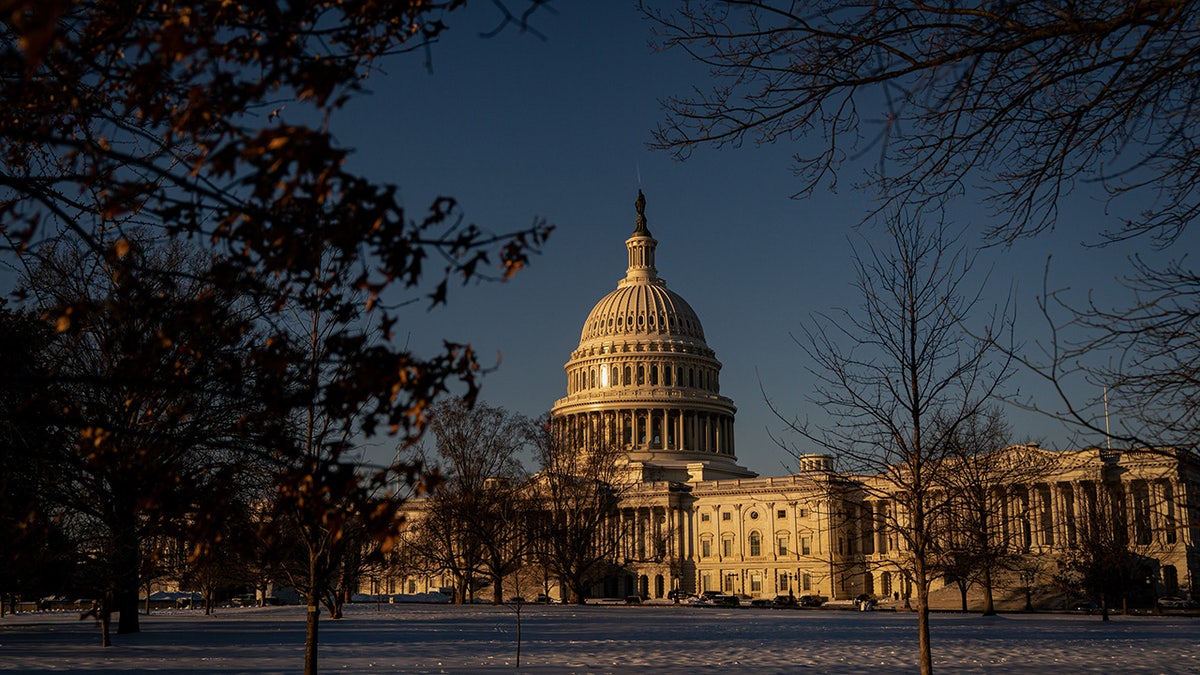
Capitol Hill, left, pictured next to ICE agents, right.(Andrew Caballero-Reynolds / AFP via Getty Images; Aaron Lavinsky/The Minnesota Star Tribune)
His position was echoed by Rep. Ro Khanna, D-Calif.
“We need to fund every aspect of it other than ICE. We’re going to fight on the ICE funding. I mean, they already have $75 billion,” Khanna said, noting that ICE itself already received funding through Donald Trump’s Big Beautiful Bill.
In light of those appropriations, Republicans believe Democrats have assumed an unsustainable position as they continue to shoot down efforts to fund DHS in its entirety.
“They’re not interested in reopening, right? Their whole thing is: ‘Okay, we’re doing a shutdown to go out there and affect ICE and Border Patrol.’ But ICE and border patrol are the ones that are not even affected by this shutdown. They’re funded by the One Big, Beautiful Bill that passed previously,” Rep. Brian Mast, R-Fla., said.
“How long do I foresee Democrats lying to their base? Forever,” Mast added.
Calls to implement the partial funding stance have grown louder since the shutdown first began.
The US Capitol in Washington, DC, US, on Thursday, Jan. 29, 2026. (Al Drago/Bloomberg via Getty Images)
Funding for DHS originally lapsed on Feb. 14 when Democrats refused to advance spending legislation for DHS that didn’t also include a set of demands to reform ICE. Among other changes, Democrats have conditioned their support on a ban on masks for ICE agents, stiffer warrant requirements for apprehending suspects in public and a ban on roaming patrols.
Republicans have rebuffed the demands, arguing they would handcuff President Donald Trump’s immigration enforcement goals.
Republicans need at least seven Democrats to reach the 60-vote threshold to break a filibuster in the Senate, where they hold just 53 seats.
The standoff has overlapped with a series of domestic attacks, raising alarm among Republicans that DHS’ closure may be reducing the country’s preparedness to counter similar threats.
A vehicle-ramming at a synagogue in Michigan, a university shooting in Virginia, the detonation attempts in New York and another shooting in Texas have left members like Seth Magaziner, D-R.I., joining calls to pass non-ICE DHS funding.
A Brazilian national was indicted in Florida for allegedly creating a fake government agency and selling fraudulent DHS and FBI identification cards that he claimed would grant immunity from immigration enforcement.(Photo by Heather Diehl/Getty Images)
“If it takes more time to negotiate those changes to ICE, then the right thing to do is to fund the rest of DHS, TSA, Coast Guard, FEMA, counterterrorism, all of that, while we continue to negotiate over ICE,” Magaziner said.
Sen. Richard Blumenthal, D-Conn., said he has also joined that position.
“Ready, willing, and eager to approve funding for TSA, for FEMA, and for the Coast Guard through the separate bill that we’ve offered and Republicans have rejected. There’s an easy solution here,” Blumenthal said.
Leo Briceno is a politics reporter for the congressional team at Fox News Digital. He was previously a reporter with World Magazine.
The NCAA filed suit against DraftKings on Friday, accusing the sportsbook operator of trademark infringement for use of terms such as March Madness, Final Four and others related to the men’s and women’s basketball tournaments.
The NCAA is requesting an emergency temporary restraining order to stop DraftKings from using its trademarked terms, according to the suit, which was filed Friday in federal court in the Southern District of Indiana.
The NCAA, in the suit, said it asked DraftKings to remedy the situation and the sportsbook removed some “egregious” uses of the trademarked terms, but “maintained that it has the right to use the NCAA’s trademarks directly on its sports betting apps.”
DraftKings’ sportsbook app had multiple references of March Madness, Sweet Sixteen, Elite 8 and Final Four alongside betting options on Friday night. ESPN, which has a business partnership with DraftKings, has reached out to the sportsbook for comment.
Other sportsbooks, in addition to DraftKings, were displaying March Madness and other terms, on their betting apps Friday night.
“Because DraftKings is actively infringing the NCAA’s marks in the middle of the NCAA Men’s and Women’s Division I Basketball Tournaments (“Tournaments”) and the NCAA has consistently refused to be affiliated with the gambling industry, this issue is an urgent one and critical to the NCAA’s organizational mission,” the suit reads.
In a release announcing the suit, the NCAA said DraftKings’ “unauthorized use of its trademarks is flatly contrary to one of the Association’s most deeply held institutional values: that sports betting must not be associated with, endorsed by, or linked to NCAA championships or the student-athletes who compete in them.”
The NCAA requested a briefing schedule beginning Monday.
On Tuesday, NCAA president Charlie Baker submitted a letter to the Commodity Futures Trading Commission requesting that the federal regulator suspend prediction markets from offering trading on college events.
Thirty-two games later, the first round of the 2026 men’s NCAA tournament is in the books.
Here is your guide to all 16 first-round games from Day 2, complete with analysis from on-site reporters of how each game was won, and our experts’ takes on each winner’s chances to advance to the Sweet 16.
How UConn won:Tarris Reed Jr. was just too much for Furman. The 6-foot-11 center personally outrebounded the Paladins, hauling in 27 boards to go with 31 points in a dominant performance for UConn. The 3-point shot wasn’t falling for the Huskies (5 of 25), keeping the game tight against Furman, which was powered by freshman Alex Wilkins and senior Tom House. But Reed controlled the interior, plucking 11 offensive rebounds, including several in the closing moments, to secure the win. He’s just the third player in the past 50 years to have 30 points and 20 rebounds in an NCAA tournament game. — Tim McManus
UConn’s second-round opponent: UCLA
How the Huskies can advance to the Sweet 16: UConn can win most of its matchups in this game, even if Silas Demary Jr. is unavailable. Solo Ball can create shots off the dribble, Alex Karaban is a threat on the perimeter as a 38.6% 3-point shooter, Tarris Reed Jr. just finished with 31 points and 27 rebounds in the win over Furman, and Braylon Mullins is a first-round NBA prospect. The Huskies have dealt with efficiency issues and turnovers in recent weeks, but if they can play with more rhythm, they can beat any team in the country. If Tyler Bilodeau returns, however, their bigs — including Reed — will be challenged to defend in space. Still, a Huskies team with wins over Florida, BYU and St. John’s has overcome more star power than UCLA has on its roster. UConn can keep things simple and win. — Myron Medcalf
play
0:48
Tarris Reed Jr.’s massive 31-point, 27-rebound game propels UConn
Tarris Reed Jr. unleashes career highs with 31 points and 27 rebounds to lift the UConn Huskies to the second round.
How Miami won: Talk about a gutty win for the 7-seed Hurricanes. After Missouri finally climbed ahead, Miami reeled off an 11-0 run that put the Hurricanes firmly in control down the stretch. Senior forward Malik Reneau struggled early but used a couple of 3-pointers to find his groove; he scored 19 of his game-high 24 points in the second half. Friday night felt like a de facto road game for the Hurricanes, but they handled the environment and the pesky Tigers to pick up their first NCAA tournament win since 2023. — Ben Baby
Miami’s second-round opponent: Purdue
How the Hurricanes can advance to the Sweet 16: Jai Lucas has already orchestrated one of the biggest turnarounds in Division I basketball this season. A win over Purdue and a Sweet 16 appearance would be another achievement in a remarkable first season at the helm, but it won’t come easily. Malik Reneau will have to be the best player on the court to give Miami — a team that doesn’t have wins against any national title contenders — a chance to win. The Hurricanes will also have to pressure Braden Smith and play disciplined in the paint. Even if they do just that, though, they’ll still need Reneau, Tre Donaldson and Shelton Henderson to match — or exceed — whatever Smith, Trey Kaufman-Renn and Fletcher Loyer bring. This is the kind of game where Miami’s best players will have to be better than Purdue’s. — Myron Medcalf
How Kansas won: For about 35 minutes, it looked like Kansas would roll after taking a 26-point lead on Cal Baptist, but the Jayhawks’ cushion shrank to six points with a minute left. Kansas buckled down and escaped with a 68-60 victory, but it included questionable decisions down the stretch. Darryn Peterson led all scorers with 28 points, but he vanished in the final minutes — either by his own volition or the plays being called by the KU staff. Regardless, Peterson’s offensive attack fueled the Jayhawks’ victory. Now, they will face off against the Big East tournament champions, St. John’s on Sunday. The dream Bill Self-Rick Pitino matchup is happening. — Paolo Uggetti
play
0:20
Darryn Peterson caps off the half with a buzzer-beater
Darryn Peterson stays hot and hits a buzzer-beater to end the half for Kansas.
Kansas’ second-round opponent: St. John’s
How the Jayhawks can advance to the Sweet 16:Flory Bidunga has to be the key for Kansas against St. John’s. He will have his hands full against Zuby Ejiofor, one of the best two-way big men in the country, but Bidunga has held his own in matchups against Motiejus Krivas and JT Toppin. Bidunga has also struggled mightily in other big games, five points and four points in two games against Houston, two points against Arizona and eight points against North Carolina, and his win/loss splits are telling. In Kansas’ wins, Bidunga averages 15.1 points and shoots better than 70% from the field. In losses, he averages 9.9 points and shoots 50.6% from the field. Defensively, the Jayhawks have to keep St. John’s out of transition and force the Red Storm to make perimeter shots. They ranked near the bottom of the Big East in 3-point attempt rate and percentage of points from 3s. Their 10 3s against Northern Iowa was the first time they made double-digit 3s in a game since Jan. 10. — Jeff Borzello
How Florida won: After posting the second-largest halftime lead in NCAA tournament history at 60-21, the Gators kept it rolling, dispatching 16-seeded Prairie View by 59 points for the second-largest margin of victory in NCAA tournament history. The historic marks didn’t stop there: Florida’s seven double-digit scorers tied the record for the most in NCAA tournament history: Boogie Fland (16), Thomas Haugh (14), Rueben Chinyelu (14), Alex Condon (13), Urban Klavzar (11), Xaivian Lee (10) and Micah Handlogten (10). — Jenna Laine
Florida’s second-round opponent: Iowa
How the Gators can advance to the Sweet 16: Florida’s game prep will focus on stopping Bennett Stirtz and getting the ball out of his hands. Stirtz is a high-usage point guard, and Ben McCollum’s system revolves around him having a hand in nearly every possession. Boogie Fland has really developed as a defender this season and will likely be tasked with guarding Stirtz. The rest of Florida’s plan will be about imposing its will. The Gators are bigger and more athletic than Iowa, and they’re elite on defense. If they can speed the game up and make Iowa uncomfortable, it’s hard to picture the Hawkeyes keeping up. Iowa hasn’t played a game with more than 70 possessions this season; Florida averages 70.7 possessions per game, per KenPom. — Jeff Borzello
How UCLA won: The Knights put up a fight with a late surge, but the Bruins walked away with the win after finishing with 13 steals and nine blocks to kick-start their transition offense. The Knights turned the ball over 17 times compared with eight for the Bruins, and went just 5-of-16 from the free throw line. Donovan Dent (10 points, 5 assists, 6 steals) ran the show for UCLA and had a pair of alley-oop passes to Eric Dailey Jr. and Xavier Booker to add some flash to the substantive performance. Dailey tied a season high with 20 points. He is the first UCLA player with 20 points and five rebounds in an NCAA tournament game since Jaime Jaquez Jr. in 2023. — Tim McManus
UCLA’s second-round opponent: UConn
How the Bruins can advance to the Sweet 16: It would help if Tyler Bilodeau returned. The 6-foot-9 star is UCLA’s best 3-point shooter — he spaces the floor for the Bruins in a unique manner that balances their offense. Against UConn, his presence would be a difference-maker because of his size and talent. Without him, the Bruins have to work harder to find open looks against a UConn squad with a top-15 defense. And Donovan Dent, who was 4-for-17 from the field against UCF, can’t be a spectator in this game. He was one of the most coveted transfers in the portal during the offseason. He has to play to his ceiling to help UCLA beat a team that has won two of the past three national titles.
On defense, Xavier Booker will have the responsibility of containing Tarris Reed Jr., who just finished with 31 points and 27 rebounds in a win over Furman. If the 6-foot-11 Booker can’t slow down Reed, UCLA won’t have a chance. The Bruins should also look to exploit UConn’s ballhandling woes — the Huskies have committed 79 turnovers in their past six games — especially if Silas Demary Jr. is out again. — Myron Medcalf
play
0:25
Eric Dailey Jr. electrifies UCLA with a big alley-oop jam
UCLA’s Eric Dailey Jr. catches a lob and throws down a powerful, two-handed dunk.
How Iowa won: Iowa took a 12-4 lead and never gave it up, marking the first game this season that Clemson hasn’t led at any point. The Hawkeyes’ edge came on the boards, outrebounding the Tigers 40-27. Brad Brownell warned his team about rebounding earlier this week, particularly with their top rebounder Carter Welling (5.4 RPG) out after suffering a torn ACL in the ACC tournament. Cam Manyawu was key in the win. He became the third player in the past 60 years to have 10 rebounds without attempting a shot from the field in an NCAA tournament game, per ESPN Research. — ESPN Staff
Iowa’s second-round opponent: Florida
How the Hawkeyes can advance to the Sweet 16: On paper, Iowa is in for a tough night down low against Florida. The Gators have one of the most dominant frontcourts in the country, ranking second nationally in paint points per game and third in second-chance points per game. They also lead the country in offensive rebounds per game. Iowa doesn’t block shots and allows opponents to shoot 56.5% inside the arc in Big Ten play, but the Hawkeyes played a frontcourt with comparable size and ability when they faced Michigan earlier this month. And though they lost, they held their own up front, outscoring the Wolverines in the paint and scoring more second-chance points. Can the Hawkeyes repeat the feat against Florida? Iowa will also have to get the game at its preferred pace, one of the slowest in the country, forcing the Gators to play in the halfcourt more than they would like. — Jeff Borzello
How St. John’s won: Northern Iowa cut its deficit to 13 points in the second half, but St. John’s was never in danger. By the time the buzzer sounded, the Red Storm had dispatched the Panthers. St. John’s slowed down in the second half (scoring only 32 points after putting up 47 in the first), but it dominated in every aspect — especially on the glass, where it outrebounded the Panthers 45-29. The Johnnies’ defense was predictably suffocating, holding NIU to 39% shooting from the field and only 3-of-14 from deep. Next up for Rick Pitino and Co.? A potential blockbuster matchup against Kansas and Bill Self if they get through Cal Baptist. — Paolo Uggetti
play
0:17
Bryce Hopkins swishes the trey
Bryce Hopkins gets an open look and swishes the 3 points.
St. John’s second-round opponent: Kansas
How the Red Storm can advance to the Sweet 16: The biggest edge St. John’s will have against Kansas is on the offensive glass. The Red Storm are one of the most effective offensive rebounding teams in the country, ranking 17th nationally in second-chance points per game. Kansas, meanwhile, was one of the worst defensive rebounding teams in the Big 12, allowing opponents to rebound nearly 32% of their misses. Zuby Ejiofor and Dillon Mitchell should get extra possessions for the Red Storm. With the exception of the drubbing at UConn in late February, St. John’s defense has been operating at an incredibly high level for several weeks. The Red Storm have allowed their past five opponents to make an average of just 3.4 3-pointers per game. — Jeff Borzello
How Purdue won: An experienced backcourt can take a team a long way in March, and Purdue’s Braden Smith and Fletcher Loyer showed they are as solid as it gets. Smith had 26 points and eight assists against Queens University. Loyer had 14 points on 4-of-8 shooting from behind the arc. Both have played four seasons for coach Matt Painter and the Boilermakers, and that helps, too: The guard duo was vital in Purdue’s deep run in 2024 that fell just short of a national championship. If this year’s group is going to have a similar run, it will be because of the two guys who have started all 146 games of their collegiate careers. — Ben Baby
Purdue’s second-round opponent: Miami
How the Boilermakers can advance to the Sweet 16: Purdue can win if Braden Smith (26 points, 8 assists against Queens) controls the pace of the matchup and its frontcourt gets the upper hand over Miami’s frontcourt. Over the past five games, Trey Kaufman-Renn (25 points, 9 rebounds, 3 assists) has averaged 17.4 points and 7.4 rebounds. That inside-outside threat was the catalyst for a run to the Big Ten tournament title game. Add Fletcher Loyer‘s sharpshooting, and the Boilermakers can beat anyone — they’re a tough team to stall with their size inside and Smith’s ability to dictate the flow of any game. In their last loss this season, Wisconsin made 18 3-pointers. Miami doesn’t present a similar threat in this matchup. — Myron Medcalf
How Tennessee won: “He missed one. Thank God.” That was a Miami (Ohio) fan’s reaction to a rare misfire by Ja’Kobi Gillespie in Tennessee’s convincing win. Gillespie took care of the bulk of the scoring (29 points), and the Volunteers handled their business on the boards (42-25) and on defense, limiting the RedHawks to just 35% shooting. Miami senior guard Peter Suder poured in 27 points, the most since Wally Szczerbiak in 1999, but no one else on the team reached double digits. — Tim McManus
Tennessee’s second-round opponent: Virginia
How the Volunteers can advance to the Sweet 16: Rick Barnes’ team ended Miami (Ohio)’s fairy tale Friday. The Volunteers outscored Travis Steele’s squad 40-16 in the paint to advance — and they did it despite projected NBA draft lottery pick Nate Ament going 0-for-3 in the game. The Vols will need Ament to look more like the player who scored 27 points in an SEC tournament win over Auburn to reach the Sweet 16. Ja’Kobi Gillespie continues to make this group soar. If he gets to his spots, Ament plays to his potential and the Vols dominate the offensive glass, they will have the offensive tools to win. But nearly 50% of Virginia’s field goal attempts are 3-pointers, and the Cavaliers are a top-10 offensive rebounding team. They can play Tennessee’s game, too. The Vols will have to play it better. — Myron Medcalf
How Utah State won: In short, MJ Collins Jr. Down 10 points to Villanova early in the second half, the Aggies stuck to their game plan, attacked the paint and got to the free throw line, finishing with 37 attempts. They tied the score with 3:56 left, and that’s when Collins took over. The senior guard scored nine points as part of a 14-1 Utah State run, including an acrobatic, behind-the-back three-point play, as well as a key steal and dunk that capped the victory. — Paolo Uggetti
play
0:26
MJ Collins Jr. punctuates Utah State’s win with big steal and slam
MJ Collins Jr. comes up with a big steal and throws down the one-handed jam for Utah State vs. Villanova.
Utah State’s second-round opponent: Arizona
How the Aggies can advance to the Sweet 16: Utah State will need another clutch effort from MJ Collins Jr. and Mason Falslev — one of the best guard duos in America who combined for 42 points against Villanova — to advance past Arizona, a team with just two losses. In the second half of Friday’s game, the pair got hot thanks in part because of off-ball screens and backdoor cuts to the basket. They have to find their spots to have a chance against Arizona, too. On defense, the Aggies could follow two blueprints against Arizona: Kansas refused to relent to Arizona’s bruising frontcourt, and Texas Tech needed a combination of 31 points from JT Toppin and perimeter pressure that held the Wildcats to a 4-for-16 clip from 3. But the Wildcats are diverse, so Utah State will need 6-foot-10 Zach Keller and 6-foot-9 Adlan Elamin to protect the paint. The Aggies will also need their guards to limit an Arizona team that has been hot from beyond the arc in recent weeks. — Myron Medcalf
How Alabama won: Without their second-leading scorer and best 3-point shooter, Aden Holloway, who was arrested Monday on a felony drug charge, the Crimson Tide were forced to rely on sophomore guard Labaron Philon Jr. He responded with 29 points, eight rebounds and seven assists in the 20-point victory. The Pride did not go quietly, though. Freshman guard Preston Edmead put up 24 points, going 5-of-10 from behind the arc, with four rebounds and four assists. — Jenna Laine
Alabama’s second-round opponent: Texas Tech
How the Crimson Tide can advance to the Sweet 16: Similar to Tech’s keys, Alabama has to win the perimeter battle. The Crimson Tide shoot the ball at an incredible volume from beyond the arc, but are not quite as accurate as the Red Raiders — and the Tide have lost four of the six games in which they have made fewer than 10 3s. Moreover, Alabama’s 3-point defense is far worse than Texas Tech’s 3-point defense. Without Aden Holloway, Alabama has fewer players who can get their own shot off the dribble, making the Crimson Tide more reliant on Labaron Philon Jr. to have another big game. As one of the elite playmakers and shotmakers in the sport, Philon is likely up for the task. But he’ll be facing a fellow All-American and first-round pick in Christian Anderson. Who wins that matchup? That’s the key. — Jeff Borzello
How Iowa State won: Take your pick from any number of ways that Iowa State rolled Tennessee State. The Cyclones dominated in virtually every category, though the discrepancy on the glass was particularly notable. At one point late in the second half, Iowa State had more offensive rebounds than Tennessee State had defensive rebounds. Another telling stat: Iowa State scored the game’s first 45 bench points. Looking ahead to Sunday’s game against Kentucky, that depth could be the difference given how reliant the Wildcats were on Otega Oweh in their dramatic first-round win. That depth might also be needed if Joshua Jefferson remains out with a left leg injury — he left early in the first half and eventually sat out the rest of the game with a boot. — Ben Baby
Blake Buchanan and Killyan Toure complement each other with impressive slams to fuel the Cyclones to a blowout win over Tennessee State.
Iowa’s State’s second-round opponent: Kentucky
How the Cyclones can advance to the Sweet 16: A miraculous recovery for Joshua Jefferson would help, but his availability is unclear after he was helped to the locker room following a lower leg injury and was later shown in a boot. The Cyclones are 21.8 points per 100 possessions better with Jefferson on the floor, according to CBB Analytics. Even without him, though, Iowa State has enough to beat Kentucky. The Cyclones have the individual perimeter defenders to slow down the trio of Oweh, Collin Chandler and Denzel Aberdeen — particularly Tamin Lipsey and Killyan Toure — and could have success forcing turnovers. Kentucky also doesn’t have an answer for Milan Momcilovic, who has a case to make as the best shooter in the country and stands at 6-foot-8. The Wildcats will likely have to guard him with 6-4 Oweh or 6-5 Chandler, so Momcilovic should have the edge there. Without Jefferson, TJ Otzelberger could opt to go with a smaller lineup that features Momcilovic at the 4, which might create a tougher individual matchup but would also space out the Kentucky defense and remove some of its shot-blockers from the paint. — Jeff Borzello
How Virginia won: Virginia escaped a scare and advanced to the second round thanks to a come-from-behind win. Senior guard Jacari White took over down the stretch, scoring 15 of his season-high 26 points in the second half, and drew the Raiders’ attention to create easy baskets for his teammates. His 26 points are the most by a Virginia player in an NCAA tournament game since De’Andre Hunter had 27 in the 2019 championship game against Texas Tech, per ESPN Research. White’s six made 3-pointers also tied London Perrantes (2016 Elite Eight) for the most by a Virginia player in an NCAA tournament game. — Tim McManus
Virginia’s second-round opponent: Tennessee
How the Cavaliers can advance to the Sweet 16: This isn’t Tony Bennett’s team anymore. The Cavaliers knock down 3s and also score with a rugged game in the paint. They also have a top-25 defense. They’ll need all of those tools against Tennessee, which is No. 1 in the country in offensive rebounding rate. They can’t allow the Vols to dominate with second-chance points, and the Cavaliers are equipped to do that thanks to a top-five defense inside the arc. They’ll also have to limit the touches of projected NBA draft lottery pick Nate Ament. Tennessee is 2-3 in its past five games when he shoots nine or fewer shots inside the arc. They also have to pressure Ja’Kobi Gillespie (11 turnovers in the past four losses). The Cavaliers’ 3-point barrage must continue after Virginia made 13 against Wright State. The Cavaliers probably can’t win without a big game from Thijs De Ridder, but they will struggle if they go cold from the 3-point line. — Myron Medcalf
How Arizona won: Arizona’s first-round matchup against 16-seeded Long Island proved to be a tepid warmup for the Wildcats, who dominated every facet of the game during a commanding victory. Their size is striking, and they used it to their advantage, outrebounding the Sharks 52-31 and scoring 50 points in the paint while adding 10 blocks. Ivan Kharchenkov had 14 points and 10 rebounds. And freshman Brayden Burries led all scorers with 18 points on 4-of-5 shooting from 3. It was the ideal start for a team with hopes (and expectations) for a deep tournament run. — Paolo Uggetti
Arizona’s second-round opponent: Utah State
How the Wildcats can advance to the Sweet 16: Arizona doesn’t have to tweak anything to its game plan to reach its third consecutive Sweet 16. Big 12 Player of the Year Jaden Bradley scored just seven points against LIU on Friday, and the Wildcats still put up 92 points. If they continue to rely on that depth, they’ll be difficult to stop; five Arizona players scored at least eight points in the win over Long Island. Plus, the Wildcats, who have been criticized after making just 33% of their 3-point attempts in Big 12 play, have made 39% of their shots from beyond the arc over their current 10-game winning streak. They’re different now. To stop Utah State’s offense, Arizona will have to defend well against numerous ball screens that put MJ Collins and Mason Falslev in positions to score. The Aggies will probably attack 7-foot-2 Arizona center Motiejus Krivas more than anyone else on those ball screens, and attempt to use their speed to set up big plays for their top guards. Utah State will need a magical effort to beat Arizona. — Myron Medcalf
How Texas Tech won: Akron trimmed its deficit to four points midway through the second half, but Texas Tech — playing without All-American and Big 12 Player of the Year JT Toppin — shot better than 75% in the second half to run away with it. (Forward LeJuan Watts, who led with six rebounds, also fouled out with under 10 minutes to go.) Freshman guard Jaylen Petty put up a career-best 24 points (5-of-7 from 3), and the Raiders held the Zips’ top-10 scoring offense that had averaged 88.4 points per game during the regular season to just 71 points. — Jenna Laine
Texas Tech’s second-round opponent: Alabama
How the Red Raiders can advance to the Sweet 16: Texas Tech is one of the few teams in America that can keep up with Alabama from the perimeter. Though the Crimson Tide lead the country in 3-point attempt rate and made 3-pointers per game, the Red Raiders aren’t far behind — they’re third nationally in 3-point shooting percentage and fifth in made 3-pointers per game. They’ve leaned into it even more since JT Toppin suffered a season-ending right knee injury, with a 3-point attempt rate above 51% in four of its past five games. At the other end, can Tech keep Labaron Philon Jr. from getting into the lane at will? He is a bit bigger than Christian Anderson, but Donovan Atwell has shown promise as an individual defender and could draw the assignment. — Jeff Borzello
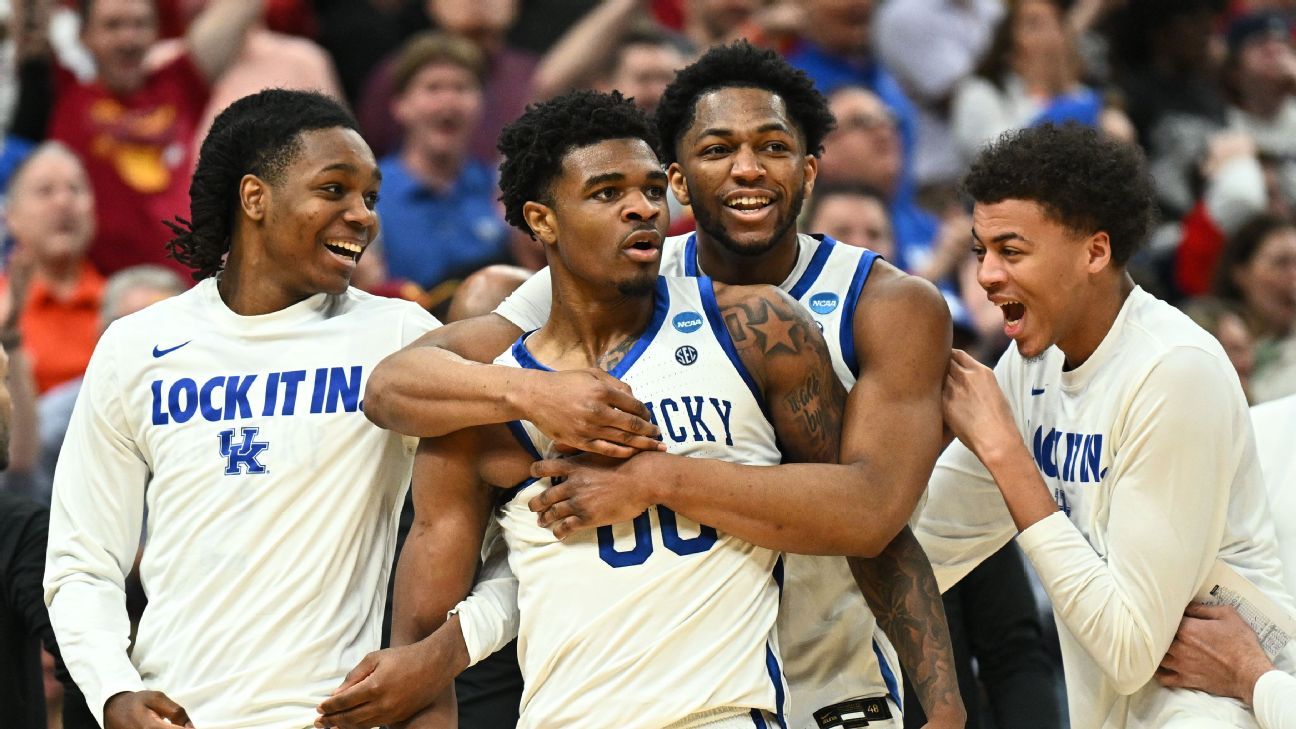
How Kentucky won: Add what Otega Oweh did to the list of great performances in Kentucky’s tournament history. Oweh scored a career-high 35 points to send the 7-seed Wildcats to the next round. Oweh’s midcourt prayer that banked through the net at the buzzer sent the game into overtime and helped the Wildcats avoid the upset. Oweh fueled Kentucky’s offense and held off a balanced Santa Clara attack that was led by Elijah Mahi and Allen Graves. Graves thought he had the game winner with two seconds left. But Oweh made sure he and the Wildcats had the last word. — Ben Baby
play
0:25
Santa Clara-Kentucky trade late 3s in wild sequence to force OT
Santa Clara’s Allen Graves and Kentucky’s Otega Oweh hit clutch 3-pointers to send the game to overtime.
Kentucky’s second-round opponent: Iowa State
How the Wildcats can advance to the Sweet 16: It starts with taking care of the ball. Iowa State thrives when it can force turnovers and get out in transition for easy baskets. The Cyclones are fourth in the country in defensive turnover percentage and in points off turnovers per game. Kentucky was 12th in the SEC in turnover percentage, although the Wildcats have tightened things up lately, giving it away just 46 times in their last five games. Still, they’ve had issues against teams applying aggressive ball pressure, including against Vanderbilt and Texas A&M, the most turnover-prone defenses in the SEC. They will also need to make shots from the perimeter — they shoot better than 37% from 3 in wins compared to just 29% in losses. Iowa State can guard the 3, but Kentucky’s trio of Otega Oweh, Denzel Aberdeen and Collin Chandler have to get going. — Jeff Borzello
One sad chunk of salmon crudo in citrus soy dressing that everyone’s too polite to take – that’s what a small plates dinner usually comes down to;. Plus, one third of a portion of miso hispi cabbage and a spoonful of seasonal risotto for the fun, unfilling price of around £65.20. “Does anyone want that?” one person hopefully asks, before the waiter carts away the last morsel of the meal that’s worth about a fiver back to the kitchen, never to be seen again.
Small plates, even if never economical, used to be quite cool and adventurous. Stanley Tucci has openly shared his love for Duck Soup in Soho. Paul Mescal frequents Brat in Shoreditch. You’d be hard-stretched to find an Instagram dump shared by Dua Lipa without a candle-lit photo of a collection of small china plates clustered aesthetically together next to some thin-stemmed wine glasses. Singletons even mentioned small plates in their dating profiles to indicate they were edgy and elegant. This was an à la mode, not à la carte, way of eating. Until it wasn’t.
Because there has been a shift. These paltry portions that were pricy but chic no longer hit the same note. Diners have small plate fatigue. We want to be full, and we have less money in the current climate to take risks. Order the recommended three to four dishes per person at £20-£30 a plate? No thanks. In fact, according to data from OpenTable, 56 per cent of UK diners now prefer individual options over sharing plates. But more than the outrageous cost, small plates simply no longer feel special.
Everywhere you turn, there’s another restaurant with a sign in the same scrawling font serving biodynamic wine, roasted fennel, grilled tuna belly and roasted artichoke on industrial metal tables. The formula has become so predictable that it’s routinely parodied by one successful content creator on TikTok who’s made up her own fictional small plates restaurant, Prick. “We’re not actually a restaurant, we’re an eatery space,” she says to the camera with convincing condescension. “We’re on a seasonal mediterranean vibe tonight,” she explains to her digital diners. “So, that means if you haven’t pre-eaten you will be going home hungry.”
Dining out used to mean you’d order a starter, main and maybe some sides to share. That changed in 2009, when Russell Norman opened Polpo in Soho. Inspired by the “ciccheti” culture in Venice, the restaurant sold smaller servings of dishes at (importantly) a reduced price, so they could be shared with a group. The concept was immediately popular in London, with swathes of restaurants following the formula – but not always the price point.
“For the last 10 to 15 years or so, East London has been the gentrifying frontier with these hip, artisanal, aesthetic restaurants,” says Peter Harden of Harden’s restaurant guide.
“Restaurants and business people look at what sells and then everyone piles in, so we’ve got more and more of it – But I think we can say fairly conclusively that the East End of London is well discovered now, and that this type of eating is no longer radical.
“There’s a definite possibility that the trend is running its course,” he adds. “It is, maybe, starting to look a bit passe in terms of its appeal.”
Small plates are, TikTok parodies aside, descending into farce. A new “snack” section appearing on menus can see you set back £10 for one singular chicken nugget, before you’ve even entered into the core main small plate section of the meal. If we continue to distil at this rate, we’ll have a “crumbs” section on the menu by 2027, where waiters serve you the aftermath of a bread basket, rather than the thing itself.
Instagram social commentator Socks House Meeting, who has made many a meme lovingly mocking the East London crowd who pile into small plates restaurants, says there’s now a three-tier structure to the trend: “Actual-experience, sit-down natural wine type restaurants, which have been there from the start of it becoming popularised; the gastropub-type, wooden-interior, public house group-adjacent places, which have jumped in; and then really off-key places you’d not expect to see it, like Wetherspoons and All Bar One, who are now labelling what would’ve been called ‘starters’ or ‘sides’ as small plates.”
As this race to the bottom continues, it’s perhaps unsurprising that there’s been a bounce back towards restaurant maximalism in retaliation. Many recent openings in the capital – Field Notes in London Fields, The Hart in Marylebone (from the team behind The Pelican and The Hero) have opted for simple, filling menus that offer just a handful of starters and reliable mains like steak and potatoes and fish stew, over frills.
Sasha Shaker, Senior Director at OpenTable in the UK and Ireland, says the move away from small plates indicates a broad return to traditional dining, which has coincided with a yearning for the past. “[We’re seeing] nostalgia play a role, especially among Gen Z diners,” she says, “with retro comfort dishes like bangers and mash (29 per cent) and prawn cocktail (28 per cent) among the dishes they’d love to see on menus in 2026.”
In a period of economic uncertainty that seems to have no signs of slowing down, eating out is a treat that we want to feel luxurious. Case in point: Martino’s in Sloane Square, which opened in November to rave reviews and is all about old school glamour. “It was de rigueur to rip off your linen tablecloths a few years ago,” says Harden. “They did it at The Connaught – but they were never foolish enough to do that at The Ritz. It was a bit like dad-dancing; five stars trying to get hip and down with the kids,” he adds of the luxe confidence crisis.
“But in the long term… creature comforts don’t change that much over the years,” Harden muses of the direction we’re headed back to now. “Polished hipster concrete and low lighting is nice, but people are always going to like comfy chairs… Sometimes, you just want lots of people being extremely nice to you and making you feel important.”








 (7)
(7)