The fog from the Iran war is obscuring the Federal Reserve’s view of the U.S. economy.
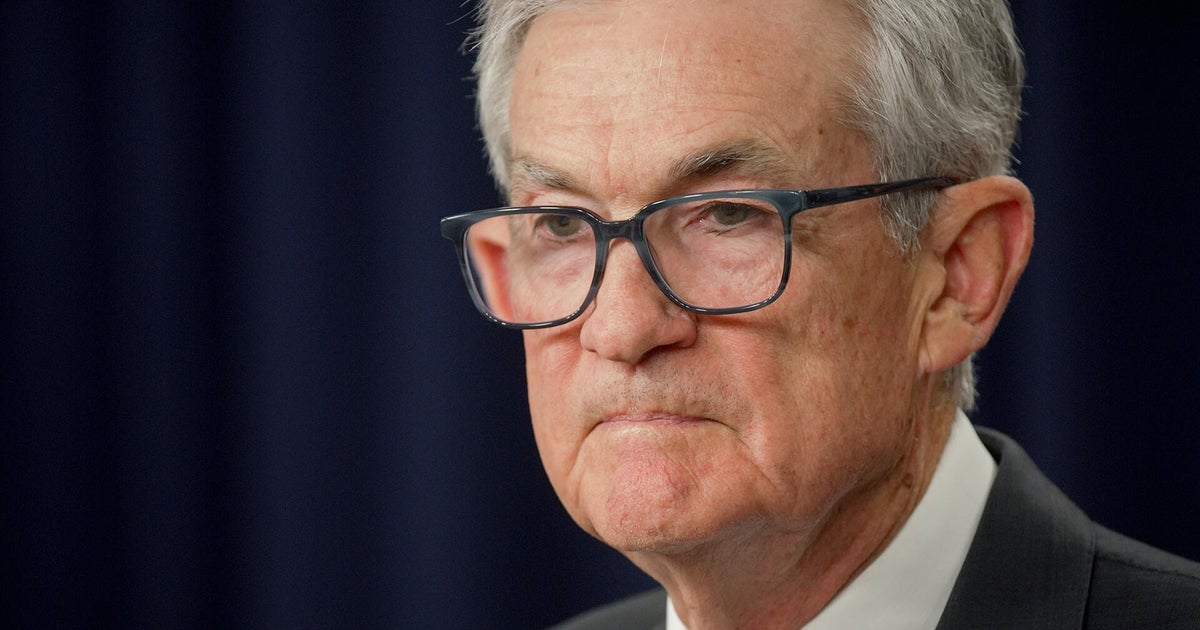
Investors were rattled on Wednesday, when the central bank said it is holding interest rates steady, after Fed Chair Jerome Powell repeatedly underlined the mounting uncertainty caused by the escalating Middle East violence. Stocks slumped during his afternoon press conference, and have continued to drop on Thursday.
“The Fed is frozen,” Heather Long, chief economist at Navy Federal Credit Union, told CBS News. “We’re in this world where clearly the risks are elevated to the extreme, and the No. 1 question for the economy is when does the Strait of Hormuz reopen — and that isn’t really an economic question.”
About 20% of the world’s oil supply travels through the Strait of Hormuz in the Persian Gulf, which has been effectively paralyzed by the Iran war.
Here are three reasons the Fed’s latest economic outlook is causing investors to fret.
The Fed looks frozen
During Wednesday’s press conference, Powell used the phrase “we don’t know” at least 14 times and said “wait-and-see” another four times. The upshot, according to EY-Parthenon chief economist Gregory Daco: The Fed doesn’t want to preemptively adjust monetary policy given the roiling uncertainties around how the Iran war could evolve.
“It seems clear that the Fed was blindsided by recent inflation data and paralyzed by the Iran conflict, leaving [Fed] participants caught like deer in the headlights,” Tim Duy, chief U.S. economist at SGH Macro Advisors, told clients in a report.
The Fed on Wednesday also released its latest Summary of Economic Projections, a quarterly report that outlines its members’ expectations for everything from inflation to economic growth. The forecast shows that Fed officials expect inflation to be slightly hotter in 2026 than in their December forecast.
At the same time, Powell downplayed his confidence in that outlook, highlighting the unknowns now facing the central bank as oil and gas prices surge due to the Iran war.
“The thing I really want to emphasize is that nobody knows,” Powell said. “The economic effect could be bigger, they could be smaller, they could be much smaller or much bigger. We just don’t know.”
Rate cuts may be off the table this year
Powell’s remarks suggest the Fed may opt against lowering its benchmark interest rate in 2026, economists noted. Before the meeting, the Fed had been expected to cut rates once or even twice this year, Long noted.
Now, CME FedWatch, which tracks expectations for the Fed’s rate decisions, shows an almost 75% probability of no rate cuts this year.
“That’s a pretty big shift,” she added.
The so-called “dot plot” — a chart that shows where each Fed official expects the federal funds rate will be in the near future — also signals that Fed members are less confident that additional rate cuts could occur in 2026, noted Bill Adams, chief economist for Comerica Bank.
Seven Fed officials penciled in no rate cuts in 2026, while seven support one, and five policymakers predict two or more.
“Overall, the dot plot of median rate expectations highlights a deeply divided committee,” Daco said.
The job market has stalled
The Federal Reserve’s dual mandate requires it to keep inflation low while also ensuring full employment.
On Wednesday, Powell noted that the unemployment rate remains relatively low, at 4.4%, but added that job creation has slowed to a standstill. “Effectively, there is zero net job creation in the private sector,” he said.
Typically, the Fed cuts interest rates to bolster the job market because lower borrowing costs make it cheaper for businesses to expand and hire new workers. But the central bank is balancing labor market weakness with stubborn inflation, which has remained above the Fed’s annual 2% annual target and which is expected to rise because of surging energy prices.
A plus for U.S. workers is that layoffs remain low by historical standards. Still, that doesn’t mean the job market is humming, experts noted. The U.S. shed 92,000 jobs in February, an unexpected setback after economists had forecast a gain.
“The United States is in a hiring recession,” Long said. “Americans are worried and frustrated about it — it’s really hard to get a job right now.”
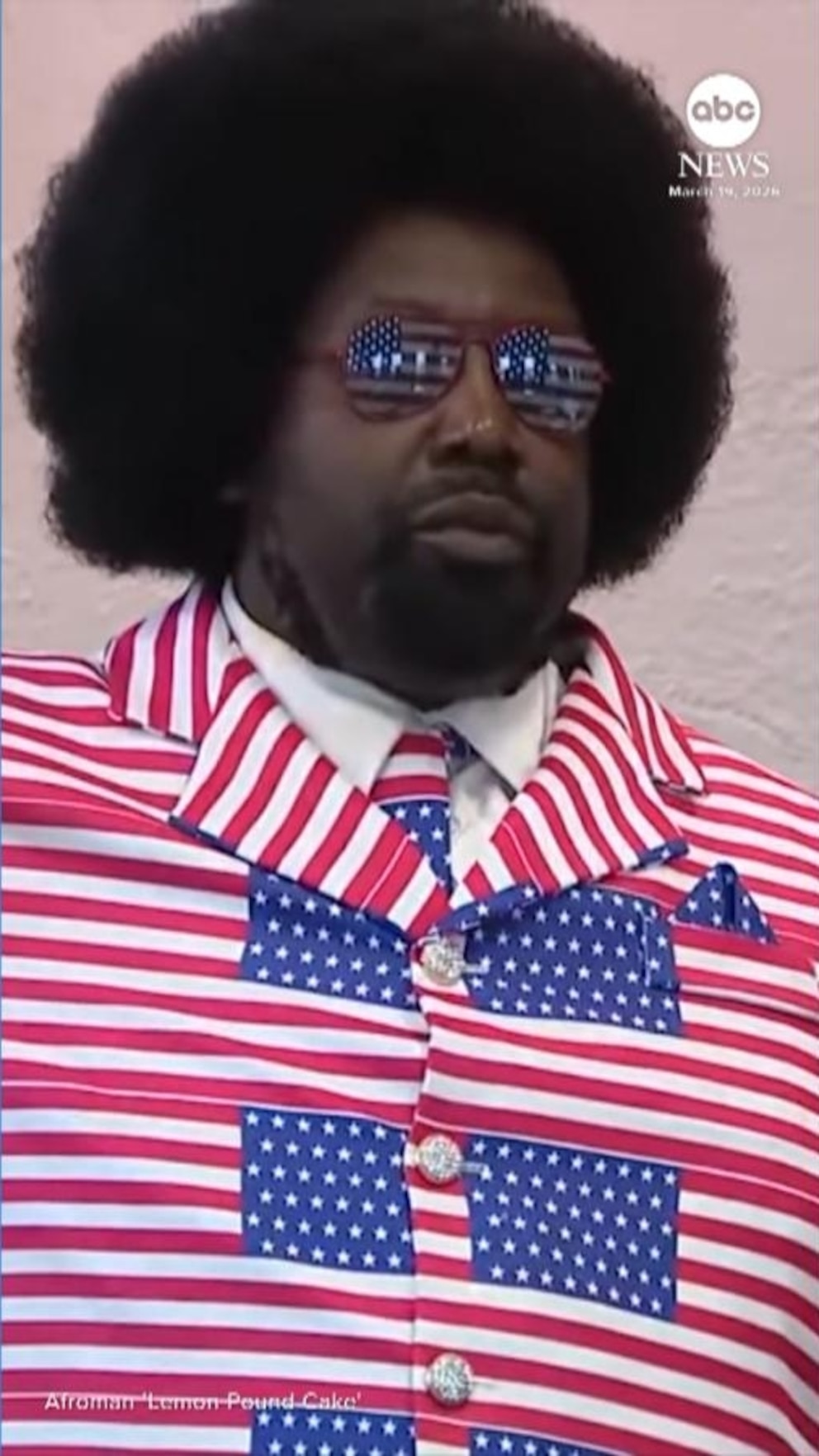
Jury sides with rapper Afroman in police music video case
Grammy-nominated rapper Afroman won a defamation lawsuit filed by seven Ohio sheriff’s deputies who sued him over music videos in which he used home security footage to mock their raid of his home.
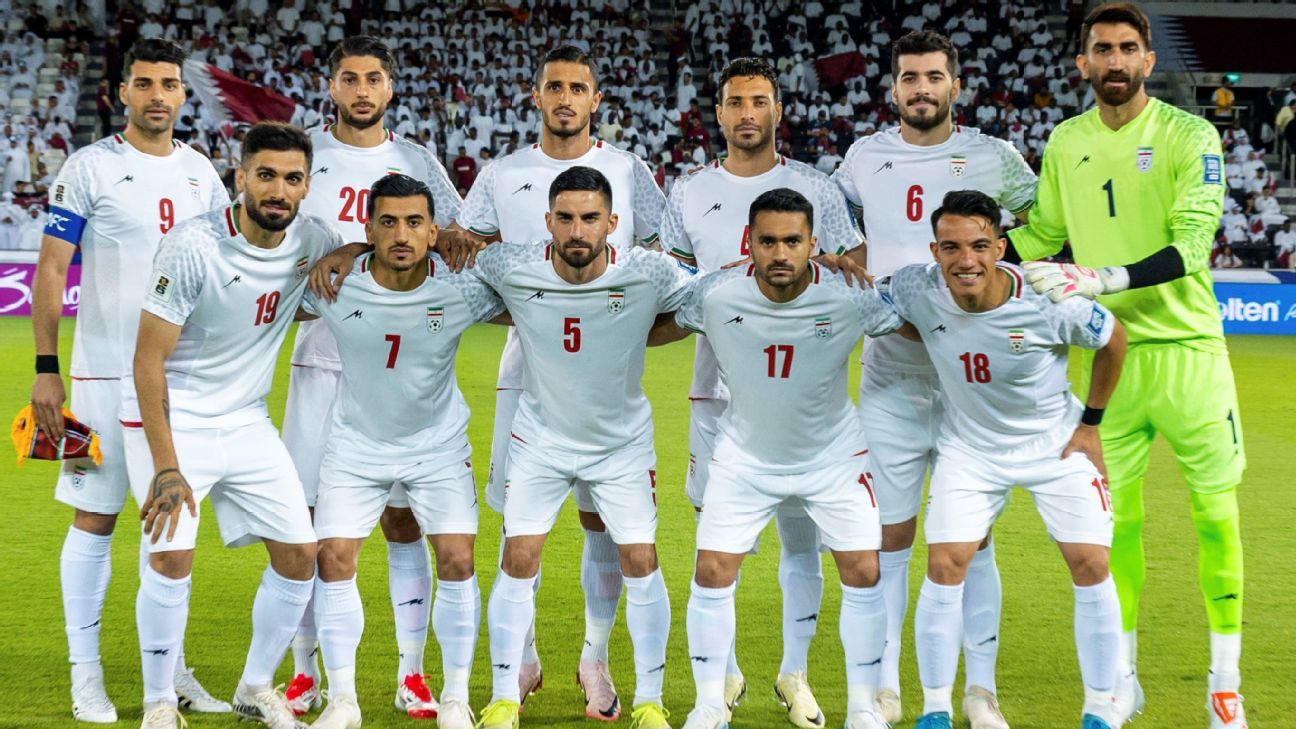
Iran will “boycott the United States, but not the World Cup,” the president of the country’s football federation said Wednesday, in quotes reported by Iran’s Fars news agency.
Iran’s participation at the finals, which are being co-hosted this summer by the U.S., Mexico and Canada, has been cast into doubt after the United States and Israel launched air strikes on the country at the end of February.
Iran are due to play all three of their group matches in the U.S., but the country’s football federation chief, Mehdi Taj, said Wednesday: “We will be preparing for the World Cup. We will boycott the United States, but we will not boycott the World Cup.”
That followed on from quotes attributed to Taj posted on the X account of the Iranian embassy in Mexico on Tuesday, in which he said they were “negotiating” with FIFA to move Iran’s matches to Mexico.
“When Trump has explicitly stated that he cannot ensure the security of the Iranian national team, we will certainly not travel to America,” the statement said. “We are currently negotiating with FIFA to hold Iran’s matches in the World Cup in Mexico.”
In a statement on Tuesday, FIFA said it is “in regular contact with all participating member associations, including [the Islamic Republic of] Iran, to discuss planning for the FIFA World Cup 2026. FIFA is looking forward to all participating teams competing as per the match schedule announced on Dec. 6, 2025.”
FIFA president Gianni Infantino publicly addressed the Middle East conflict for the first time following the conclusion of a FIFA council meeting Thursday.
“FIFA can’t solve geopolitical conflicts, but we are committed to using the power of football and the FIFA World Cup to build bridges and promote peace as our thoughts are with those who are suffering as a consequence of the ongoing wars,” he said.
“FIFA is looking forward to all teams participating at the FIFA World Cup to compete in a spirit of fair play and mutual respect.
“We have a schedule,” he added. “We will soon have the 48 competing teams confirmed and we want the FIFA World Cup to go ahead as scheduled.”
Even if Iran’s group games were moved, there would still be an issue with subsequent knockout matches. If Iran and the U.S. finish second in their groups, for example, the sides will meet at AT&T Stadium in Arlington, Texas, on July 3.
Moving the games would be unprecedented less than three months before the start of the World Cup.
U.S. President Donald Trump said last week it would not be “appropriate” for Iran to play at the World Cup “for their life and safety.”
Asked Tuesday if Mexico was open to hosting the matches, Mexico President Claudia Sheinbaum told a news conference: “Yes. Mexico maintains diplomatic relations with every country in the world, therefore we will wait to see what FIFA decides.”
The Fars news agency also quoted Taj as saying Wednesday that Iran intends to press ahead with friendlies against Nigeria and Costa Rica in Türkiye later this month.
PA and The Associated Press contributed to this report.
NEW YORK — For decades, the strongest evidence for the earliest human settlement in the Americas came from a site in Chile called Monte Verde.
Scientists found echoes of human presence dating back to around 14,500 years ago, including footprints, wooden tools, foundations for a building and the remains of an ancient fire pit. They dated sediments and artifacts from the site to this time frame.
A new study challenges the age of this important site, suggesting Monte Verde might be much younger than scientists thought. But not everyone agrees with the findings.
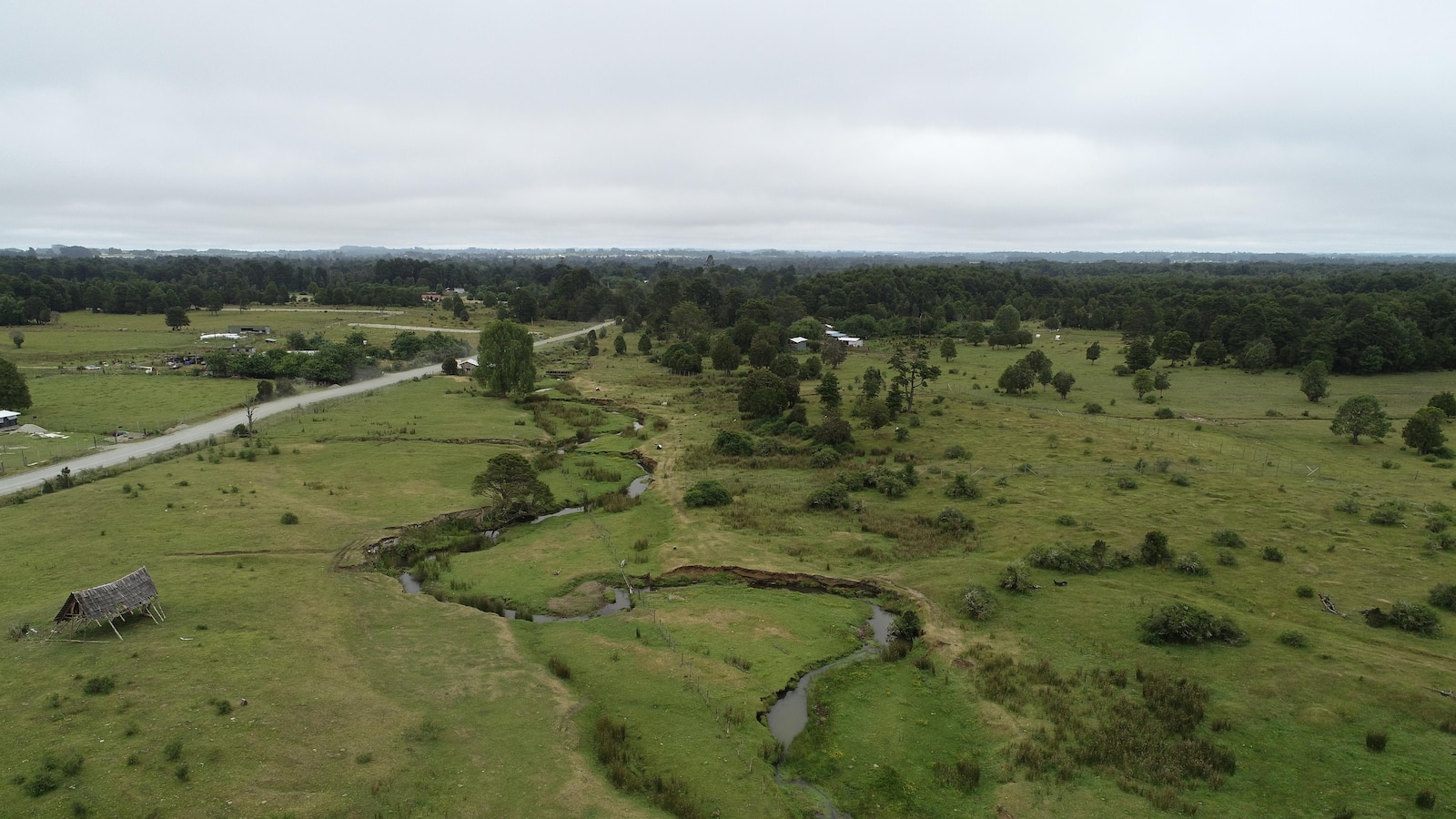
Scientists sampled and dated sediments from nine areas along the Chinchihuapi Creek by the site and analyzed how the landscape changed over thousands of years. They uncovered a layer of volcanic ash from an eruption dating back to about 11,000 years ago.
Anything above that layer — in this case, the Monte Verde wood and artifacts — had to be younger, according to study co-author Claudio Latorre.
“We basically reinterpreted the geology of the site. And we came to the conclusion that the Monte Verde site cannot be older than 8,200 years before present,” said Latorre, who works at the Pontifical Catholic University of Chile.
The researchers think changes to the landscape, including a stream wearing down the rocks, may have mixed old layers with new, causing researchers to date ancient wood as part of the Monte Verde site.
The findings were published Thursday in the journal Science. Several scientists, including those involved with the original excavations, take issue with the results.
“They have provided, at best, a working hypothesis that is not supported by the data they presented,” said Michael Waters of Texas A&M University, who had no role in either study.
Experts not involved with the research say the study includes analysis of samples from the area surrounding Monte Verde, where the geology isn’t comparable to the site itself. And they say there’s not enough evidence that the layer of volcanic ash once covered the entire landscape.
They also say the study doesn’t offer a sufficient explanation for the artifacts found at the site that have been directly dated to 14,500 years ago, including a mastodon tusk fashioned into a tool, a wooden lance and a digging stick with a burned tip.
“This interpretation disregards a vast body of well-dated cultural evidence,” archaeologist Tom Dillehay of Vanderbilt University, who led the site’s first excavation, said in an email.
The new study’s authors disagree with these criticisms, saying they sampled within, upstream and downstream of the site. And there’s not enough evidence that the dated artifacts at the site really are that old, said co-author Todd Surovell, of the University of Wyoming.
The Monte Verde site is critical to scientists’ understanding of how people got to the Americas. Scientists used to think the first arrivals were a group of people 13,000 years ago who made tipped stone tools known as Clovis points. The discovery and dating of Monte Verde, which was initially mired in controversy, appeared to put that to rest.
It’s unclear how a new date for the site might affect the human story. Since Monte Verde, researchers have uncovered sites in North America that predate the Clovis people, such as Cooper’s Ferry in Idaho and the Debra L. Friedkin site in Texas.
But another big question is how, exactly, people got to the Americas from Asia, maneuvering south of two massive ice sheets covering Canada. Did humans arrive in time for the sheets to part, revealing an ice-free corridor? Did they travel along the coast in boats, or over a mix of water and land?
A revised date for Monte Verde could reopen discussions about the most likely route by early humans, said Surovell. Future independent analyses of other early human sites could provide more clarity.
“Given enough time and given the ability to do science, science is self-corrective,” Surovell said. “It eventually reaches the truth.”
___
The Associated Press Health and Science Department receives support from the Howard Hughes Medical Institute’s Department of Science Education and the Robert Wood Johnson Foundation. The AP is solely responsible for all content.
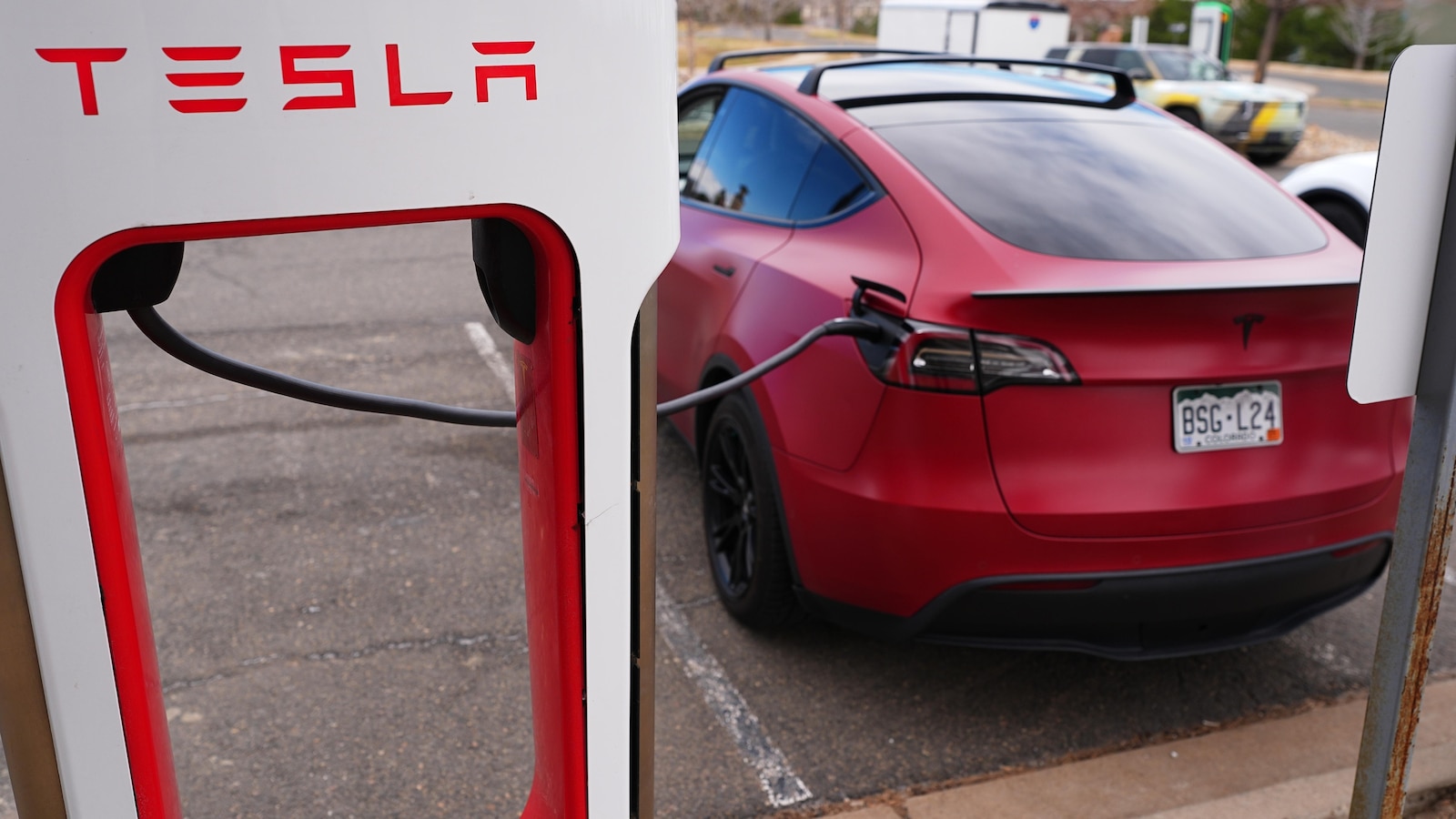
Federal auto regulators have escalated a probe of Tesla after several of its cars crashed while using its self-driving feature, just as CEO Elon Musk prepares to roll out a new model with no steering wheel or pedals
NEW YORK — Federal auto regulators have escalated a probe of Tesla after several of its cars crashed while using its self-driving feature, just as CEO Elon Musk prepares to roll out a new model with no steering wheel or pedals.
The National Highway Traffic Safety Administration said in a memo that it was examining nine crashes where the self-driving software failed to quickly alert drivers to take control in fog and other poor conditions because the vehicle’s cameras weren’t picking out road hazards. The NHTSA memo signals a regulatory investigation begun in 2024 over poor visibility crashes could now lead to enforcement action, possibly including a recall of 3.2 million Tesla vehicles.
Tesla stock fell 3.1% to $380.75 in early afternoon trading Thursday.
The increased regulatory scrutiny comes as Tesla is trying to convince investors that the future of the company lies less in selling cars as sales drop and more in making its self-driving software ubiquitous. Musk has said he will soon turn millions of Tesla cars already on the road into taxis that their owners can rent out when they are not using them.
As part of that transition, Musk said Tesla will roll out its robotaxi service with no one behind the wheel in several U.S. cities this year. It is also planning to launch production of its no-wheel-no-pedal Cybercab to sell to customers next month.
Tesla did not immediately respond to a request for comment.
Unlike other autonomous vehicles, Tesla vehicles rely solely on cameras to spot problems on the road. Others supplement cameras with light radar or lidar, a more expensive method that Musk has dismissed as unnecessary.
The NHTSA probe into crashes when there is sun glare or dust or too much fog will now move to an “engineering analysis,” a more serious level of scrutiny.
Tesla had called its driver assistance software Full Self-Driving, or FSD, a name that auto experts and regulators have said is misleading because drivers must always keep their eyes on the road and be ready to take over at any time. The company has since changed the name to Full Self-Driving (Supervised).
Of the nine crashes under review, Tesla has told regulators that three would not have occurred with new over-the-air FSD upgrades.
Tesla is facing several regulatory other probes including one over its FSD-equipped cars running red lights and another on door handles that reportedly failed to work in crashes, trapping passengers inside.
The logo of pharmaceutical company Novo Nordisk is displayed in front of its offices in Bagsvaerd, Copenhagen, Denmark, Feb. 4, 2026.
Tom Little | Reuters
The Food and Drug Administration on Thursday approved a higher-dose version of Novo Nordisk‘s blockbuster weight loss injection Wegovy, as the company pushes to win back market share from chief rival Eli Lilly.
Novo expects to launch the higher, 7.2-milligram dose of Wegovy in April. The Danish drugmaker is positioning that version to better compete with Lilly’s obesity drug Zepbound, which has proven to be more effective at promoting weight loss than the standard, 2.4-milligram dose of Wegovy.
That higher efficacy has helped Zepbound become the preferred obesity medication among prescribers and patients, even though it entered the U.S. market later than Wegovy, and has solidified Lilly’s position as the dominant player in the space.
The high-dose Wegovy helped patients with obesity lose an average 20.7% of their weight after 72 weeks in a phase three trial. The standard dose of Wegovy has shown around 15% weight loss on average in clinical trials.
More CNBC health coverage
“I think it really makes it more competitive, and it really reduces the delta there,” Dr. Jason Brett, principal U.S. medical head at Novo Nordisk, said in an interview Thursday ahead of the approval.
“But even more importantly, I think it just gives patients another option if they’re not reaching their targets, and achieving some of these higher weight losses for certain patients,” he added.
In a separate phase three trial on patients with obesity and Type 2 diabetes, high-dose Wegovy demonstrated an average weight loss of 14.1%. People with diabetes typically have a harder time losing weight than people without the condition.
It marks the first approval of a GLP-1 treatment under the FDA’s new national priority voucher plan that aims to cut drug review times to one to two months for companies the agency says are supporting U.S. national health priorities. The FDA launched the pilot plan in June.
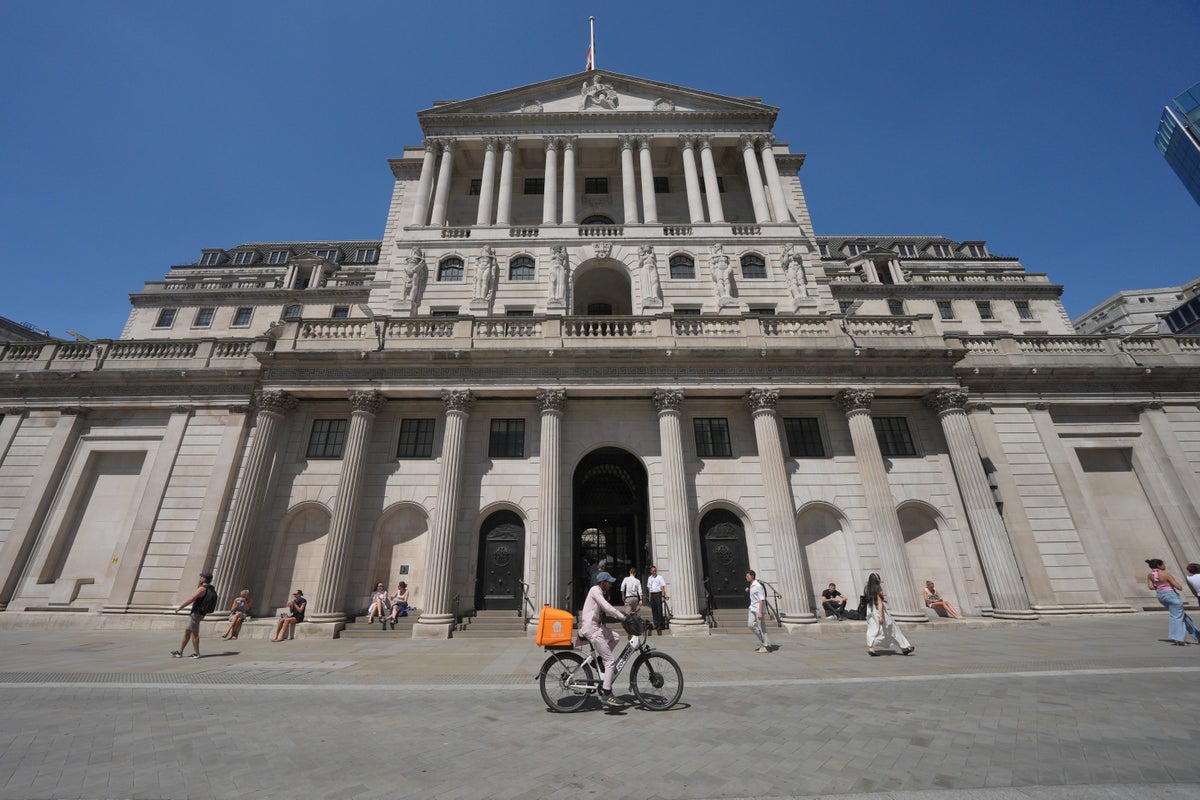
Stock prices in London and Europe closed firmly in the red on Thursday as markets continued to track developments in the Iran war, and digest this week’s interest rate decisions so far, before China’s is released later.
The US Federal Reserve left interest rates unchanged late on Wednesday, as did the European Central Bank and the Bank of England on Thursday. The People’s Bank of China releases its own rate decision at 1.15am UK time on Friday.
The World Trade Organisation (WTO) has warned, meanwhile, that the Middle East war could weigh heavily on already slowing global trade, with merchandise trade volume potentially growing just 1.4% this year, compared to 4.6% in 2025.
“Sustained increases in energy prices could increase risks for global trade, with potential spill-overs for food security and cost pressures on consumers and businesses,” WTO chief Ngozi Okonjo-Iweala warned.
Speaking of energy, US Treasury secretary Scott Bessent has said that Washington might “unsanction” Iranian oil that is already being shipped.
His comments to Fox Business came as energy prices made a renewed surge, after Iran hit the world’s biggest liquefied natural gas facility in Qatar and threatened to destroy the region’s energy infrastructure.
Mr Bessent added in the interview that the US government could also release more oil from its strategic reserves.
Meanwhile, President Donald Trump’s administration is not considering a ban on oil exports, a US official told news agency AFP, as the government scrambles to contain surging energy costs.
“Oil and gas export restrictions are not under consideration,” the Trump administration official said.
Brent oil was quoted at 110.46 US dollars a barrel at the time of the London equities close on Thursday from 108.21 dollars late on Wednesday.
The International Monetary Fund said it was monitoring the impacts of the war in Iran on global inflation and output, but that no countries had so far approached it for emergency assistance related to the conflict.
“If prolonged, higher energy prices will lead to higher headline inflation,” said IMF chief spokesperson Julie Kozack at a press briefing.
The FTSE 100 index closed down 241.79 points, 2.4%, at 10,063.50. The FTSE 250 was down 520.73 points, 2.4%, at 21,560.04, and the AIM all-share was down 25.36 points, 3.4%, at 727.85.
Oil major BP was the sole FTSE 100 riser, up 4.3%, while Shell lost 0.3%.
Gold miners were among the FTSE 100’s worst performers, with Endeavour down 7.9%, Fresnillo down 6.7%, and Antofagasta down 5.0%.
Gold was quoted lower at 4,603.53 dollars an ounce against 4,875.60 dollars.
While geopolitical tensions remain elevated, the resulting increase in energy prices has raised inflation concerns, reducing the likelihood of near-term rate cuts,” DHF Capital’s Bas Kooijman commented. “This has temporarily weighed on gold, as higher yields make non-interest-bearing assets less attractive.
“It is important to note that this movement reflects short-term market dynamics and profit-taking after record highs, rather than a change in gold’s long-term fundamentals.”
On AIM, Central Asia Metals lost 5.6%, after the miner reported a 2025 pre-tax loss of 58.5 million dollars (£43.7 million) from a 77.2 million dollars (£57.7 million) profit a year earlier, despite revenue rising, and declared a total dividend of 12p, down from 18p.
It also guided for between 12,000 and 13,000 tonnes of copper, 18,000 to 20,000 tonnes of zinc-in-concentrate, and 26,000 to 28,000 tonnes of lead-in-concentrate 2026 production. This compares with 13,311 tonnes of copper, 17,881 tonnes of zinc-in-concentrate, and 25,156 tonnes of lead-in-concentrate in 2025.
Sancus Lending soared 49%.
The alternative financial services provider said pre-tax profit jumped to £1.2 million in 2025 from £130,000 a year ago, while revenue climbed 32% to £22.1 million, and that the macroeconomic environment remained mixed while several structural trends supported its outlook.
Sancus cited continued undersupply of housing across the UK and Ireland, increasing regulatory pressure on traditional banks, and growing institutional and private wealth appetite for secured private credit strategies, among others.
Among small caps, gold exploration firm Mila Resources fell 9.6%, but announced that reverse circulation drilling is underway at its Yarrol gold project, with around half of the planned 1,600-metre programme completed despite adverse weather.
Mila said diamond drilling has extended the mineralised system to about 300 metres depth, confirming structural controls on gold mineralisation, with further assay results pending.
In other UK news, Prime Minister Sir Keir Starmer is sticking to his “red lines” on links with the EU, Downing Street said after the mayor of London, Sadiq Khan, called for Labour to pledge to rejoin the bloc at the next election.
However, Chancellor Rachel Reeves, earlier this week, set out plans to follow more of the EU’s rules, saying closer alignment would help bring down prices and inflation.
In European equities on Thursday, the CAC 40 in Paris closed down 2.0%, while the DAX 40 in Frankfurt ended down 2.8%.
Meanwhile, the dollar traded lower.
The pound was quoted at 1.3367 dollars at the time of the London equities close on Thursday, higher compared to 1.3334 dollars on Wednesday. Against the euro, sterling rose to 1.1597 euros from 1.1577 euros a day prior. The euro stood at 1.1527 dollars, higher against 1.1517 dollars. Against the Japanese yen, the dollar was trading lower at 158.09 yen compared to 159.45 yen.
Stocks in New York were lower. The Dow Jones Industrial Average was down 0.8%, the S&P 500 index down 0.7%, and the Nasdaq Composite down 0.8%.
The yield on the US 10-year Treasury was quoted at 4.27%, widening from 4.22%. The yield on the US 30-year Treasury was quoted at 4.84%, narrowing from 4.86%.
The Pentagon is seeking 200 billion dollars (£149.4 billion) in additional funds for the Iran war, a senior administration official has said, according to PA. The Washington Post first reported the request.
The department sent the request to the White House, according to the official, who spoke on condition of anonymity to discuss the private information.
Asked about the figure at a press conference on Thursday, defence secretary Pete Hegseth did not directly confirm the figure, saying it could change.
However, he said: “We’re going back to Congress and our folks there to ensure that we’re properly funded,” adding that it, “takes money to kill bad guys”.
Also, new US jobless claims fell more than expected last week, signalling continued resilience in the labour market, according to data released by the department of labour.
In the week ended March 14, initial claims for state unemployment benefits decreased by 8,000 to 205,000 from an unrevised 213,000 the week before. FXStreet had expected initial claims to stand at 215,000.
The highest stocks on the FTSE 100 were: BP, up 23.8p at 579.6p; Schroders, down 0.5p at 572.5p; Games Workshop, down 20.0p at 17,220.0p; Sage, down 1.40p at 835.8p; and Shell, down 11.5p at 3,450.0p.
The biggest fallers on the FTSE 100 were: Barratt Redrow, down 25.5p at 262.15p; NatWest, down 49.4p at 530.6p; Endeavour Mining, down 348.0p at 4,058.0p; M&G, down 23.6p at 278.5p; and Fresnillo, down 224.0p at 3,098.0p.
On Friday’s economic calendar, look out for UK public sector net borrowing, German producer inflation, and eurozone current account and trade data.
On Friday’s UK corporate calendar, JD Wetherspoon and Smiths Group report their half-year results.
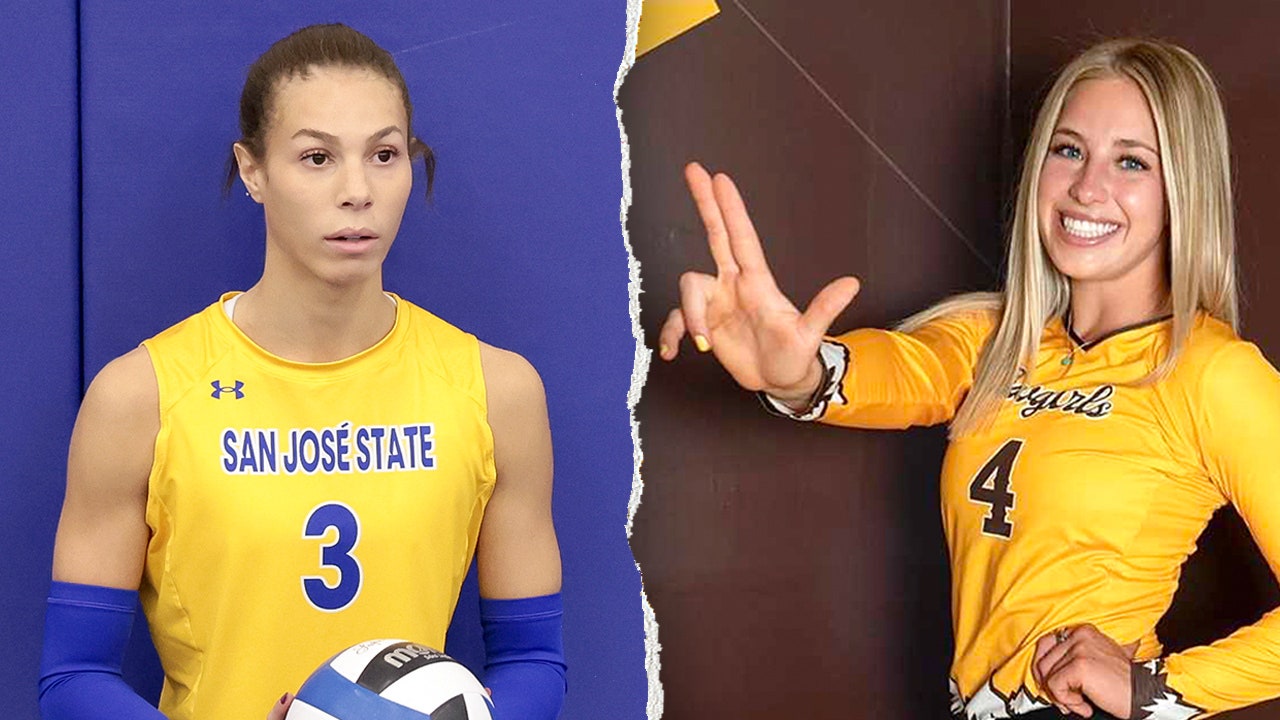
As San Jose State University approaches a critical deadline in its Title IX conflict against President Donald Trump’s administration, another woman who was affected by the school’s 2024 volleyball scandal has come forward.
Former University of Wyoming volleyball star Macey Boggs said her team was “torn apart” over a decision whether or not to forfeit two matches to SJSU in 2024. The Spartans were embroiled in a national controversy at that time due to the presence of a biological male transgender athlete on the roster.
Boggs said in a recent interview the players found out about the trans player, who they competed against two years prior, in the spring of 2024. When the fall rolled around, the locker room became a hive of tension and nerves due to the two scheduled matches between Wyoming and SJSU, and disagreements on whether to forfeit or not.
Former University of Wyoming volleyball star Macey Boggs(Courtesy of Macey Boggs)
“You could tell that things got a little bit hostile,” Boggs told Fox News Digital.
“In between the whispering between each other’s back, and then we were no longer one team, one unit, it was like these two separate islands.”
Friendships were permanently ruined for Boggs and the rest of the Cowgirls, she said.
“Yeah,” Boggs said when asked if the situation “permanently ruined friendships.”
“There were some of the girls who I really enjoyed and we got along great and then this situation came up, some conflict came up, and ultimately we went in separate directions because of that … as soon as we played in our last game, we all went in separate directions… it was hard to maintain those relationships.”
How did it get to that point?
The first Mountain West team to forfeit to SJSU that year was Utah State, becoming the first of five conference teams to do so.
Former Utah State star Kaylie Ray previously told Fox News Digital that the decision was left up to a player poll, and the majority of players voted to forfeit.
Wyoming also left the decision up to a player vote, per Boggs. But that vote had troubling outcome for her.
“It was said that it was up to the players. So we took an anonymous vote, it ended up we were going to play because most of the girls on my team wanted to play,” Boggs said. But she and others weren’t going to play anyway, regardless of the vote.
“There were a few of us who were like, ‘We’re not gonna play.’ So we decided we’re not gonna play… There was a lot of conflict within the team… and it was not something you should have to deal with on your team… It just seems so silly and something that tore apart the team.”
The divide came with several difficult conversations for Boggs.
But most of the conversations weren’t necessarily ideological, over whether males should be able to play in women’s sports. Boggs said the conversations were mostly about the pain of taking two losses on their record, when they were all working so hard to make the playoffs.
It was especially hard for the seniors.
“One of the hardest conversations, there were two, one of them was a fellow senior and she said ‘this is my fellow senior year, I don’t want it to be ruined by this. And I fully resonated with that because it was also my senior year and it was ruined by that,” Boggs said.
“One girl was doing really well statistically in the Mountain West and the NCAA and she mentioned, ‘how is this going to affect my stats?’ And that didn’t settle well for me because I was like, ‘ok that’s kind of selfish.’
“I understood where she was coming from … but ultimately it’s a bigger issue.”
Boggs and the players who were determined not to play the game were preparing to tell the coaches of their intent.
But just then, prior to the first match between Wyoming and SJSU on Oct. 5 of that year, the players were called into another meeting, Boggs said.
Boggs claims that Wyoming Athletic Director Tom Burman told them they were instructed by the Wyoming state government to forfeit the game.
“By the time it was time to tell the coaches, we had another meeting, and ultimately the government decided that ‘hey, you’re not gonna play,’ which was awesome. Boggs said.
“It was told to us by our AD Tom Burman, so he was the one who said, ‘this is the decision that has been made, it’s been taken out of your guys’ hands. And I’m so grateful for that.”
Fox News Digital has reached out to University of Wyoming Atheltics and Wyoming Governor Mark Gordon’s office for a response.
The dispute was resolved. But the consequences remain.
Wyoming went on to finish the season 17-13, losing six of their last nine games. They finished two games out of the final spot in the conference tournament, and would have made the tournament had they won their two games against SJSU. It was Boggs and other seniors’ last chance to make the tournament in their Wyoming careers.
Within the locker room, the disagreements over initial vote left rifts. Boggs and the women on her side dug their heels in deeper.
In November of that year, Boggs and teammates Sierra Grizzle and Jordan Sandy joined former SJSU volleyball star Brooke Slusser’s lawsuit against the Mountain West Conference. Slusser initially brought the scandal into the national spotlight that September, when she joined Riley Gaines’ lawsuit against the NCAA, with Slusser citing her experience playing with and rooming with trans teammate Blaire Fleming without ever being officially told of Fleming’s birth sex.
Boggs, Grizzle and Sandy joined Slusser and seven other conference players in suing the Mountain West and representative of SJSU and the California State University (CSU) system.
Boggs said the decision to take things that far earned the respect of teammates who initially voted to play the game.
Once they joined, Boggs said she told her other teammates, “‘Hey, can we talk to you guys. We’ve decided to join this lawsuit and this is why.”
“And after that, they like totally understood … I think that standing up for something can be extremely scary, and something you need to be very brave and bold in.”
The Slusser v Mountain West lawsuit was partially dismissed by federal judge Kato Crews earlier in March, with all charges being dismissed against the Mountain West.
However, Title IX claims and representatives of SJSU and CSU were not dismissed. Crews is reserving a ruling on those charges until after the ruling in the ongoing B.P.J. v West Virginia Supreme Court case over trans athletes in women’s sports, and the Title IX implications.
At the same time, SJSU and CSU are waging a legal war of resistance to the Trump administration’s efforts to get SJSU to resolve its alleged Title IX violations for how it handled Fleming.
After the U.S. Department of Education announced an investigation determined that SJSU violated Title IX, and offered a series of compliance points to resolve it, SJSU and CSU sued the federal government to challenge the findings.
“I laughed,” Boggs said when she heard the news of SJSU’s lawsuit. “That seems like something that is a little bit silly. I truly believe that we even shouldn’t be having lawsuits centered around men in women’s sports.”
U.S. Education Secretary Linda McMahon responded to the lawsuits on March 11, giving the institutions a deadline of 10 days to come to an agreement or risk federal funding cuts and a referral to the U.S. Department of Justice.
With that deadline coming up within a week, Boggs is the latest woman to have been impacted by the scandal to speak out about the experience, joining Slusser and Ray.
Both Slusser and Ray have gone viral on social media in recent weeks after speaking out, prompting criticism and even online insults from people with pro-transgender views.
Boggs said she’s faced online attacks from the other side ever since her decision to forfeit and join the lawsuit in 2024, and she is prepared to face more, if necessary.
“I will bare the weight all day, I will take any hate that has to come, because I truly believe in this. If you have to say these crazy things, I would rather you say them to me than those girls that I am fighting with.”
Jackson Thompson is a sports reporter for Fox News Digital covering critical political and cultural issues in sports, with an investigative lens. Jackson’s reporting has been cited in federal government actions related to the enforcement of Title IX, and in legacy media outlets including The New York Times, The Los Angeles Times, The Philadelphia Inquirer, The Associated Press and ESPN.com.
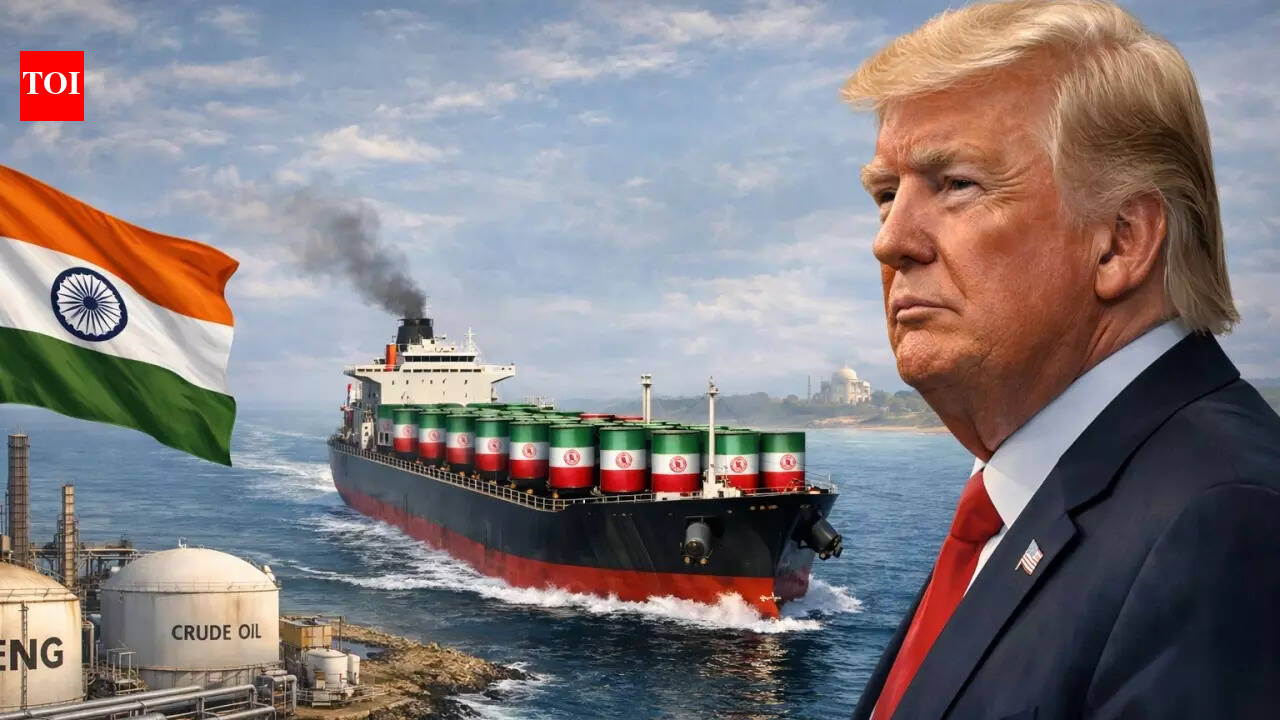
If the US were to ‘unsanction’ Iran oil at sea, India would be able to step up procurement. (AI image)
Will India get access to Iran crude oil soon? The Donald Trump administration has signalled the possibility of waiving sanctions on floating Iran crude oil to ease the ongoing shock in the global energy markets. The US-Israel-Iran war has driven up crude oil prices globally, with Brent crude rising to near $120 per barrel levels.The Trump administration has already issued a similar waiver for Russian crude oil which it had sanctioned to pressure Moscow to end the conflict with Ukraine. US Treasury Secretary Scott Bessent said on Thursday that Washington is considering the possibility of lifting sanctions on Iranian oil cargoes that are already in transit, as energy prices surge amid the ongoing Middle East conflict.His remarks, made during an interview with Fox Business, came as oil and gas markets rallied again following Iran’s strike on Qatar’s largest liquefied natural gas (LNG) facility and its threats to target broader regional energy infrastructure.“In the coming days, we may unsanction the Iranian oil that’s on the water. It’s about 140 million barrels. So depending on how you count it, that’s 10 days to two weeks of supply that the Iranians had been pushing out that would have all gone to China. In essence, we will be using the Iranian barrels against the Iranians to keep the price down for the next 10, or 14 days, as we continue this campaign,” Bessent said.Also Read | How Iran’s strikes on Qatar’s Ras Laffan, world’s largest LNG hub & other Middle East oil & gas infra, will impact India Bessent also indicated that the US could tap additional volumes from its strategic petroleum reserves to help stabilize global oil prices.The US has been working to contain the sharp rise in energy costs after US-Israeli strikes on Iran on February 28 triggered a wider escalation. Iran’s response has effectively disrupted commercial shipping through the Strait of Hormuz, creating bottlenecks in global energy supply chains. Under normal conditions, nearly one-fifth of the world’s crude oil and LNG shipments pass through this key route.
US sanction waiver for Iran oil soon? What it means for India
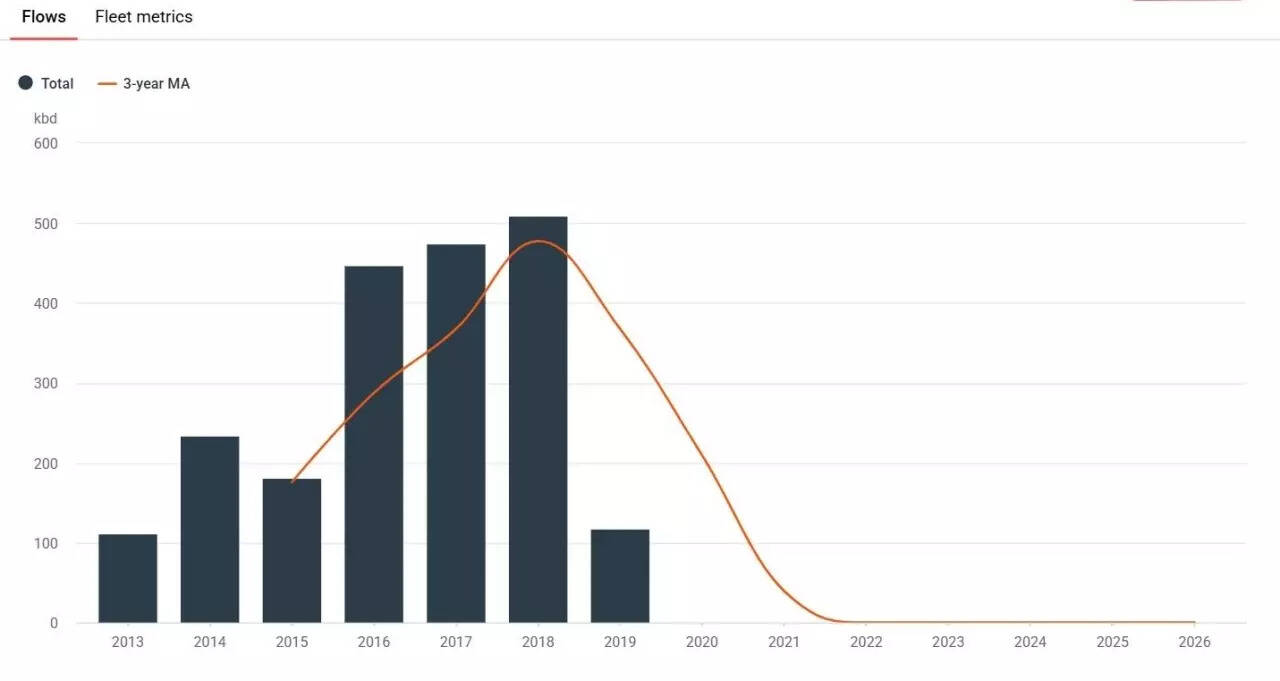
India has not been buying crude oil from Iran since mid-2019 after the US ended waiver for sanctions on Iran crude. Around 35-40% of India’s crude oil needs are met through cargoes that make their way towards Asia through the Strait of Hormuz. The de facto closure of Strait of Hormuz since the start of the US-Iran war has disrupted supplies for India, even as it works to ensure safe passage for its tankers.To mitigate any oil supply shock, India has been aggressively buying Russian crude oil in the last few weeks. According to a Bloomberg report, India bought 30 million barrels of Russian crude in a week after the conflict broke out.
India’s annual imports of Iran oil (Source: Kpler)
So, if the US were to ‘unsanction’ Iran oil at sea, India would be able to step up procurement, adding an important source to its crude supply basket.According to Sumit Ritolia, Lead Research Analyst, Refining and Modelling at Kpler, historically, India was a major buyer of Iranian crude, importing significant volumes of Iranian Light and Heavy grades due to strong refinery compatibility and favourable commercial terms. The expert says that speculation in the market about a possible relaxation or modification of US sanctions on Iranian crude has brought a significant variable back into focus for global oil flows. “India could emerge as a key demand centre to watch, alongside Chinese buyers (state-owned enterprises and large independents) and other Asian countries,” Ritolia says.Following sanctions tightening in 2018, imports stopped from May 2019, with crude oil volumes getting replaced by Middle Eastern, US and other grades. At peak, Iranian crude accounted for around 11.5% of India’s total imports as per Kpler data.Also Read | Armageddon scenario! Why Iran’s missile strikes on Qatar’s LNG spell nightmare for Europe, AsiaAlso, just like easily available Russian crude on sea, the supply of Iranian crude also remains substantial. Roughly 170 million barrels are estimated to be on water, including volumes that are held in floating storage as well as shipments in transit. According to Ritolia, Indian refiners retain the ability to re-integrate these barrels with minimal operational adjustments, supported by prior processing experience and established trading setups.However, the expert believes that any resumption of imports will depend largely on commercial viability and geopolitical developments rather than technical readiness from India’s perspective.“Key considerations include the scope and durability of sanctions relief (including on shipping), pricing structure, and the availability of payment, insurance and logistics mechanisms. If these conditions align, a ramp-up in Indian imports of Iranian crude could be significant, similar to the rapid increase observed in Russian crude intake following the easing of Western sanctions,” he concludes.
Phishing emails are getting more convincing every day. Scammers copy the look of trusted brands and rely on urgency to get you to click before you think. But sometimes the most misleading part of a scam is not the email itself. It is the signal your own email app gives you.
A CyberGuy reader recently sent us a screenshot of an email that looked suspicious but included something surprising at the top. Apple Mail displayed a banner that said, “This message was sent from a trusted sender.” At first glance, that message feels reassuring. Many people would assume the email must be legitimate. The reader sent the screenshot with the subject line “Another sneaky trick.” In the image, Apple Mail labels the message as coming from a trusted sender even though the email itself shows several signs of a phishing scam.
Here is the catch. That label comes from Apple Mail itself, not from Apple and not from a system verifying the email. In other words, a phishing email can still appear trusted. Understanding how this happens can help you avoid handing your Apple ID or other personal information to scammers.
Sign up for my FREE CyberGuy Report Get my best tech tips, urgent security alerts and exclusive deals delivered straight to your inbox. Plus, you’ll get instant access to my Ultimate Scam Survival Guide – free when you join my CYBERGUY.COM newsletter.
Scammers often copy Apple’s branding and use urgent warnings to push people into clicking malicious links.(Photo Illustration by Thomas Trutschel/Photothek via Getty Images)
Why Apple Mail may label a phishing email as a trusted sender
Apple Mail automatically adds the trusted sender banner in certain situations. It usually appears when the email address looks familiar to your device. For example, Apple Mail may display the banner if:
The sender’s address is saved in your Contacts
You have replied to that email address before
The address appears in previous email conversations
The feature is designed to help you quickly recognize people you communicate with often. It is meant as a convenience signal, not a security verification. That distinction is important.
Warning signs of a fake Apple account email
Phishing emails often copy the look of real Apple notifications. The goal is to create urgency so the victim clicks before thinking. The email in the screenshot contains several classic warning signs.
Generic greeting
The message begins with “Dear user” instead of addressing the recipient by name. Legitimate account emails typically reference your name or Apple ID information.
Slightly incorrect branding
The email references “Cloud+ subscription.” Apple’s real service is called iCloud+. Small branding mistakes often appear in phishing campaigns.
Urgent scare tactics
The message warns that personal data could be permanently removed from cloud storage. Fear and urgency are common tools in phishing scams.
Payment problems tied to account threats
Scammers often claim a subscription payment failed and your account is at risk. The goal is to push victims to click a link and enter login details. Apple does not send emails threatening immediate deletion of iCloud data because of a billing issue.
Why the Apple Mail trusted sender banner can be misleading
Because the banner relies on familiarity, scammers can sometimes exploit it. Cybercriminals often spoof real email addresses so their messages appear to come from someone you know. If that address matches a contact or previous message history, Apple Mail may still mark it as trusted.
That can create a false sense of safety. The banner simply reflects your email history. It does not confirm the sender’s identity or verify that the message actually came from Apple or any legitimate company. In some cases, that visual signal can make a phishing email look more believable than it really is.
The “trusted sender” banner in Apple Mail reflects your contact history. It does not verify that the email actually came from Apple or another legitimate company.(Sean Gallup/Getty Images)
Ways to stay safe from Apple phishing emails
Phishing emails continue to evolve, but a few simple habits can greatly reduce your risk.
1) Avoid clicking links in account warning emails
If you receive a notice about your Apple account, open your browser and go directly to Apple’s official website instead of using the email link.
2) Use strong antivirus software
Strong antivirus software can help detect malicious links, suspicious downloads, and phishing pages before they reach your device. Get my picks for the best 2026 antivirus protection winners for your Windows, Mac, Android & iOS devices at Cyberguy.com
3) Use a data removal service
Scammers often gather personal information from data broker websites to make phishing emails look more convincing. Removing your data from these sites reduces the information criminals can use to target you. Check out my top picks for data removal services and get a free scan to find out if your personal information is already out on the web by visiting Cyberguy.com.
4) Check your Apple account settings directly
You can verify subscriptions by opening Settings on your device, tapping your Apple ID and selecting Subscriptions.
5) Look closely at branding and wording
Misspelled product names, unusual formatting, and generic greetings often reveal a phishing email.
6) Enable two-factor authentication
Two-factor authentication (2FA) adds another layer of protection, even if someone manages to steal your password.
Cybercriminals frequently disguise their emails by mimicking legitimate addresses, making it look like the message was sent by someone you trust.(Wei Leng Tay/Bloomberg via Getty Images)
Kurt’s key takeaways
Email apps often try to help by identifying messages that appear familiar. Unfortunately, scammers understand how those systems work. The trusted sender banner in Apple Mail reflects your contact history. It does not confirm that the message came from Apple or any legitimate company. That means one simple habit still offers the best protection. Pause before clicking any urgent account warning. Because in the world of phishing scams, the messages that look the most convincing are often the most dangerous.
If your email app told you a message was trusted, would you still double-check before clicking? Let us know by writing to us at Cyberguy.com.
Sign up for my FREE CyberGuy Report Get my best tech tips, urgent security alerts and exclusive deals delivered straight to your inbox. Plus, you’ll get instant access to my Ultimate Scam Survival Guide – free when you join my CYBERGUY.COM newsletter.
Copyright 2026 CyberGuy.com. All rights reserved.
Kurt “CyberGuy” Knutsson is an award-winning tech journalist who has a deep love of technology, gear and gadgets that make life better with his contributions for Fox News & FOX Business beginning mornings on “FOX & Friends.” Got a tech question? Get Kurt’s free CyberGuy Newsletter, share your voice, a story idea or comment at CyberGuy.com.